
Quick report
- Cracking
- widespread
- Collapsing
- specific
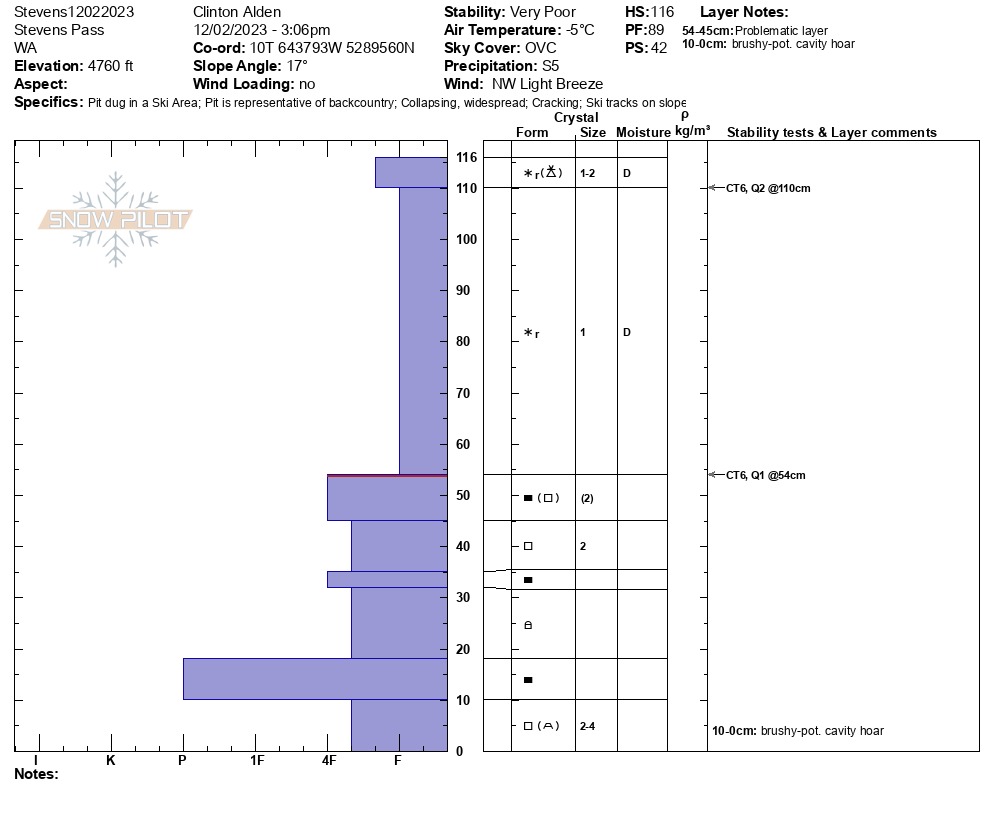
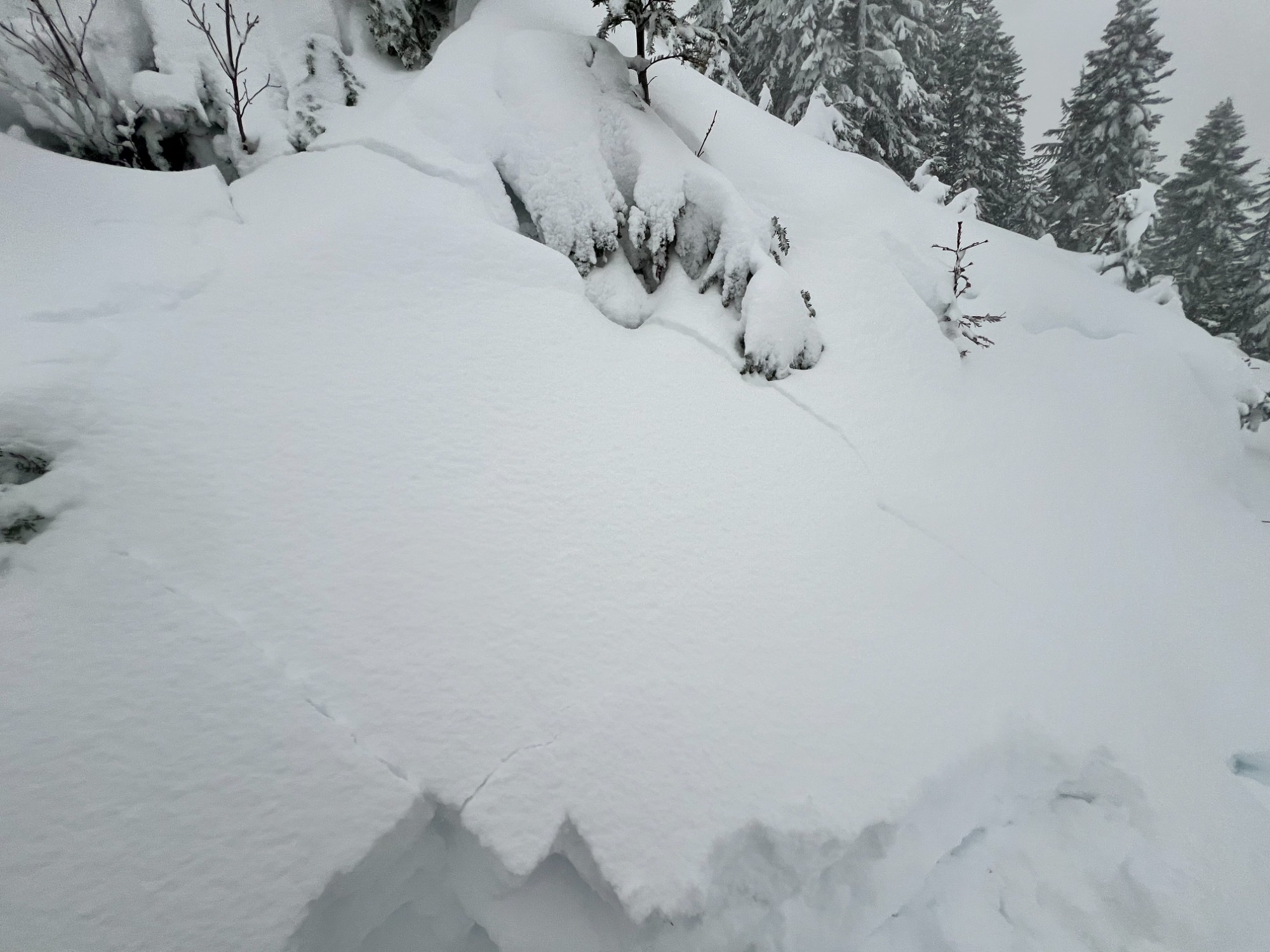
The storm slab avalanche problem was high today and the avalanche warning felt very well-warranted. While digging this pit near the skinner, nearly every party that passed mentioned how reactive the new snow felt and noted widespread cracking. On a couple small road/trail cuts, the storm slab failed easily and consistently with ski cuts, with fractures evident on the new/old snow interface and the density inversion near the top of the new snow. Loud whumpfing collapses observed in brushier terrain (potentially consistent with depth/cavity hoar observed in pit profile). Cracking was very widespread, nearly every step into untracked snow produced shooting cracks up to 10' away.
Weather
- Air Temp
- 23
- Cloud Cover
- obscured
- Wind Loading
- light
- Rain Elevation
- 800
- Recent Snowfall
- 70
- Snow Avail For Transport
- moderate amounts
Snowfall rates increased throughout the day, in excess of 5cm/hr by 1600. Due to the density of the new snow and relatively light winds in this mostly forested terrain, minimal wind transport was observed although I suspect that to be a different story at high elevations and in more exposed locations. A big surprise for me today was how low the freezing level was, with snow accumulation occurring down to ~800ft on the west side of Stevens' Pass. Temperatures also trended cooler than expected, with an air temperature of -5C (23F) observed at 4700' at 1506.
Snowpack
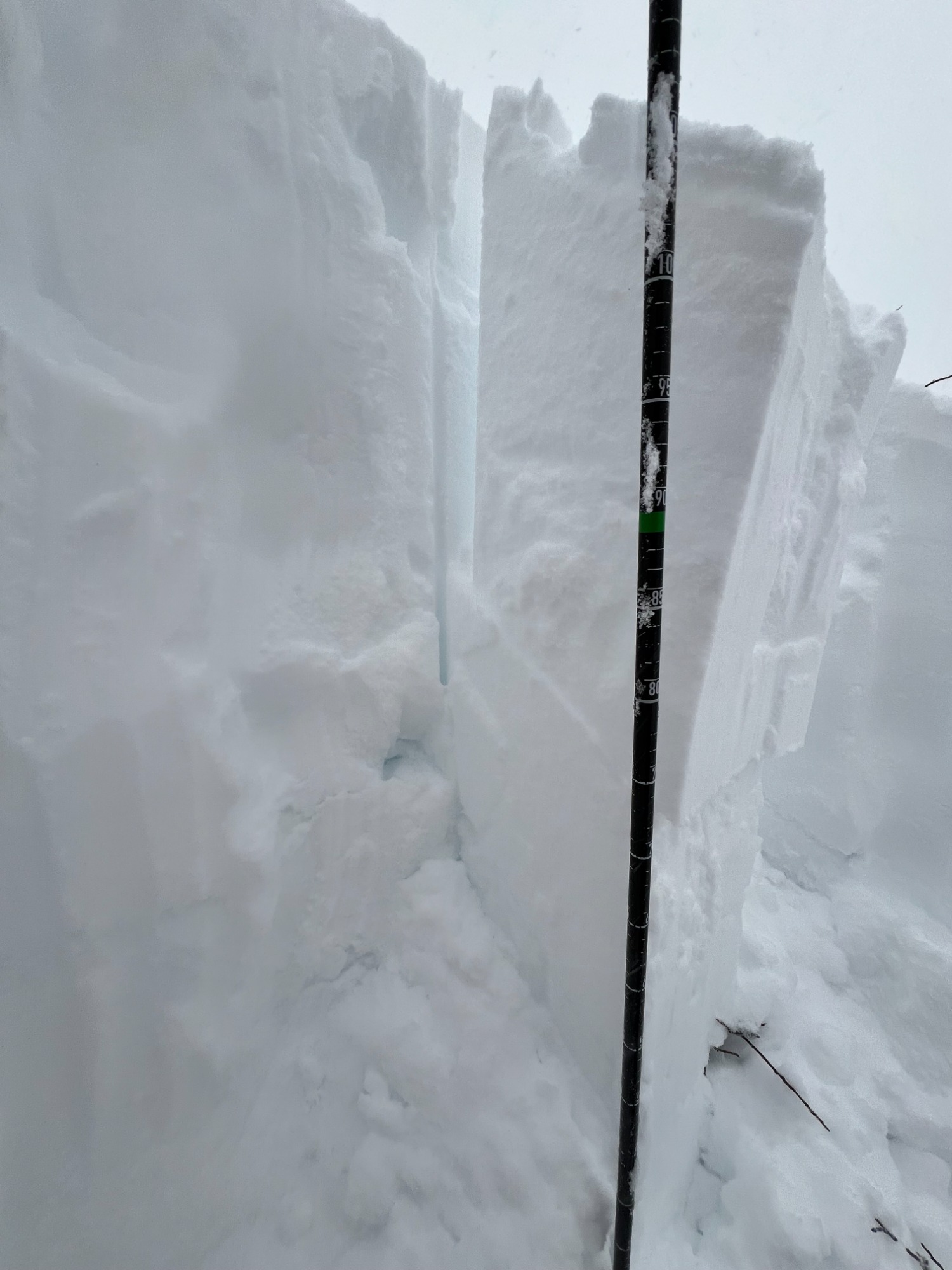
The new storm slow was cohesive and dense, failing consistently in repeated Compression Tests (CT6, Q1) on the new/old snow interface (FC above crust). High snowfall rates (S5+) and a density inversion also lead to reactivity observed within the new snow with top 10cm of new snow failing with little stress (CT6). Other than a P hard raincrust near the base, all layers of the snowpack observed in the snowpit were relatively weak, with hardness <= 4F. This was emphasized by high boot and ski penetration values of 89cm and 42cm, respectively.