
Quick report
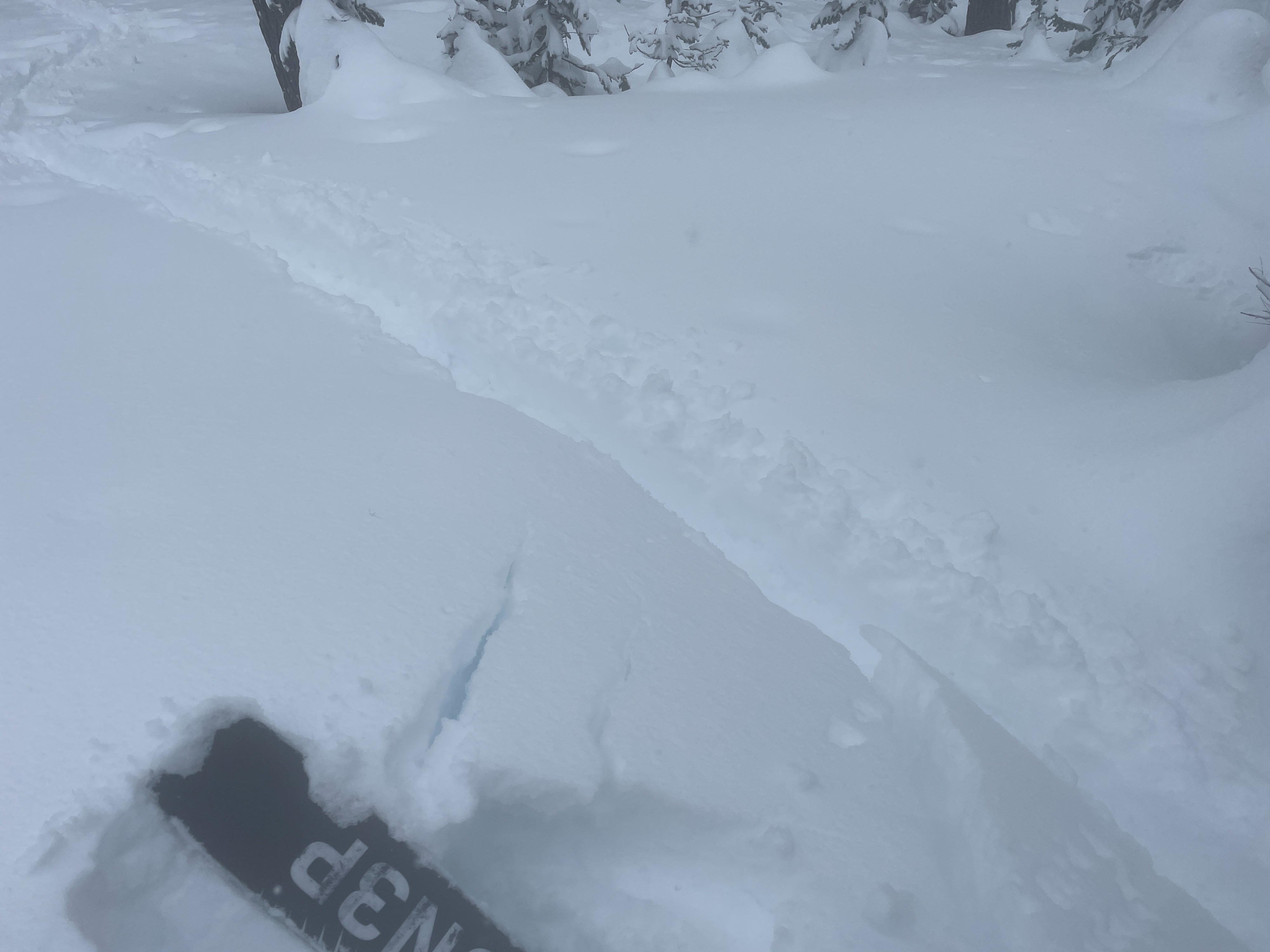
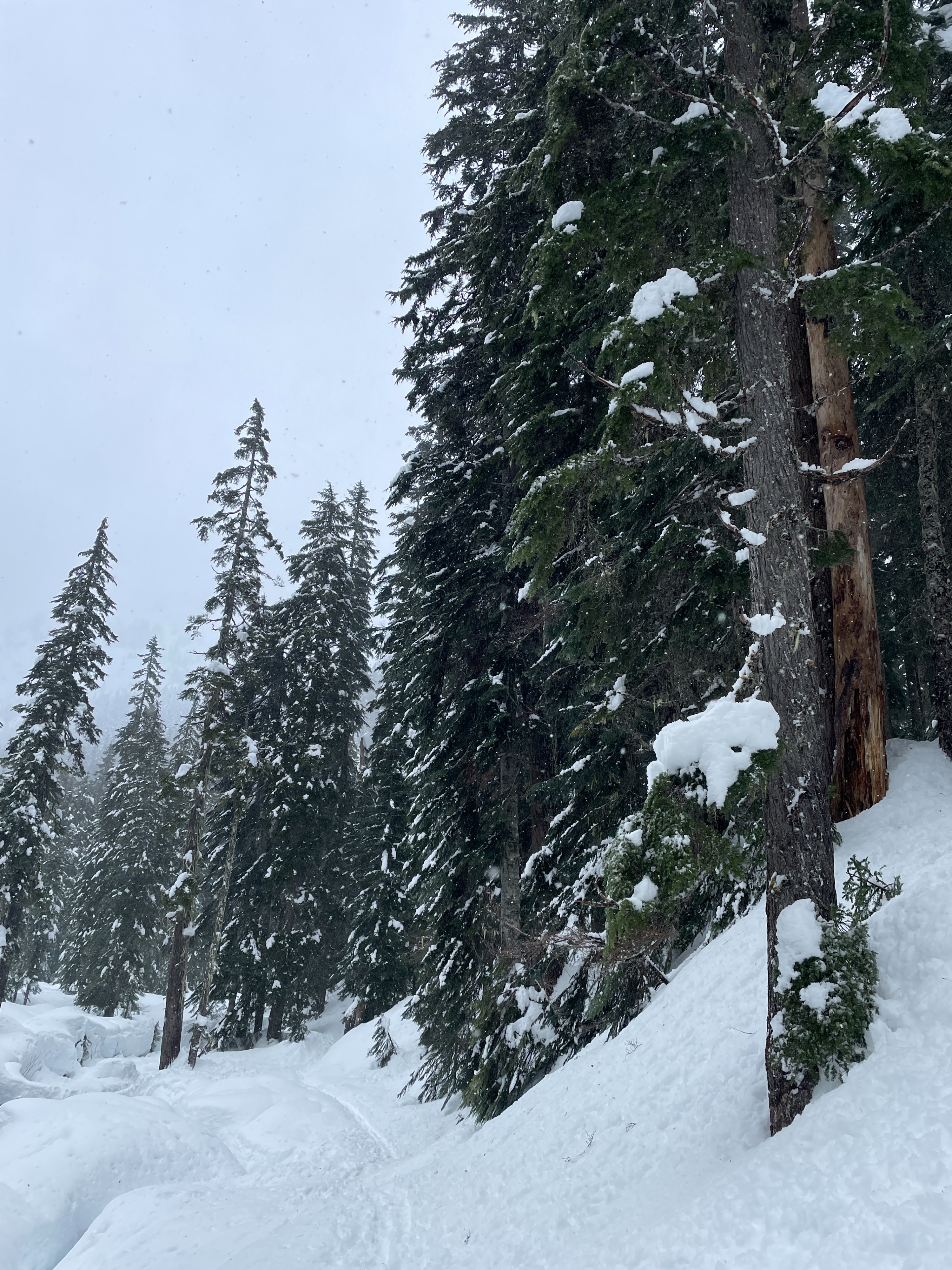
It was a very heads-up day in the mountains. Despite our short tour, we recorded several avalanches. Many reached low in their runouts. We were also able to trigger avalanches on small slopes even in the trees. These slides failed easily, propagated, and ran far downhill despite their small size. It seems like all the slides were failing on or near the 2/27 interface, though many of the higher crowns were not visible.
Small cracks were occasionally observed on very steep slopes and along the uphill sides of tree wells.Weather
- Air Temp
- 33
- Cloud Cover
- obscured
- Wind Loading
- light
- Rain Elevation
- 4300
- Recent Snowfall
- 30
- Snow Avail For Transport
- small smounts
Pretty wet day with temperatures hanging out right at the rain-snow line. Much of the precipitation looked white but melted on contact, even on the snow surface. Winds were generally light, but gusty.
Snowpack
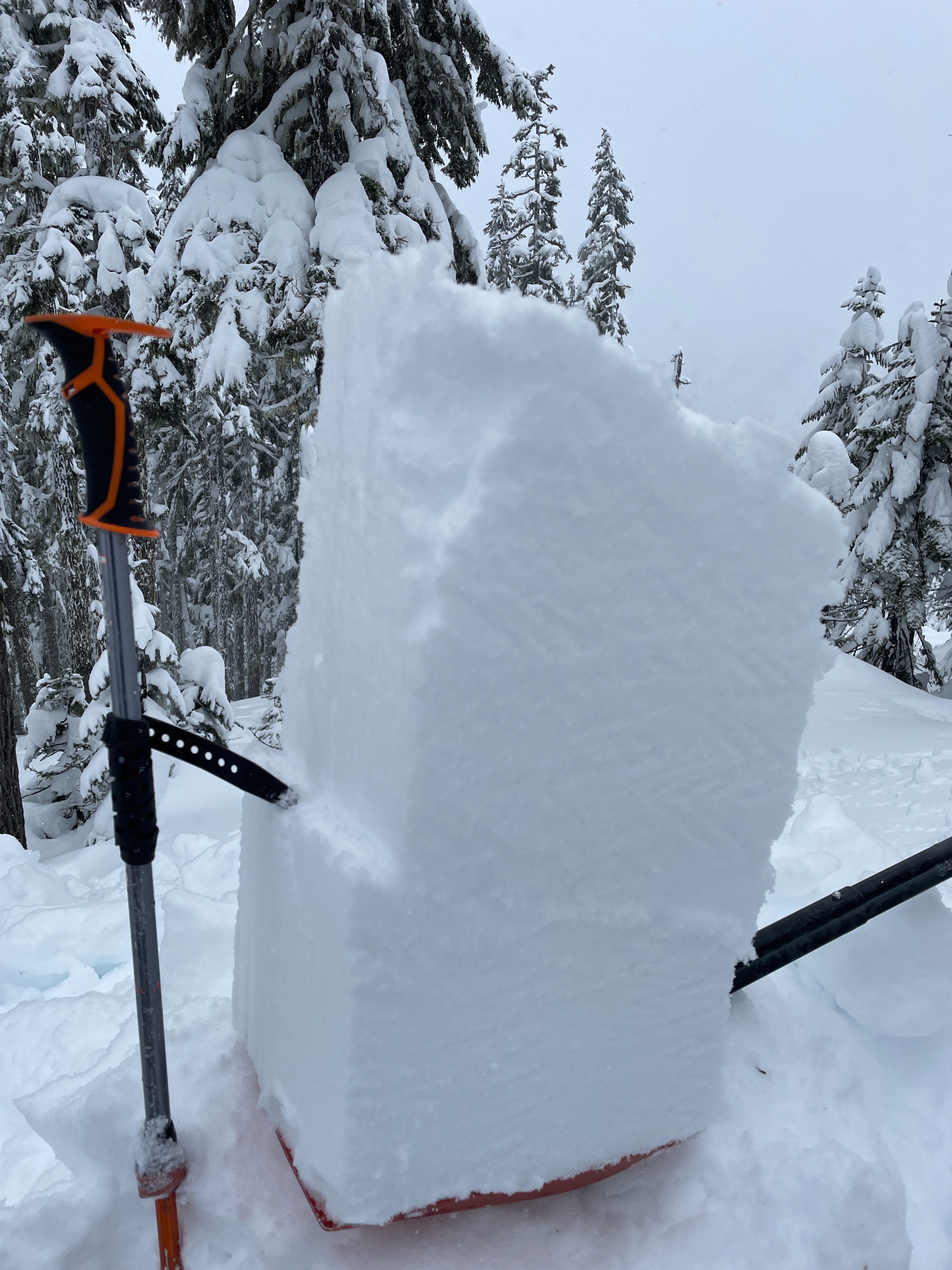
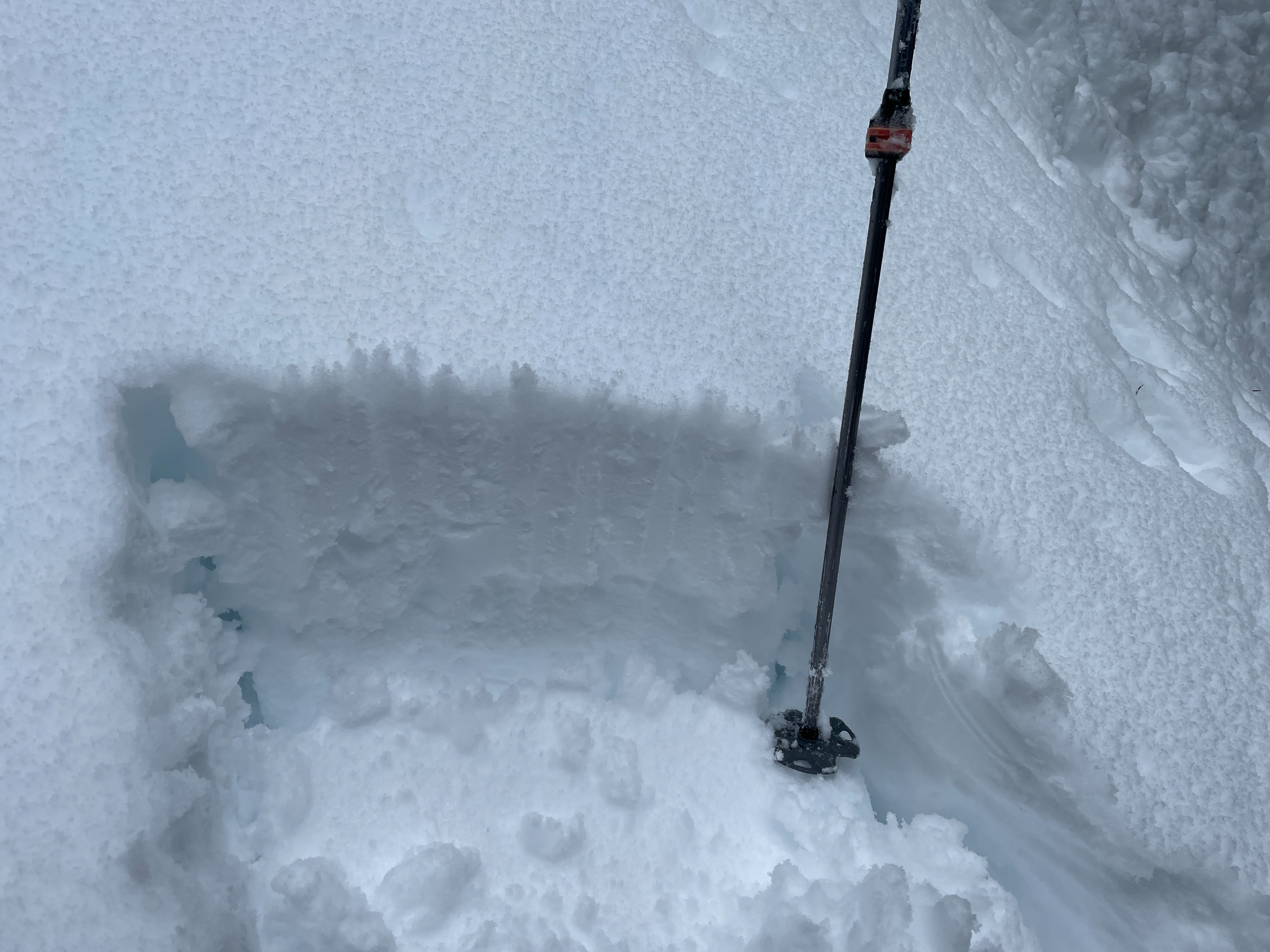
Below the rain-snow line, only the upper inch or two (2-5cm) of snow was wet from the rain. Below the surface we found heavy but dry snow from overnight. Handpits and hand shears indicated slides would fail on the 2/27 interface. This corresponds to a few natural storm slab avalanches we saw at 3800ft on a NW aspect. Rollerballs were plentiful off steep rocky slopes and where tree bombs could roll downhill. However, we only saw a few small wet loose slides during our travels.
Above the rain-snow line, uptrack tests, hand pits, hand shears, and small slopes all failed on the 2/27 interface down about 1 ft (30cm). A snow profile at 4800ft also indicated that this would be the primary layer of concern. Snowpack tests did not fail on any layers deeper than the 2/27 in this location.
Gusty winds knocked snow out of the trees, but we didn't notice any drifting. Of course, we also didn't make it to ridge tops.
Tree bombs were a real hazard today and large blocks of snow fell during warming and windy weather.
Avalanche
- Size
- D2 R1
- Type
- SS
- Count
- 4
- Aspect
- NW
- Trigger
- N
- Elevation
- 5400 ft
Even in this relatively short tour, we counted at least 6 natural large storms slabs, 4 natural smaller storm slabs, and triggered 4 storm slabs. Given the limited terrain we covered and poor visibility, this feels like a lot of avalanches. One thing that stuck out to us was how far down slope these slides ran despite their smaller size. Many reach near the bottom of their runouts. The slides we intentionally triggered were on small steep slopes in forested terrain. It's worth noting that even in the trees we could still trigger storm slabs that propagated and ran far downslope.