
Quick report
- Cracking
- specific
Multiple indicators that the 1/10 interface is gaining strength and becoming difficult to trigger in wind-sheltered terrain and at middle elevations.
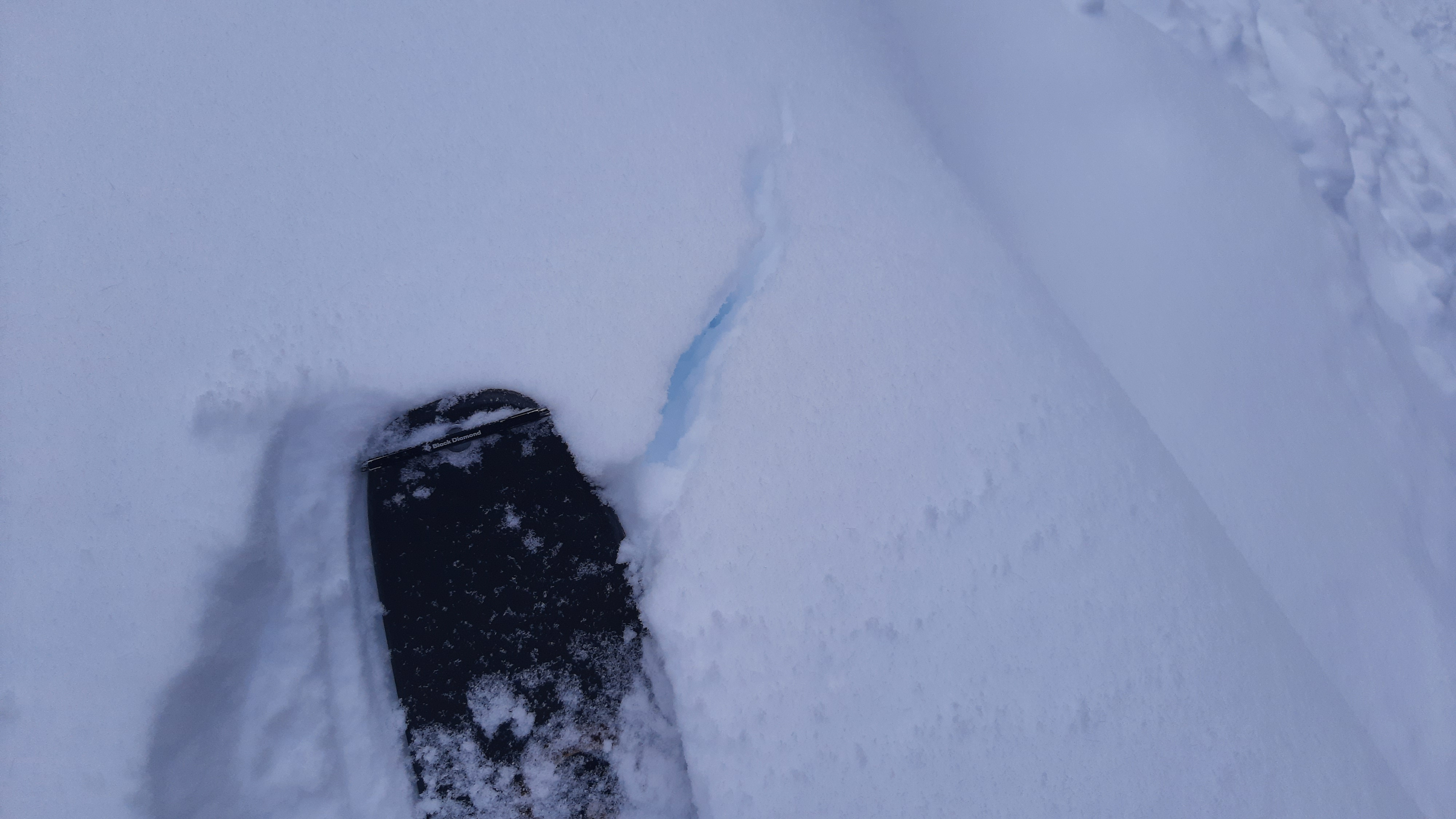
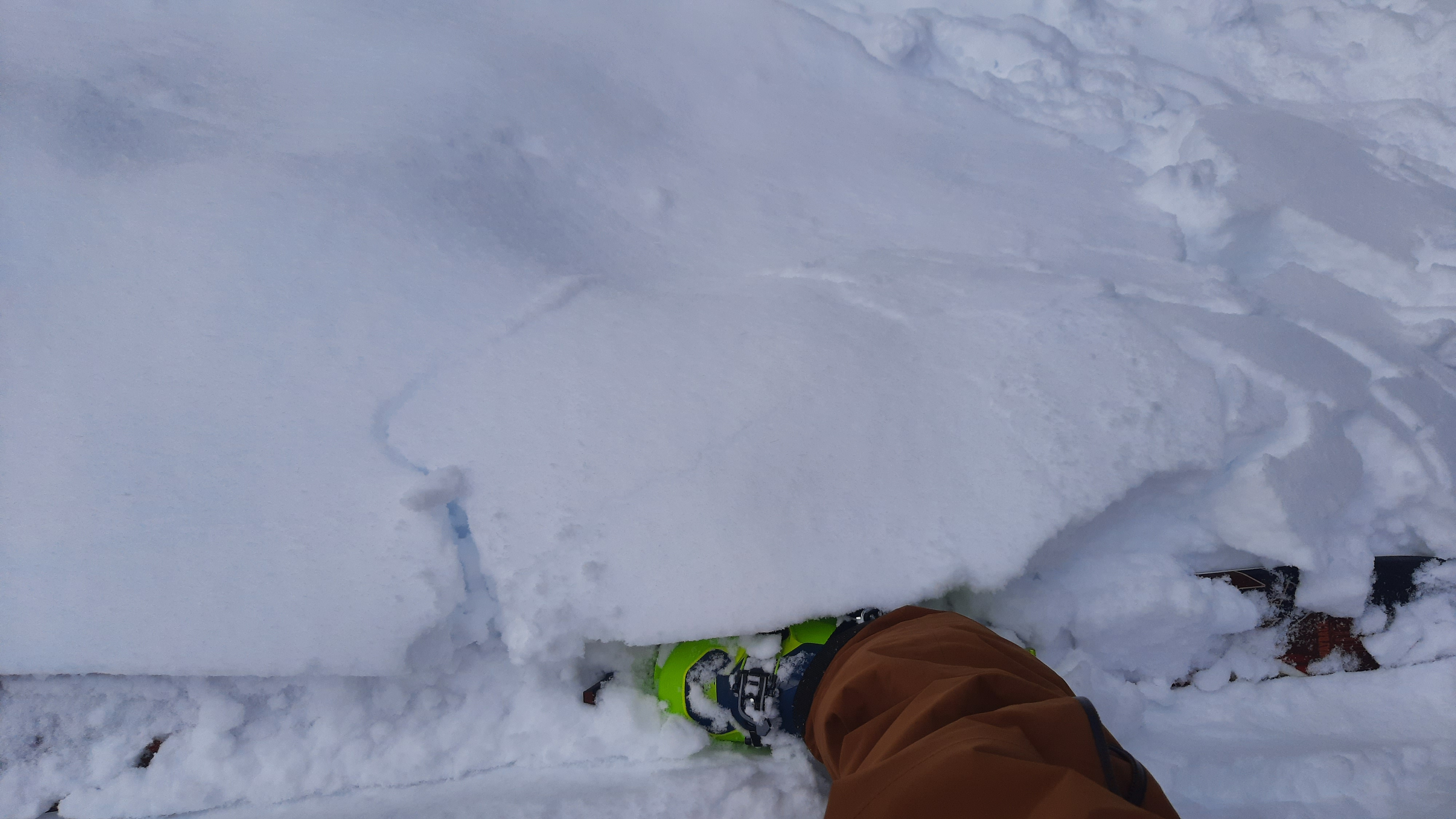
The sensitivity of recent snow over the 1/10 interface has dropped significantly in the past 24 hours. Fewer signs of instability than 1/11, but still some indicators. Slope testing and ski cuts on many small, convexities and unsupported features produced no avalanches. Cracking was stubborn. When the slope had already been undercut, cracks could propagate a max of 2ft from our skis. The 1/10 interface was weak in shear and snow would slide easily on it.Weather
- Cloud Cover
- overcast
- Wind Loading
- previous
- Recent Snowfall
- trace
- Snow Avail For Transport
- small smounts
Slightly filtered, broken clouds before 9a, then overcast west of Henry Creek. Light flurries and graupel in the early afternoon. Calm wind.
Snowpack
Our objective was to target the upper snowpack, including the recent snow on the Jan 10th interface and the underlying crust. We dug 4 quick profiles on a variety of aspects (southerly and shaded), in both wind-exposed and sheltered terrain.
We found 23cm of cohesive, recent snow. This was generally Fist+ to 4-Finger hardness, but up to 4F+ where it was most wind affected. Interestingly, this was in a typically wind-sheltered location. The new snow rests on the 1/10 weak layer, ranging from 1-5cm thick with variable grain types. In 2 locations, we found near-surface facets but they were only well-developed (up to 2mm) in one of these. At this location, ESE, 5,220ft ridge, we also found surface hoar (6mm) mixed in with the facets. On shaded slopes, we only found decomposing snowflakes (DF). Under the weak layer, a crust existed below 5,100ft. It was most robust on steep, southerly slopes and at lower elevations.
Tests produced either no results or no propagation in long columns (ECTX, ECTN6). Small small columns produced resistant fractures CTE(RP). All failures were easy. Informal tests were clean and easy, sometimes collapsing on isolation.
Avalanche
We saw numerous previously reported slides from 1/11, mostly on southerly aspects. None were observed on northerly aspects.