
Quick report
- Cracking
- isolated
- Collapsing
- specific
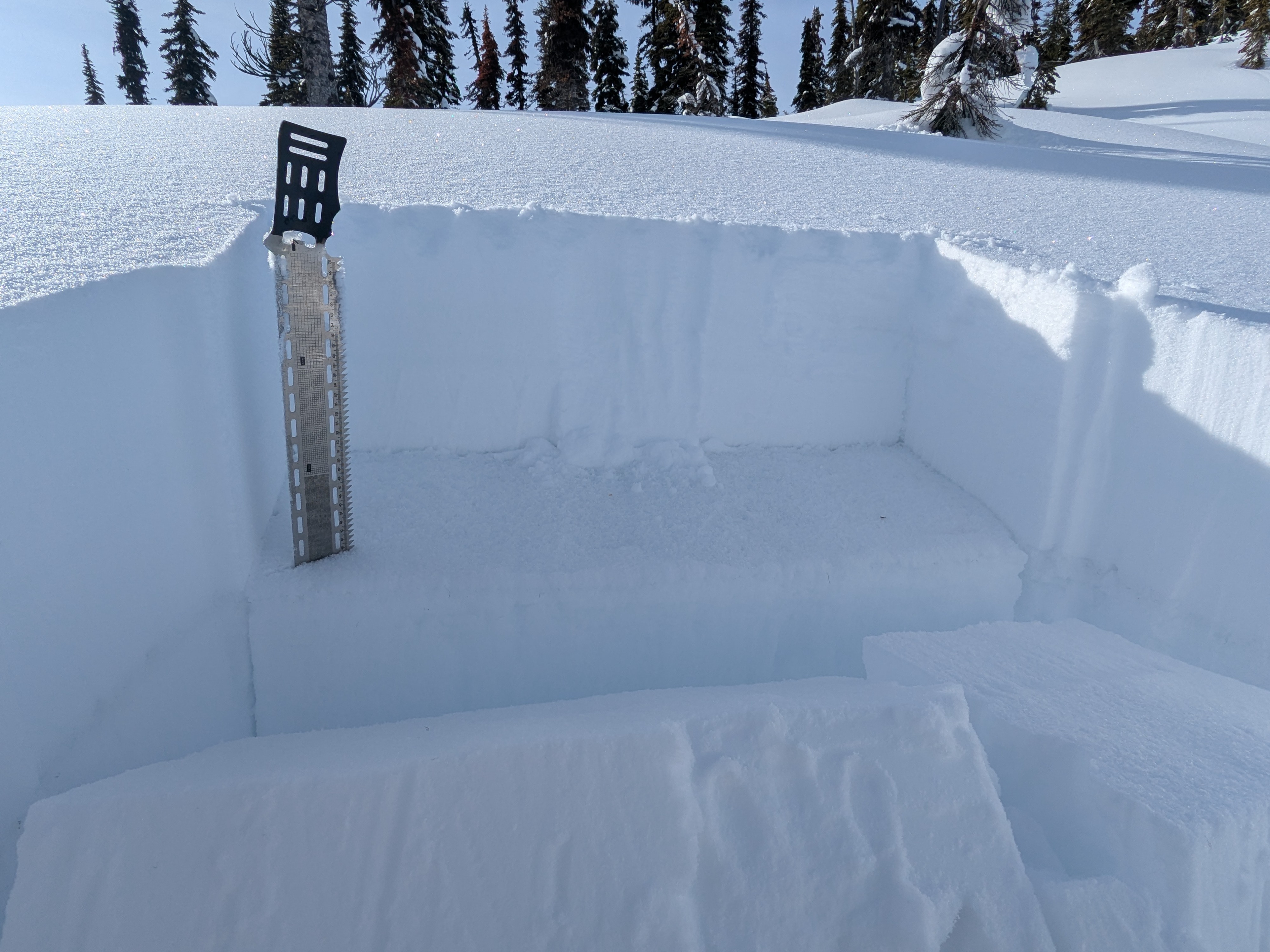
Audible collapses and propagating results in snowpack tests confirm surface hoar buried under recent snowfall is far from finding equilibrium. Warming temperatures over the coming days could drive additional slab settlement and make the slab-weak layer combo more reactive. Even if a particular slope or area is void of the buried surface hoar, there is a pile of weaker facets below a degrading rain crust that are the next concern in the cascading line of failure potential.
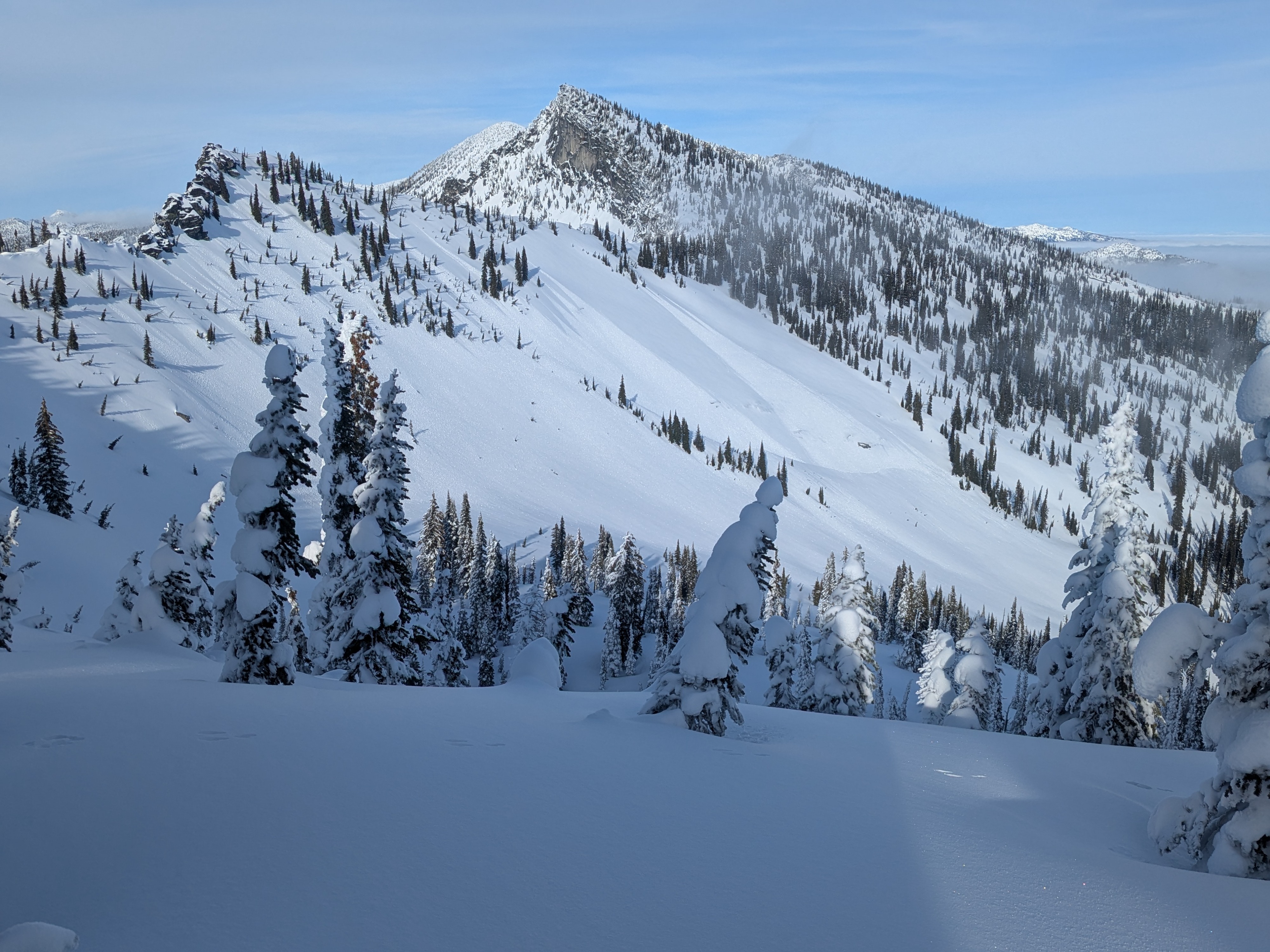
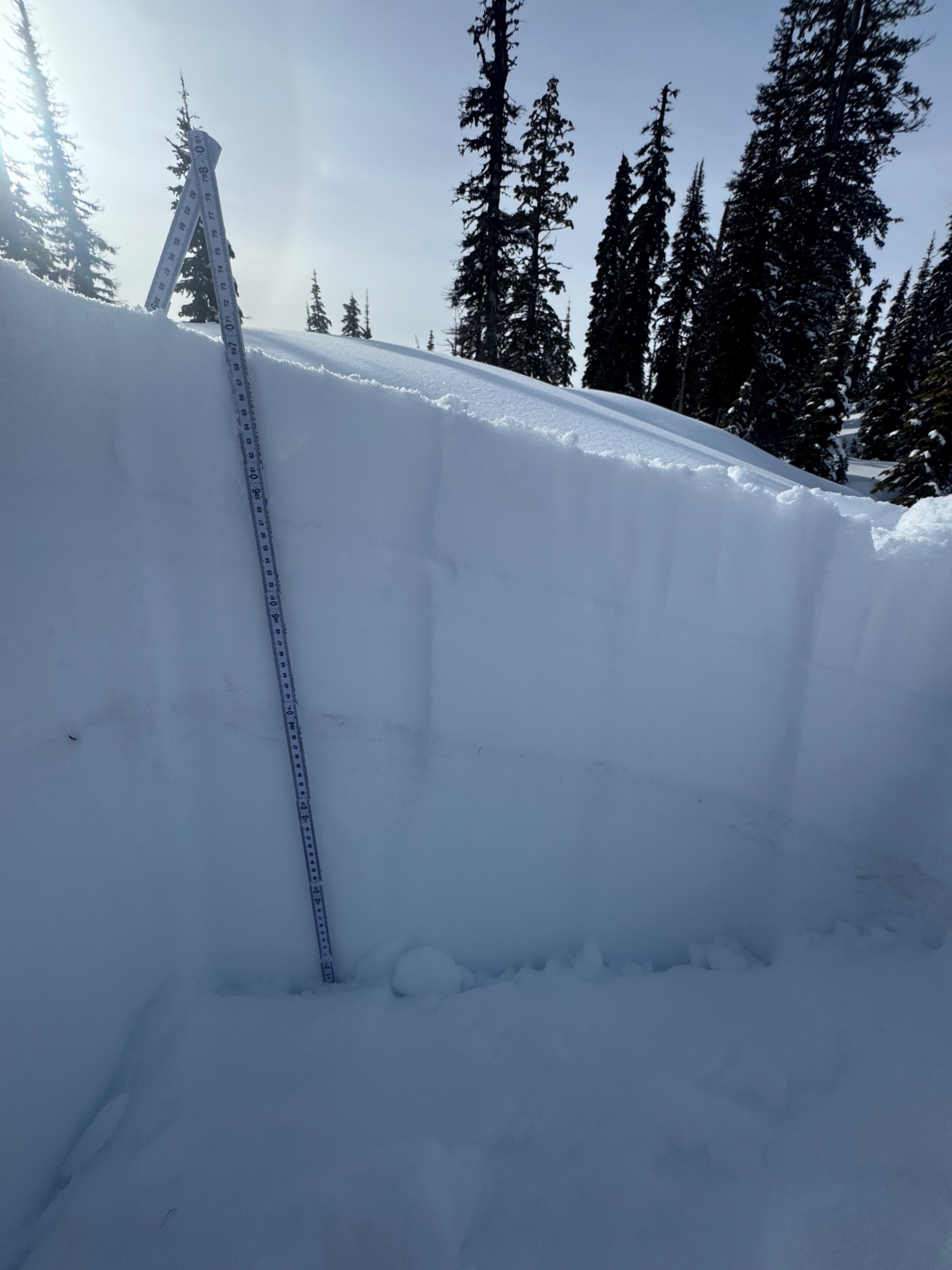
Minor cracking observed, but nothing extended very far beyond our skis. We heard and felt three audible collapses while ascending south to southeast-facing slopes, and crossing above a northeast-facing slope. These all occurred between 6,000 and 6,800 feet. The weak layer responsible for the whumpfs is a layer of small buried surface hoar (5-10 mm) capping a thin faceting crust. The average slab depth was 30cm above 6,000 feet. The activity seemed to be confined to terrain that was tilting more easterly near the sub ridge we were ascending.Weather
- Air Temp
- Warm and muggy
- Cloud Cover
- few
- Wind Loading
- none
- Rain Elevation
- 4,500
- Recent Snowfall
- 10
- Snow Avail For Transport
- moderate amounts
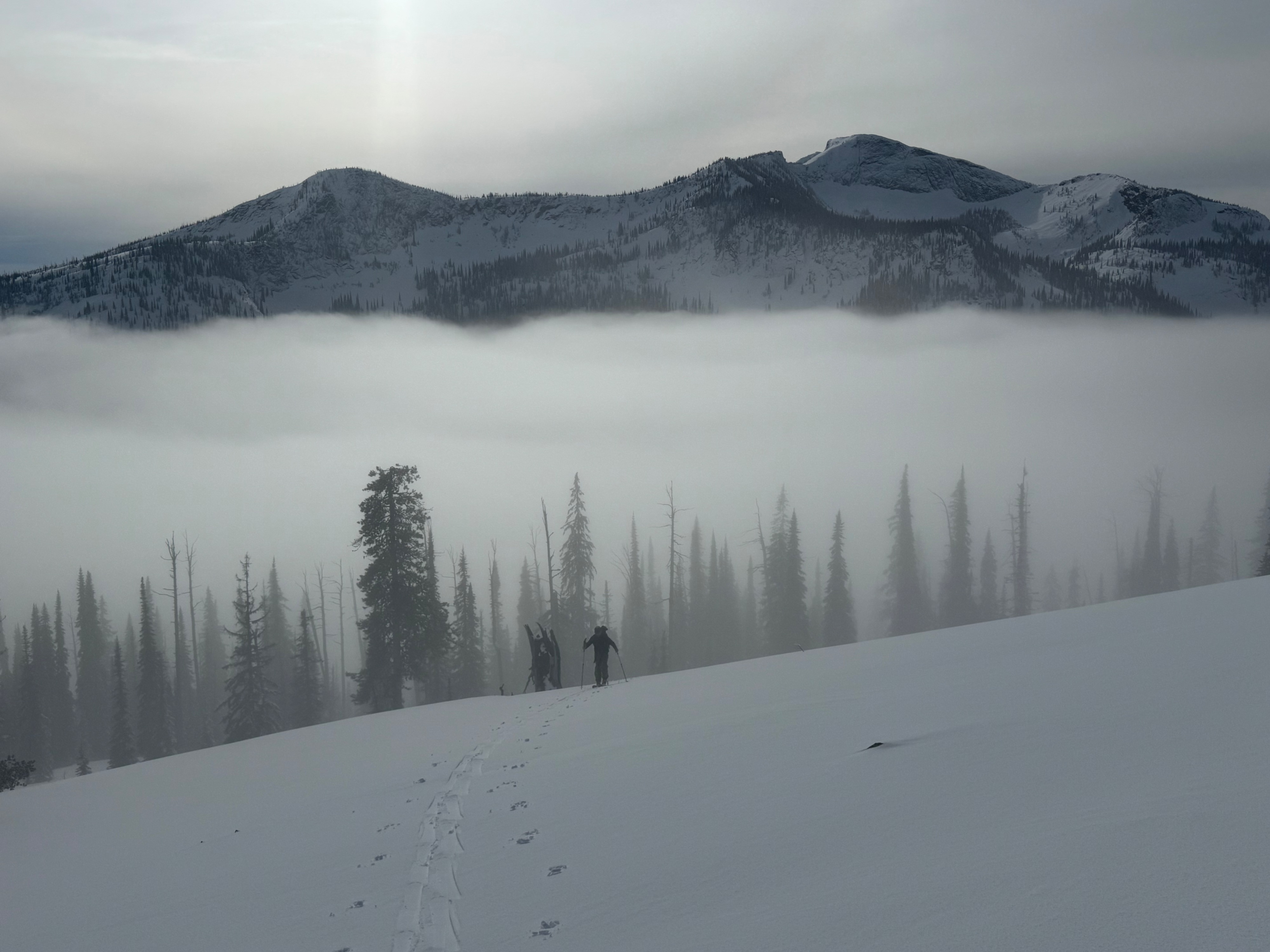
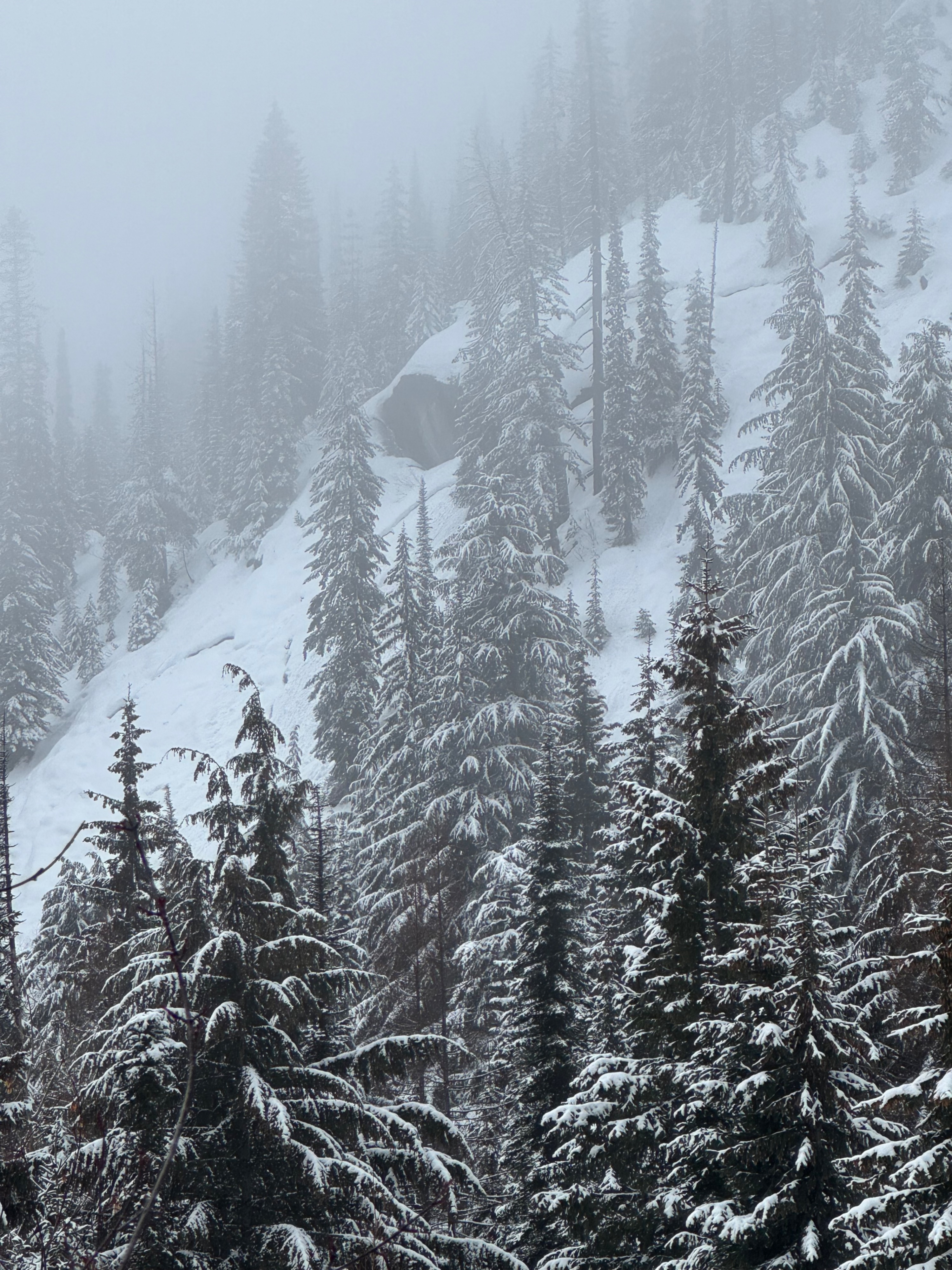
Moist conditions below the valley fog/ inversion with fresh snowfall melting from the trees and extensive dripping in the forest. Stratus deck hovered near 5,700 feet and was widespread as far as we could see. Mostly clear and sunny above the deck with only thin, high passing clouds. Winds were generally calm.
Snowpack
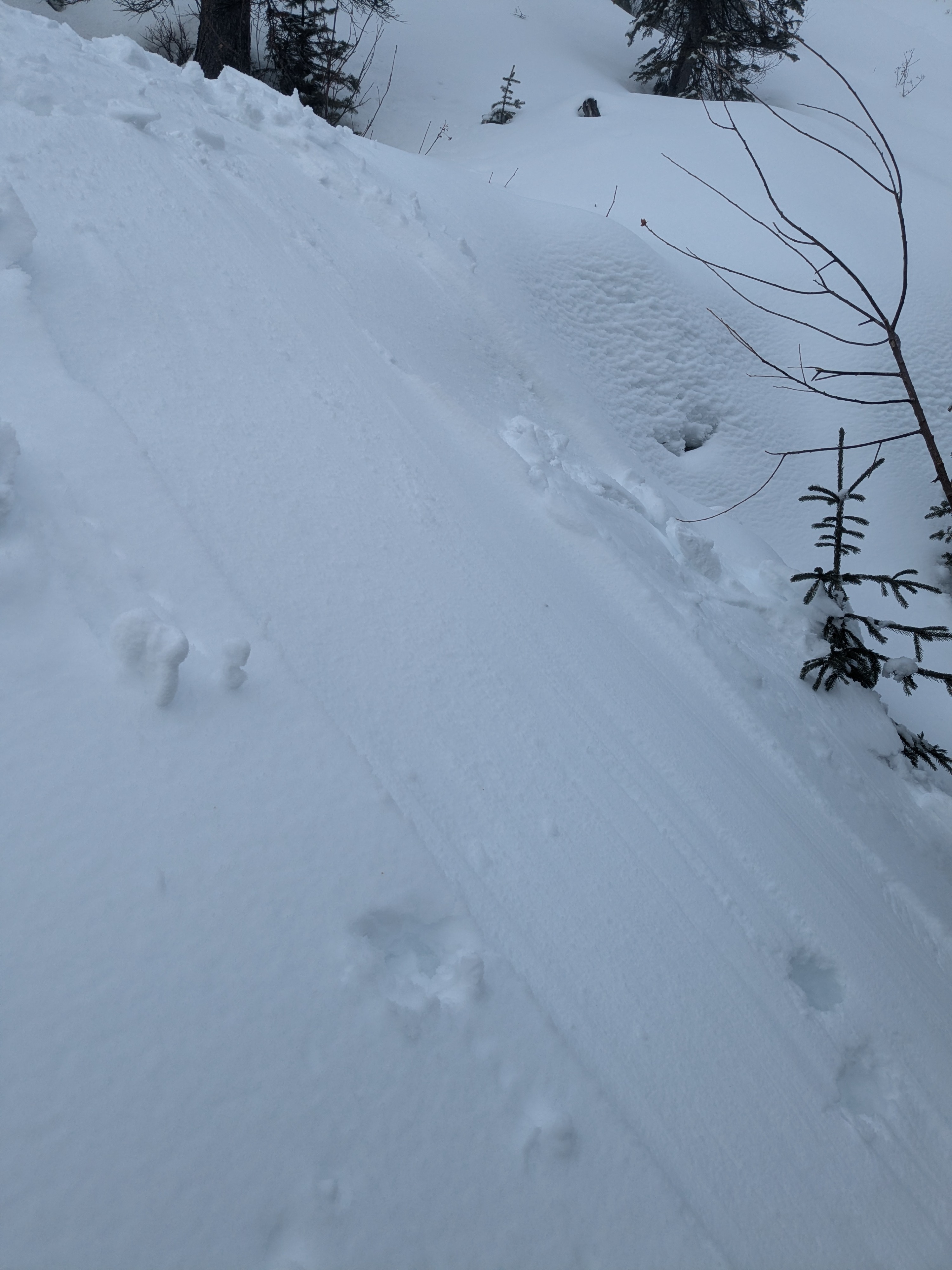
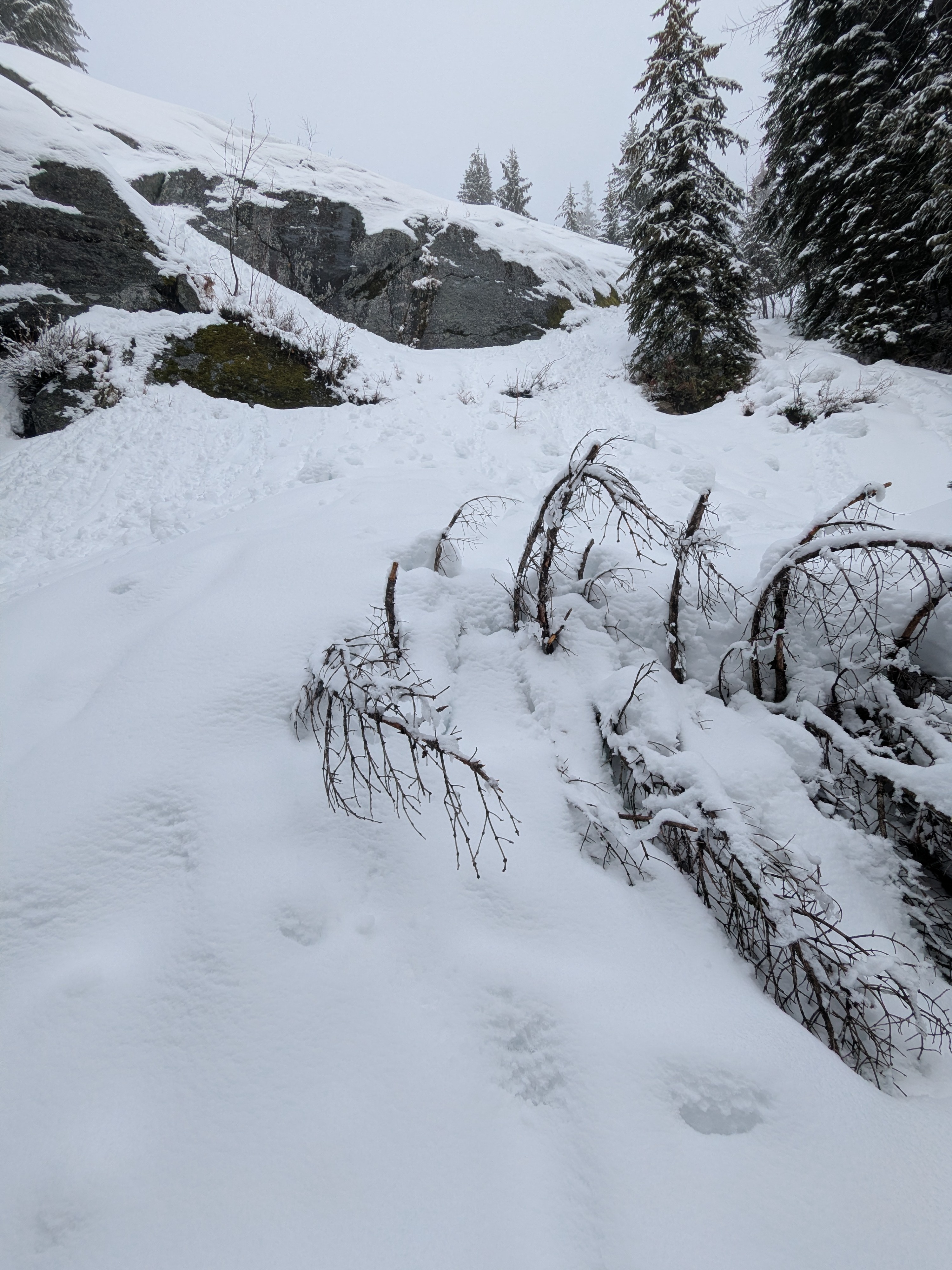
Conditions below 4,500 feet were wet and sloppy. While there was a little snow in the trees, precipitation had likely been of the liquid variety over the last 24 or so hours. This gave the snowpack a nice soaking. As we climbed above 4,500 feet, the snow surface was still moist but the last precipitation fallen appeared to be wet snow. This contributed to rollerballs and pinwheels in steeper areas, but not entraining additional snow while sliding downhill. While descending in this elevation band in the afternoon, we were able to sheet the top couple of inches of wet snow above a crust downhill on steep convex rolls. Once we approached 5,500 feet, the snow surface dried out remarkably. Above the inversion (~5,700 feet), southerly slopes were getting moist from the sun and mild ambient air temperatures, but northerly and easterly aspects remained cold and soft. Moving along the ridgeline and above steeper slopes from around 6,000 feet and above we started observing audible collapses. Digging on northerly and easterly aspects yielded a concerning slab-weak layer structure in the top foot of the snowpack. The lurking concern below is upright and intact surface hoar (6 to 10 mm) sitting on a crust, and fragile faceted snow (0.5-1.5 mm) below the crust. In general, places where the slab above is around 8 inches deep it is now thick enough to promote proagating failures in tests. Slab depths along our travels at mid and upper elevations was consistently a foot deep. Multiple tests failed with easy to moderate force and dug on the slopes where the softest riding conditions are found. On sunny slopes, the same weak layers exist below but slabs are slightly shallower on those slopes. The only difference is the slab on sunny slopes could consolidate faster during this weeks rapid warm-up into a stiffer slab to support failure even though the slab on those slopes is a bit thinner.
Avalanche
No recent avalanches observed