
Quick report
- Cracking
- specific
Inverted storm slabs increase the chance to trigger a slide. Be mindful of how much snow you find if venturing into steeper slopes. These stiff-over-soft slabs can be triggered from lower down on the slope and break above you or wider than you anticipate. As more snow stacks above in the coming days, potential avalanche size and sensitivity is expected to increase.
Weather
- Cloud Cover
- broken
- Wind Loading
- light
- Recent Snowfall
- 20 to 30
- Snow Avail For Transport
- moderate amounts
Mix of clouds, sun, and intermittent snow showers in the afternoon. Light southwest winds.
Snowpack
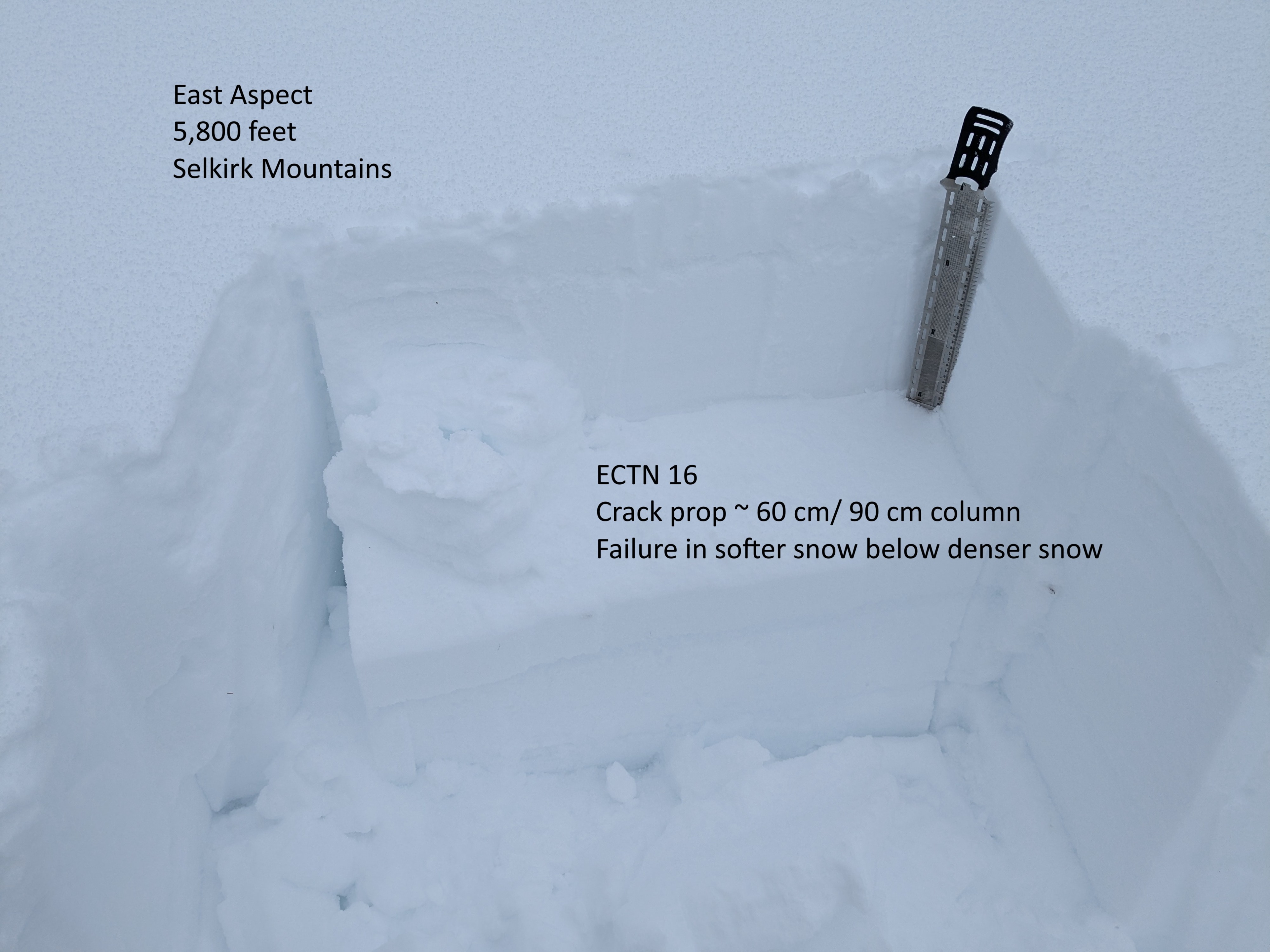
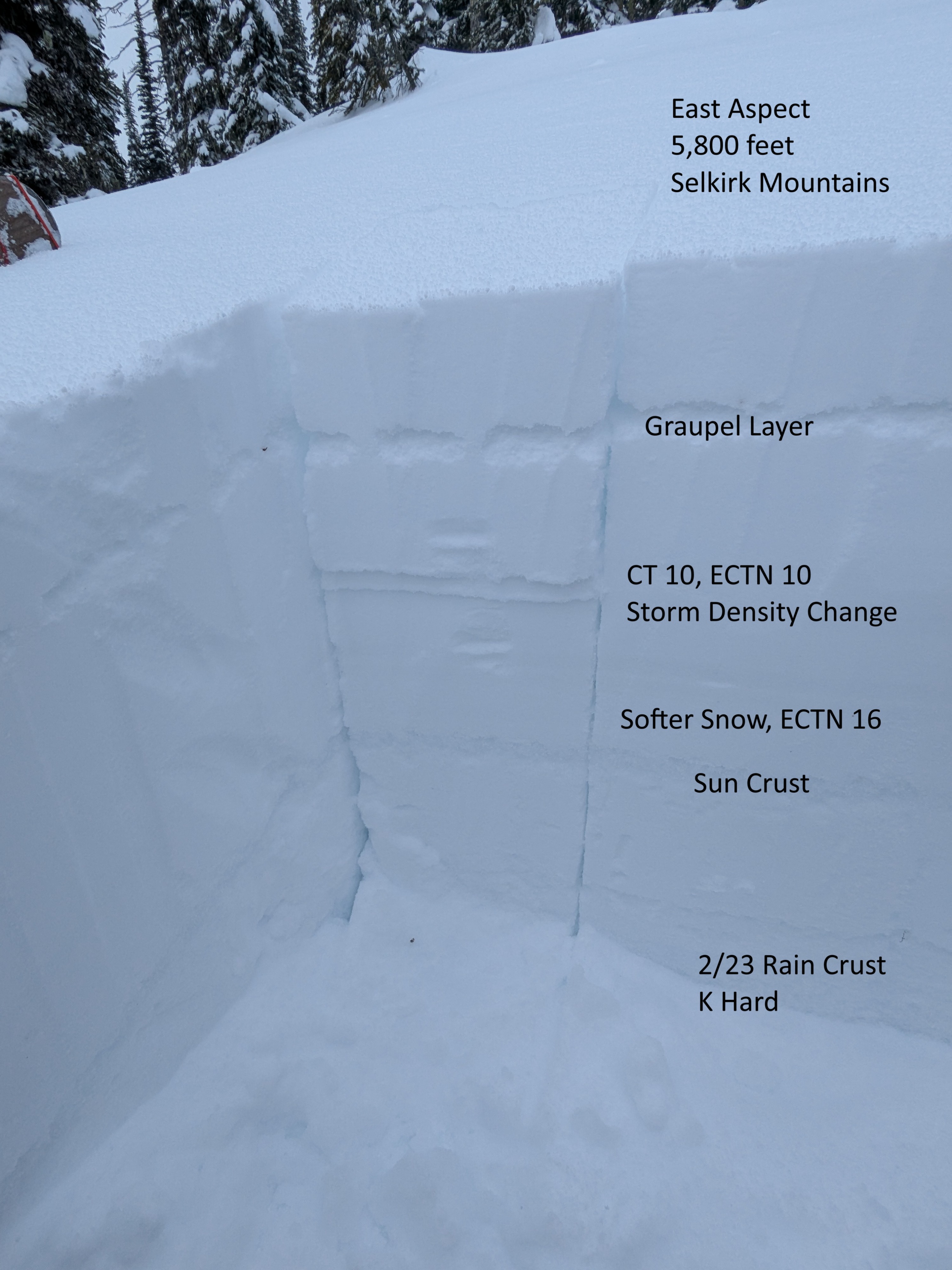
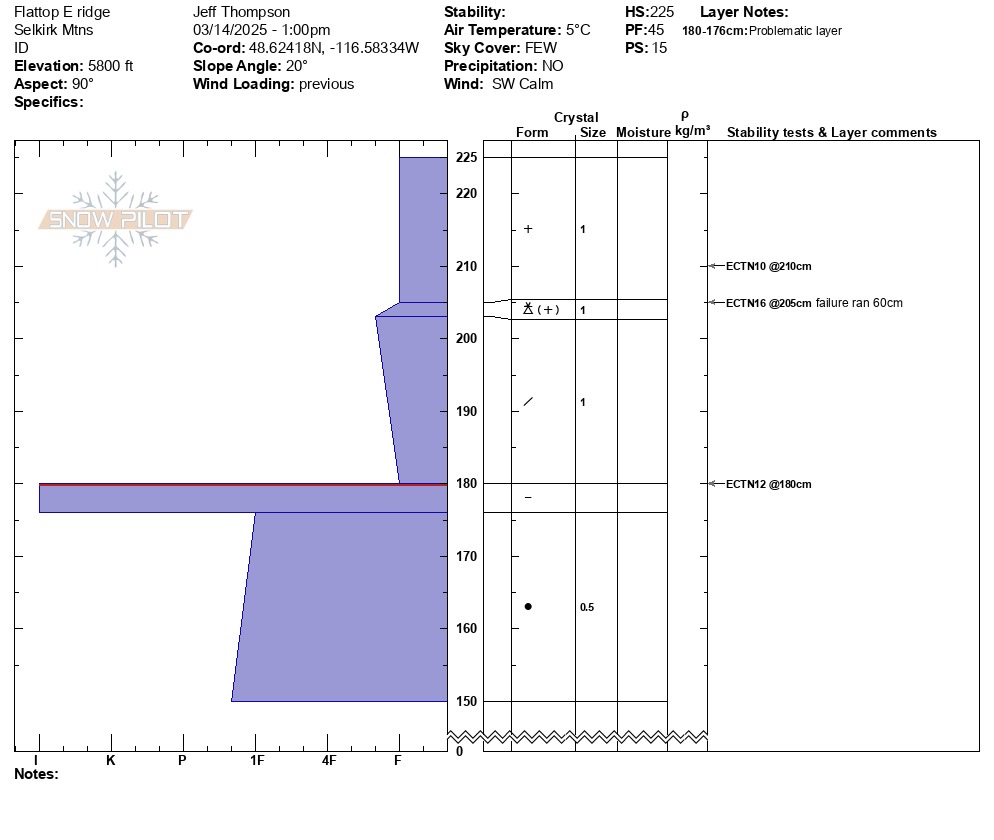
We found fresh, inverted storm slabs around 8 to 12 inches deep. They sit above 1 to 3 inches of lower density snow, sitting directly above a hard sun crust. We observed easy to moderate failures within the new snow and at the interface of a notable density change above the crust. RP failures in CTs and ECTNs occurred in our snowpit around 5800 feet. The failure in the ECTs propagated about 60 cm across a 90 cm column, then with an easy shovel placement behind, the crack continued across the column and the slab slid off into the pit. This happened in multiple tests. No failures noted below the upper most crust in snow layers that consists of mostly rounded grains. Below these harder snow layers is the extremely stout rain crust from 2/23. This hard interface is around 60 to 70 cm deep and we did not observe failures there. Once we climbed above 6,000 feet and onto more wind-drifted slopes, the inverted storm slab was more pronounced. We started seeing cracking in the snow surface and the snow felt more collapsible underfoot. Jumping on small test slopes around 30 degrees was unremarkable and we atributed slope angle as the main contributor of lacking results.
Avalanche
- Size
- D1.5
- Type
- SS
- Count
- 2
- Aspect
- N
- Trigger
- N
- Elevation
- 5400 ft