
Quick report
- Cracking
- isolated
Our primary hazard to avoid was wind slabs which will remain the main avalanche concern for the near future here. Wind slabs may stay reactive for longer if they formed over weak faceted snow that recently formed on the surface of the snowpack on some slopes. Avalanches failing on the weak layers at the bottom of the snowpack are currently unlikely.
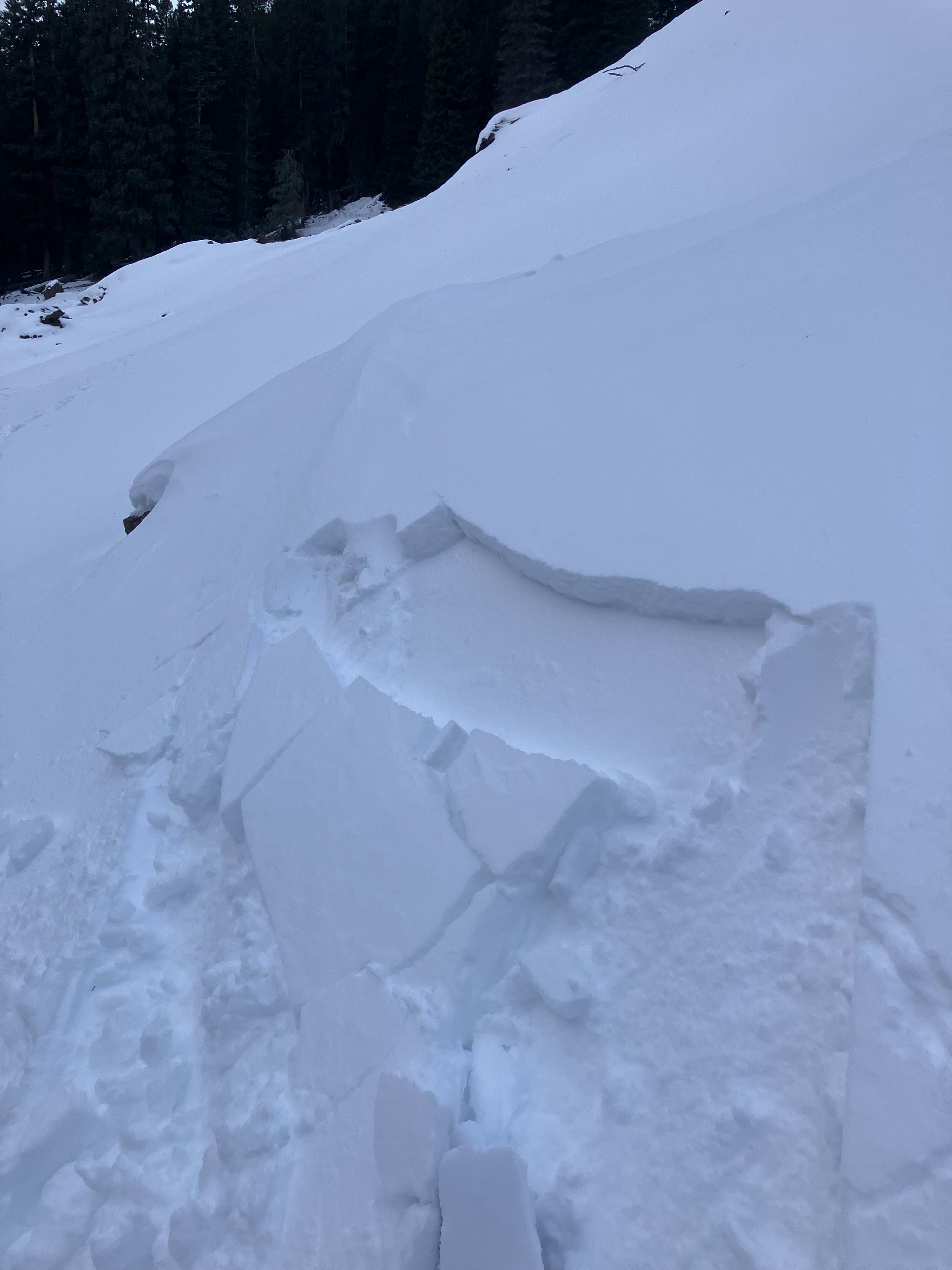
A couple small wind slabs on small rollover test slopes cracked under my skis and slid a short distance. One harder slab was very stubborn, but broke eventually after many hard kicks. Softer, small, easy to trigger slab is in attached photo.
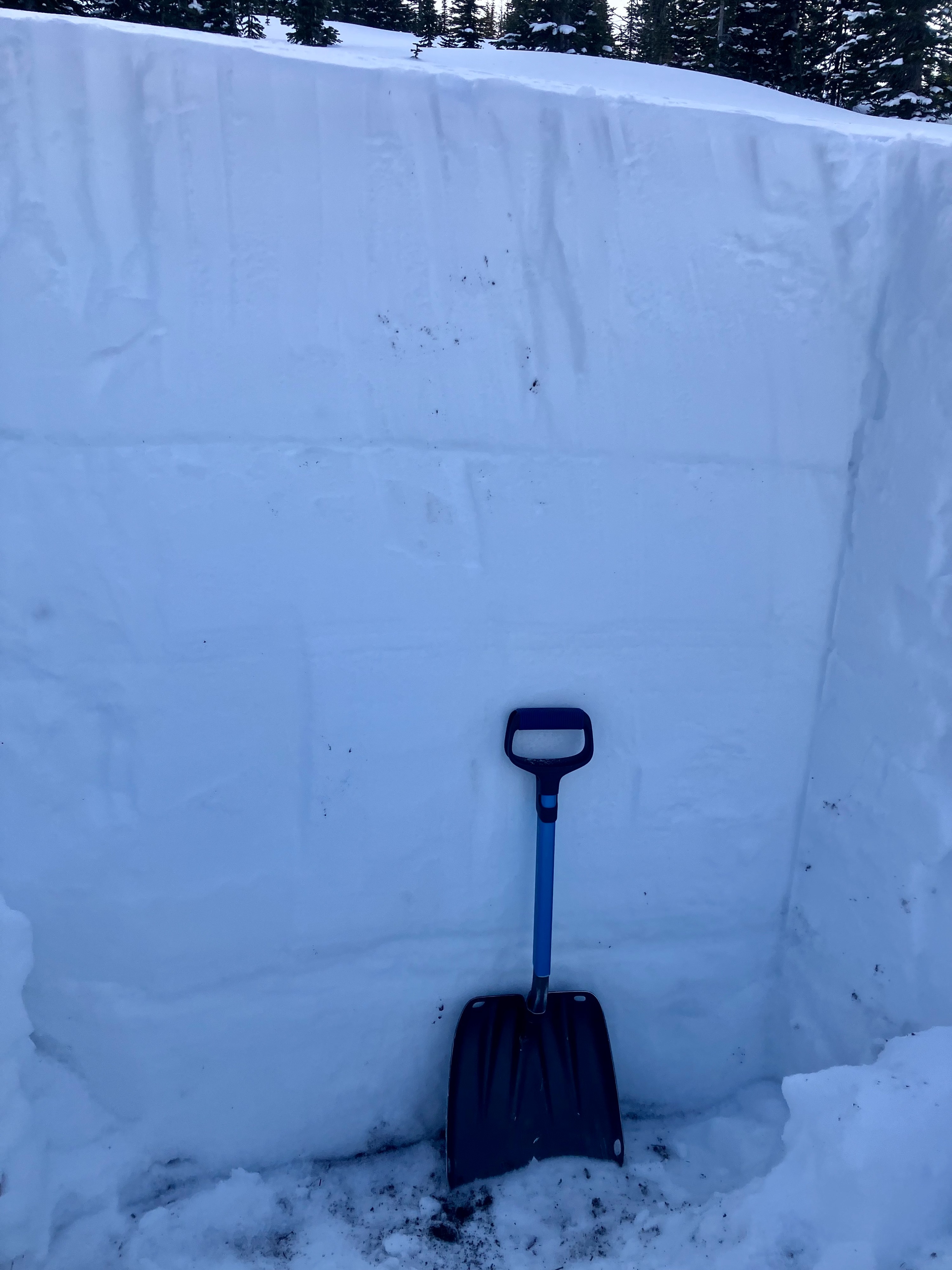
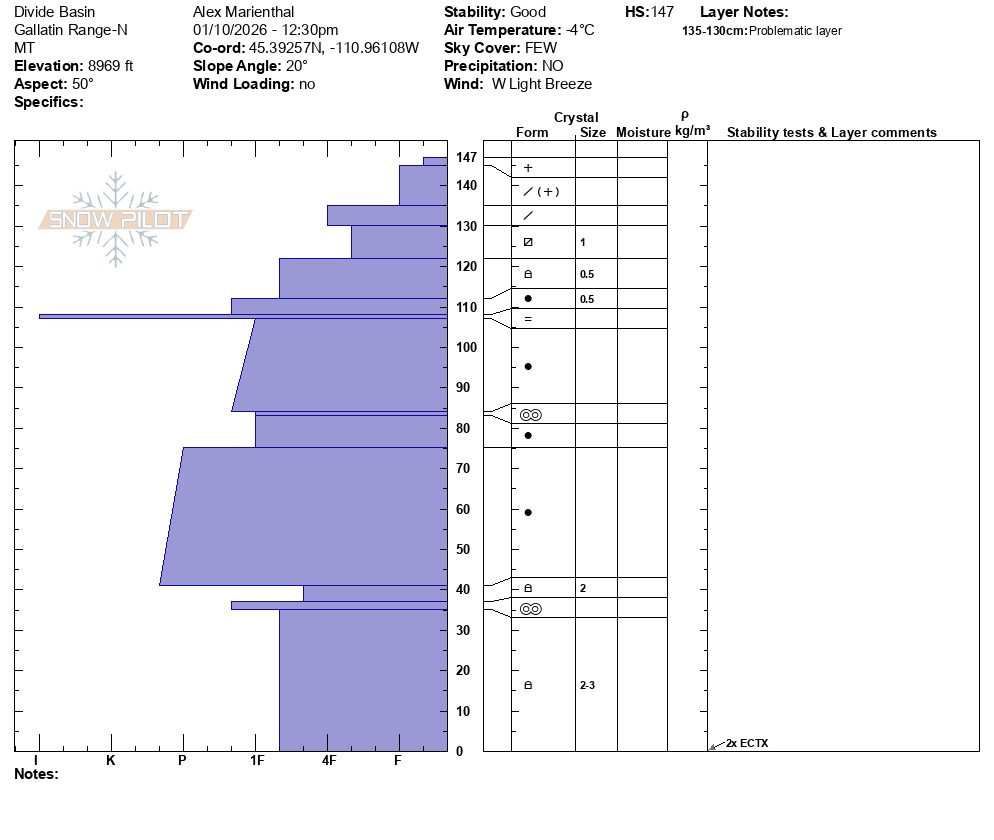
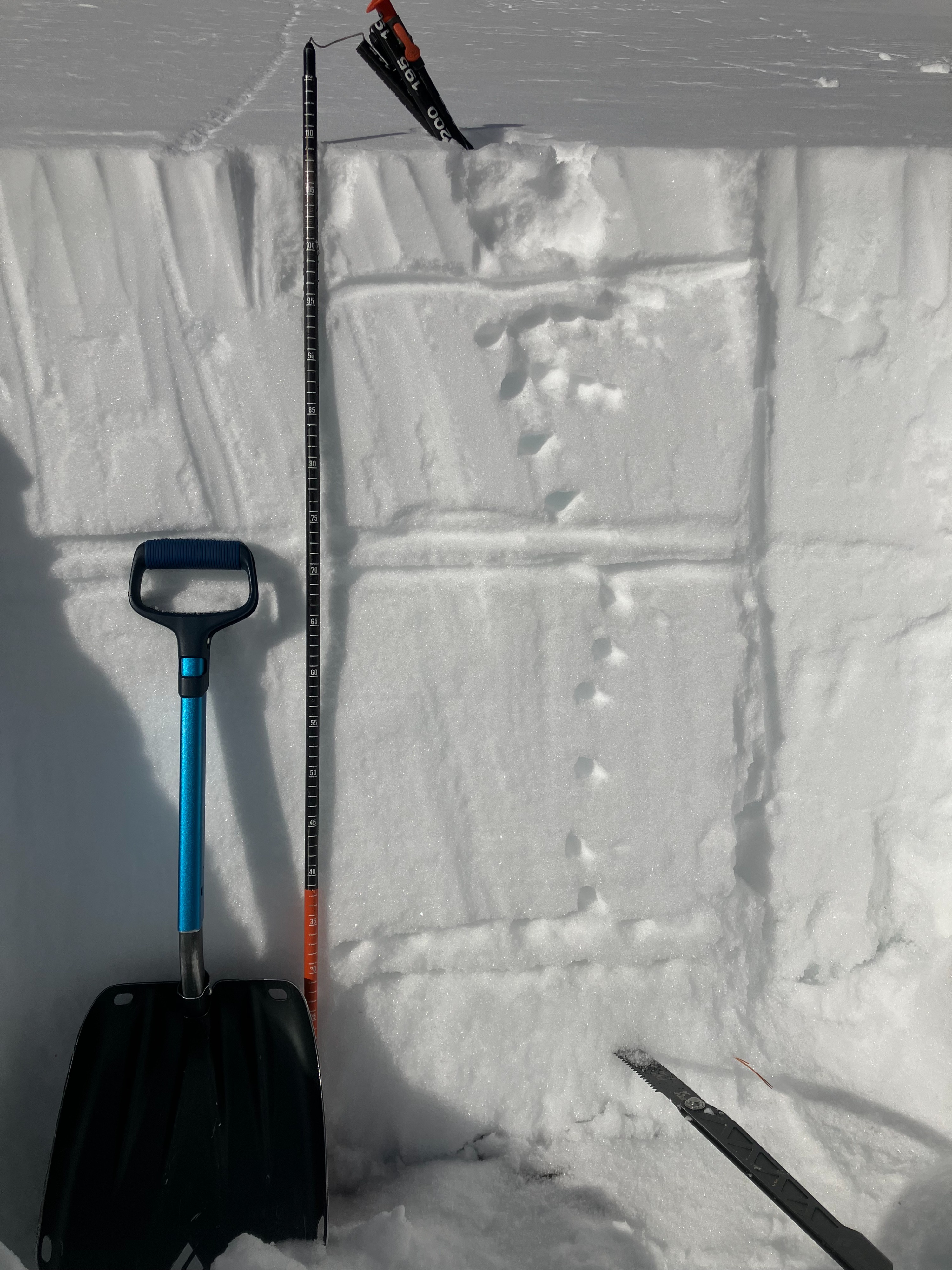
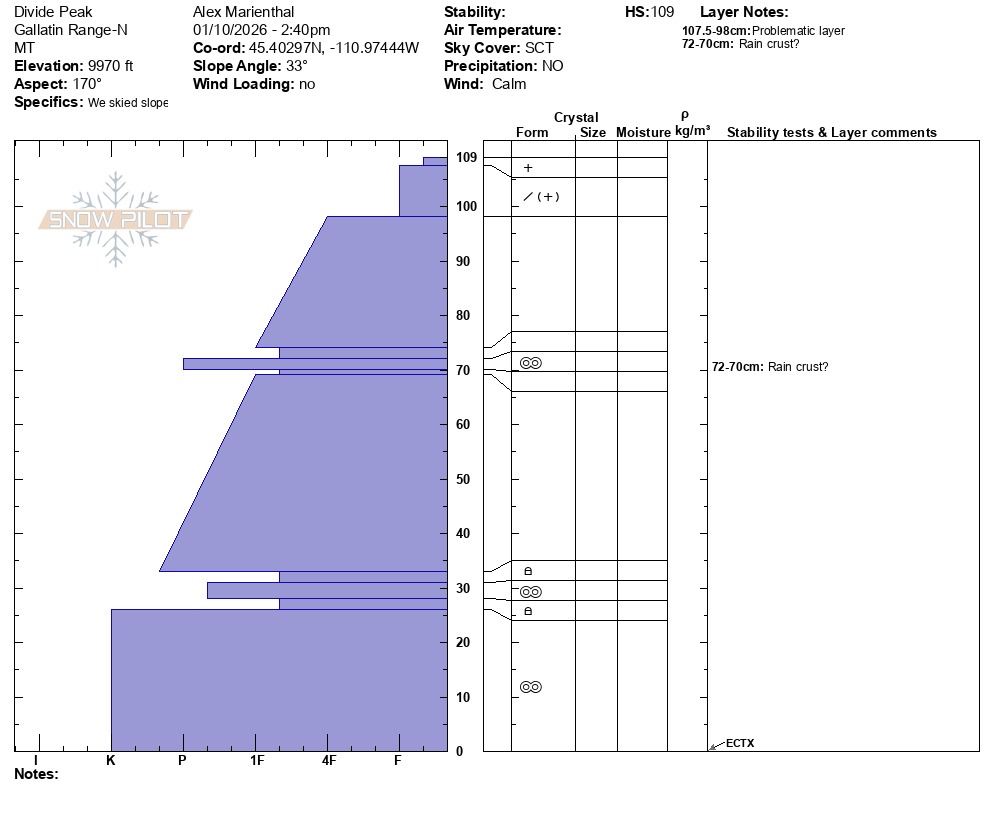
We dug snowpits on a NE aspect at 9000', and on a S aspect at 9950'. We had ECTXs in both pits. In the north facing pit the facets at the bottom were 2mm and rounding, HS was 150cm. In the south facing pit the HS was 110cm, the bottom layer was a Knife hard melt-freeze crust with slightly faceted, but hard (1f) snow between it and the hard, dense snowpack above. The middle of the snowpack was very hard (1F+ to P) and difficult to dig through in both locations.
We looked for weak near-surface-facets buried below the last week's snow. This layer was obvious along the trail between 7,500-8,500', below 3-6" of recent snow. Higher up it was less obvious. less widespread, and seemed less developed, but I would expect some wind slabs to remain reactive for a couple more days anywhere they formed over the recent facets.
Recent new snow from the last week seemed to range from 3" to ~8"+ at higher elevations. Temps were in the low 20s F. Skies were mostly clear with cloud cover increasing slightly in the afternoon. Wind was light to moderate at higher elevations in the morning with some small plumes of snow moving, and in the afternoon wind was mostly calm.