
Quick report
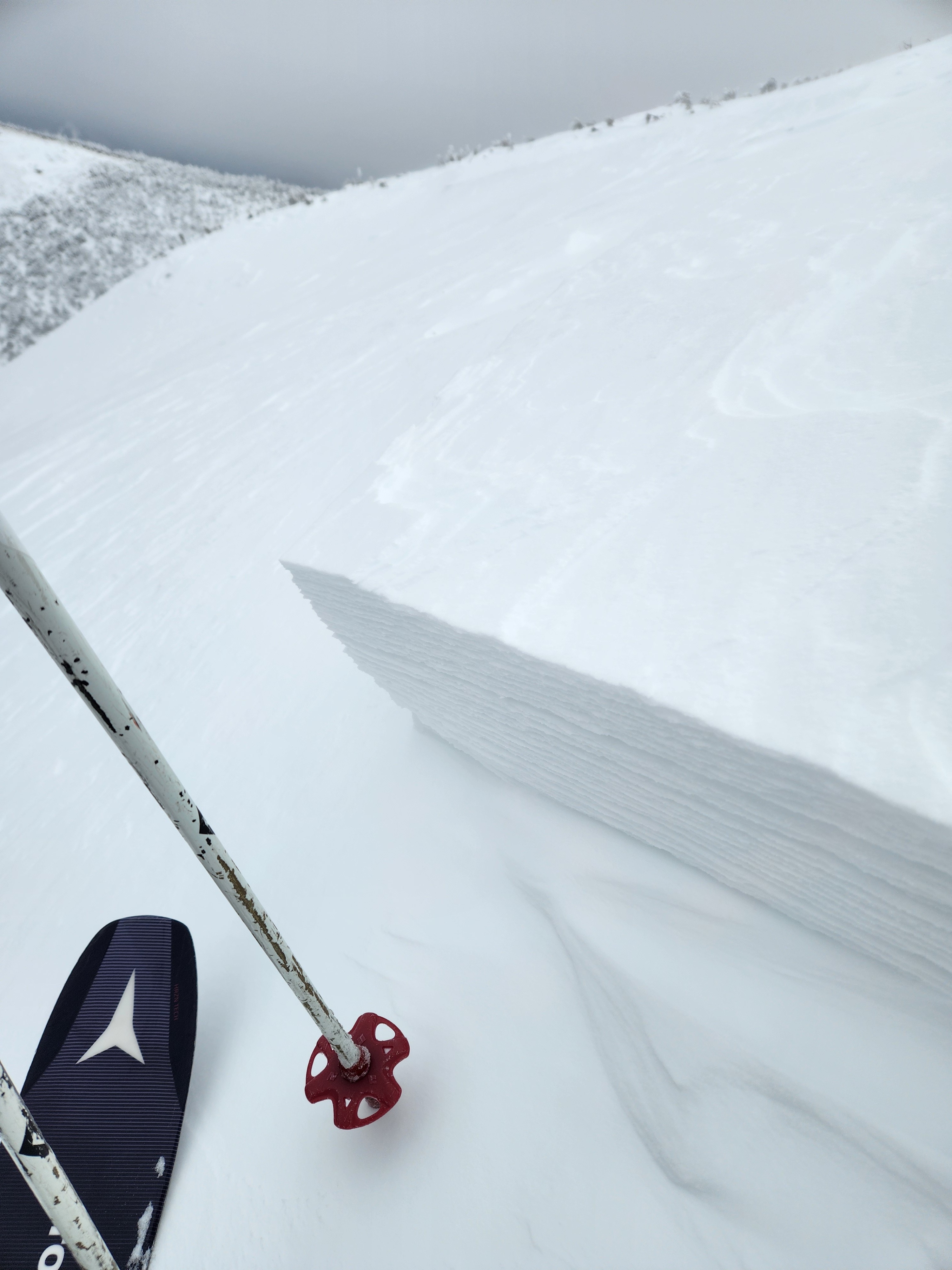
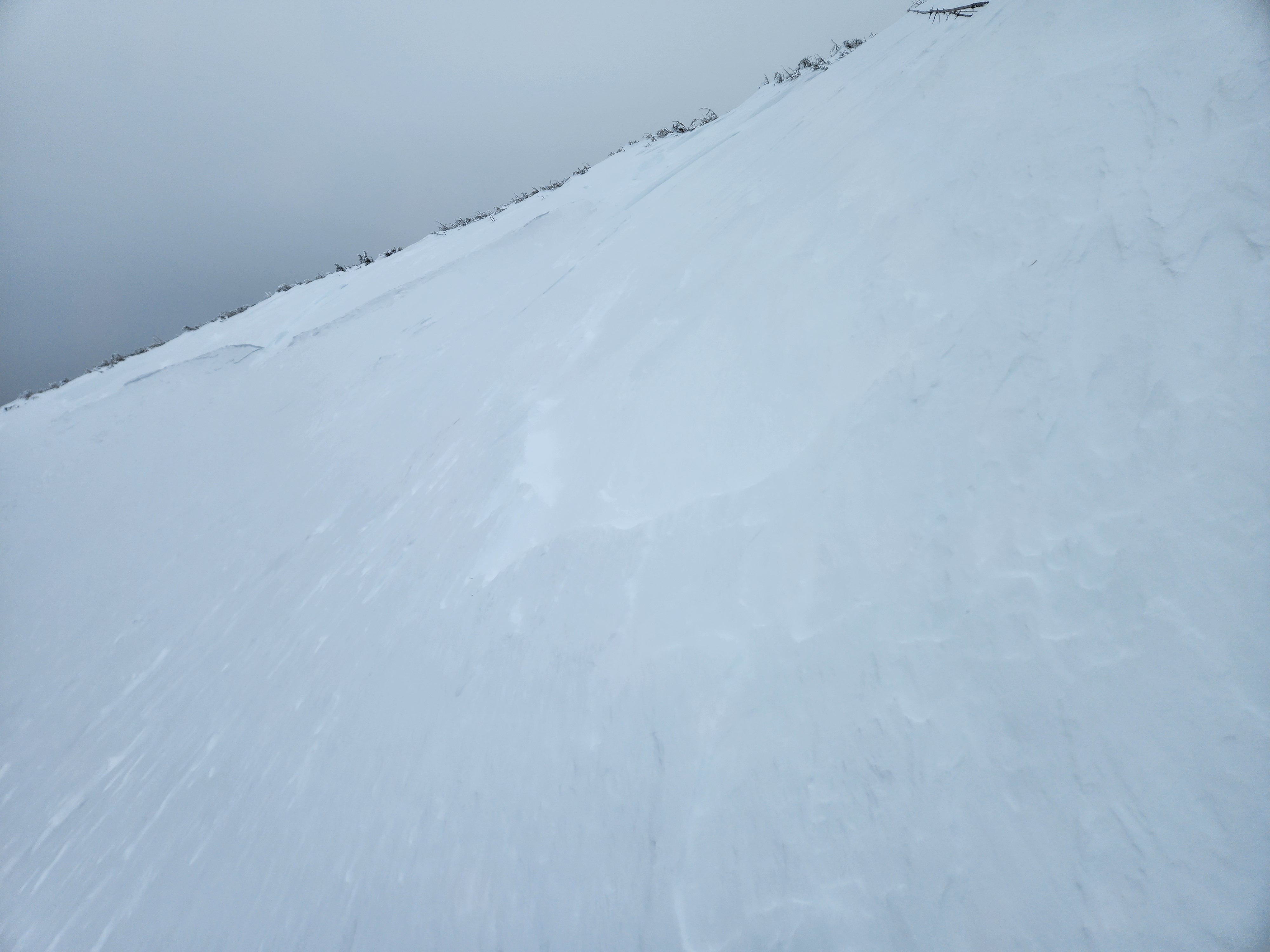
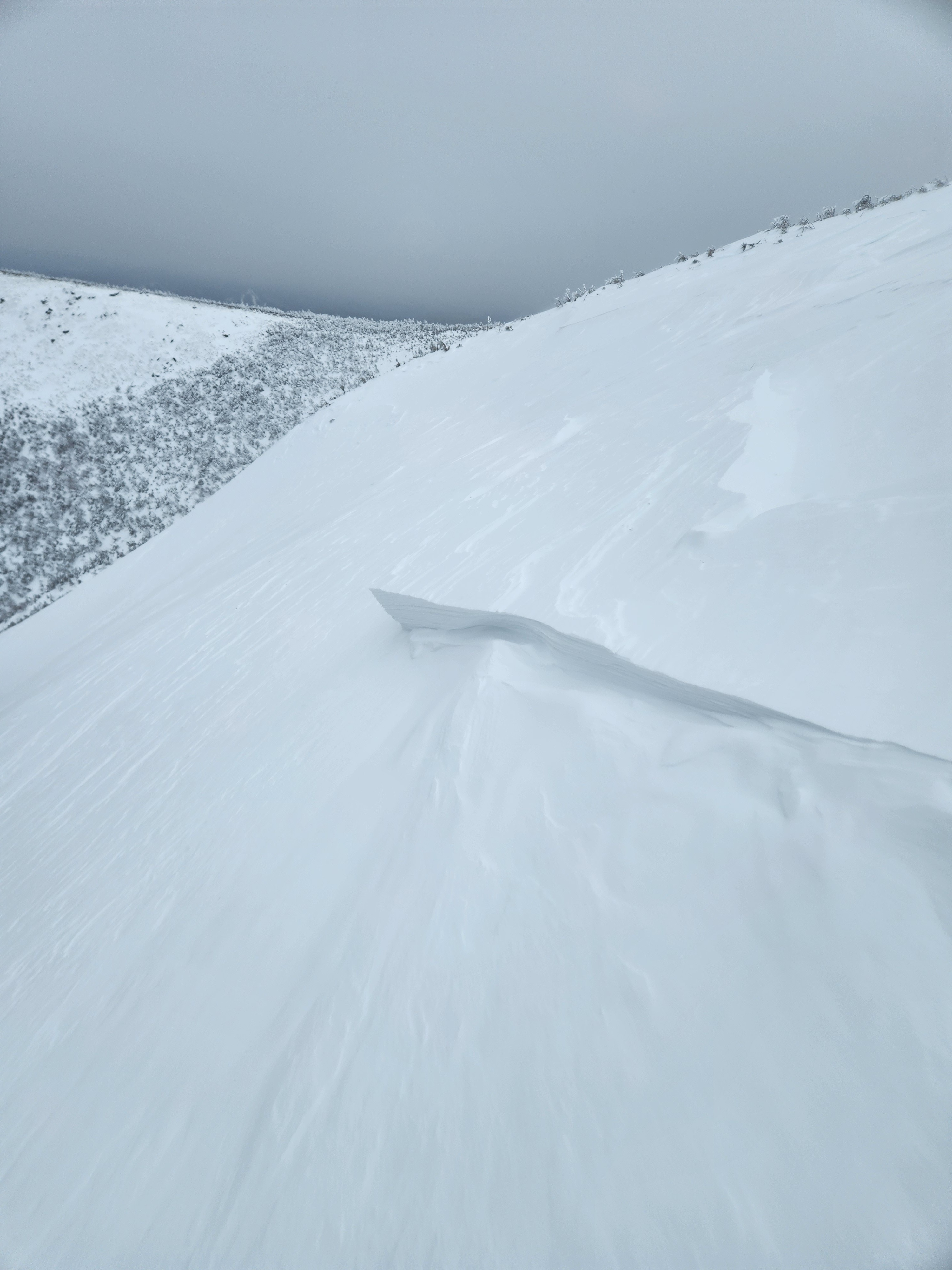
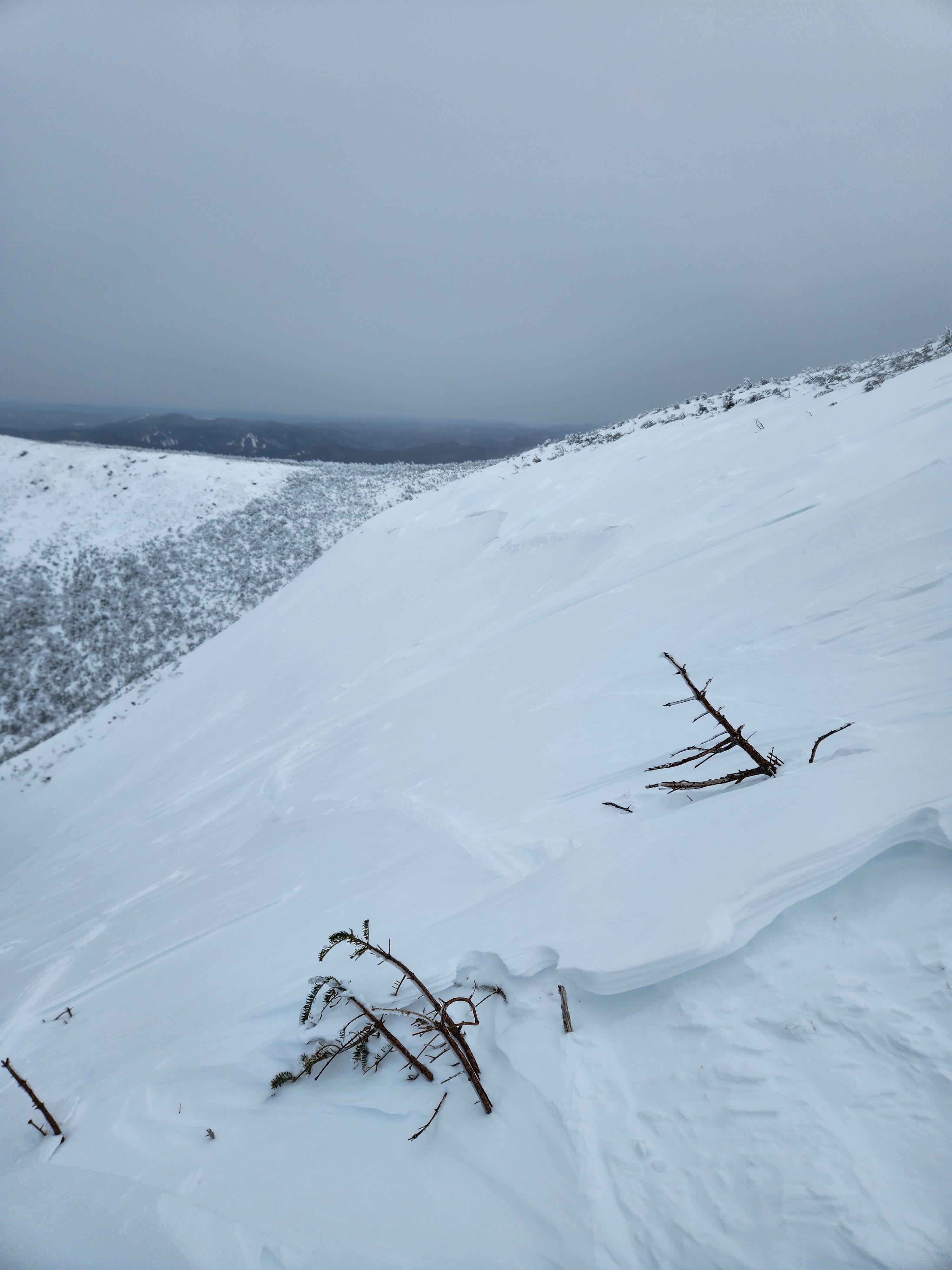
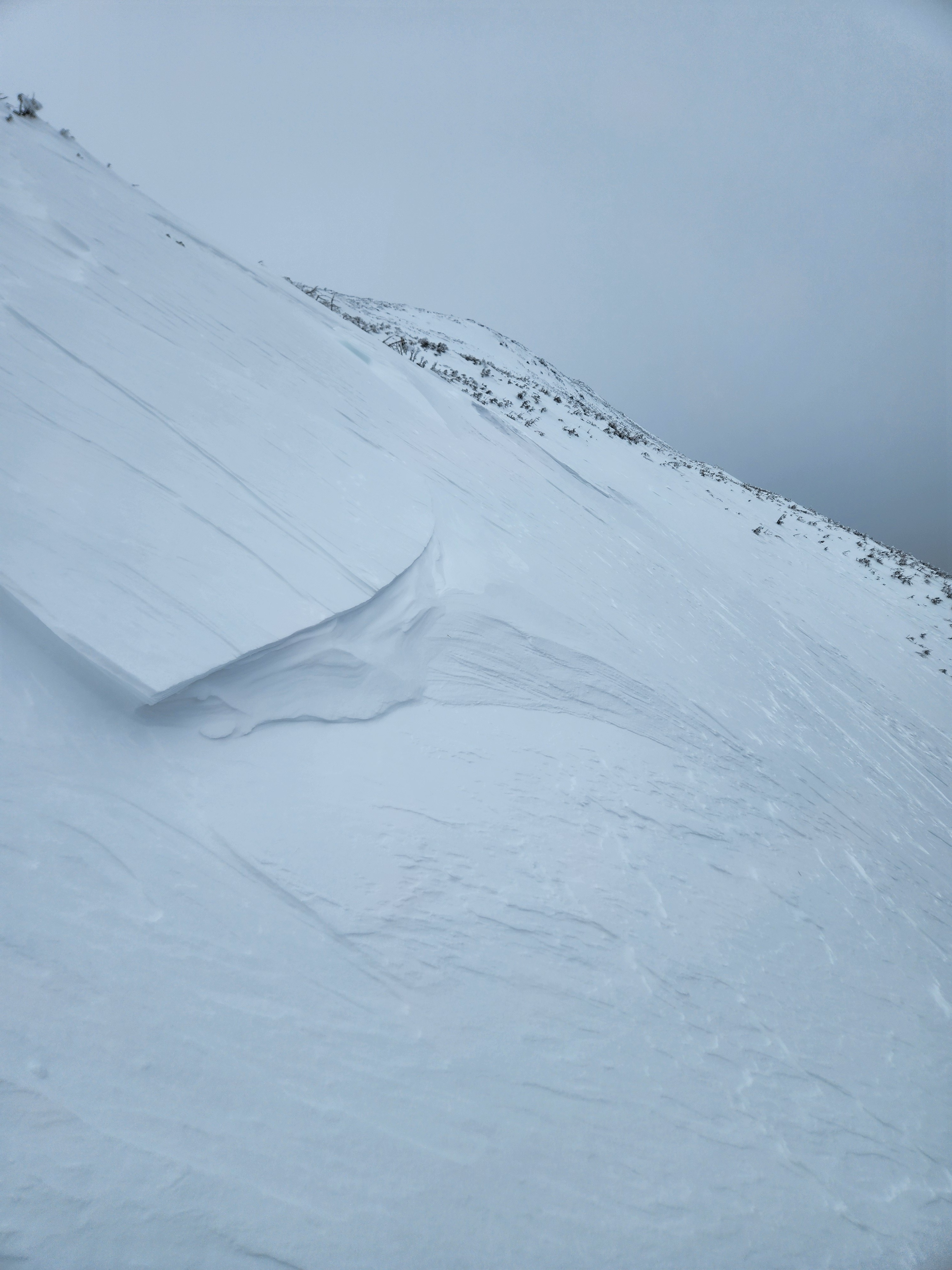
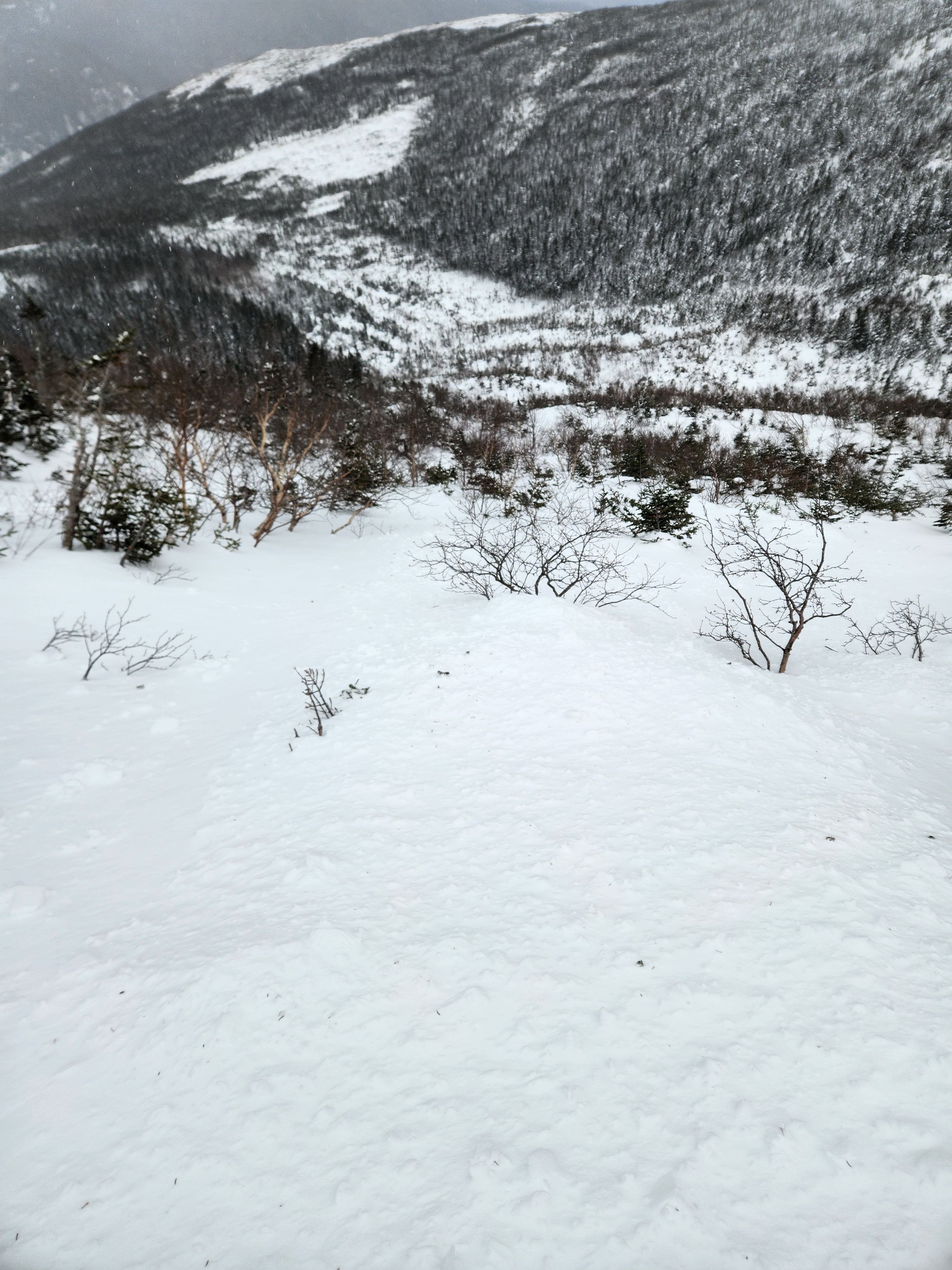
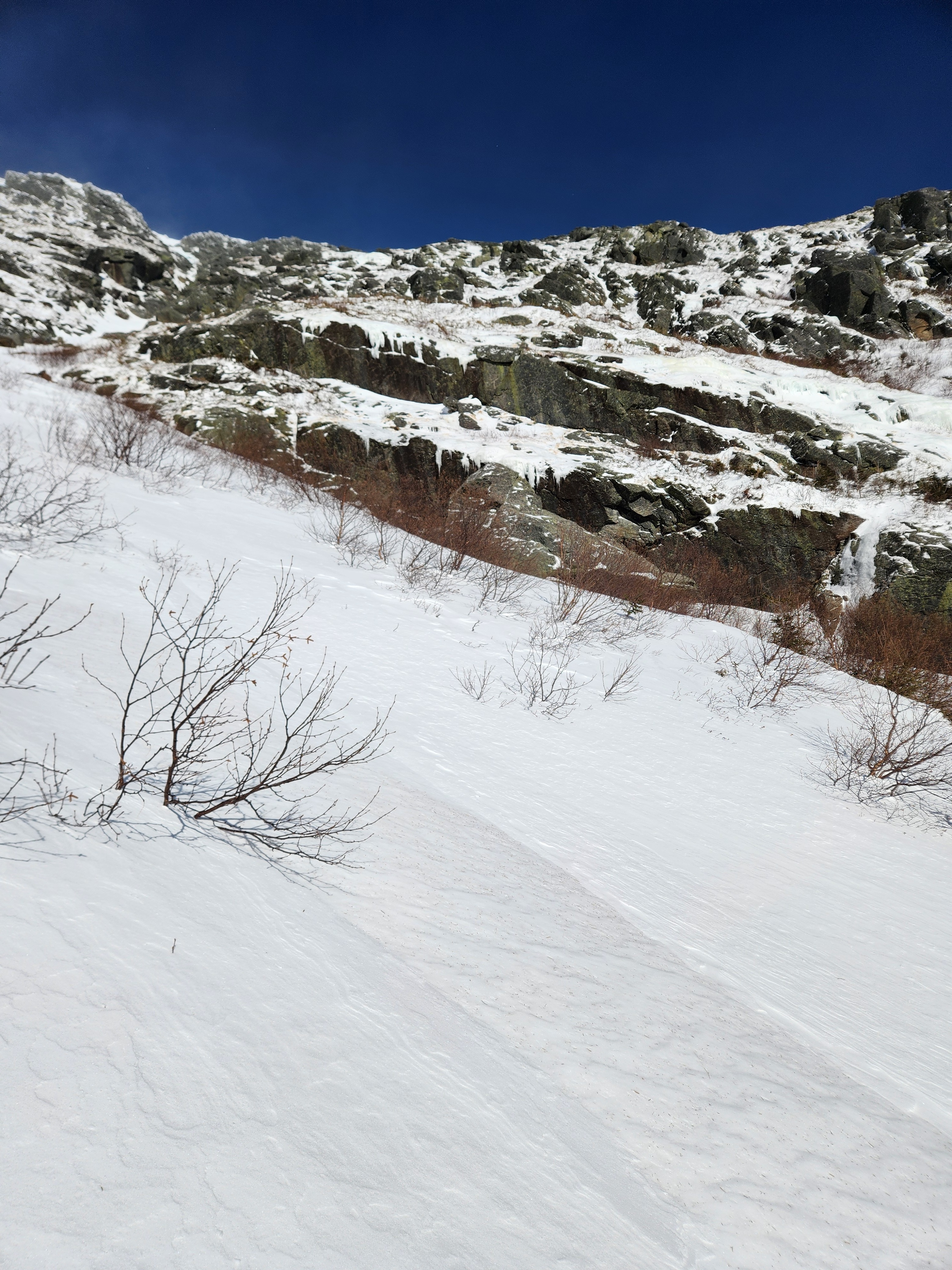
Not all avalanche forecasts pan out, and today was one of those days. A concern on today's forecast call was a lot of remaining snow available for transport, and because of that, there would be reactive and large wind slabs forming, as well as the possibility of naturals. We did not observe any wind transport or active loading, and in general found small and stubborn wind slabs in east-facing terrain. Even in the trees, there was wind effect with wind-hardened surfaces and a lot of wind texture. High in startzones the terrain was scoured. The window for naturals was likely late yesterday afternoon or overnight when the winds increased in speed.
New wind slabs D1-1.5 in size, with the potential for isolated D2s.
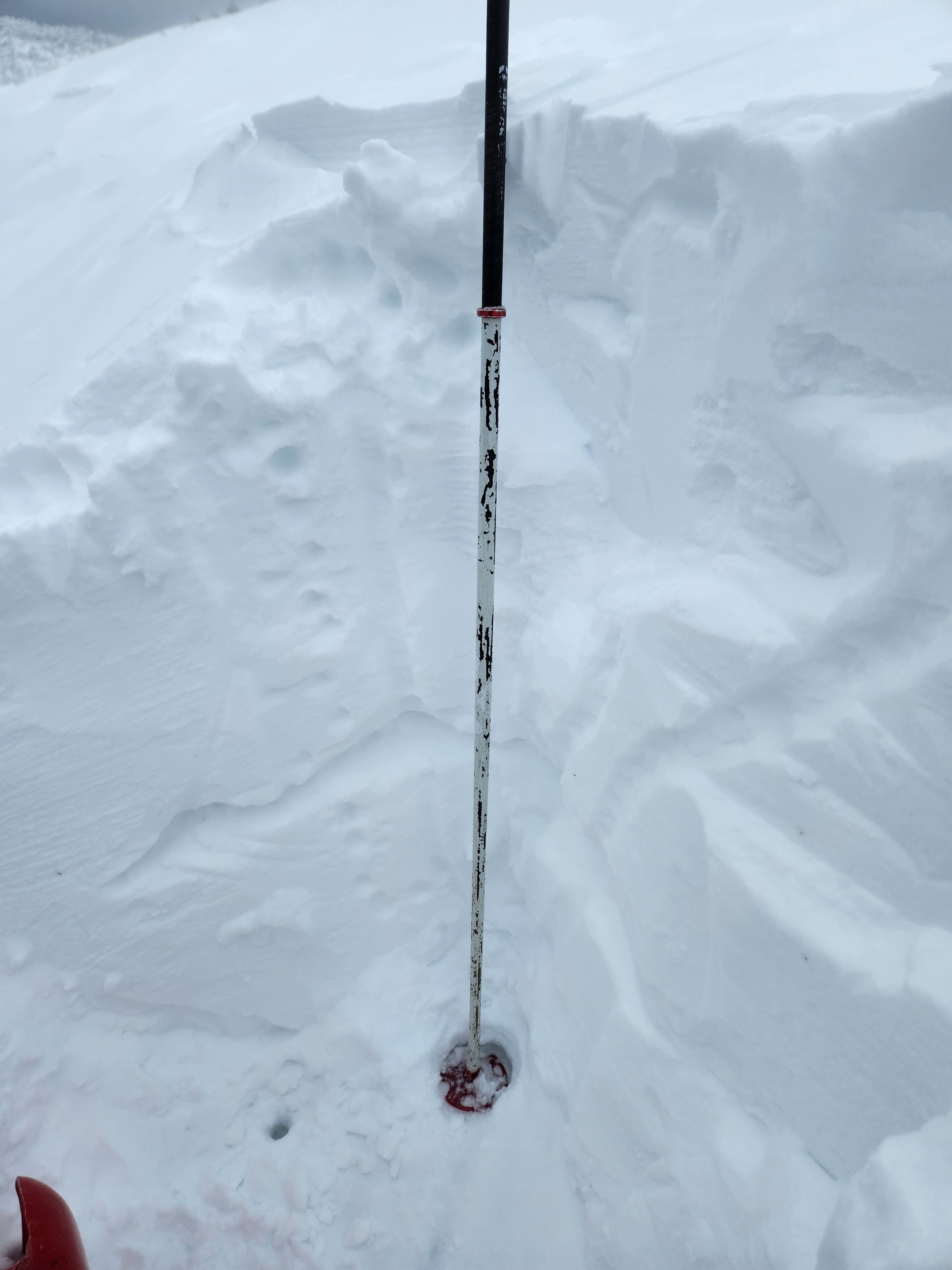
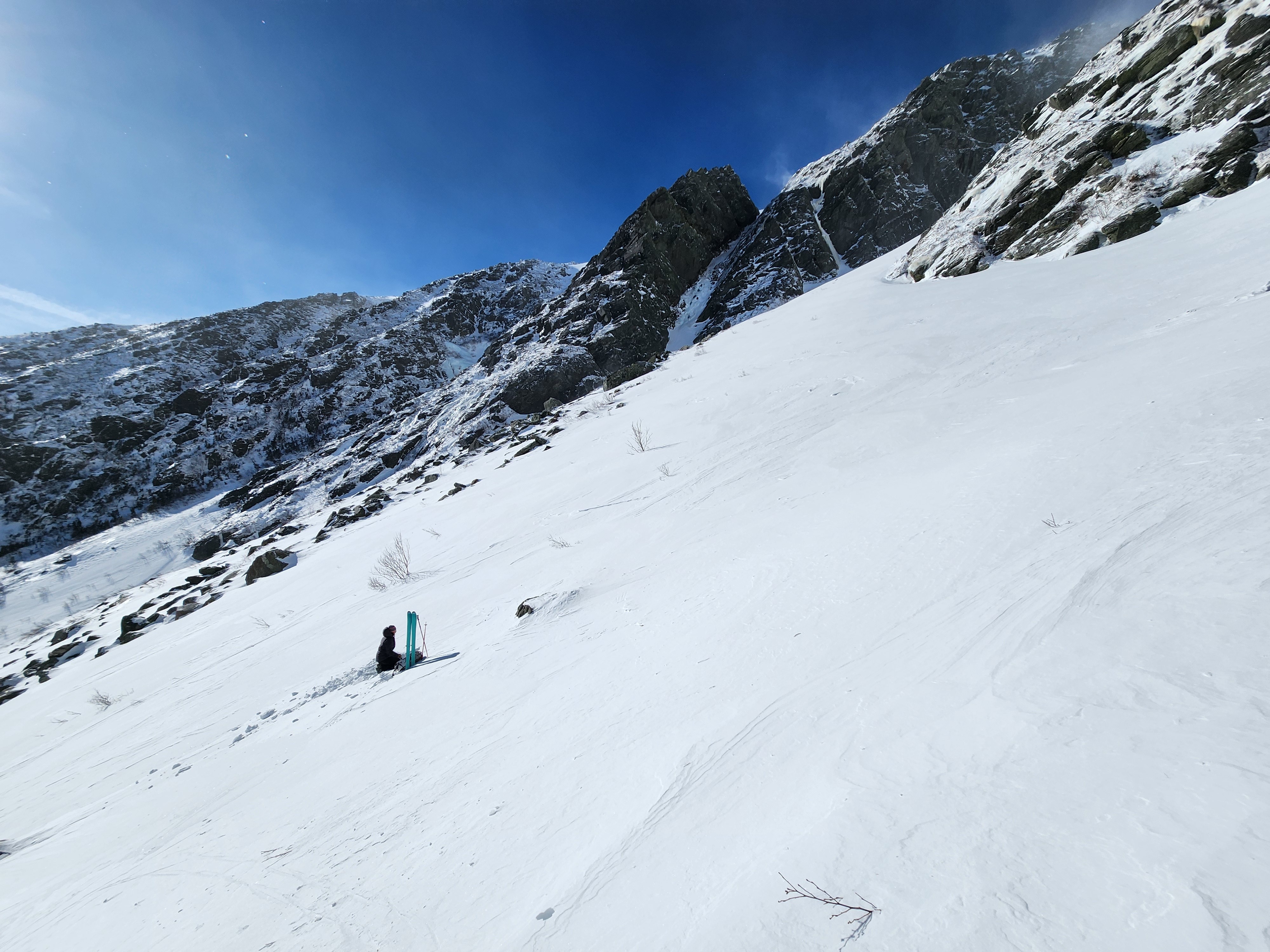
Went into Huntington Ravine to look at the PWL as an observation cited getting an ECTPV on the melt-freeze crust. Found variable snow surfaces, with slab depths ranging from 20 cm to 55 cm and some areas scoured down to the 1/10 melt-freeze crust.
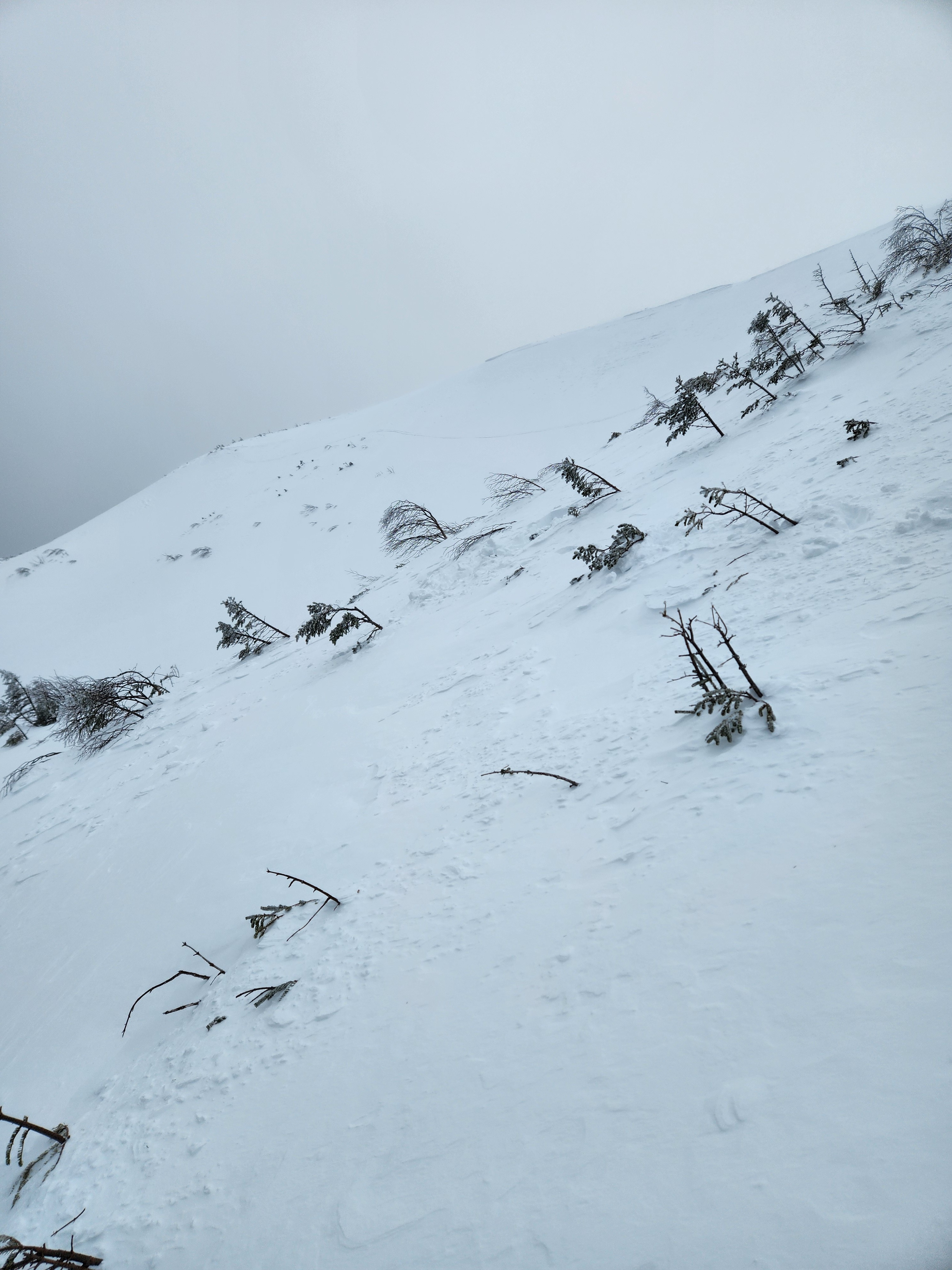
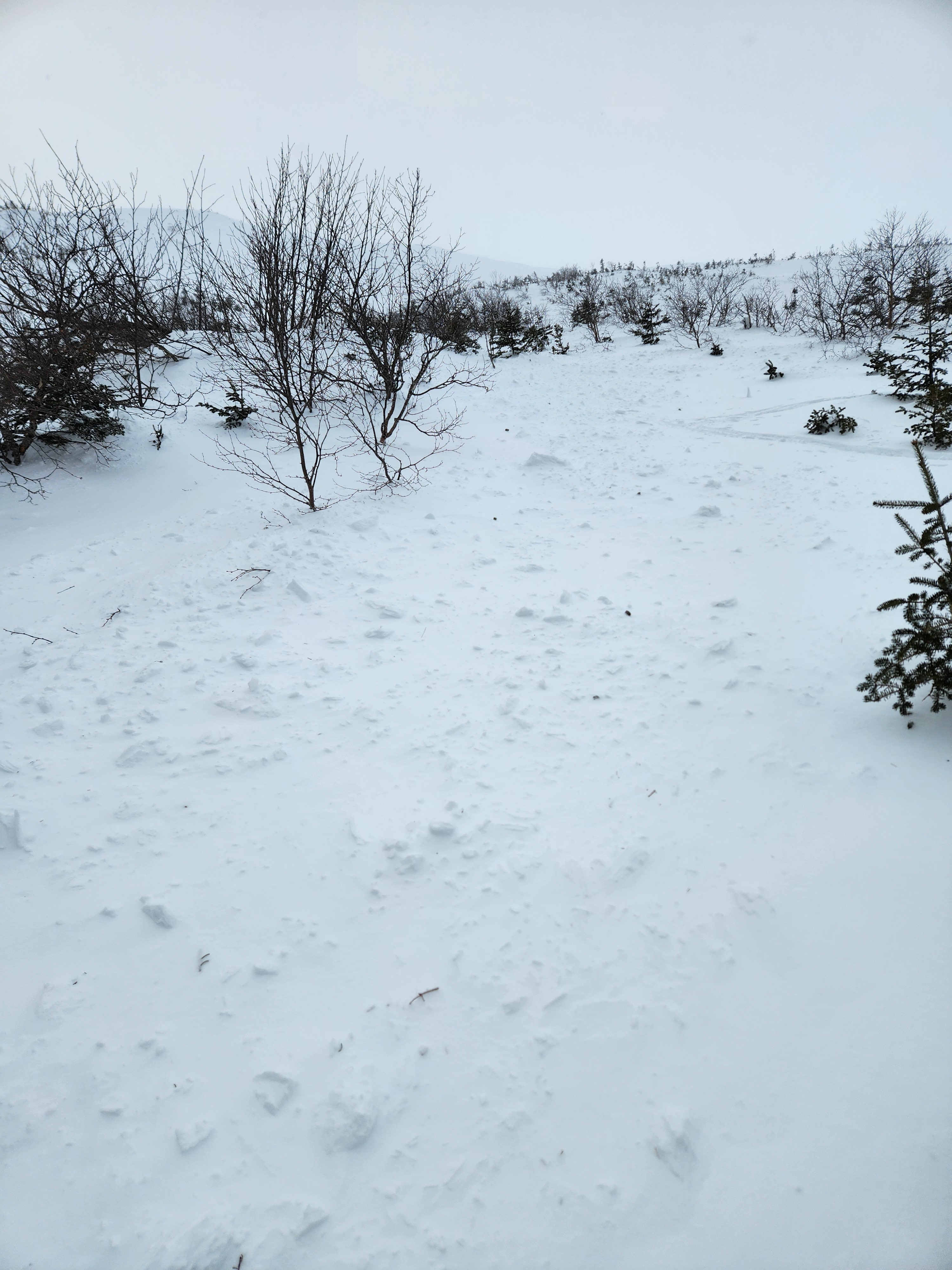
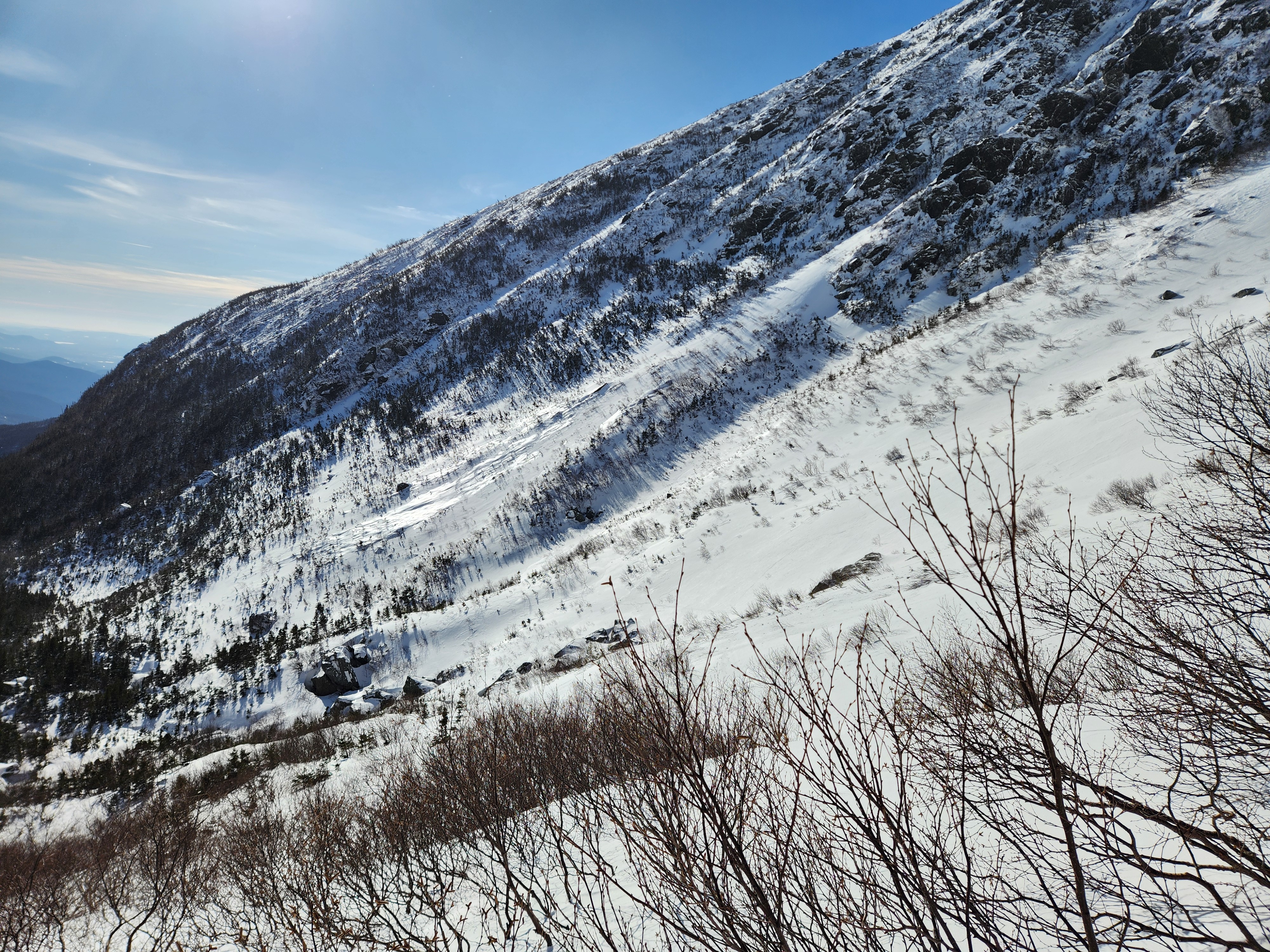
Also went into Gulf of Slides as typically, the Snowfields is terrain that is productive during persistent slab cycles. The melt-freeze crust was found at variable depths, from exposed to the surface to 25-60 cm in depth. The deeper areas were in sheltered and treed areas. There was a small crown across part of the Snowfields. Assessing this it did not step down to the melt-freeze crust in the startzone, and within the track pulled out a small pocket that stepped down to the melt-freeze crust. This did not significantly add to the size or destructive potential of this avalanche. Assessing some snow that was sheltered between crown lines, found 15-25 cm depth for the slab on top of the melt-freeze crust. This had easy failures in hand shears and a clear 3-4 cm weak layer. Unfortunatley there was not an area large enough to do a ECT to assess the propagation
Weather
- Cloud Cover
- few
- Wind Loading
- previous
- Recent Snowfall
- 1cm Hermit Lake
- Snow Avail For Transport
- none
Blue Skies AM - High level clouds flitered in around 1pm eventually becoming overcast and decreasing visibility with flat light and light snowfall. Winds were negligible below treeline but noticable above.
Snowpack
Huntington:
surface slab 6cm pencil
thin 1 cm weak layer
25 cm pencil hard slab
1 cm weak layer
1/10 melt-freeze crust
The slabs on top of the melt-freeze crust in Huntington Ravine ranged from 20 cm to 55 cm, with the deeper areas being in more treed areas and sheltered- also in some of the treed areas, the crust was thinner or non-existent (or very stout and on the surface). In the areas we dug into the snow both formally and with hand shears, it almost seems like this interface needs more time to weaken- and with persistently cold temperatures on the forecast, it is an interface to continue to track. The slabs on top of it are firm, but they don't seem incredibly well-connected in some areas. CTN and ECTX. While there was no fracture quality to observe, the shear was clean and planar on the 1/10 melt-freeze crust interface.
From visual observations, we saw scoured and wind textured startzones, with areas of bright white snow midpath. These were not particularly large and pillowy looking, but the areas of smooth snow should still be assessed in steep terrain.
Gulf of Slides:
Dug down to the MF crust at the Crownline (approximately 75cm down)
New snow that had filled in just below the crown was 5cm of F hard snow on a pencil hard layer to the crust except for a 3cm layer of 1F snow approximately 25cm above the 1/10 MF crust.
Avalanche
Observed a shallow but long crown line several hundred feet long across the top of the GOS snowfields with widespread mostly soft slab debris in the runout. The crown line was mostly filled in and the new snow surface was a mix of exposed soft debris and wind hardened snow (wind board up high but breakable wind crust lower down in the track). This path likely cycled naturally yesterday or last night due to new wind slab formation. It did not appear to step down to the 1/10 MF crust. Likey D1.