
Quick report
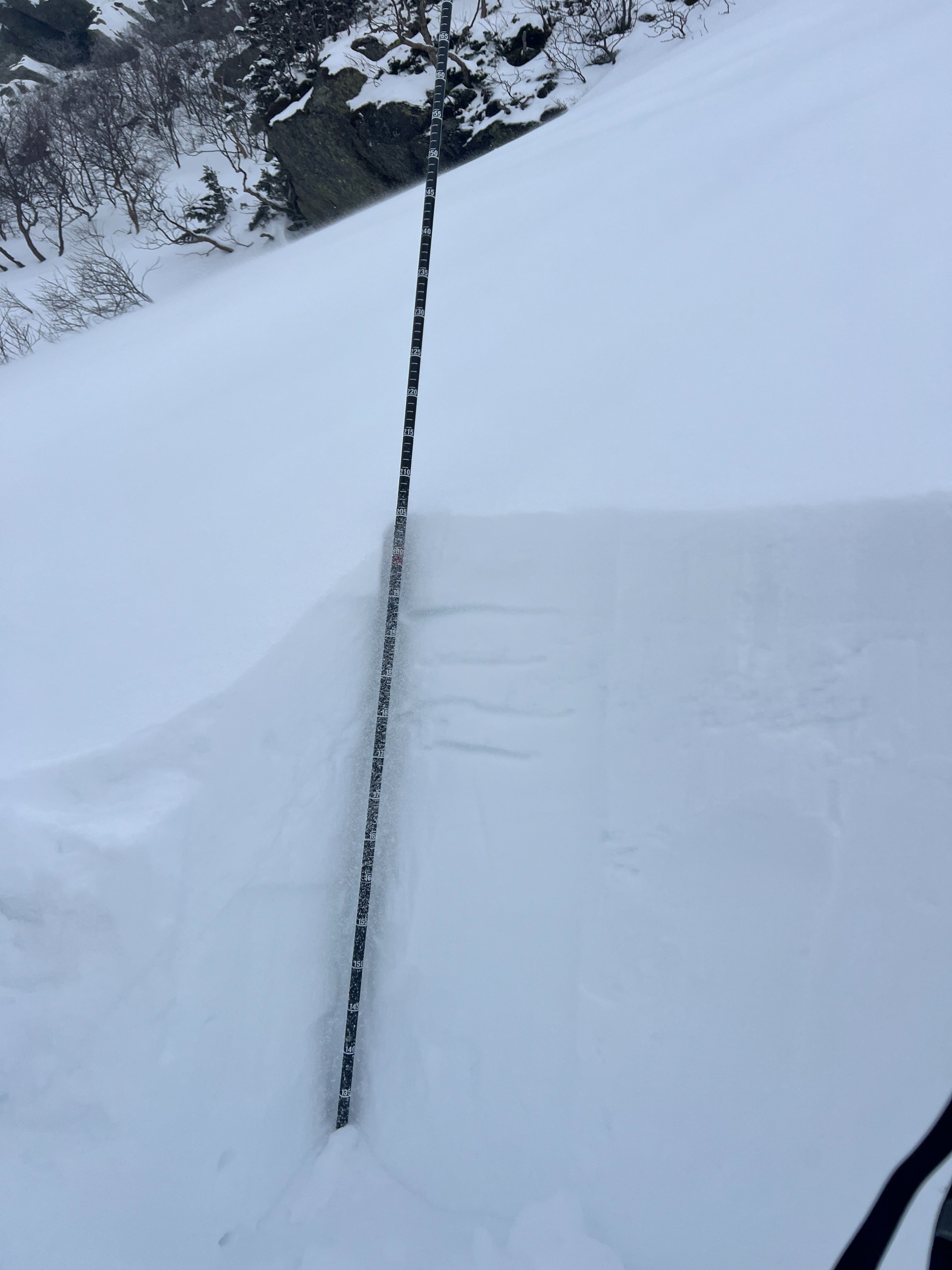
Observed consistently distributed storm snow that is about 5 inches in depth and is on top of a pencil hard melt-freeze crust. This snow had no wind effect and was loose, dry, and lacked cohesion or slab characteristics.
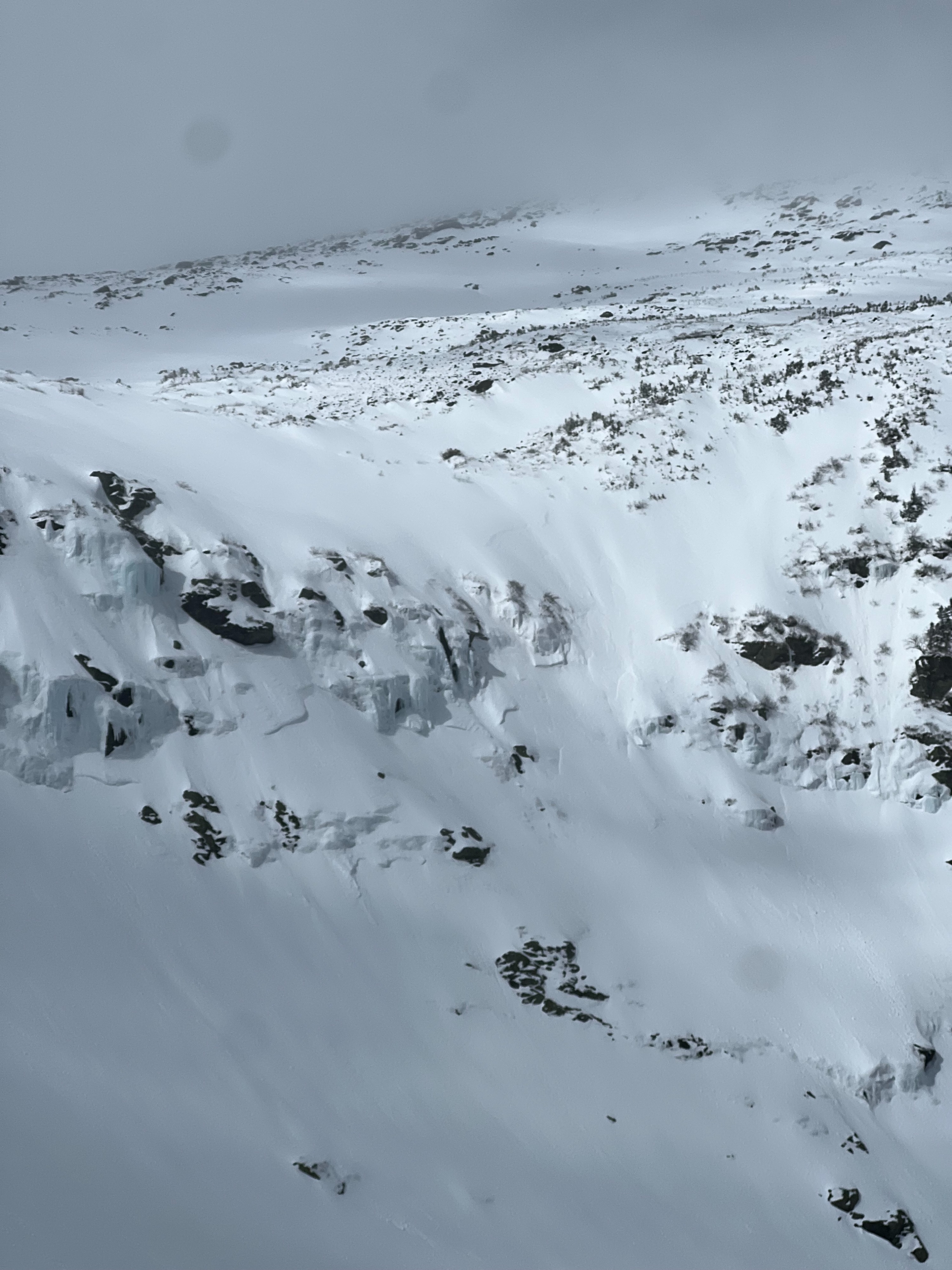
Further evidence of no loaded snow was visible remaining crownlines from the 3/10-11 cycles.
Weather
- Air Temp
- 31
- Cloud Cover
- overcast
- Wind Loading
- light
- Recent Snowfall
- 9
- Snow Avail For Transport
- moderate amounts
Cloud coverage increased through the day, there was a window of clearer skies and warming around 9:00-10:00 AM. About 10:30/11:00 a short flurry of snow began with trace accumulation. Light transport of snow on western winds was observed moving snow into Left Gully about 1:30 PM
Snowpack
In Tuckerman Ravine, observed a consistent layer of snow that was approximately 5 inches. This was mostly from the snow that came in on yesterday’s 3/15 storm. The low winds did not seem to move or affect this snow, which is explained by the unconsolidated structure that we observed and consistent snow depth.
For the snowpack itself we found a breakable melt-freeze crust that became a thin melt-freeze crust about ~4500 ft and above. Underneath this was about 5 inches of dry and unconsolidated snow on top of a thicker pencil hard-melt freeze crust.
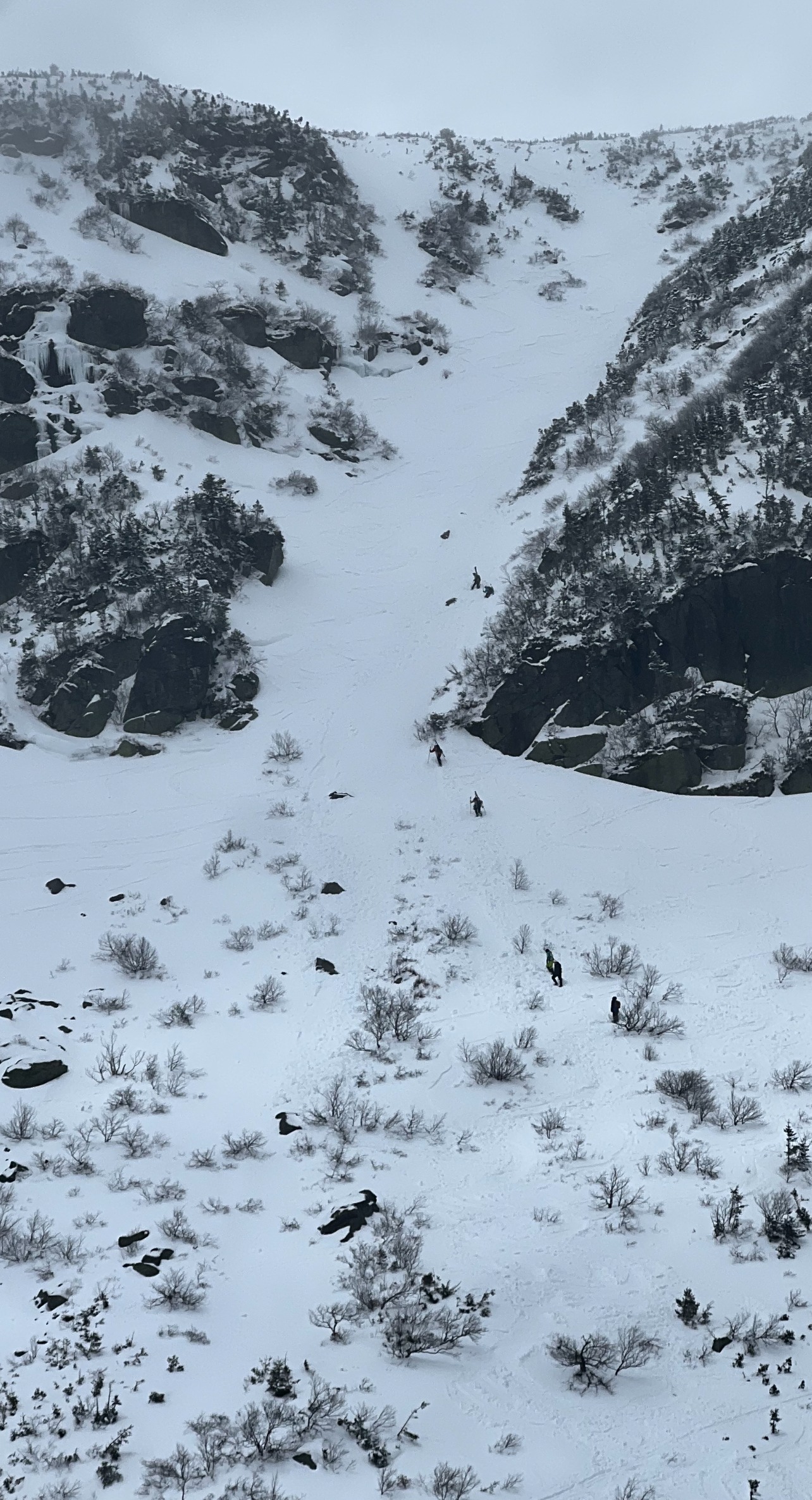
We had forecasters to the left of Left Gully looking at NE aspects and forecasters looking at SE aspects between Sluice and Right Gully. Both teams found very similar results, with a key difference being some wet loose debris that was in the runout of Right Gully and was mentioned in this observation yesterday.
Snow was drier than expected at middle elevations, but the surface melt-freeze crust helped to limit warming from the brief window of solar gain.
We discussed that the firmer melt-freeze crust 5 inches down has the potential to act as an effective bed surface as additional snow falls and winds increase and begin to transport and load this snow.
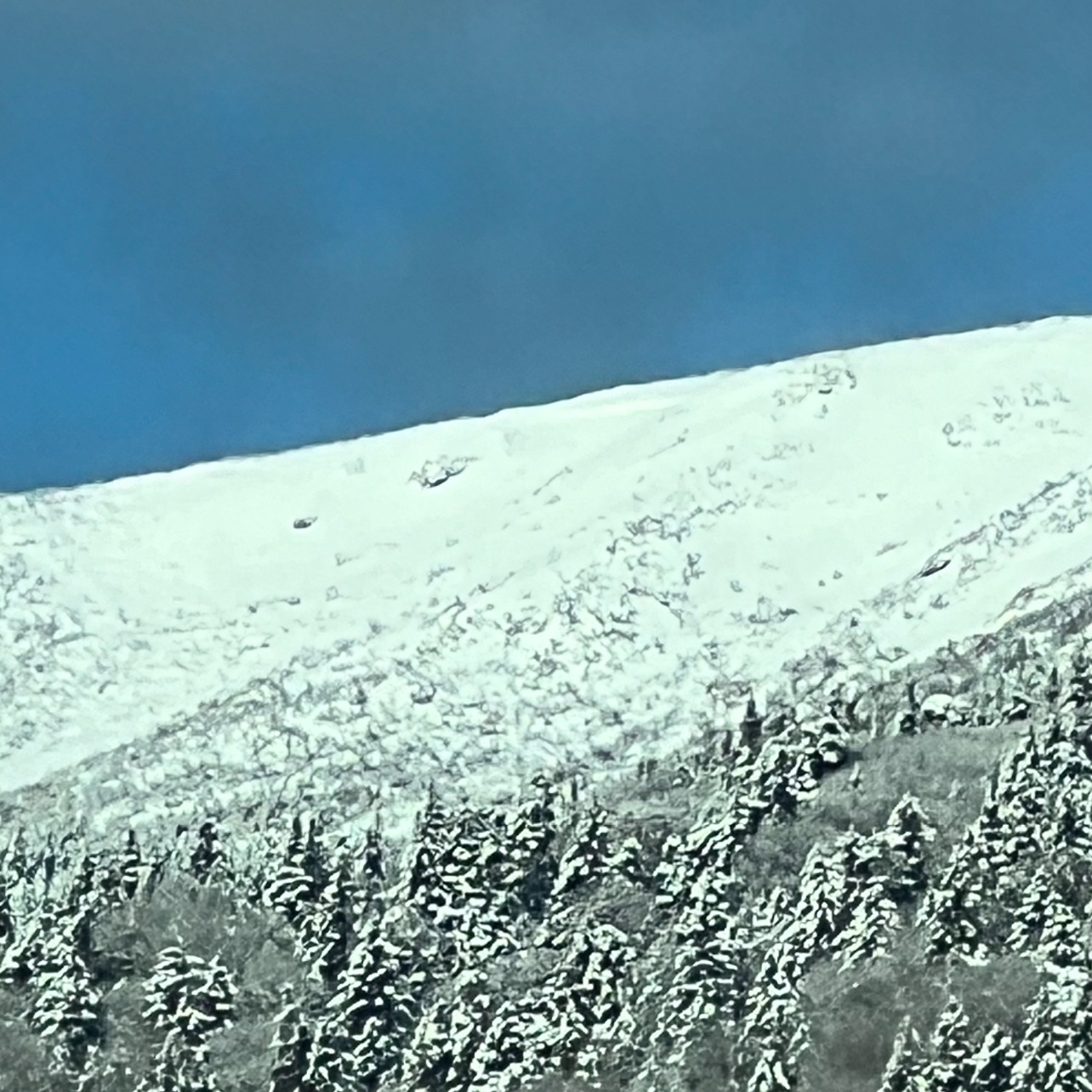
Crown lines are still visible in Sluice, the lower part of Center Headwall, Right Gully, and faintly observable across the Lip. From the road you can still see the crownline from the South Snowfields in Gulf of Slides. These are all signs that not much snow, if any, has been transported and loaded into east-facing terrain.