
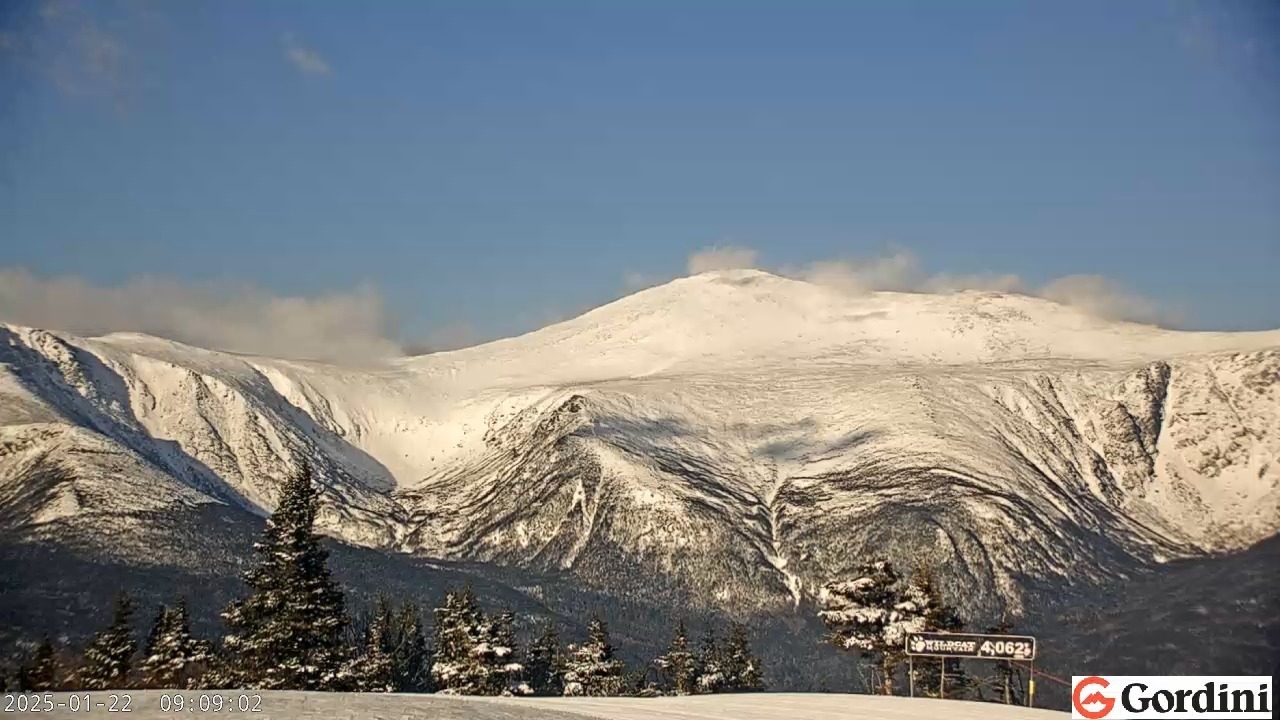
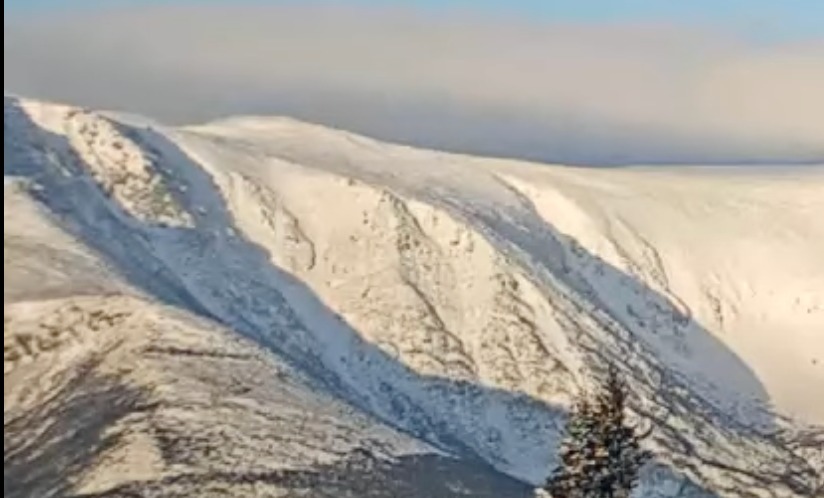
Quick report
Found the wind slabs built from snow 1/19th to be small, stubborn, and pocketed
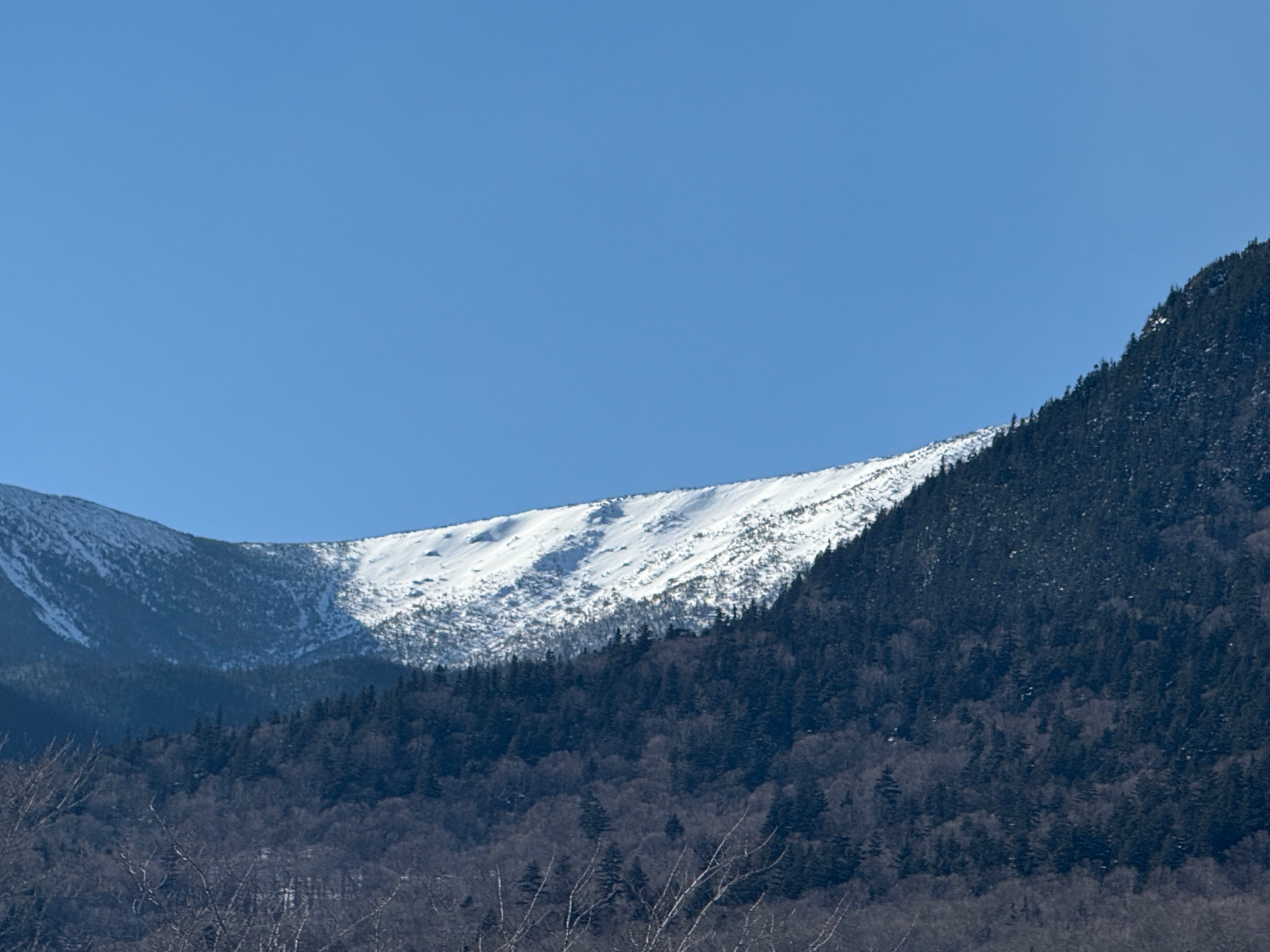
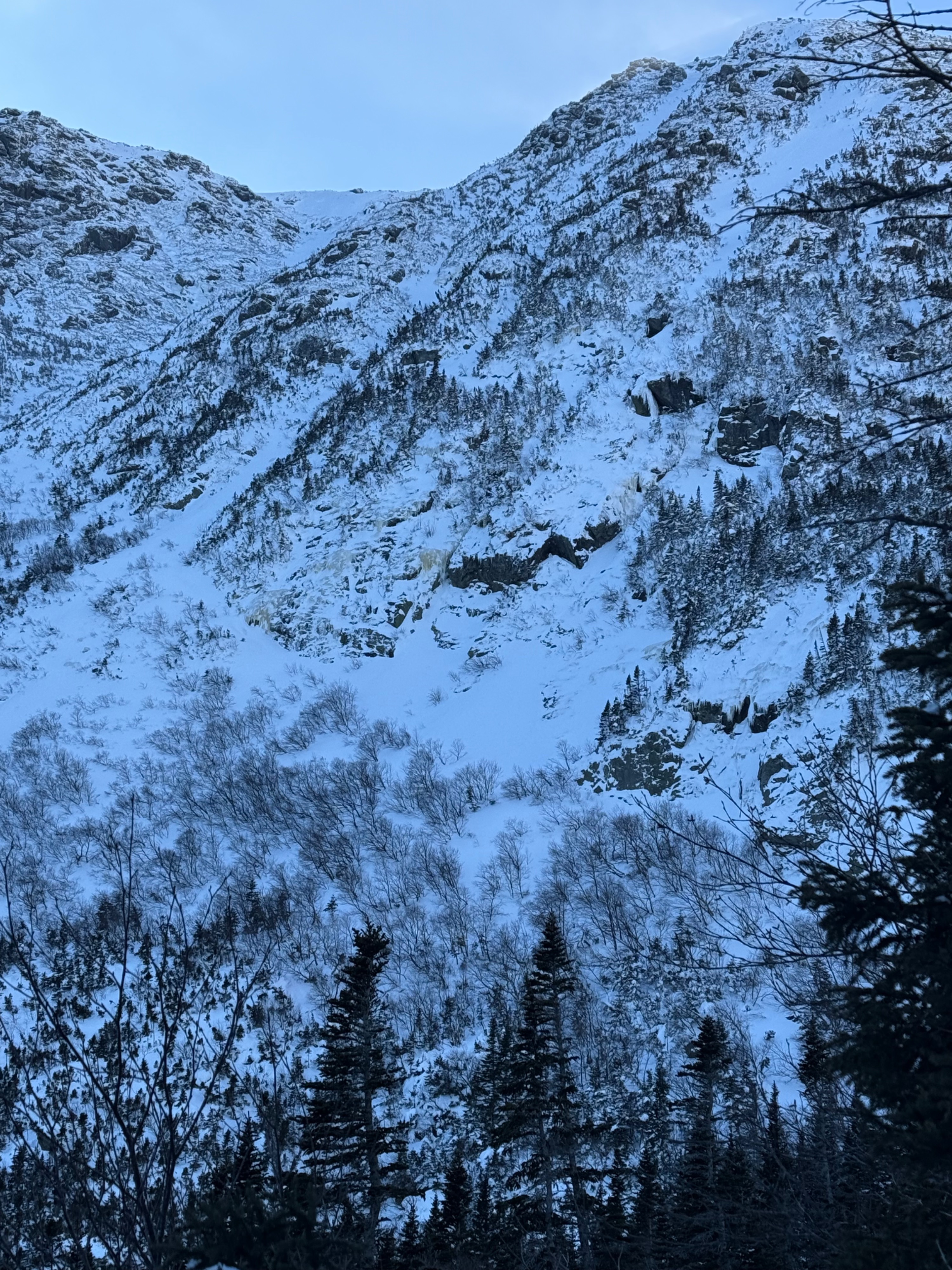
Start zones are becoming larger and more connected, terrain like Left Gully and Hillman's for example are smooth and planer and capable of producing a large avalanche with enough snow
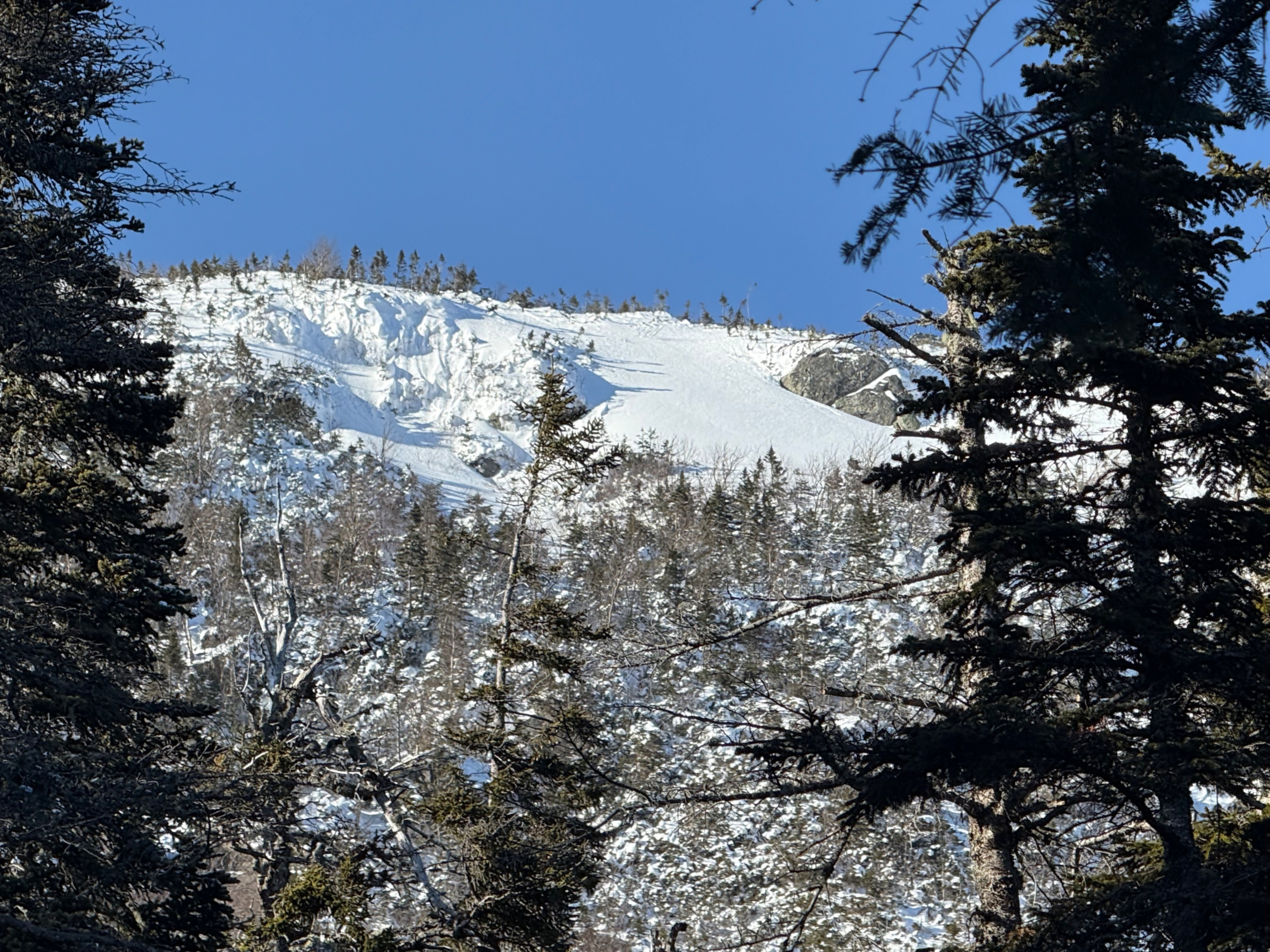
Summer Lion Head is looking larger and planar, careful evaluation is warranted as that terrain is capable of producing an avalanche and it is over a gnarly terrain trap.
Weather
- Air Temp
- -1
- Cloud Cover
- scattered
- Wind Loading
- none
- Recent Snowfall
- 0.25
- Snow Avail For Transport
- none
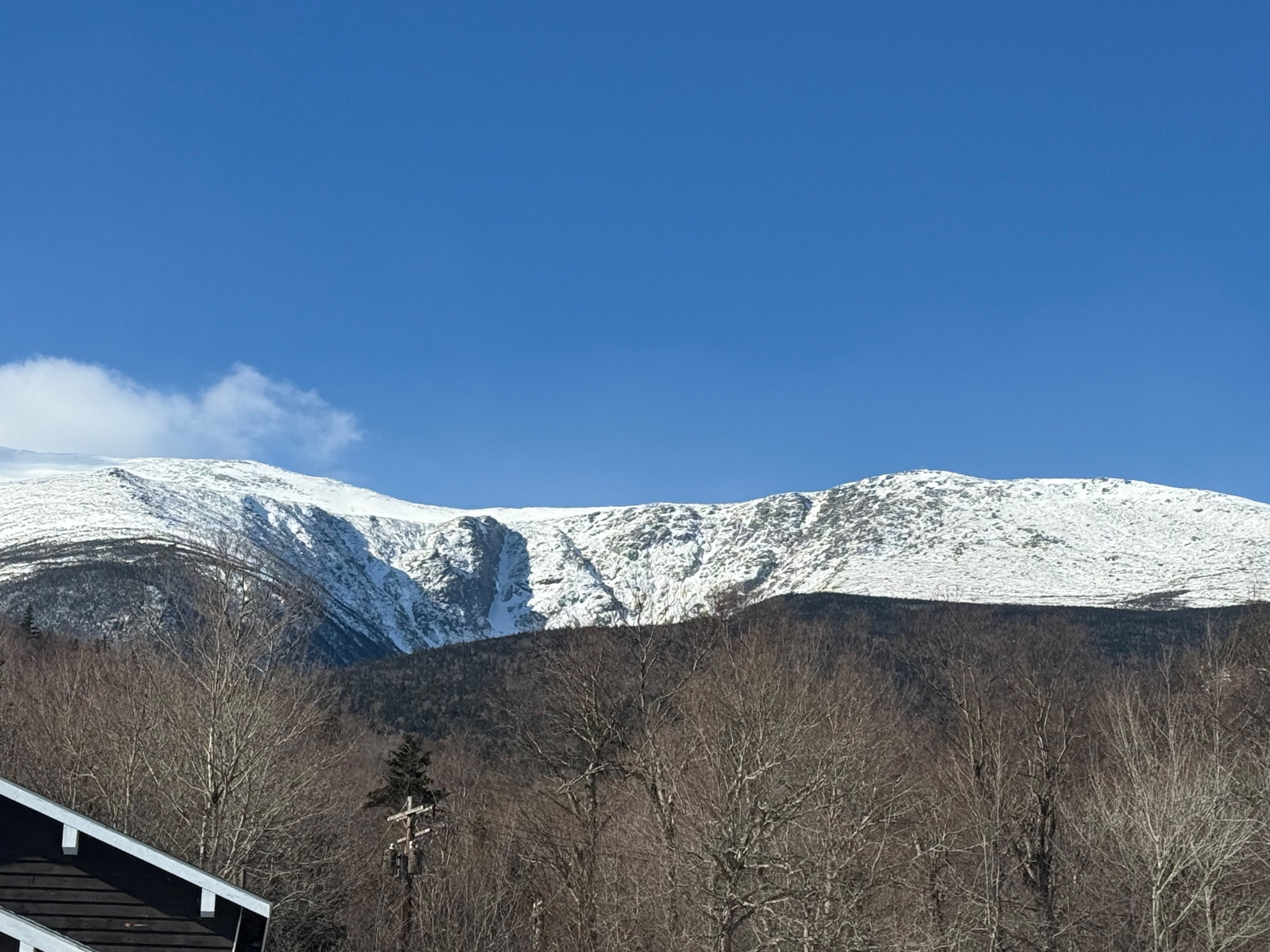
Cold and breezy! good visibility enabled visual observations. Sun was out and shining on southerly aspects, but with very cold temps was having no solar impact (nor was expected to do so). Winds felt slightly stronger in the Ravine then was expecting, winds recorded at the Summit were 20-25 mph.
Snowpack
I went into Tuckerman Ravine to look at the wind slabs formed from snow on 1/19th and to dig deeper into the snow to look at the snowpack structure and see if there were any changes from this prolonged period of cold temperatures. Coming up the Tuckerman Ravine Trail could see where cracks had previously happened in the surface snow, undisturbed snow either did not crack, or only cracked right underfoot.
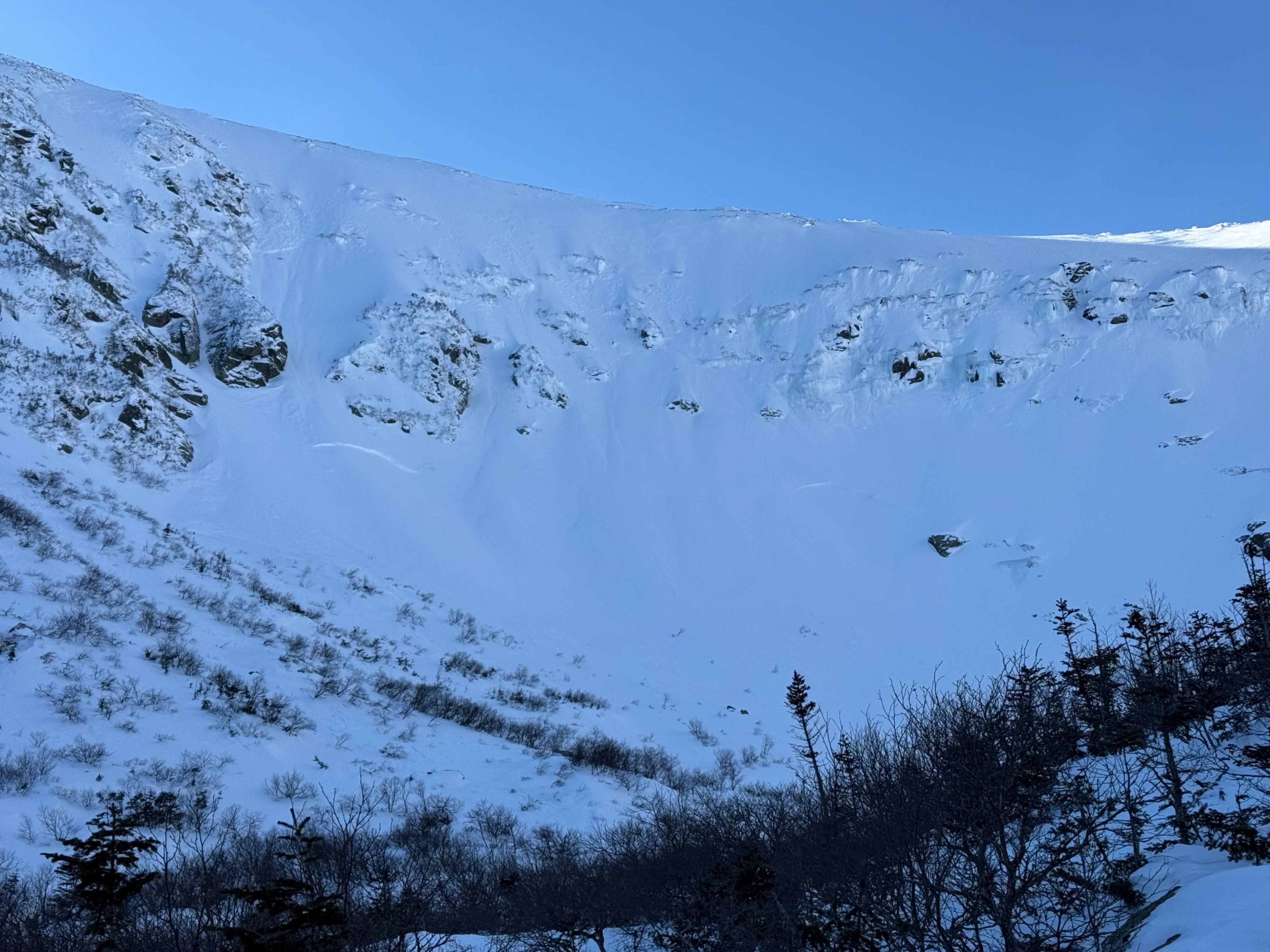
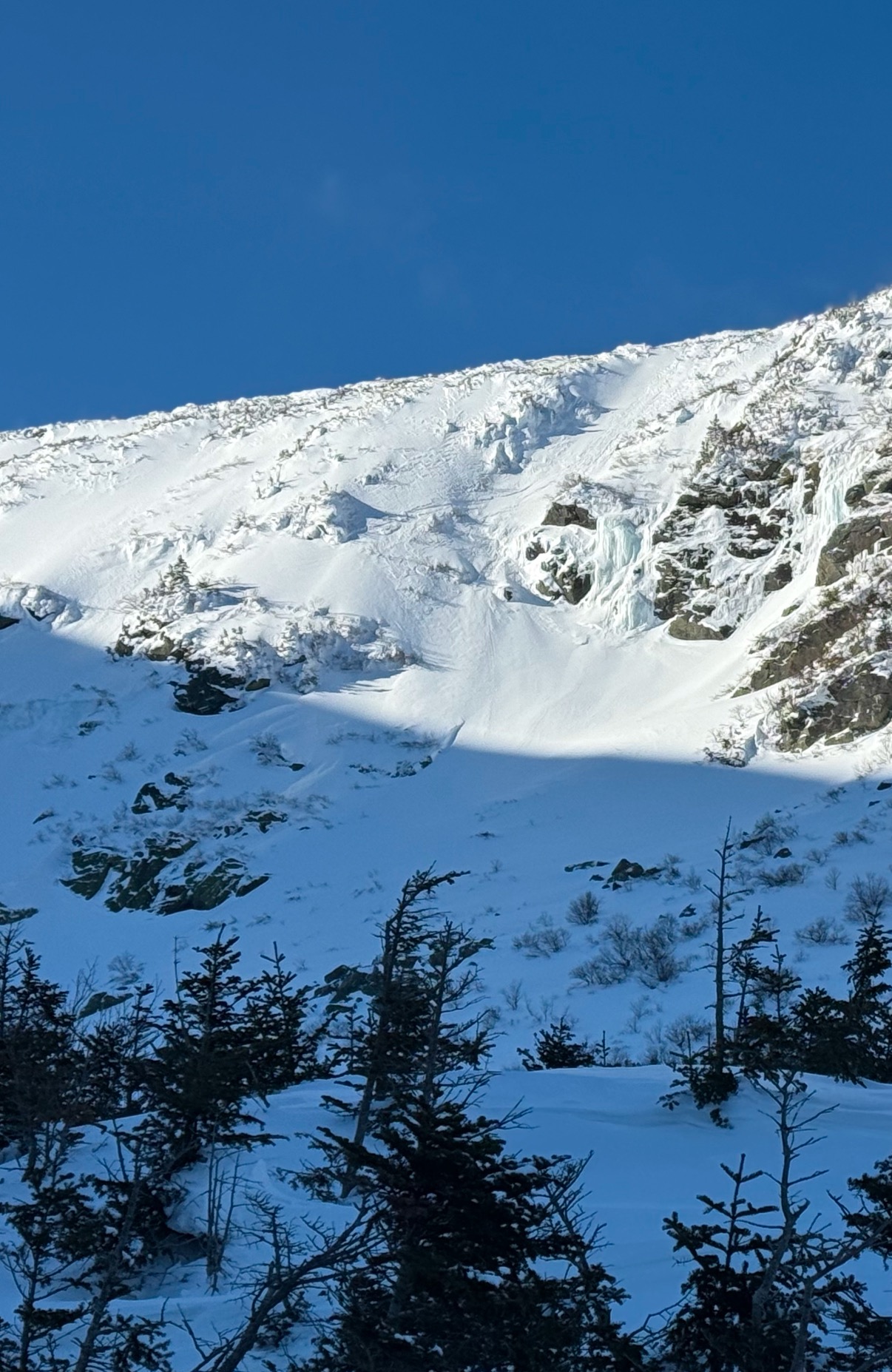
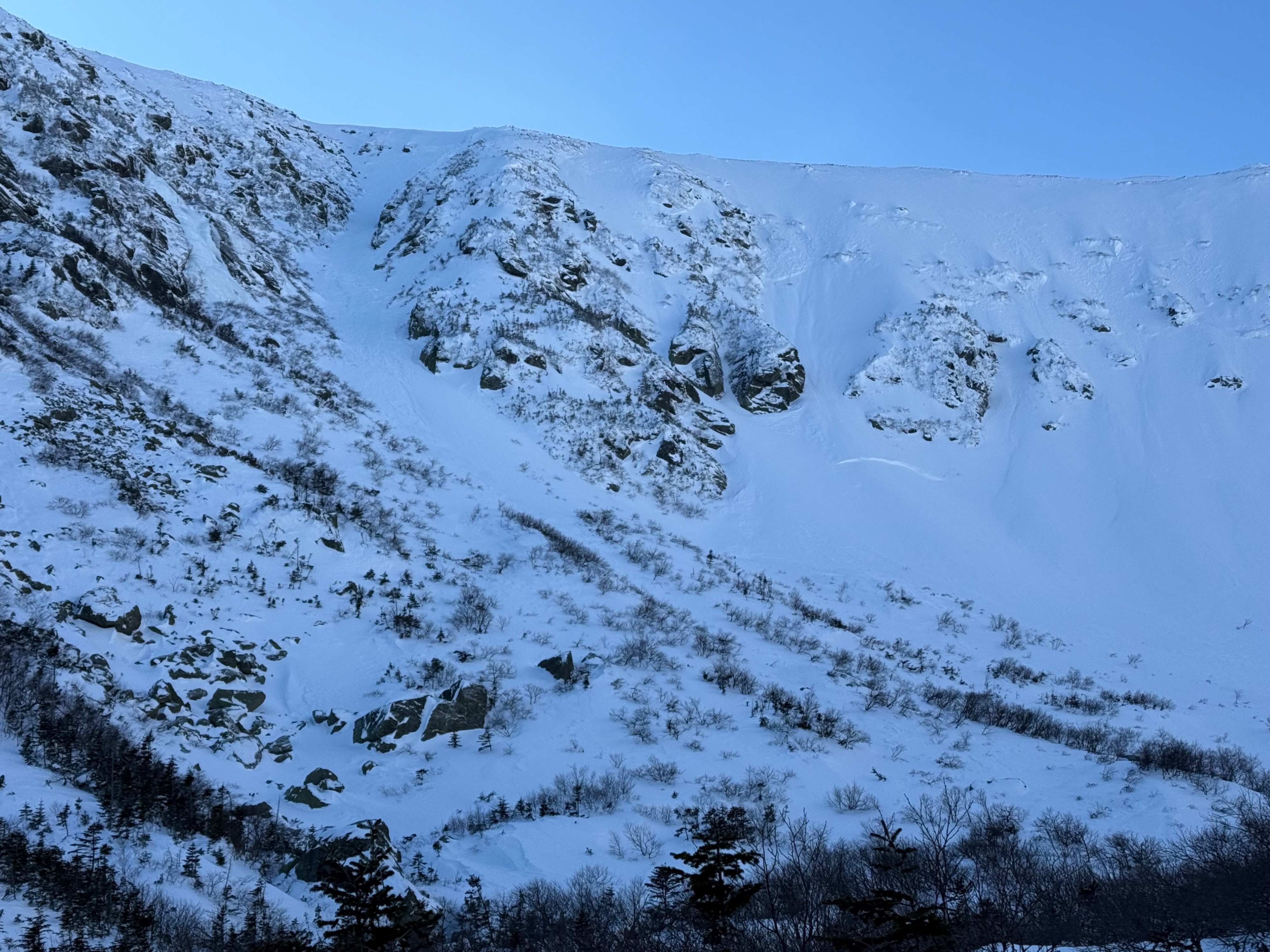
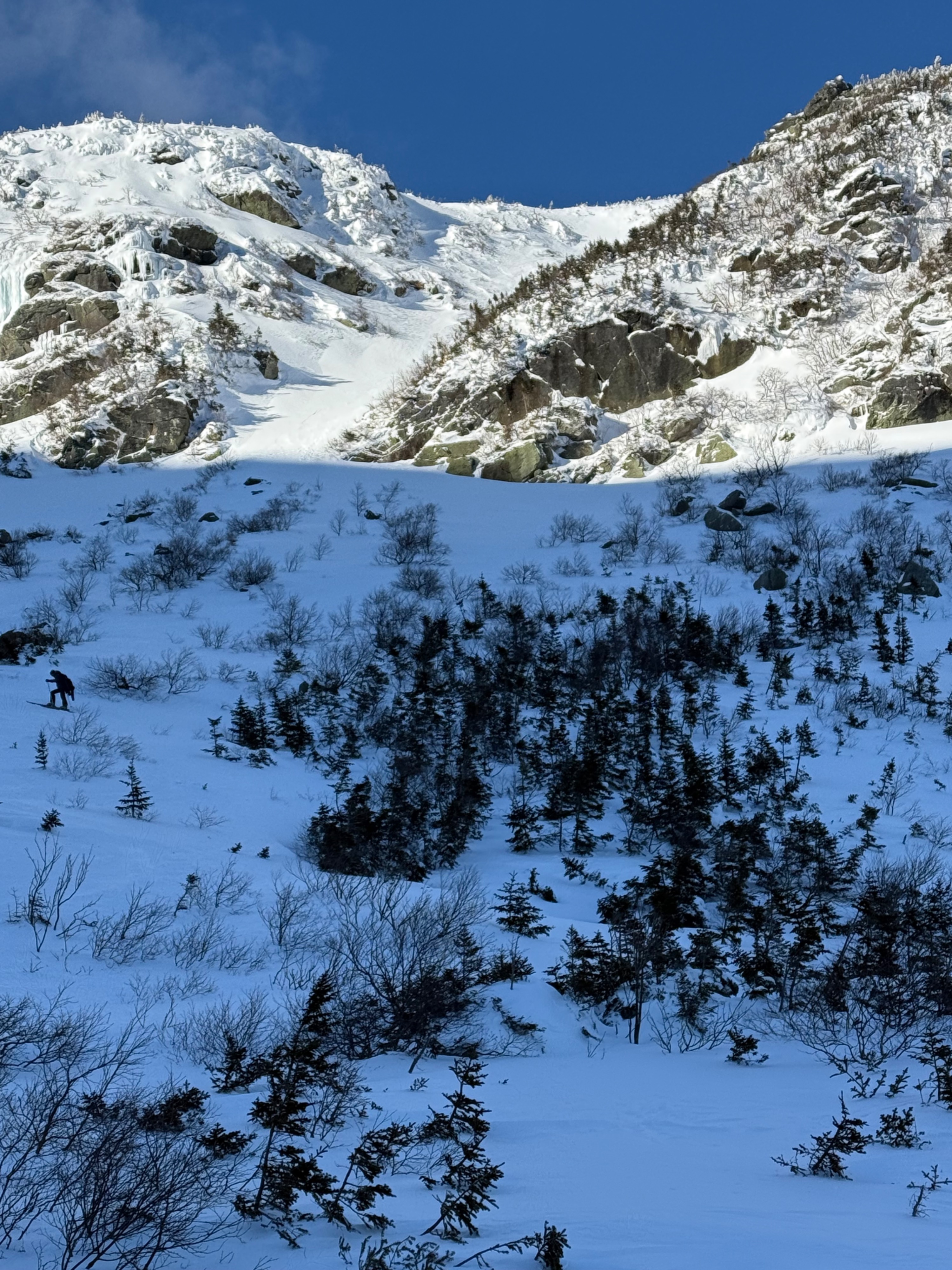
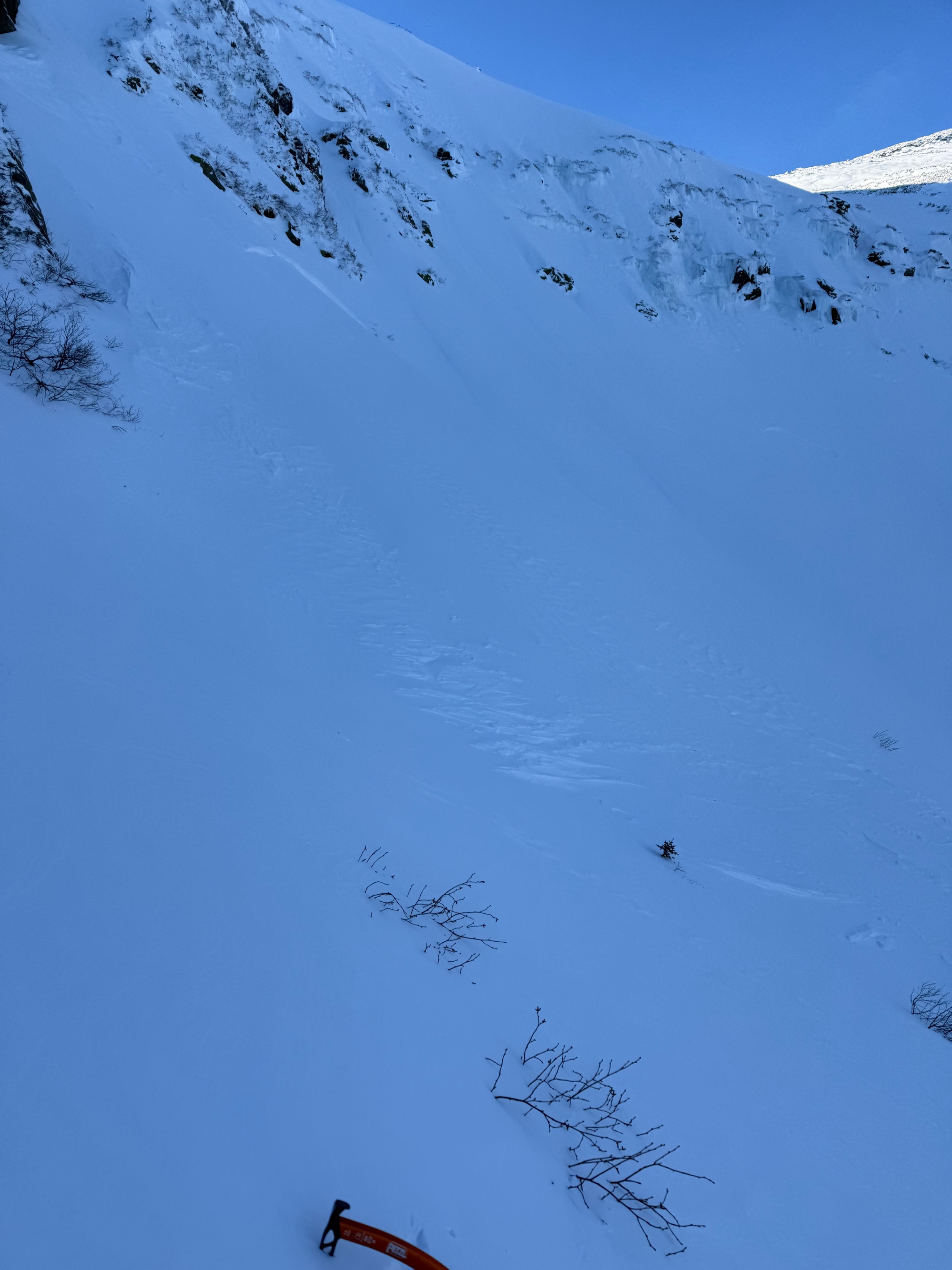
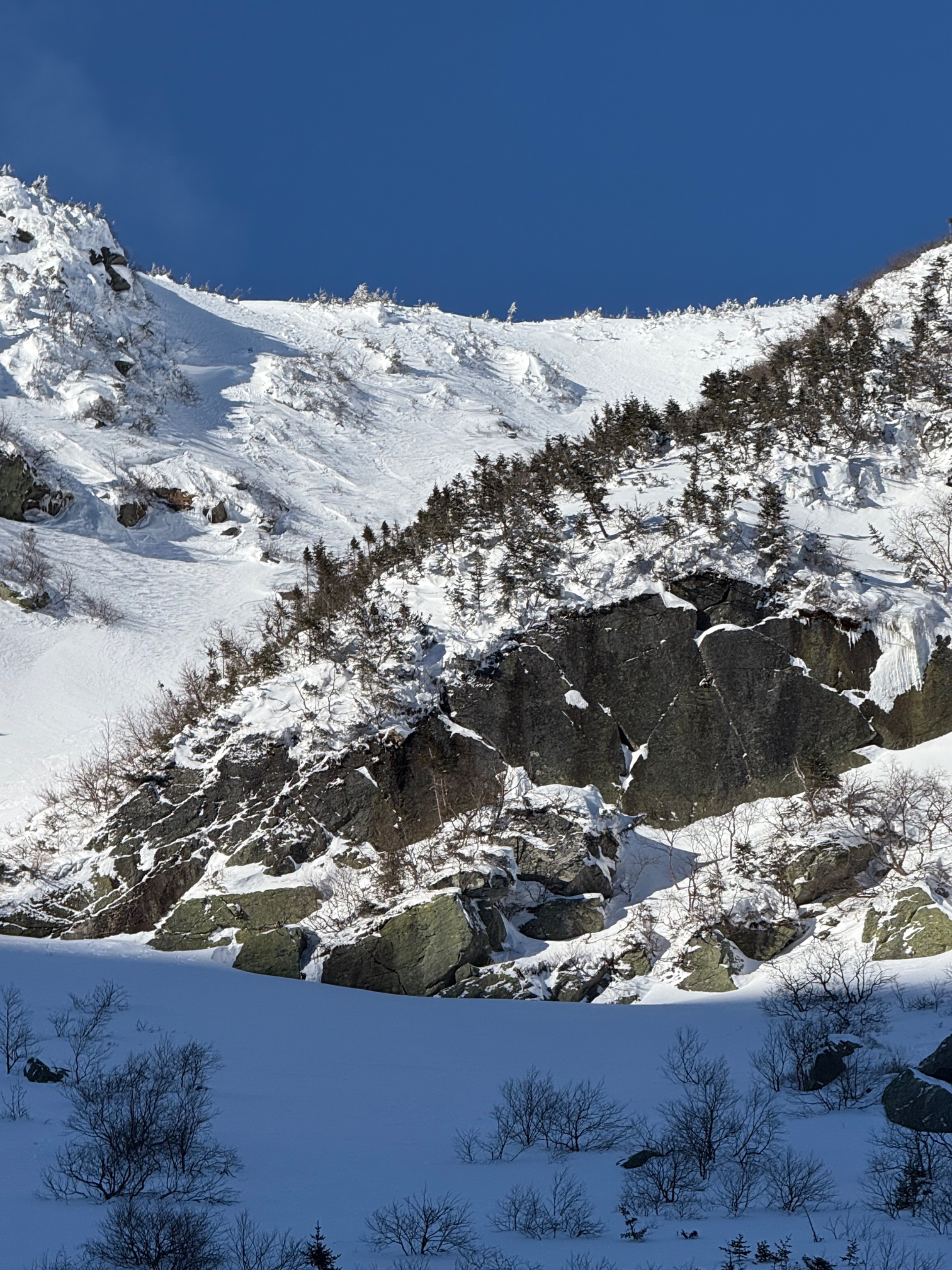
Found evidence of crowns from newer wind slabs in Chute and across Center Headwall. No visible debris remained and the crown in Chute appeared sharper than the one in Center which may have slightly filled back in. Estimated these as D1 as they are pretty low in the path and while the crown in Chute is thicker in spots, overall the Ravine floor is largely unchanged so seems likely that these avalanches were small. Also saw a thin crown line from a presumed small avalanche in Dodges Drop.
Old crowns from the skier-triggered avalanche in Right Gully 1/16 are still visible and have not yet been filled back in.
From visual observations I did not find areas of large connected wind slabs that gave me pause or concern. This is likely from low snow totals in the 19th. Overall saw some planer surfaces, but most snow surfaces had some evidence of wind effect and looked firm. In SE and S aspects there were more areas of snow that looked soft.
Wanted to dig into the snow in NE and S aspects to compare snowpack structure in slightly different aspects within the same terrain.
NE went to about ~4675 between Left and Chute and found very firm and supportable snow. If I had not gone into the terrain wanting to look deeper in the snowpack, would have had no reason to dig. HS was 125 and was mostly Pencil hard to the ground. There was a slight hardness change underneath the new wind slab, but that was the only layer of concern. This was really thin and did not have angular grains (though with continued cold temperatures these could begin to facet). Deeper in the snowpack found fist hard cohesionless snow that had angular crystals. I did not find a stout ice crust in this location either.
Moving to S I found more variable snow surfaces with areas of softer snow, hollow-sounding snow, or overall firm surfaces. Found some cracking, but this was located within the new surface wind slab and did not propagate- or feel like it had the energy to do that. The old December ice crust was very stout in this location and only had about ~40 cm of snow above it. Found softer snow here (which was far more pleasant to dig into) and more defined hardness changes. ECTN 15 and ECTN 17 respectively about 5 cm down on a hardness change between wind slabs. This was the interface I had also found small cracks in. This snow was very weak and then was on another wind slab (see pit details below).
I was looking for poor snowpack structure and potential facets that could become more reactive from persistently cold temperatures. I found grains that are faceting, but did not find fully formed facets, highly connected, or reactive weak layers. Knowing that the terrain in Tuckerman Ravine has cycled naturally numerous times may be part of this. Faceting rounds were more developed in southern aspects higher in the snowpack, and in NE the faceting grains I found were deep in the snowpack.
Avalanche
- Size
- D1 R1
- Count
- 3
- Aspect
- E
- Trigger
- N
- Elevation
- 4600 ft
Saw crown lines from small avalanches in Dodge's Drop, Chute, and across Center Headwall. Speculated that these are naturals and likely occurred on Monday as there was not a lot of snow available for transport, is possible these happened late Monday into Tuesday but thinking about the amount of snow and winds Monday seems most likely.