
Quick report
- Cracking
- isolated
Was able to easily identify the 1/26 buried surface hoar layer sitting directly on a supportable rain crust below 3000'. The slab on top of the weak layer seemed to be almost not deep enough or stiff enough to create signs of instability. The weak layer and bed surface are very clearly a dangerous setup and sensitivity will likely increase, once more snow accumulates and/or the slab stiffens. In other words this problem is likely to get worse before it gets better. Test slopes easily produced small slabs on steep rollovers and gathered speed quickly due to the low friction bed surface.
Pit results at 2200'/S produced ECTN12 down 35 cms (1/26 BSH)
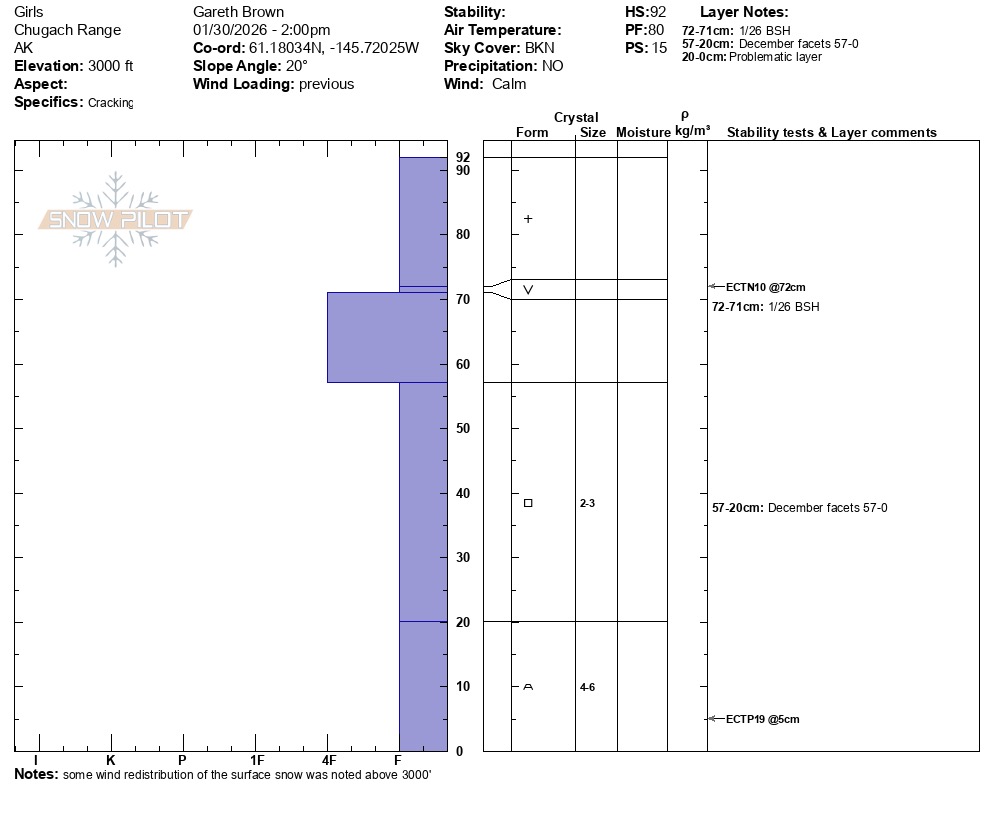
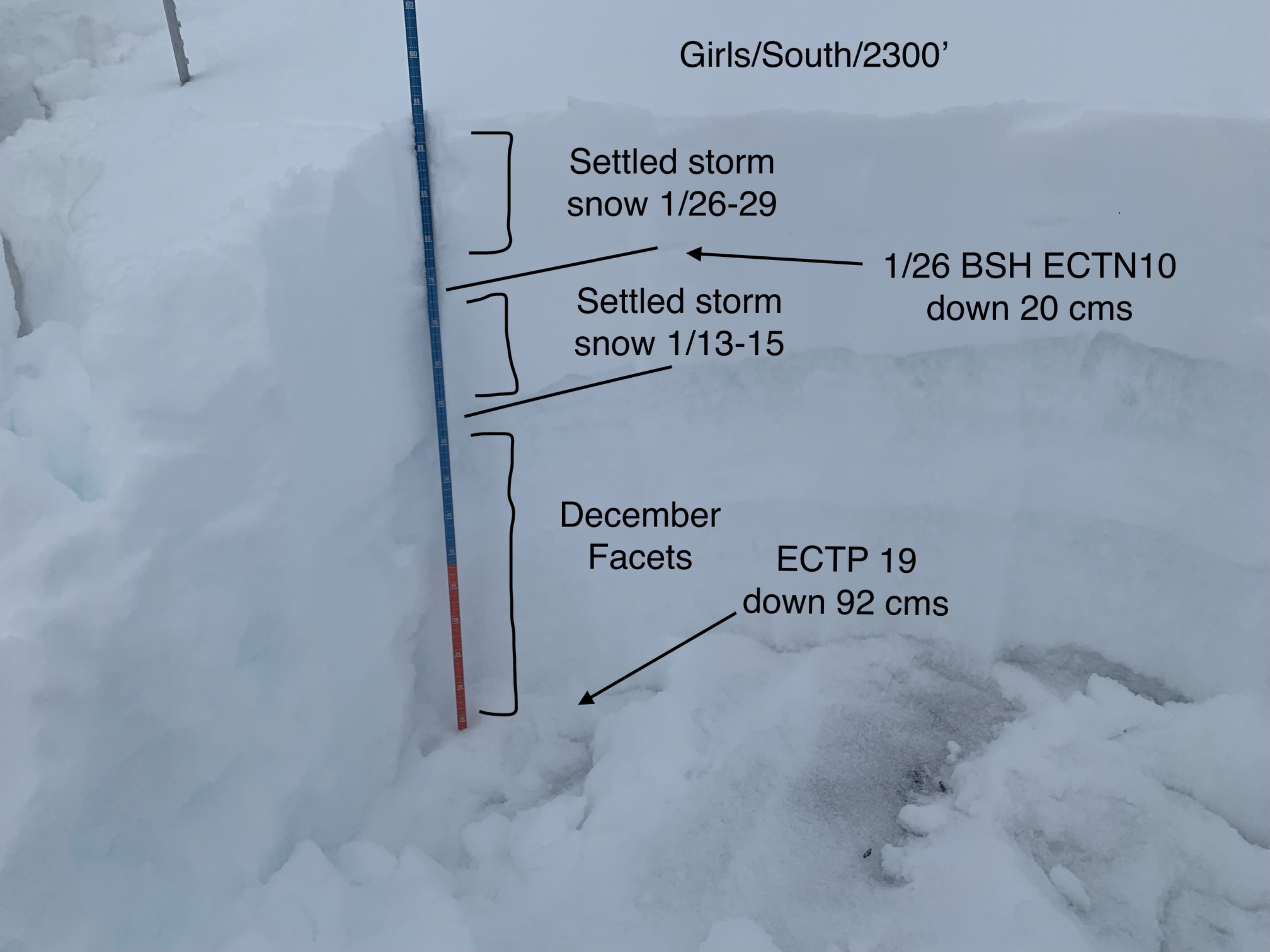
Pit results at 3000'/S produced ECTP19 at the ground (down 95 cms), ECTN10 down 20 cms (1/26 BSH)
Did not receive any collapses, but was on a old skin track for part of the way so collapses may have already occurred. Cracks were observed on small steep test slopes that failed easily at the buried surface hoar beneath the new snow.Weather
- Cloud Cover
- broken
- Wind Loading
- previous
- Rain Elevation
- N/A
- Recent Snowfall
- 30-35
- Snow Avail For Transport
- moderate amounts
Snowpack
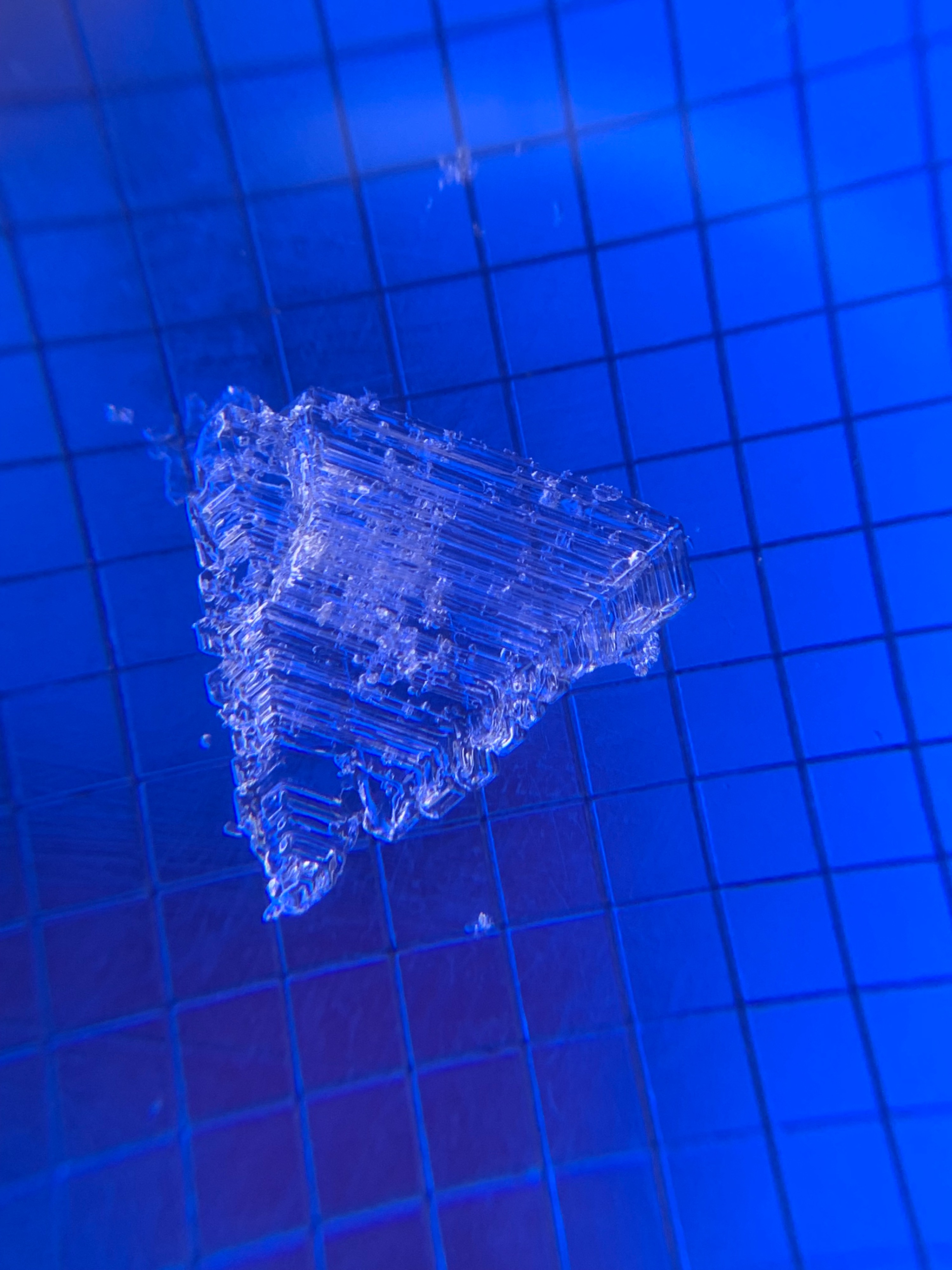
Below 2800'- found 12-14 inches of fairly uncohesive snow on top of 1-1.5 cm preserved buried surface hoar sitting directly on a stout rain crust Easy hand shears.
2800-3200'- Rain crust disapeared and BSH became smaller. December facets were very weak in this area. Only penetrated 6 inches on my skis but when i got onto just my feet I sank through the whole snowpack, just above my waist. Received ECTP19 at the ground
Above 3200'- The base of the snowpack became a mix of old hard wind slabs. New snow was more wind compressed as well, but no signs of instability were present.