
Quick report
- Cracking
- isolated
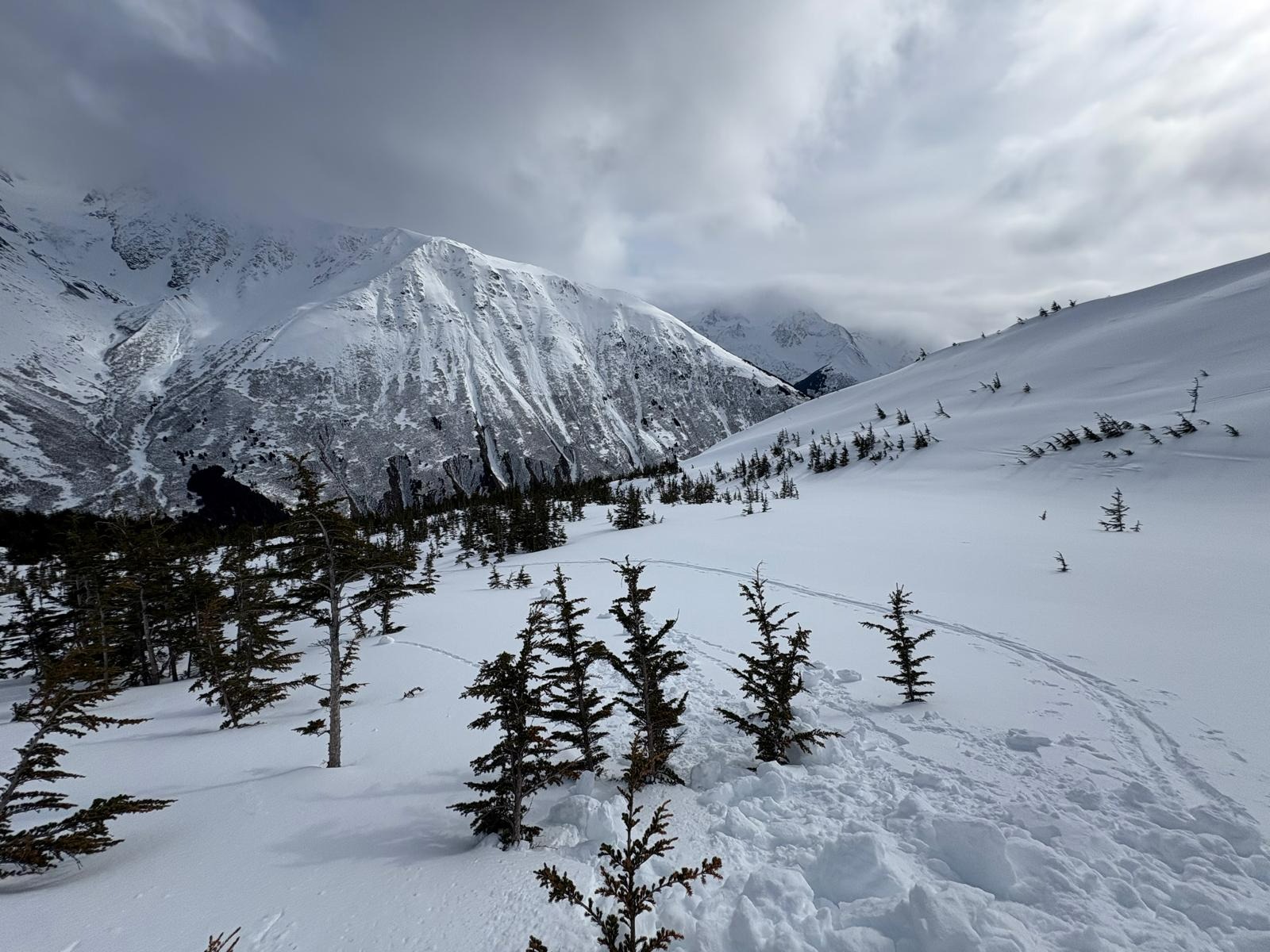
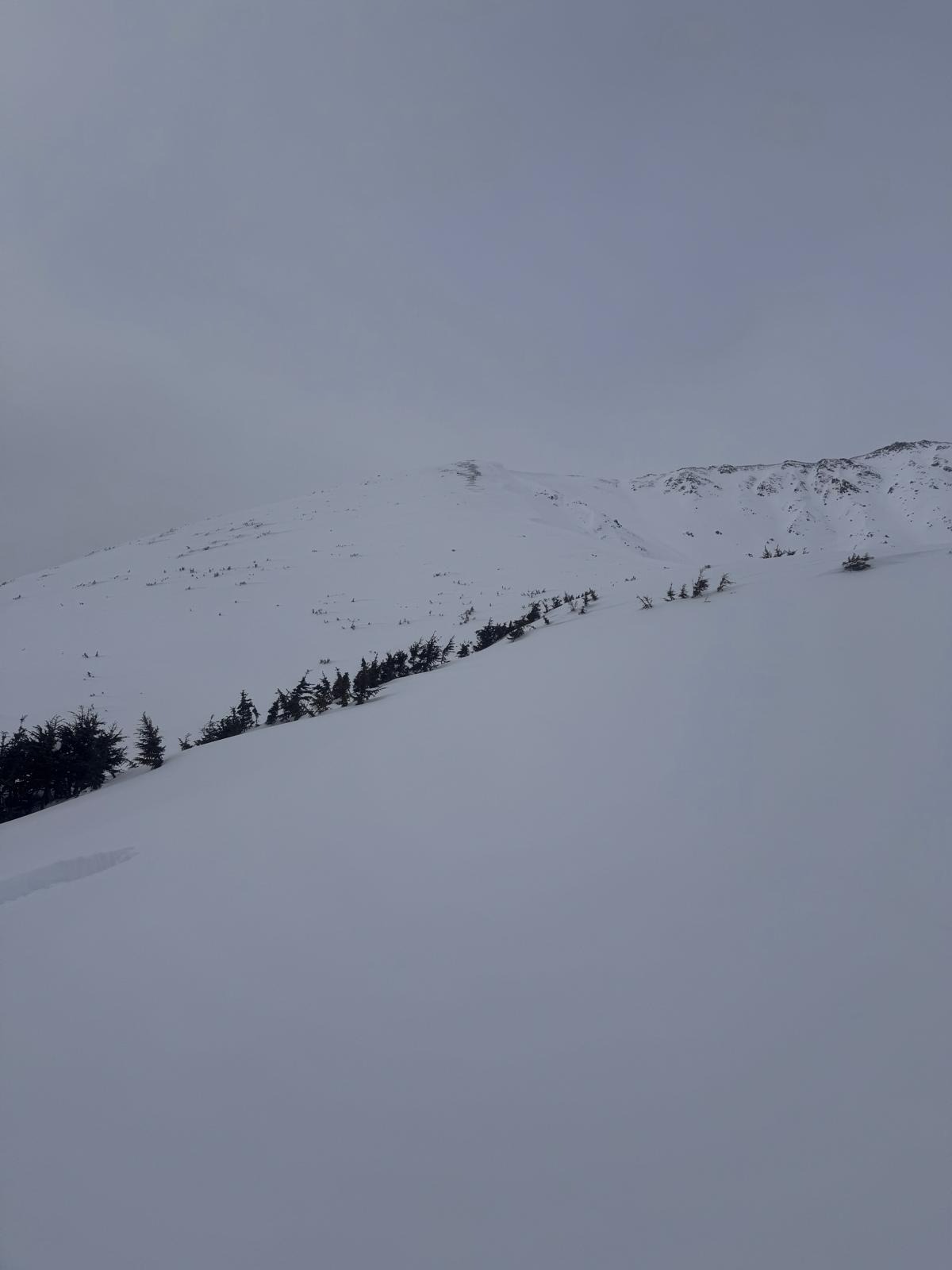
We toured up to Raggedtop today with a couple of objectives in mind: checking storm totals from the recent weather, observing the rain line throughout the day, and assessing how the weak layer setup is responding to the new loading event. While touring up, we noticed that the storm appeared to have favored the east side of Girdwood Valley. There was ≈1–2 inches of new snow on Raggedtop, which at lower elevations had seen a bit of rain either overnight or early in the morning. The top couple of centimeters of surface snow was gloppy and moist, but not fully wet during the ascent.
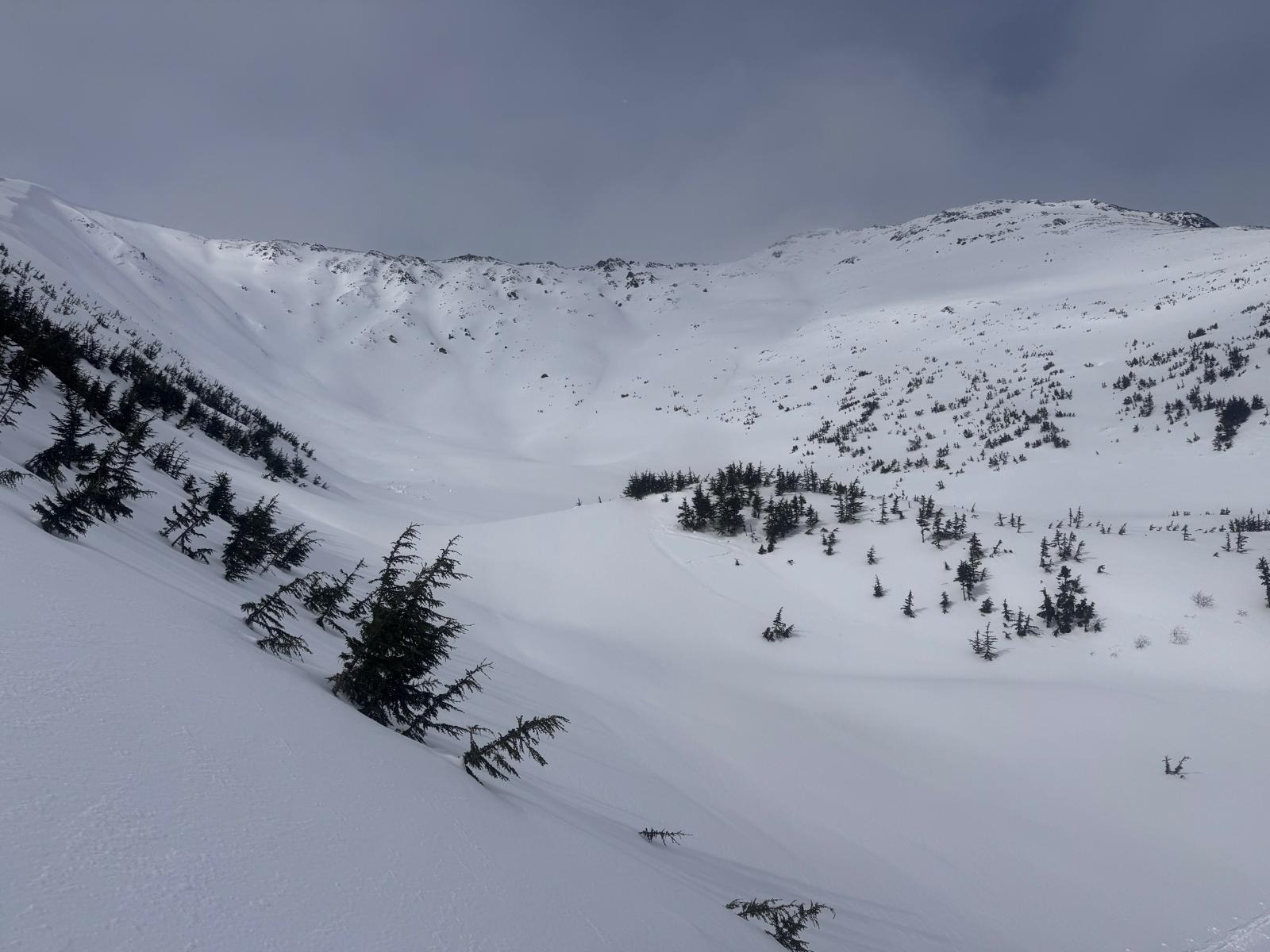
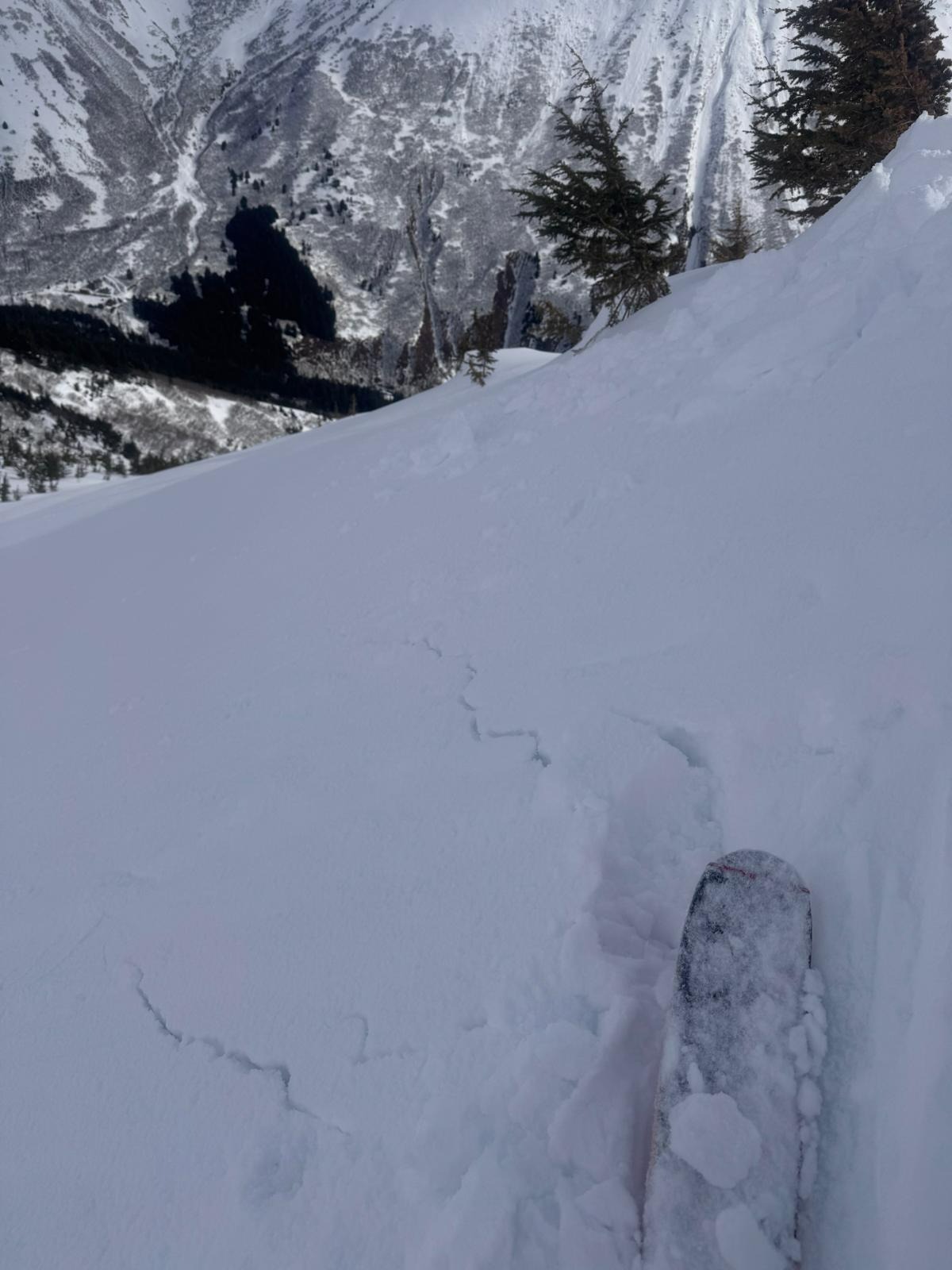
At about 2,500' we dug a snowpit on an east-facing aspect. The snowpack structure in this pit, while objectively poor, produced only non-propagating results. We decided to continue a few hundred more feet to the ridgeline. By this point, winds were picking up slightly, and we noted light to moderate active transport. Below the cornices on the ridgeline, we observed a few instances of shooting cracks in front of our skis, isolated to pockets of wind-affected snow. On the ridge, there appeared to be slightly more snow, maybe an extra inch.
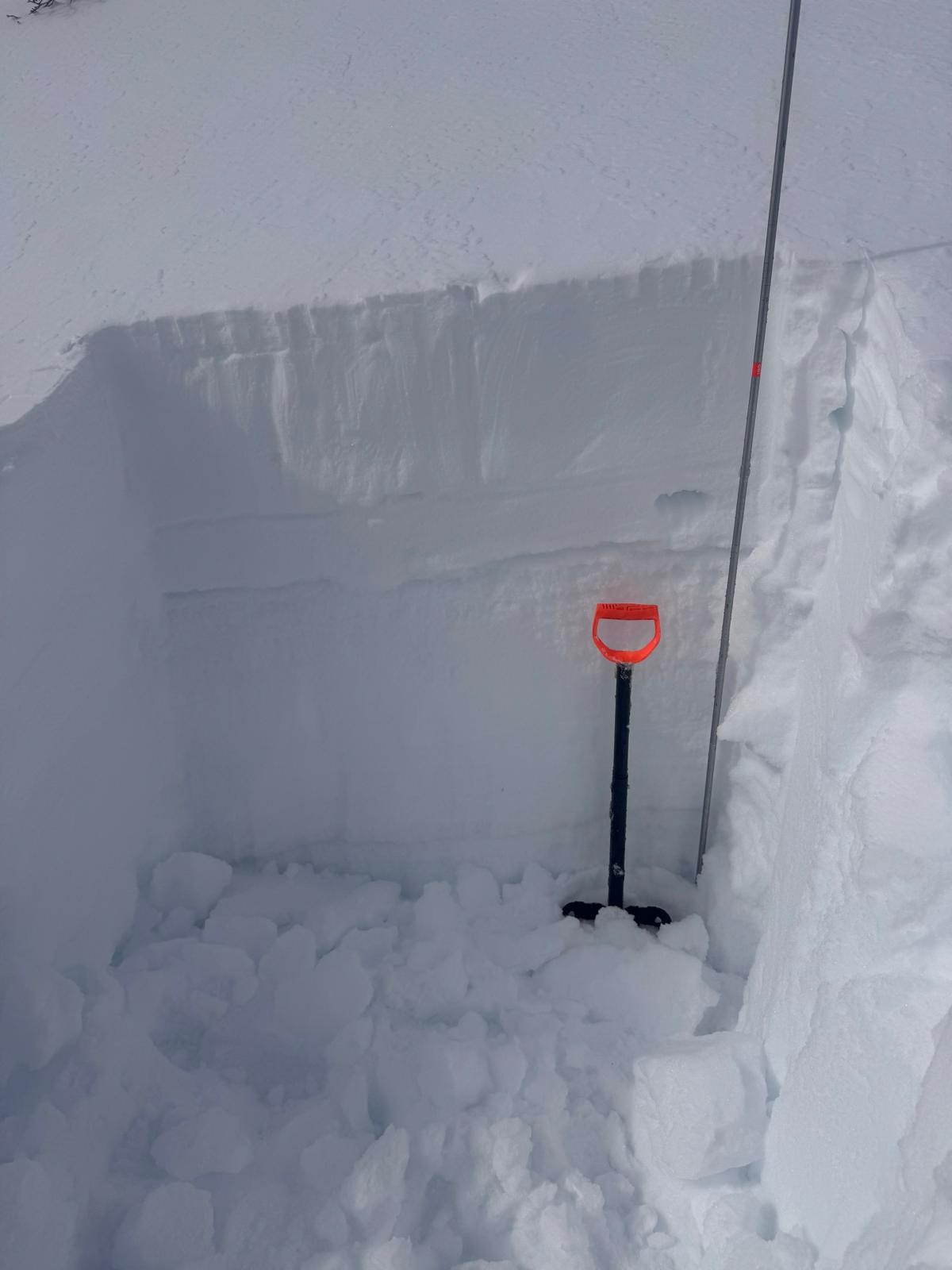
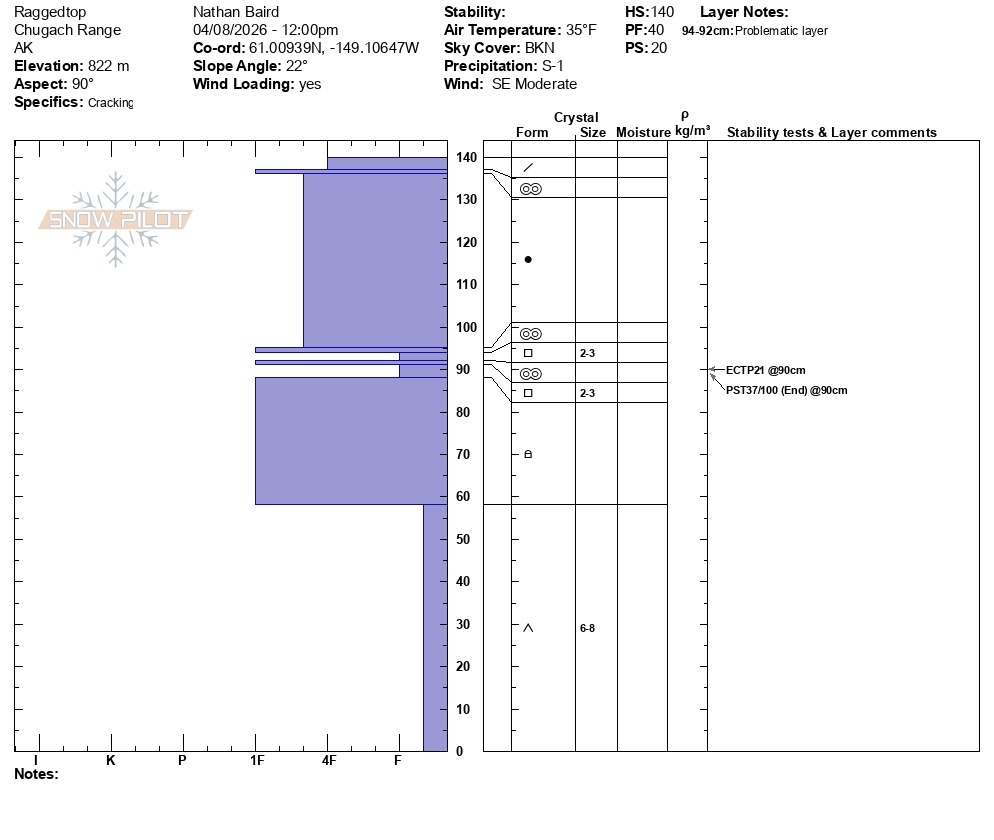
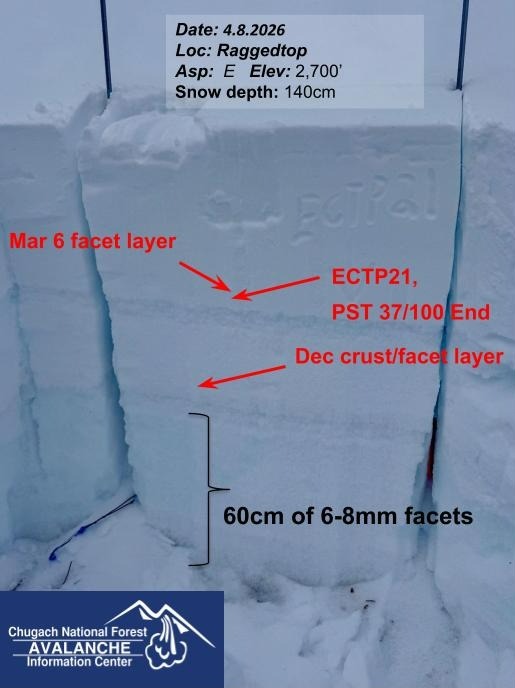
We continued up to about 2,700 feet and dug another snowpit on an east-facing aspect. In this pit, the March 6 facet layer produced unstable results (ECTP21 ↓ 50 cm ×2), which were confirmed by a PST 37/100 End ↓ 50 cm in our saw test. Given the poor structure, concerning test results, and active loading, we opted to turn around and head back to the truck. Girdwood Valley stability still seems particularly dubious, and even with this modest loading event, the March 6 facet layer is reactive and capable of producing unstable results. While descending, we observed that the rain line had trended upward throughout the morning to roughly 1,500 feet. The snow below this line had turned to mashed potatoes and had clearly been rained on sometime after our climb up.
We observed shooting cracks on and below the wind-loaded ridgeline of Raggedtop, isolated to wind-affected snow below the ridgeline at around 2,600 feet.Weather
- Air Temp
- 30-41
- Cloud Cover
- broken
- Wind Loading
- moderate
- Rain Elevation
- 500-1500
- Recent Snowfall
- 2-4
- Snow Avail For Transport
- small smounts
Broken clouds for most of the day. Winds picked up to gusts in the mid-20s around noon. The rain line trended upward throughout the day, rising from about 500 feet overnight and in the morning to around 1,500 feet or slightly higher by the afternoon.
Snowpack
We dug two pits on east-facing slopes today—one at 2,500 feet in Raggedtop Bowl and the second at 2,700 feet on the ridgeline. The overall structure between the two pits was similar, with the ridgeline pit being about 30 cm shallower.
The March 6 facet layer has not shown much sign of healing in either location and produced a number of unstable results in our ridgeline pit. This layer is buried about 1.5–2 feet deep (50–65 cm), depending on location. We found the facets to be approximately 2–3 mm in size, with a very subtle crust about halfway through the layer.
The amount of depth hoar present in our ridgeline pit was also noteworthy, with about 60 cm of F-hard, 6–8 mm facets.
Snowpit #1:
- HS: 170 cm
- Elevation: 2,500 ft
- Aspect: 78° (E)
- ECTN6 @ 10 cm↓, ECTN8 @ 15 cm↓, ECTN14 @ 50 cm ↓
Snowpit #2:
- HS: 150 cm
- Elevation: 2,700 ft
- Aspect: 90° (E)
- ECTP21 @ 50 cm ↓ ×2
- PST 37/100 END @ 50 cm ↓