
Quick report
The snowpack transition to a spring-like structure is underway at lower elevations with liquid water moving deep into the snowpack on east through south through west aspects in the shallower parts of the the forecast area. Triggered loose avalanches seem possible as surfaces weaken during the day but only the shallowest, dirty-looking slopes might gouge into the snowpack. Wet Slab concerns appear unlikely, but liquid water is moving through weak layers on west and east aspects at low elevations where the snowpack is less than 150cm.
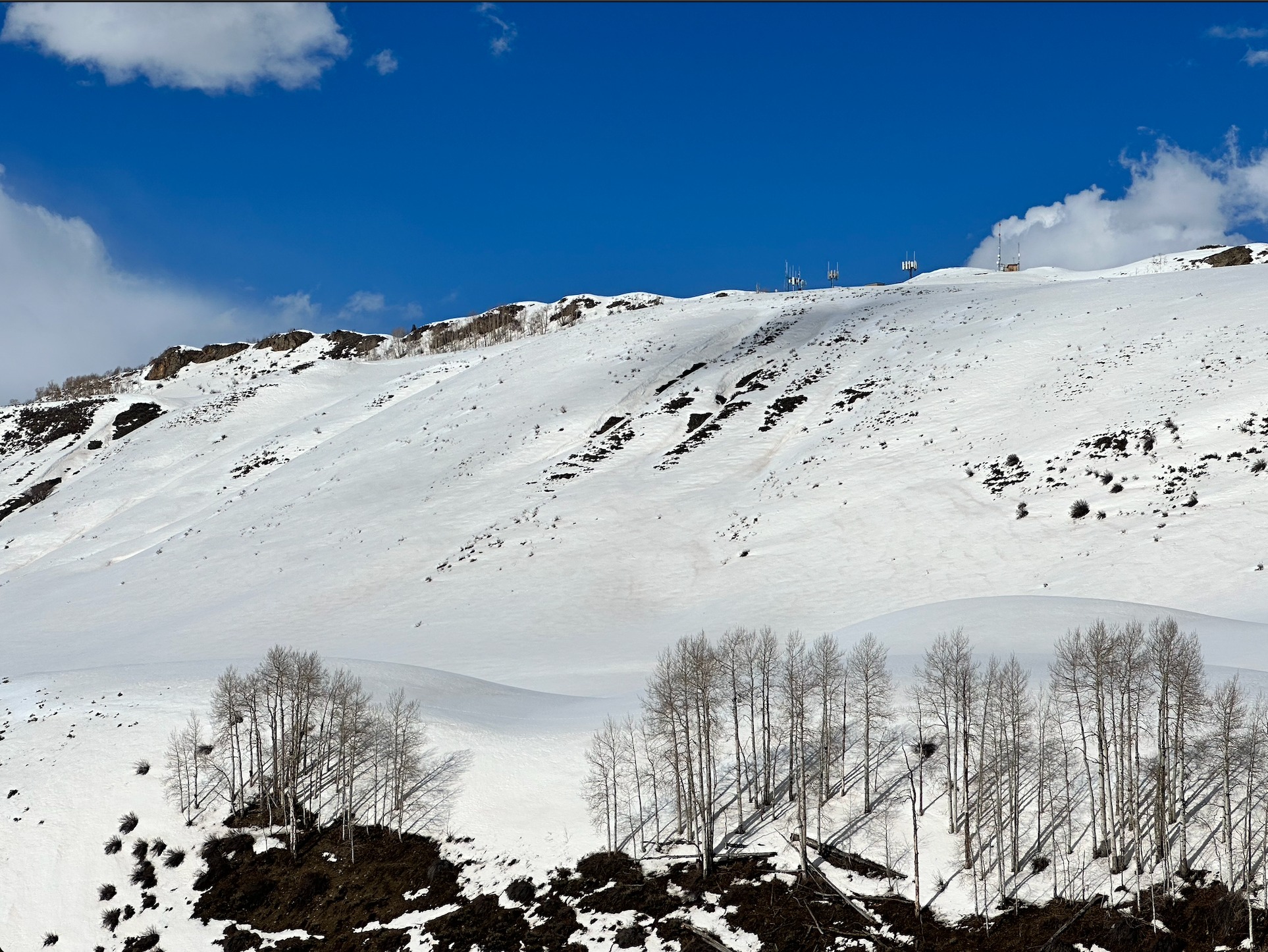
Dirty surfaces are making there way to the snow surface on sunny terrain below treeline; this will accelerate melting and water production in the coming days if the sun stays out.
Weather
- Cloud Cover
- few
Clear skies through the afternoon. Convective cells developed in the evening around the area.
Snowpack
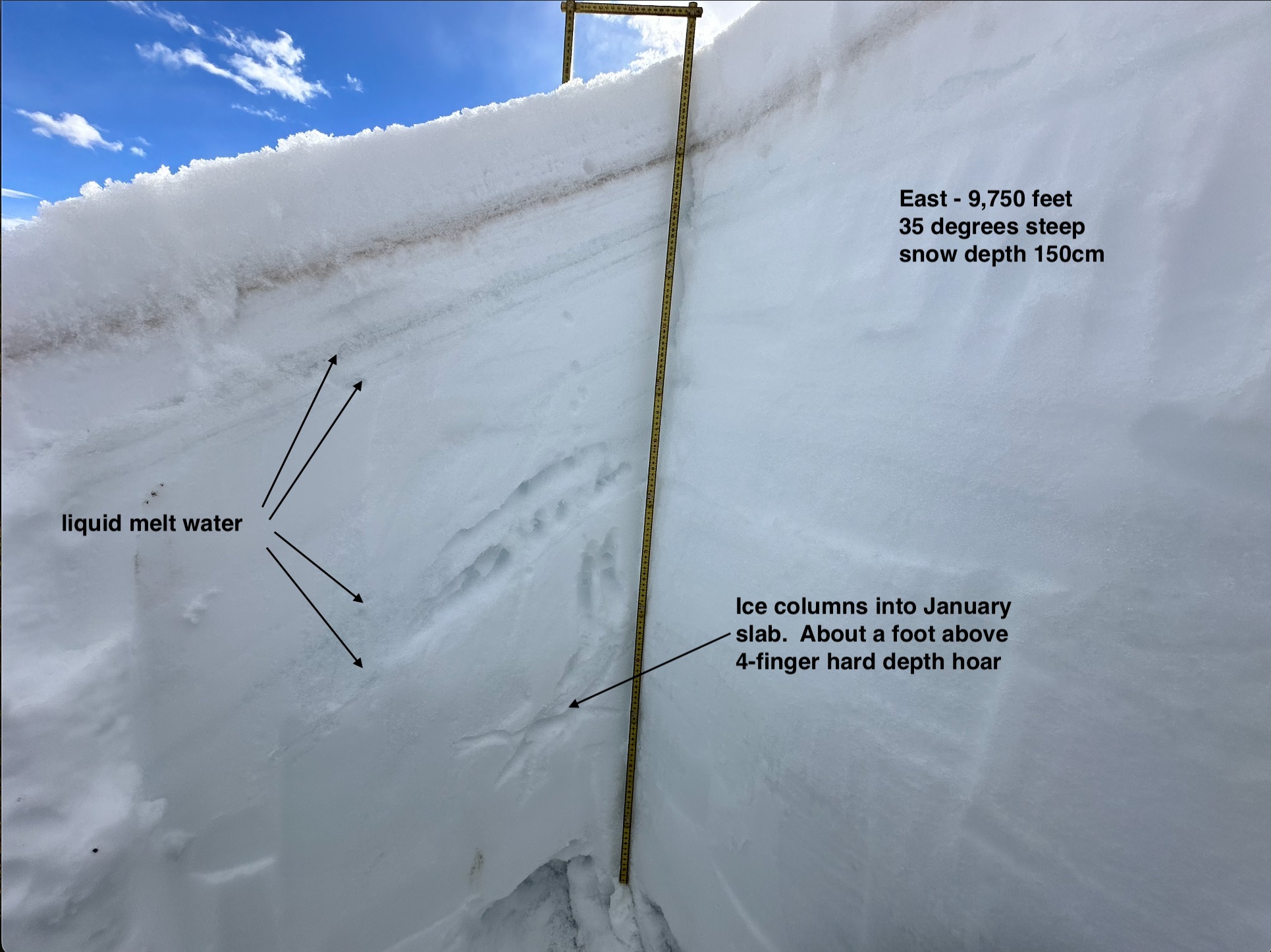
I traveled to a handful of low-elevation slopes on a variety of aspects below 10,000 feet to check on liquid water movement in the snowpack. On south and southwest slopes the snowpack was isothermal with meltwater having moved through the entire snowpack. In the late afternoon, this terrain was often unsupportive to boots. As I transitioned to southeast the snowpack became more supportive with cohesive snow intact. On an east slope (depth 150, see image), meltwater had pooled at multiple interfaces in the upper snowpack, produced a few ice lens, and created ice columns into the January slab; meltwater will likely reach the ground in the next day or two at this location. Wet slabs don't appear particularly concerning at the moment, but I couldn't rule out an isolated release in the coming days on shoulder aspects in the shallow portions of the forecast zone at lower elevations or a warm rocky/bushy feature near treeline.
Avalanche
I glassed terrain from the pavement and did not see any new activity. It appears the recent natural wet loose activity ended until warmer temperatures or poor refreezes occur.