
Quick report
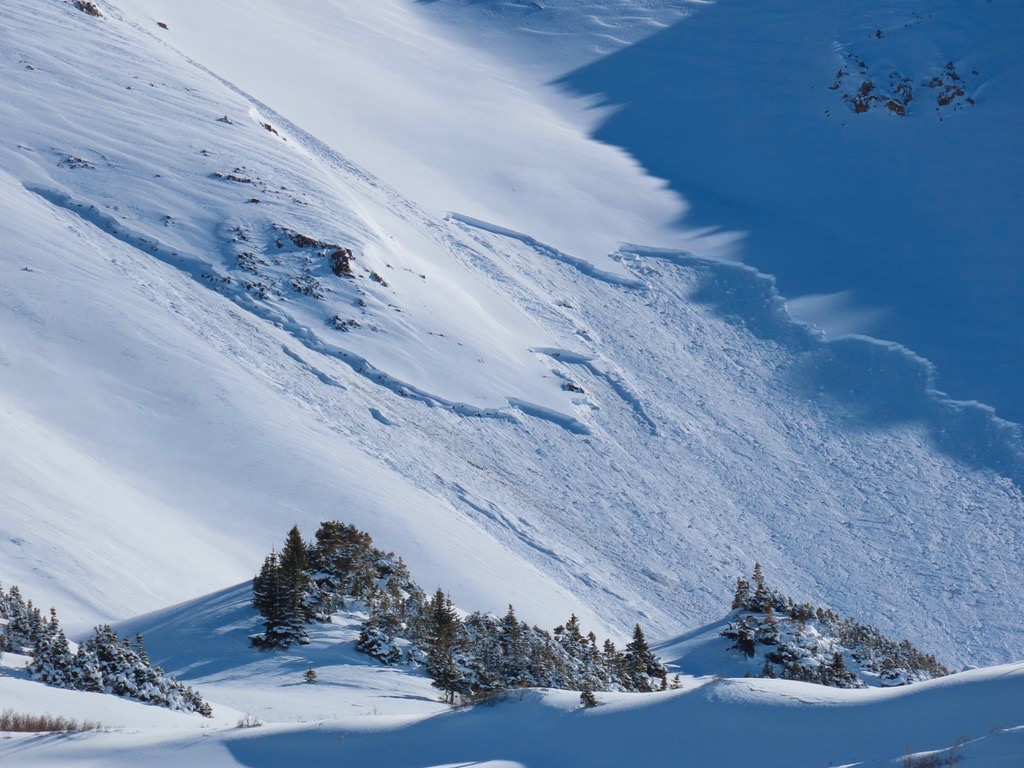
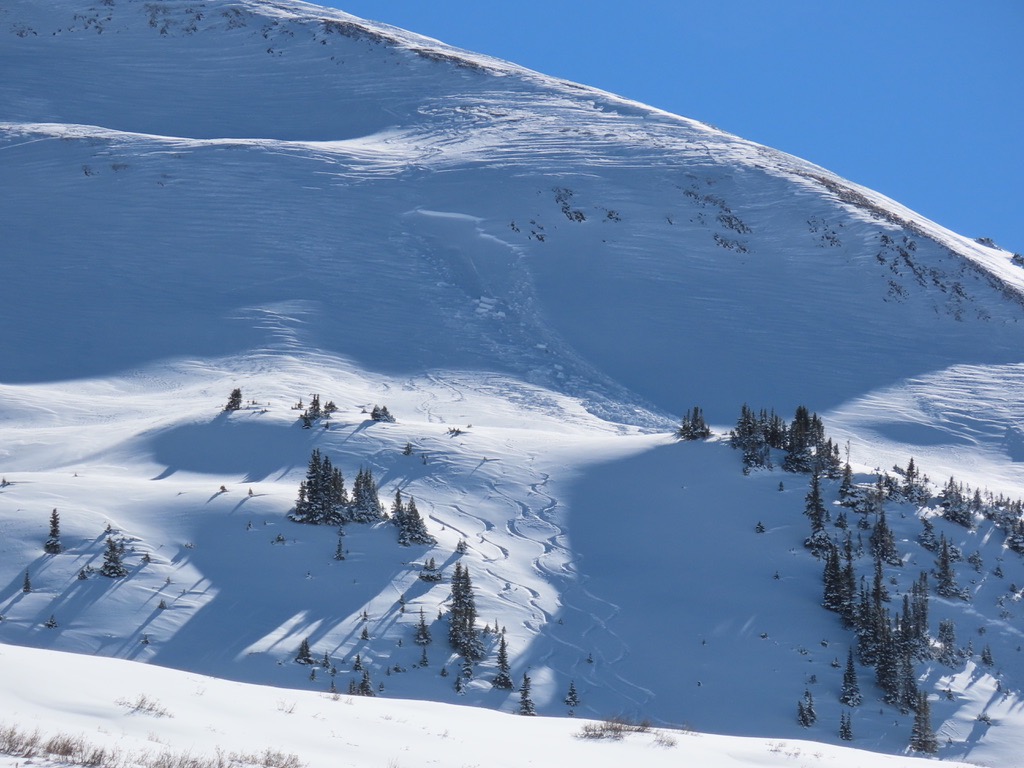
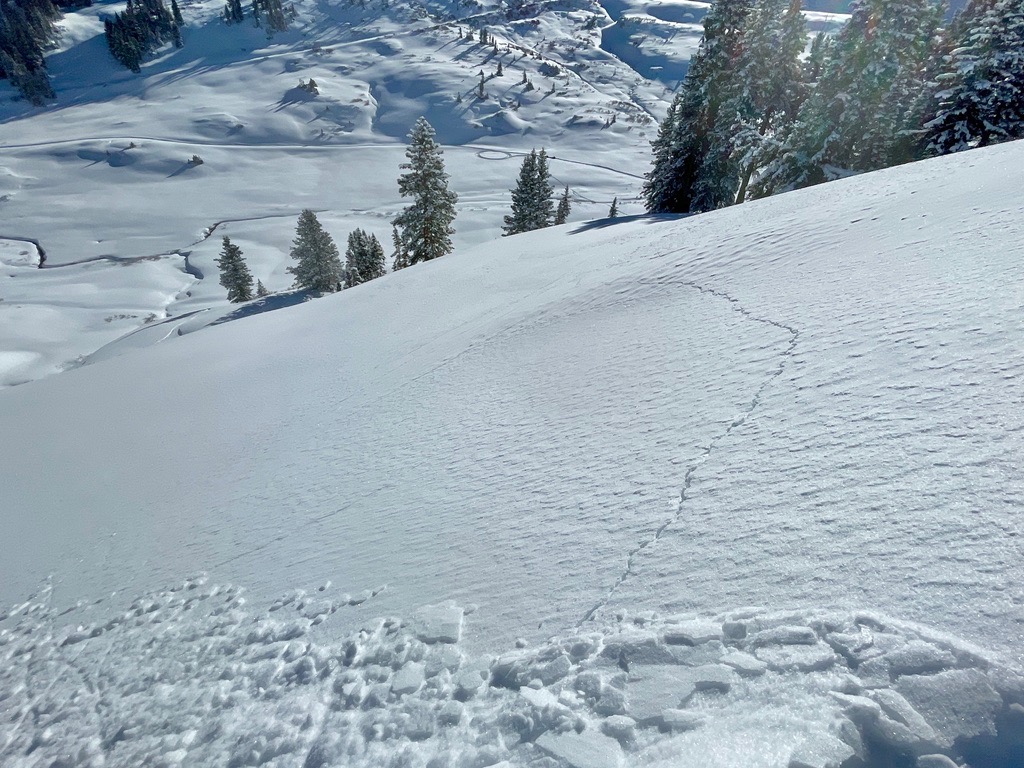
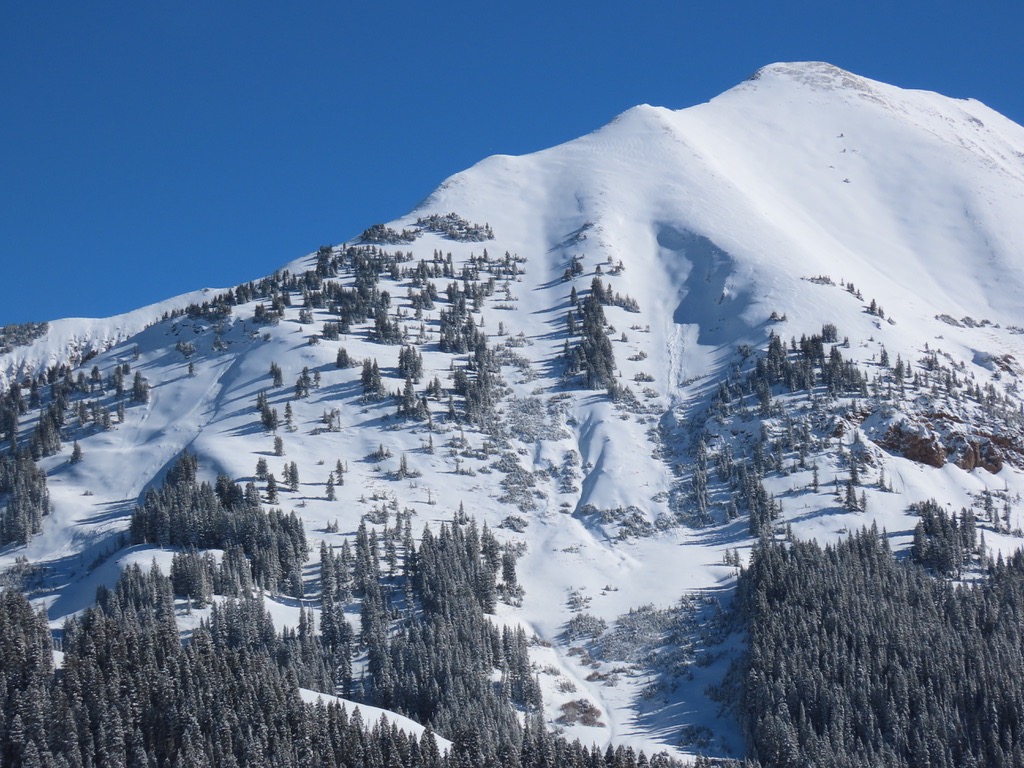
Collapsing and cracking on sun-exposed easterly-facing slopes. Collapses broke just below the mid-November crust, and propagated across small features. The slabs are thinner and less connected in this more sun-exposed terrain than on nearby northerly-facing slopes which hold continuous snow from at least two more storms.
Weather
Cold, clear and calm.
Snowpack
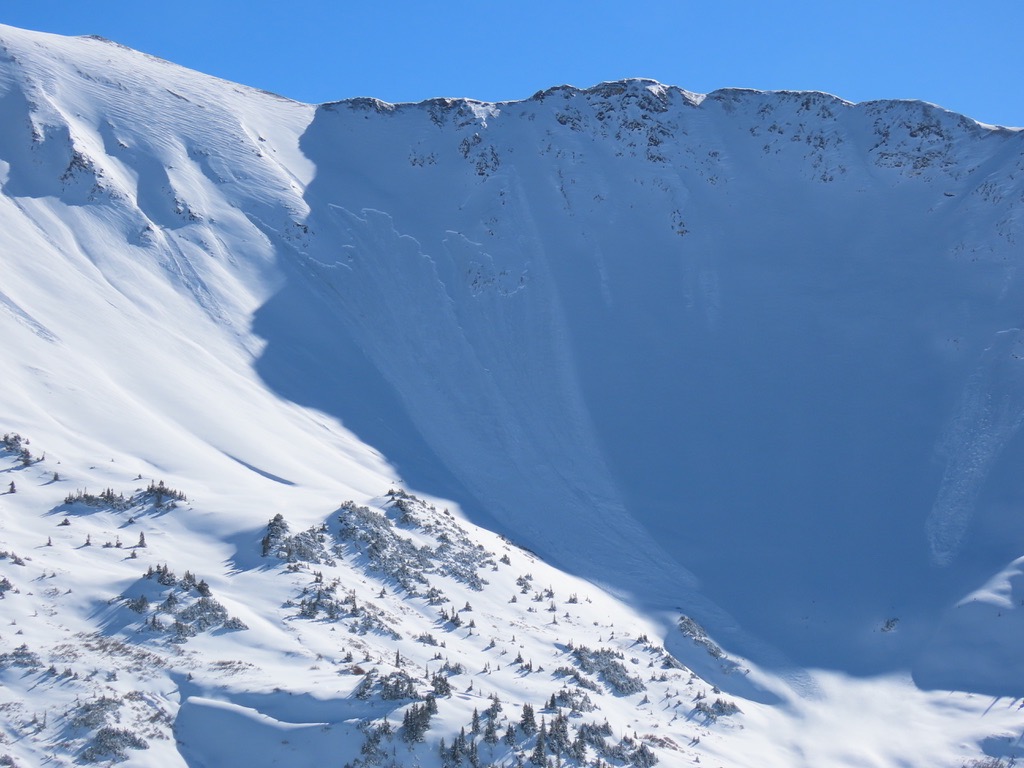
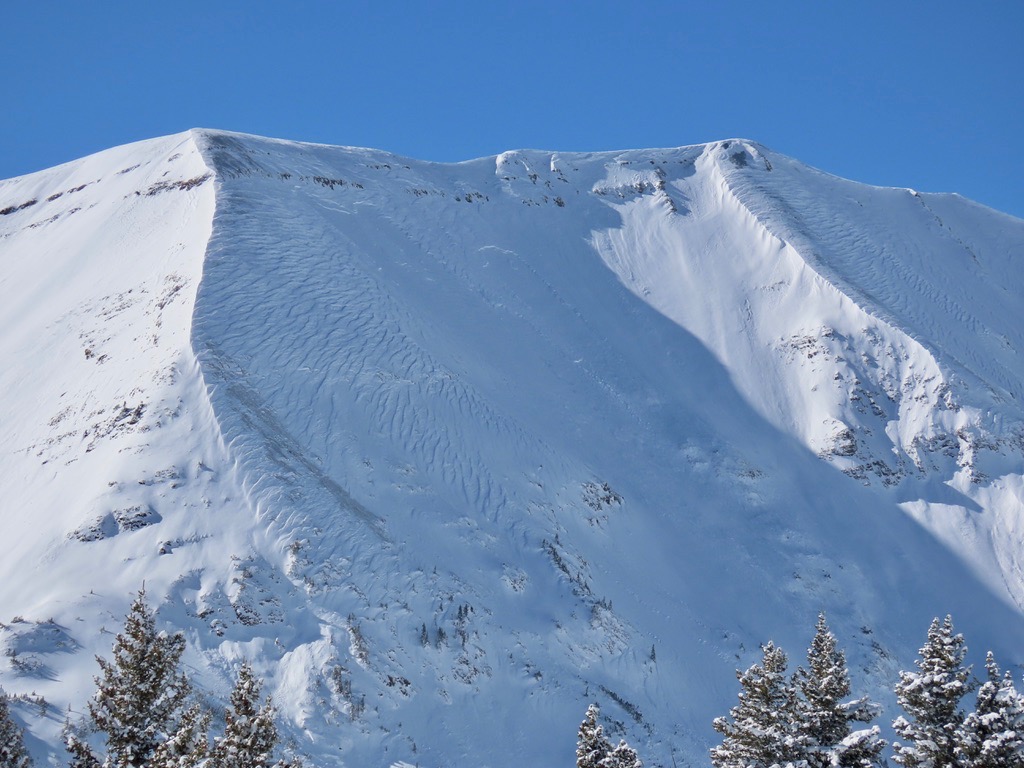
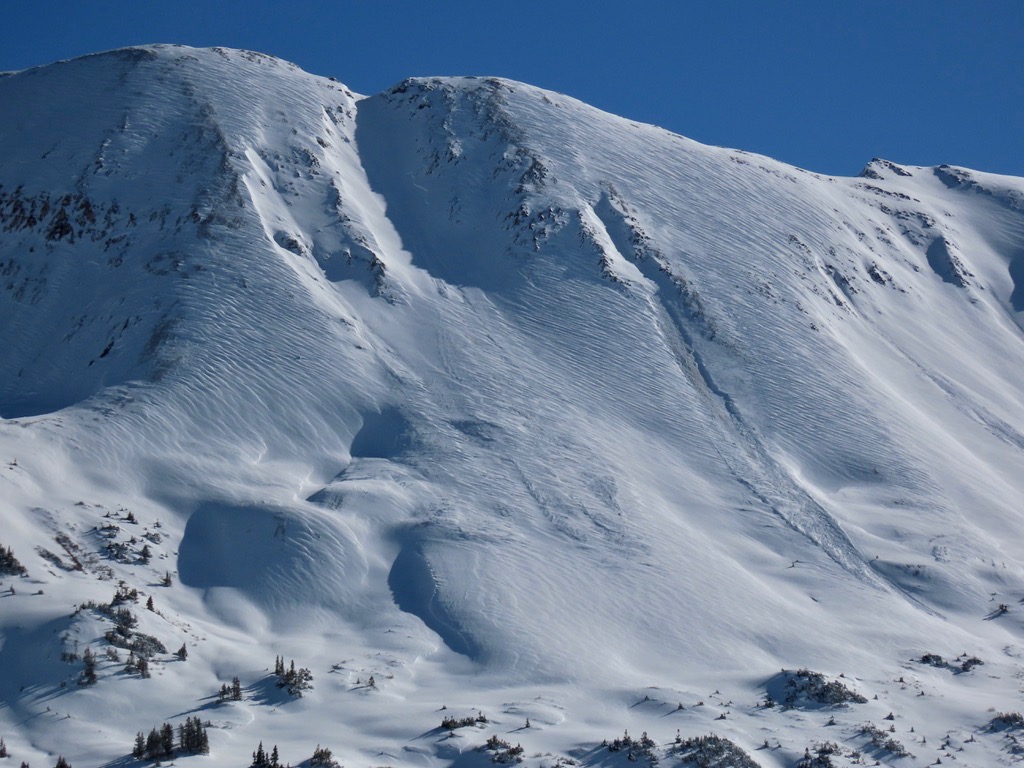
The average height of snow ranged from about 2 to 3 feet deep (70 to 100cm). Sun-exposed slopes where October snow melted away were generally less noisy, with cracking confined to individual terrain features, not across broad mountain slopes like northerly-facing terrain across the valley. A slight change in aspect on gully walls, just a few degrees north of east, brought back the long-running, booming collapses. Wind overnight changed a lot of snow textures above 12,000 feet, drifting into gullies, and releasing a few natural avalanches that were not there 24 hours prior.
Avalanche
- Size
- D2
- Count
- 3
- Aspect
- NE
- Trigger
- N
- Elevation
- 12000 ft
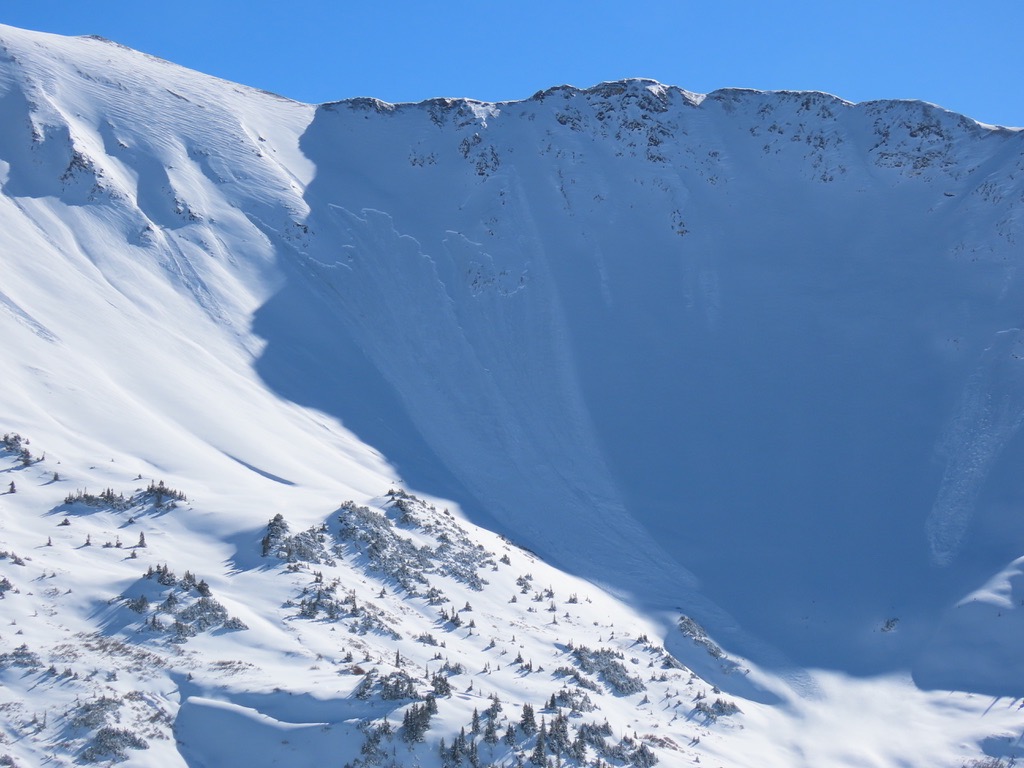
A large avalanche and several smaller avalanches ran between mid-day Saturday and early Sunday morning. The wind didn't blow hard, but enough goose feathers drifted into gullies to trigger slides on cross-loaded northwest and northeast-facing terrain in the Paradise Divide area.