
Quick report
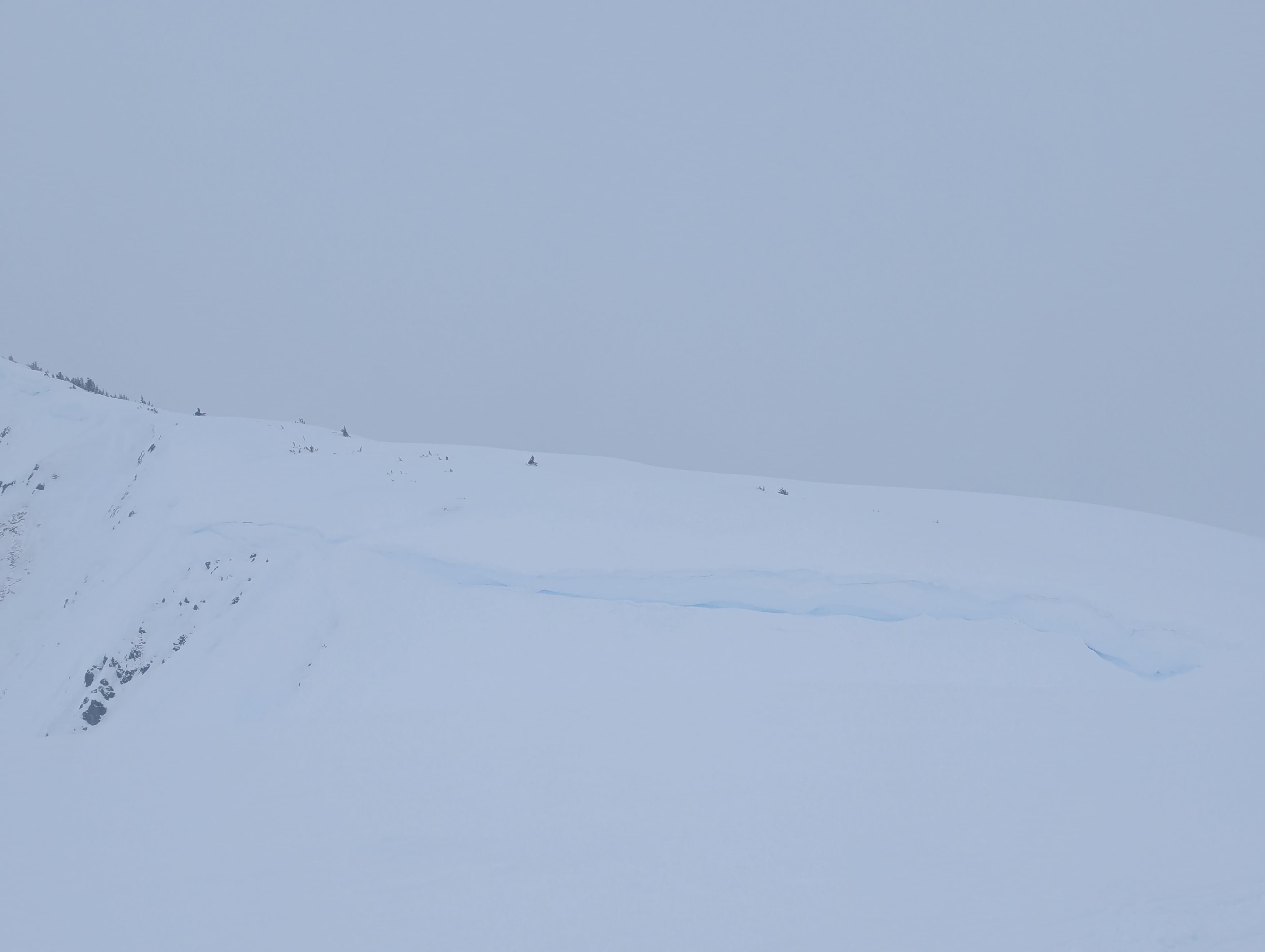
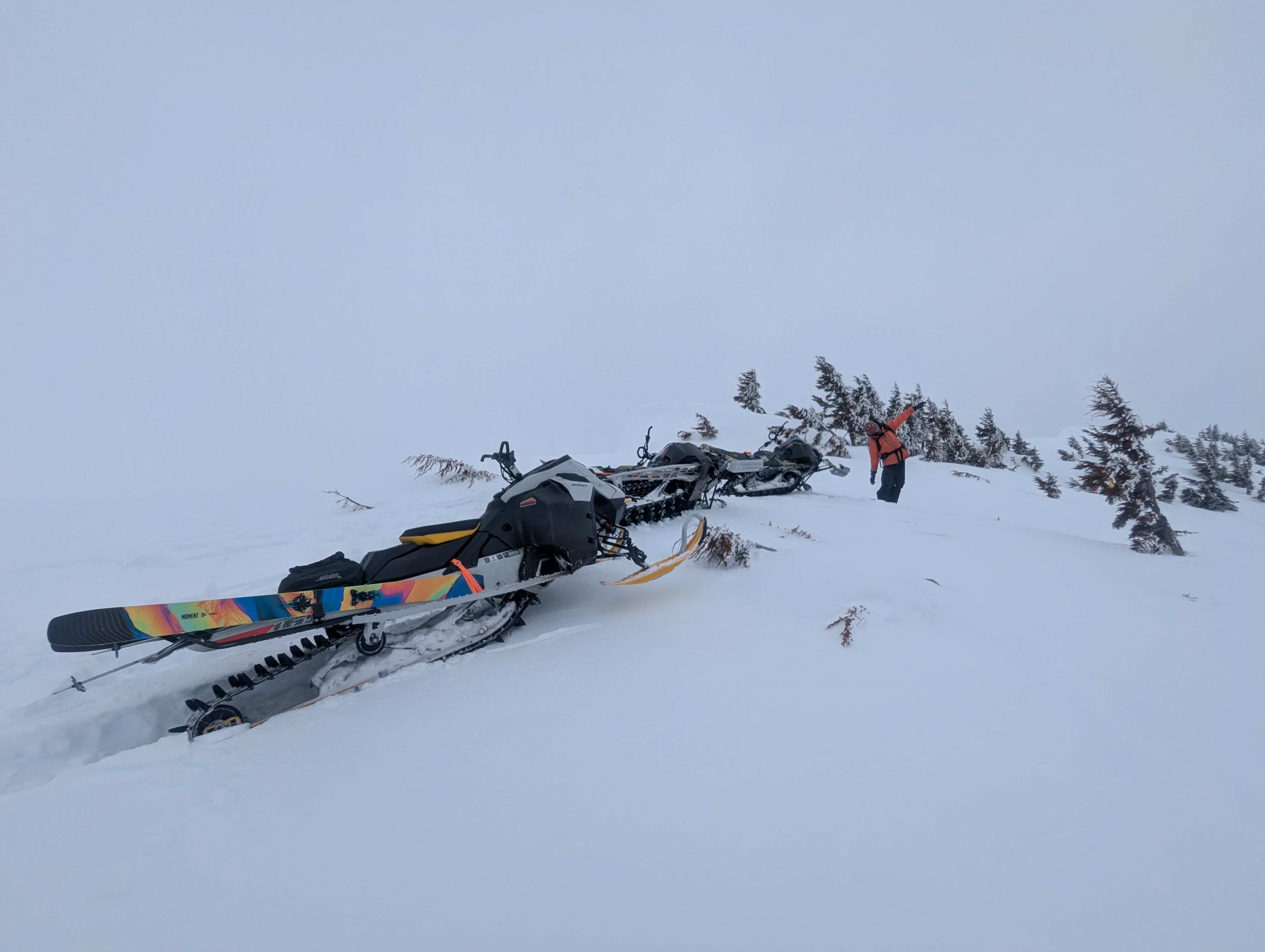
We rode up Seattle Ridge with the goal of digging mid and high elevation pits and looking for natural avalanche activity. Flat light and poor visibility made travel challenging. Although we hoped to get a look at Warm Up Bowl and areas farther south along the ridge, we stuck to Main Bowl where there are more trees. The only recent avalanche activity we observed was a couple of loose wet avalanches in Main Bowl, but poor visibility limited how much of the Seattle Ridge riding area we could see.
At 1,800 ft we found about 4 inches of new snow. In more sheltered areas above 2,500 ft, we found 5 to 6 inches of fresh snow.
We dug our first pit next to the Seattle Uptrack on a southeast aspect at 1,800 ft and found a mostly moist snowpack. While none of the snow was fully saturated, many of the faceted layers were rounding and moistening. Without digging on a northerly aspect at this elevation, it is difficult to say whether the snowpack is healing across all aspects. However, we also dug on a less sun-affected aspect at 2,800 ft and found a very different setup.
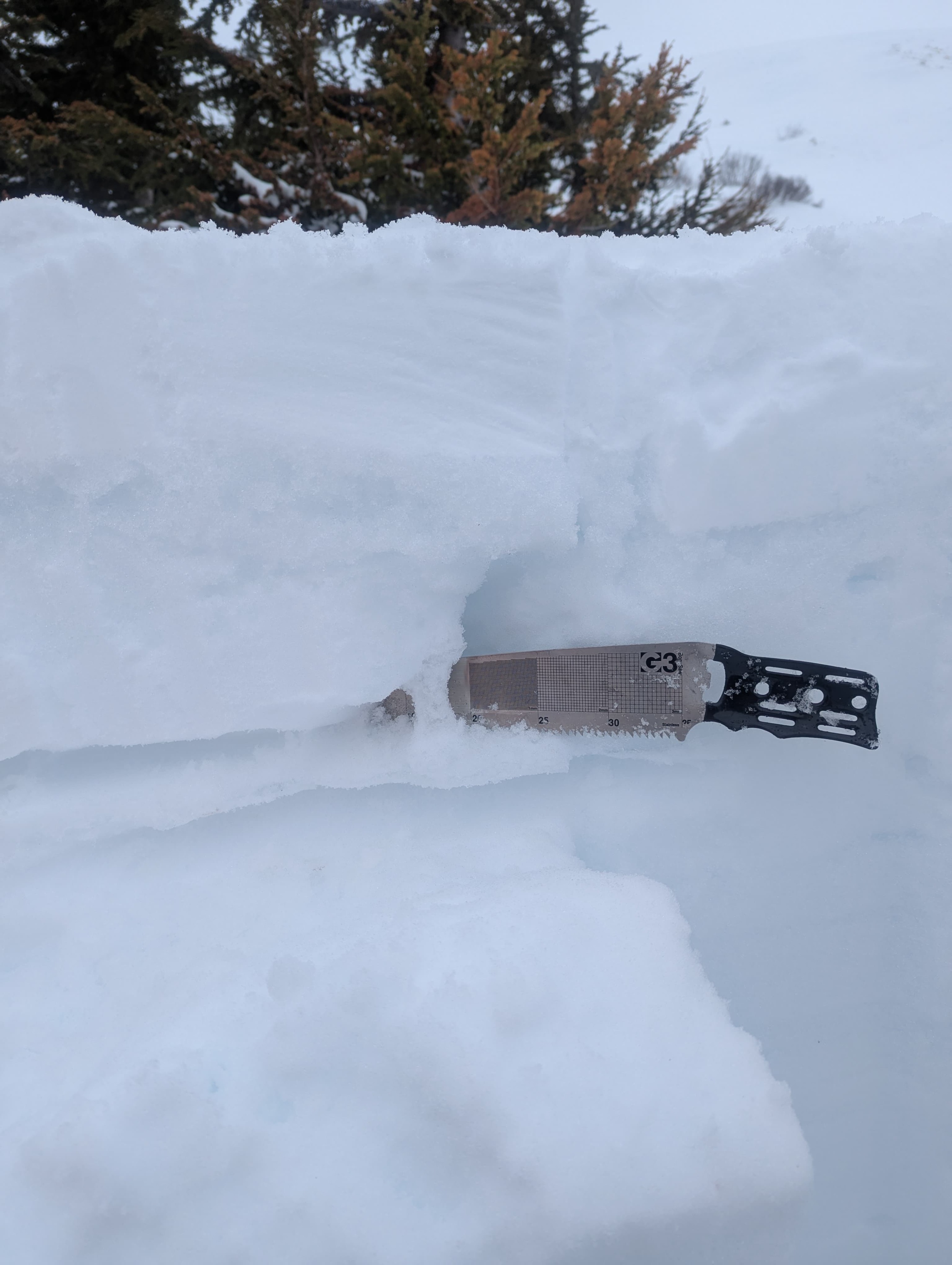
In our upper elevation pit on an east aspect at 2,800 ft, we found mostly dry snow. We could clearly identify all the facet layers we have been tracking since the beginning of the season. The snow remained mostly dry beneath the recent storm snow, and the structure matched our observations from the past couple of weeks. While neither pit produced concerning test results, weak layers persist at mid and upper elevations, and the most concerning layer in our pits is facets above and below an early February melt freeze crust.
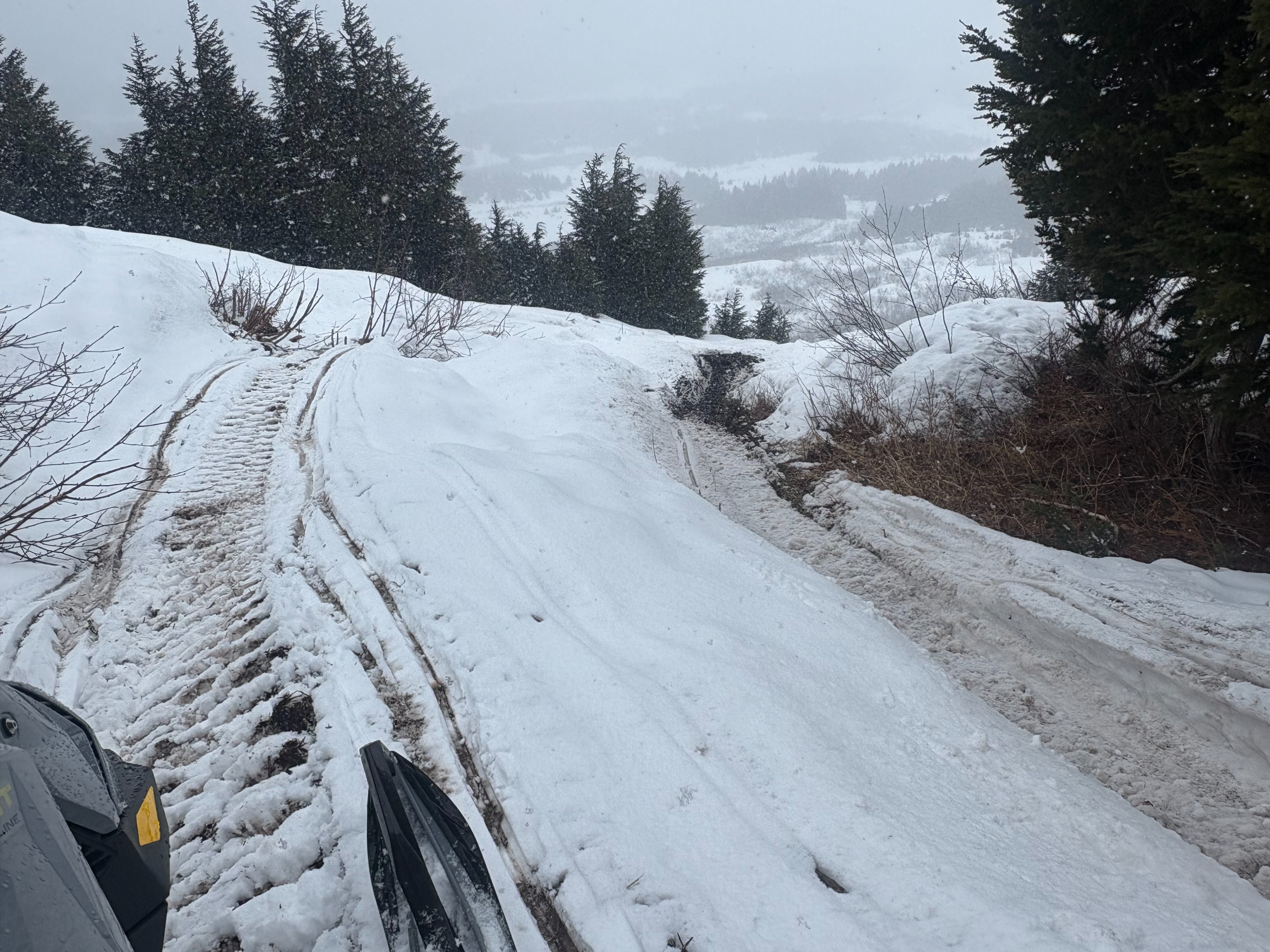
Trail conditions are still soft and grippy, but a few sections of dirt are present in the treed section of the uptrack.
Weather
- Cloud Cover
- overcast
- Wind Loading
- previous
- Rain Elevation
- 1000
- Recent Snowfall
- 10-15
- Snow Avail For Transport
- small smounts
Overcast with light snowfall in the late afternoon, continuing until we left at 3:30 PM.
Snowpack
We dug snowpits at two elevations and aspects and found very different snowpacks. In our first pit at 1,800 ft on a southeast aspect near the Seattle Ridge uptrack, we found mostly rounded grains and moist, rounding facets. Layers were becoming more difficult to distinguish, and most of the snowpack was moist. In the upper foot, we observed a percolation column extending about 1 ft into the snow, forming a new melt freeze crust. Our nearest surface facet layer consisted of moist, rounded facets about 1.5 ft down, sitting above the February 10 crust, but Extended Column Tests did not produce unstable results.
We dug our second snowpit in a small stand of trees at 2,800 ft above Main Bowl. We found about 4 inches of new snow at this slightly wind-affected location, sitting on top of a breakable melt freeze crust. Below this crust, we identified multiple intact early April and March facet layers, as well as facets above and below the February 10 melt freeze crust. The snowpack at this location resembled a midwinter structure. Although valley bottoms are melting and conditions are starting to feel like spring, the snowpack at elevation still resembles a midwinter pack with poor structure, and although we did not have unstable results at these locations, we will continue to track these layers.
Snowpit 1:
- HS: 175 cm
- Elevation: 1,800 ft
- Aspect: 150° (SE)
Snowpit 2:
- HS: 180 cm
- Elevation: 2,800 ft
- Aspect: 95° (E)