
Quick report
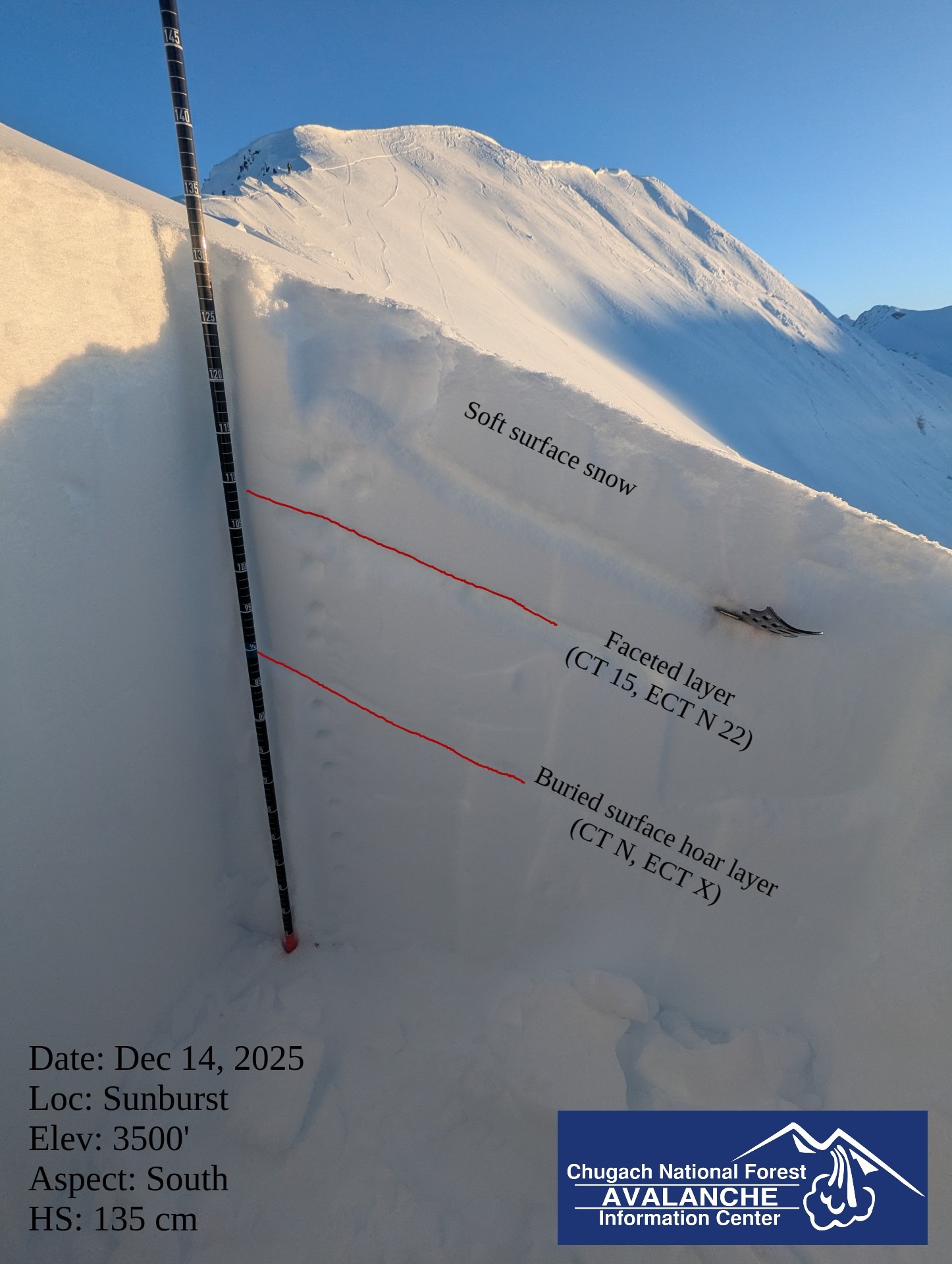
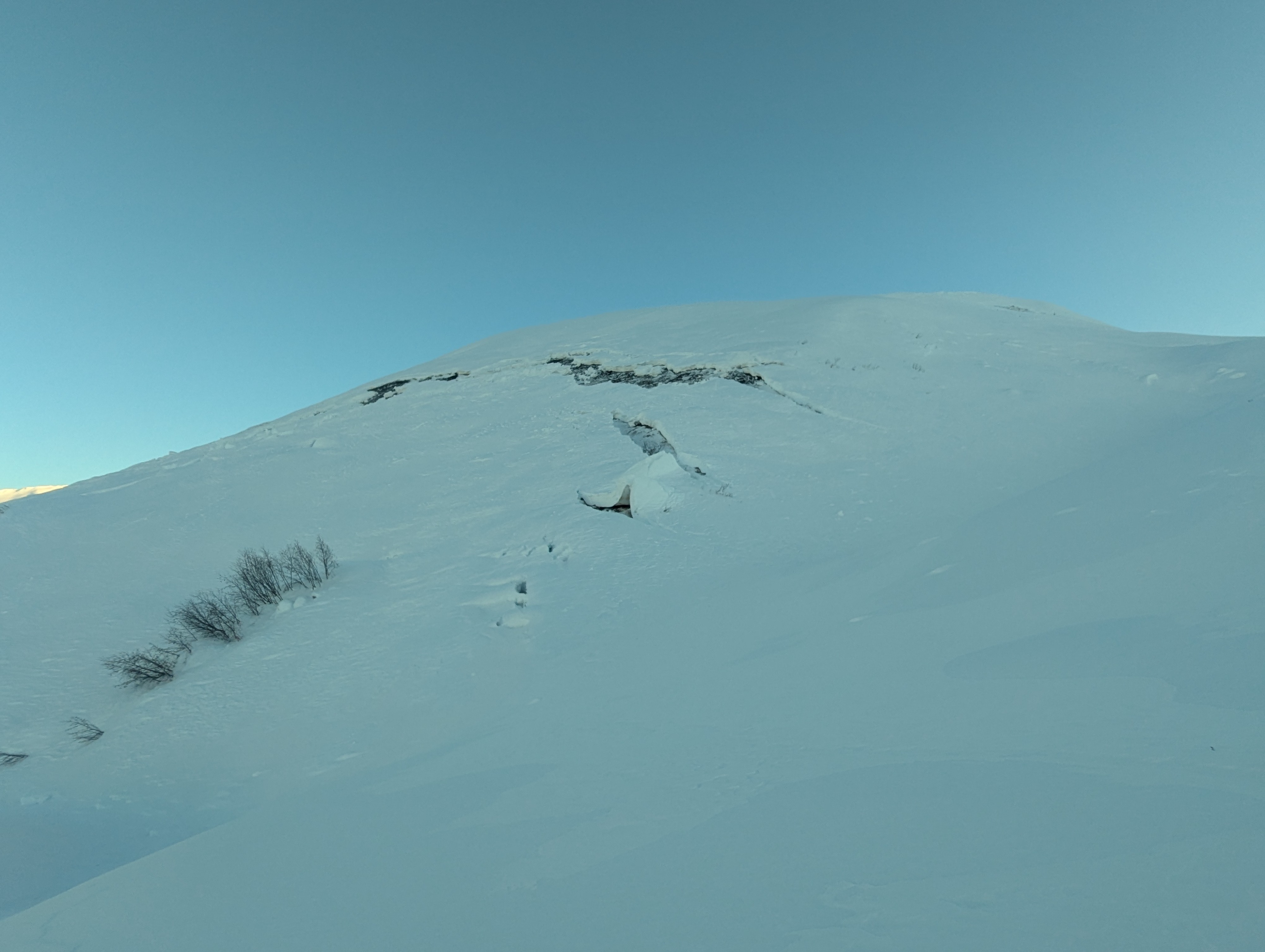
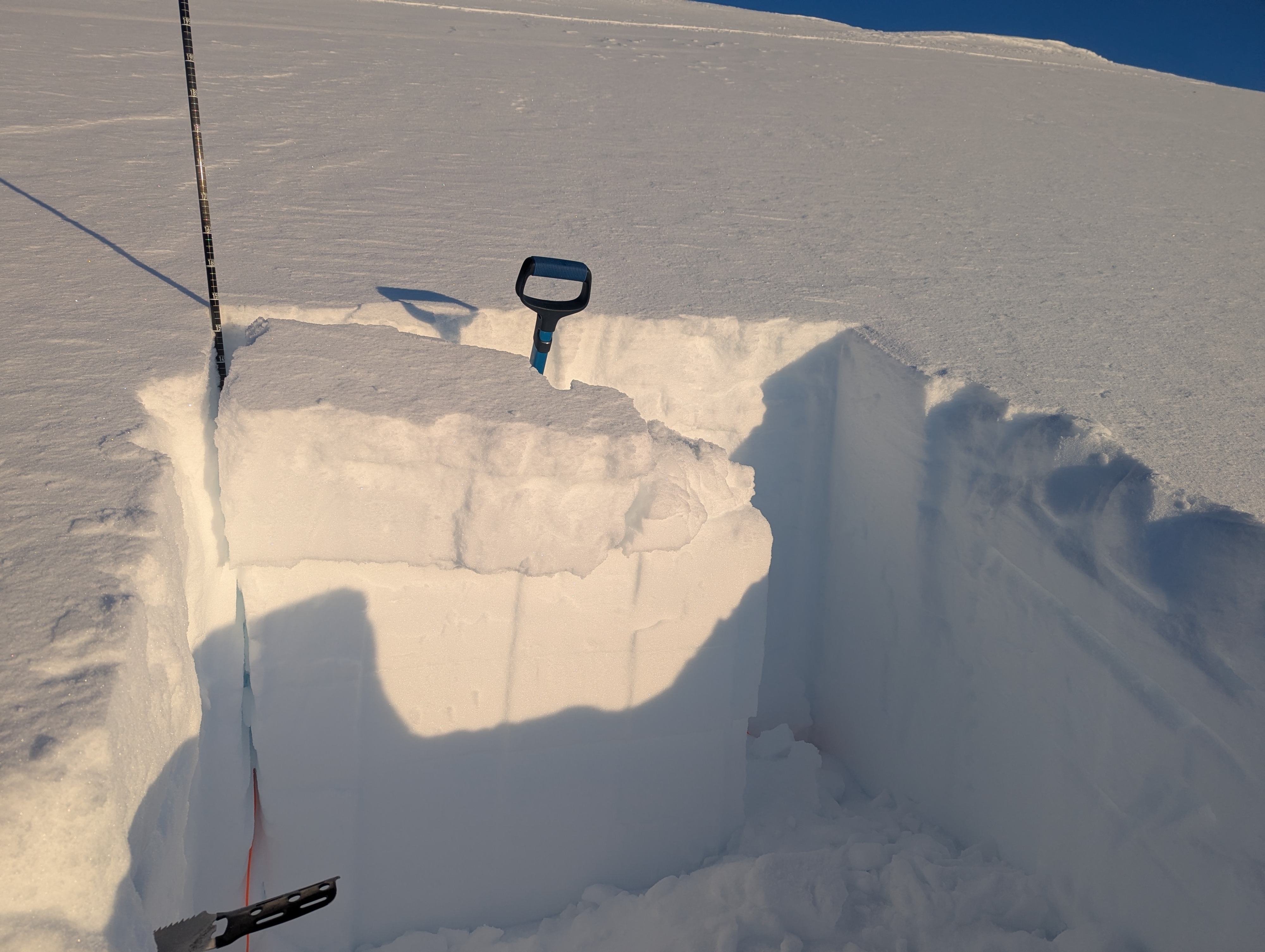
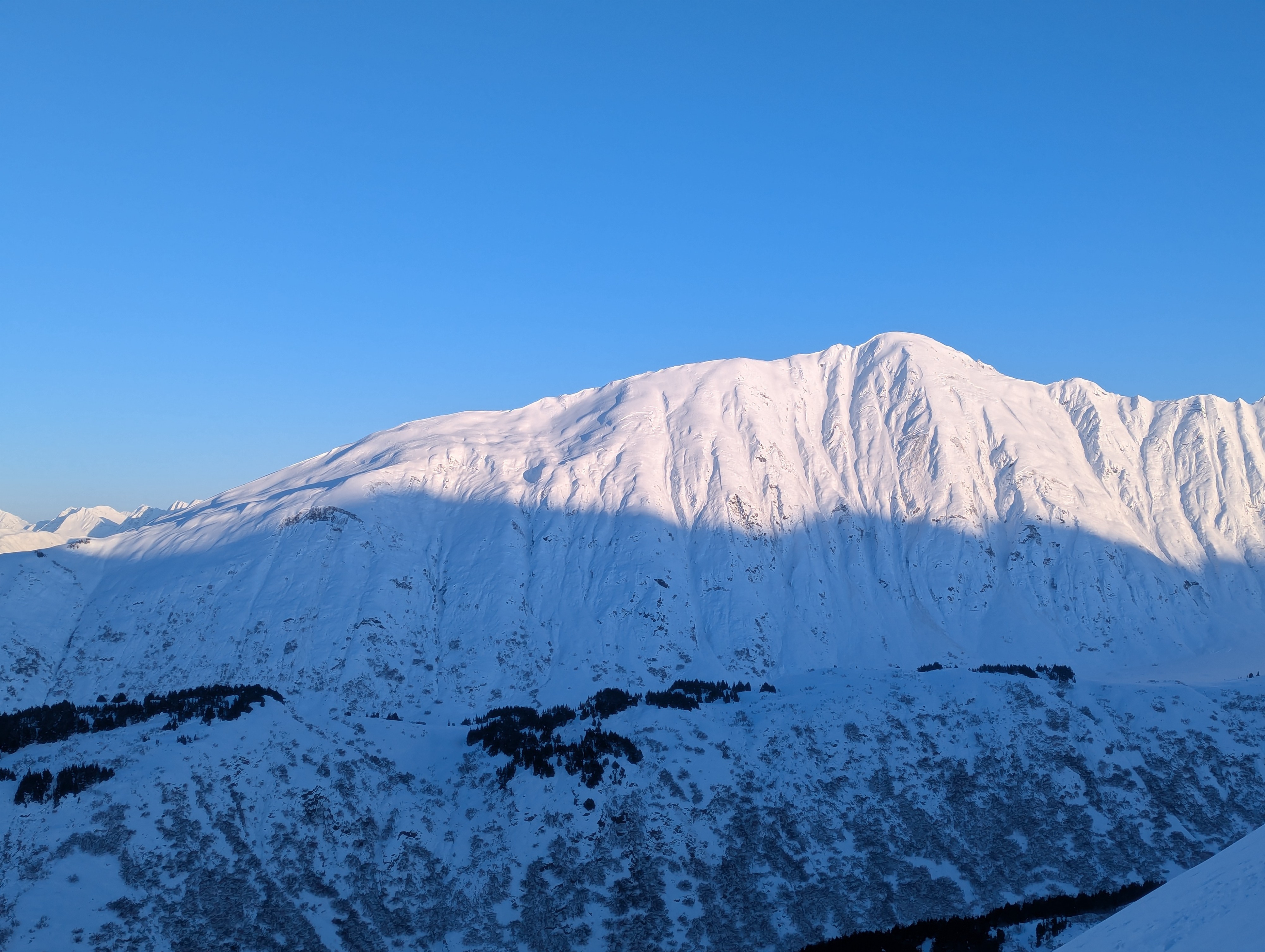
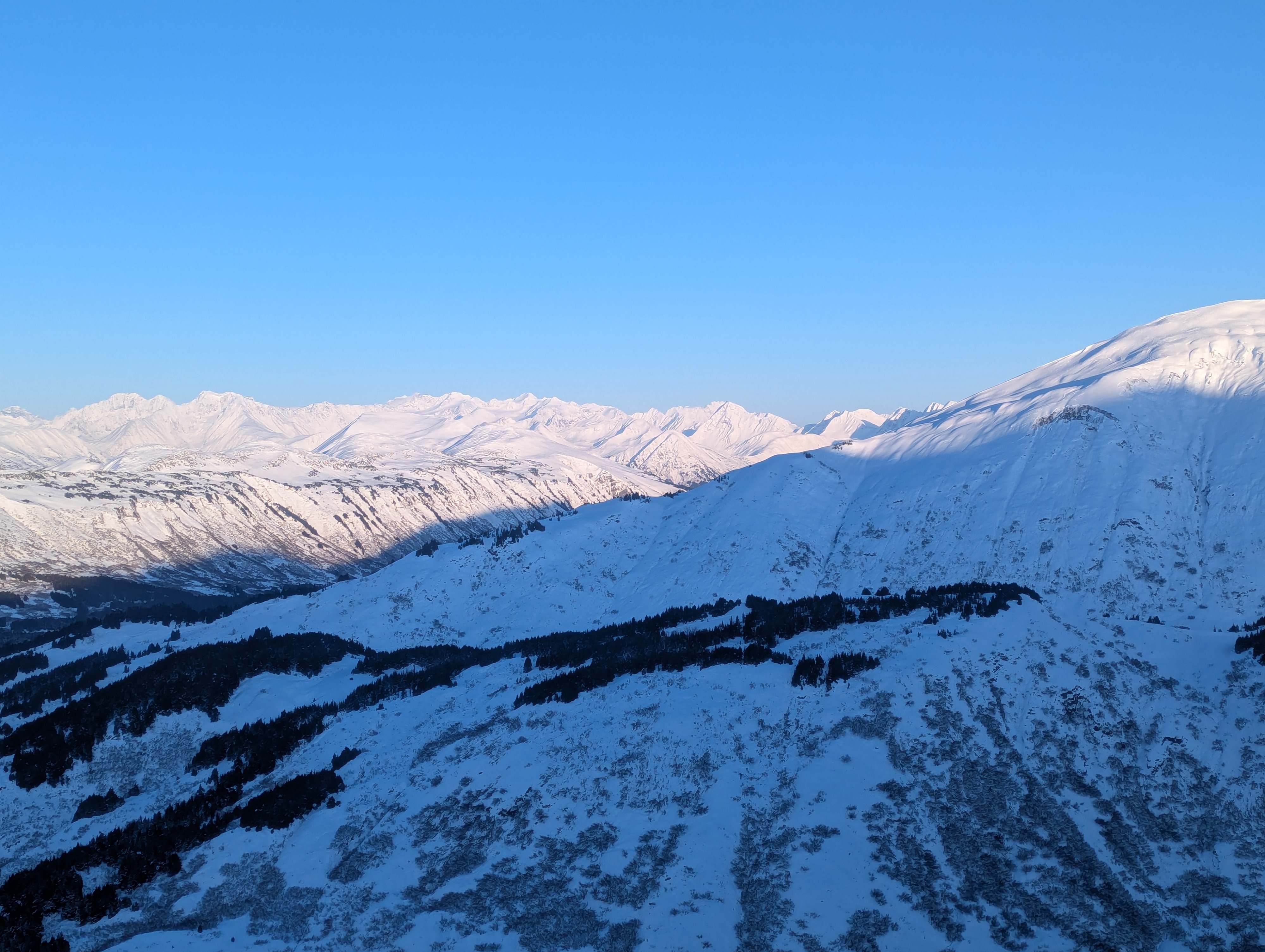
We tried to get to Lipps but got shut down and retreated to Sunburst. Overall, the winds over the past few days seem to have done significant damage to the surface conditions in the alpine. There were some pockets of soft snow interspersed with variable wind crust. We dug a pit at 3500' on a S aspect and found a layer of facets about a foot deep and a layer of buried surface hoar about two feet deep. Neither of these produced concerning results in our pit tests, but persistent weak layers like this can give inconsistent results in snow pits. We can't write them off yet, but the lack of unstable results is a sign that these layers are not very reactive right now, at least in this location.
Weather
- Air Temp
- -7 to 10 F
- Cloud Cover
- clear
- Wind Loading
- previous
- Snow Avail For Transport
- moderate amounts
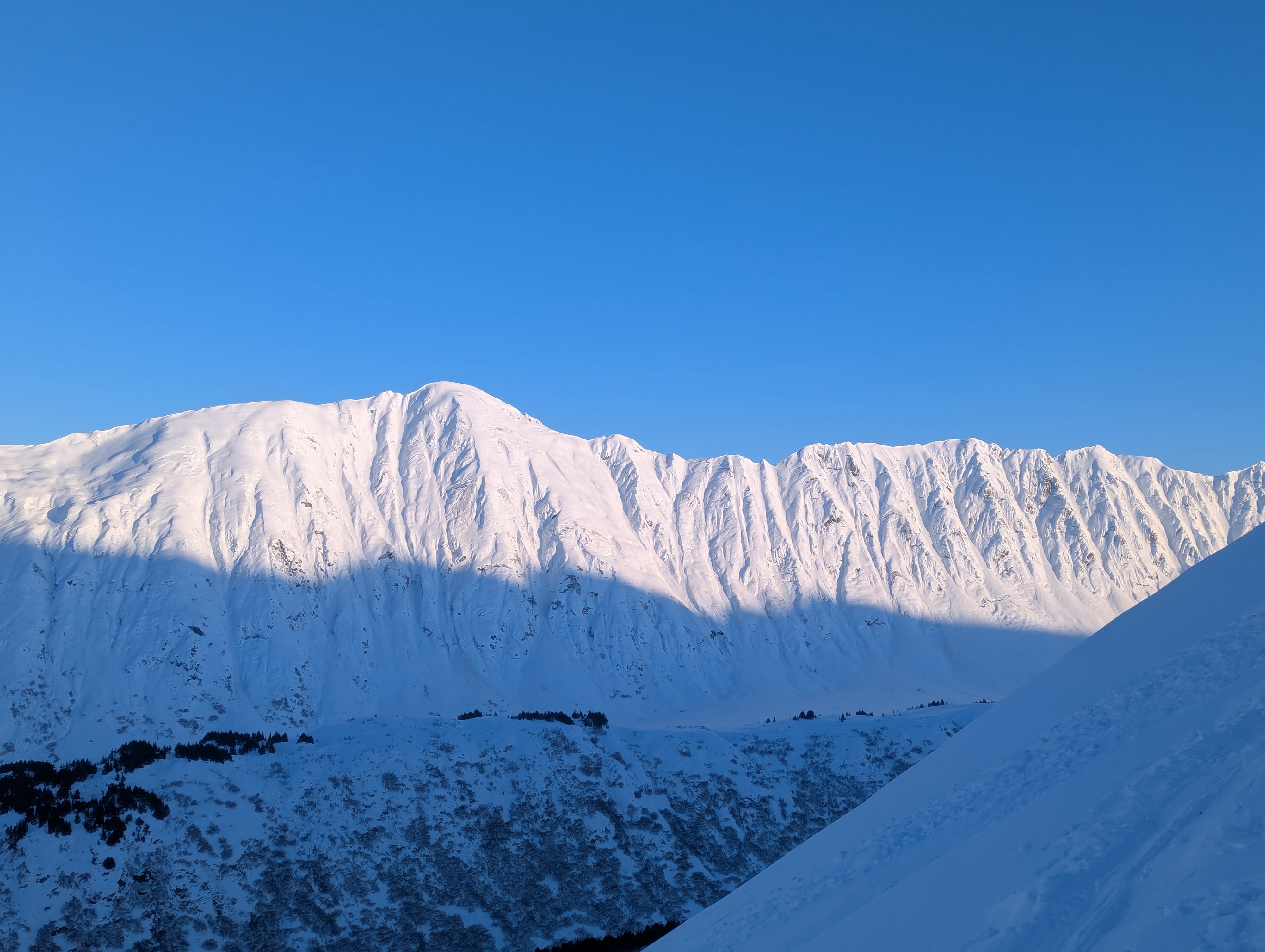
Cold and clear day. There was a light down valley wind coming from Taylor Pass that felt cold at some points of the skintrack, but overall the winds were minor and didn't appear to be transporting snow on any of the ridgelines we could see.
Snowpack
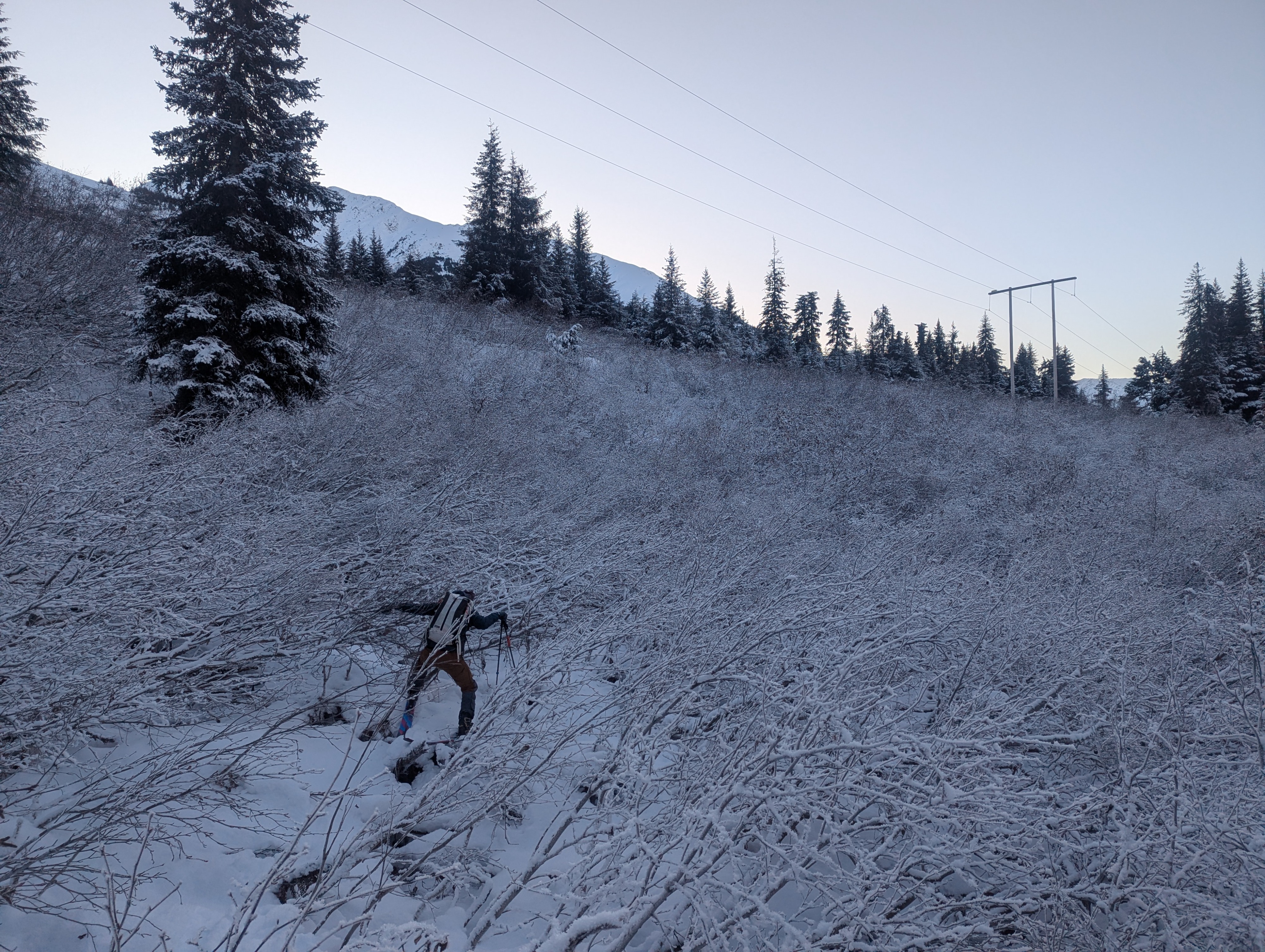
The snow surface conditions were highly variable. Down low we found a very firm icy snow surface. From about 2000 to 2500', there was an icy breakable crust. Above 2500', there was some soft snow on sheltered slopes, but largely the surface had variable wind crusts that made for tricky skiing conditions. We dug a pit in a wind sheltered location off the skin track at 3500' on a south aspect. The total snowpack depth was about 4 to 5' (135 to 150 cm). Overall the snowpack was strong and mostly right side up. There were two notable weak layers in the upper part of the snowpack. A layer of facets about 1' deep that failed in the compression test (CT 15) but didn't propagate in the extended column test (ECT N 22). And layer of buried surface hoar about 2' deep that failed on overdrive in the compression test (CT 35) and did not fail in the extended column test (ECT X). These test results indicate that these layers are not very reactive in this location, but there could be specific slopes where they are better preserved or buried more shallowly where they could still be a problem.