
Quick report
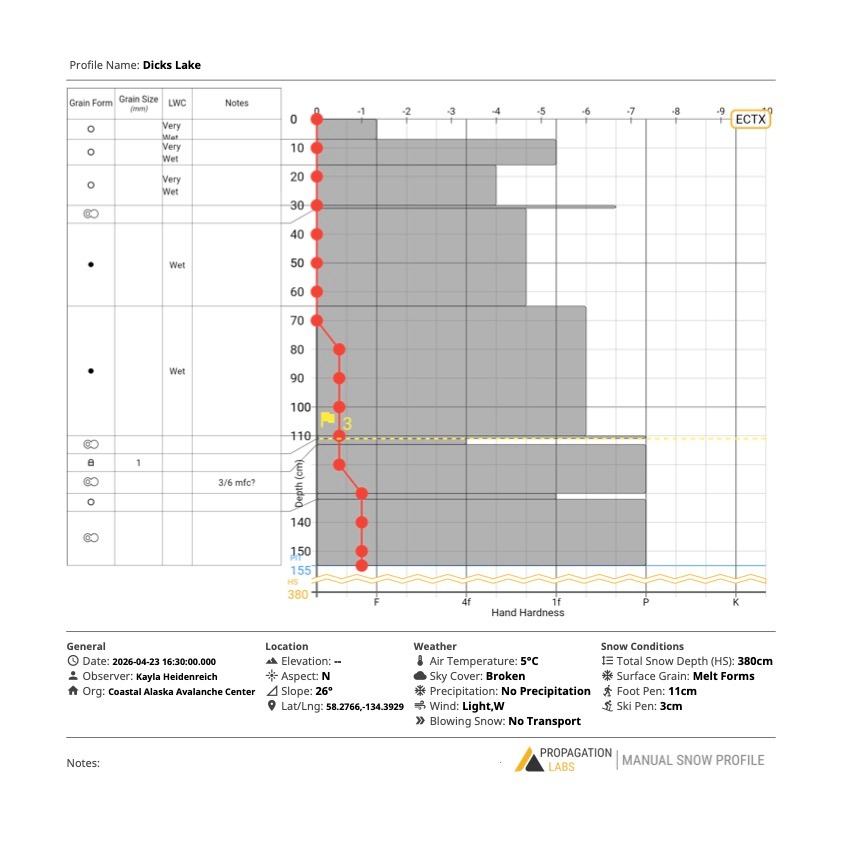
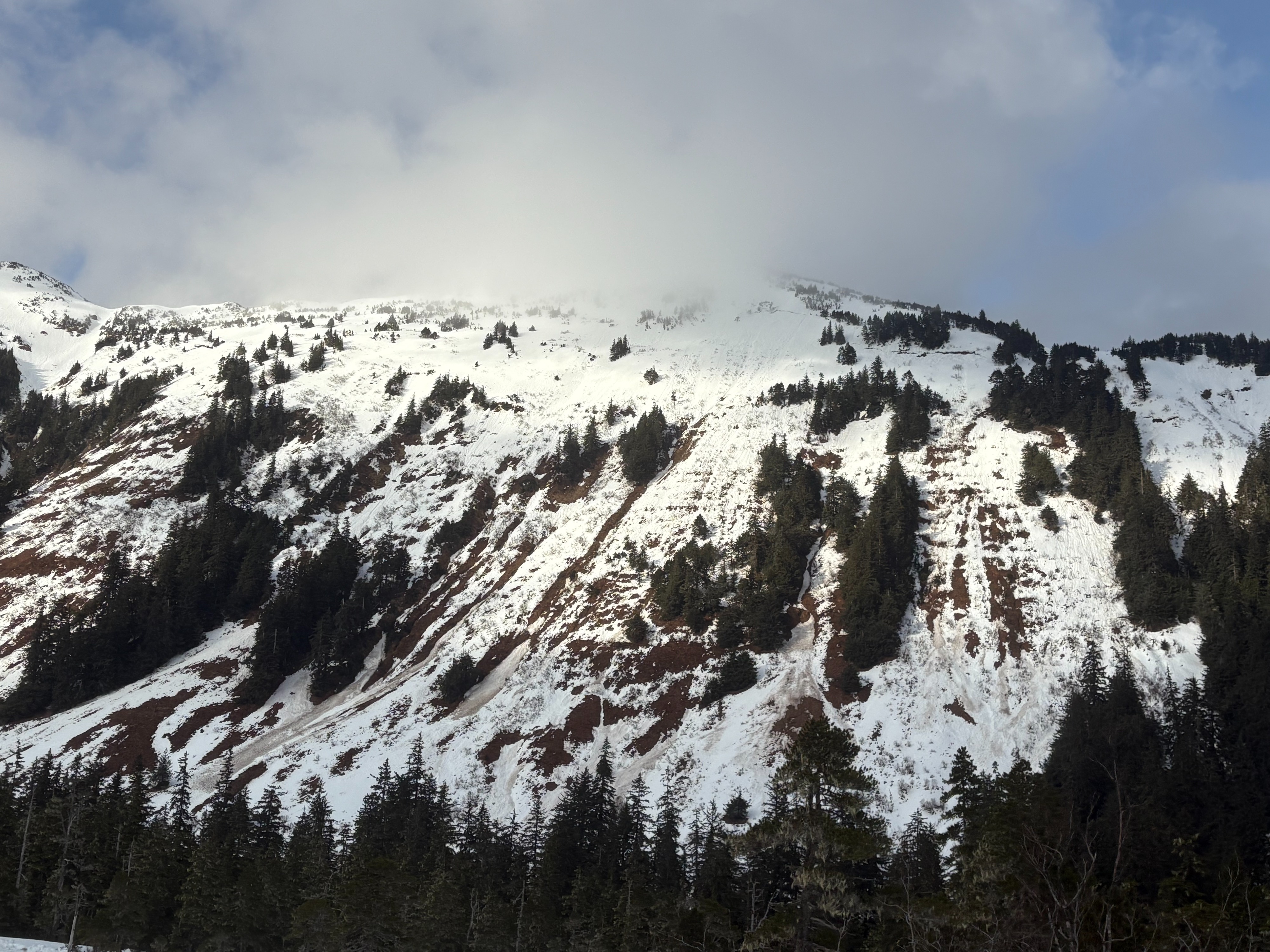
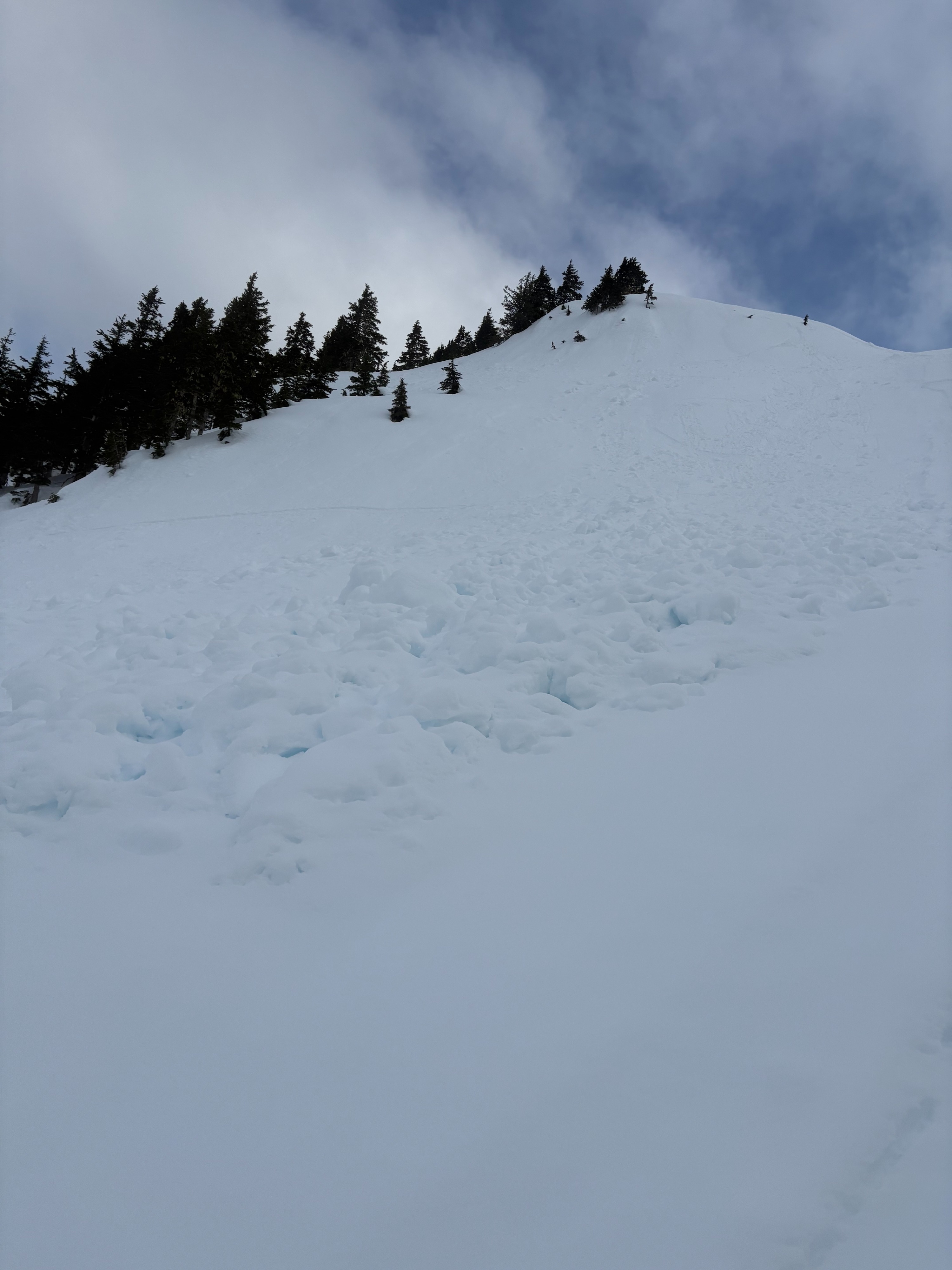
“Hot pow” conditions on a tour toward High East to investigate snowpack temperatures and assess older weak layers. Total snow in this locaiton was 380cm. A 150 cm pit revealed few notable concerns. A melt-freeze crust was present approximately 110 cm below the surface, with large, sugary melt forms beneath it. This layer showed no reactivity in stability tests. Widespread signs of wet snow instability were observed on all aspects, including evidence of wet loose avalanches in the east bowl with sizable debris. Along the TSA ridgeline, intense solar input has led to visible glide cracks and lots of exposed dirt. Overall riding conditions were poor as it was sticky top to bottom.
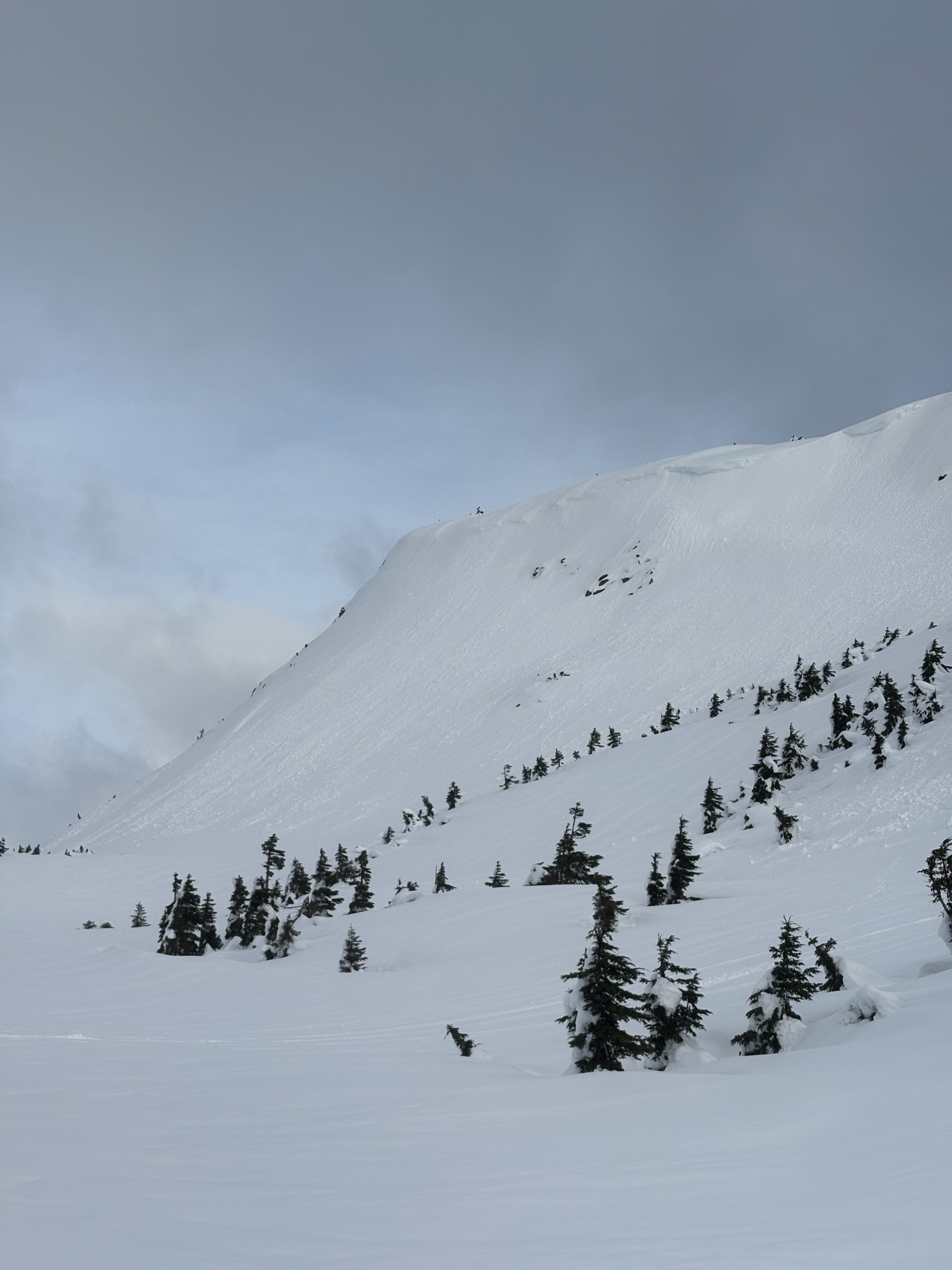
Several recent avalanches have been observed around Douglas, including a notable crown in Jumbo Bowl. The depth and bed surface of this avalanche are currently unknown. With continued warming temperatures and increasing solar radiation, the likelihood of additional avalanche activity is rising. Potential concerns include cornice failures, wet slab avalanches, glide avalanches, and wet loose avalanches with the potential to step down into deeper layers of the snowpack.
Weather
- Air Temp
- 41
- Cloud Cover
- broken
- Wind Loading
- none
- Recent Snowfall
- 0
- Snow Avail For Transport
- none
Clouds were rolling in and out throughout the afternoon. Light Westerly winds.
Snowpack
The upper snowpack was very wet. Minor density changes were observed within the upper 100 cm, but no significant layering was identified. A melt-freeze crust was found 110 cm below the surface, potentially the March 6 melt-freeze crust. Beneath this crust, 1-2mm sugary melt forms were present. Stability tests produced no notable results; however, after when shearing off the ECT column after testing the block sheared off 125 cm deep, right below the melt-freeze crust. Temperature measurement indicate the snowpack is trending toward isothermal conditions. Riding down, snow was sticky top to bottom.