
Quick report
- Cracking
- isolated
We went to Virginia Lakes to see how wind slabs were settling after the January 3rd storm.
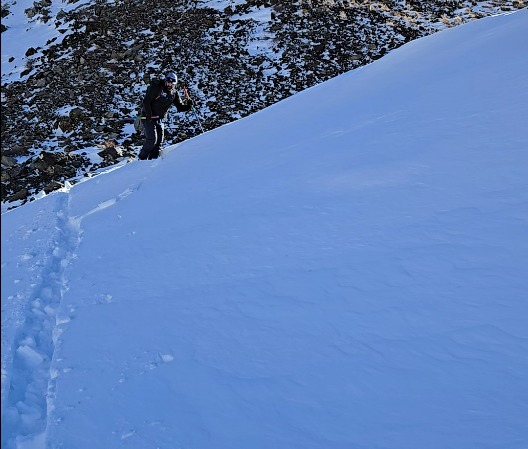
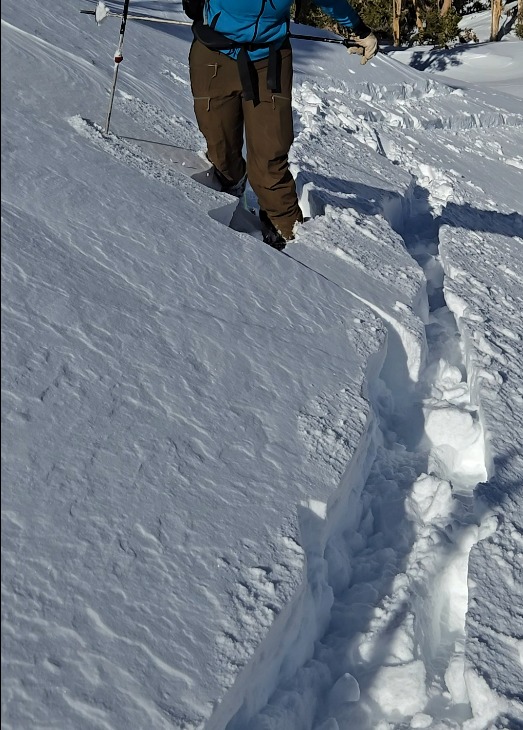
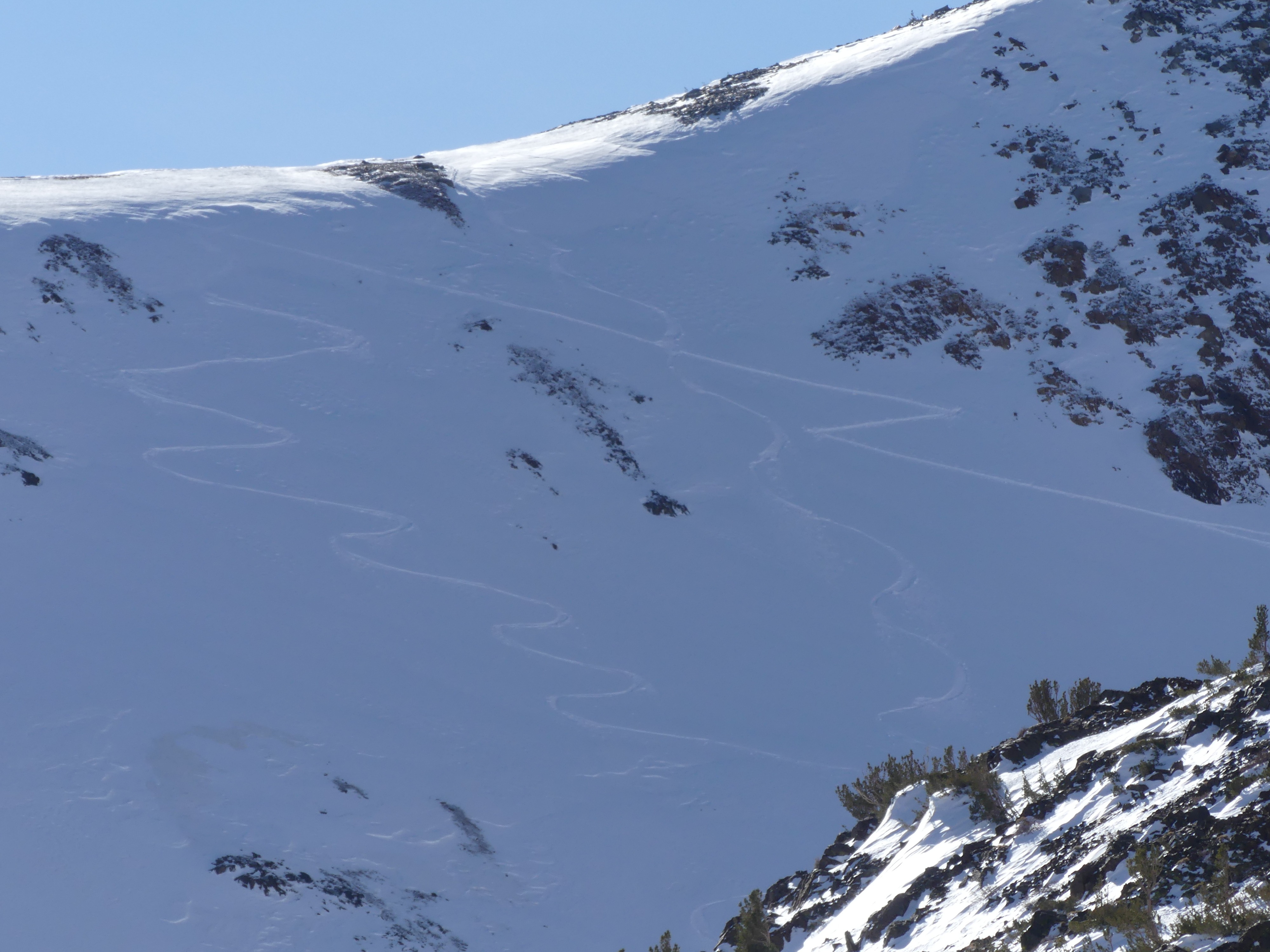
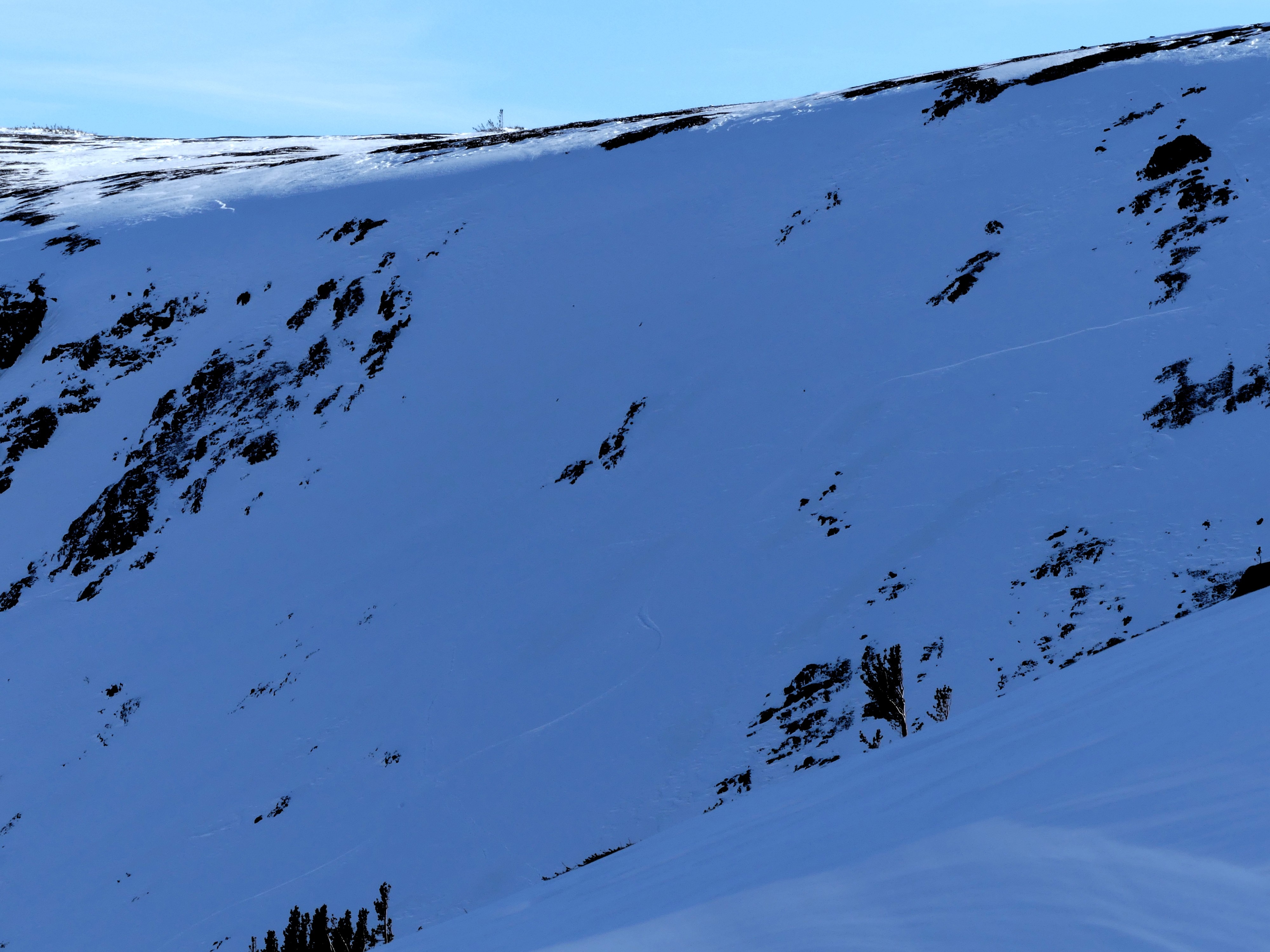
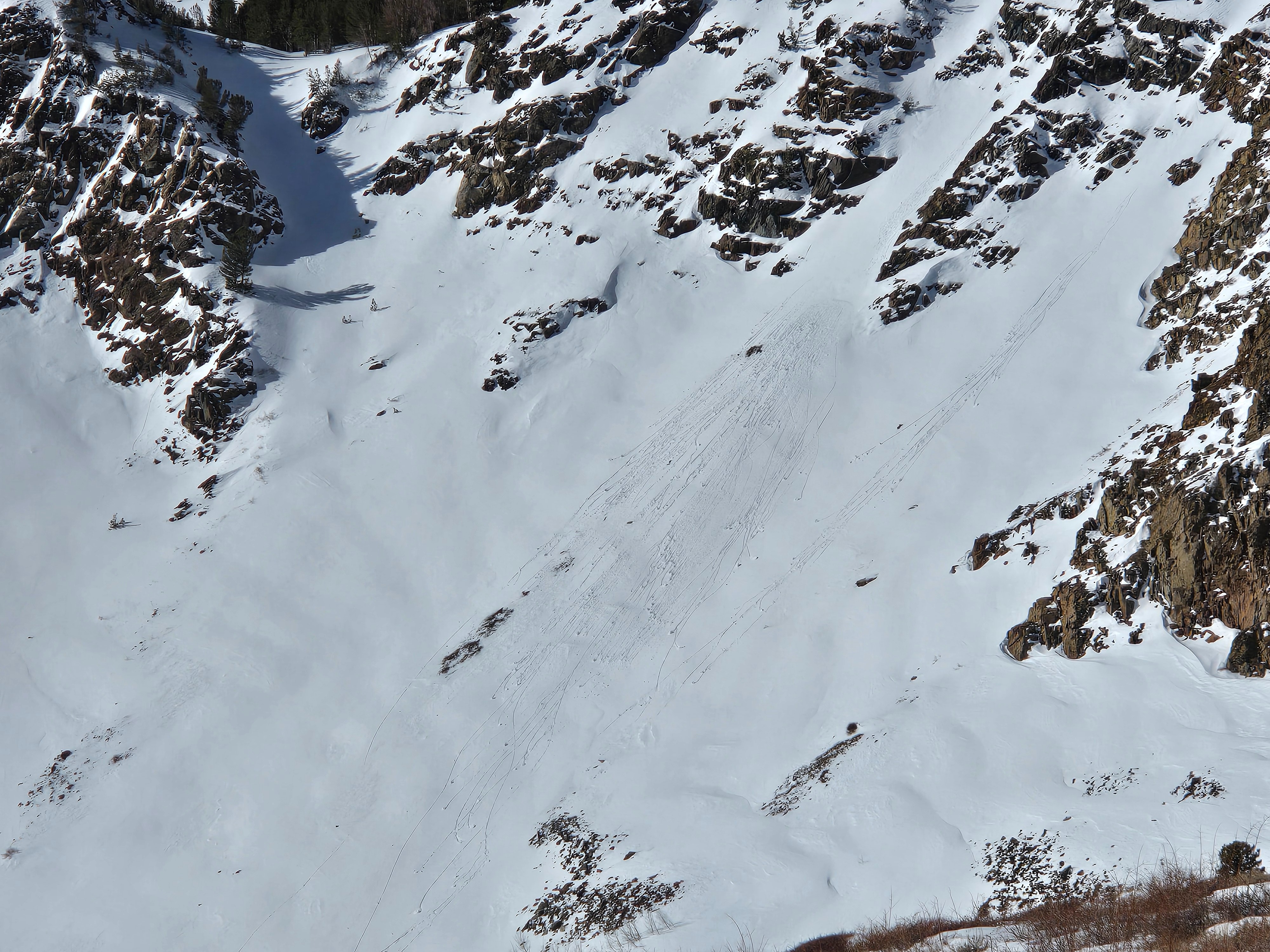
- We found improving stability in wind drifts on leeward terrain near treeline, with only minor cracking in denser surface snow. Other parties today skinned up, ski cut, and skied steep, leeward alpine terrain without incident. We saw no recent avalanches.
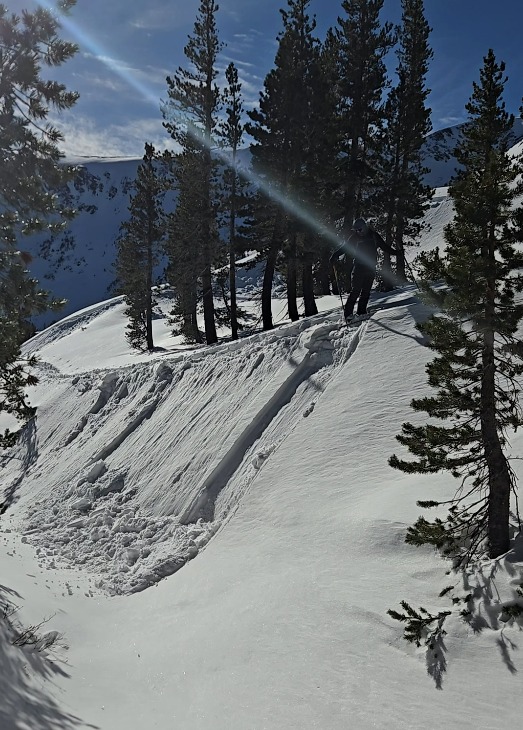
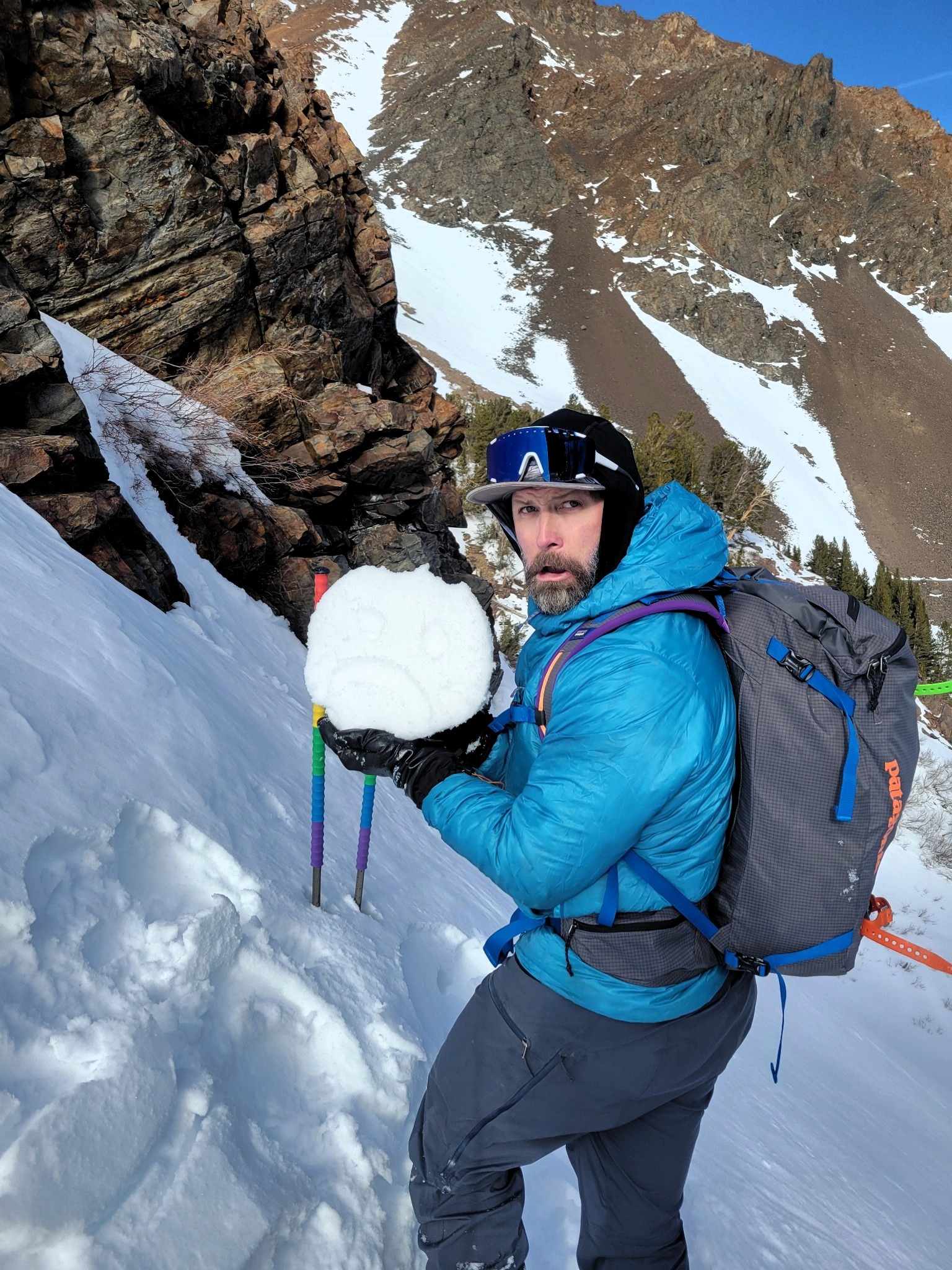
- We triggered a few very small sluffs in the morning. These became much harder to trigger nearby in the afternoon after another day of above-freezing temperatures.
- Coverage, i.e. the potential distribution of future avalanches, is best near treeline and on easterly aspects above treeline close to the Sierra Crest. Northerly and southerly alpine slopes have been cross-stripped and most of the snow on those aspects is confined to gullies.
Weather
- Air Temp
- Above Freezing
- Cloud Cover
- scattered
- Wind Loading
- previous
- Snow Avail For Transport
- moderate amounts
It was partly cloudy with light west winds. We saw no blowing snow.
Snowpack
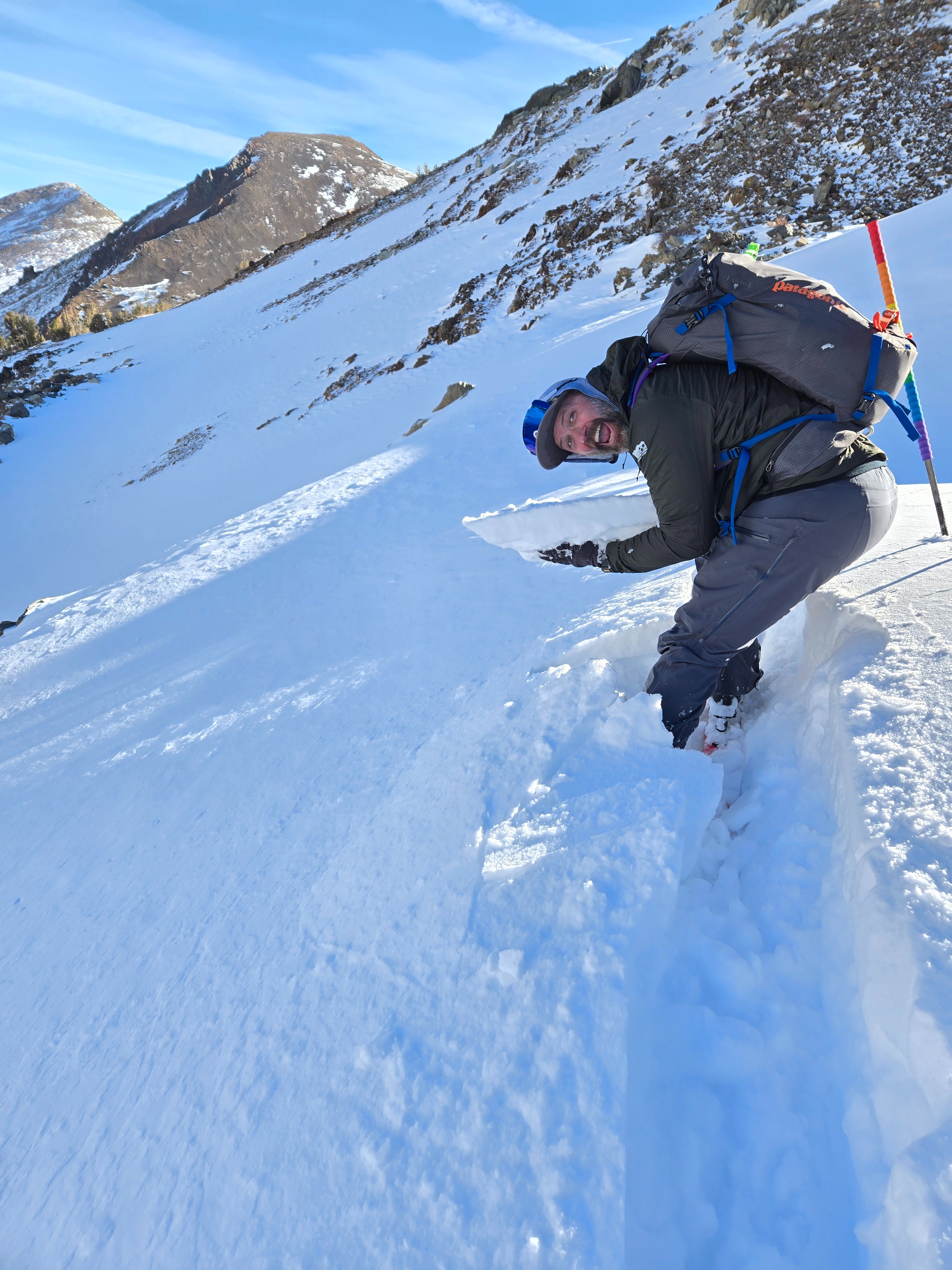
Wind slabs from the 1/3 storm were soft (4F) near treeline and hard (1F) above treeline. Drifts blanketed the north and east sides of ridges and the sides of gullies stretching for about 30-50 feet downslope at the most. They averaged about a foot thick. It was hard to get them to crack, even after we undercut some of them. We did get some sudden small column snowpack test results and some non-propagating long column test results in the soft (F-) recent storm snow (DF/PP) under these slabs.
In our hasty pit at 10,600 ft, there was a faceted interface between older, harder wind slabs that gave us sudden planar small-column test results but did not propagate in extended column tests.
The mid-pack where we dug and probed was strong (P) down to about 30 cm above the ground, where it felt much weaker. We did not dig to the ground.
Scoured sides of ridges near and above treeline had thin coverage of mostly faceted snow. The surface in protected trees on shady slopes was also faceted.
Rollers tumbled down sunny slopes as the sun hit them mid-morning, and we found a melt-freeze crust on these aspects later in the afternoon.