
Quick report
Against our better judgment, we went back to Virginia Lakes this morning. Our goals were to 1) observe the local rain/snow line, and 2) see if the existing snowpack had been changed by light rain and humidity.
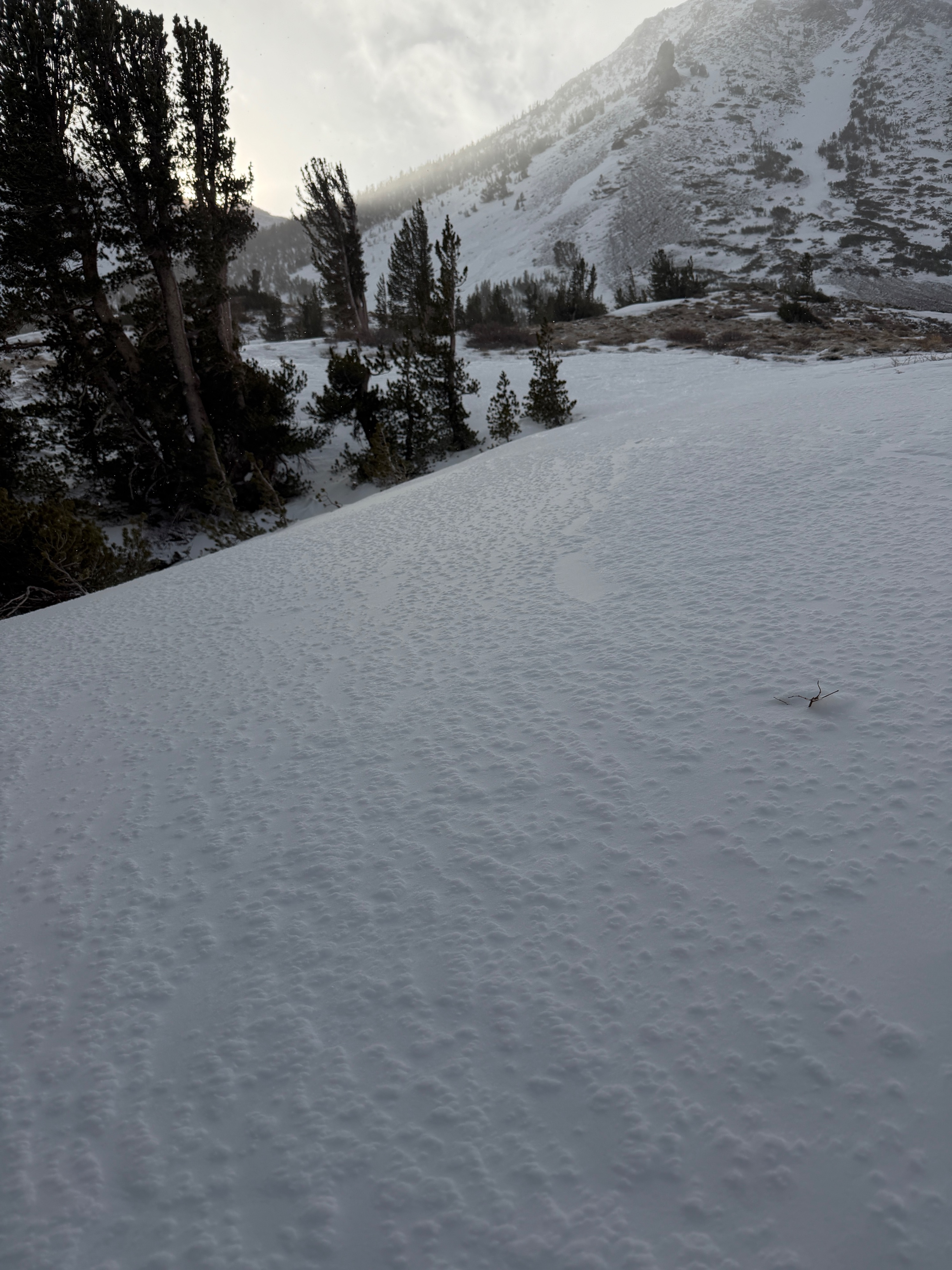
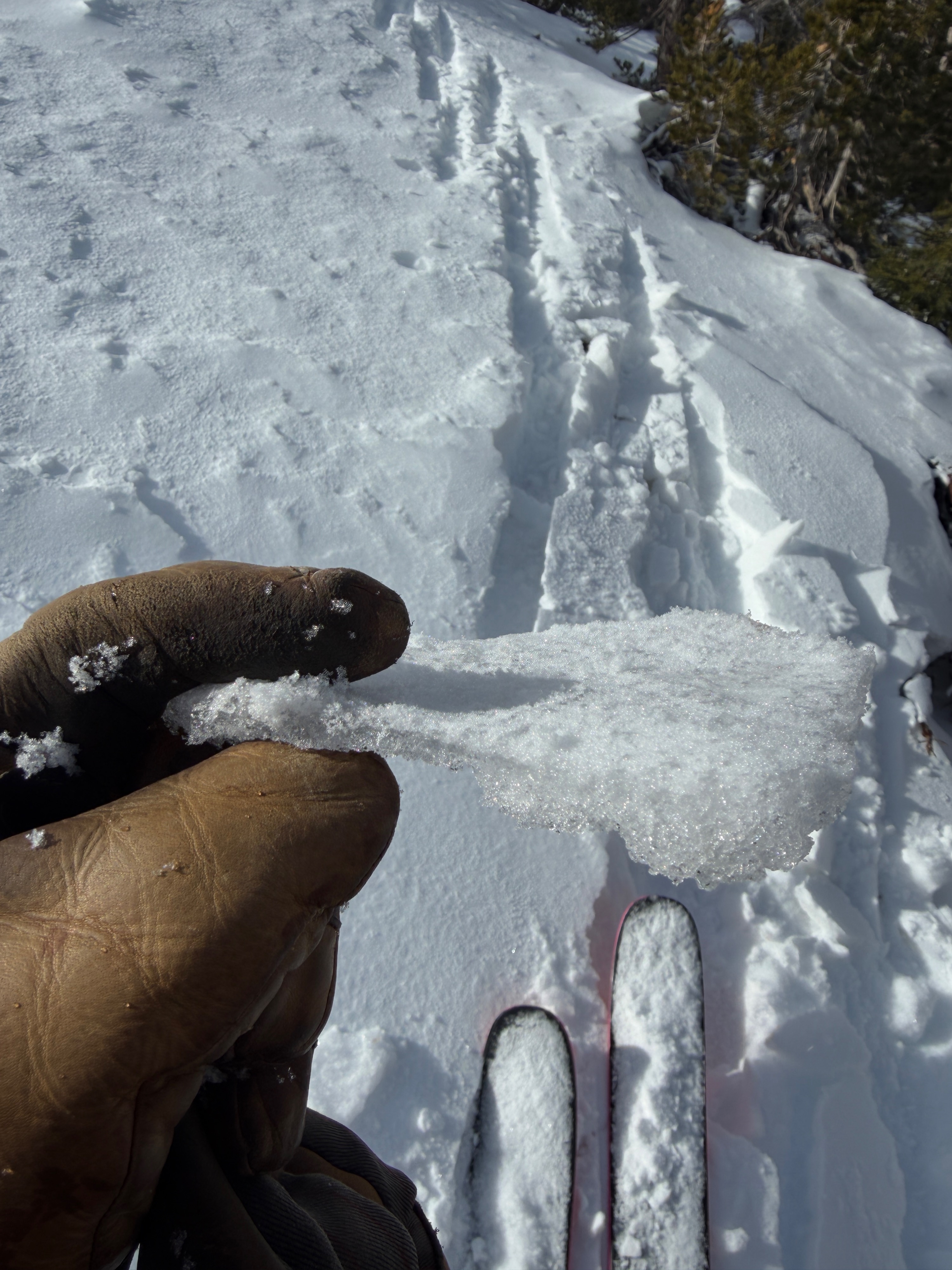
If you had thought that current snow surfaces could not get any more variable (like we did), you would have been incorrect. Below 10,000 feet, a semi-supportable rain crust capped most of the limited old snow. This crust was supportable until you tried to turn, at which point you would punch through to the moist snow below.
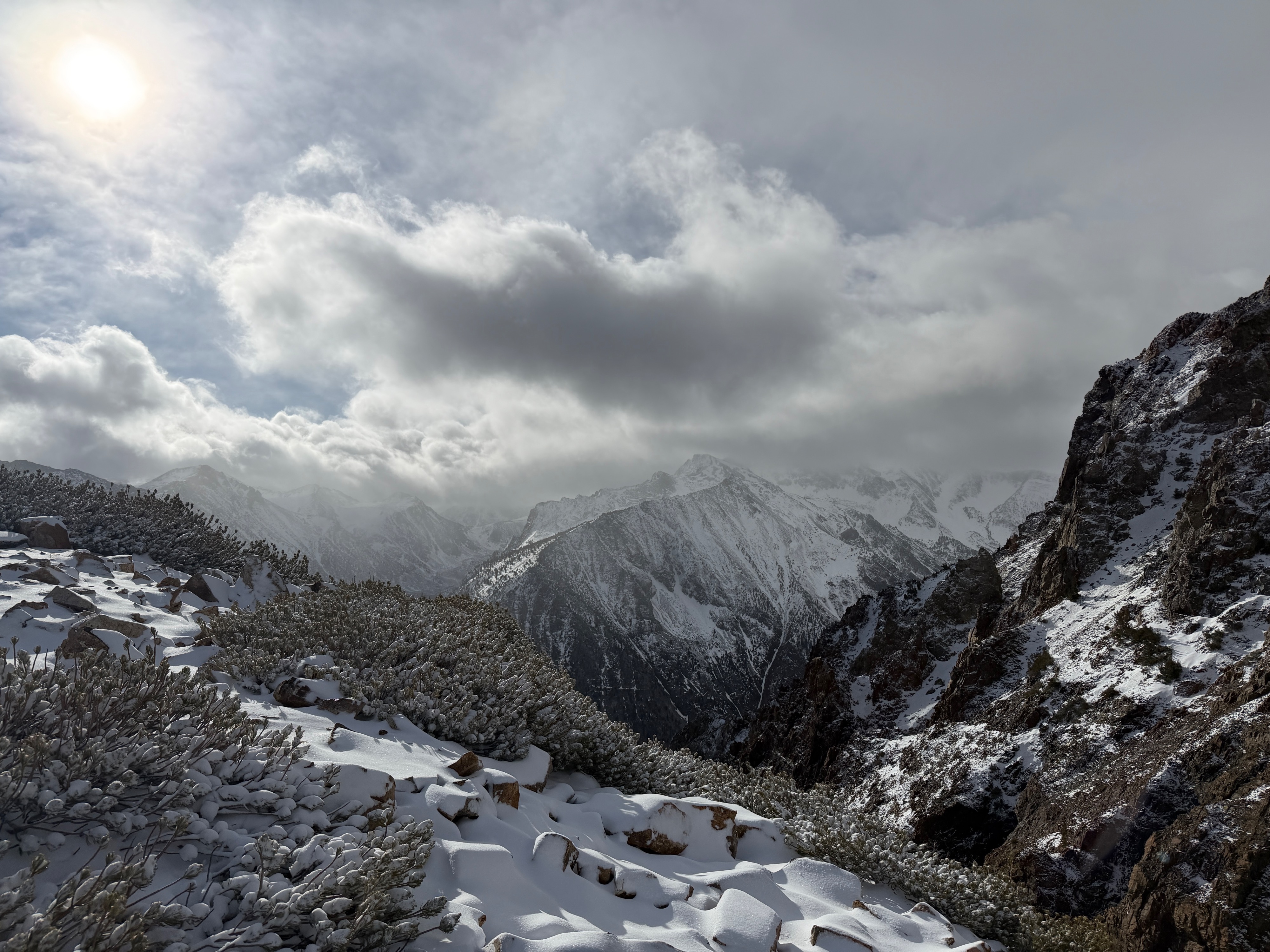
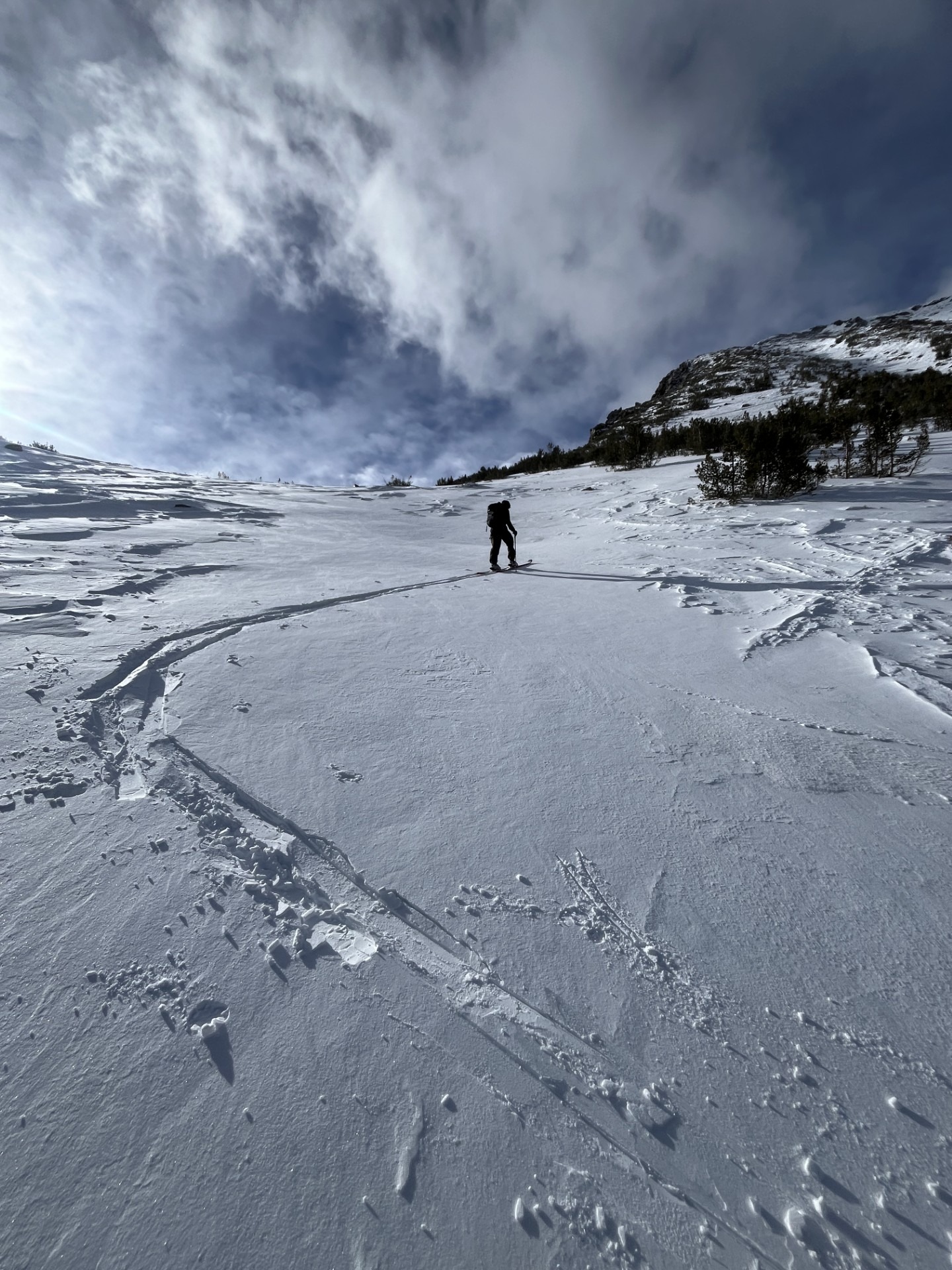
Above about 10,200 feet, the new rain crust was less discernible. A trace of new snow had been blown around here and there, but hardly enough to really talk about. More noteworthy - the subsurface at this elevation and above is either scoured down to rock, or made up of multiple layers of crusts and large facets.
Snow depth and distribution are highly variable, even on the same elevation, aspect, and slope. In places where more than one layer of snow still exists, the structure is undoubtedly poor.
Weather
- Air Temp
- 35
- Cloud Cover
- broken
- Wind Loading
- light
- Rain Elevation
- ~10200 feet
- Recent Snowfall
- Trace
- Snow Avail For Transport
- small smounts
Partly cloudy, breezy and just above freezing at the car at 9600 feet. As we ascended, we got a brief break when winds subsided and skies cleared. By the time we were back to the car, the westerly winds had picked back up and skies were again mostly cloudy.
Snowpack
10000 feet and below: Patchy coverage and variable surfaces. A new, semi-supportable rimed rain crust on the surface with moist facets and melt forms below.
10000 feet and above: Trace to 4cm of new snow on top windboard, loose, dry facets and crusts. Some windward slopes are scoured down to the ground. Most solars below 11000 feet are entirely free of snow. Pit on a north-facing aspect around 10,400' was dry to the ground.