
Quick report
- Cracking
- specific
My goal was to be out during the high snowfall intensity and track the forming storm slab problem.
I toured out from the ski area to Hemlock Mountain.
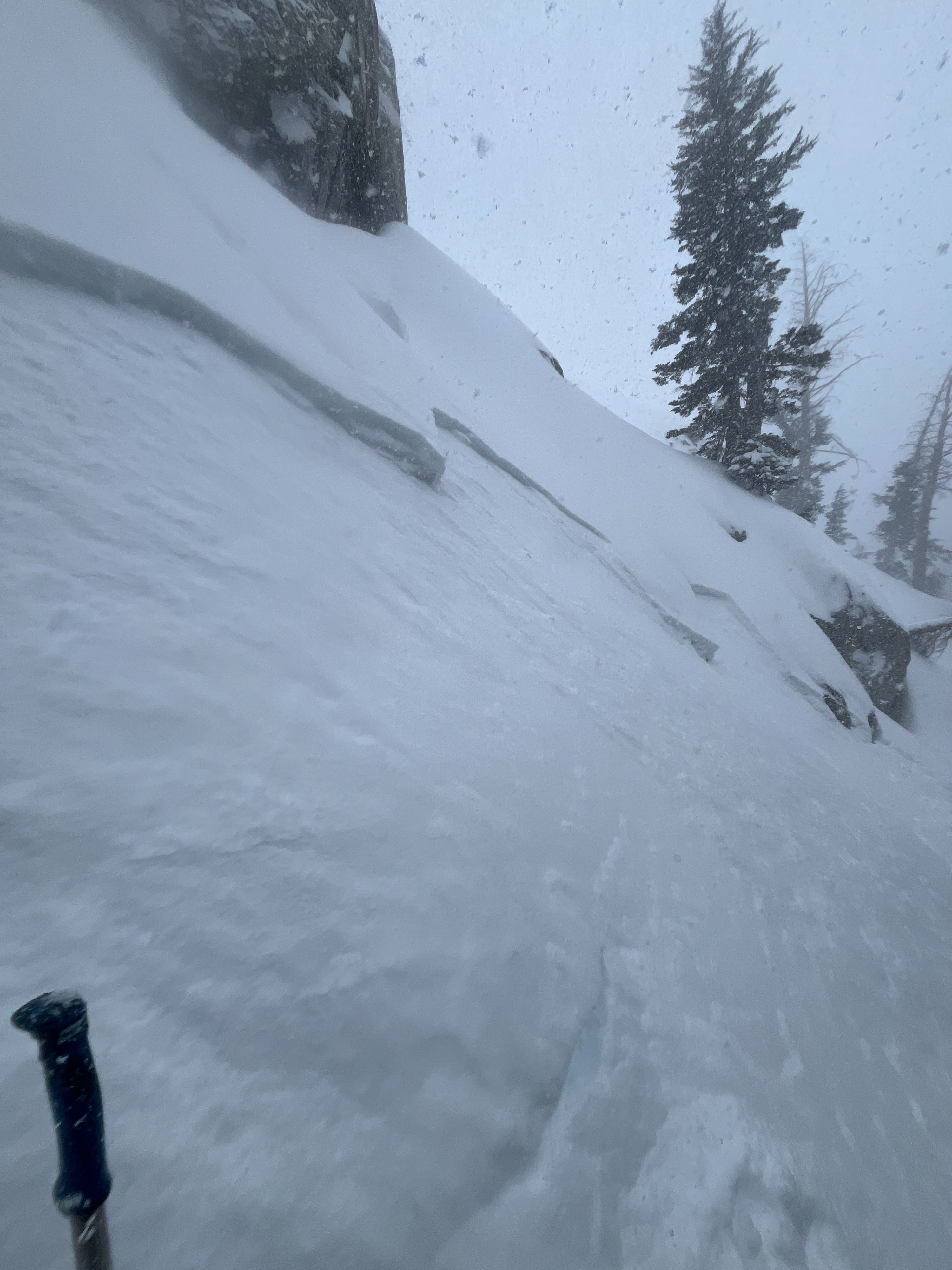
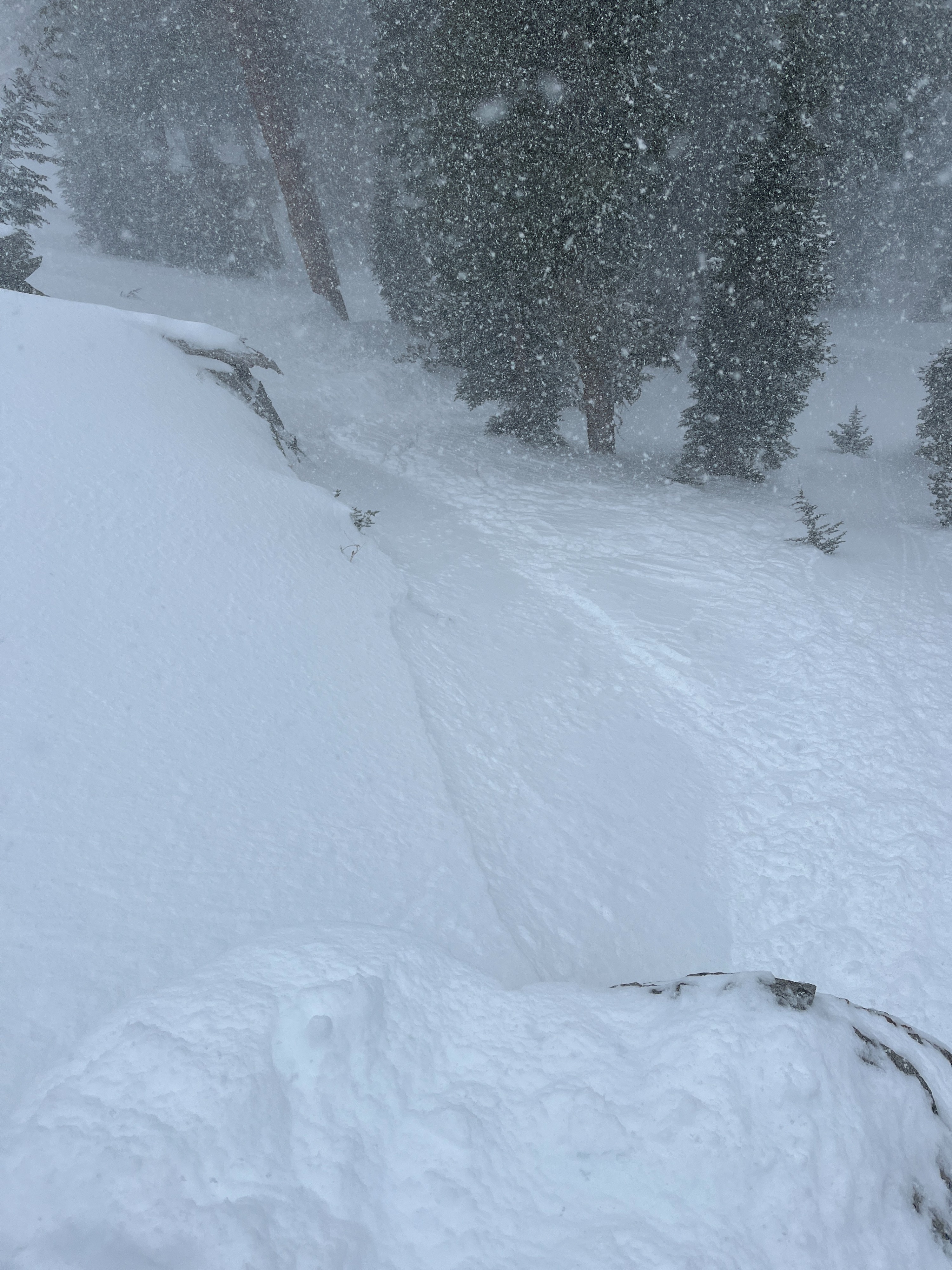
After a couple hours of 2"/hr snowfall rates, small storm slabs were easy to find. After 3 hours of high snowfall intensity, I could intitiate D1 storm slabs on any slope or roll 35 degrees or steeper. These slabs were sensitive and propagtion would often shoot several meters out in front of my skis. If given enough room, they would run fast and entrain snow as they went.
I did not get to a great spot to safely test wind slabs, but based on ridgetops winds and plenty of light snow to transport, I'm sure they're up there and growing as we speak.
I continued to trigger small storm slabs and sensitive loose dry sluffs all the way down to the road.
Weather
- Air Temp
- 20-25
- Cloud Cover
- obscured
- Wind Loading
- moderate
- Rain Elevation
- Below 7000 feet
- Recent Snowfall
- 10 to 30
- Snow Avail For Transport
- large amounts
Light snow in the morning. Consistent 1"/hr around noon, and 2"/hr in the afternoon. Winds were light to moderate out of the southwest, gusting to strong near 10000 feet.
Snowpack
I did not dig deeper than shallow hand shears to look at new storm instabilities.
Prolonged high snowfall intensities (2"/hr) created small sensitive storm slabs on every slope that had an old surface and was steep enough to slide.
On norths at 9000 feet, storm slabs were failing 4-8" down on storm instabilities. On easts at the same elevation, s slabs were failing 8" down on a sun crust.
Avalanche
- Size
- D1 R1
- Type
- SS
- Aspect
- N
- Trigger
- AS
- Elevation
- 9000 ft
Multiple small, sensitive storm slabs.