
Quick report
- Cracking
- isolated
- Collapsing
- isolated
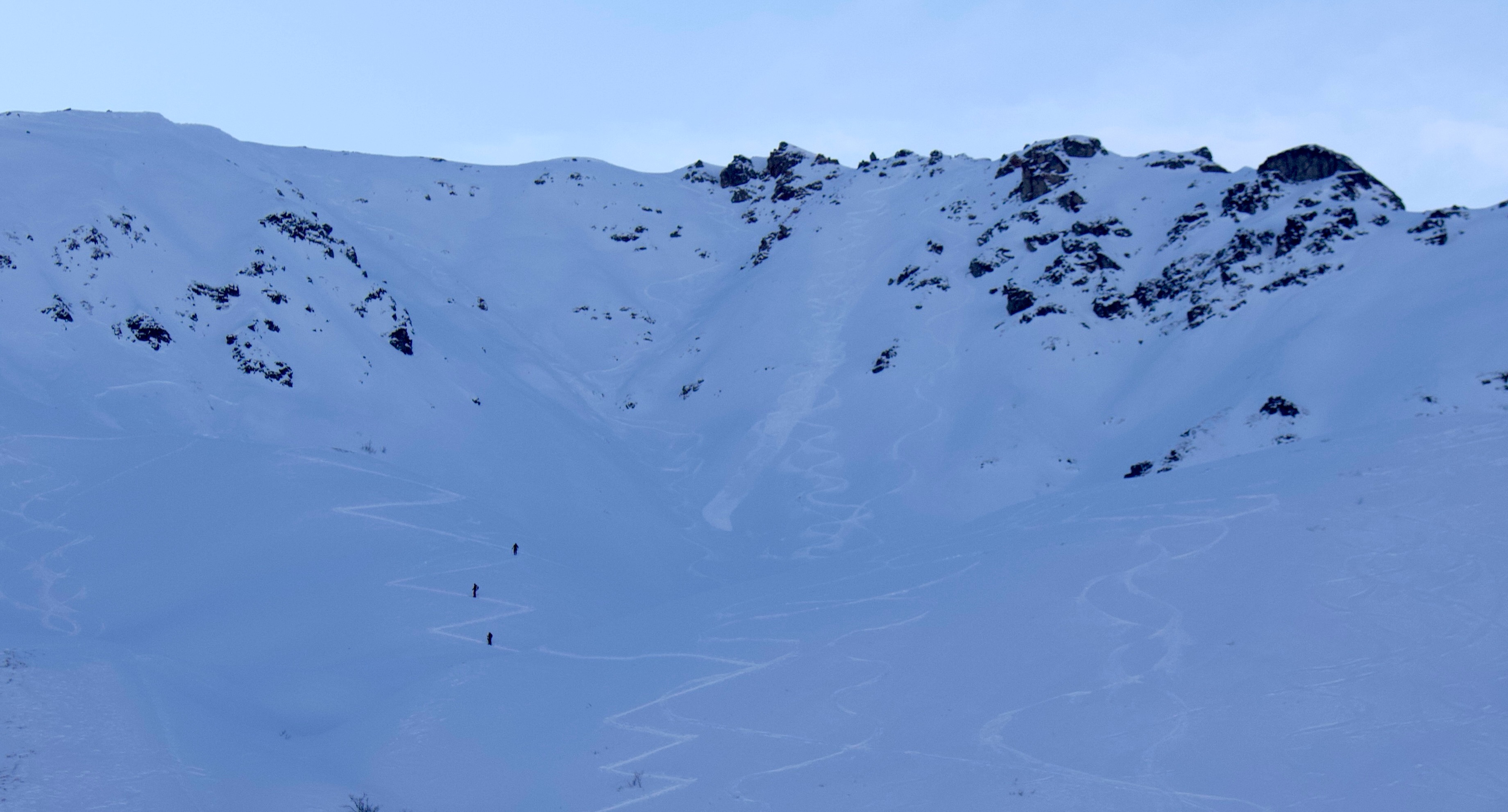
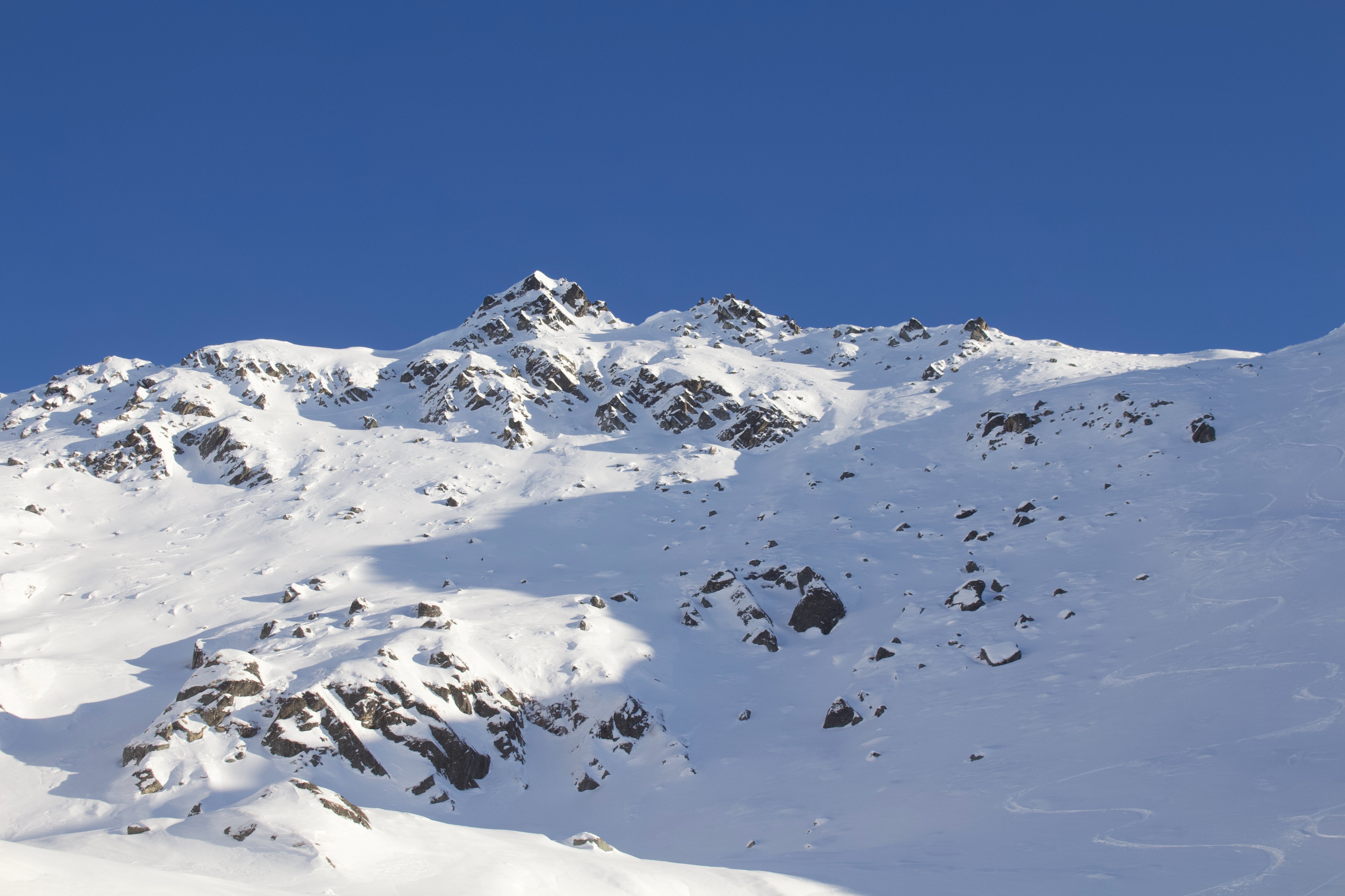
Toured to Mircodot today, and found isolated pockets of stubborn old wind drifts; these drifts were easily pulled away in hand pits. Near the upper portion of the start zones near Mircodot, I found a surprisingly deep snowpack, ranging from 4-6 feet deep. However, this wasn't unanimous across a start zone, and just off the ridge, I found only 2-3' in places. I dug on a SW slope at about 4700', and had poor results in a relatively shallow area, ~3 feet.
I had small amounts of cracking in isolated wind-loaded pockets and one muffled collapse in a very shallow flat slope, where recent winds had built thin drifts over faceted snow below.Weather
- Cloud Cover
- clear
- Wind Loading
- none
- Snow Avail For Transport
- small smounts
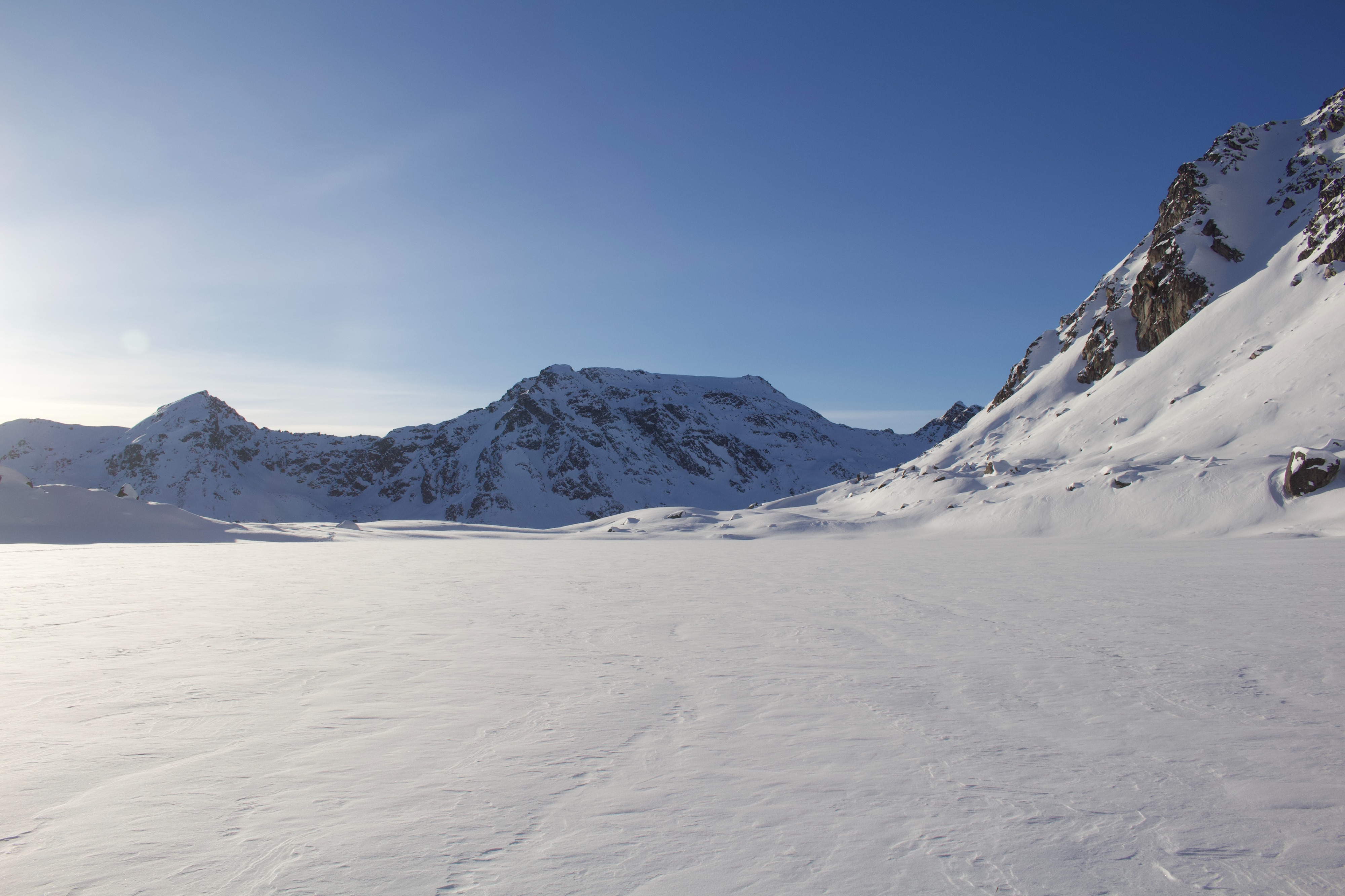
Clear skies and calm winds. The sun was a welcomed warth, with cool temperatures in the basins.
Snowpack
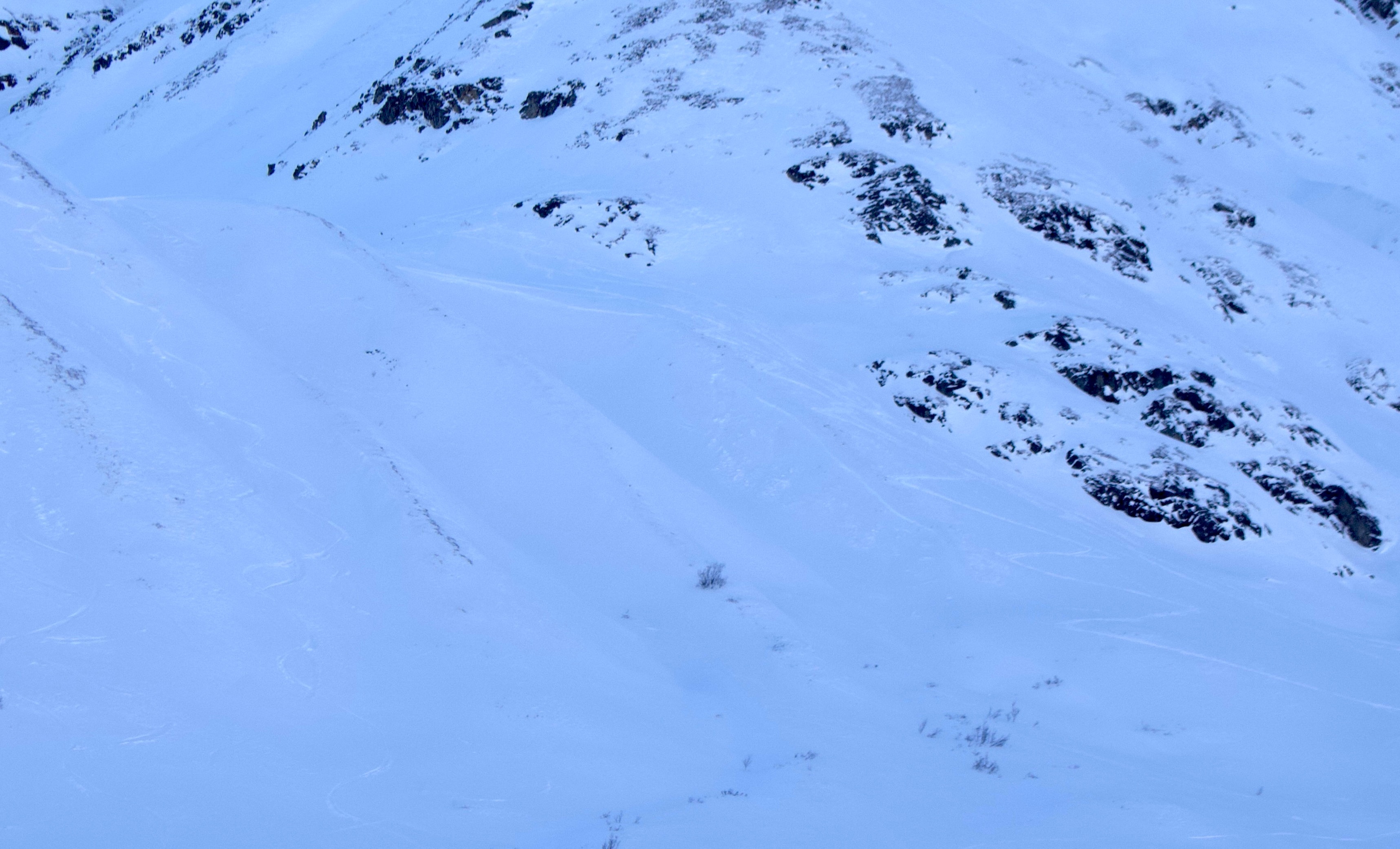
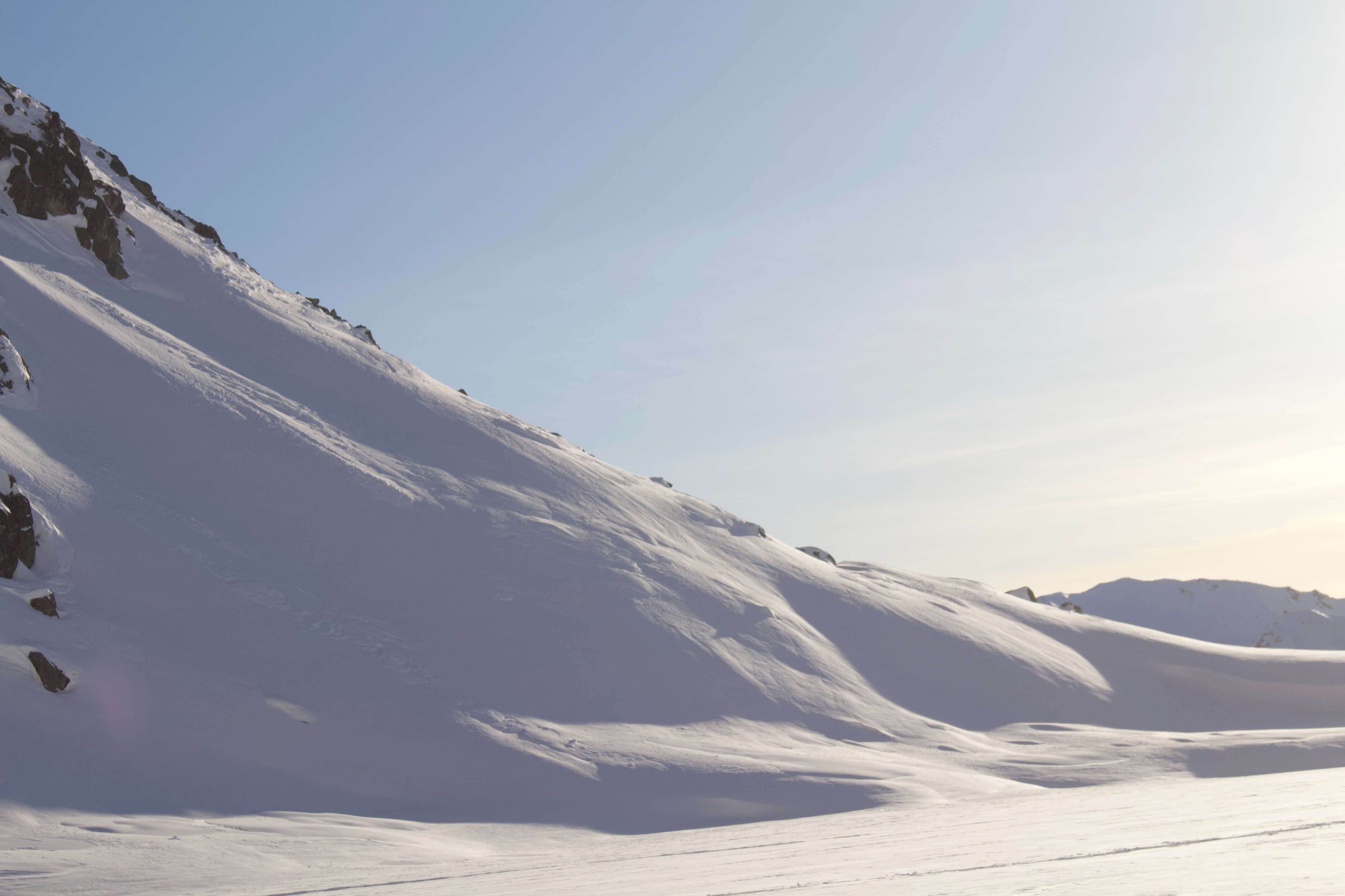
Strong winds built spiratic drifts in isolated areas. Some places I found 2-5" drifts that could be easily peeled away in hand pits, in others I found thin more stubborn slabs of snow. In a few wind-scoured places, new snow scoured slopes down to the 02/15 drizzle crust.
I probed around in a few southerly facing start zones around Mircodot, and was surprised to find a fairly deep snowpack (150-200+ cm). Just off the ridge, however, this depth quickly tapered, becoming shallow and closer to 1 meter deep. On the edge of one of these deeper areas, I did find a shallow snowpack that produced poor stability rest results (ECTP17x2, HS 108). On the north side of the ridge, I found a similar setup with deep start zones, quickly tapering to shallower, more variable coverage mid-slope.
Avalanche
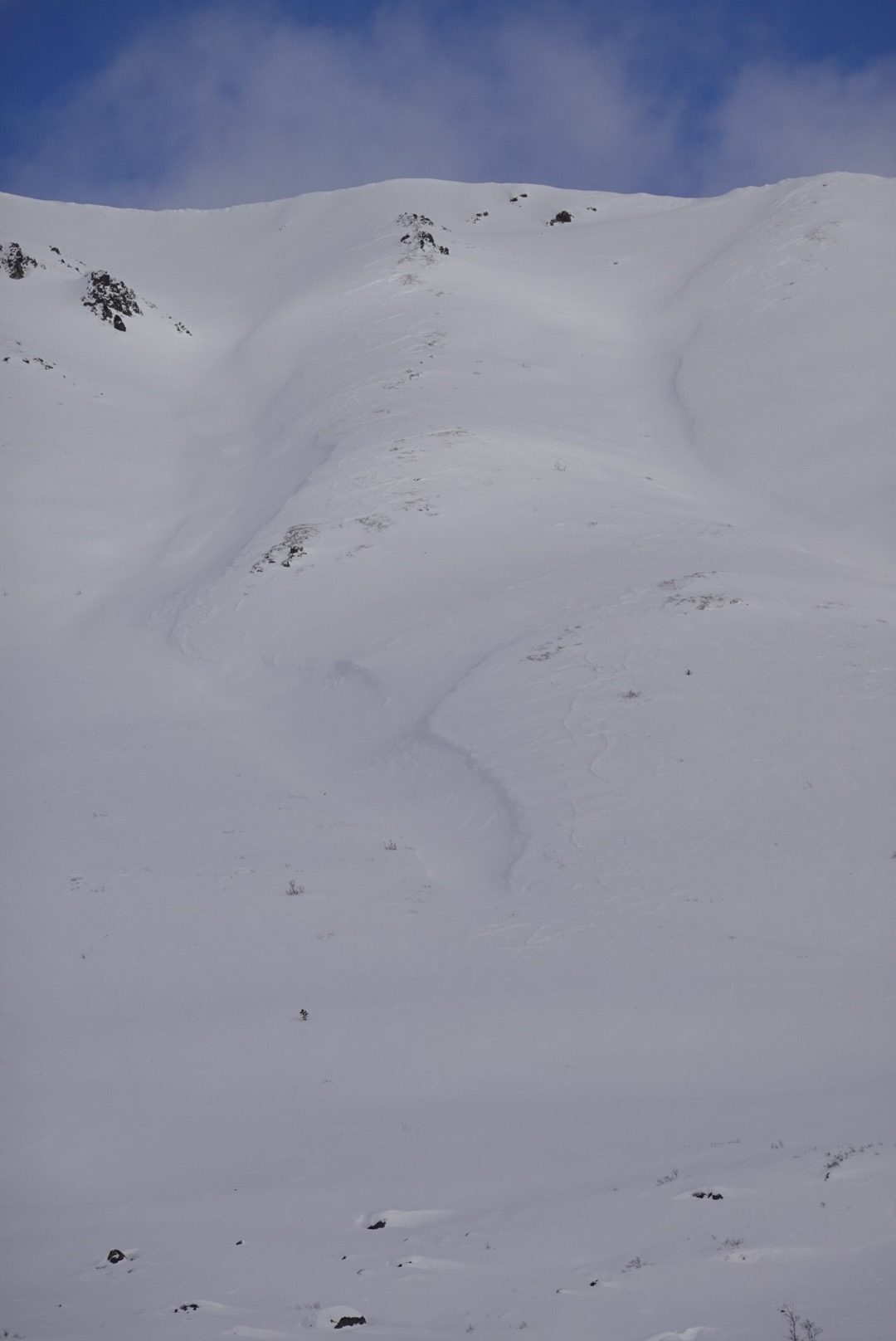
I saw a handful of small natural slides in steep previously wind-loaded terrain—these likely failed earlier this week during high winds. Additionally, I saw a few recent skier-triggered slides in steep terrain, and cross-loaded gullies—these were likely thin wind slabs.