
Quick report
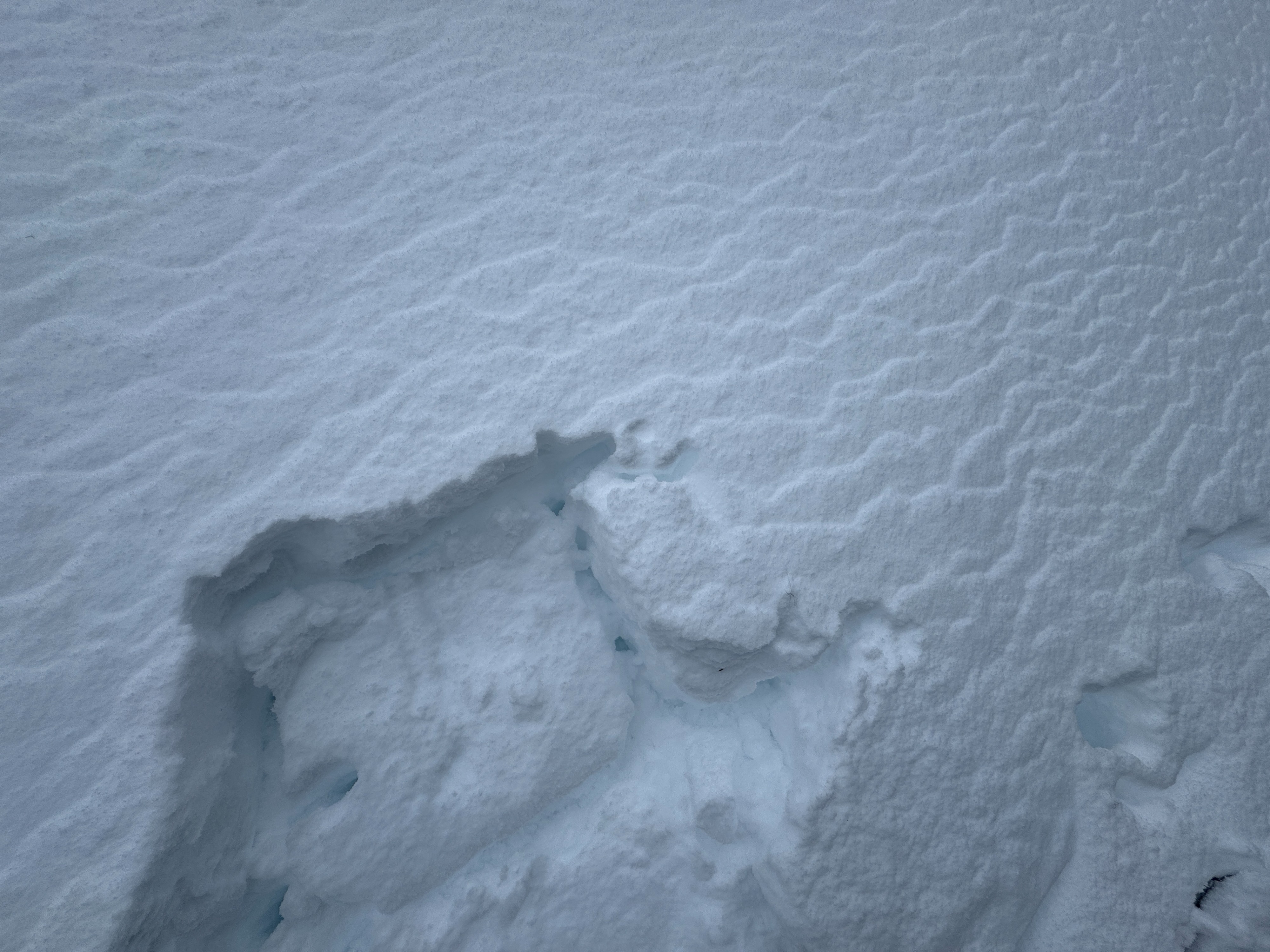
There's a lot of recent snow out there. Around the Crystal area, the winds seem to be the primary driver of any avalanche hazard. Signs or wind affected snow were quite prominent and made it easy to anticipate potential slabs along ridges and cross-loaded features.
Minimal cracking and no collapsing on multiple test slopes.Weather
- Cloud Cover
- overcast
- Wind Loading
- previous
- Rain Elevation
- 4300
- Recent Snowfall
- 15
- Snow Avail For Transport
- moderate amounts
The weather oscillated between overcast with filtered sunshine and stormy. When it was snowing, it was often coming down (S1 to S2). Winds were generally light, but you could feel moderate gust along the exposed ridges.
Snowpack
In sheltered areas, the snowpack was generally right-side-up. We could find a few subtle inter storm layers, but they weren't very impressive and didn't react in snowpack tests. The 3/9 and AR crusts were frequently 80-90 and 90-120cm below the surface respectively. On southerly aspects, you could feel a very thin sun crust from 3/20 below the most recent snow.
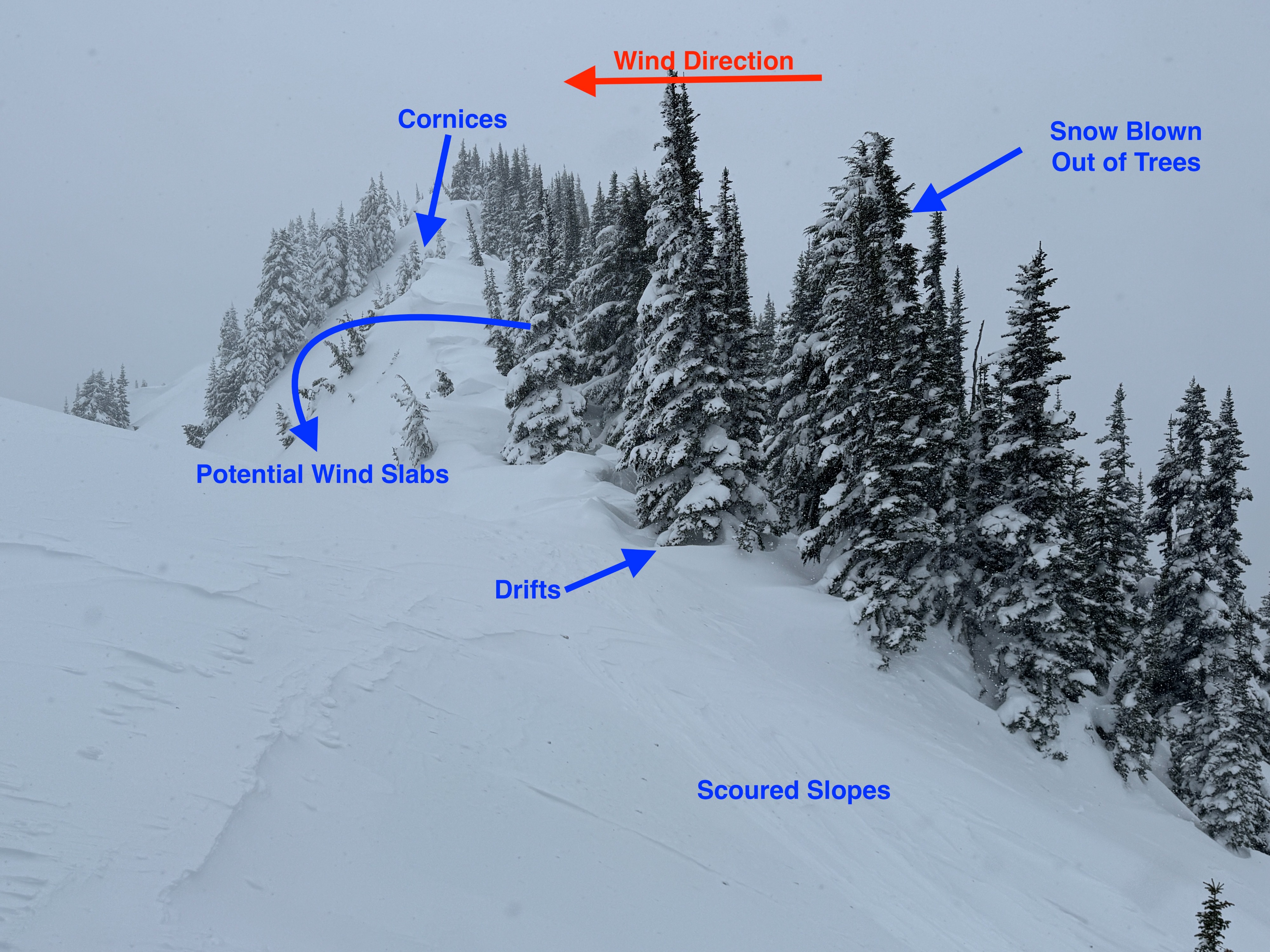
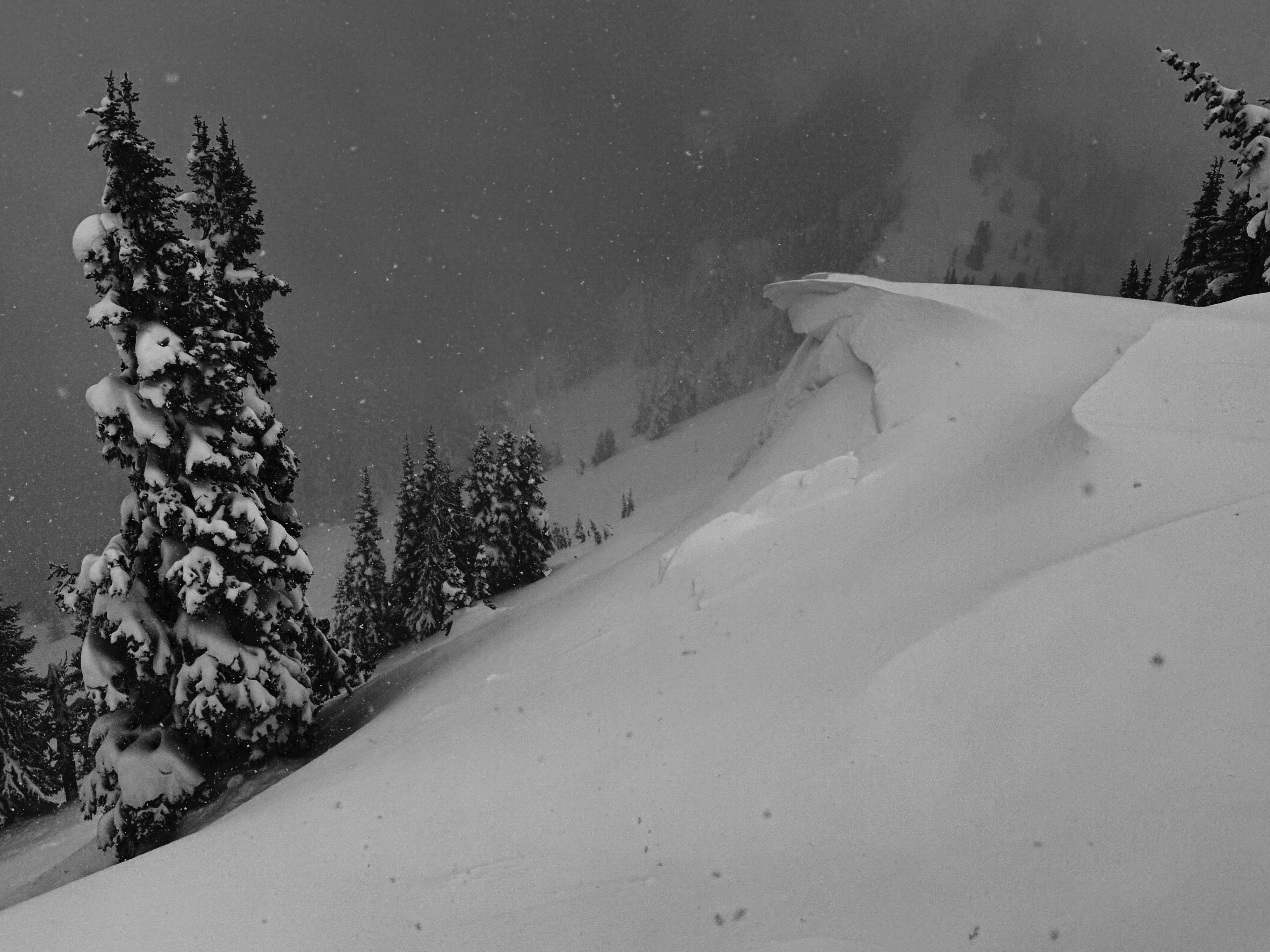
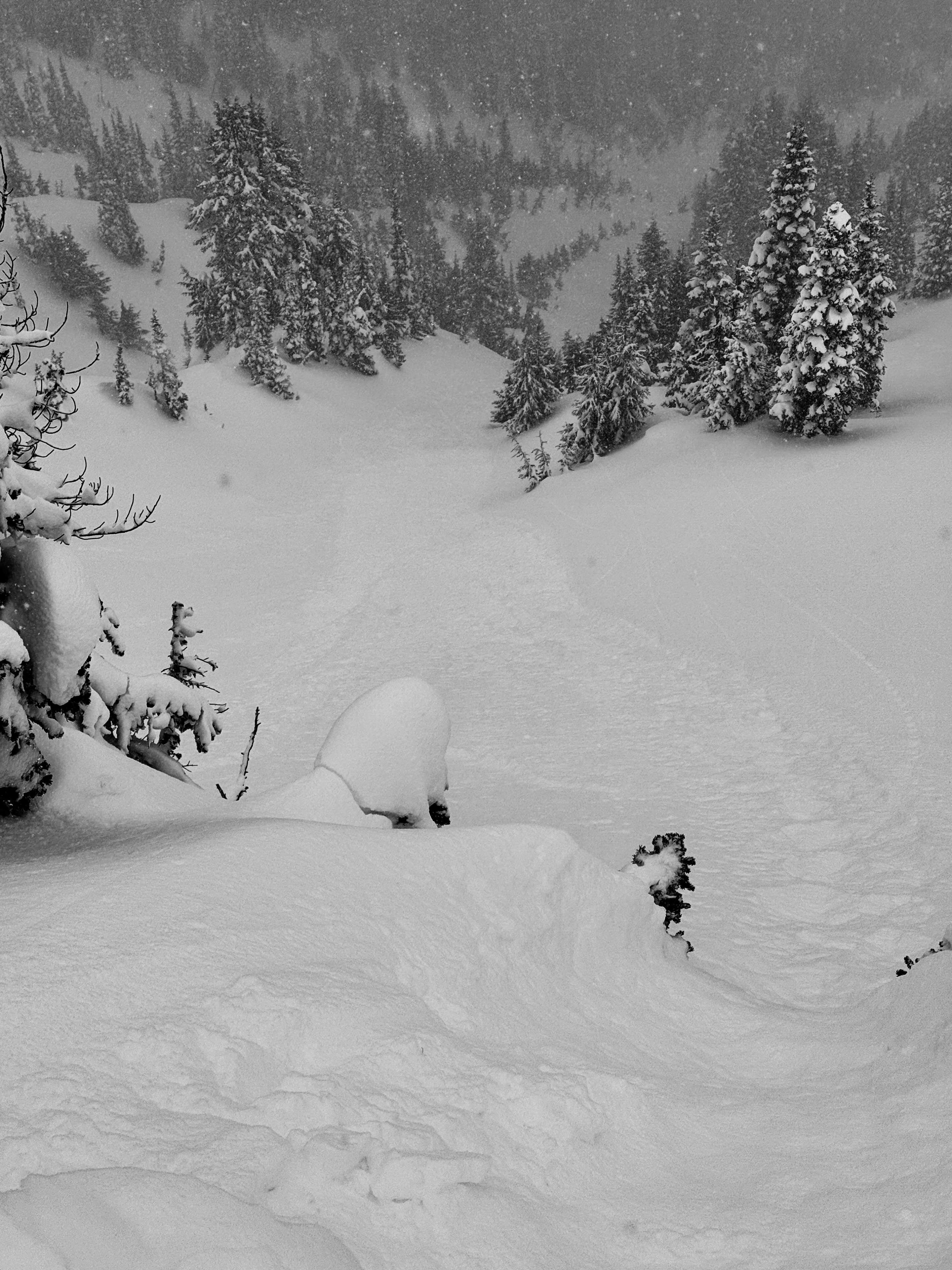
There was plenty of evidence of wind transported snow, even well below treeline. Scoured slopes, drifts, cornices, and the snow blown out of the windward side of trees all indicated significant wind blown snow. Wind slabs were mostly soft, but rarely produced any cracks of failed in any meaningful way. We dug hang pits, performed uptrack tests, jumped on test slopes, and released cornices all with minimal results.
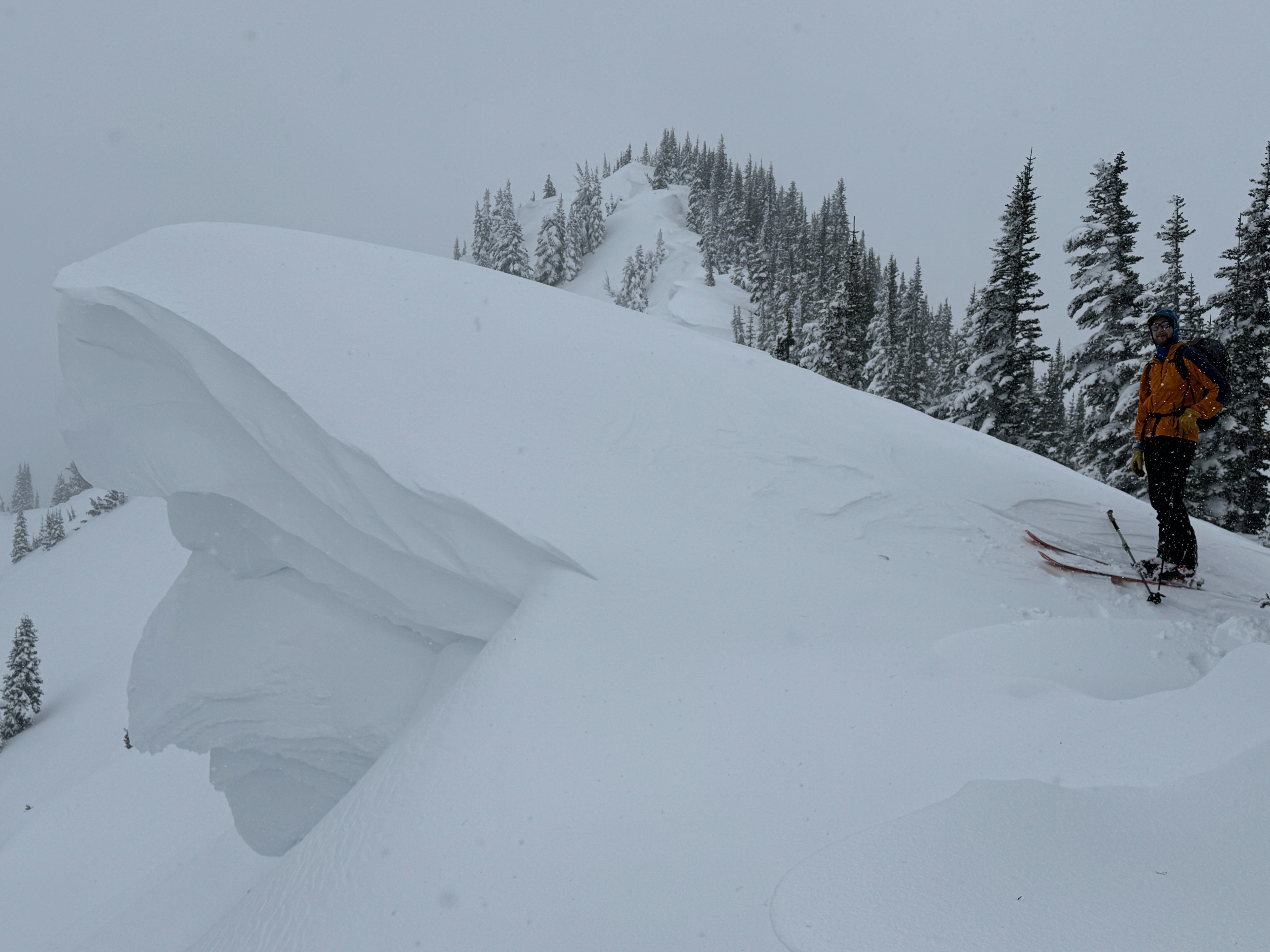
Some cornices have grown larger and looming. They aren't quite as big or widespread as we often see them, but some have gotten very large.
The snow below about 5200ft was noticeably heavier and wetter than above. Even still we did not trigger any rollerballs or loose slides at lower elevations.
Even without much in the way of test results, there's quite a bit of recent snow and we felt uncertain about large convex slopes and very steep terrain.
Avalanche
-Cornices: Two recent natural cornice collapses one on Bullion Peak NE: 6300ft and one on Crown Pt E, 6400ft. C-N-D1. We also intentionally triggered numerous small cornices in similar terrain. None of these triggered slabs on the slopes below. -Wind Slabs: Two other natural and one intentionally released cornice collapses did trigger small wind slabs on the slopes below. Crowns were generally 6-10 inches deep. ( Crown Pt, E, 6400ft, SS-NC-D1.5-R1-S) (Crown Pt: E 6350ft, SS-AC-D1-R1-S)(Pickhandle Basin NE, 6200ft, SS-NC-D1-R1-S) -Loose Dry: We triggered numerous very small loose dry slides but some ran for a few hundred feet before stopping.