
Quick report
- Cracking
- widespread
- Collapsing
- widespread
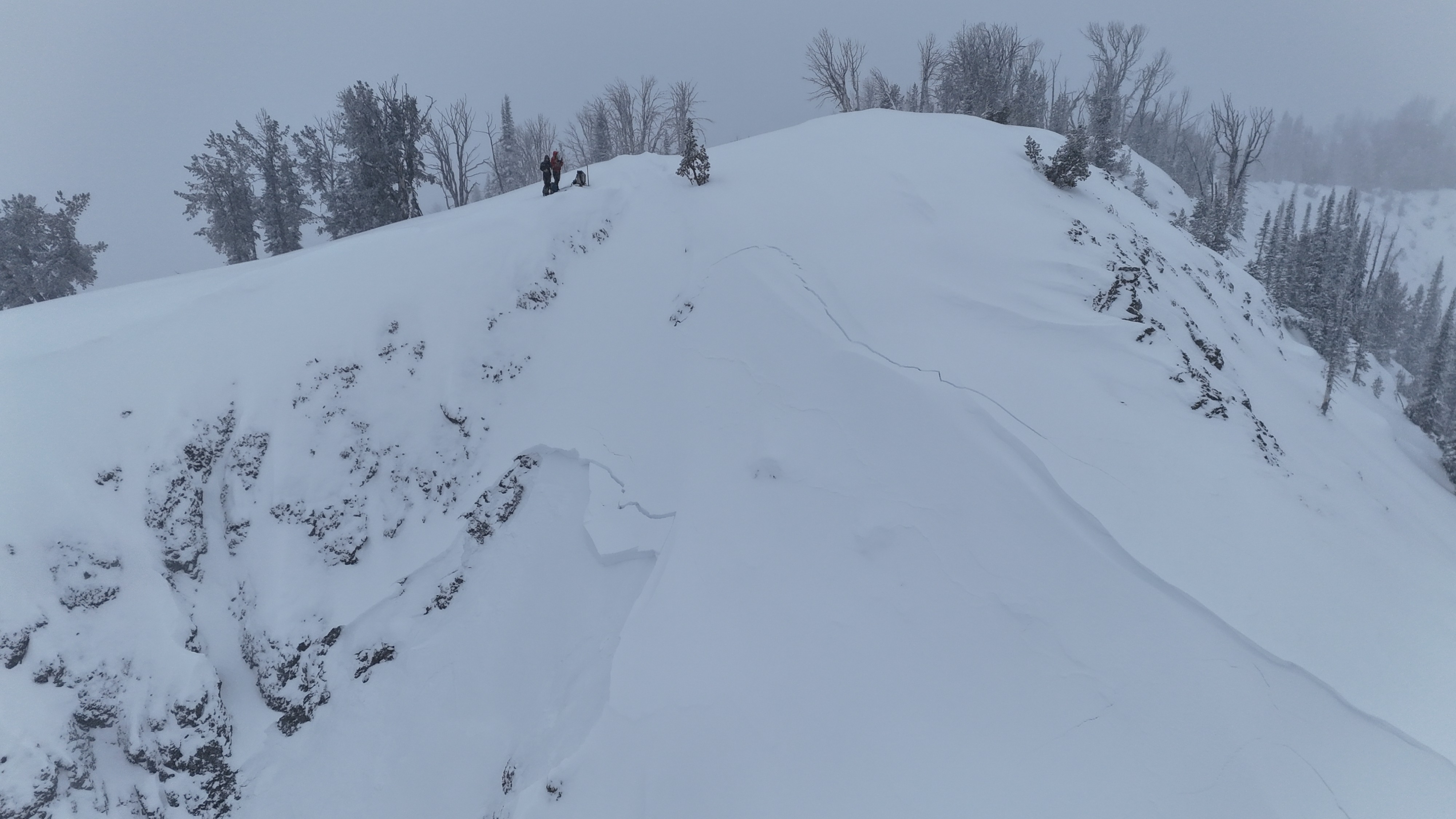
Cracking and collapsing in the new snow were widespread. These were very subtle, but present even in sheltered terrain. Cracks and collapses became much more obvious as you entered even slightly winded terrain.
Weather
- Cloud Cover
- overcast
- Wind Loading
- light
- Snow Avail For Transport
- large amounts
Periods of light snowfall in late morning, with snowfall becoming heavier in the afternoon. Max precip intensity observed was S2, but this didn't last long. Winds were occasionaly blowing at moderate speeds, but there wasn't a lot of effective loading going on today.
Snowpack
The growing slab over the 1/6 weak layer was 40cm thick in sheltered terrain. This produced widespread cracking and collaping, but these signs were quite subtle in areas not affected by the wind. Buried SH was present at this interface in sheltered, shaded locations, with thick facet stacks on all slopes that face away from the sun. Both of these weak layers produced obvious signs of instability.
Avalanche
- Size
- D2
- Count
- 2
- Aspect
- E
- Trigger
- N
- Elevation
- 8900 ft
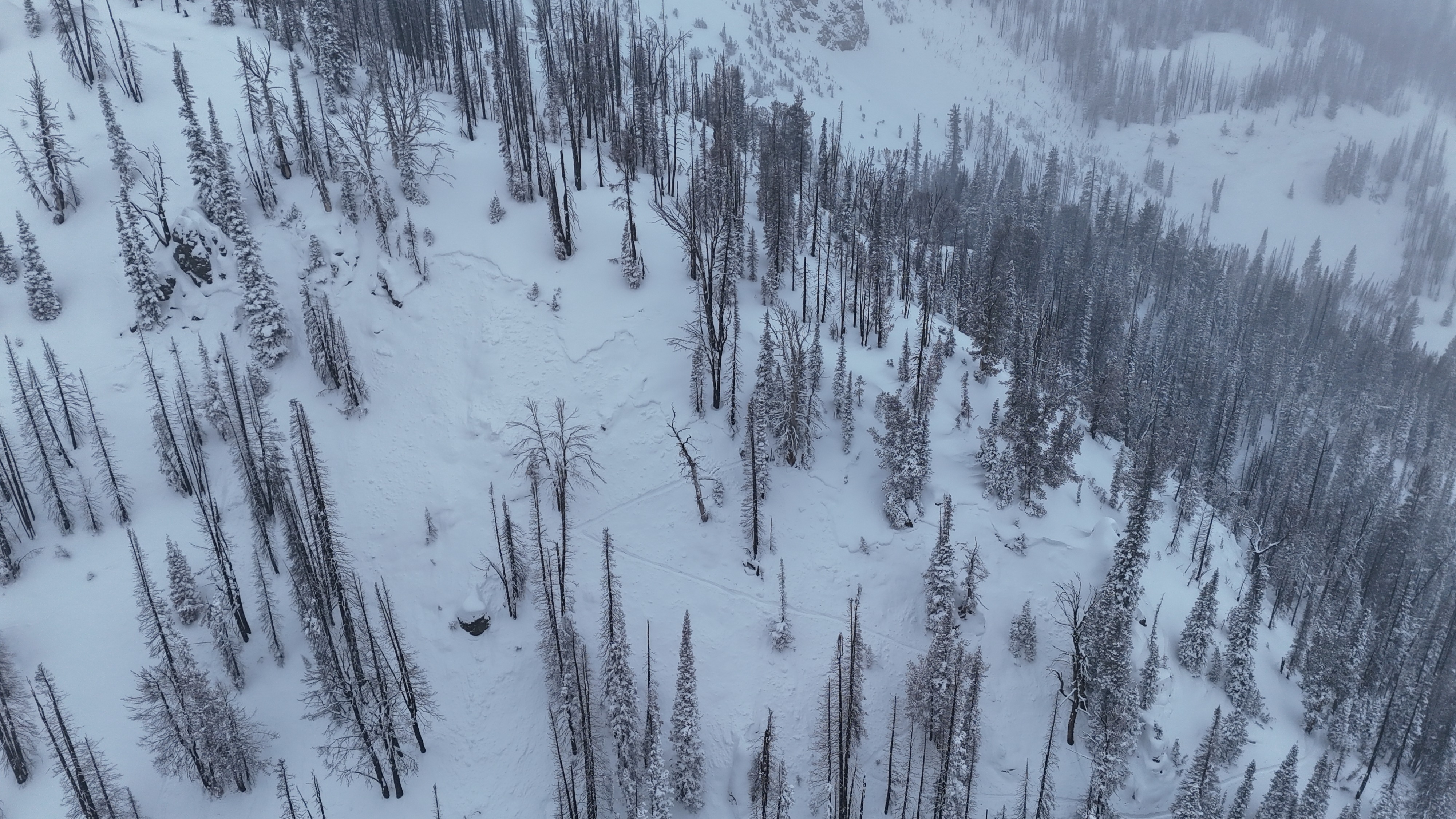
We observed a handful of D1.5-2 avalanches that released naturally late Tuesday/Wednesday. All slides that we observed involved the new snow failing on top of our new, drought-induced weak layer (1/6). We triggered several large avalanches, including remotely triggering multiple slides from the ridgeline above a steeper slope below. We also triggered a small avalanche that started as a soft slab/dry loose in the new snow, and then stepped down and entrained all of the weak, faceted snow that developed during the drought.