
Quick report
- Cracking
- isolated
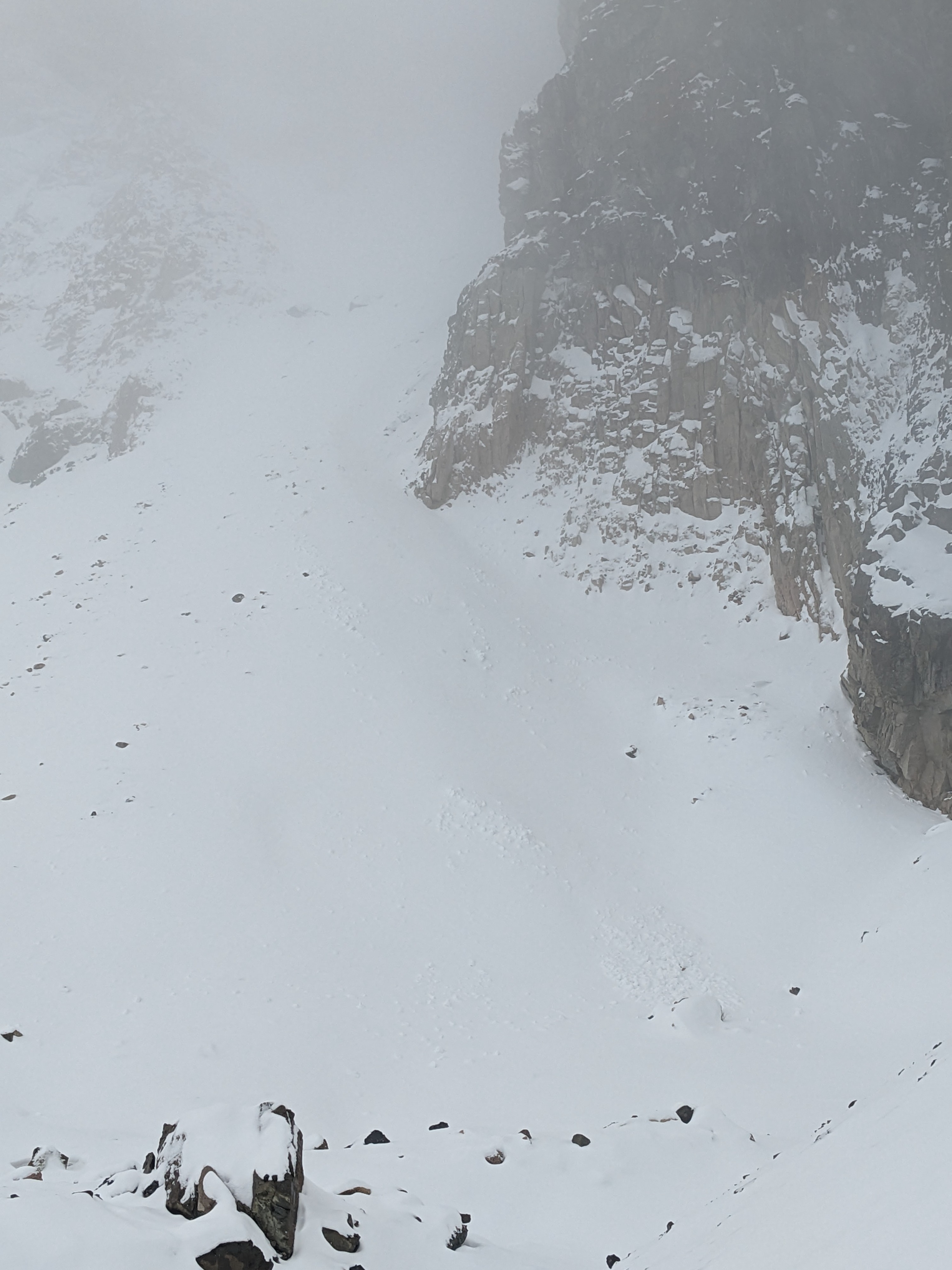
Avalanches observed refers to very small avalanches described below. Cracking observed refers to minor, short, isolated cracking in recent wind drifts.
Weather
- Air Temp
- Near freezing (est)
- Cloud Cover
- overcast
- Wind Loading
- previous
- Rain Elevation
- Fluctuating between 8,000 and 9,000'
- Recent Snowfall
- 3 cm above 10,000'
- Snow Avail For Transport
- small smounts
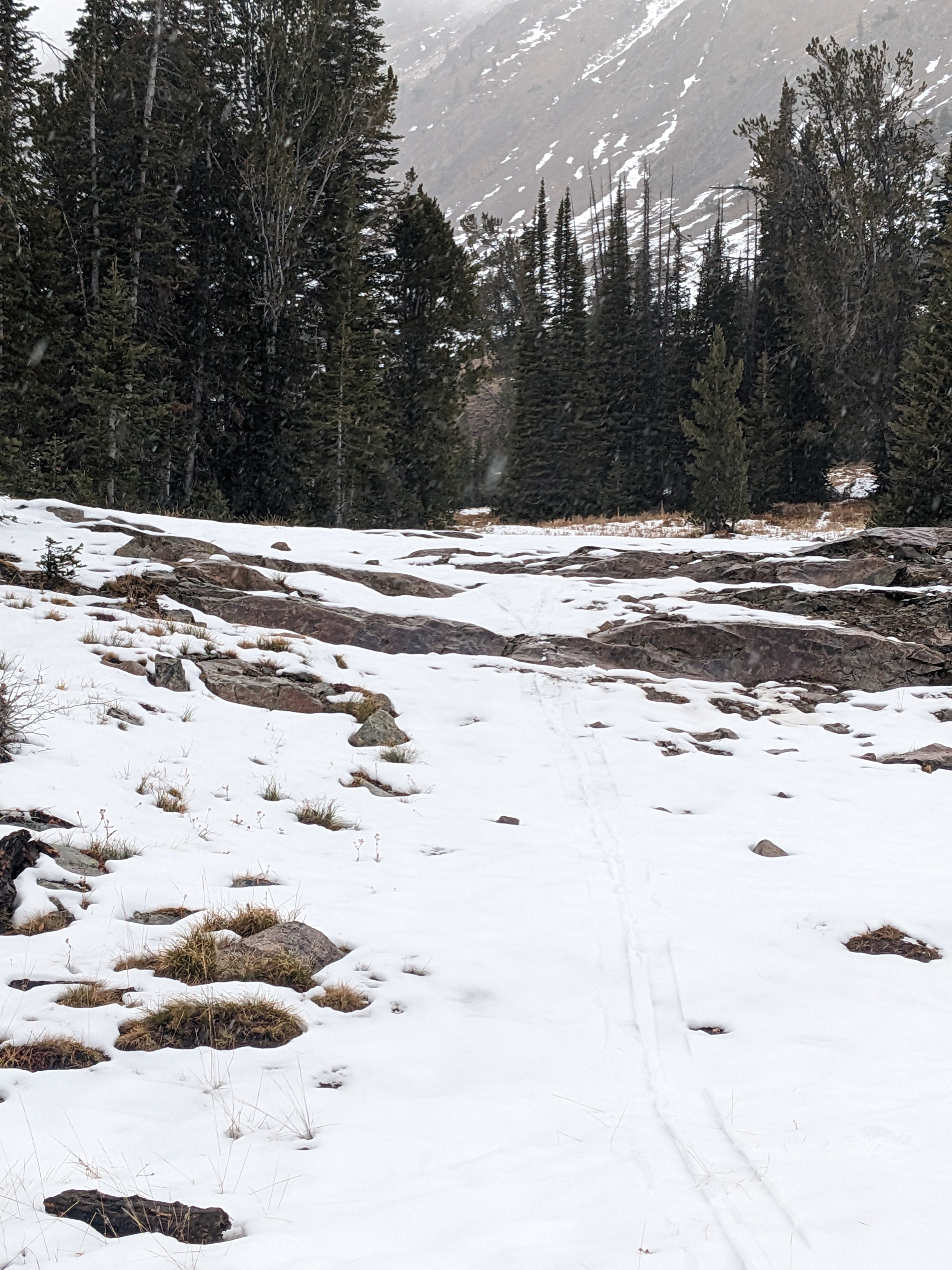
Warm, steamy day in the alpine. Brief periods of S2 snowfall in the early afternoon, but most precip was on the light side. Snow line started around 8,000' and climbed into the afternoon (highest observed rainfall was slightly over 9,000').
Snowpack
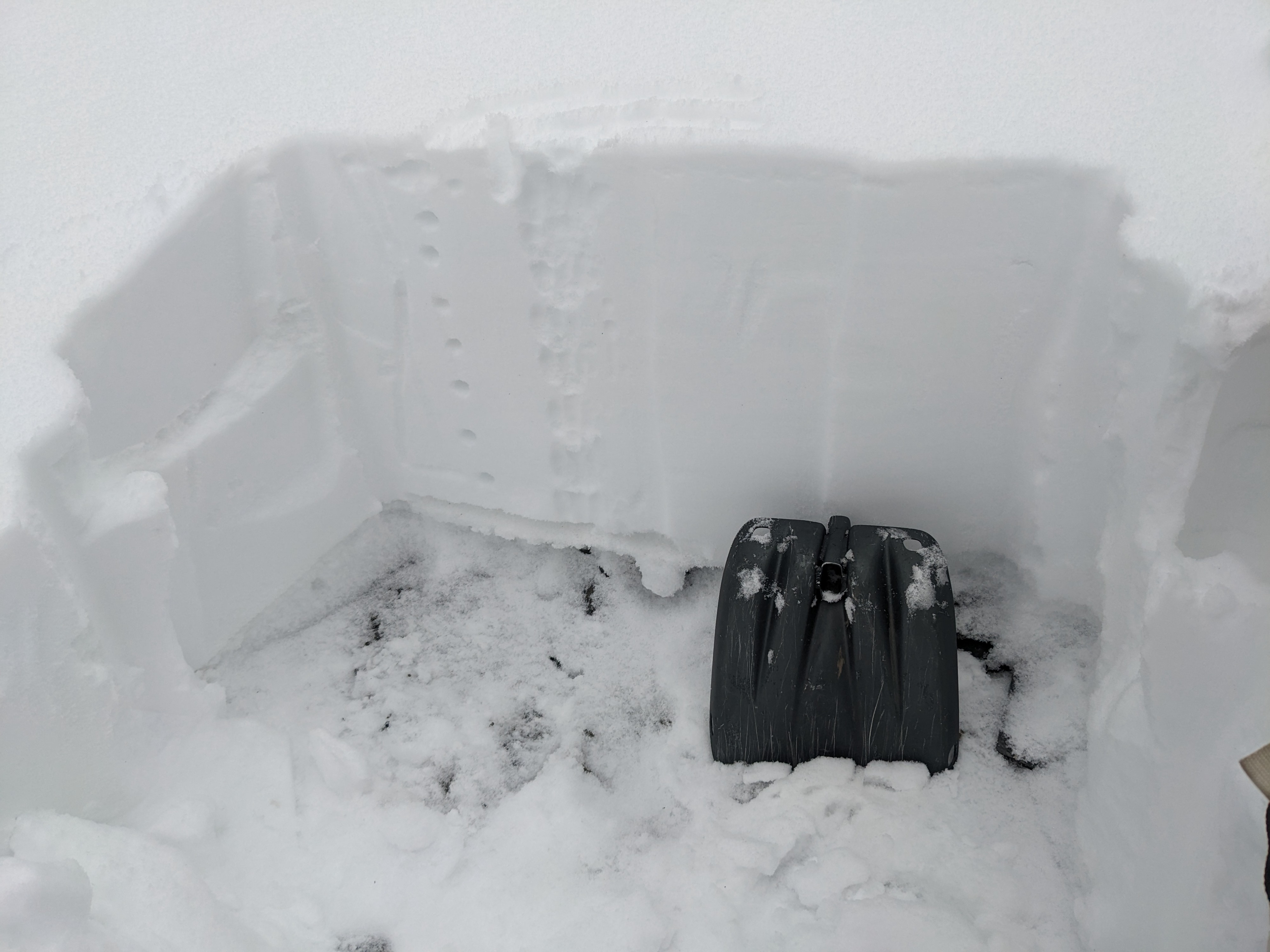
Warm temperatures and upper-elevation rain have significantly changed the picture of the snowpack in the past several days. Many slopes that harbored weak, dry, faceted snow prior to the warm-up have been able to melt and refreeze several times, producing a stout crust. By the time I got up to ~9,000' there were 10-15cm of still warm, moist, partially re-frozen snow on the ground (upper half of snow was crusty, lower half hadn't refrozen). This helped to keep my skis off many rocks that I would have been skiing on just a few days previous when the snow was still dry. Below roughly 9,500' there really wasn't an avalanche concern where I traveled, just thin snow cover. Above roughly 9,500' the snowpack becomes more complex. Here, where early fall snow did not melt off, there is an obvious interface at the base of the snowpack (buried 10/24, see pit photo below).
Avalanche
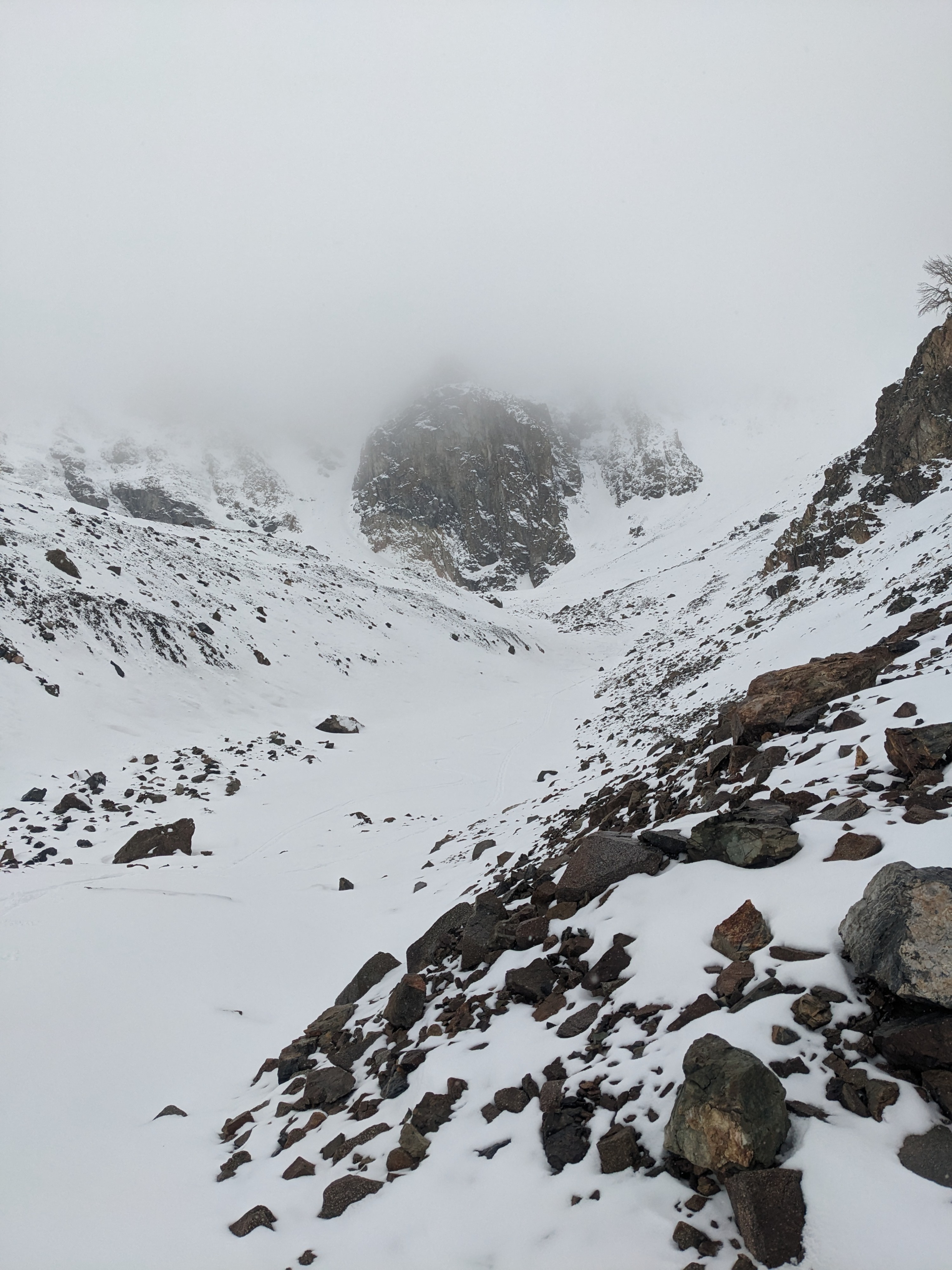
I observed a few small debris piles below very steep, upper-elevation terrain. One of these looked like it had failed as a windslab or a dry loose sluff in steep, cross-loaded terrain. The other released as a wet loose slide when ambient temperatures and upper elevation rain wetted a dry, thin snowpack. Both of these appeared to slide downhill on the stiff, somewhat icy 10/24 interface.