


Quick report
- Cracking
- specific
- Collapsing
- specific
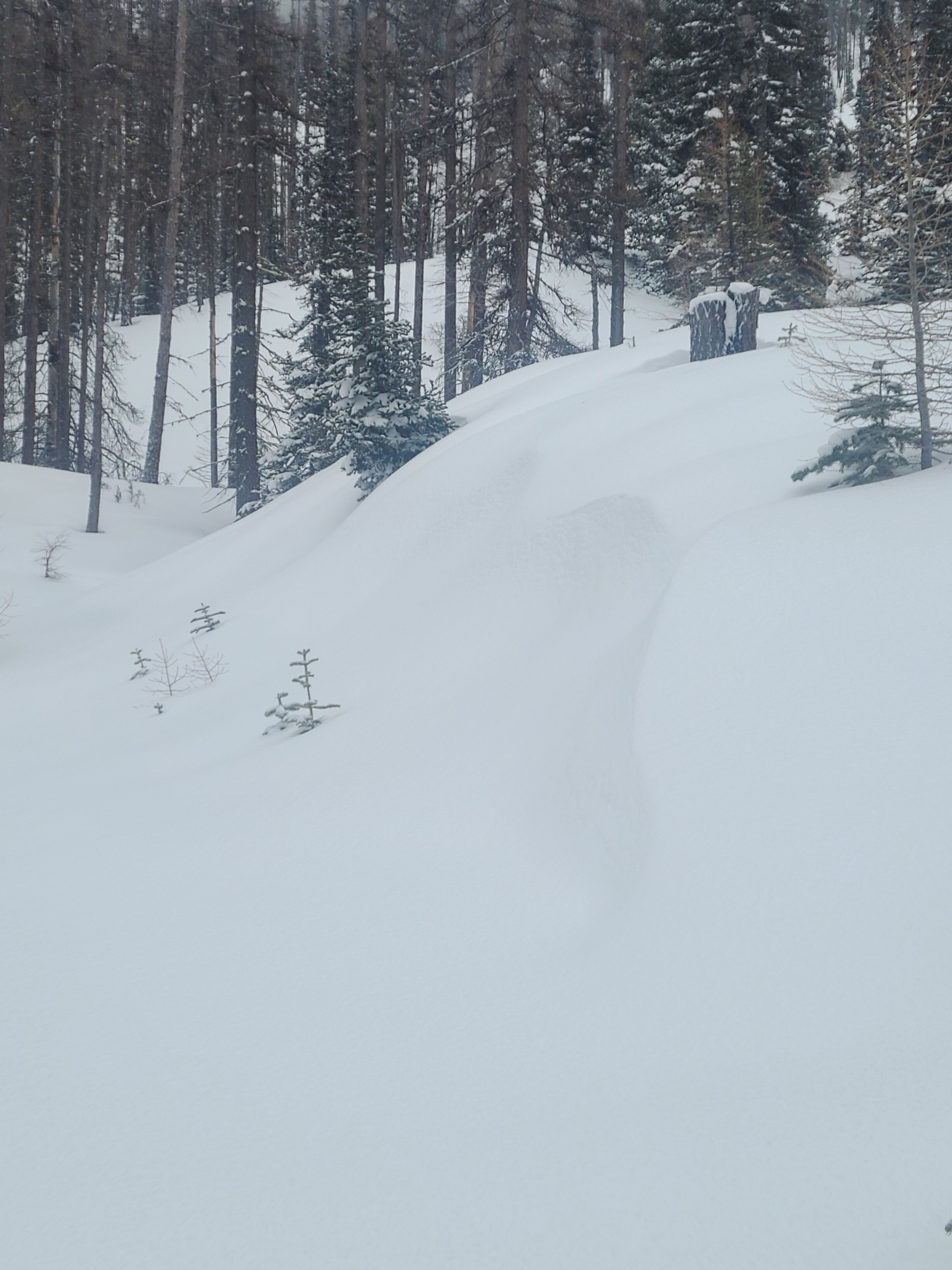
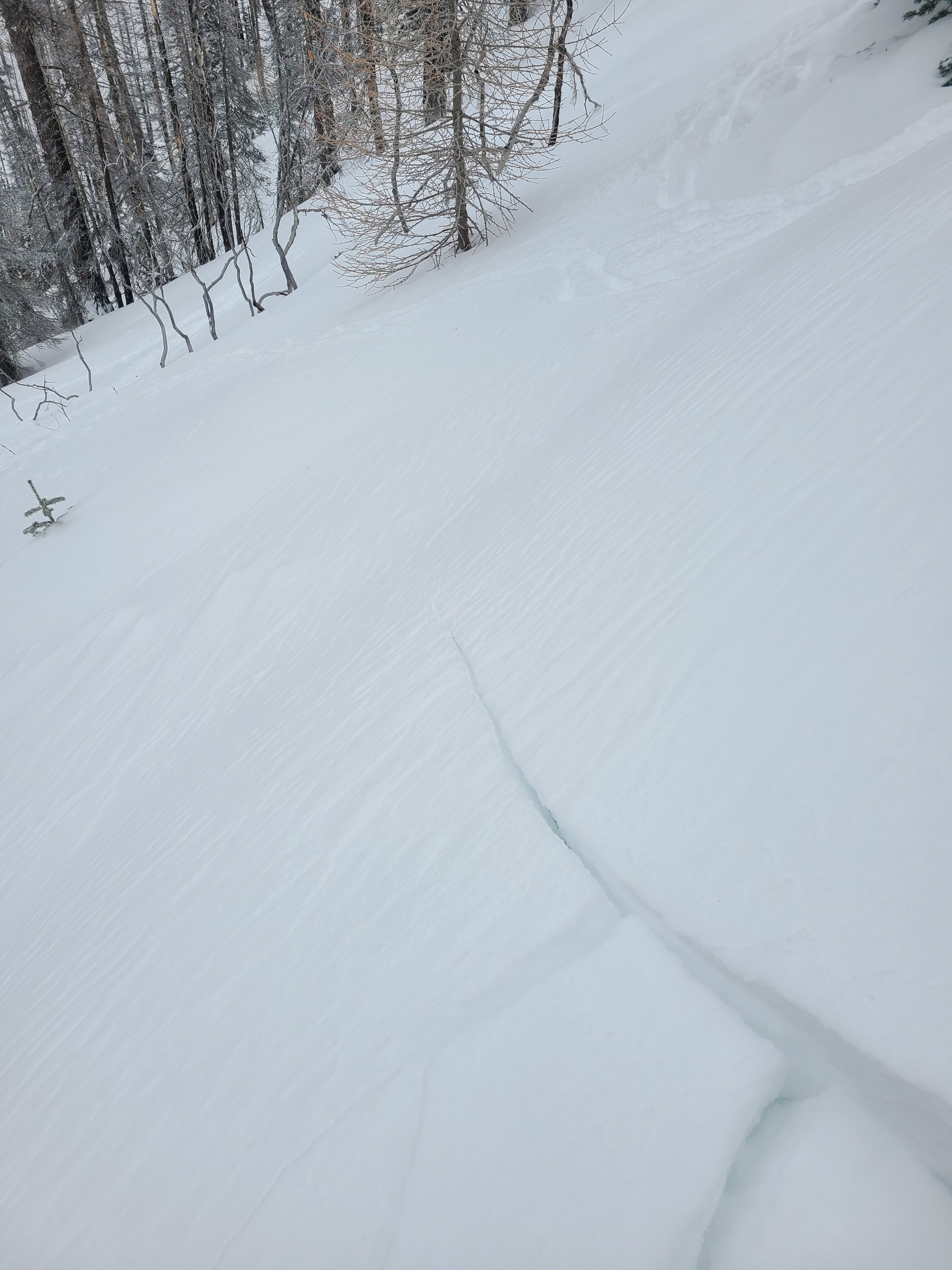
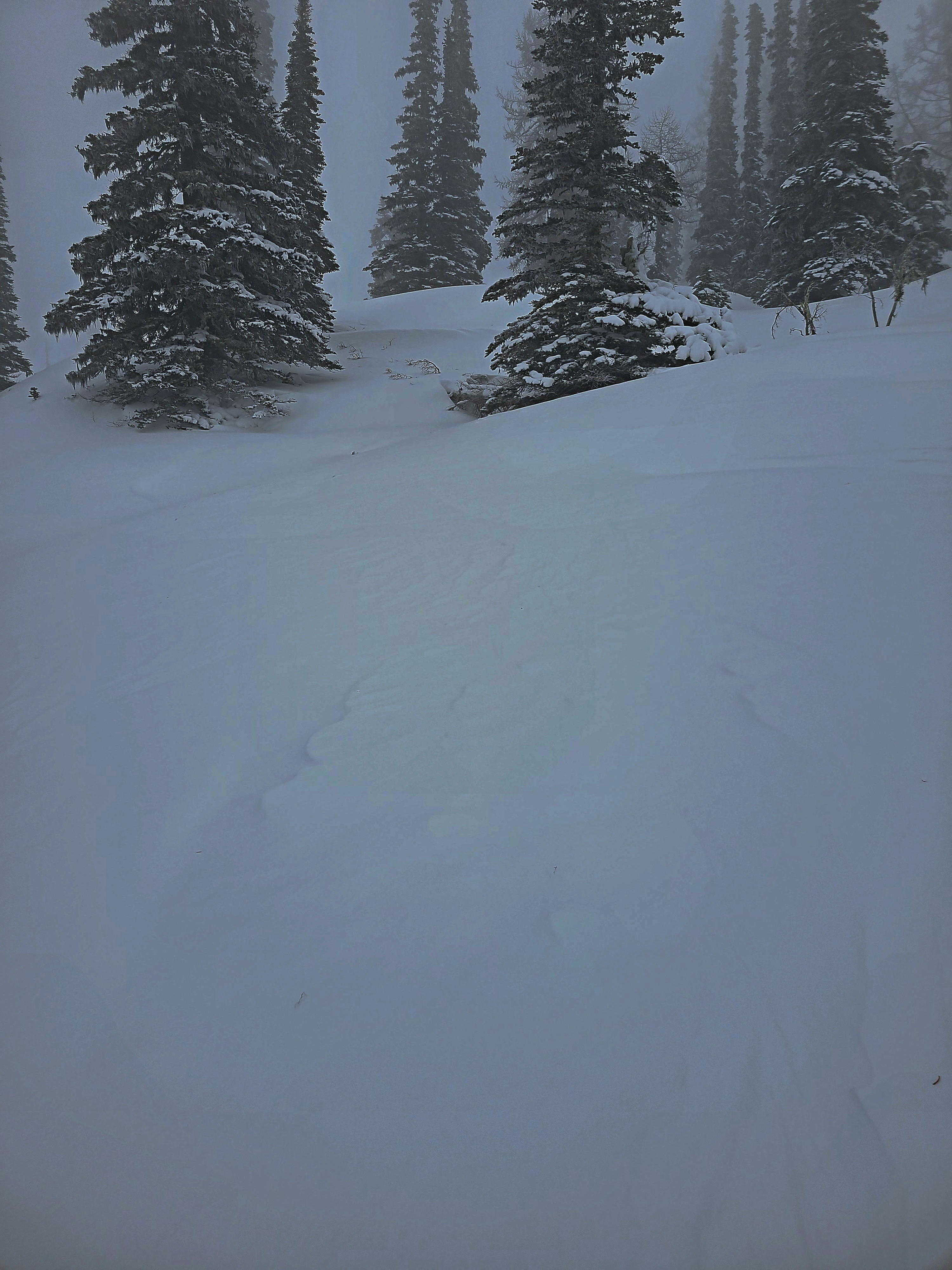
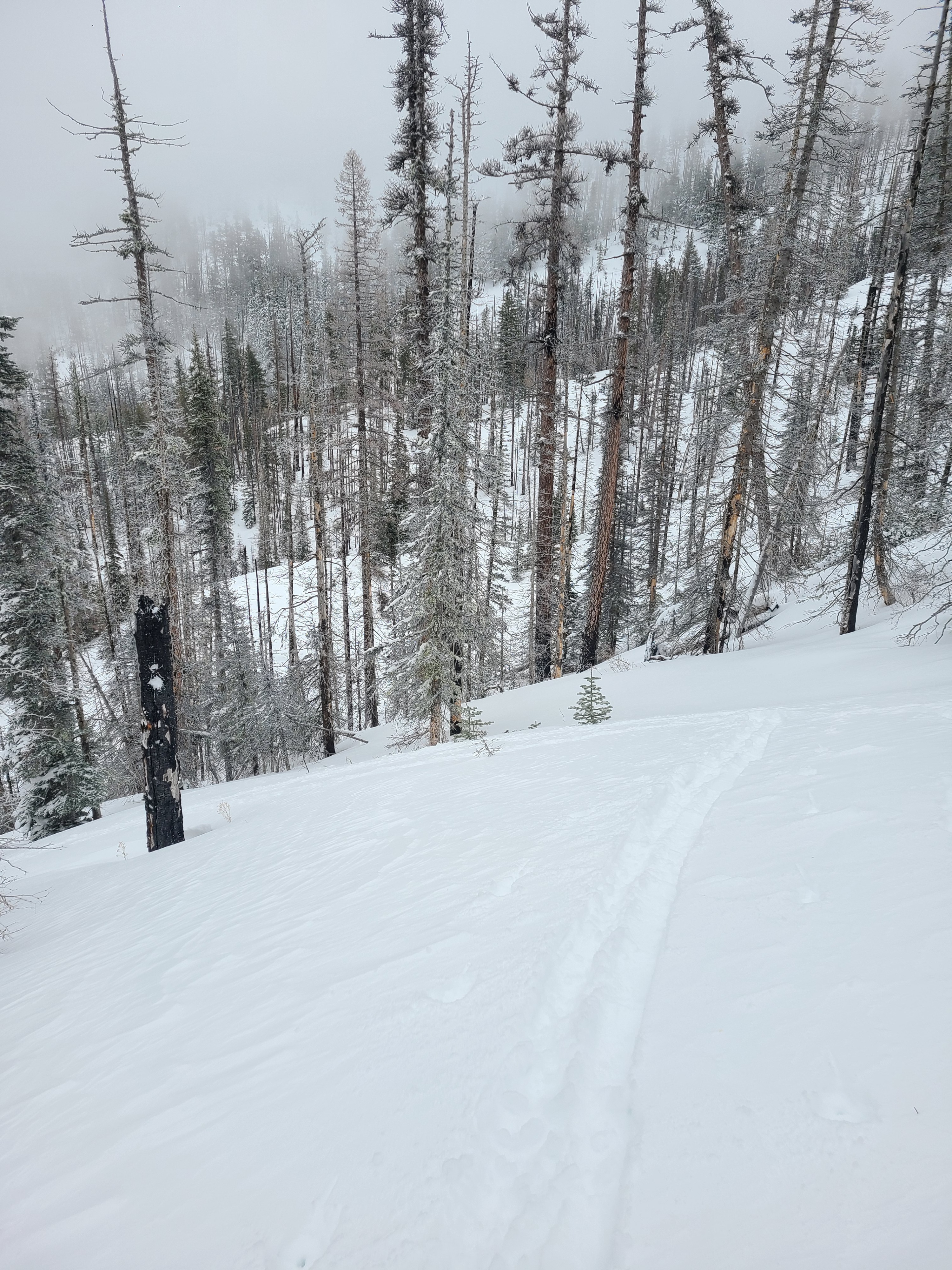
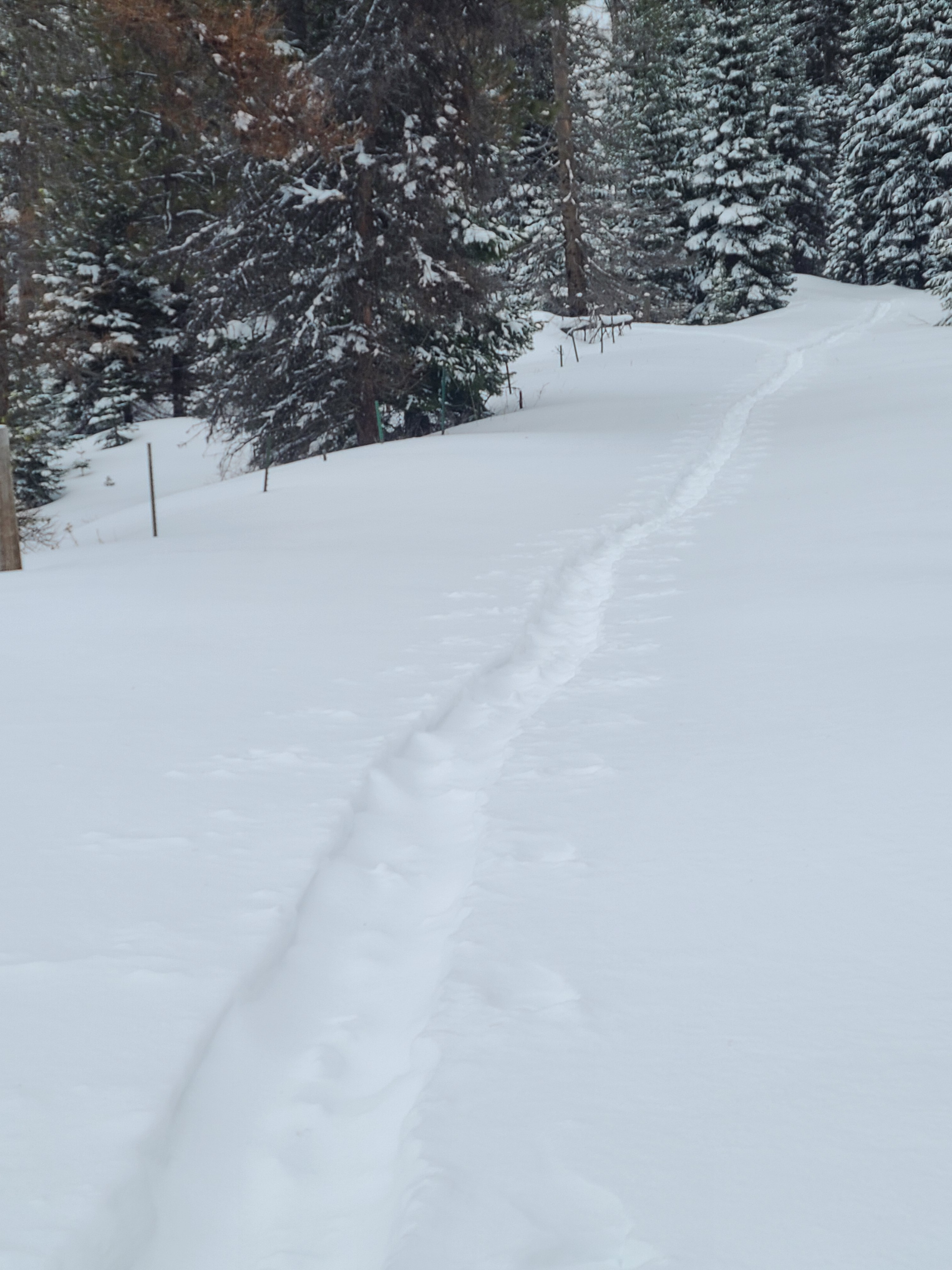
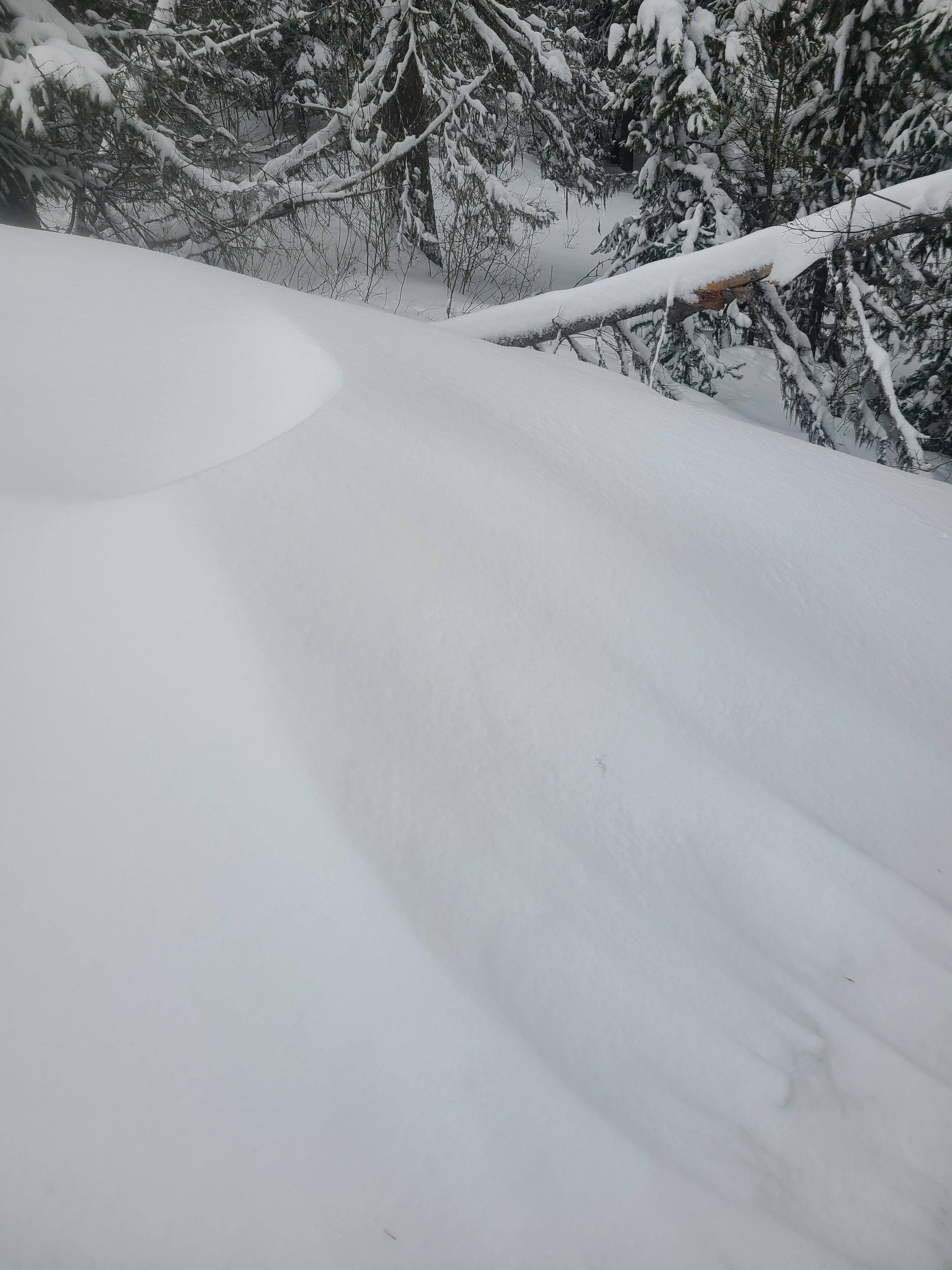
I ventured out into the areas of East Central favored by this storm track to observe the new snow and look for signs of instability and wind drifting. There was little slab structure to the snow in sheltered areas at lower elevations, and I couldn't get any results with ski cuts on steep test slopes. Once I got into more wind-affected terrain, I experienced widespread cracking and even a small collapse. Wind drifting patterns were sporadic, with deep drifts and scoured areas seemingly random throughout the sparsely treed meadow. I stuck to low-angle slopes and enjoyed low density boot-top powder skiing on a supportable crust.
It was easy to produce shooting cracks in the wind drifted snow above 5000ft. However, the strong winds during the storm made the distribution at these elevations sporadic. I experienced a small collapse at 5500ft. Weak, faceted snow over the Early February Crust is driving these instabilities.Weather
- Cloud Cover
- overcast
- Wind Loading
- moderate
- Recent Snowfall
- 30-40cm
- Snow Avail For Transport
- large amounts
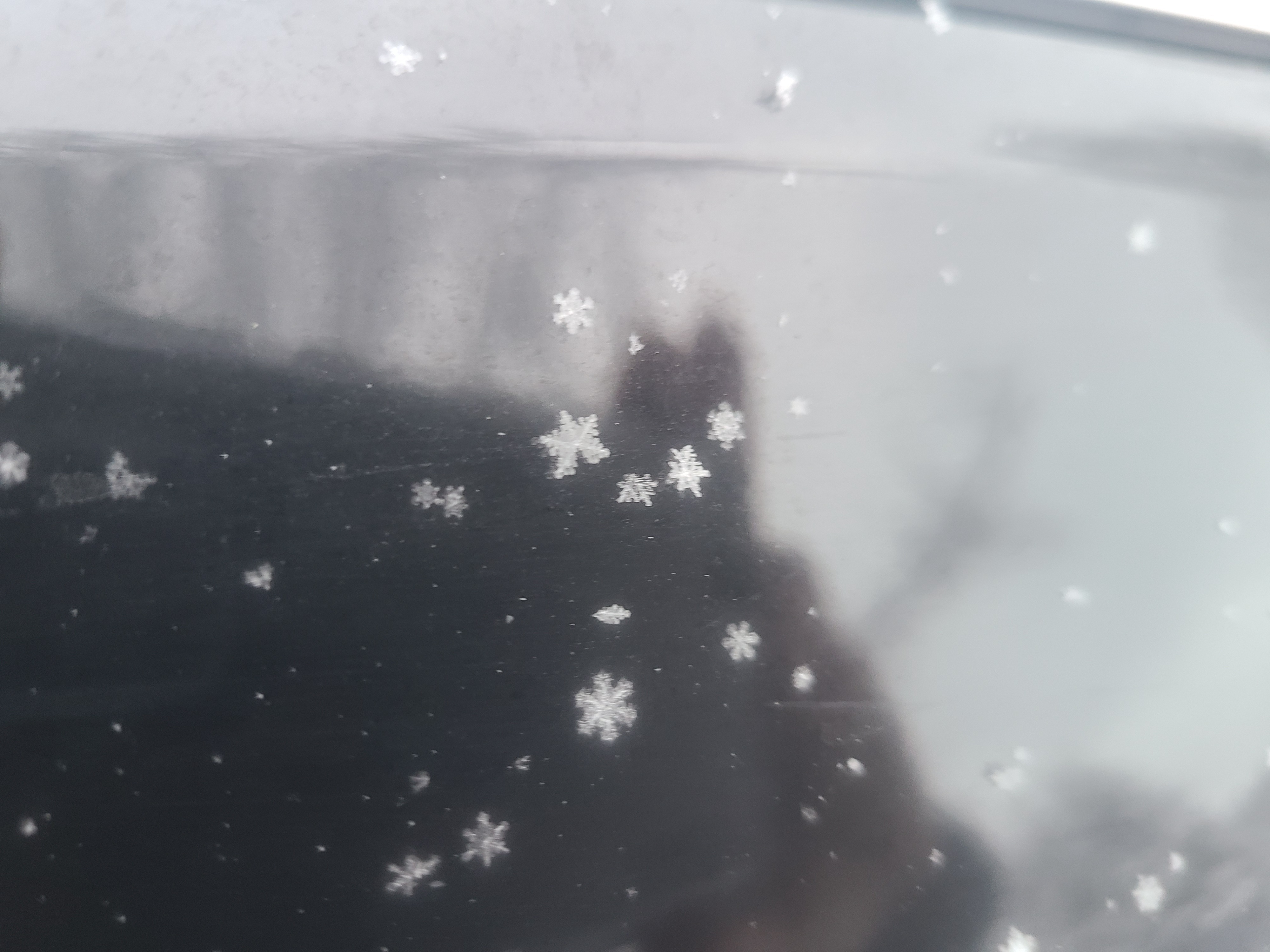
It was snowing lightly when I arrived at the trailhead around 8:30 am, tapering to the occasional flurry by 10 am. Skies tried to clear a couple of times, but other than a few short-lived sucker holes, it stayed overcast with poor visibility. Previous wind transport was apparent, and winds were light to moderate, even in more sheltered terrain throughout the day.
Snowpack
I dug a quick profile adjacent to where I observed a small collapse and found a shallow and weak snowpack. The total snow height was 100cm, with 33cm of new storm snow resting over 3cm of weak, faceted grains of varying size on the Early February Crust (EFC). Larger-grained facets exist directly over the crust, with smaller facets above that. The EFC is 20cm thick, with moist melt forms below to the ground. Extended column tests did not propagate but failed easily above the EFC on faceted grains (ECTN 7). I suspect the slab was just not cohesive enough to propagate the fracture. I would anticipate much easier propagation in steeper, more heavily wind-drifted terrain with a stiffer slab. The widespread shooting cracks were enough signs of instability to keep me on low-angle slopes.
Ski penetration was down to the EFC, and while it was pleasant skiing, I was on the crust with every turn.