
Quick report
- Cracking
- isolated
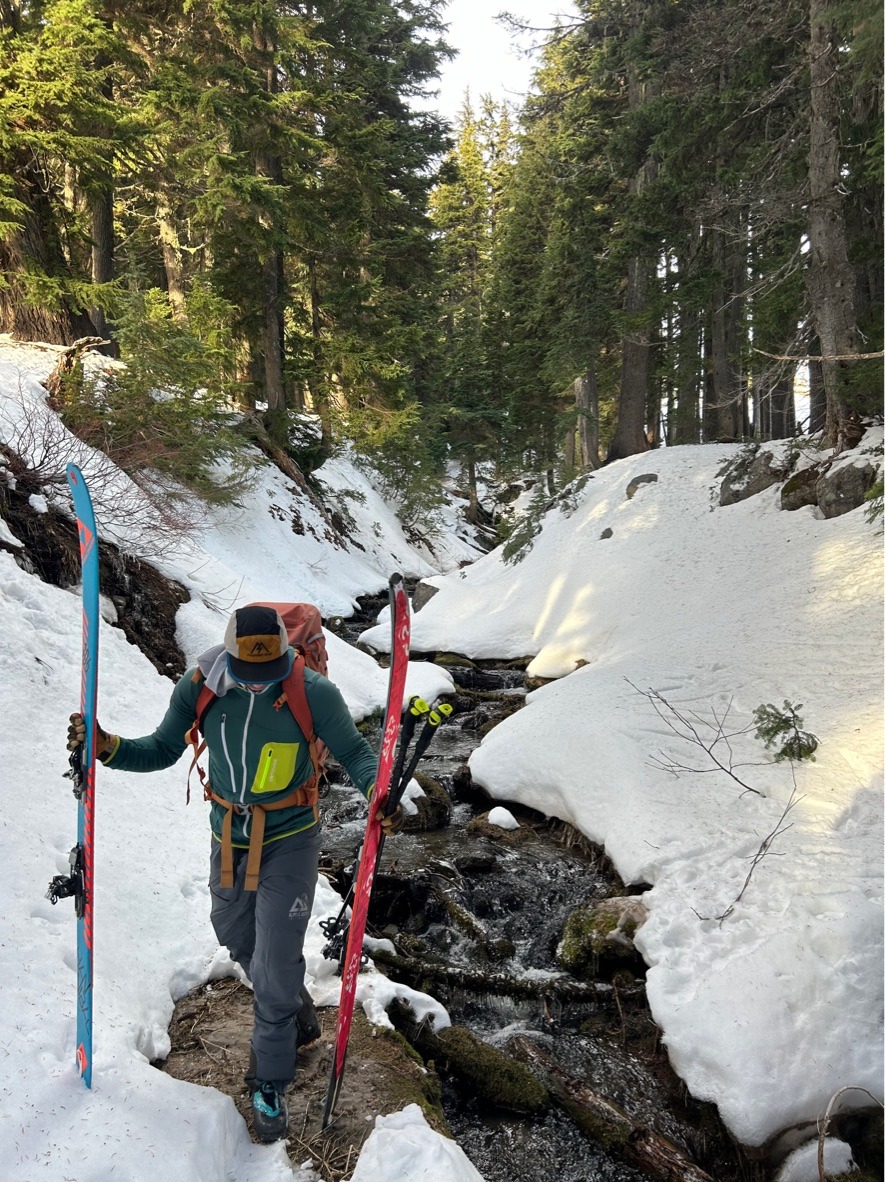
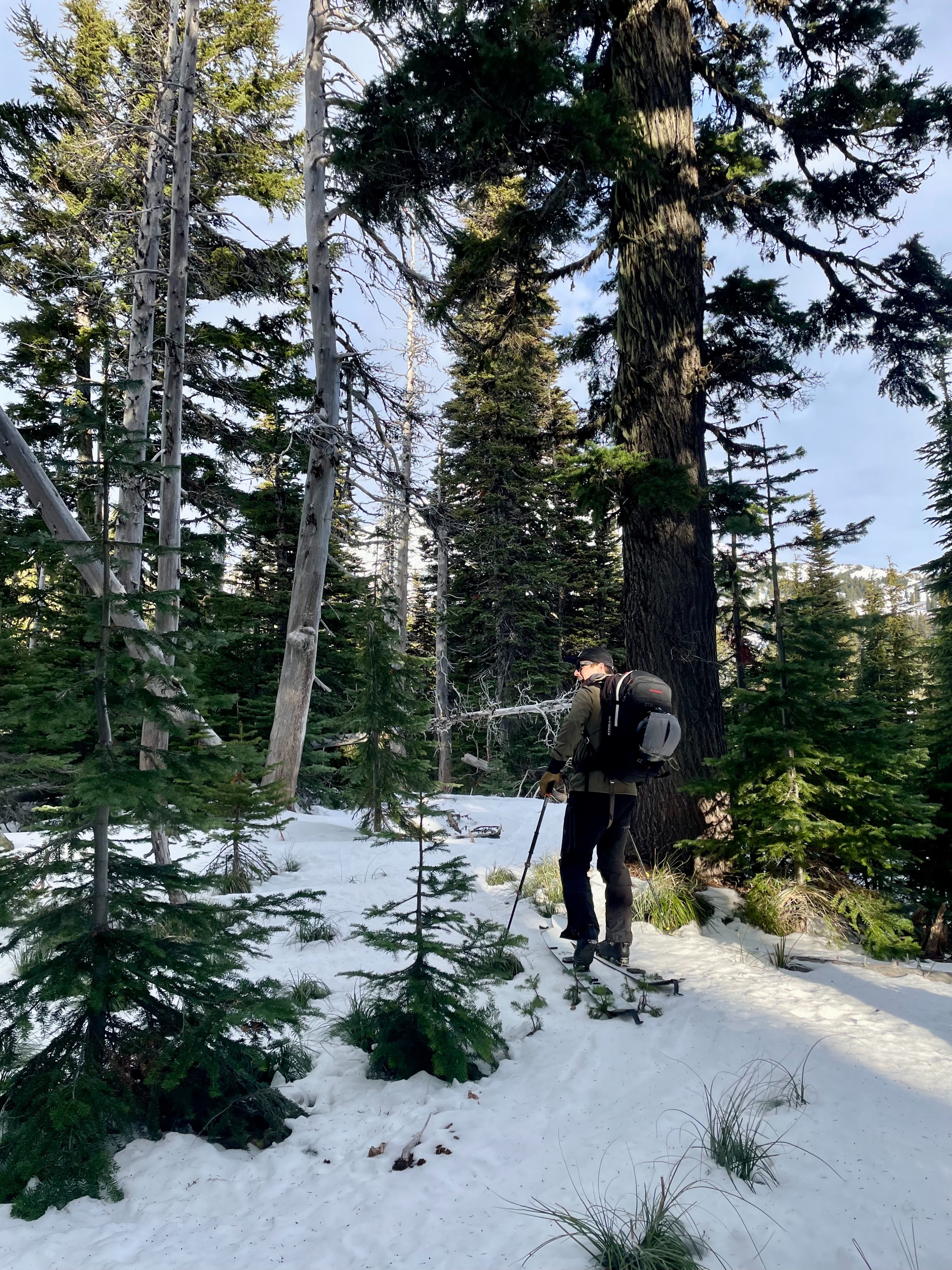
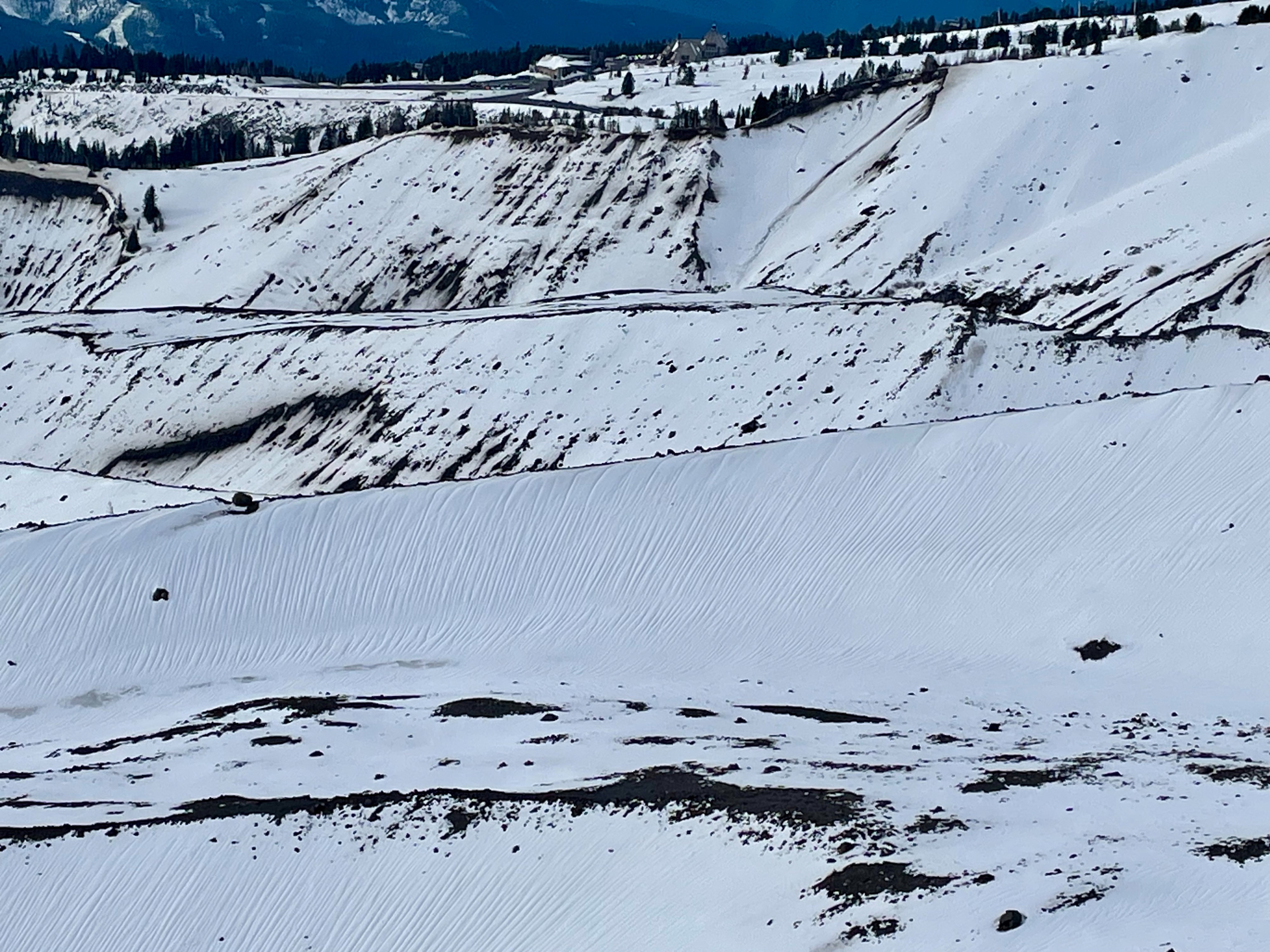
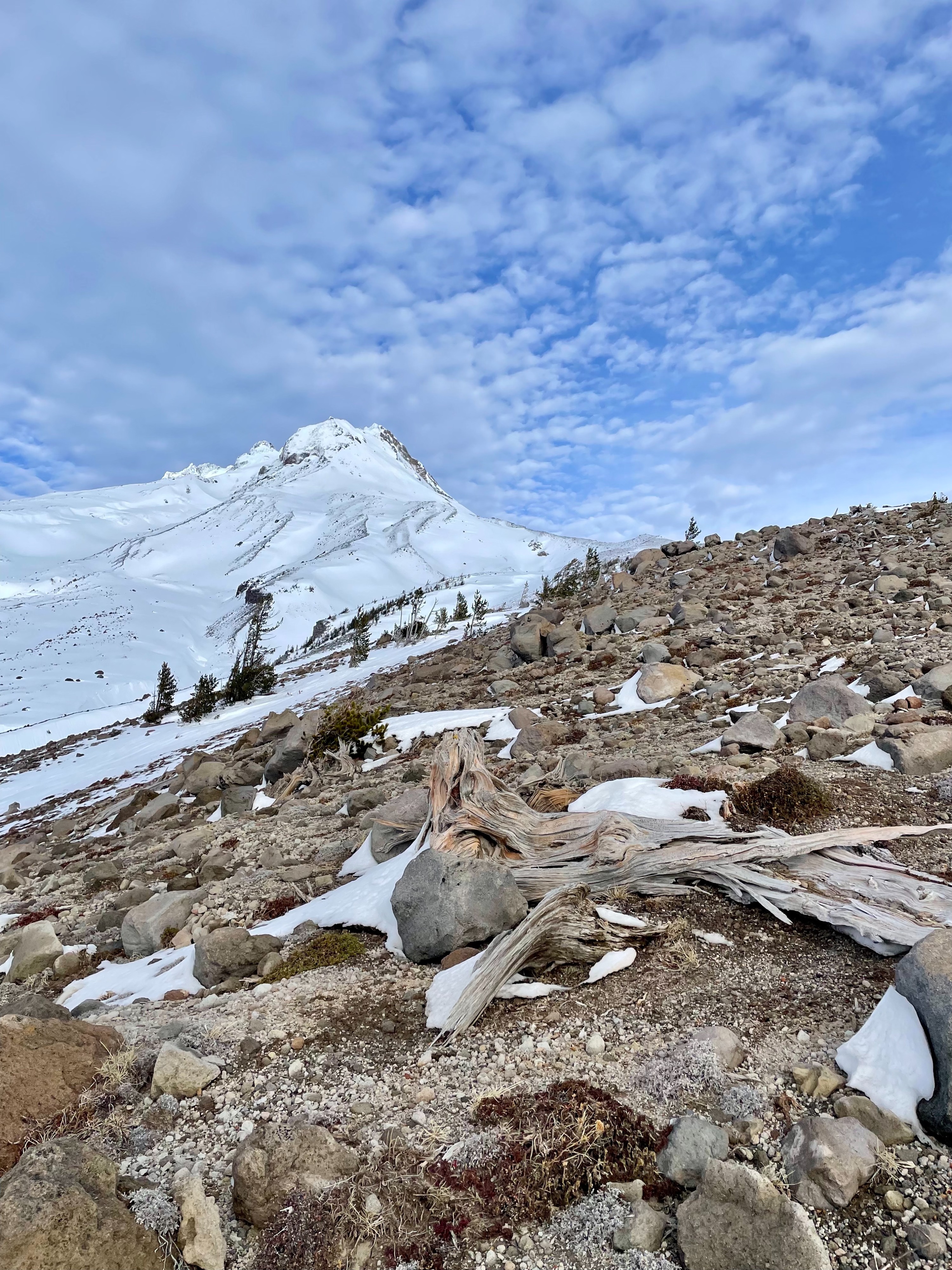
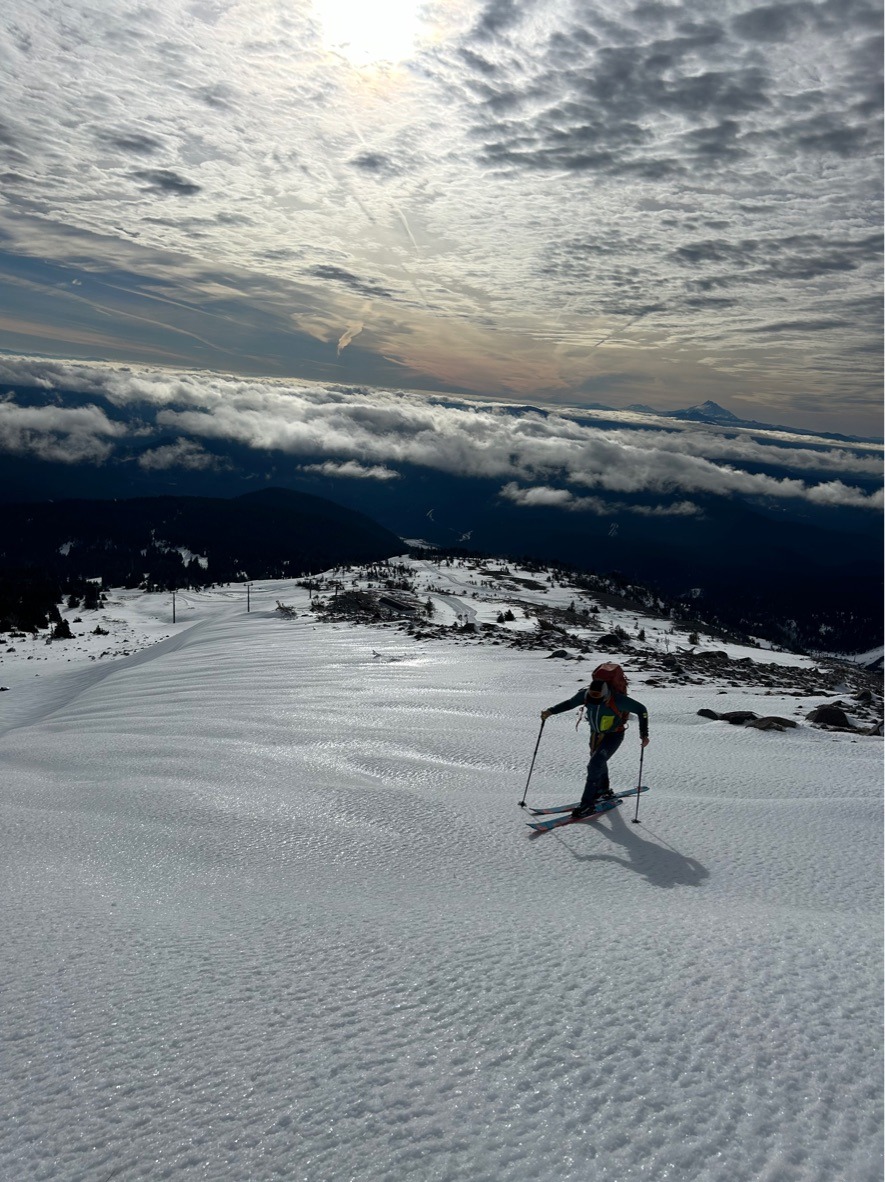
Generally, we found harsh early-season ski conditions. Our snowpack is between 12 to 24 inches deep, depending on the aspect, so hazards associated with low-tide conditions were at the front of our minds this morning. Streams were flowing wide open and near surface objects such as rocks and trees made themselves known to the bottoms of my skis, especially at lower to mid elevations.
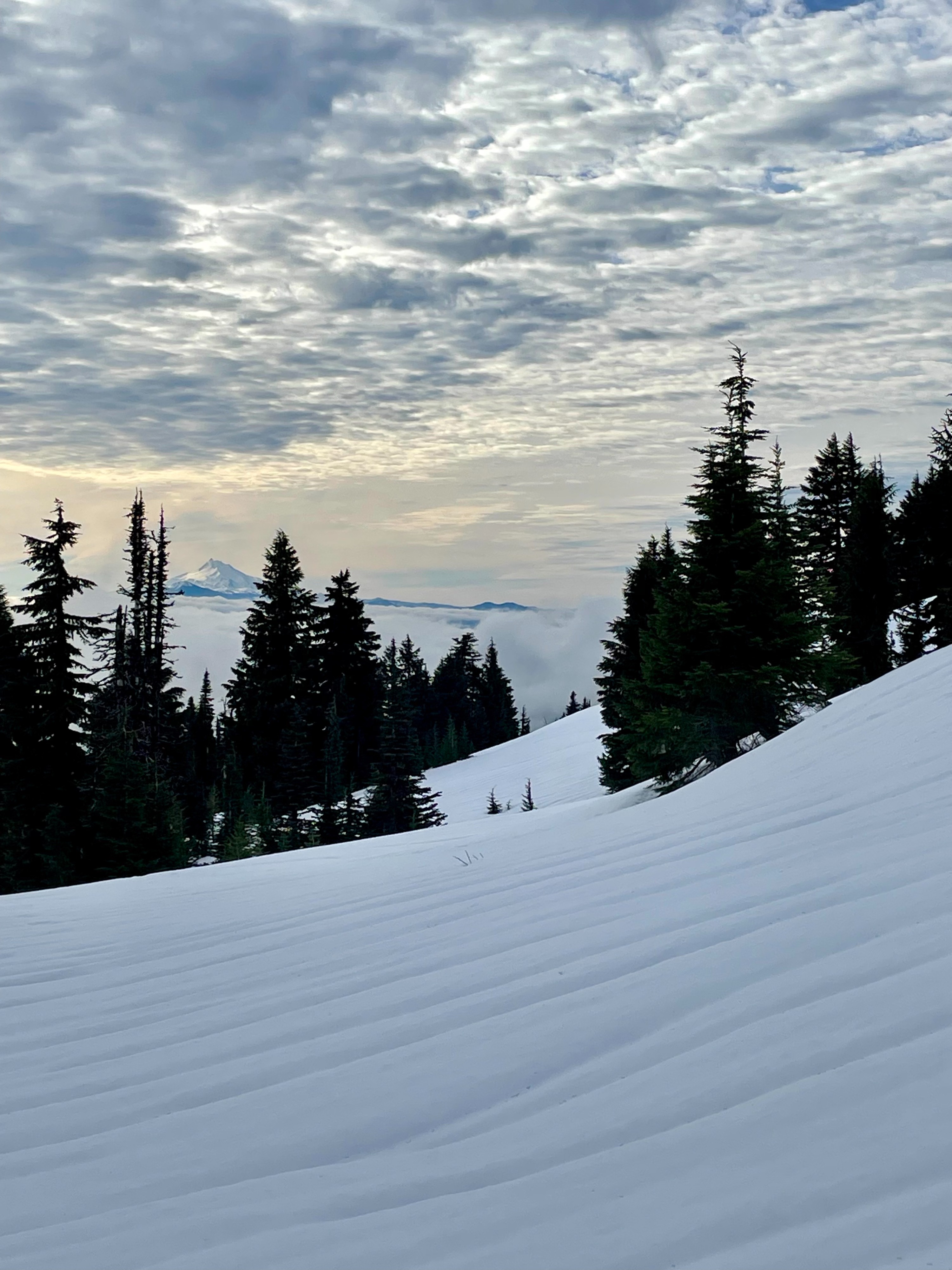
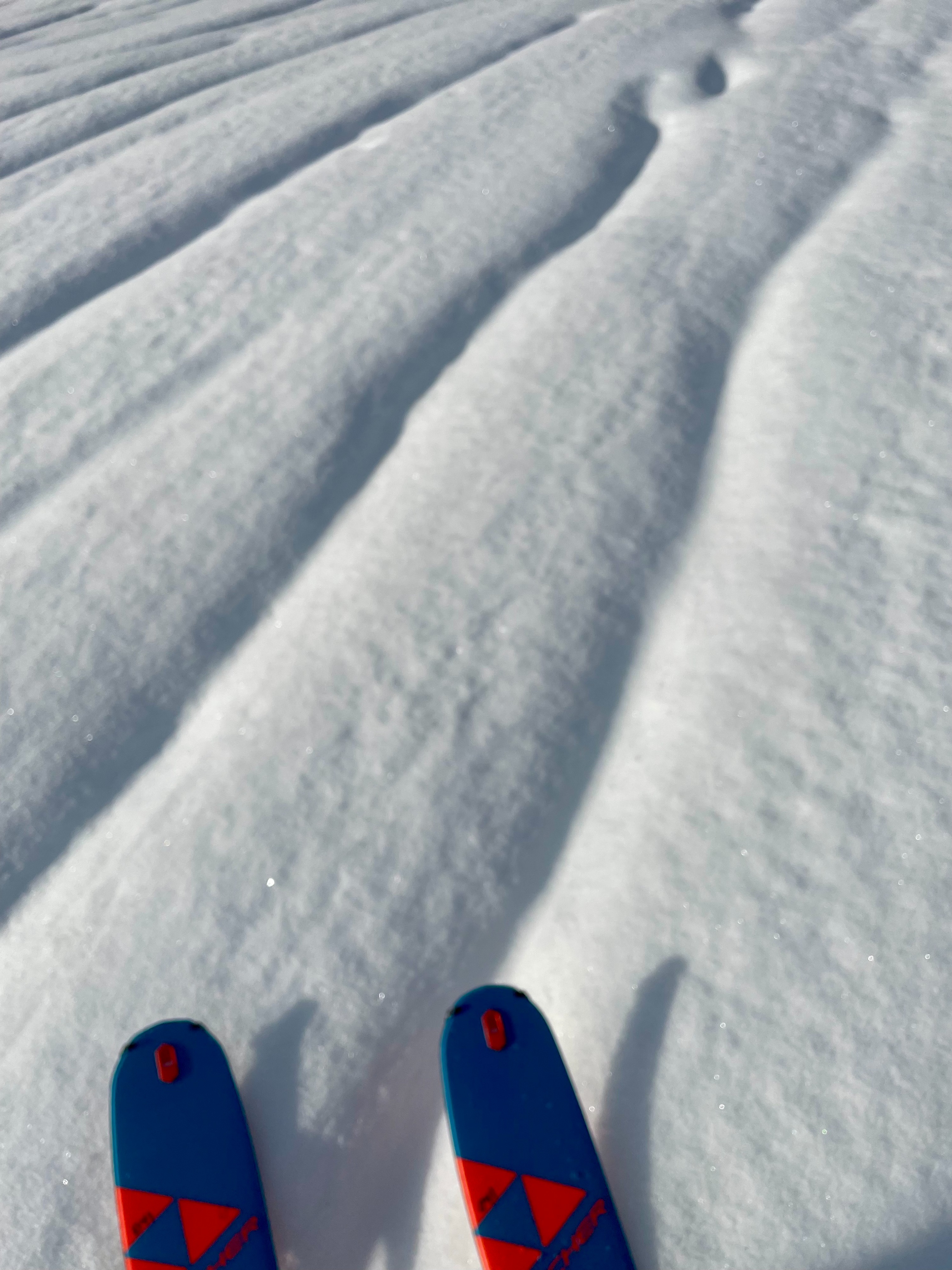
We observed the snow surface become icey and firm at 6,500 feet and continued through to our high point at 7,300 feet. This made all modes of travel tenuous. The surface was firm enough that even moderately steep slopes required full on survival ski tactics.
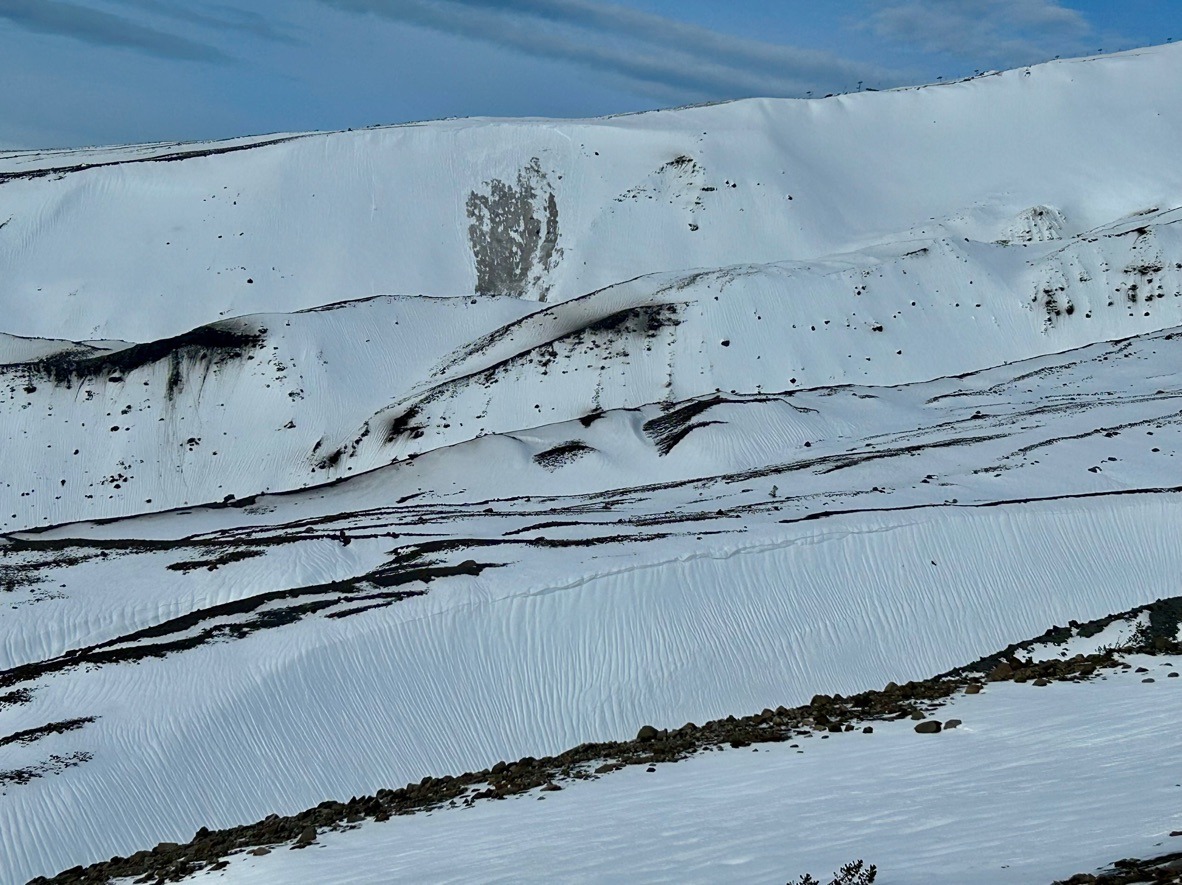
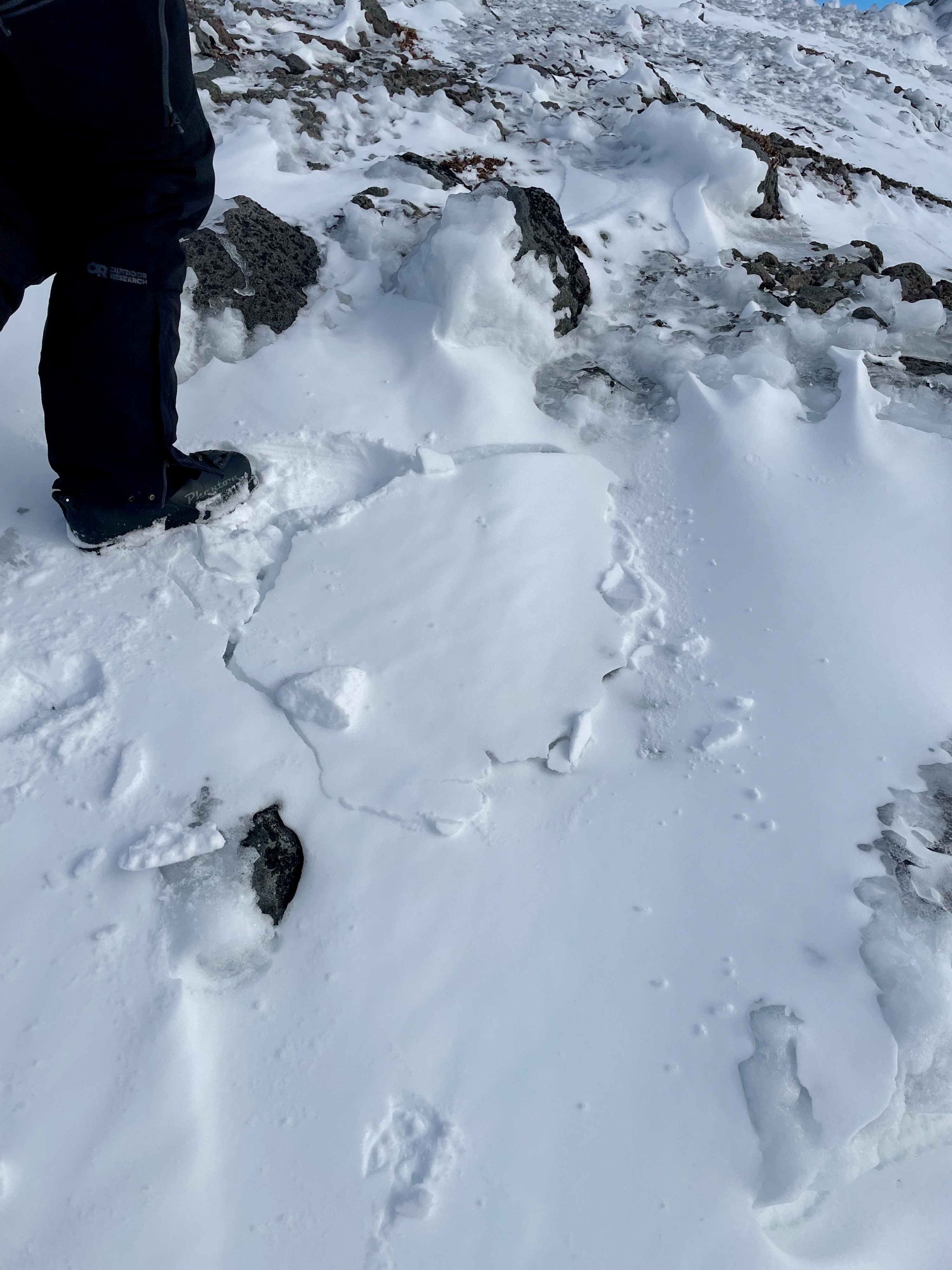
Also of note at upper elevations, we were surprised to observe small, isolated pockets of unstable wind-drifted snow on the SSW sides of rocks and small rolls. These small, isolated slabs produced small shooting cracks and were reactive to human influence.
In summary, The numerous non-avalanche related hazards we observed at all elevations made for attentive backcountry travel. However, the silver lining is a strong lower snowpack besides some isolated pockets of unstable wind-drifted snow at the highest elevations.
Small isolated pockets of unstable wind drifted snow were observed on the WSW sides of rocks and rolls in the terrain.Weather
- Cloud Cover
- broken
- Wind Loading
- none
- Recent Snowfall
- 0
- Snow Avail For Transport
- none
Snowpack
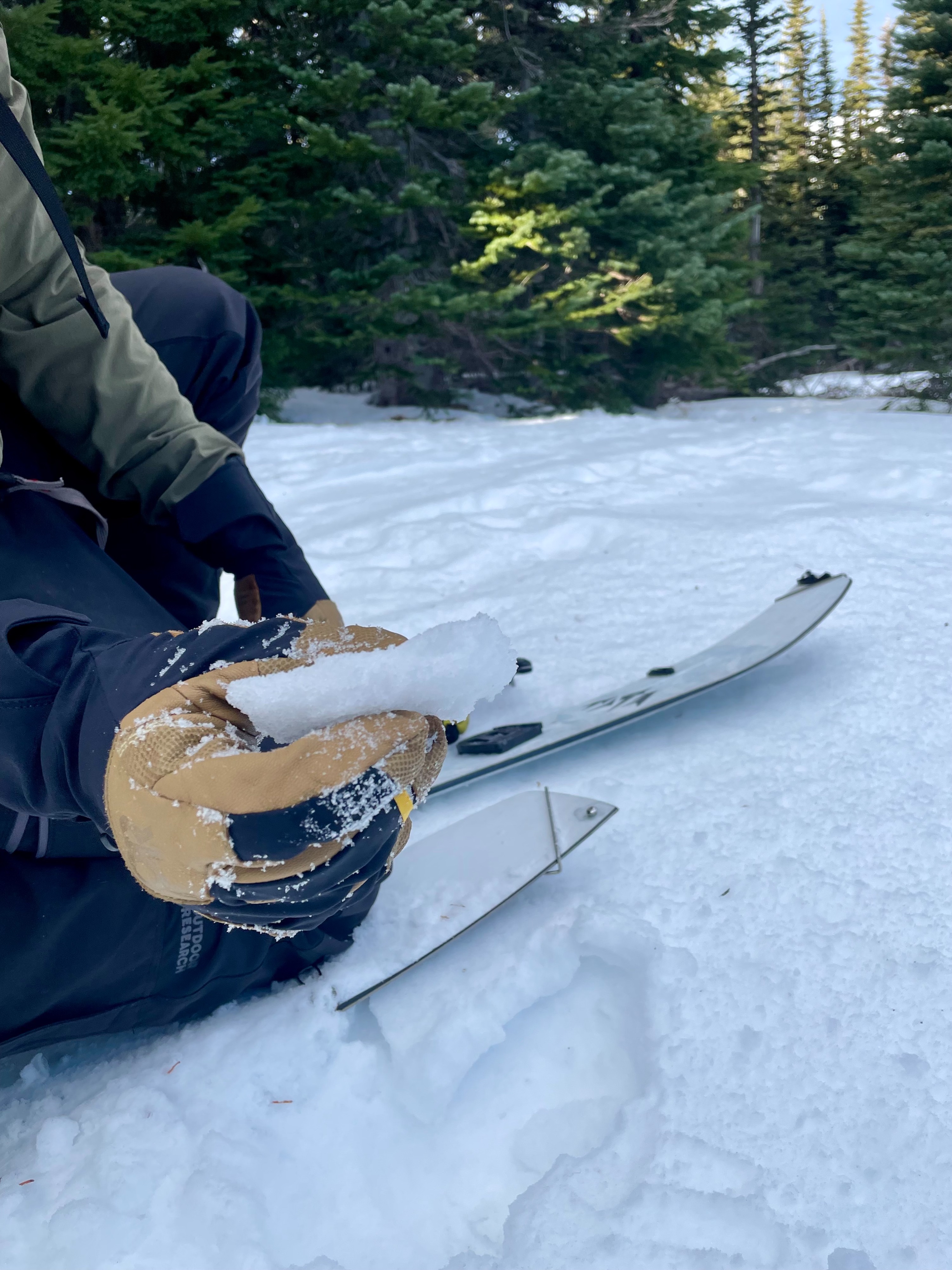
We dug a snowpit at 5,800' on an eastern aspect of lower Vista Ridge. Our current snowpack ranges from 12 to 24 inches deep and has four distinct layers. On the surface there is a 1 inch melt-freeze crust. At lower to mid elevations a ski could penetrate a couple inches through this crust but generally was supported, whereas a foot sank down to the stout 12/7 crust. Above 6,500 feet this surface crust became impenetrable and was one of the greater hazards observed. There is a stout melt-freeze crust 7 inches below the surface and was created from the atmospheric river event of December 7th; it is hard to imagine anything underneath that could slide. Snowpack tests yielded unremarkable results and we found a strong snowpack structure.