
Quick report
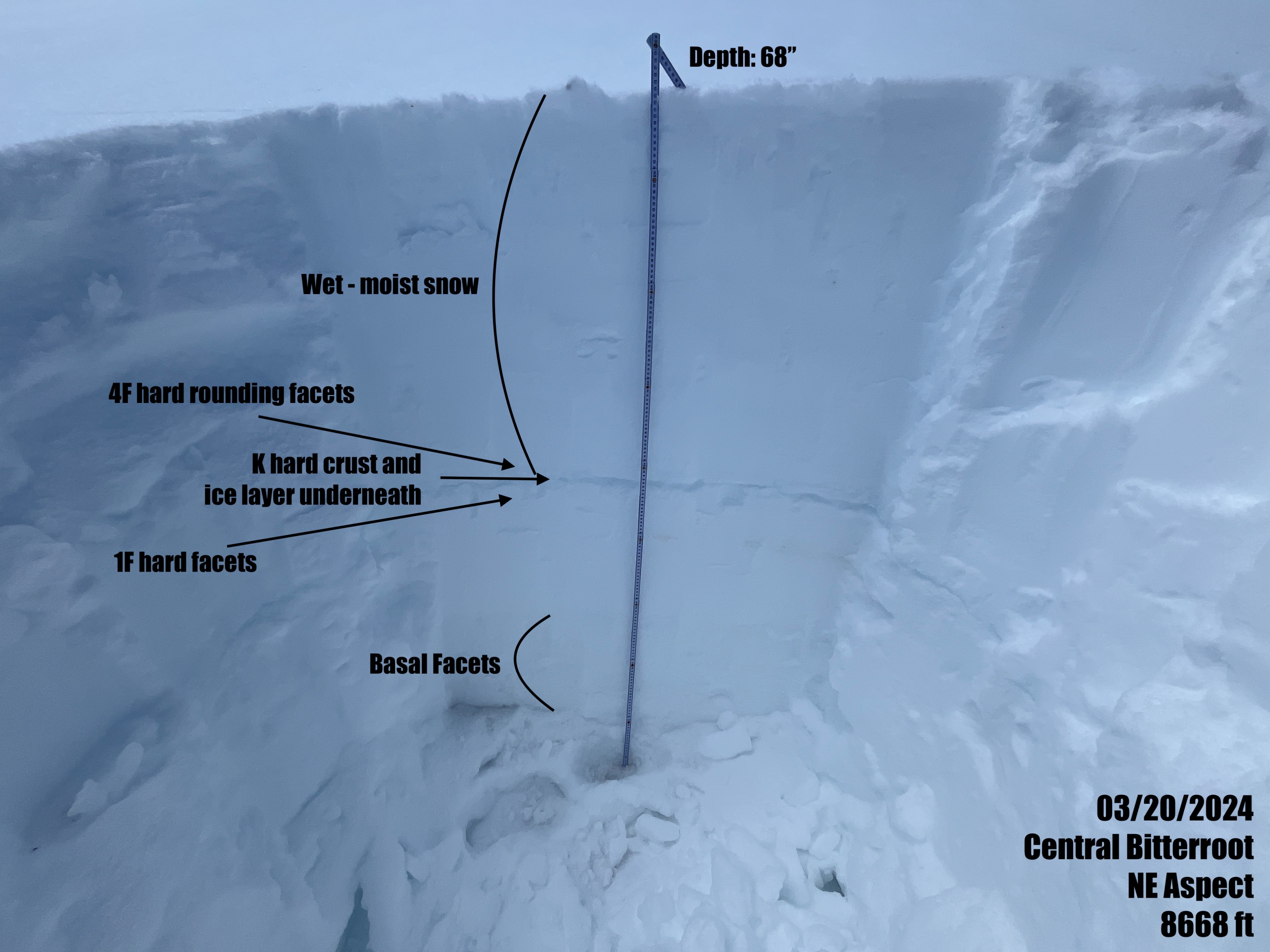
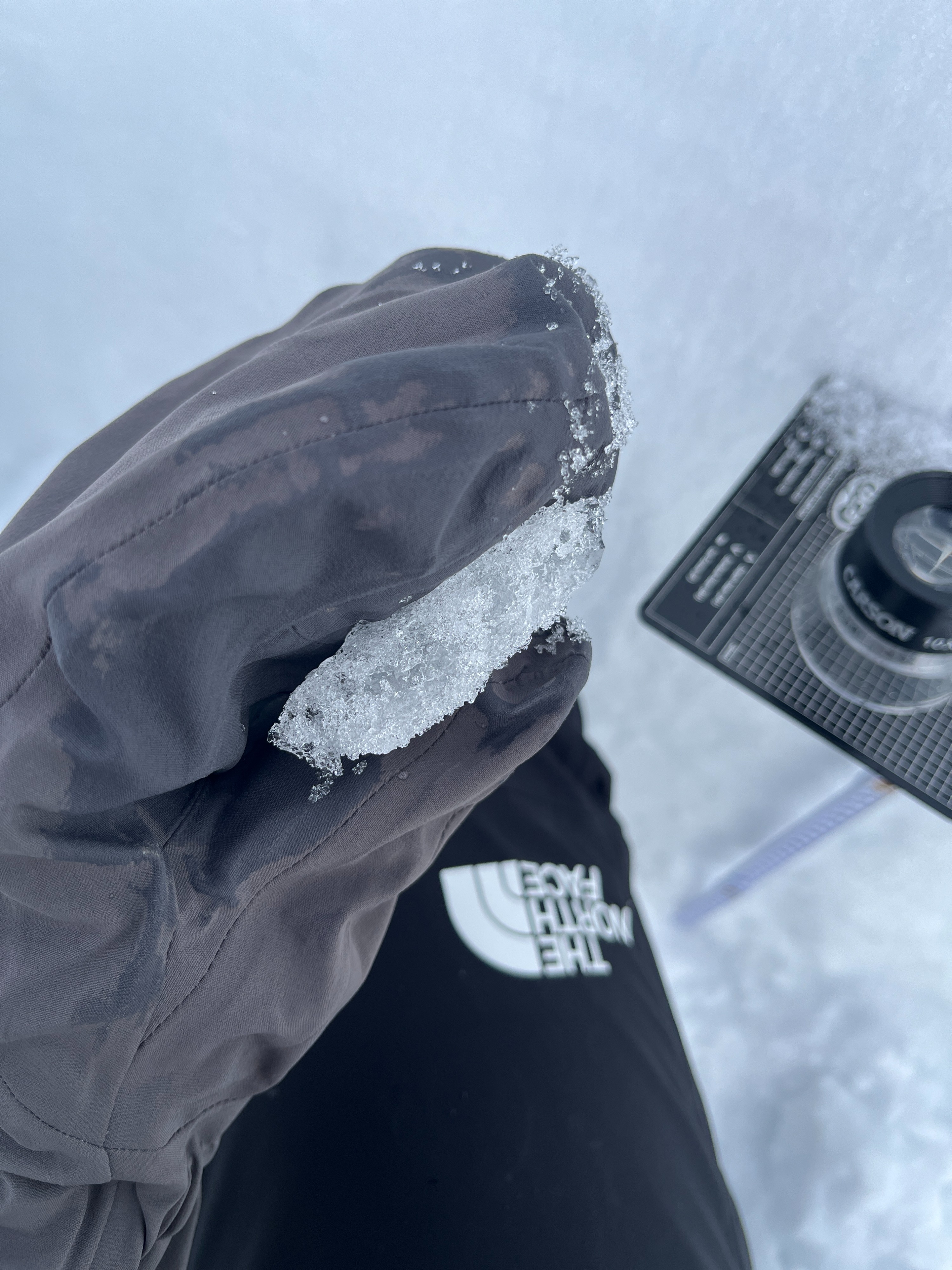
It was overall another beautiful Spring (it is officially Spring after all now) day. It was very sunny, and the snow was definitely getting warm again, but increasing wind throughout the day mitigated some of this. It was apparent that the snow had experienced a lot of warming over the last week. I found wet and moist snow through midway down in the snowpack. A thick layer of ice had formed midpack which marked the bottom of wet/moist snow. Facets continue to hang on around a melt freeze crust midpack, and there are still weak basal facets near the ground. The overall structure of the snowpack was hard and will likely lock up nicely with incoming cold weather.
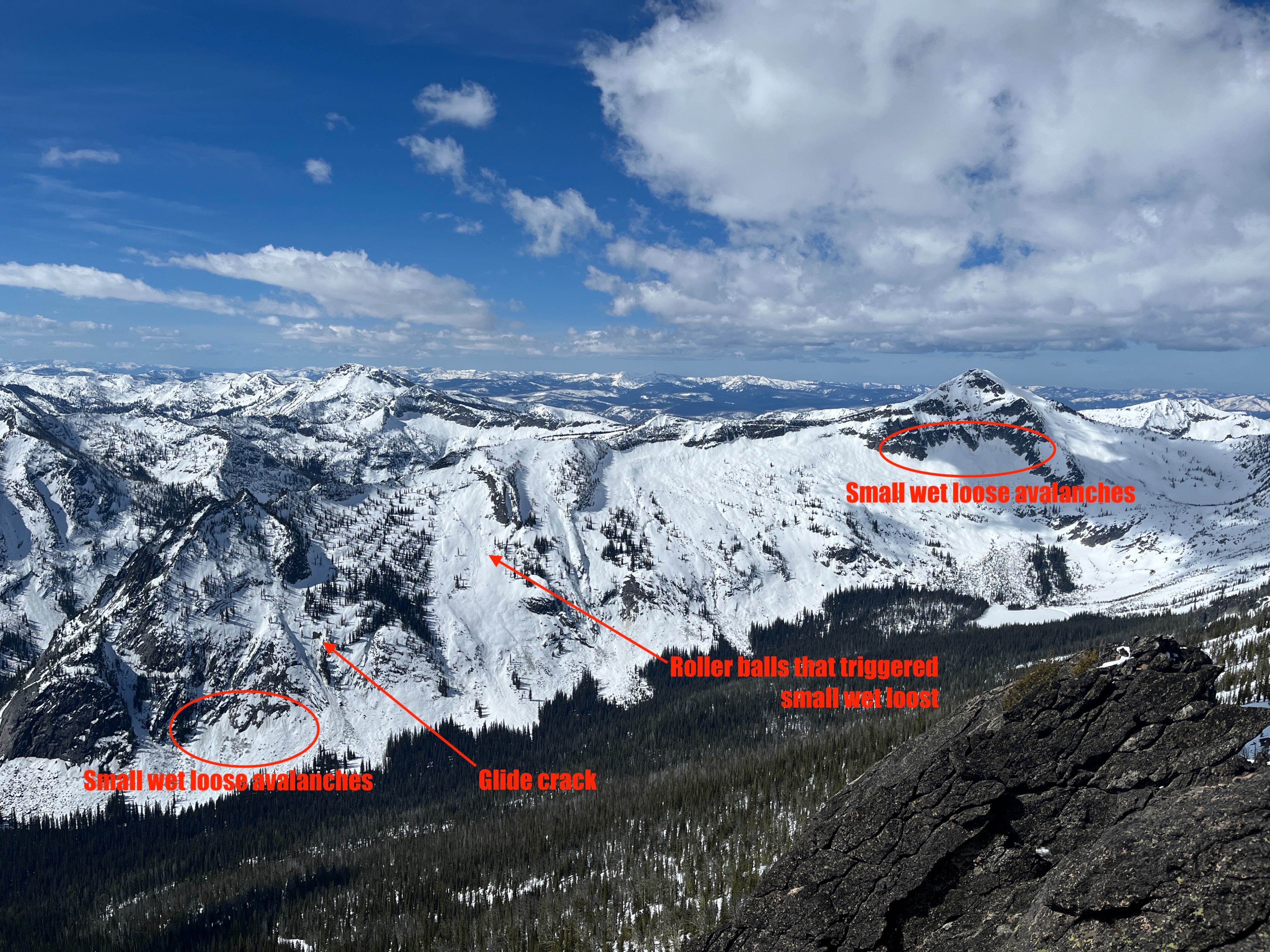
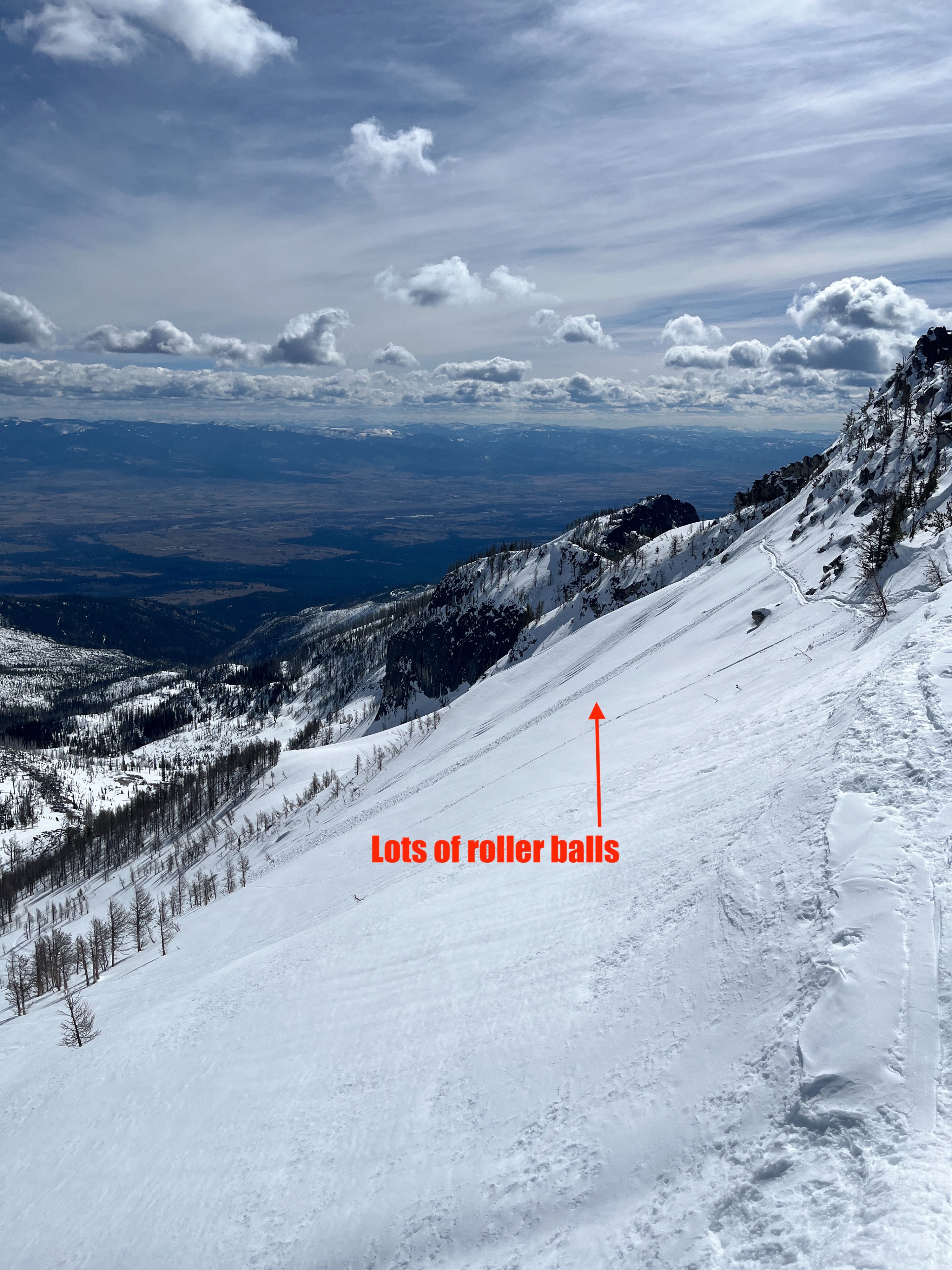
I observed numerous small wet loose avalanches but it is unknown how recently they went. I also observed lots of rollerballs at all elevations and wet, unsupportable snow at lower elevations. I observed one glide crack on an east aspect at middle elevations.Weather
- Cloud Cover
- scattered
- Wind Loading
- none
- Recent Snowfall
- 0
- Snow Avail For Transport
- none
The sky was partly cloudy throughout the day, and the wind began to pick up around 12pm. Overall, the wind was light, with moderate/strong gusts from the northwest. There were occasional gusts that came from the northeast and could be felt at middle elevations. The wind was calm at lower elevations.
Snowpack
There is insufficient snow below 6100' to ski or sled in this zone. By the end of the day, the surface of the snow at lower and middle elevations on southeast and south aspects was very warm and sticky, making for difficult travel on skis. At upper elevations, just the very surface of the snow was getting newly warm and wet on all aspects. The wind was doing an effective job of keeping things cooler.
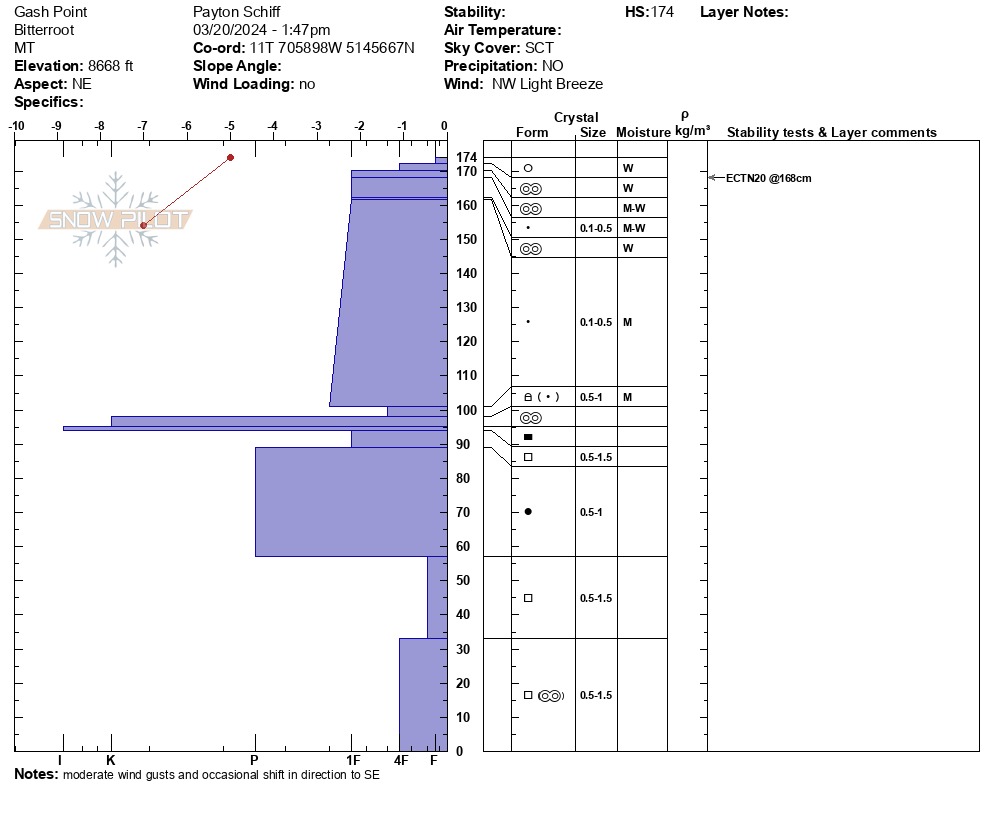
I dug a pit on a northeast aspect around 8700'. The depth of this pit was 68" (174cm). I found multiple wet melt freeze crusts at and near the surface. This gave way to a large and moist slab of rounded grains. Midway down, I found a knife (K) hard melt freeze crust with an ice (I) layer below it. Above this combo were four finger (4F) facets that were well rounded and nearly rounded grains. Below was once finger (1F) hard facets. Another layer of pencil (P) hard rounded grains was below the facet/crust layering before giving way to fist (F) - 4F hard facets at the ground. I performed an extended column test and got hard non-propagating results in the melt freeze crusts near the surface (ECTN20).