
Quick report
We moved through some terrain without experiencing any obvious signs of instability. We cautiously entered some avalanche terrain, but sought out areas that were less wind-loaded and with small starting zones, as opposed to diving into large, wide open, heavily wind loaded starting zones.
We did not experience any cracking or any collapsing.Weather
Mild temperatures and plenty of sunshine. Temps felt a bit cooler than in previous days, and an intermittent westerly wind was helping to keep surfaces a bit cooler.
Snowpack
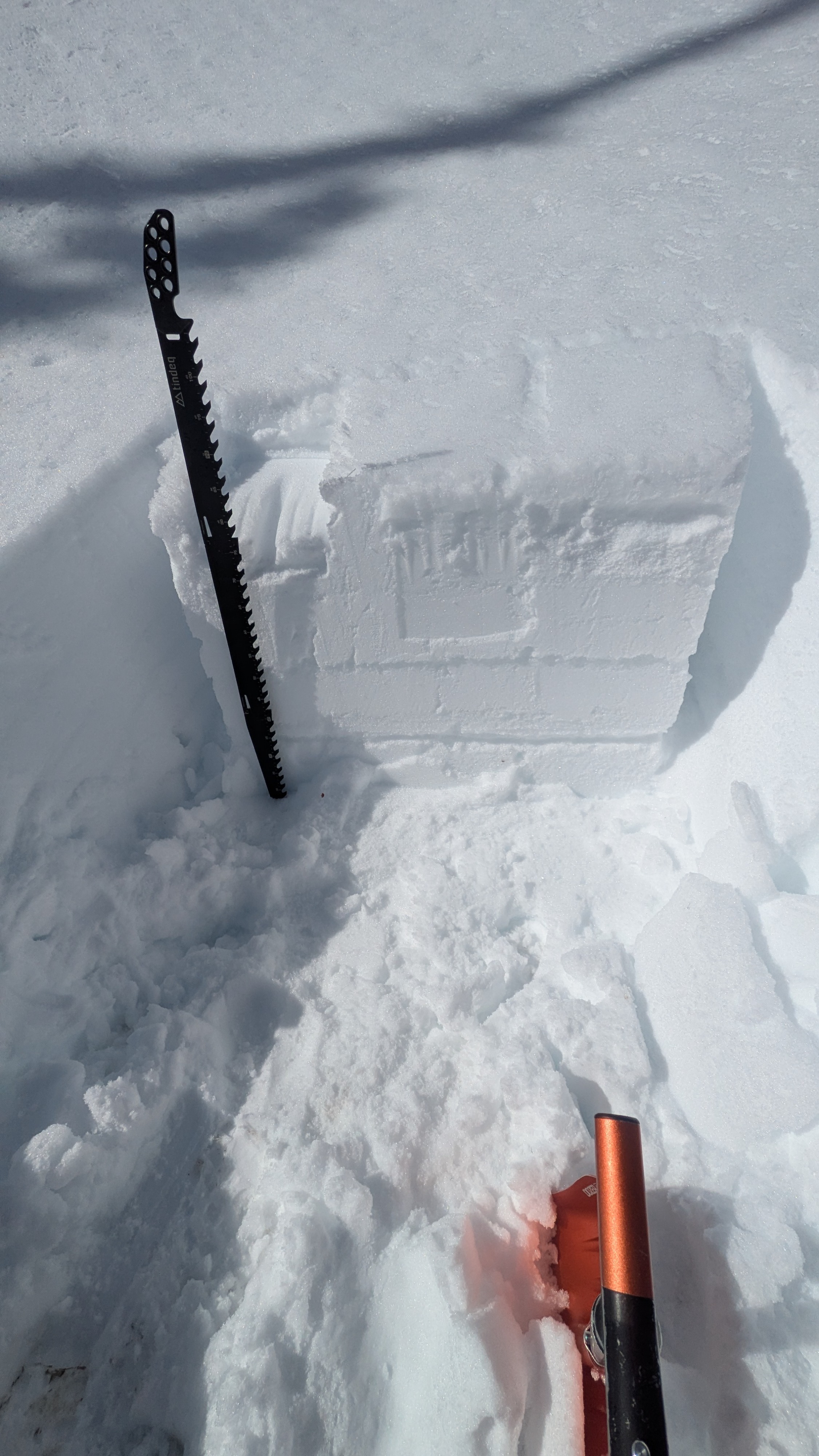
We dug in a few locations, targeting the persistent weak layers that are driving the avalanche hazard:
- NE aspect at 7,300': Subtle mid-storm rain crust 10-12cm below the surface. 2/14 weak layer buried 35-45cm down. There was small, standing surface hoar at this interface which produced an ECTP 21 (initially broke at 20 hits, but propagated at 21), and two ECTNs at 20 and 22. The January Drought Layer is buried 60cm down here and produced ECTNs with hard force (had to go beyond standard loading steps in 2 out of 3 tests to get it to break).
- E aspect at 7,500': 2/14 weak layer down 30-35cm here, presenting as up to 1 cm SH sitting on a crust. This layer produced repeated ECTPs in the 18-22 range. These propagating results were more dramatic than the subtler propagation observed on the NE aspect. The January Drought Layer was down 50cm here. Recent warm days and plenty of sunshine had produced a significant amount of water at the surface - we found irregular, discontinuous percolation columns down to at least the 2/14 weak layer, and there was significant moisture in the snow even below the January Drought Layer
- ENE aspect at Crown profile at Burgandy/Murphy saddle slide. No significant results in snowpack tests in the crown. It wasn't perfectly clear which layer this failed on, but based on depth and profile my hunch was that it was the JDL. Confidence in this is low, nearby pits showed the 2/14 weak layer to be more problematic.
SURFACE INVENTORY:
Continuing surface inventory as we head into stormier conditions again. It appeared that a layer of surface hoar formed earlier in the week and had been selectively destroyed by wind and sun. We didn't actually find any surface hoar in avalanche terrain - the best preserved SH we found was along shaded ridgelines, where it existed in pockets sheltered from the wind and sun. Surprisingly, we weren't finding it down lower in sheltered terrain: its unclear if it was formed and destroyed or if it just didn't form at all down here. Solar aspects have a variably thick crust from warm temps and sun. I expected these surfaces to look more cooked on and less concerning, but ended up finding plenty of 1-2cm thick crusts with facets underneath. Shaded aspects were faceting, producing some good recycled powder skiing. All in all, I think we will be burying another identifiable layer that will be variably reactive once loaded. This layer will have some dirtiness thanks to the amount of wind earlier in the week - expect to find a lot of pine needles and other forest debris here. Should be a decent indicator layer.
Avalanche
There were many wet loose avalanches that occurred recently at middle and upper elevations, generally starting in steep, rocky terrain. Hard to be certain on timing without being out here everyday, but seems like the focus of activity was 2/28 to 3/1. This problem did not turn on today, but the snow did become soft/moist/mushy on solar aspects later in the day. The largest observed avalanche was reported via public ob earlier (thank you !). This slide failed at the Burgudy/Murphy saddle and ran into flat terrain below the slope. This was a large avalanche, impressive for the size of the terrain. A former forecaster commented: "That may be the largest side country avalanche I’ve seen around the bowl! This is impressive for the area"