
Quick report
- Cracking
- widespread
- Collapsing
- isolated
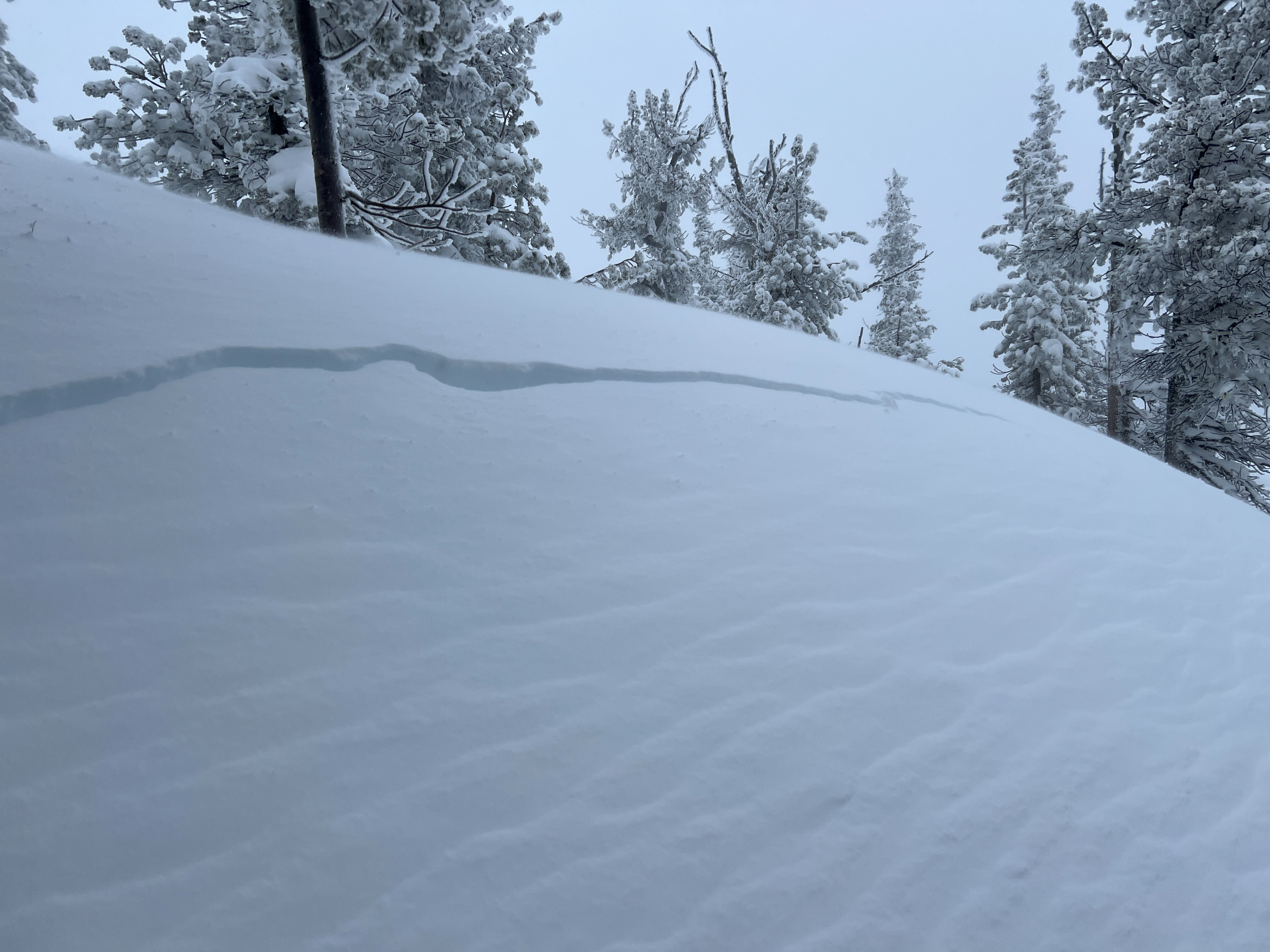
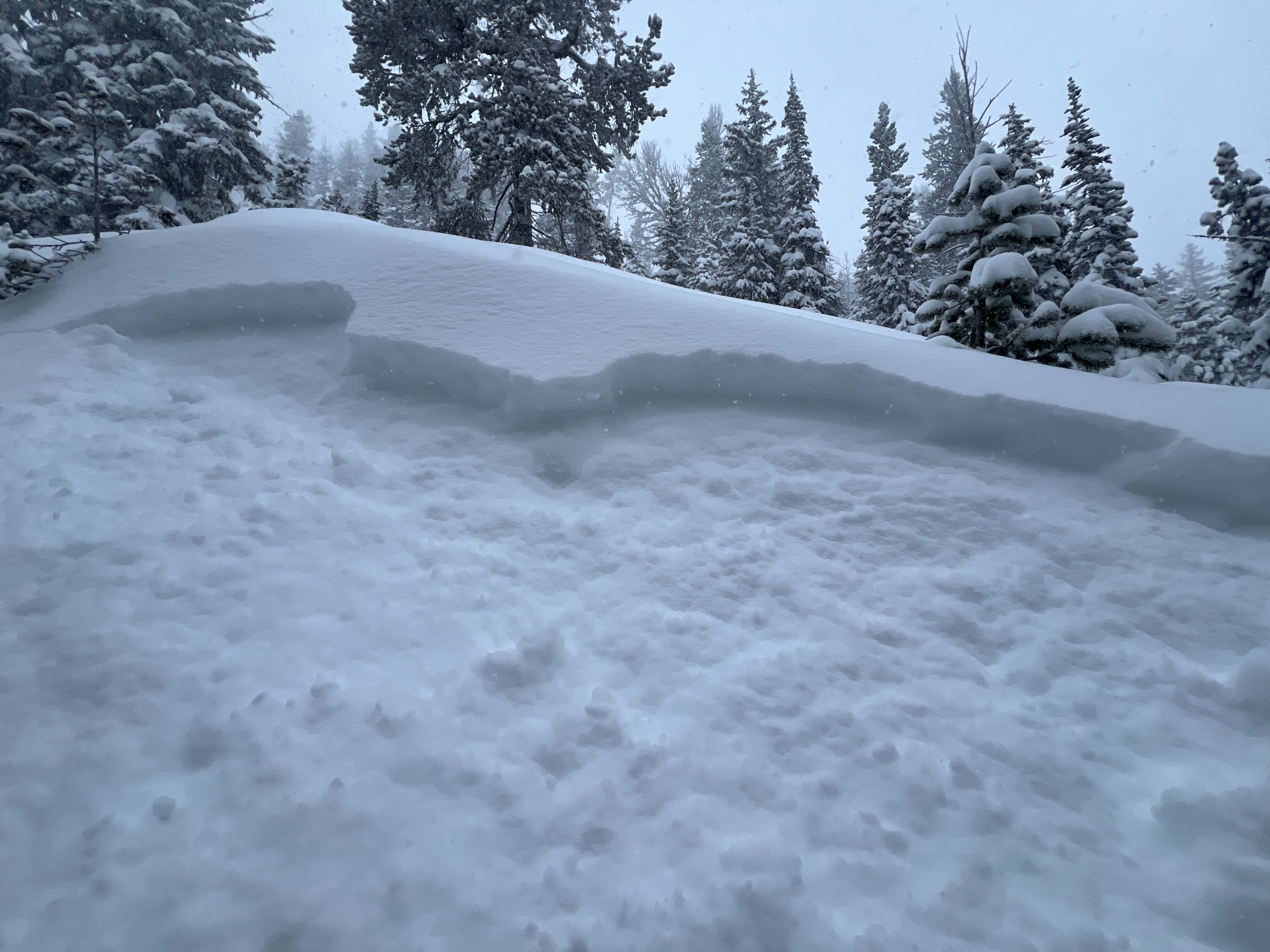
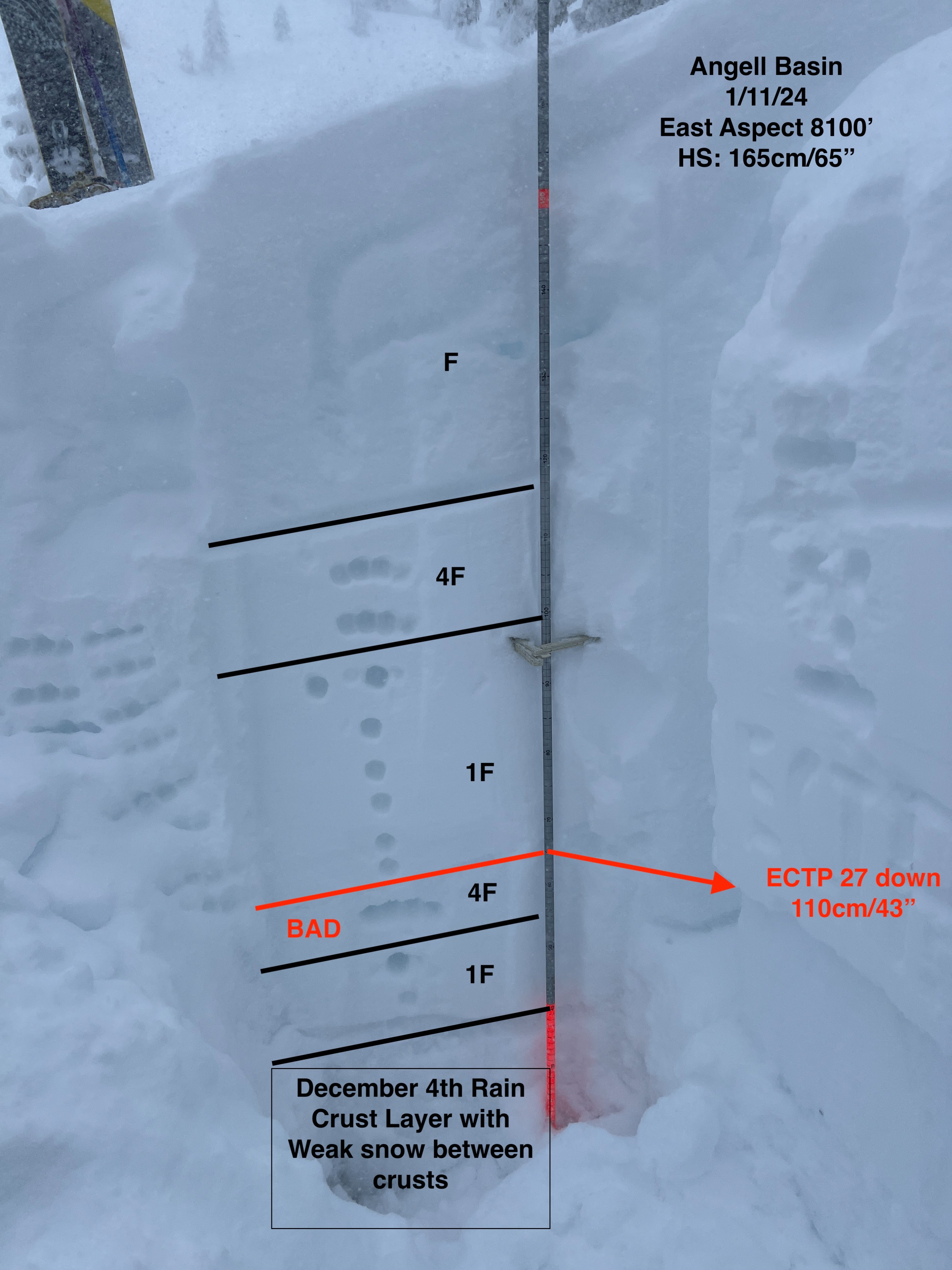
I observed cracking in exposed wind-loaded terrain near and above treeline. Below treeline, I found touchy storm slabs on small test slopes that were failing on a density change in the most recent storm snow. I carefully traveled on slopes less than 30 degrees, being diligent not to be below steeper slopes or be above any sort of terrain trap such as gullies, creeks, and cliffs. I dug two pits, one at 8100' on an East Aspect, and one at 8400' on a North aspect in the Lee/Angell saddle. Both pits showed propagation in the ECT's (ECTP27 at 8100' and ECTP29 at 8400'). As we continue to put more of a load on this snowpack this evening in the form of more snow and wind-blown snow, I would not be surprised if there is a natural avalanche cycle.
A density change within the new snow made it very easy to trigger storm slabs below and near treeline within the new snow from the last 24 hours. Isolated cracking occurred, but mostly in creek beds. Cracking would occur on wind loaded test slopes near and above treeline.Weather
- Air Temp
- 10
- Cloud Cover
- obscured
- Wind Loading
- moderate
- Recent Snowfall
- 30 cm in 24 hrs
- Snow Avail For Transport
- large amounts
Cold morning in the Elkhorns with snow intensifying around 9 AM with moderate winds out of the NNW. Some local effect lower in Angell basin from the East.
Snowpack
110cm/43" of storm snow since 1/5 is right side up (increasing hardness with depth). This new snow sits atop a layer of softer, weaker, sugary facets, and below that is a harder bed surface. Sounds like the perfect recipe for a persistent avalanche once more weight and a trigger is introduced....doesn't it? Below this harder layer (bed surface) sits the hard December 4th Rain Crust with some weaker snow right at the base of the snowpack.
Avalanche
Multiple small D1 storm slabs on small test slopes.