
Quick report
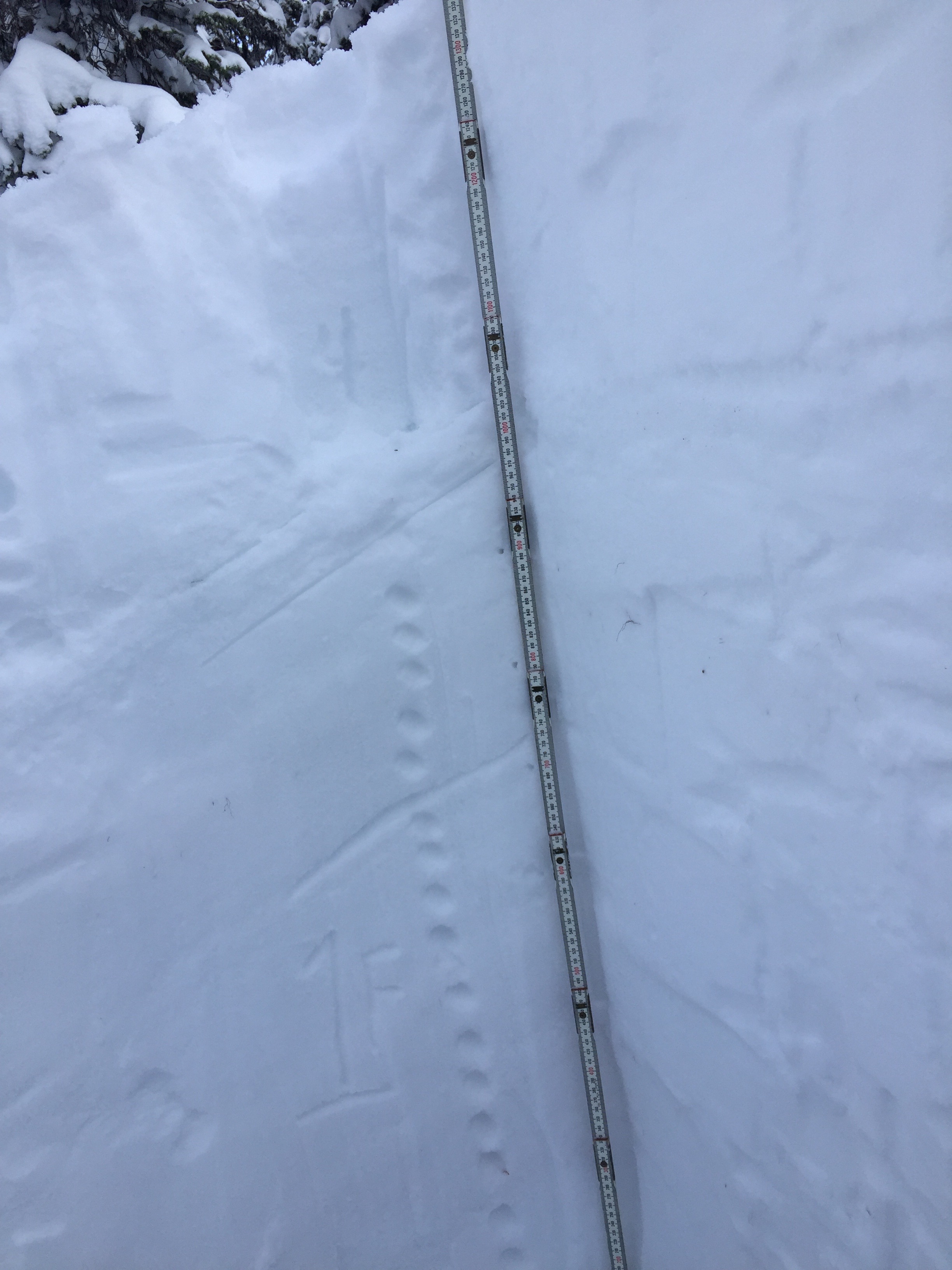
I did not observe any signs of instability. There was about 4” to 10” of unconsolidated snow resting upon the recent supportable rain crust that resides in the upper snowpack below 8000’ . The weather was pleasant with a temperature of 17 degrees at 7400’ . Skies were cloudy and wind was calm. I dug a snowpit at about 7400’ on a north facing 30 degree slope. The height of snow at this location was approximately 55” (138cm). I performed an Extended Column Test. The column failed approximately 11” down, at the interface between the uncohesive snow and the 1.5” recent rain crust. The column failed using a moderate amount of force. No propagation was observed. I also performed a Compression Test. This column failed about 26” below the snow surface on a thin layer of graupel sandwiched between two thick layers of consolidated snow. It took the maximum amount of force to get the column to fail. The fracture quality of the shear was resistant and planar. Well consolidated snow makes up most of the snowpack at this location. Because of the deteriorating bond at the loose dry/rain crust interface, I traveled conservatively on low angle terrain. I was concerned about triggering a loose dry avalanche on terrain steeper than 35 degrees. Because of the possibility of triggering a loose dry avalanche on steep terrain, I would rate the stability as fair on the terrain I have been observing.