
Quick report
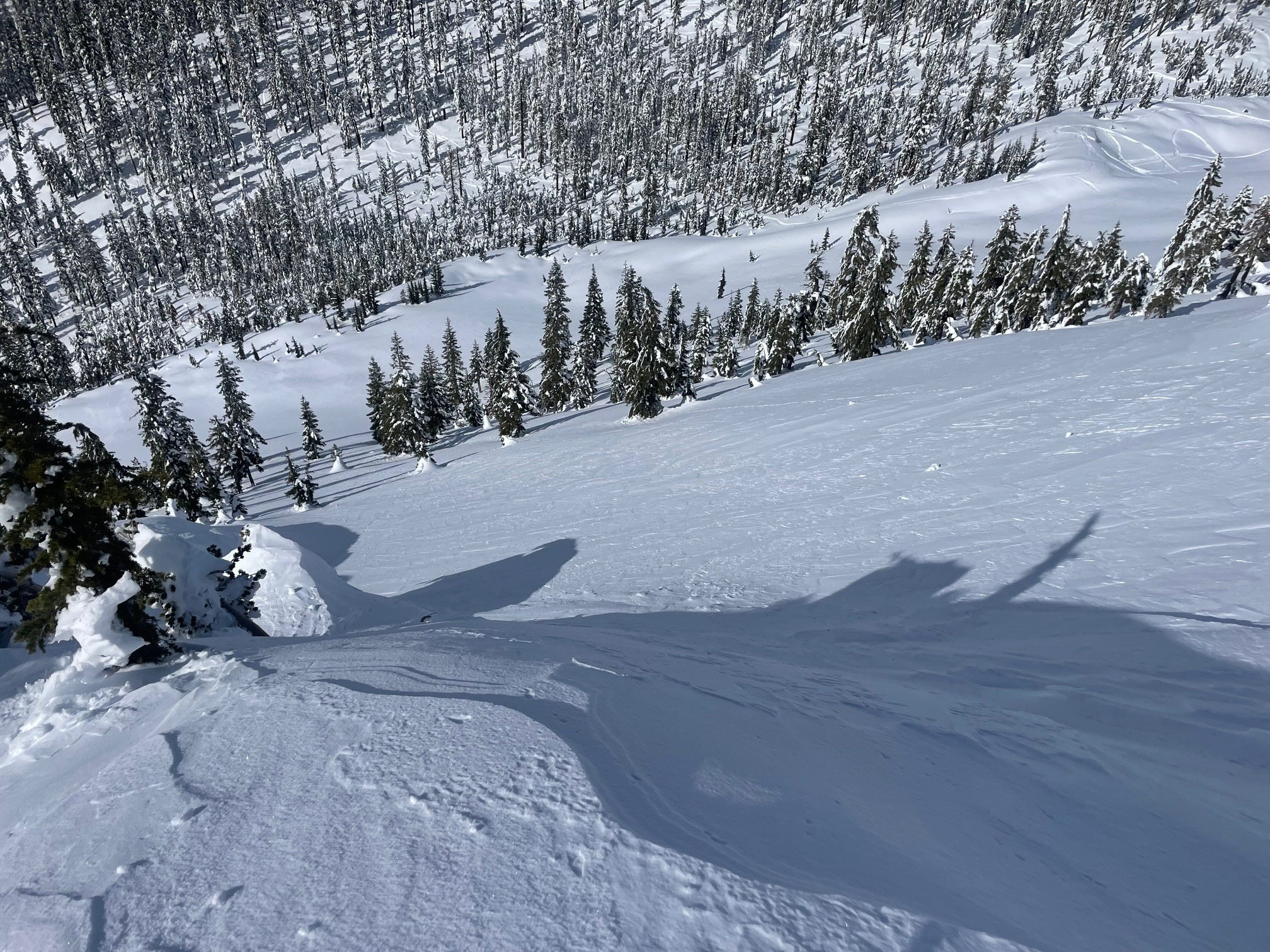
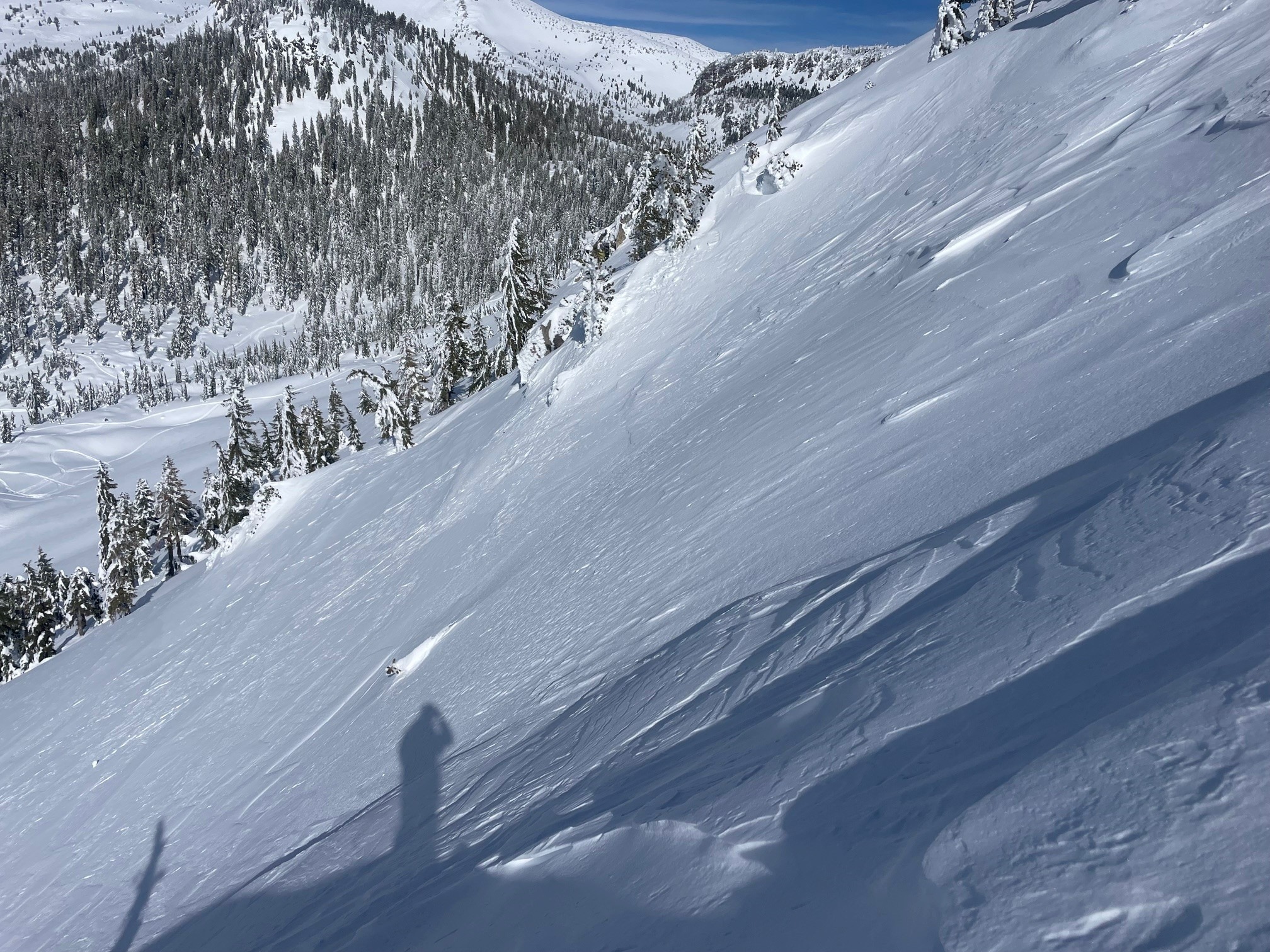
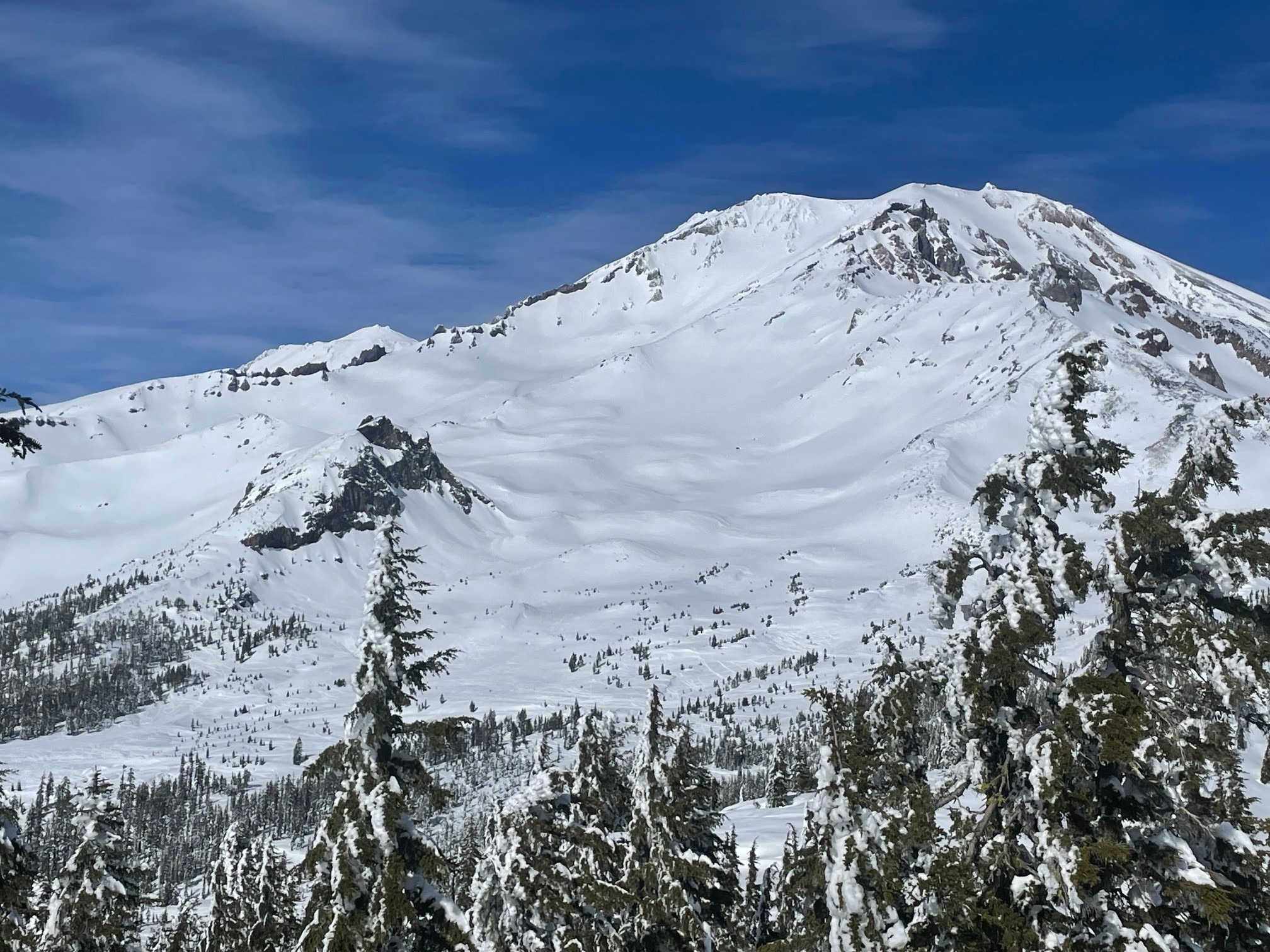
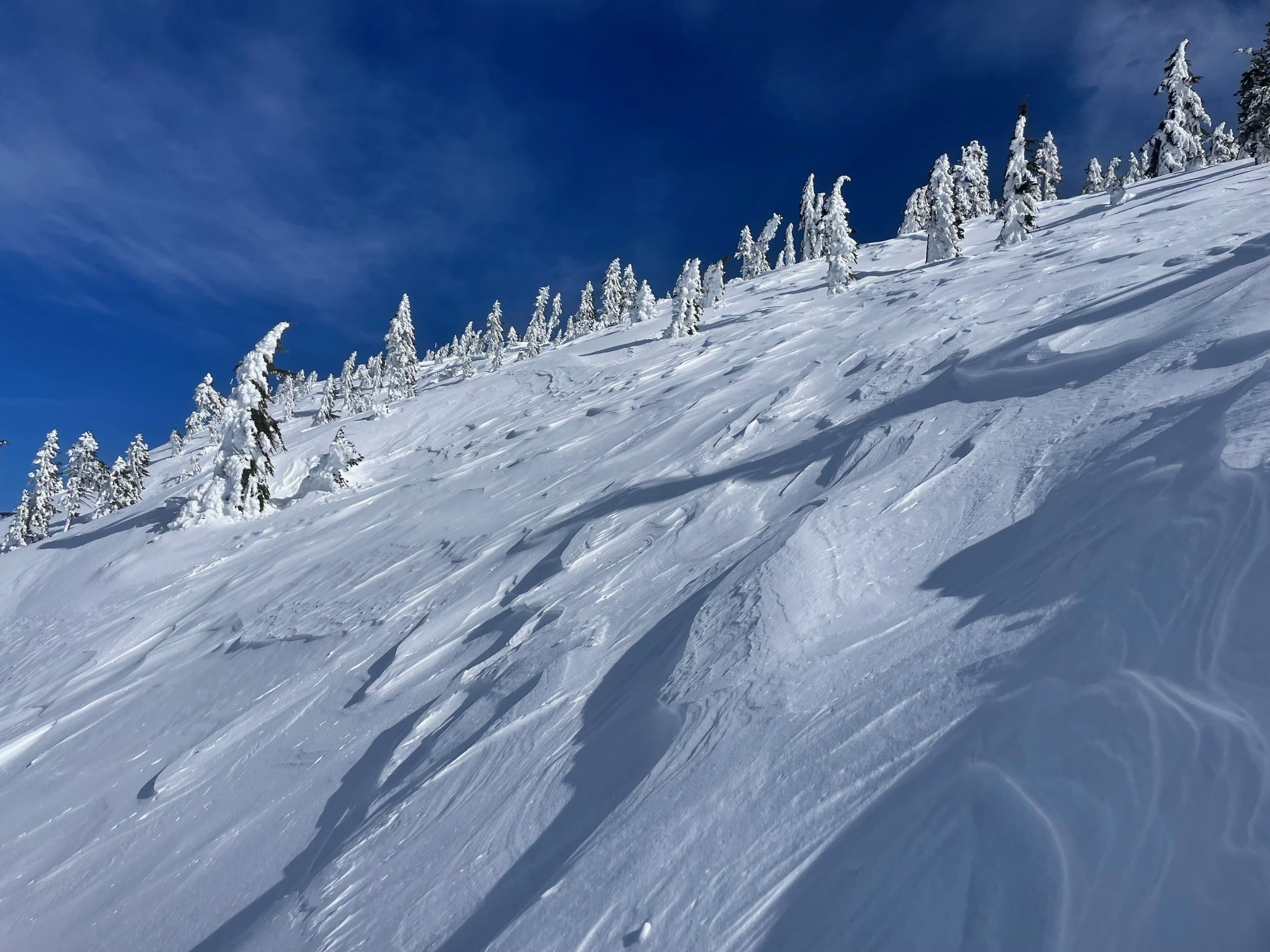
Today's objective was to assess the coverage of the recent new snow and lingering instability on Gray Butte. Coverage has improved immensly. The new snow has consollidated to 110 cm of fist to 4-finger hard snow on top of the old snow. In most areas, snow coverage was well over 250 cm. The recent northerly wind has left obvious signs of scouring and sastrugi along ridge tops. A solar crust has formed on all aspects that see sunlight.
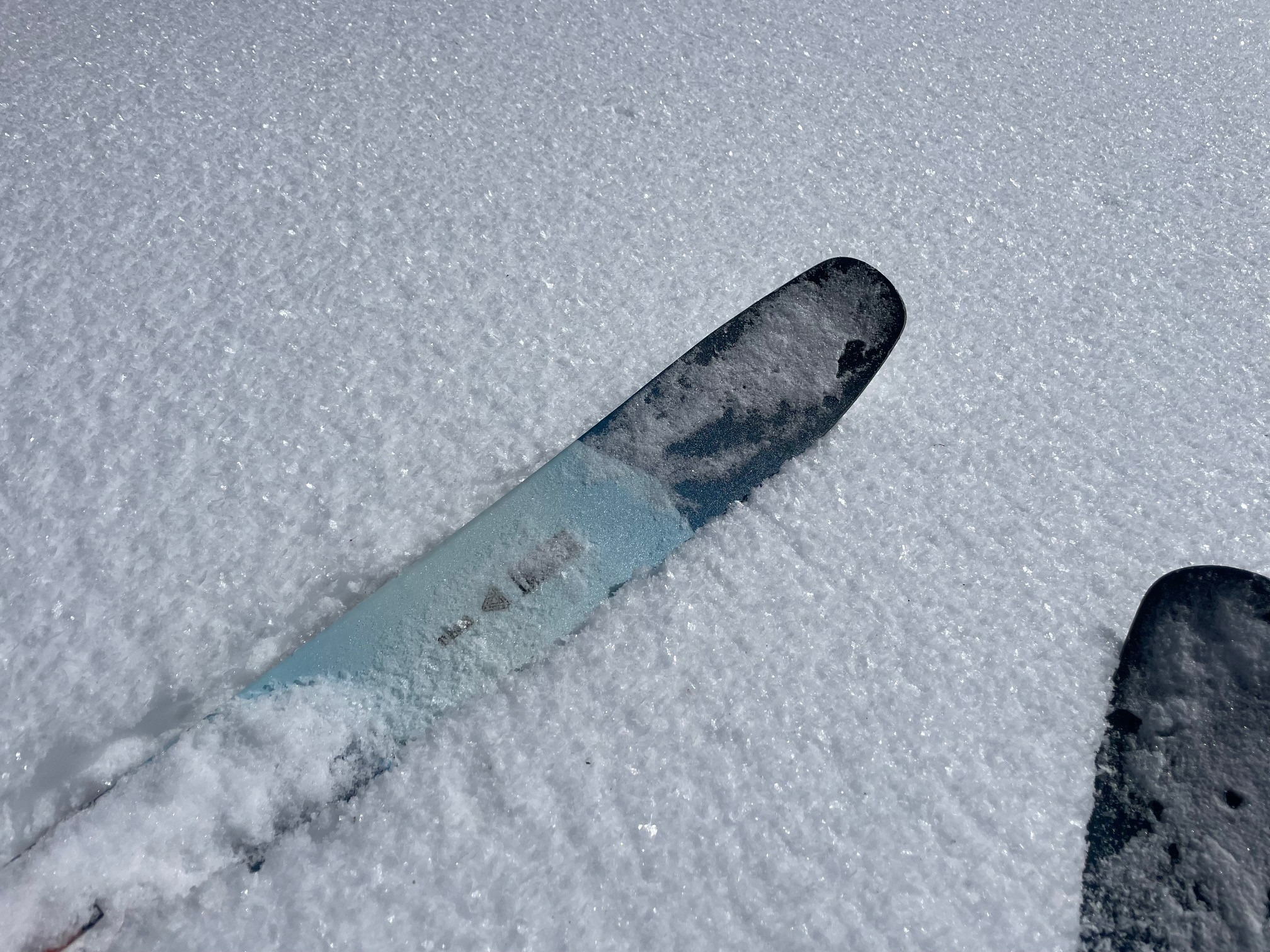
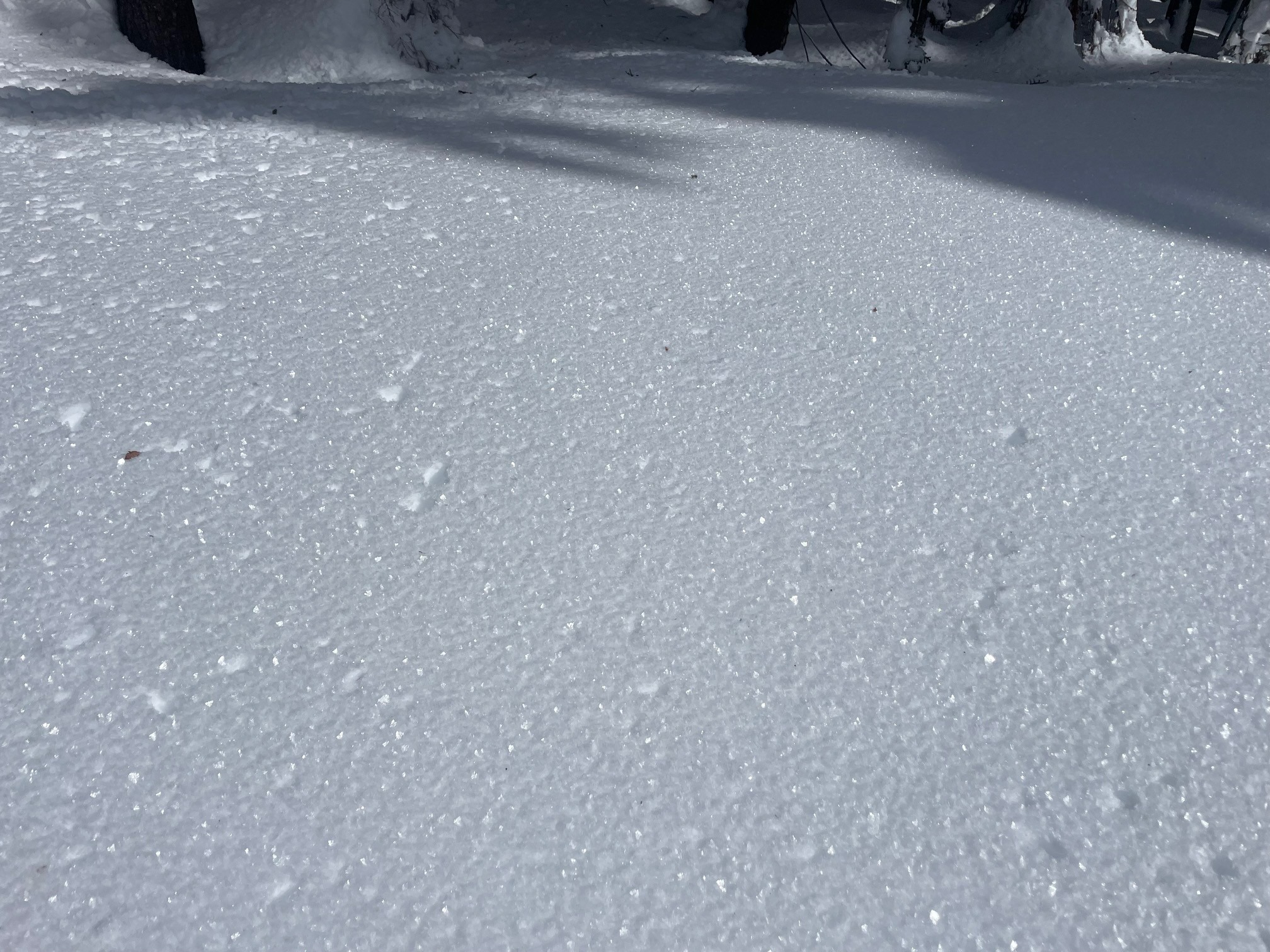
With the new snow incoming, forecasters have been keeping their eyes out for Surface Hoar (SH) development. SH often presents as a sensitive weak layer when new snow is added on top. These grains were widespread on all surfaces below 6,800 feet, and in specific sheltered terrain above 7,000 feet. Up high Gray Butte, SH was mostly nonexistent.
Weather
- Air Temp
- 28
- Cloud Cover
- clear
- Wind Loading
- none
- Rain Elevation
- N/A
- Recent Snowfall
- 0
- Snow Avail For Transport
- moderate amounts
Cold, and clear. Temperatures stayed belowing freezing. Wind was calm and unnoticeable.
Snowpack
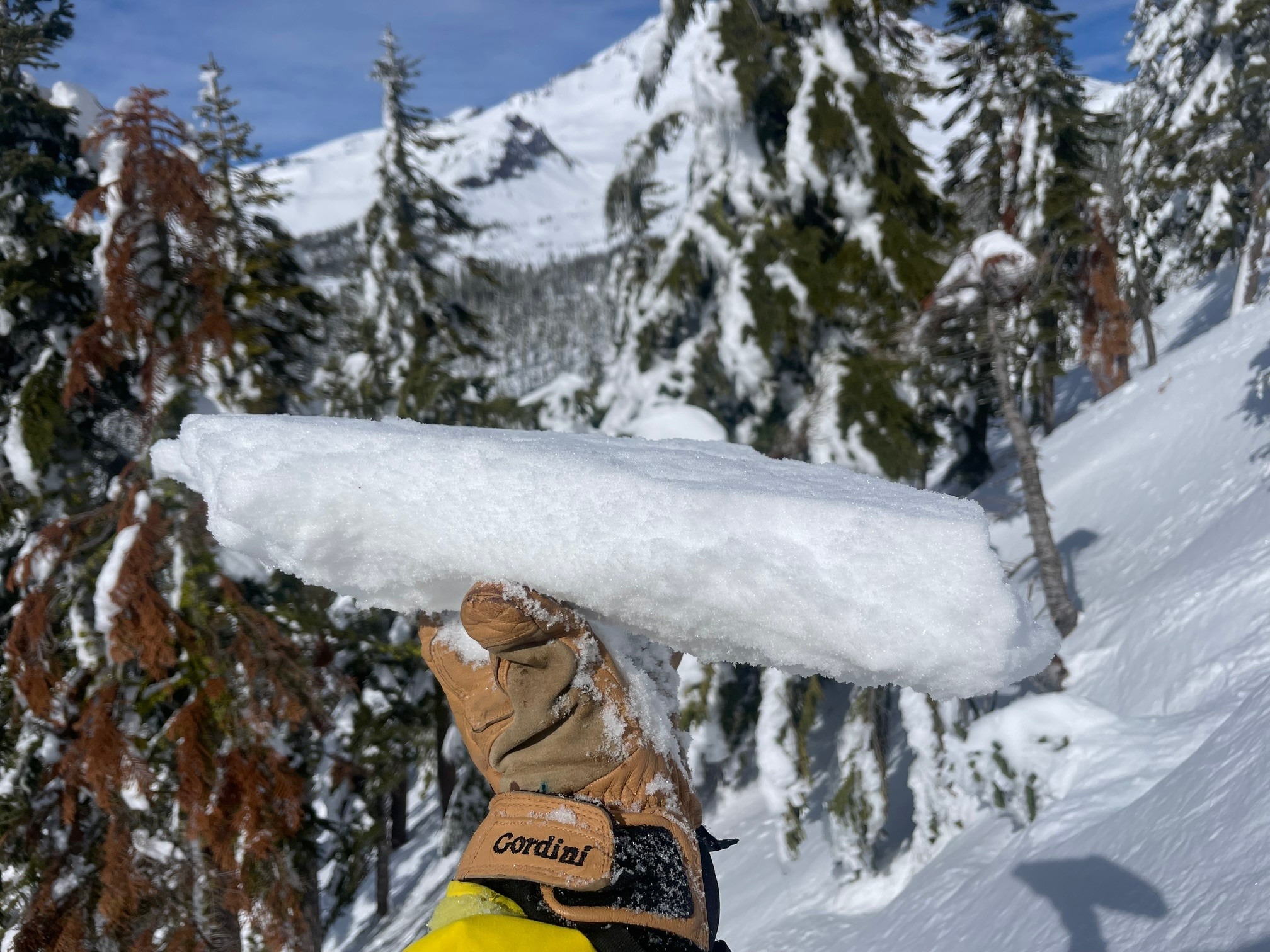
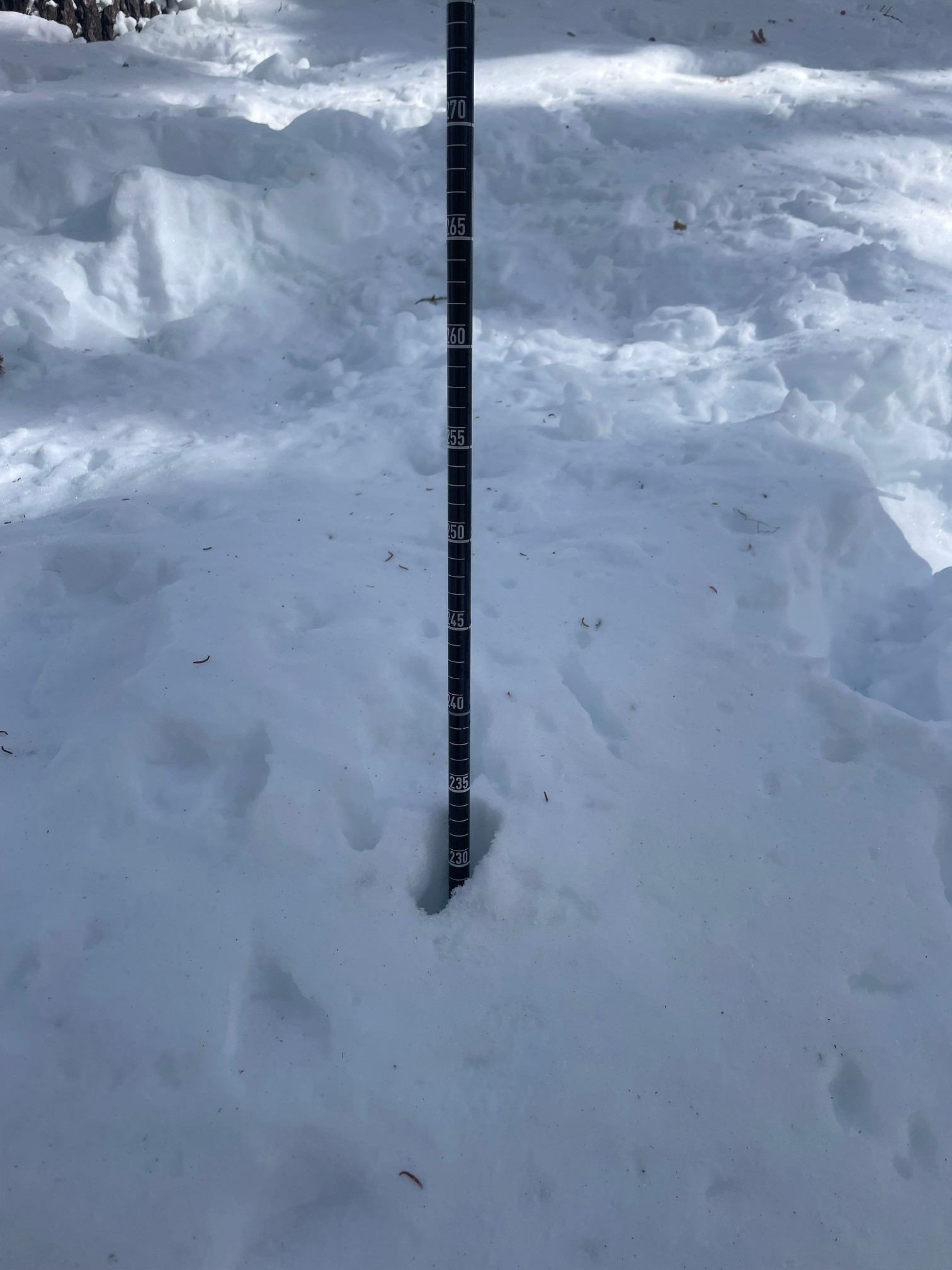
The coverage on Gray Butte has changed significantly since February 1. At 7,400 feet, snow depth averaged around 270 cm. At 7,000 feet, snow depth was around 235 cm. At 7,400 feet, around 110 cm of new snow was found on top of the old snow below. The new snow is remaining cold and soft, ranging from fist to 4-finger hard. The current surface snow is quite variable across Gray Butte. On solar aspects, a 3-5 cm thick solar crust has formed, with light less-cohesvie snow below. In the most shaded and protected areas, the soft snow remains fully preserved. In exposed areas, a firm wind scoured surface has developed.
Surface Hoar (SH) was located in specific areas such as open meadows, tight trees, and flatter terrain. SH was not found on any of the observed avalanche starting zones of Gray Butte. SH becomes far more widespread below 6,800 feet, existing on every surface, even skied up terrain.