
Quick report
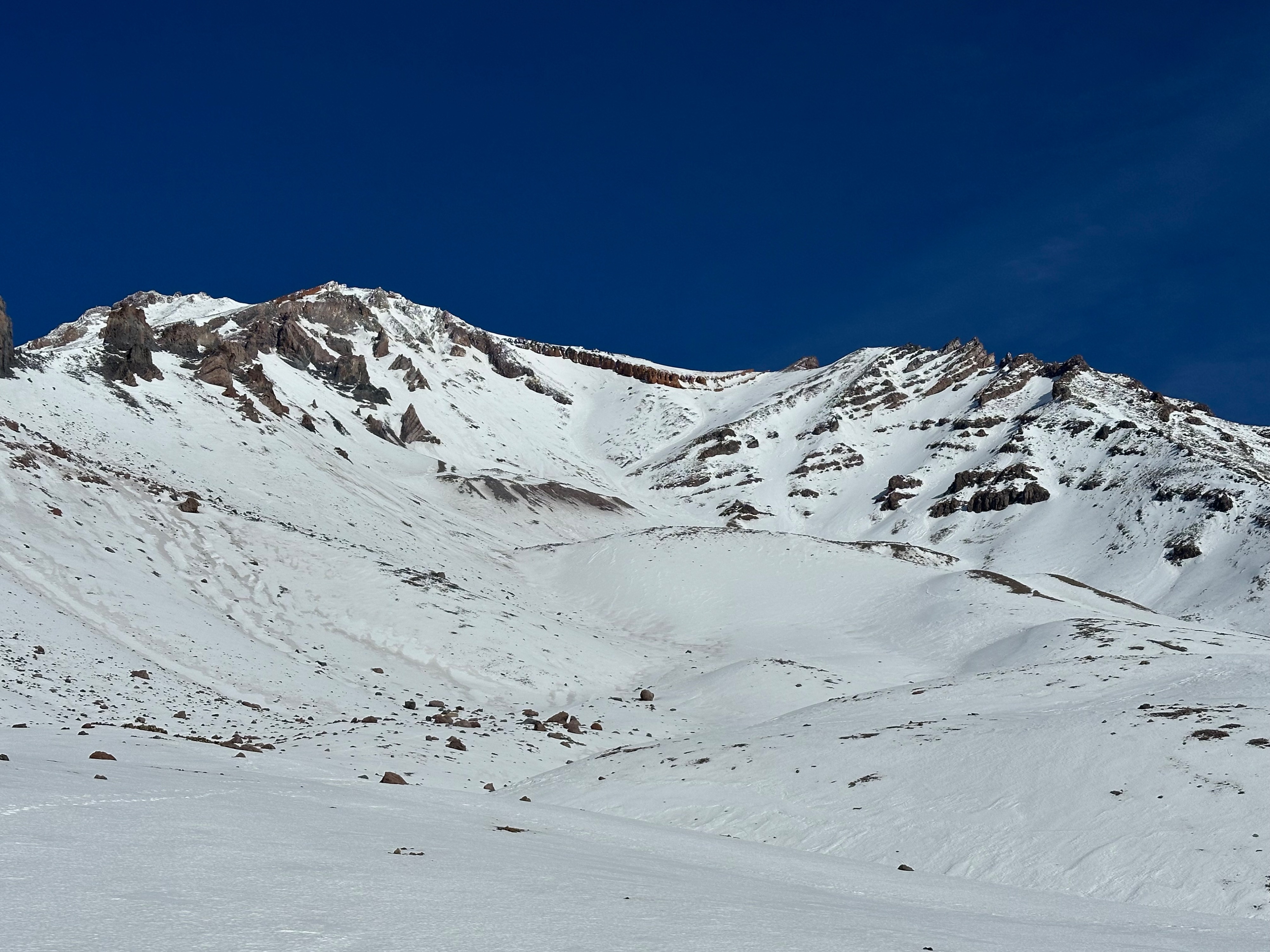
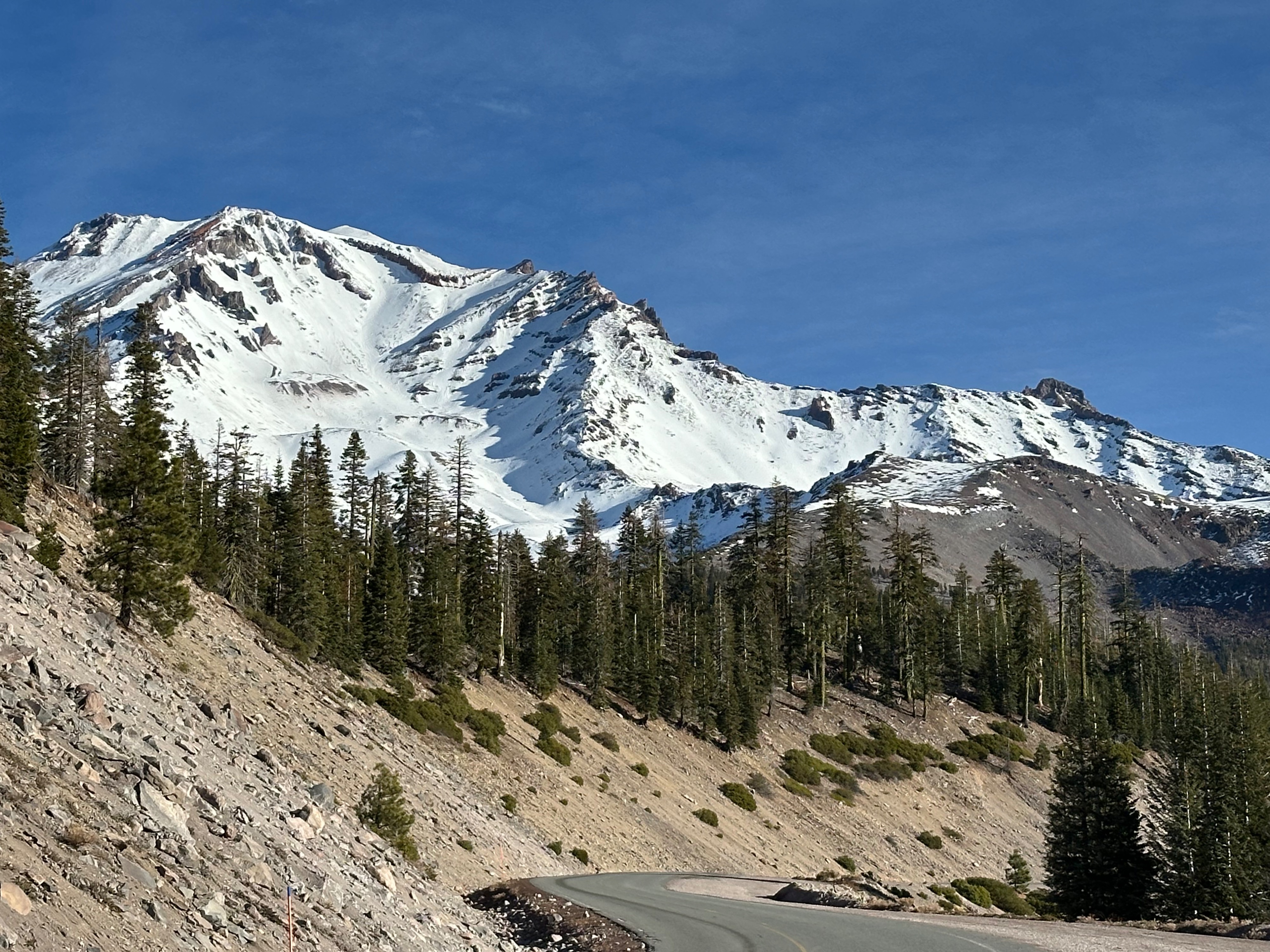
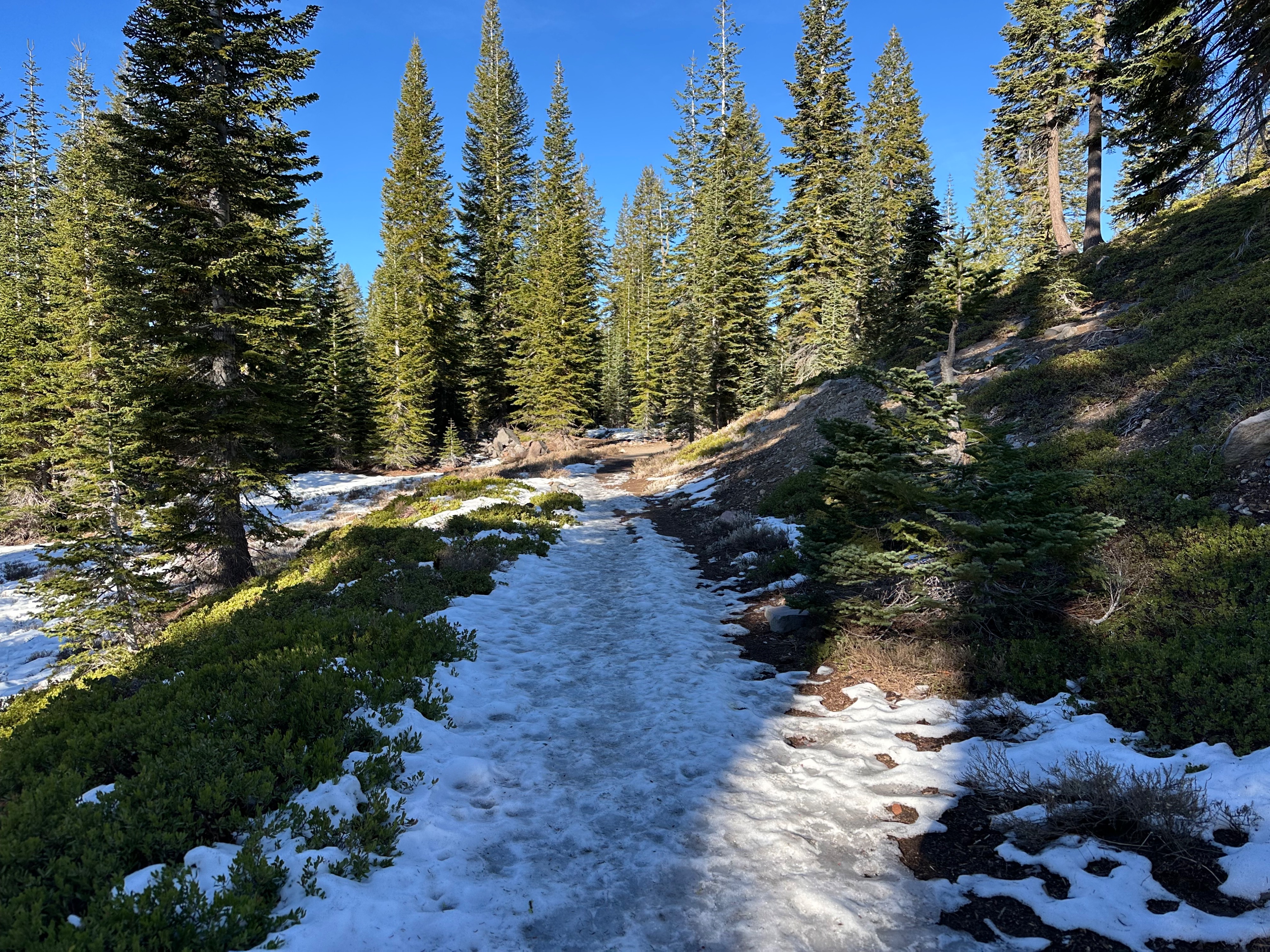
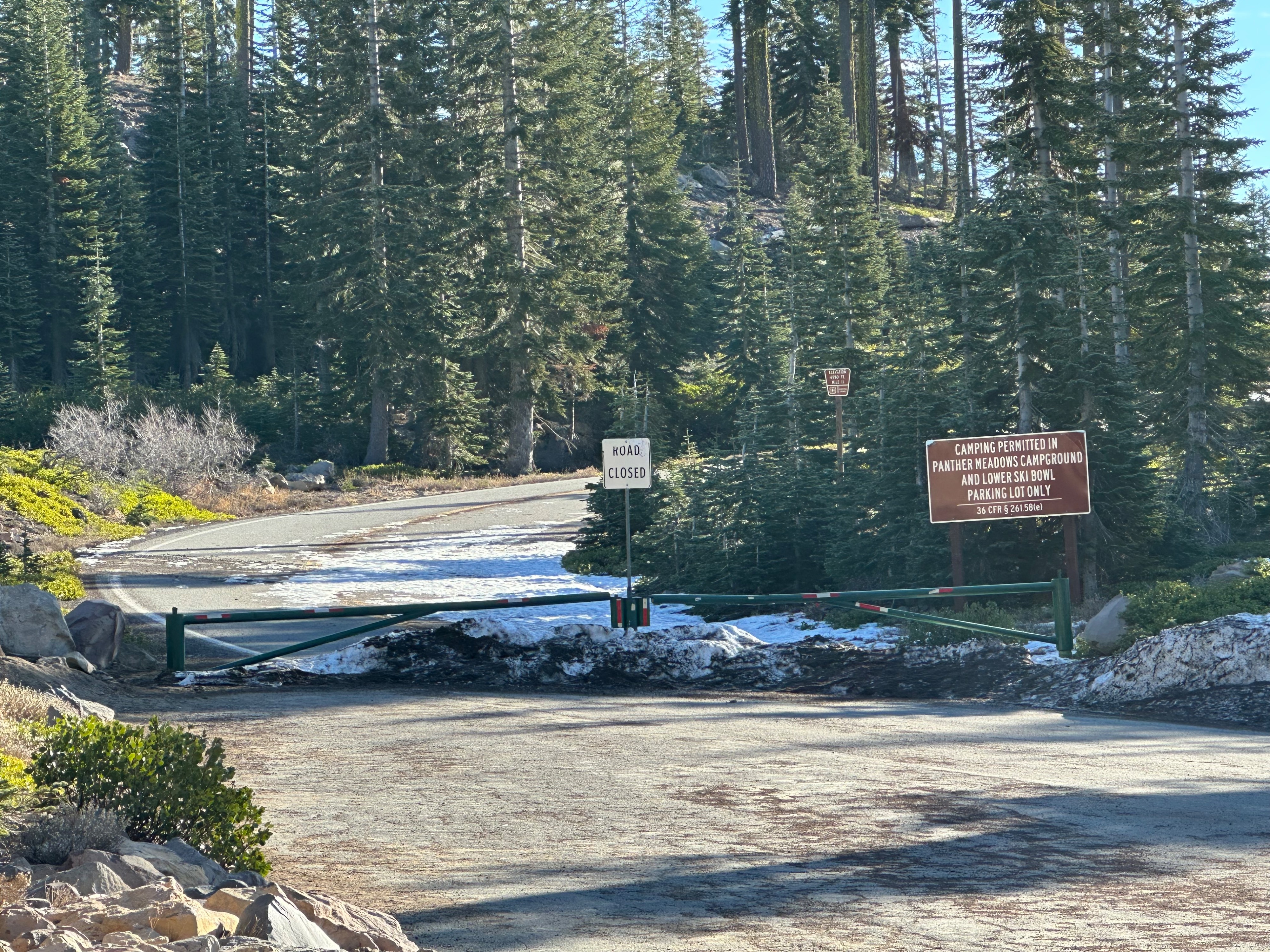
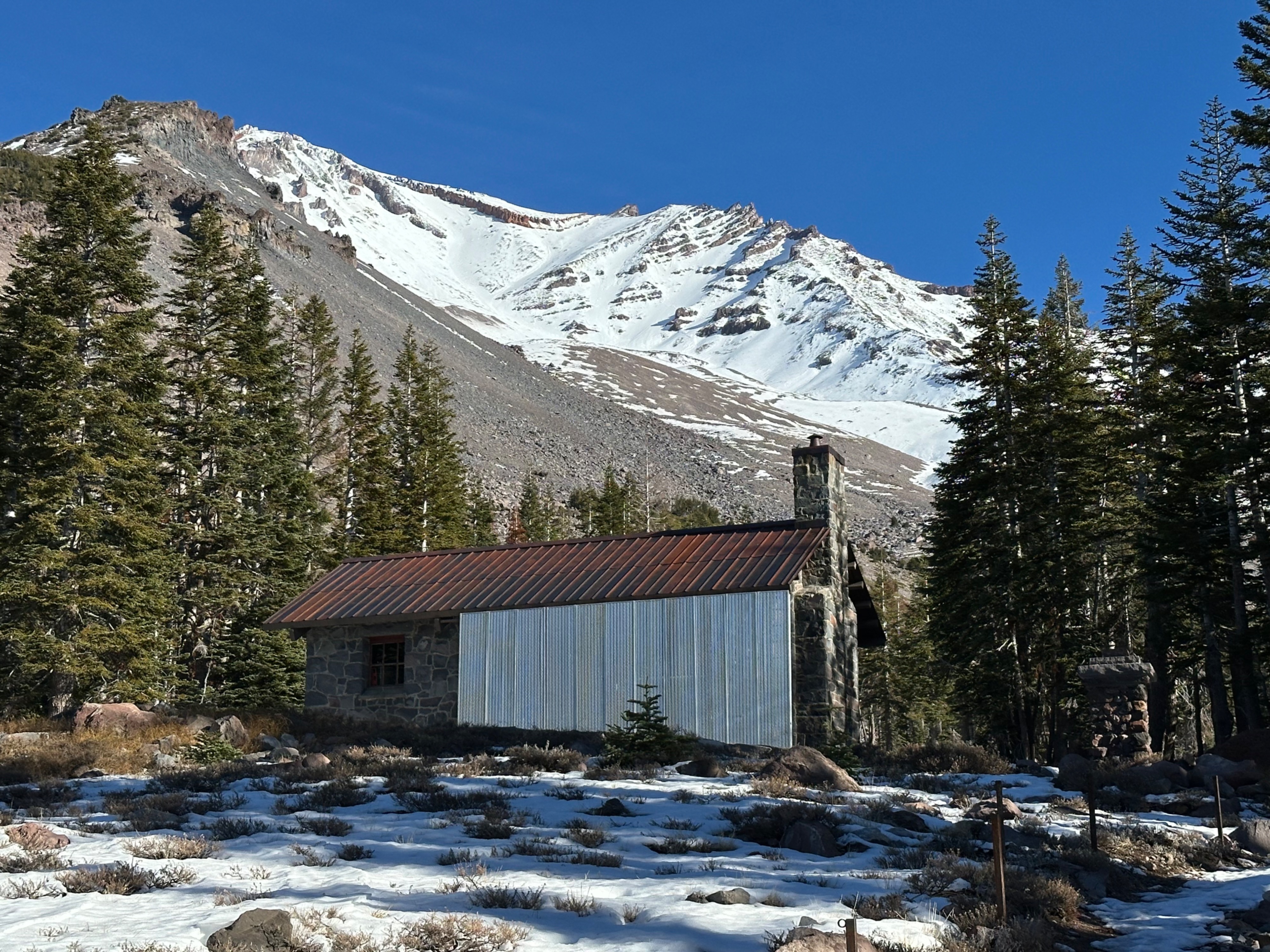
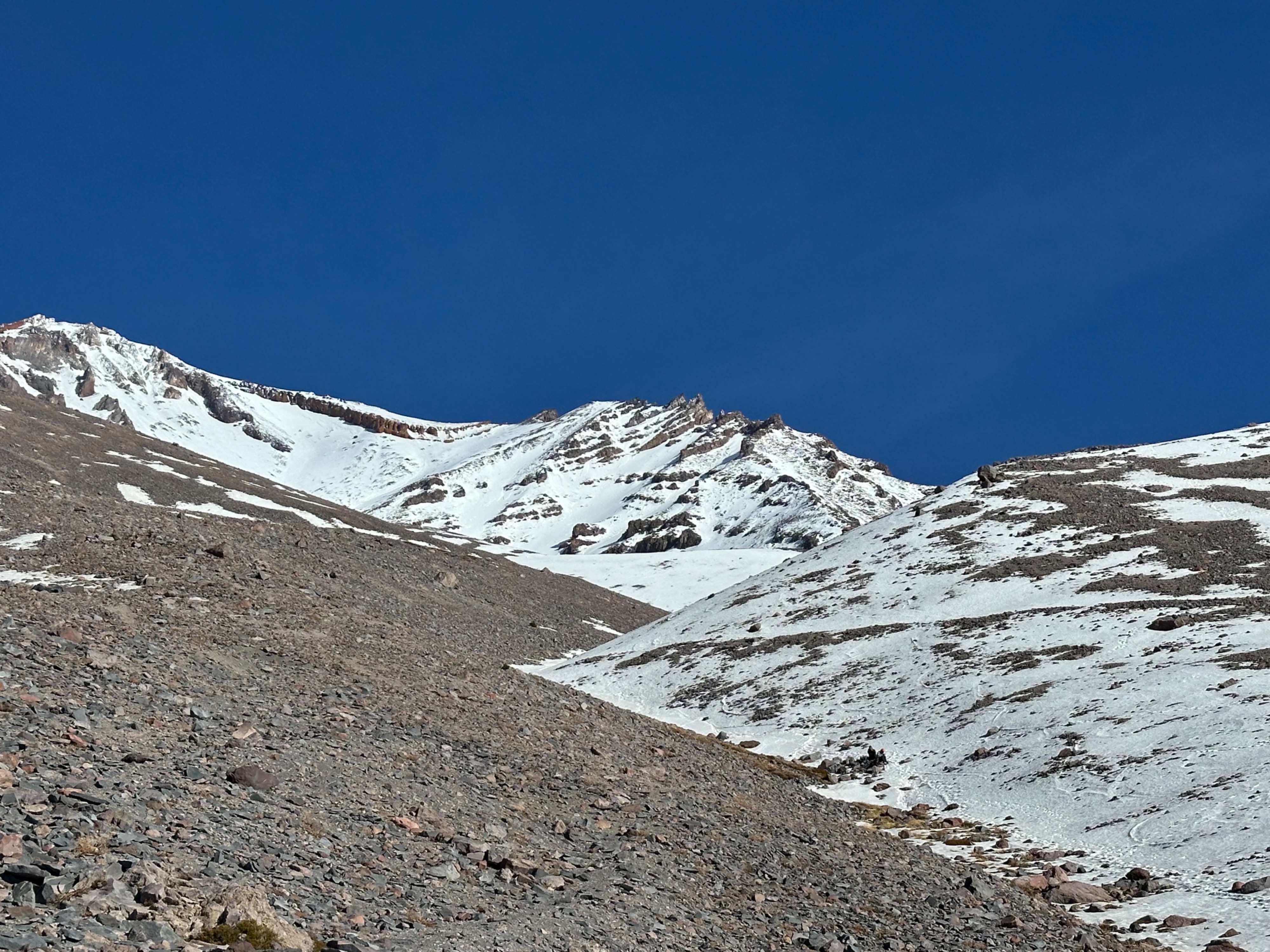
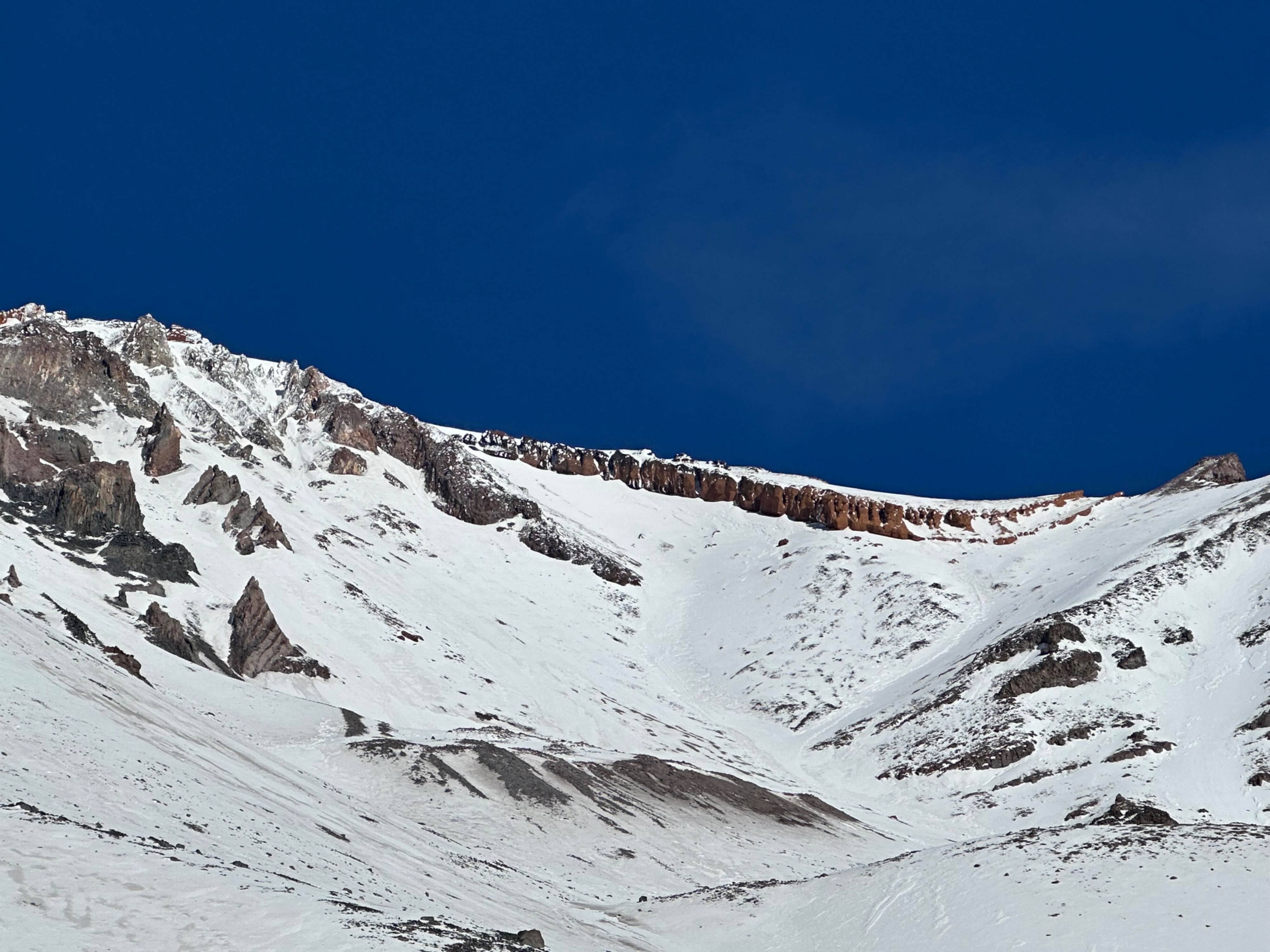
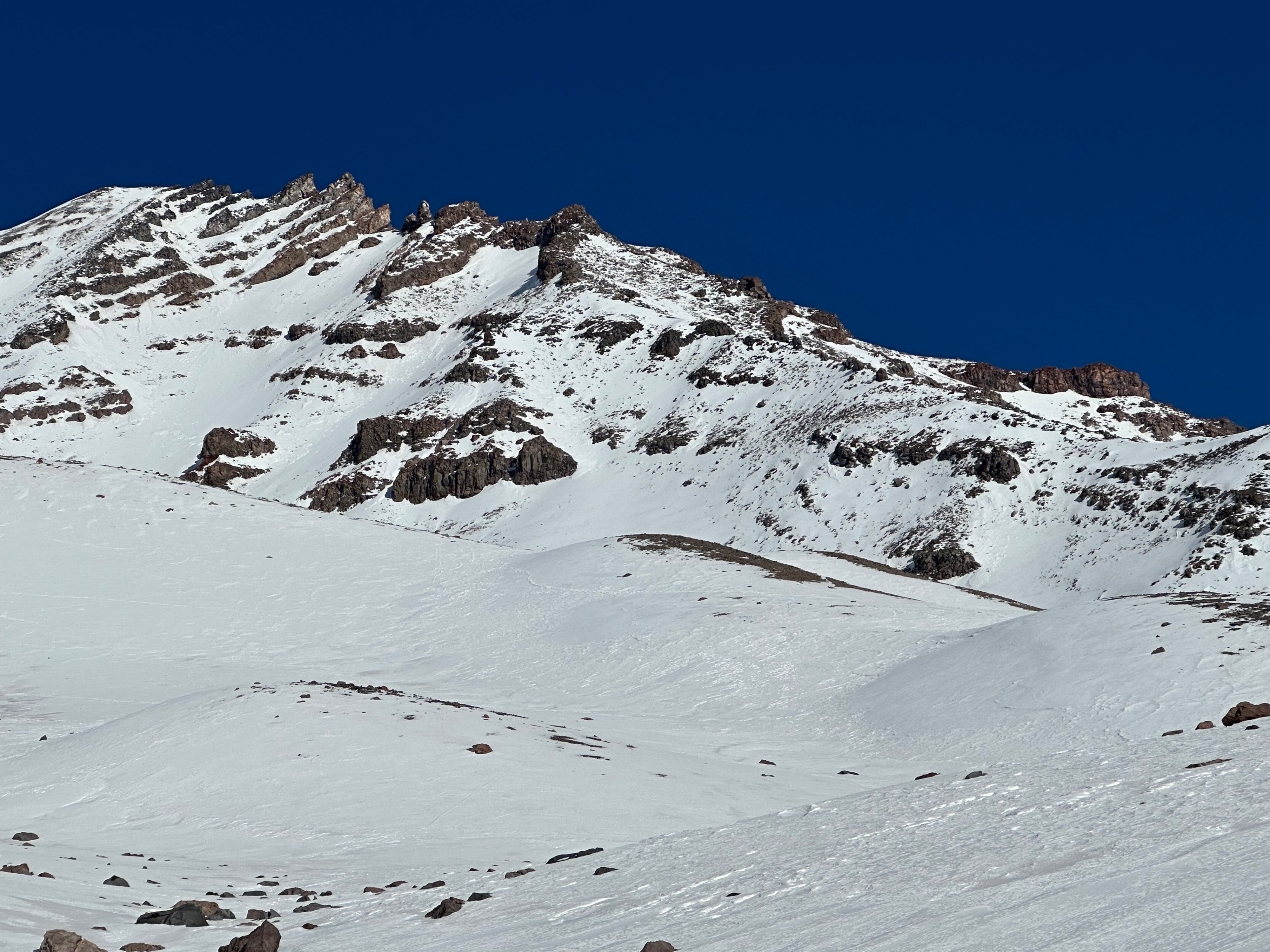
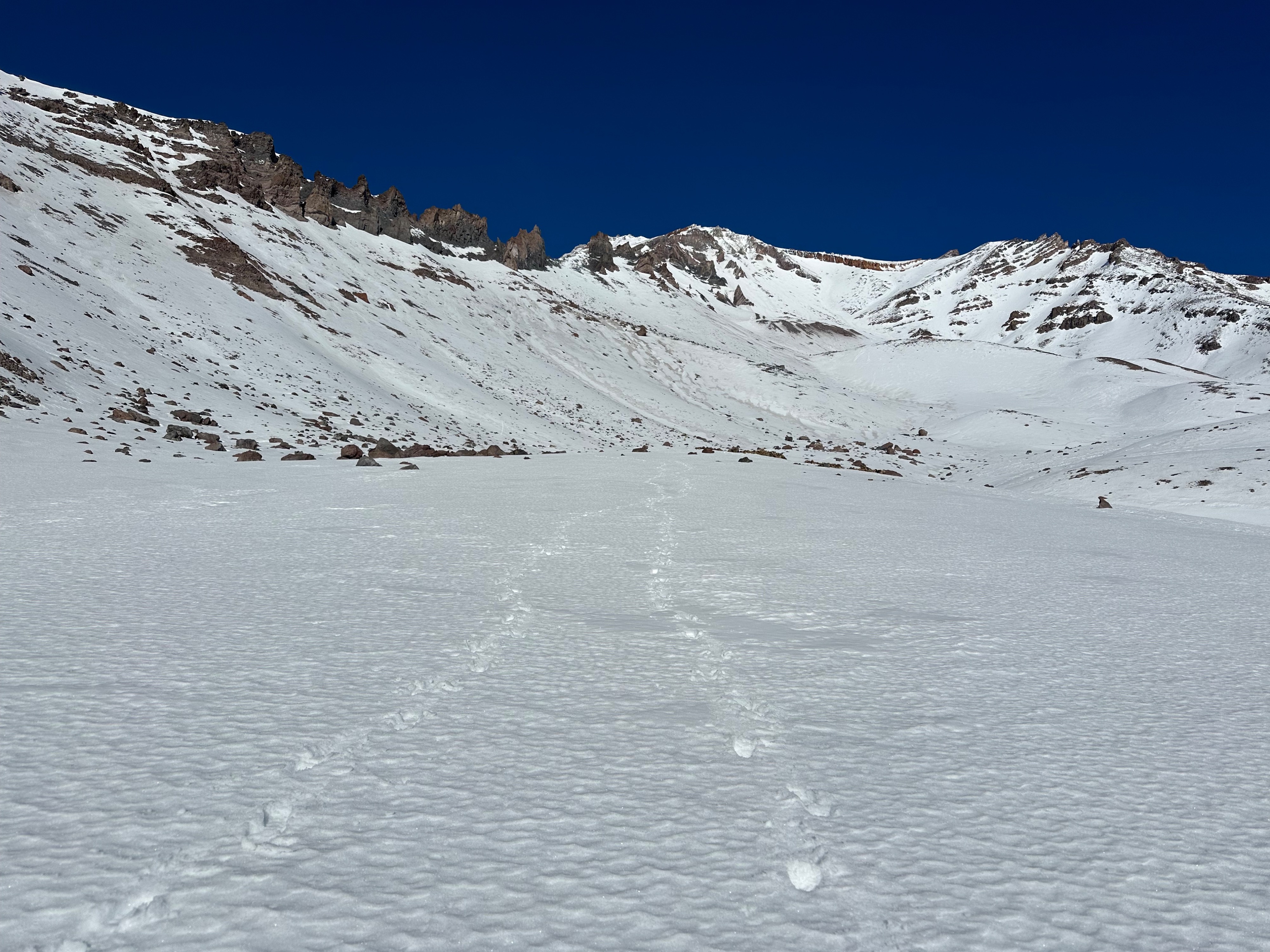
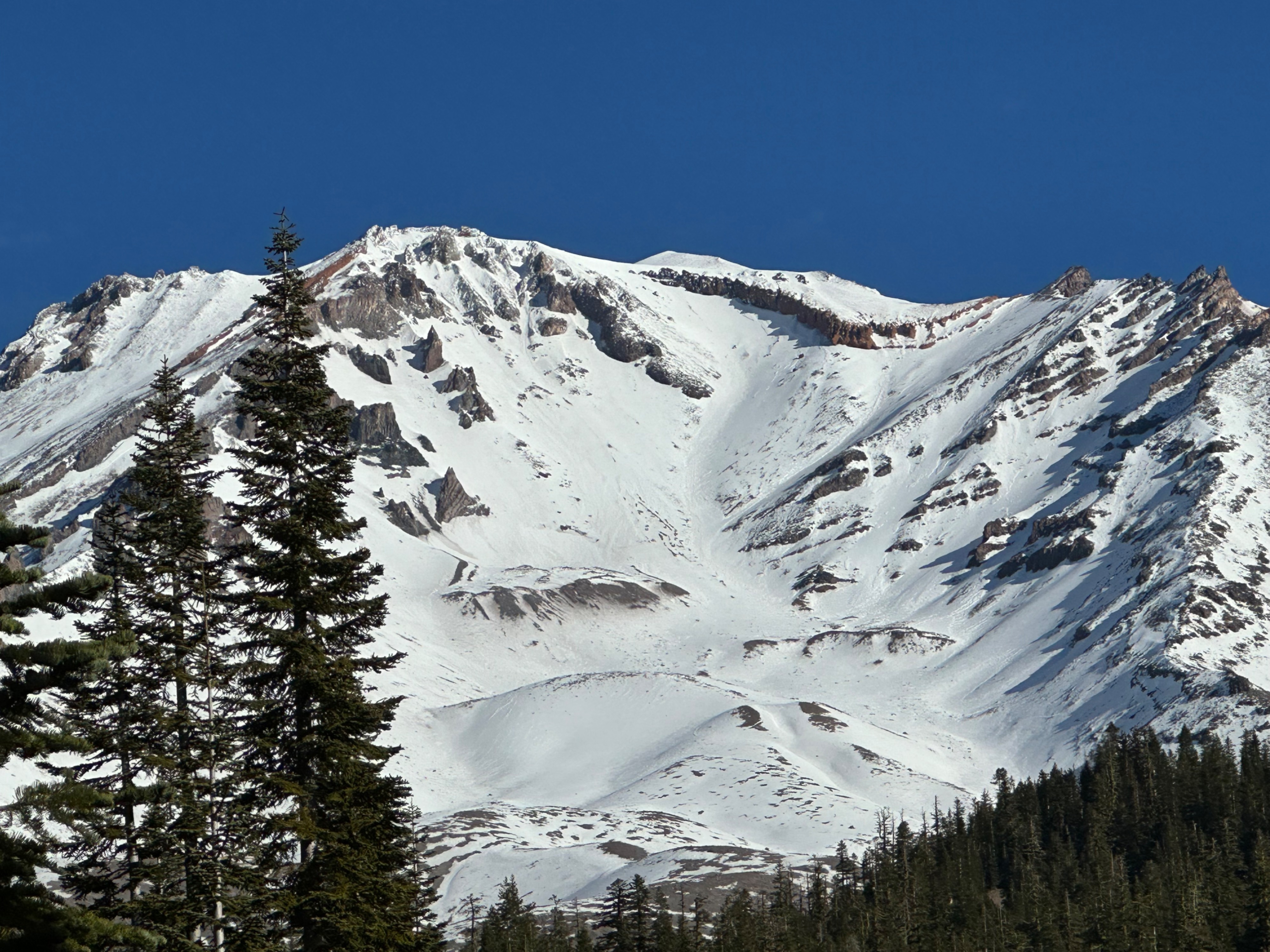
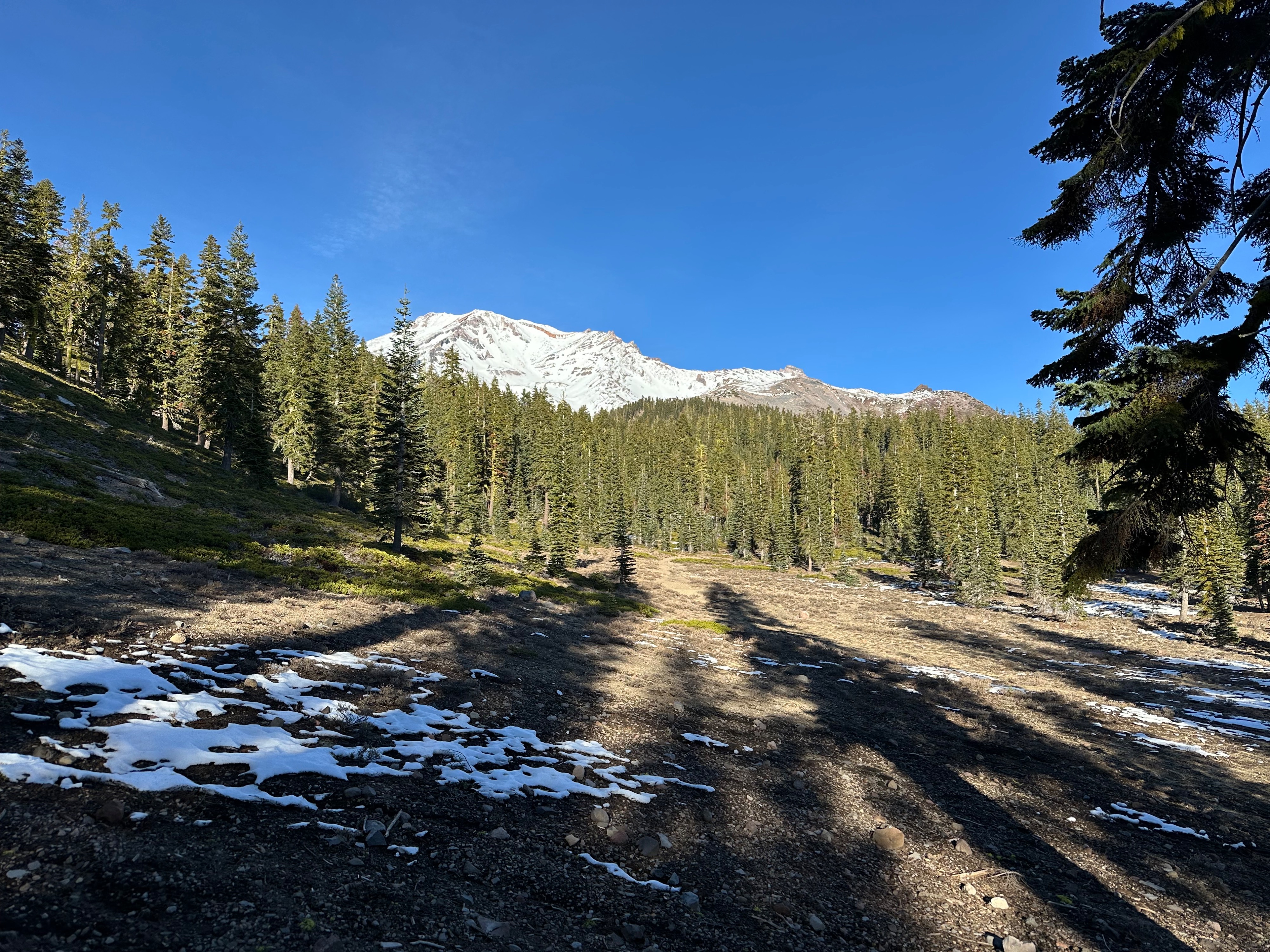
In Avalanche Gulch, consistent snow coverage can be reached at approximately 8500 feet in the Climber's Gully above Spring Hill. Sparse and spotty coverage exists below treeline. For those wishing to travel on dry ground, the summer route from Bunny Flat to Horse Camp and beyond is mostly snow-free until 9200 feet, though a few snow patches remain, which may be icy. Once snow is reached, depths are highly variable - anywhere from zero to over one meter (40 inches) on the most heavily-drifted moraine tops. Primary hazards above treeline include rockfall, rime-fall, visible and shallowly buried obstacles, and firm snow surfaces with slide-for-life potential.
Weather
- Air Temp
- 45
- Cloud Cover
- few
Unseasonably warm temperatures, sunny skies, and light winds with a few moderate gusts. A sun hoodie was the layer of choice up to 9000 feet.
Snowpack
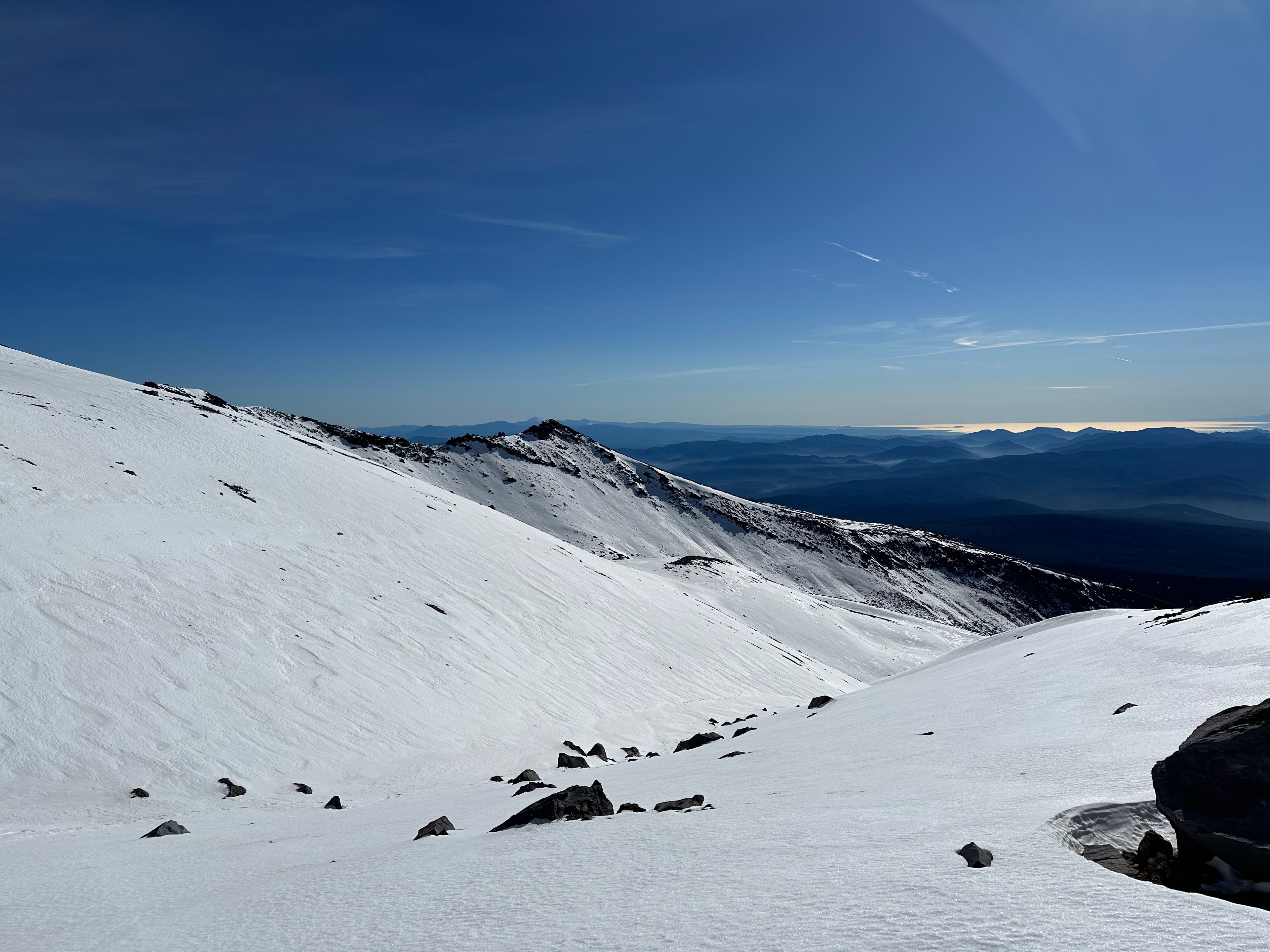
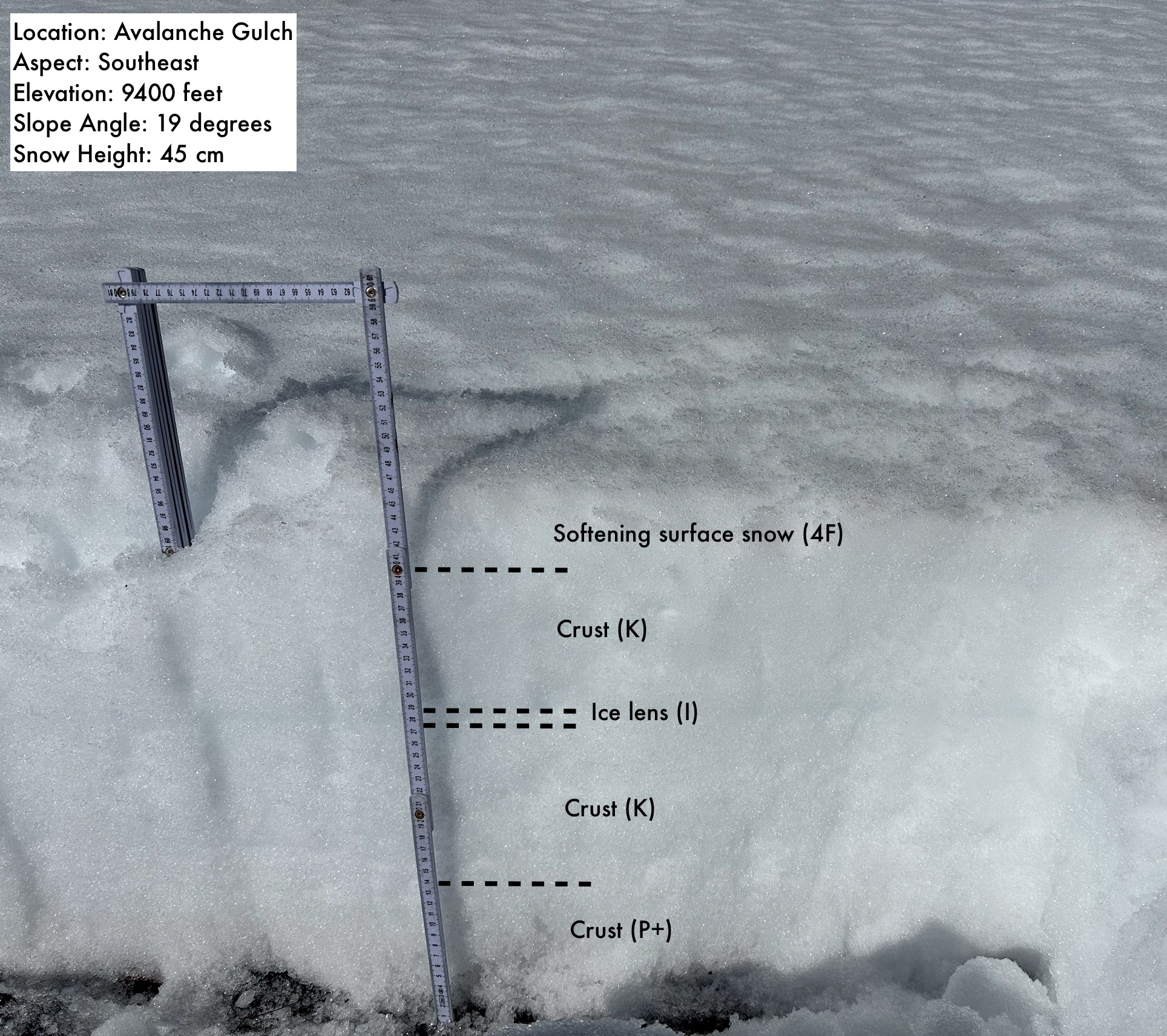
The recent dry spell and warm temperatures have accelerated the melting of Mount Shasta's early-season snowpack. There is less snow in the 50/50 Flat area than on November 15th. Snow depths generally increase with elevation, on shadier aspects, and on wind-loaded features. Snow surfaces are a variety of wind-textured snow, firm melt-freeze crusts, and moist December "corn". A southeast aspect at 9400 feet held about 18 inches of snow -- 2 inches of moist surface snow above a 16-inch crust medley (see annotated photo). The short days, low sun angle, and stronger winds on the upper mountain likely kept snow surfaces firm, despite the warm temperatures. Many above treeline starting zones still hold enough continuous snow coverage to act as a bed surface for avalanches with future loading events.