
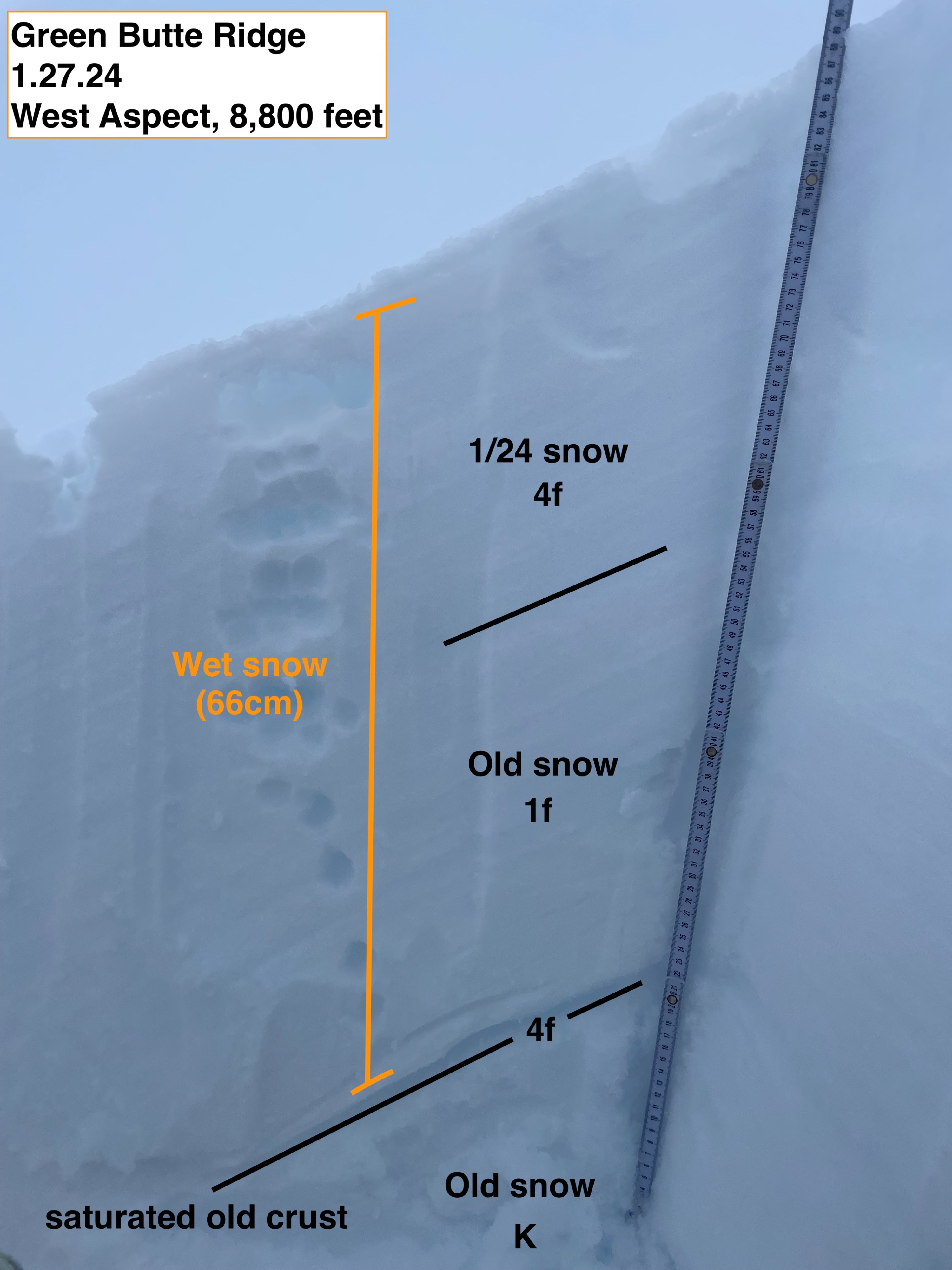
Quick report
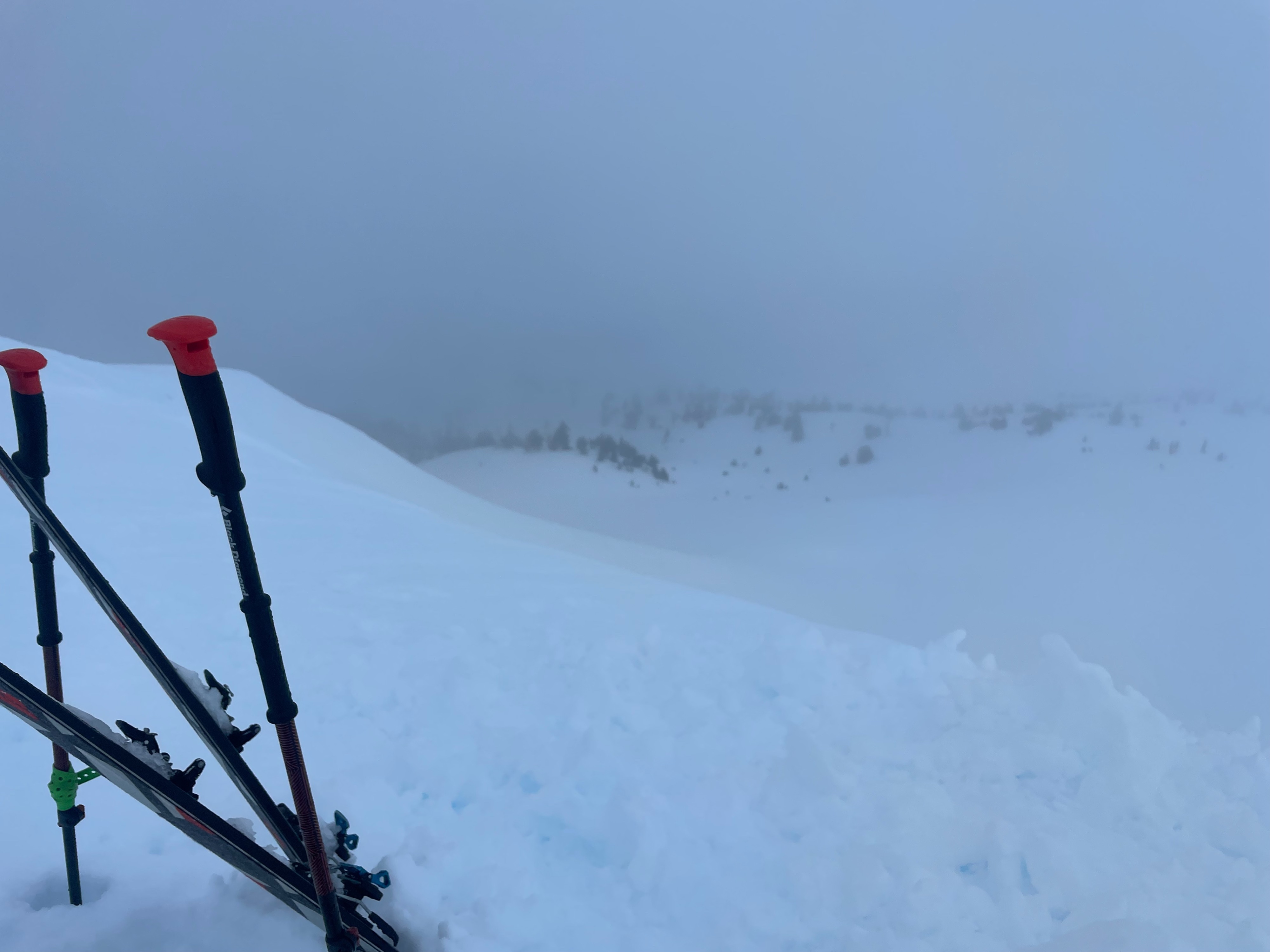
Today's goal was to assess above treeline terrain, and investigate the extent of wet avalanche problems. Above treeline terrain proved challenging to assess due to the heavy cloud cover and poor visibility (~100 feet). The heavy cloud cover, high humidity, and constant rain did, however, contribute to wet avalanche issues. The recent rain-on-snow has allowed water to percolate deep into the snowpack, and pool at old crust interfaces. Wet loose avalanches proved easy to trigger with ski cuts in near and above treeline terrain. With the continual rising temperatures, this may elevate snowpack instability in the coming days.
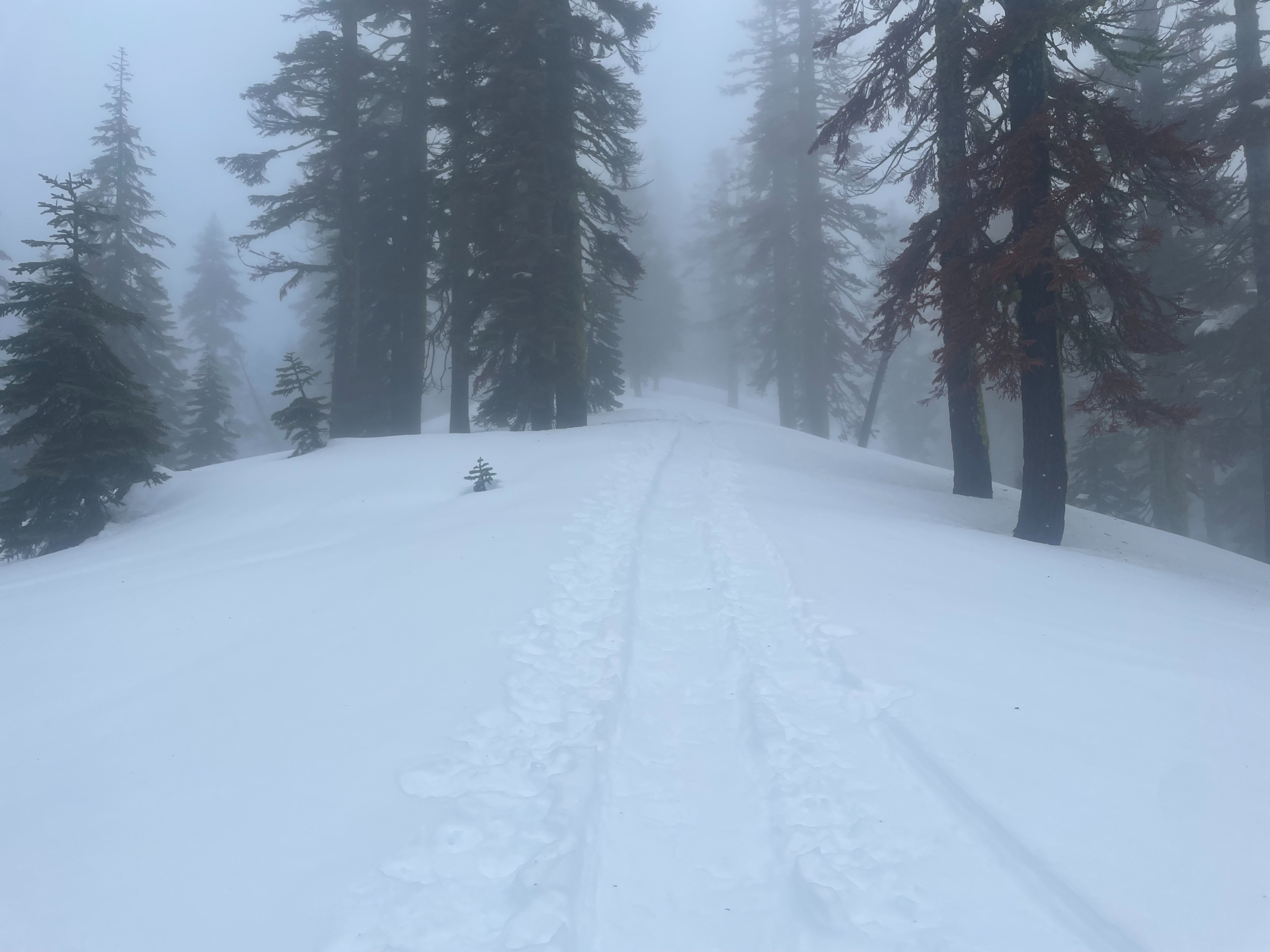
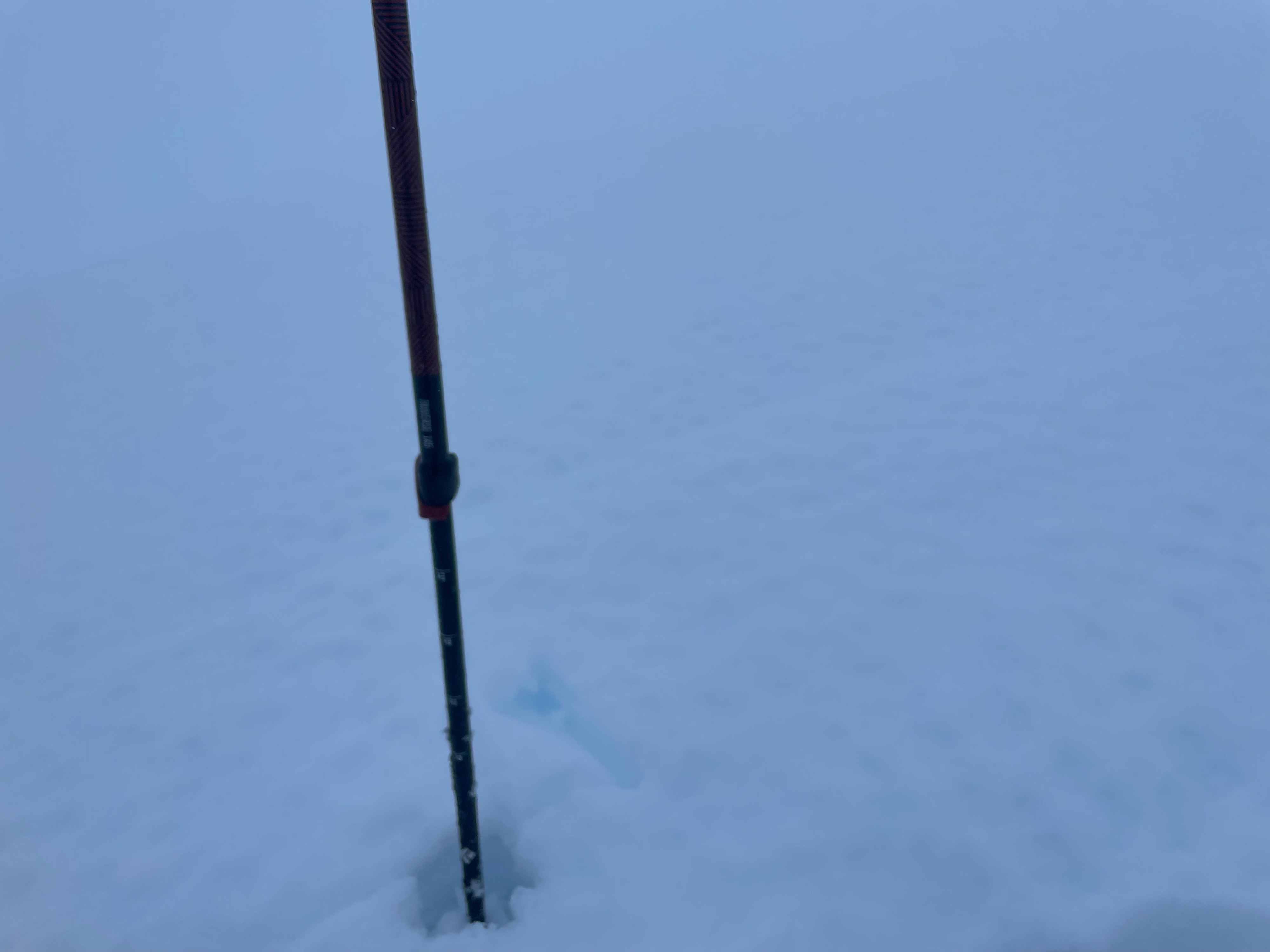
Instability became obvious upon leaving Bunny Flat. The recent rain-on-snow has resulted in a very wet, and mushy, snowpack up to 9,000 feet. Upon ascent, skies were punching through the old skin track, and boot penetration was thigh deep. At 8,800 feet, ski cuts would easily trigger a long-running wet loose avalanche, often breaking slightly wider than expected, and entraining 6–10 inches of surface snow.Weather
- Air Temp
- 38
- Cloud Cover
- obscured
- Wind Loading
- light
- Rain Elevation
- 11,000
- Recent Snowfall
- 0
- Snow Avail For Transport
- small smounts
Heavy cloud cover, and rain were the story today. Rain fell throughout the day, up to 9,000 feet. Cloud line was well below 6,000 feet, resulting in terrible visibility (~100 feet). Temperatures were well above freezing.
Snowpack
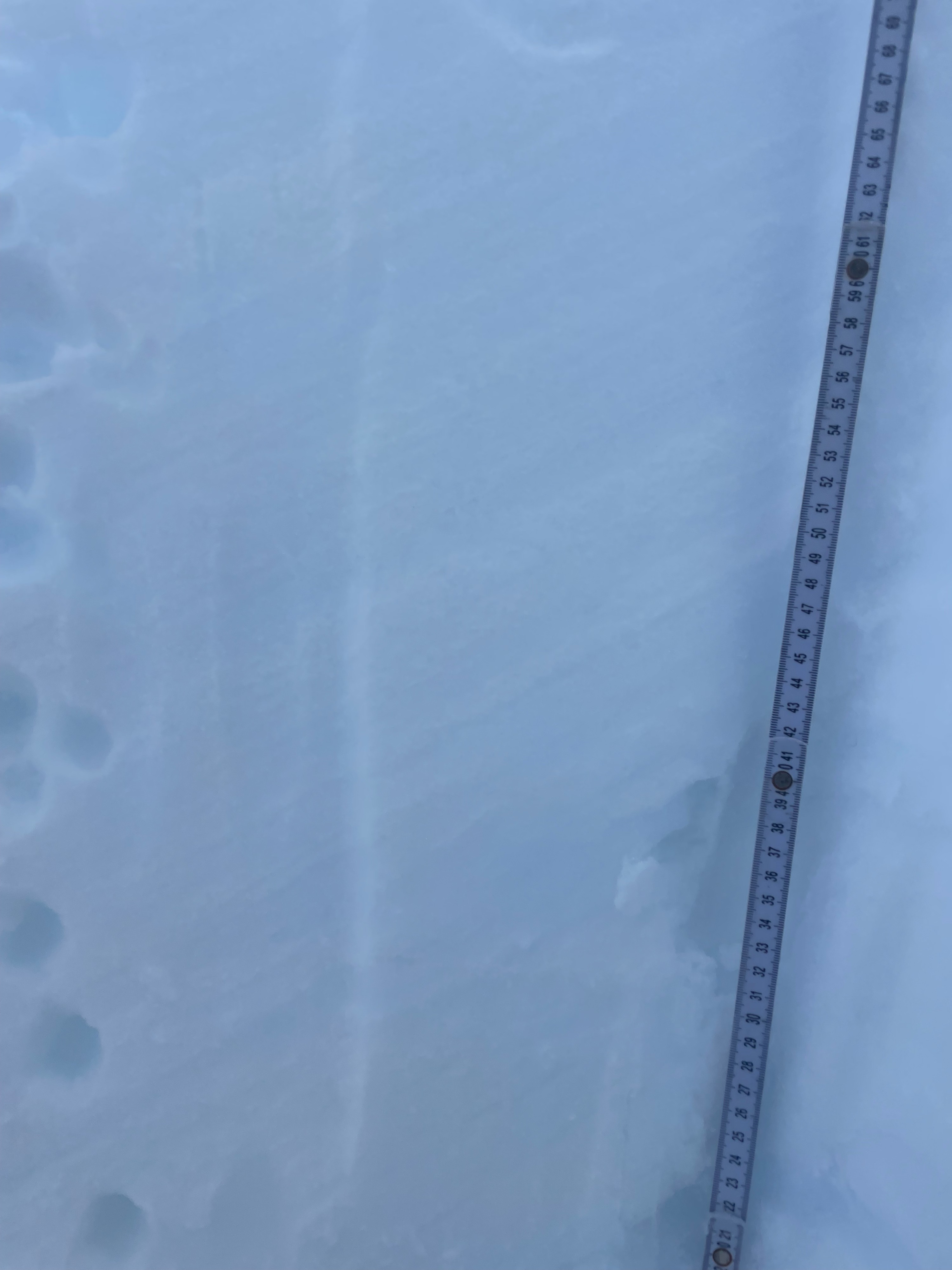
A pit was dug at 8,800 feet on a west aspect off of Green Butte Ridge. Total snow depth was measured at 53 inches (135 cm). The most surprising thing about this pit was just how much water has percolated into the snowpack. Wet snow reaches down 25 inches into old snow, with water pooling on a slight interface at the bottom. Below this wet snow is 1-finger hard drier snow and a knife-hard crust. Upon compression test and extended column test, no instability was observed, though this is often not very indicative regarding stability and wet avalanche problems.
Avalanche
A few small wet loose avalanches (D1) were observed off the west aspect of Green Butte Ridge. These likely occurred within the last 24 hours.