
Quick report
- Cracking
- isolated
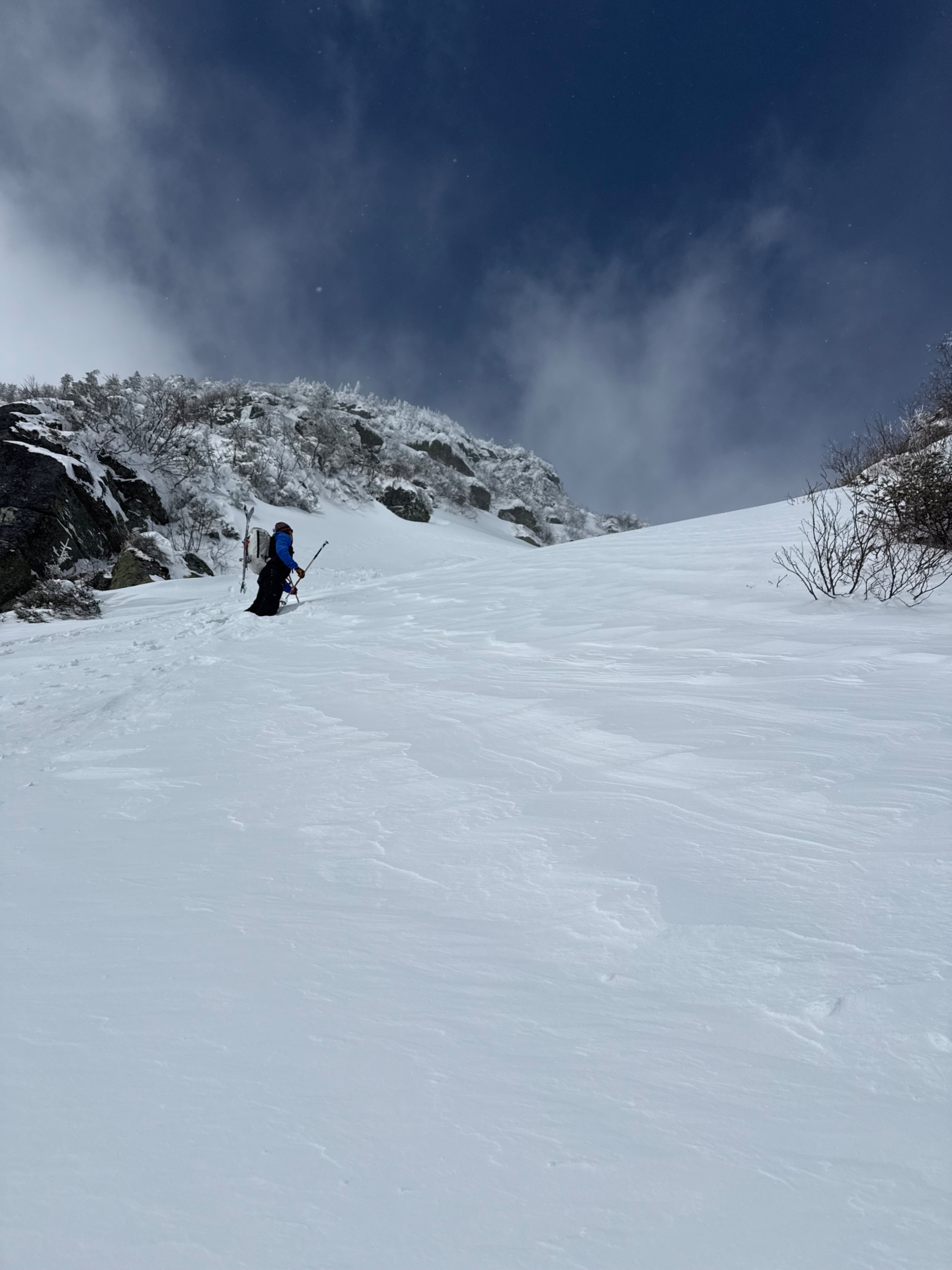
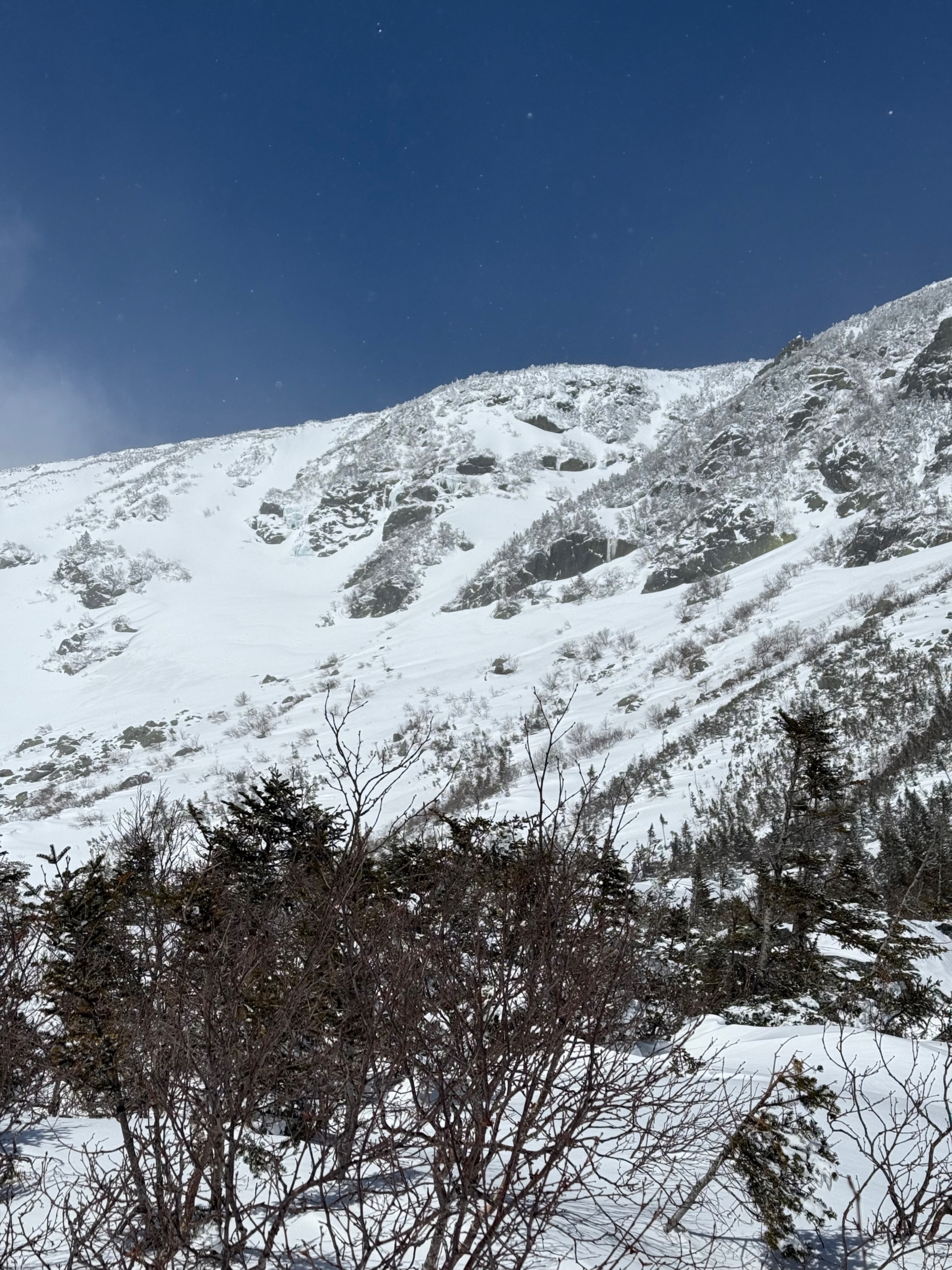
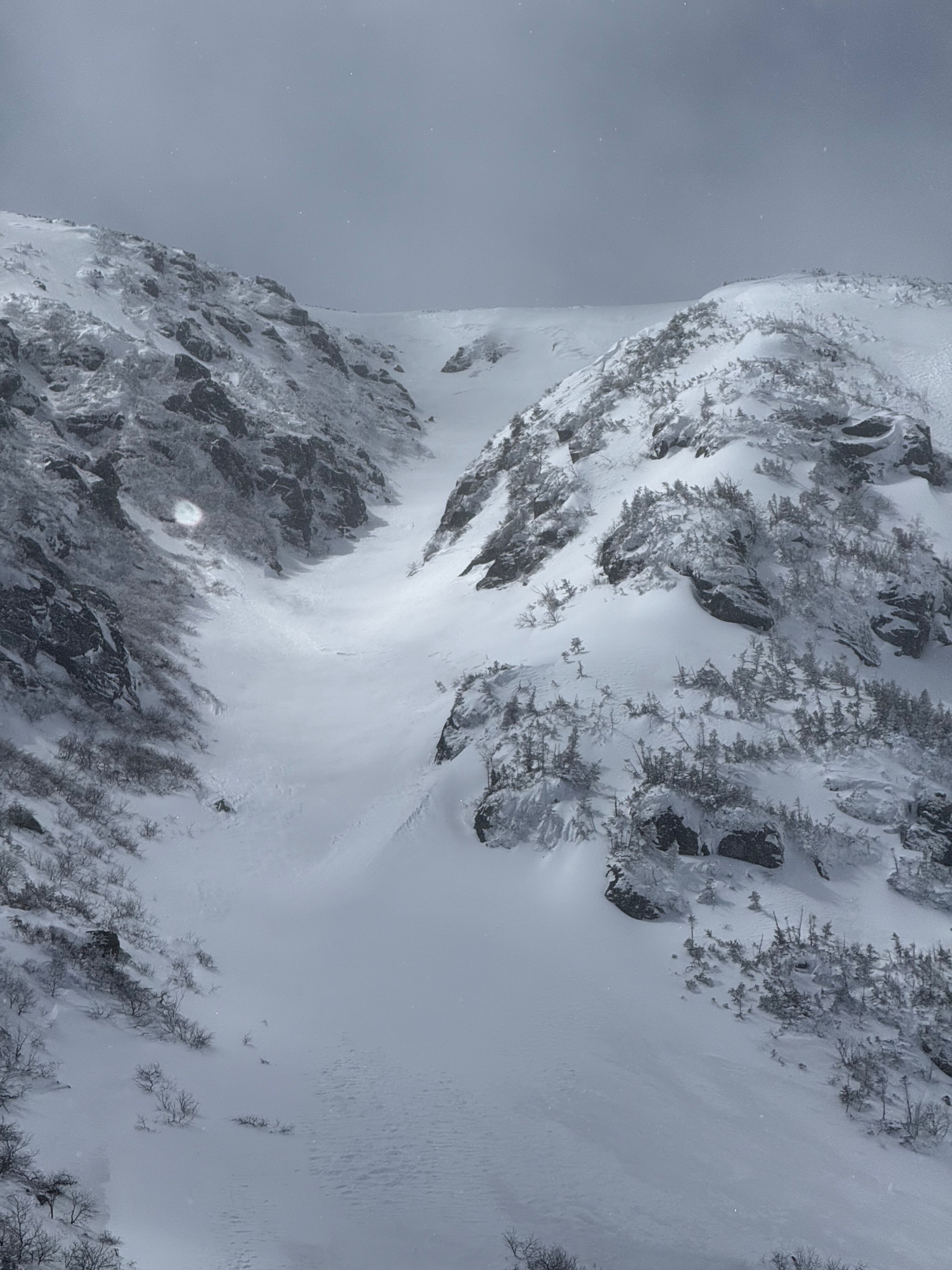
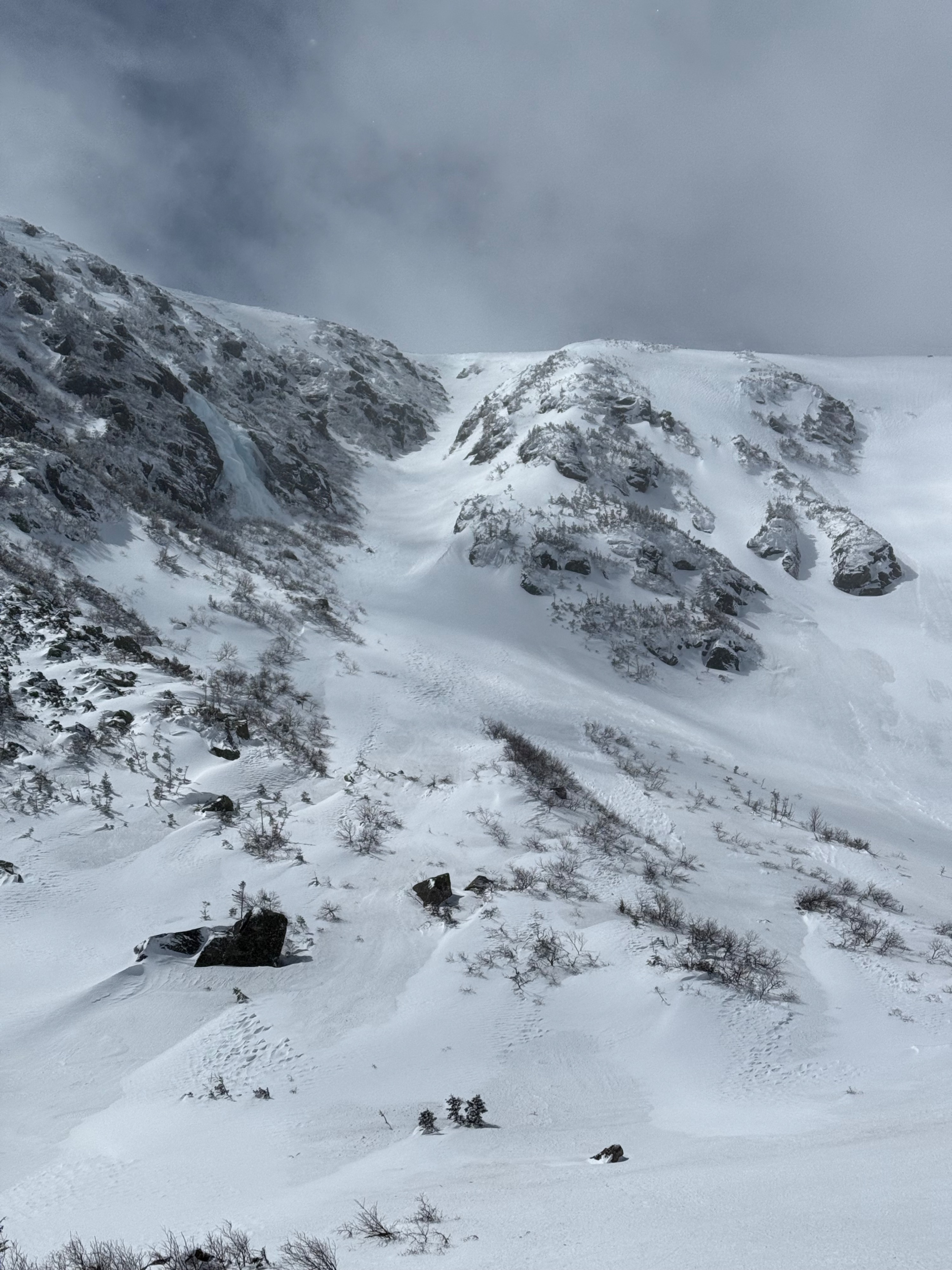
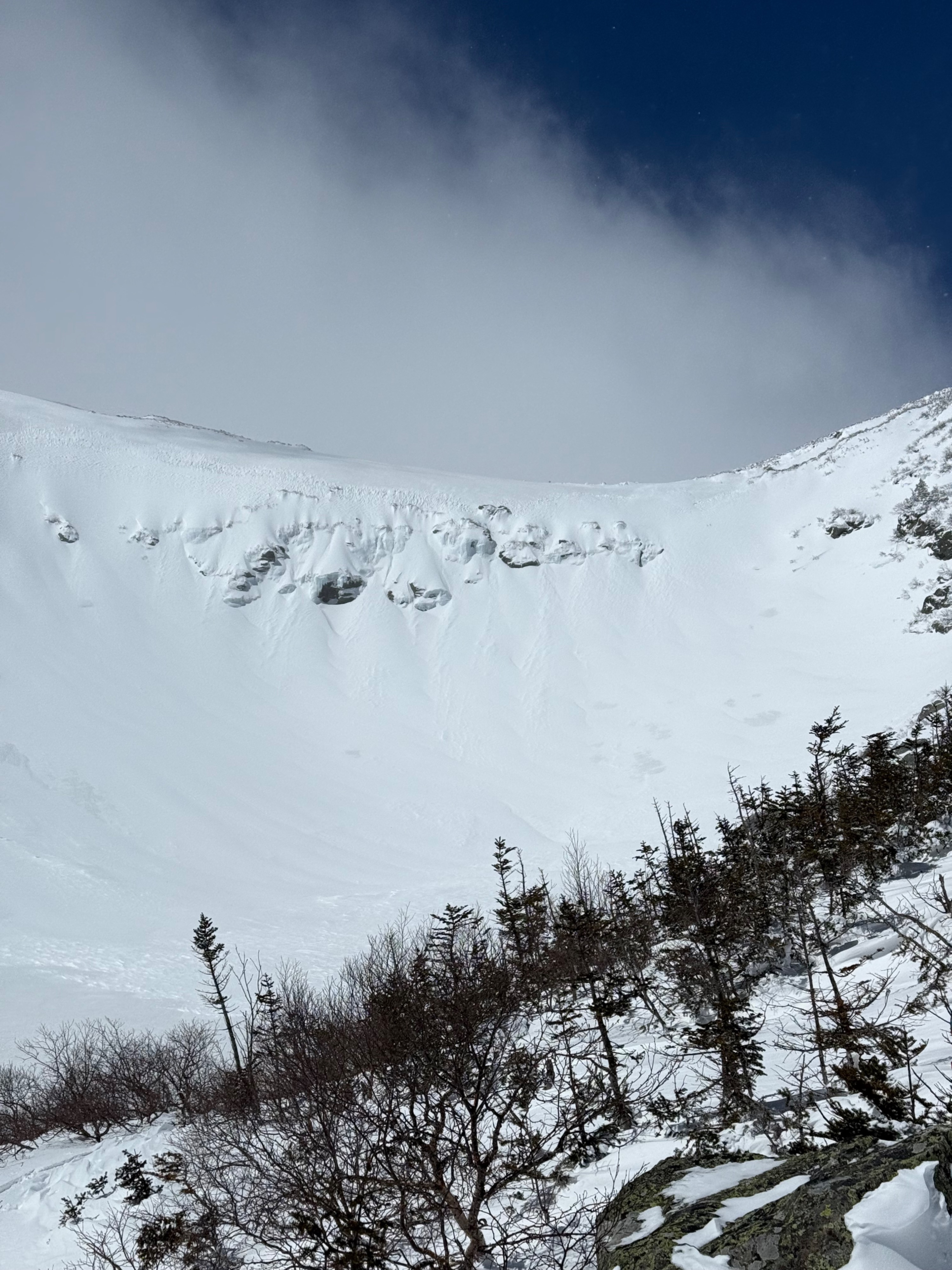
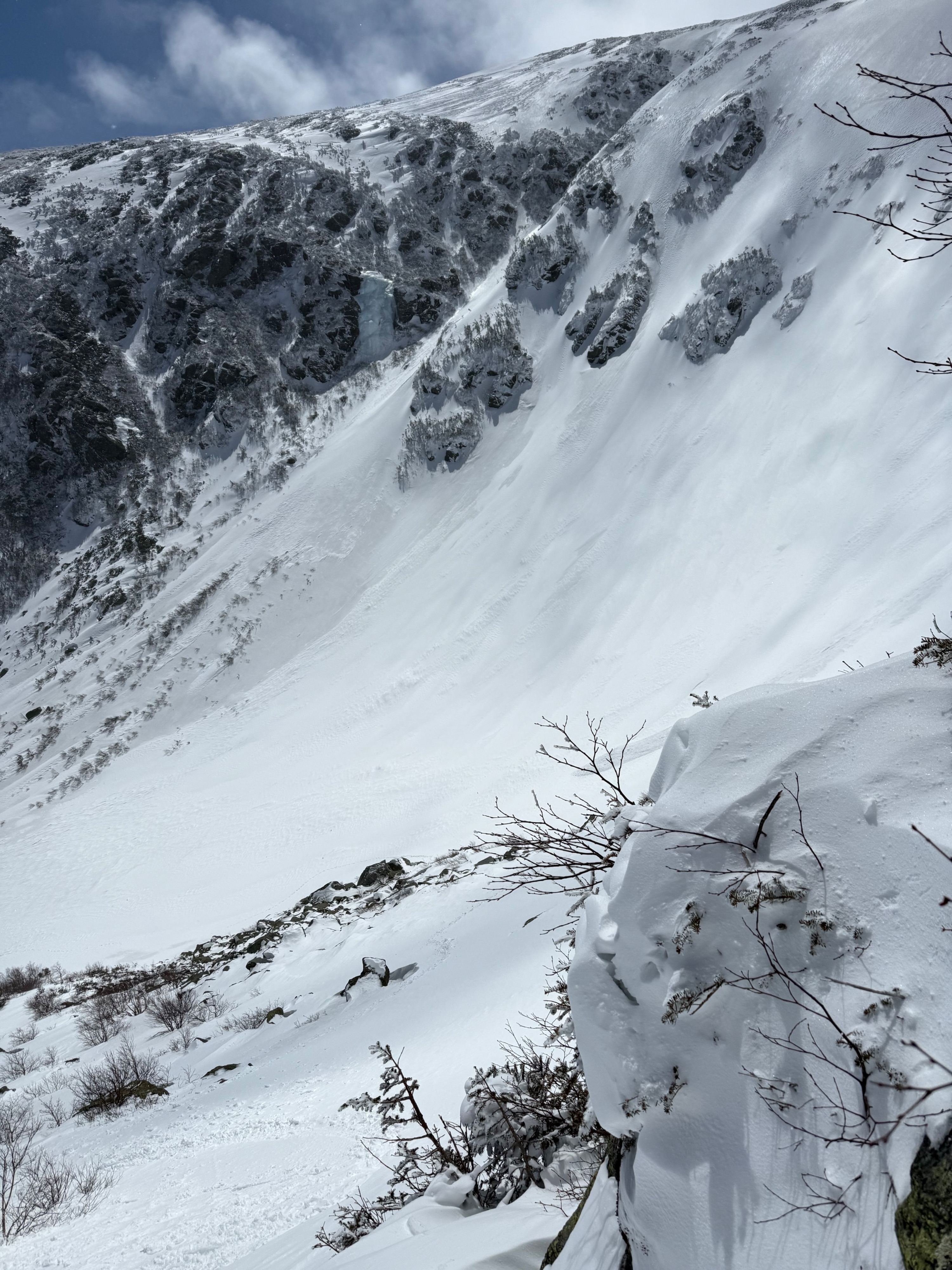
Went into Tuckerman Ravine to look at the distribution of new wind slabs from yesterday's 7.3 inches of snow. Found variable surfaces from firm and icy old snow that needed crampons to soft stubborn knee-deep wind slab.
In general the snow felt as though it was settling and largely lacked the ability to propagate, however it was also easy to get snow to slide as the surface these slabs lay on is a firm and icy old snow surface. It was easy to identify areas of concern today with clearing visibility, but there are areas of this snow I would not yet trust, especially in steep terrain features with a connected pocket.
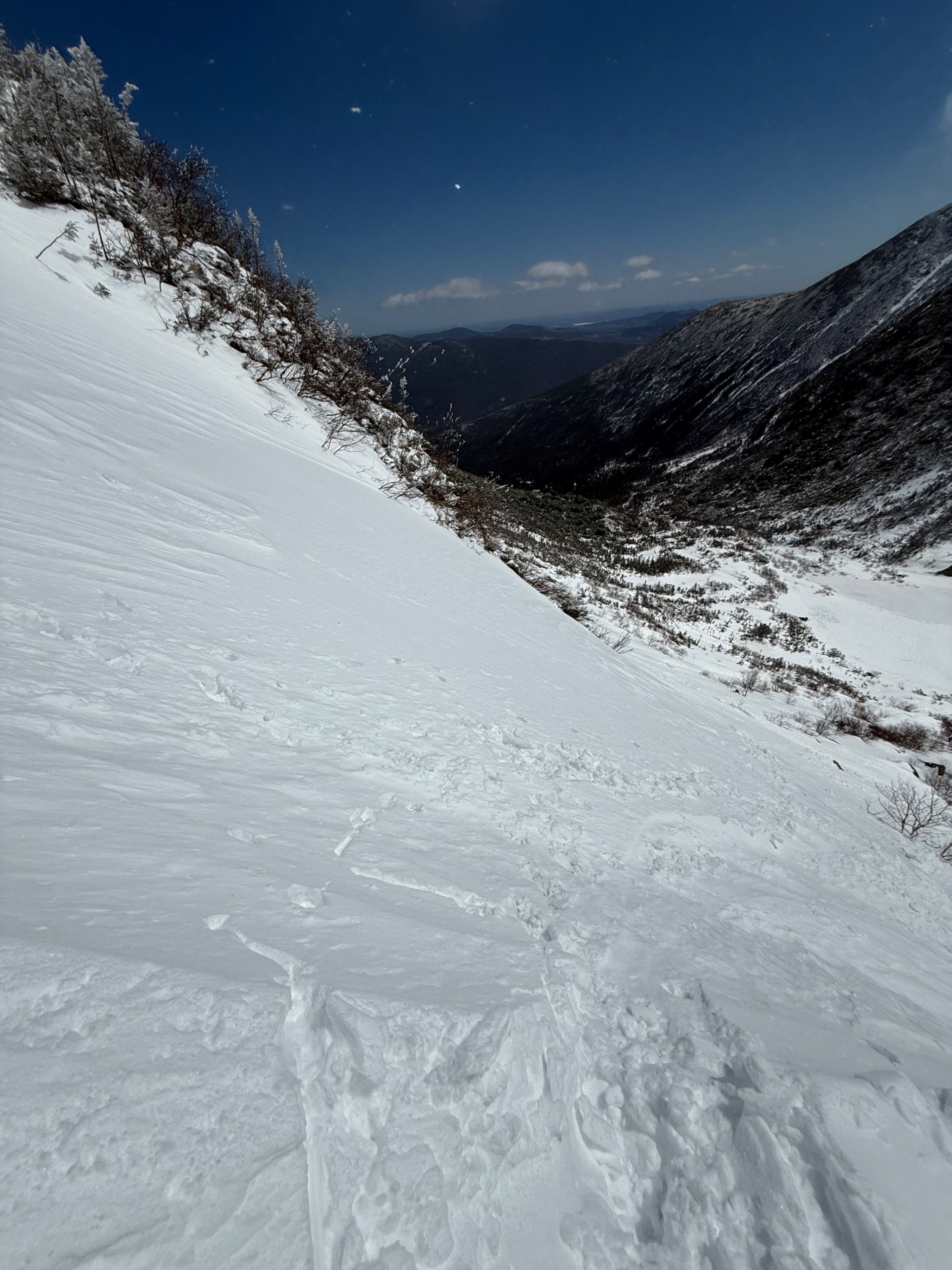
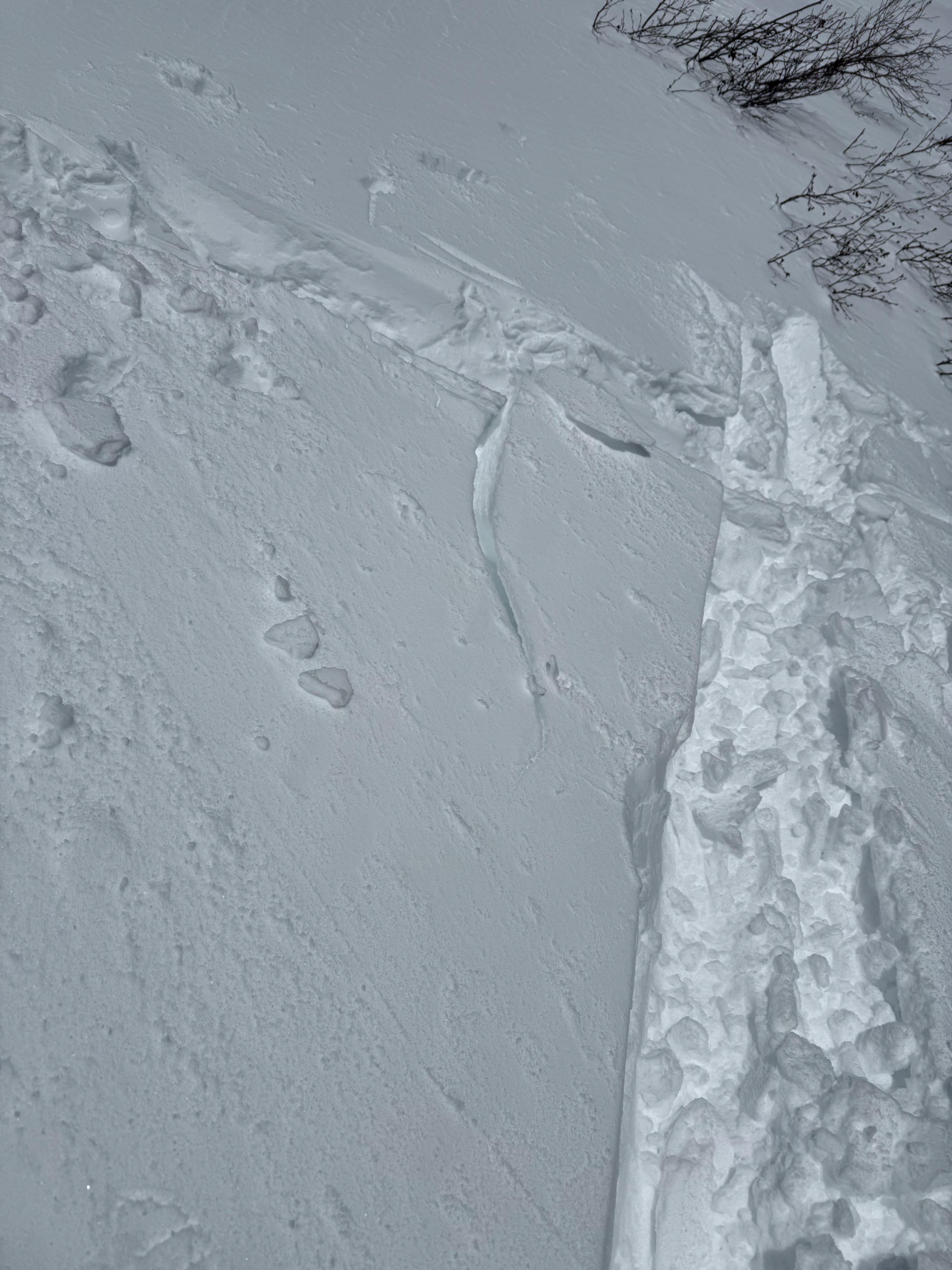
On small test slopes near the Lower Snowfields snow had slight structure and in steeper areas it was easy to get small pockets to slide on the bed surface. These were not easily differentiated from the snow around it, but were in steeper features which you could identify. These were small and did not have the potential to be destructive, but supported what we felt you could find in steeper and more connected terrain.
Isolated cracking was observed in snow when it was isolated in a kickturn on skin track.Weather
- Air Temp
- 17
- Cloud Cover
- broken
- Wind Loading
- previous
- Recent Snowfall
- 18.5 cm (Summit of Mout Washington)
In and out of the clouds with periods of sun, winds were intermittent and out of the west
Snowpack
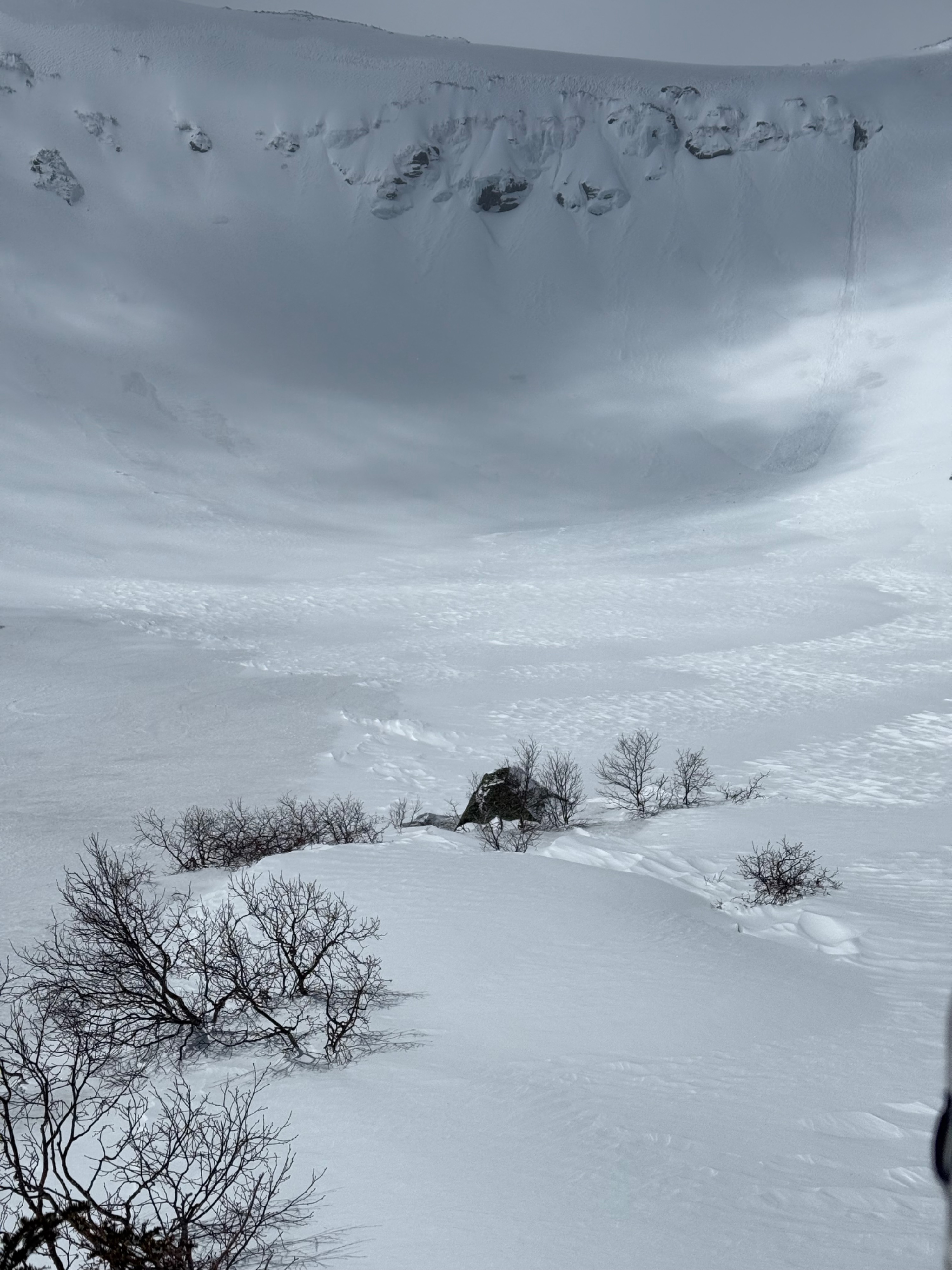
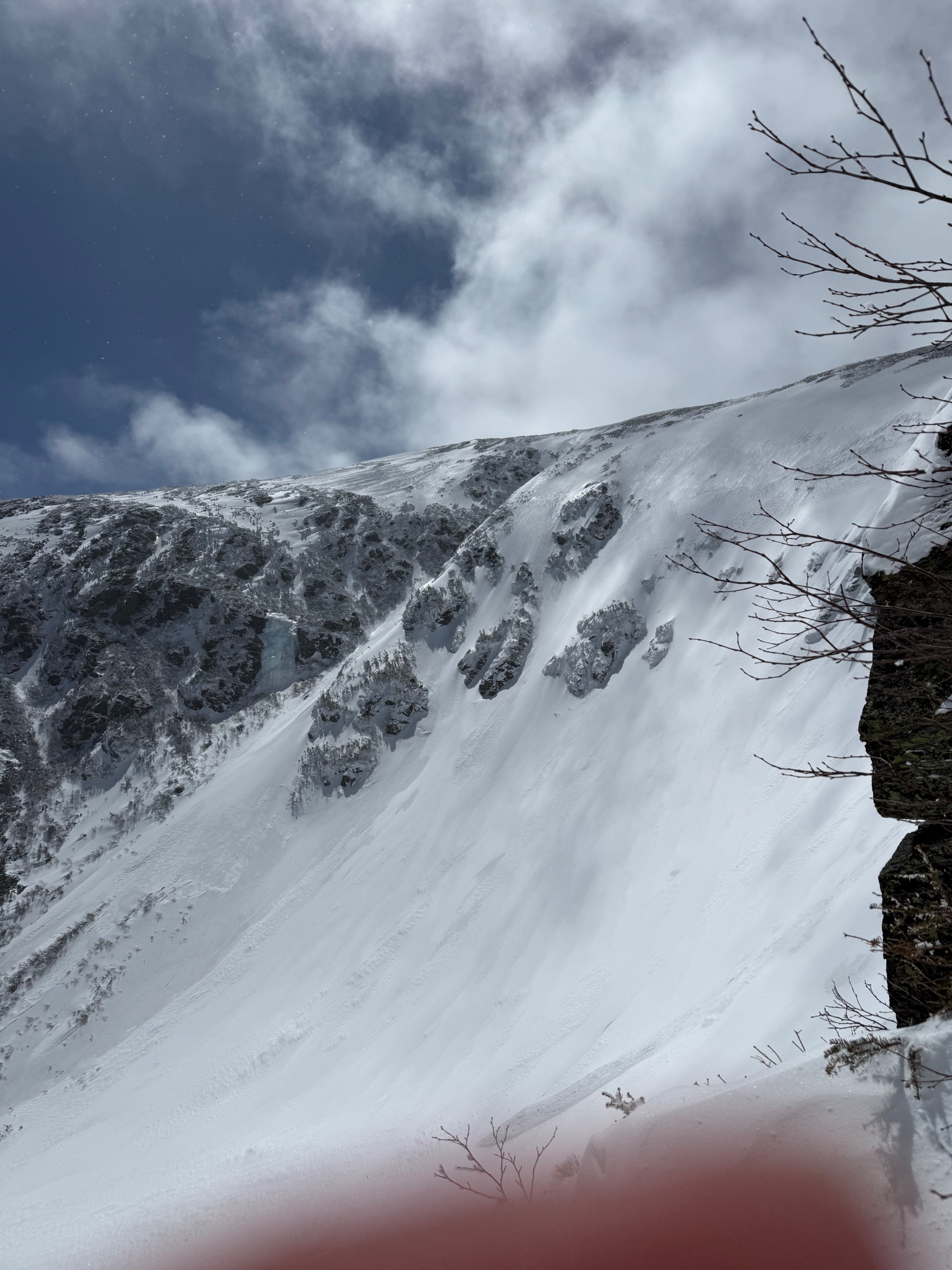
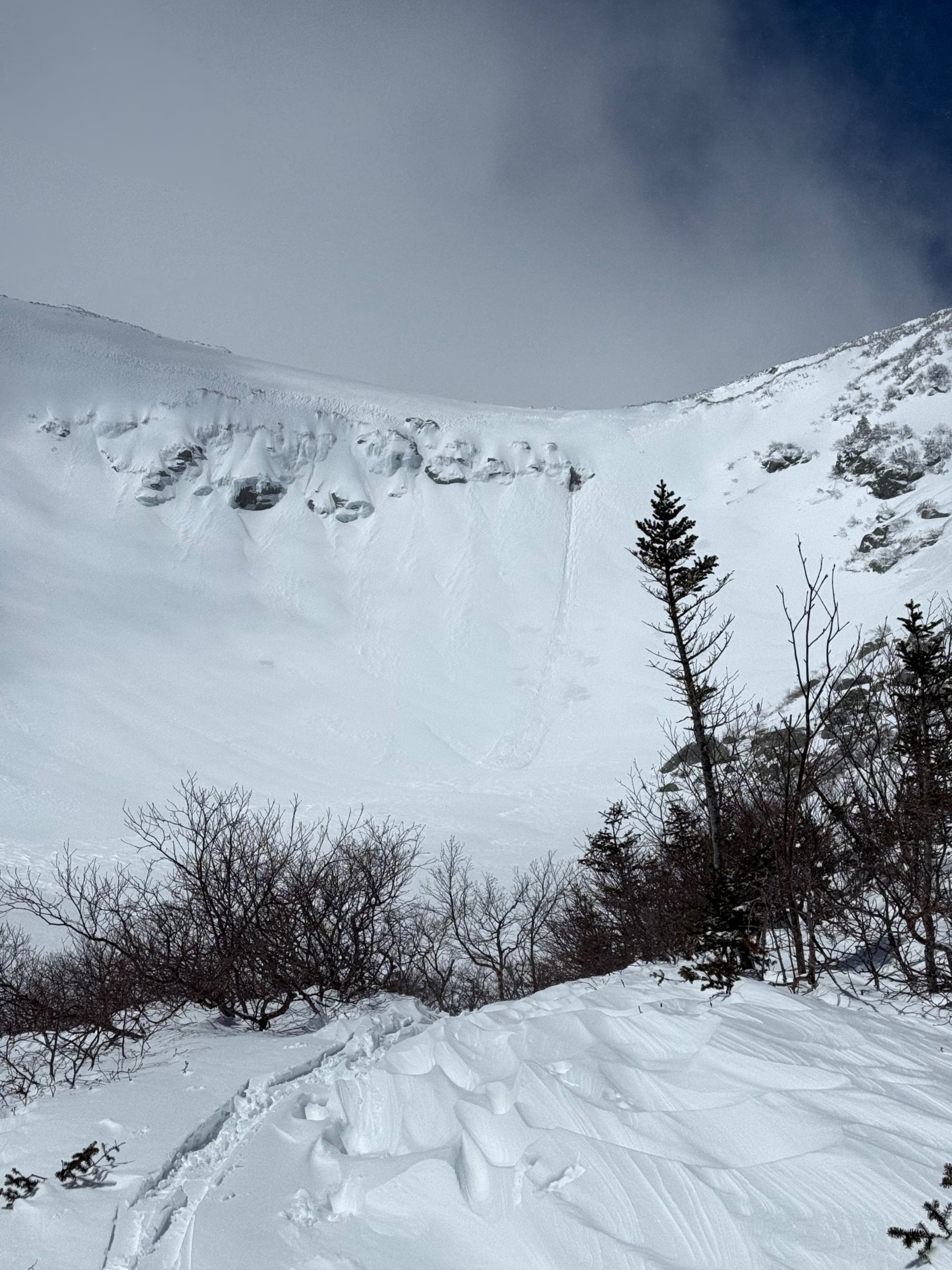
Old and icy snow surfaces were still visible. Wind blown snow had various textures, with some areas like the ravine floor which had wind sculpted snow. Other areas were smooth and pillowy and areas that stood out with larger connected pockets were Chute, Sluice, and the Lip. Snow depths were variable, with areas that were scoured, to ankle deep, to knee deep.
For the most part these pockets were small, D1, but there were some areas that looked capable of producing a larger and more destructive avalanche D2.
The structure of the slabs were soft, and the strong-over-weak structure was very subtle, a 10-20 inch slab with a 2 inch layer of softer snow directly atop the firm old snow surface. Hand shears failed moderate to easy often on this snow layer within the slab, and in a few areas directly on the old snow surface. In most areas slabs lacked propagation potential, but they had structure and the snow tended to stay together- on steep slopes these slabs could rip out as a connected pocket.
Temperatures felt cold in the Ravine, at least while we were there and solar did not seem to be affected the snow. While snow seemed to be well bonded, it was easy to get it to slide on the icy bed surface underneath, especially in steep terrain.
Avalanche
- Size
- D1 R1
- Type
- SS
- Aspect
- SE
- Trigger
- N
- Elevation
- 4900 ft
Small (D1) dry loose point release in the Lip.