
Quick report
- Cracking
- specific
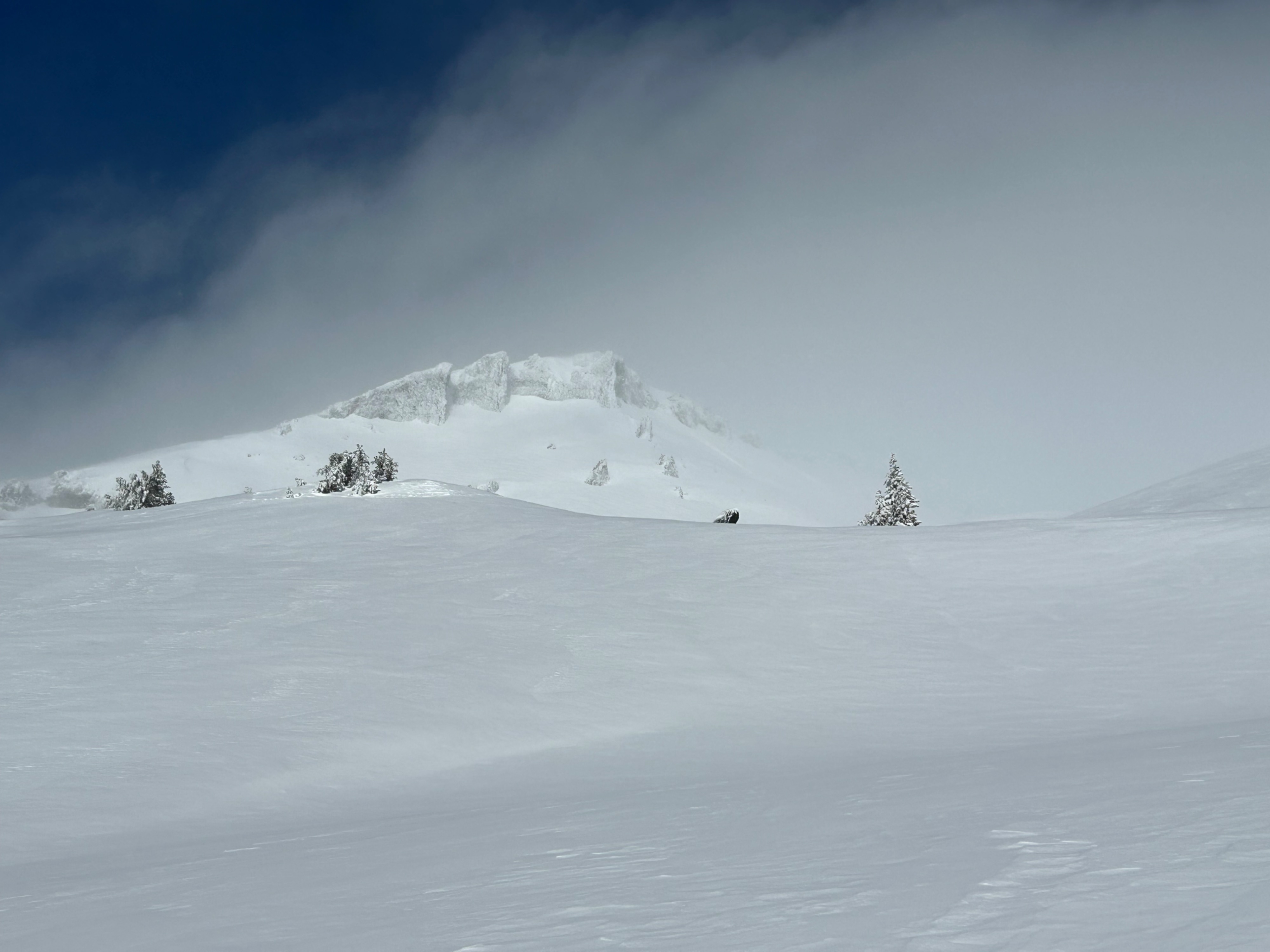
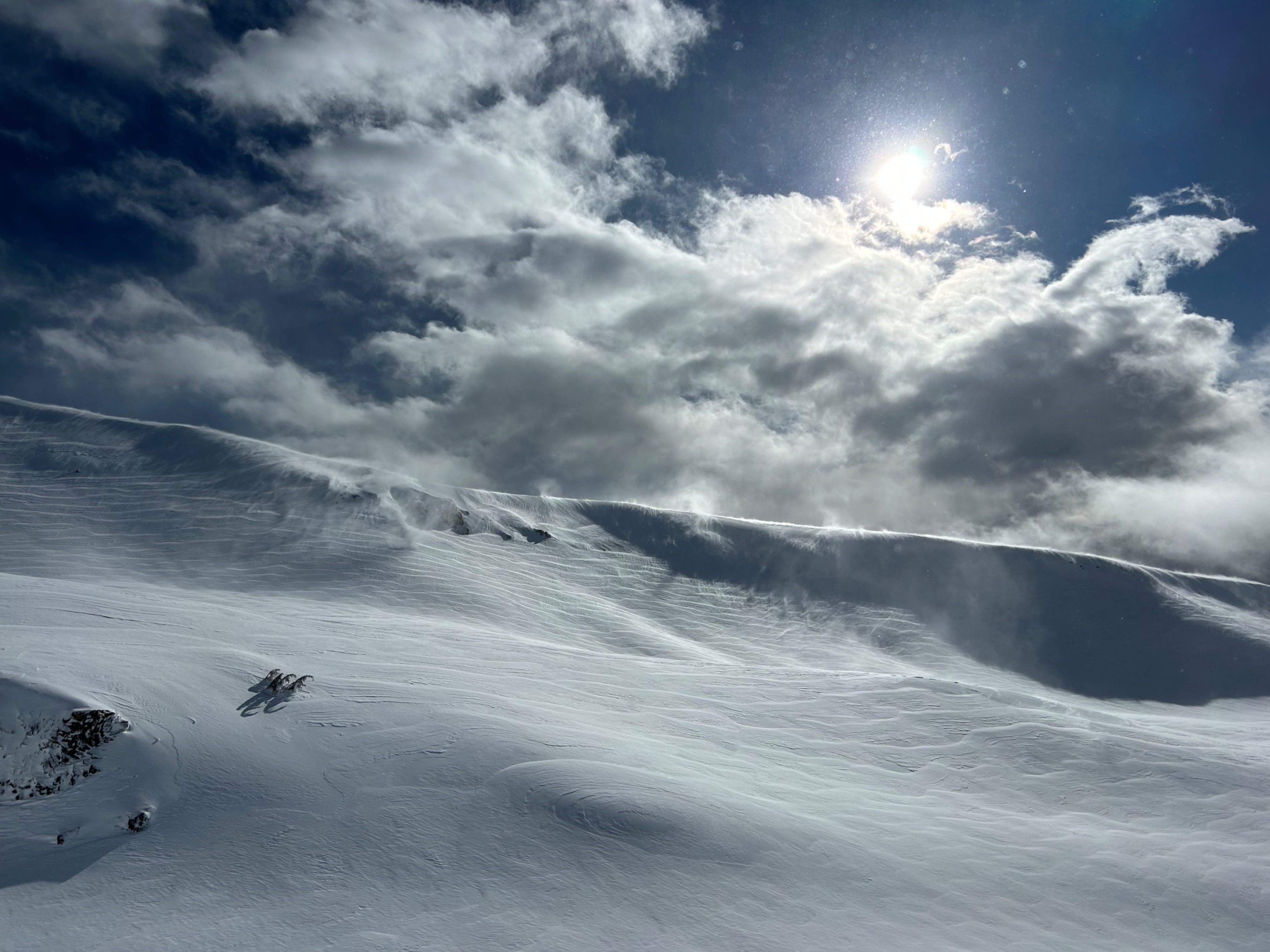
An early morning storm over Mount Shasta provided a fresh blanket of new snow. Accompanying west-northwest winds transported it onto leeward aspects throughout the day. The storm tapered by mid-day, however, Shasta's orographics paired with an incoming cold front, kept Shasta and the upper mountain veiled in clouds and churning weather.
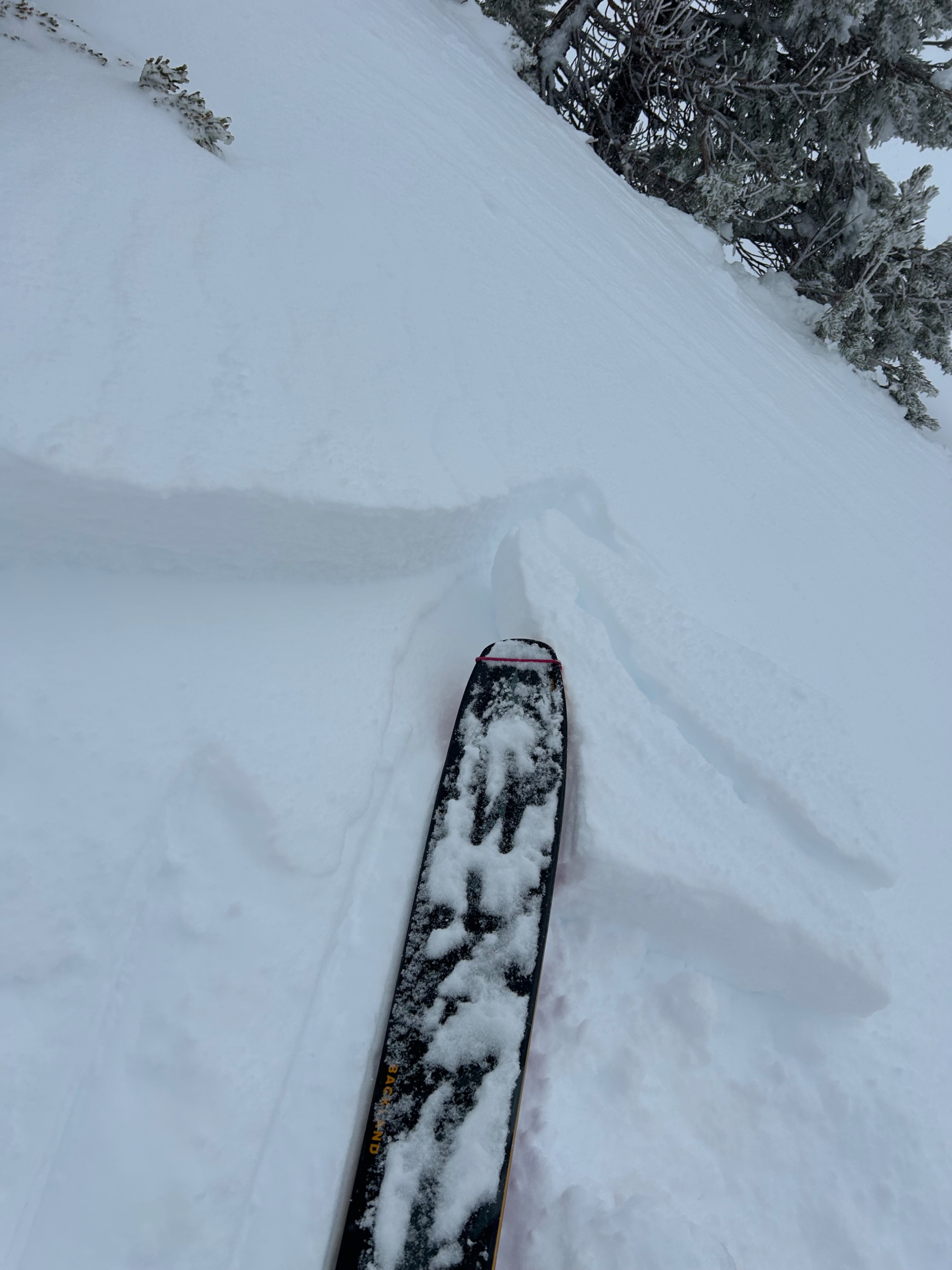
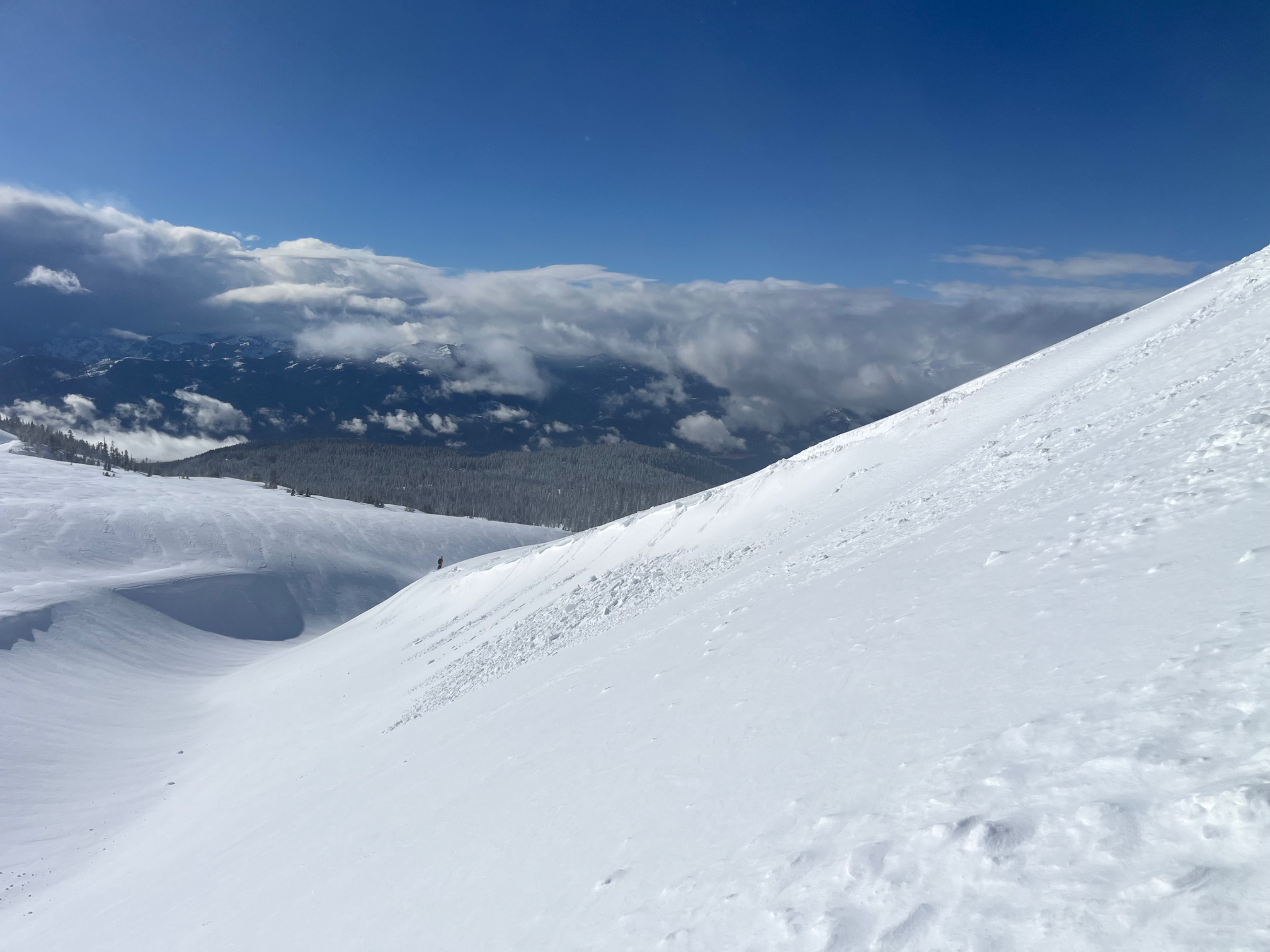
No signs of natural avalanche activity were observed. Shooting cracks and reactive wind lips were the largest signs of instability.
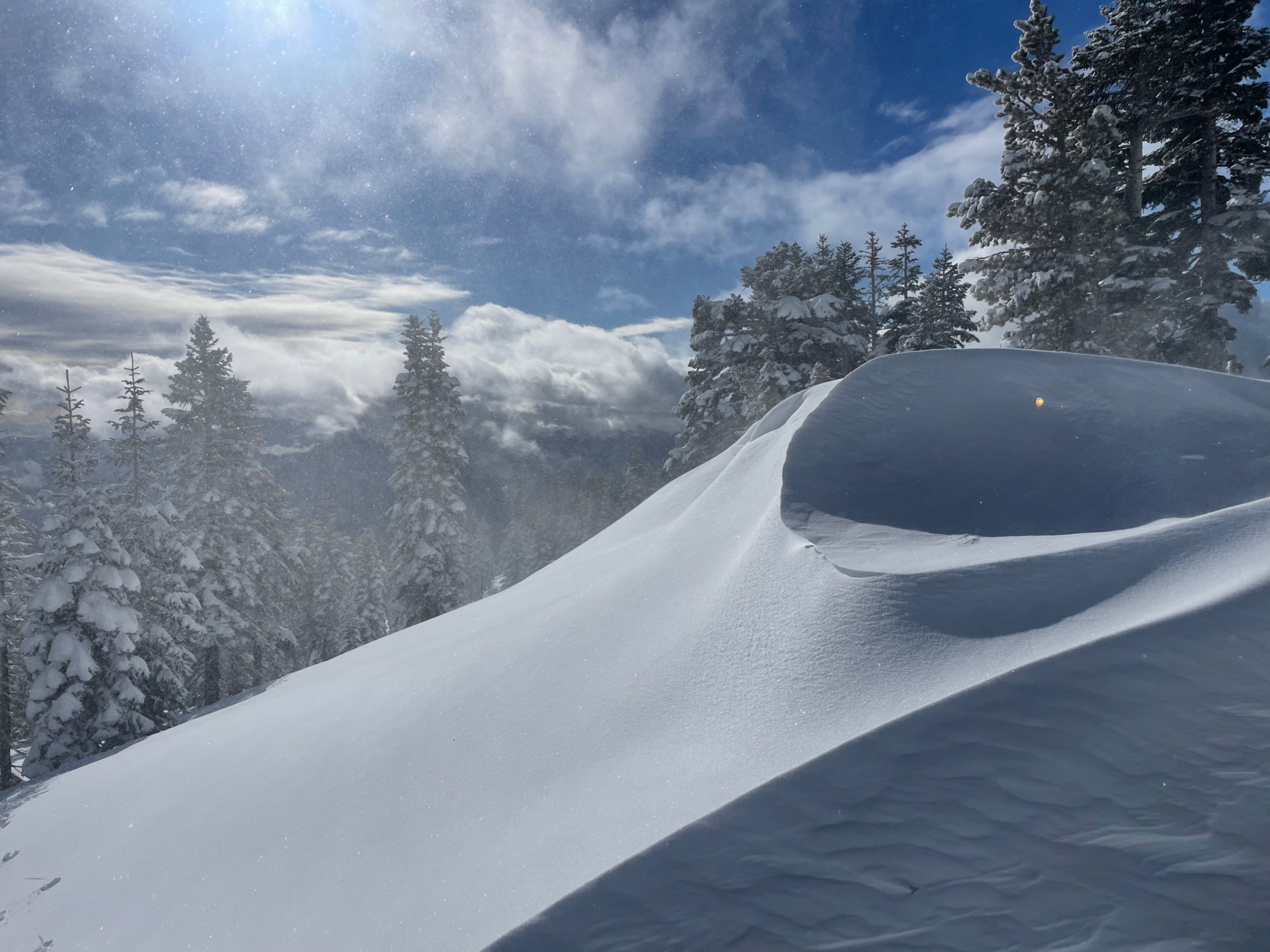
Cracking was achievable within wind stiffened snow. Reactive wind lips along ridgelines failed under the weight of a person.Weather
- Air Temp
- 27
- Cloud Cover
- obscured
- Wind Loading
- moderate
- Recent Snowfall
- 22
- Snow Avail For Transport
- moderate amounts
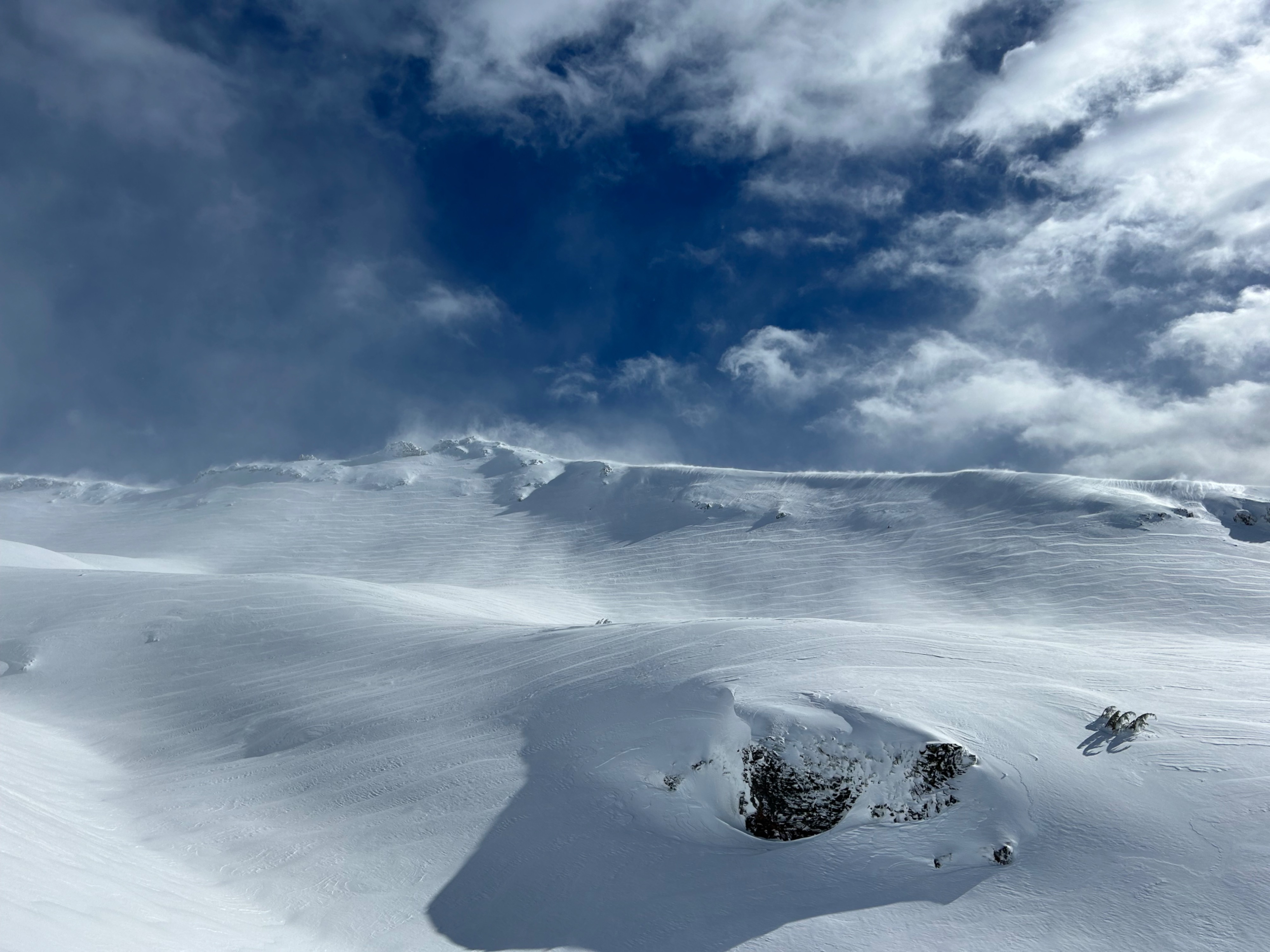
Moderate to strong west-northwest winds actively transporting snow were observed for the entirety of the outing. Obscured skies with light snow fall prevailed for the first half of the day. At 1200 hours, partial clearing allowed for decent visibility with patches of clear sky aloft. Snowfall tapered off below 8,500 feet, with freezing temperatures continuing to decline.
Snowpack
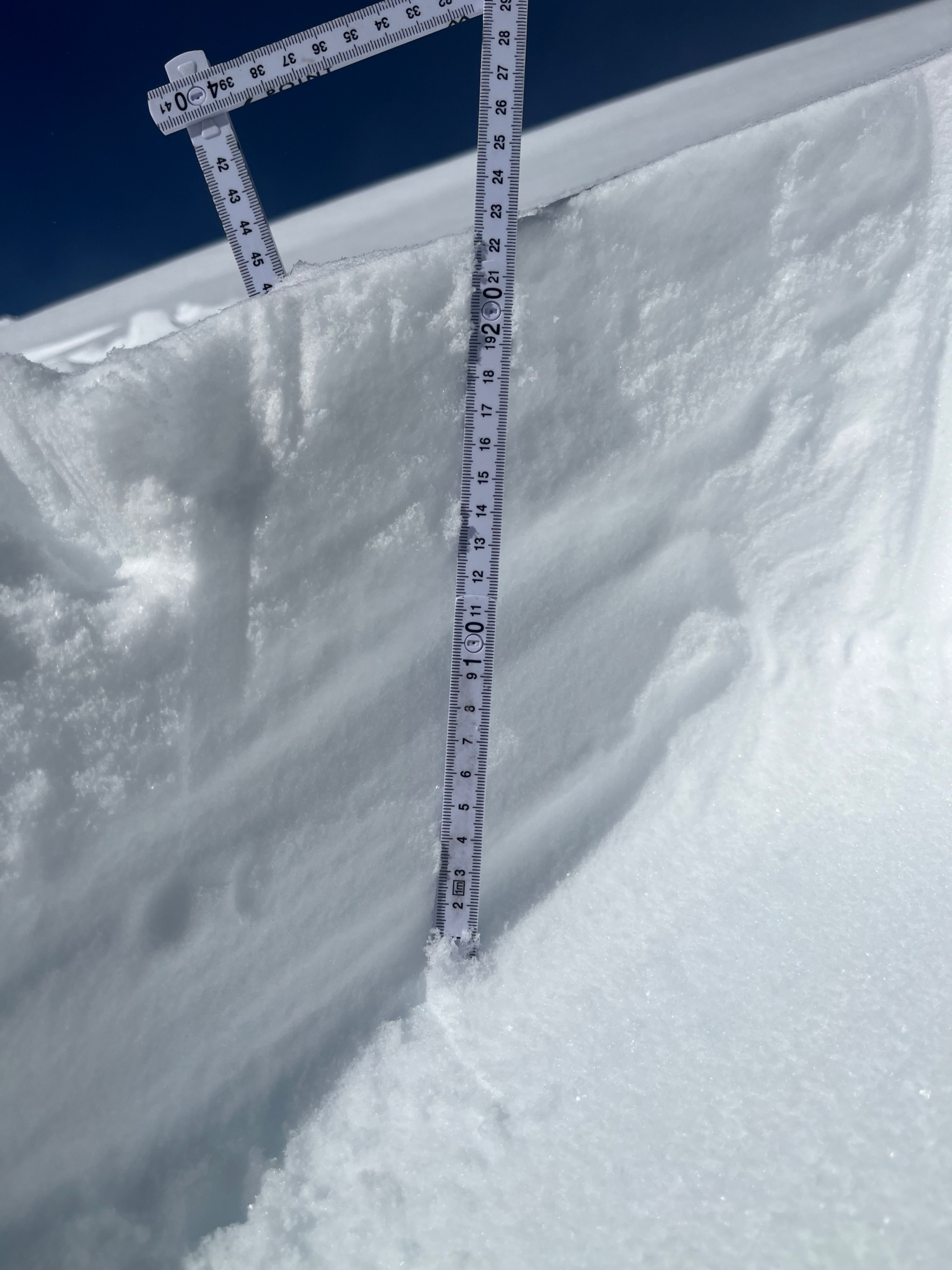
Over the past 24 hours, the forecast zone has received anywhere from 20-30 cm of new snow near and above treeline. This new snow sits atop a thick wet rain layer from days prior. A warm to cool trend has allowed the new snow to adequately bond to the old. On leeward aspects (south, east, and north) wind deposits averaging 5 -10 inches deep were reactive to skis. From atop a ridgeline, wind lips were easy to trigger but did not result in the release of a slab on the slope below. In a stability test, propagation was unachievable within the new/old snow. Catchment zones beneath ridgelines and rock outcroppings, or in gullies, and depressions hold larger amounts of drifted snow, and is where triggering a wind slab is most likely. Recent winds have made their presence known. Wind packed and textured surfaces exits on most aspects near and above treeline. On exposed windward terrain features, wind has scoured snow down to ice.