
Quick report
- Cracking
- specific
- Collapsing
- isolated
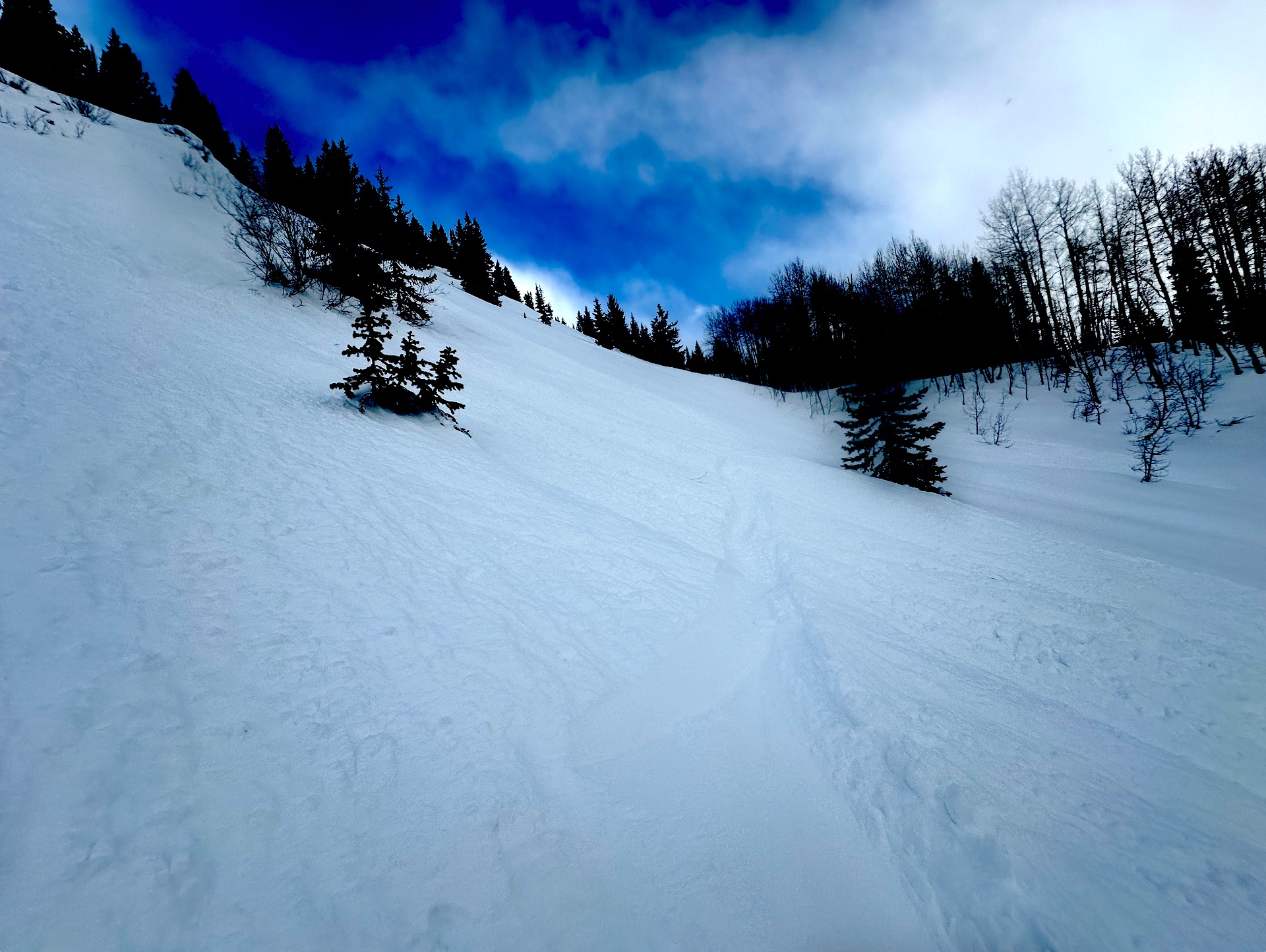
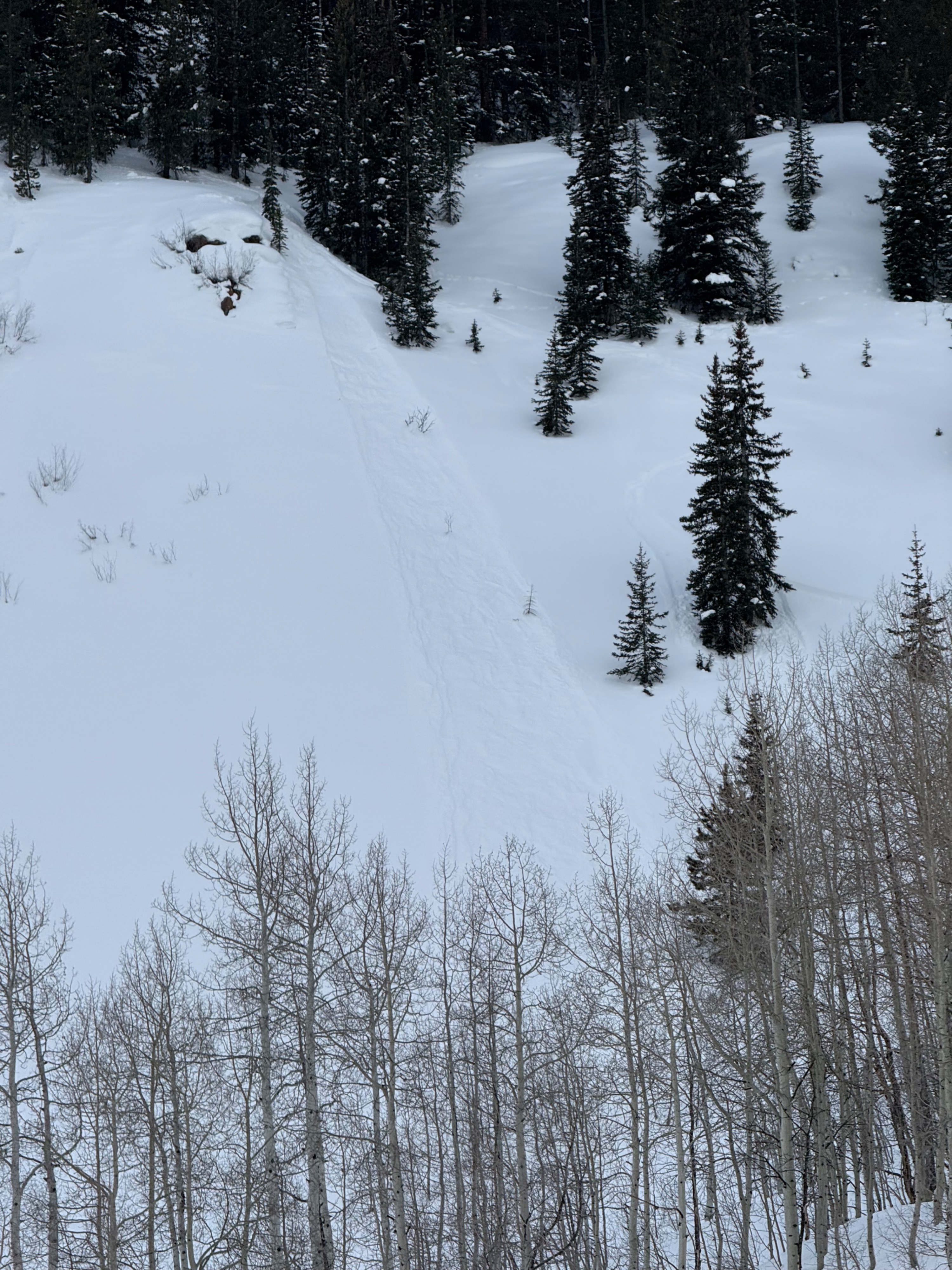
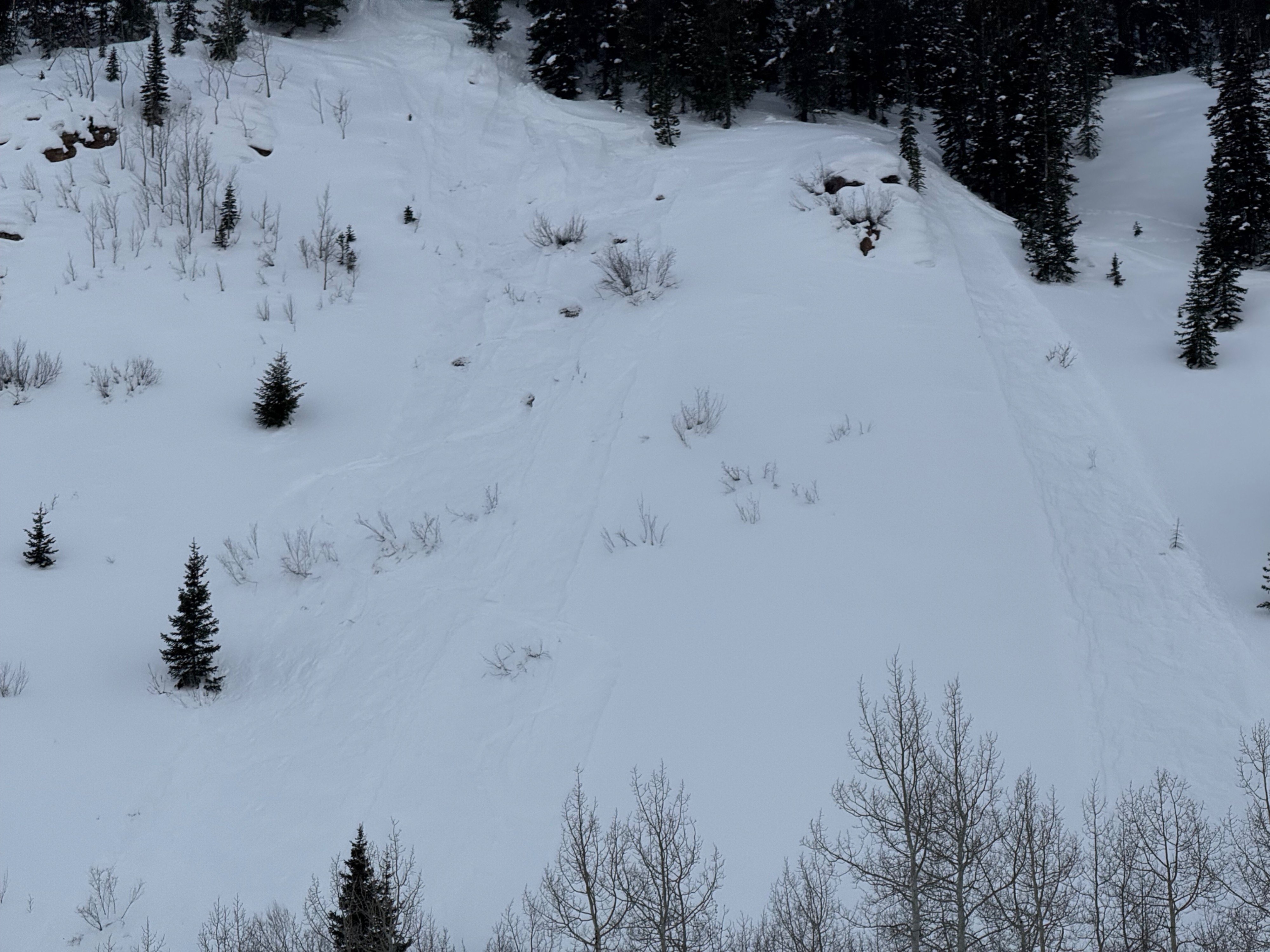
The snowpack below treeline often felt quiet, and hasty hand pits showed a mostly faceted snowpack with some 4-finger hardness remaining in the slab (these observations came from full-depth snowpacks without previous avalanche activity). Stronger winds near the valley bottom transported some snow recently, so there could be an isolated feature with a recent slab at the surface. Steep slopes with previous avalanche activity presented an obvious Dry Loose problem and were easy-to-trigger, so it was worth mentioning and looking out for.
Drifted slopes with a fetch had recently formed Wind Slabs (often resting above Persistent Weak Layers) that are sensitive to a person's weight and worth avoiding, particularly on slopes with a large fetch.
We didn't assess deeper Persistent Slab problems near treeline on steep slopes but chose to avoid skiing an east-facing slide path as we didn't want to enter to find out and didn't know the season history of the slope.
Obvious signs of instability were confined to wind-loaded terrain along the ridge that we ascended.Weather
- Cloud Cover
- broken
- Wind Loading
- light
- Recent Snowfall
- 0
- Snow Avail For Transport
- small smounts
Moderate winds throught most of the day at all elevations. Most of the snow has already been transported, and we didn't observe much for blowing snow.
Snowpack
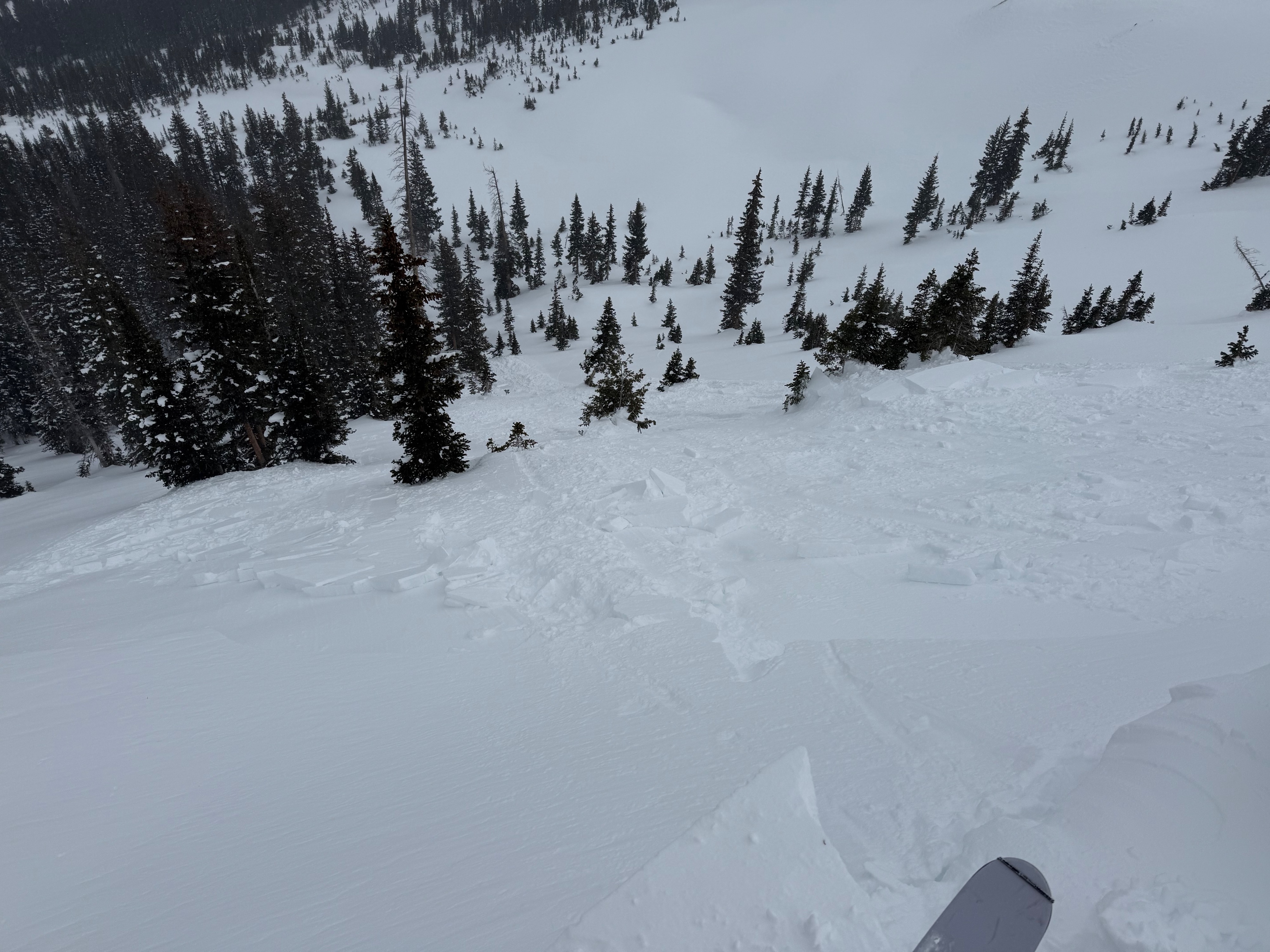
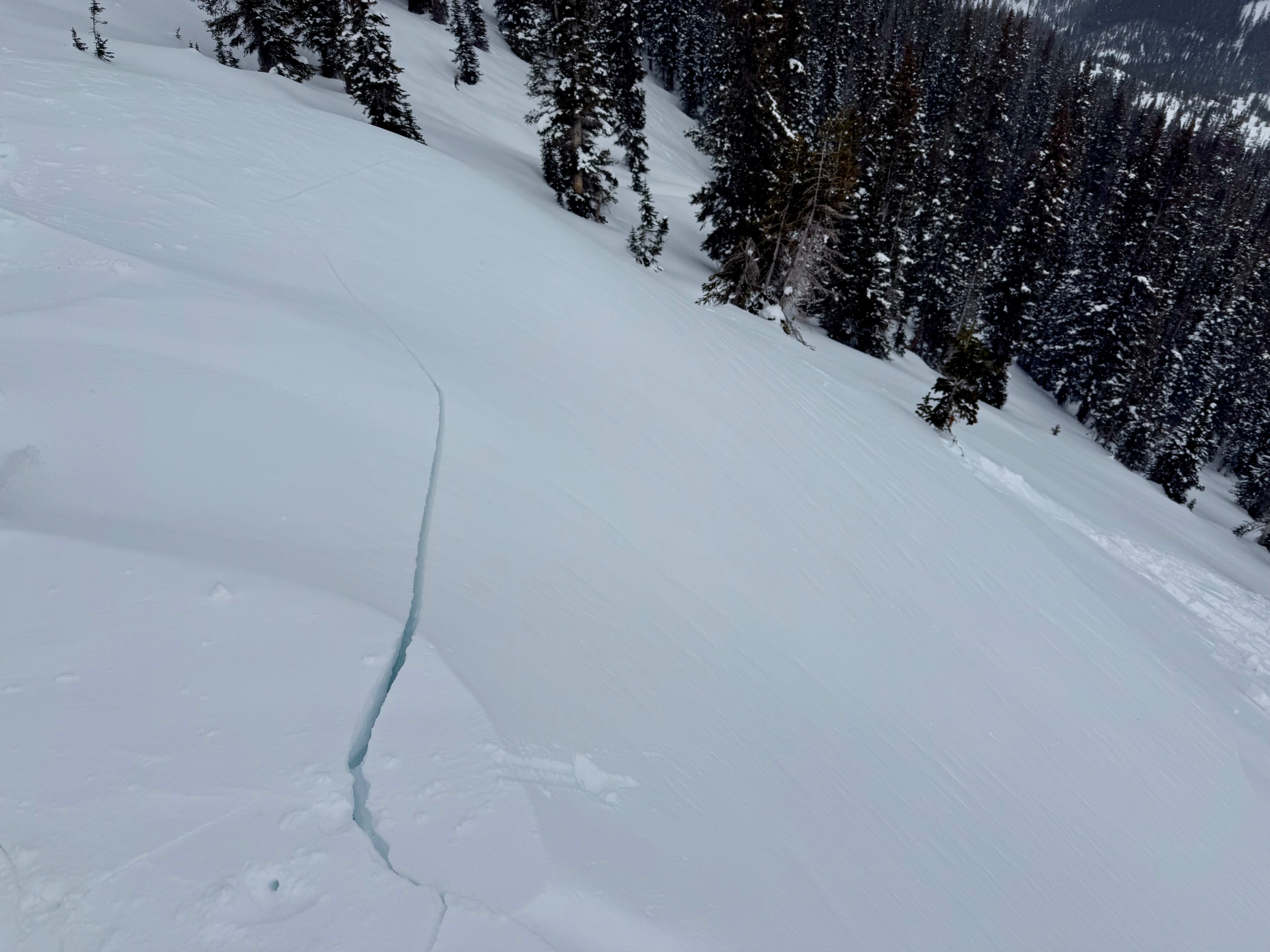
We didn't encounter slab avalanche concerns while we were in wind-protected slopes up to about 10,500ft. The wind was transporting snow at valley elevations, so you could find a cross-loaded slope at lower elevations too. Once we gained the ridgeline and moved into wind-affected snow, we encountered a stubborn wind slab avalanche problem. These slabs were thick and often difficult to budge. Once we got higher on the ridge and targeted a few areas that had a bigger fetch, we started to get a little more feedback. We triggered one windslab, got a few collapses on other wind-loaded terrain features and saw several shooting cracks. The slabs appeared to taper fairly quickly on the slopes below and were often 4 to 10 inches thick.
These wind slabs appeared to be most reactive on ESE to SE-facing slopes, where they formed on a thin collapsible crust that was created during last week's warm-up. This crust had small facets above and soft 1.5mm facets below. This weak layer is something to keep an eye on (see image below).
Avalanche
- Size
- D1.5
- Type
- HS
- Count
- 3
- Aspect
- E
- Trigger
- AC
- Elevation
- 11400 ft
Triggered a small wind slab by dropping a cornice chunk on the slope. East aspect at 11,400ft. The slab was about 40ft wide and 8 to 10 inches thick. We also triggered several small loose dry avalanches up to 10,500ft. Those sluffs were only reactive on old bed surfaces from the Thanksgiving or holiday cycles.