
Quick report
- Cracking
- isolated
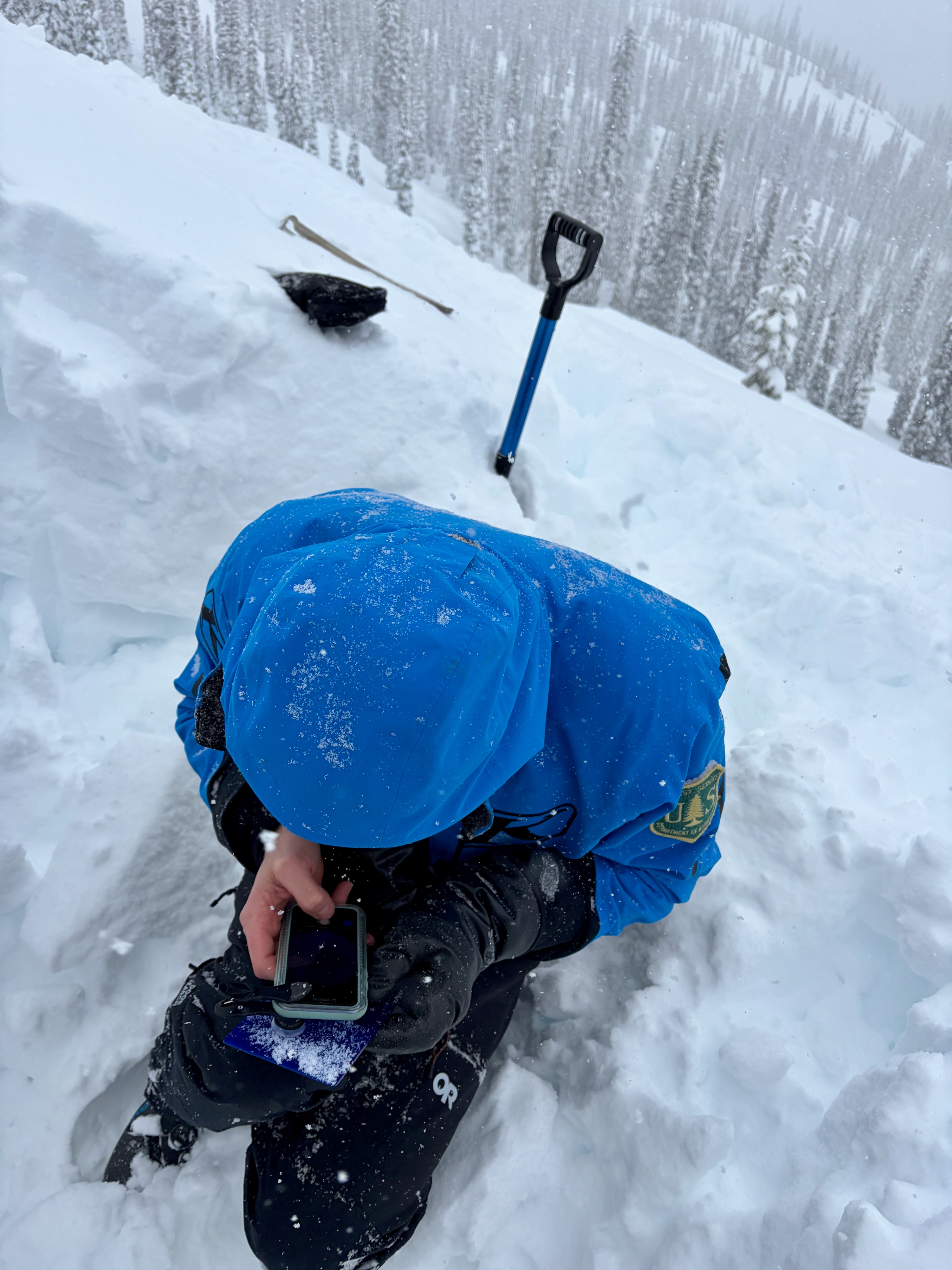
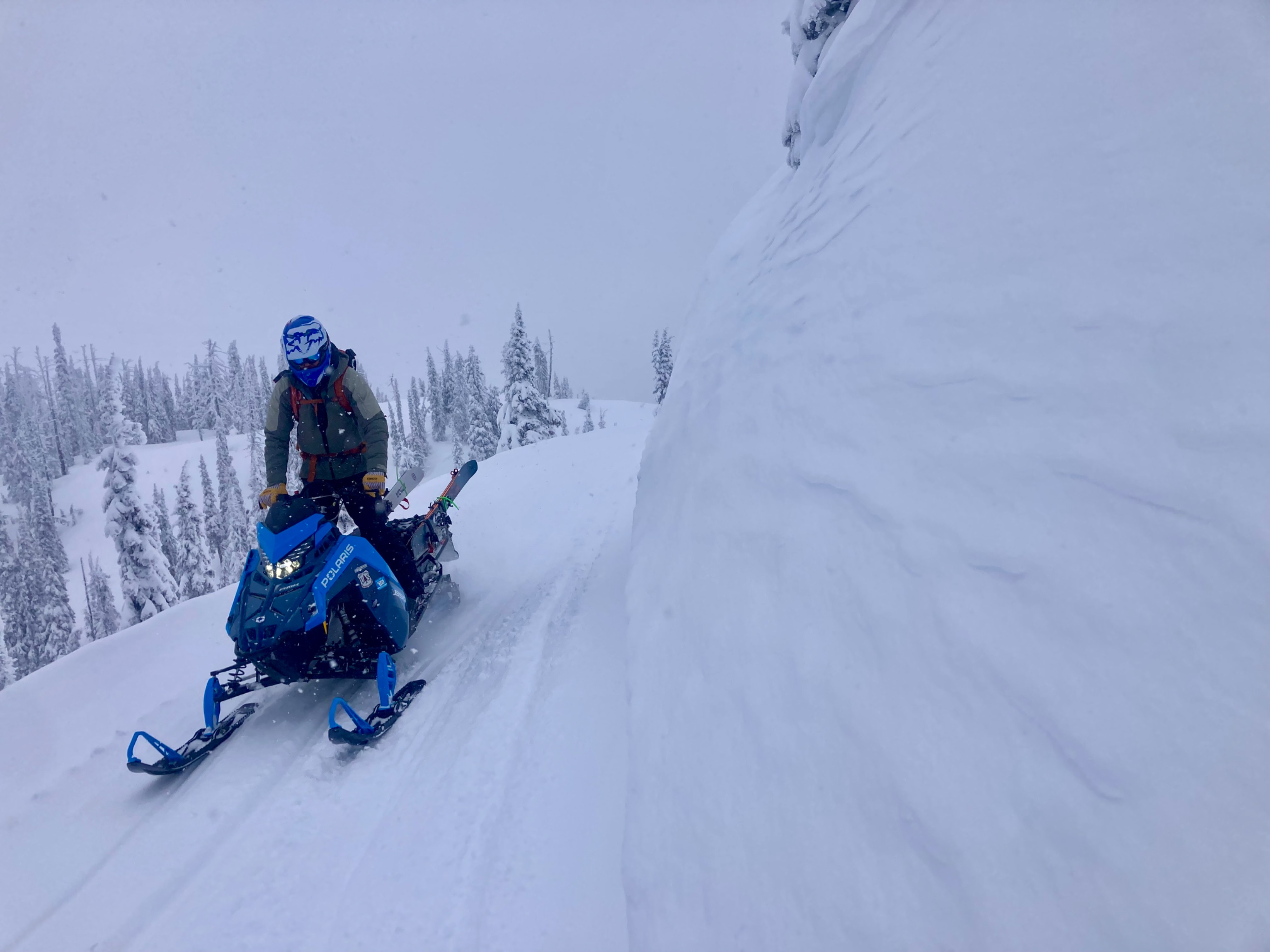
We took the machines up Stryker Ridge to see what we could learn about the distribution and sensitivity of buried weak layers.
- We first focused on slopes similar to the one that produced a large skier-triggered avalanche near WMR: Open easterly slopes at 6300 feet.
- Snowpack tests yielded unstable results 1 to 2 feet deep with moderate to hard force on slopes facing NE, E, and S at 6300 to 6400 feet.
- These tests failed in a layer of weak snow on top of the Christmas interface/crust.
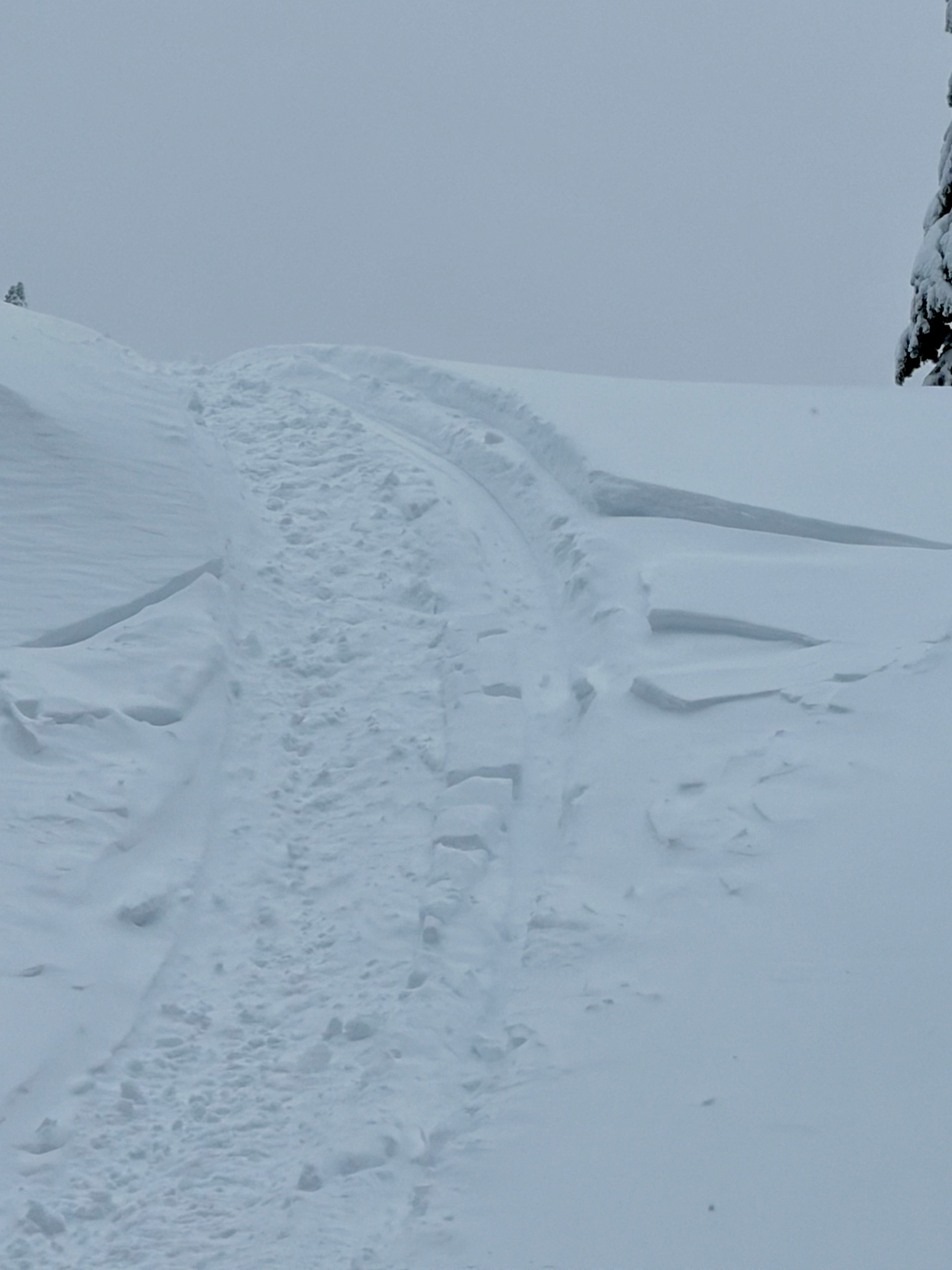
- We were able to initiate thin (4 inch) and small slabs on wind-loaded features. Sled cutting did not produce deeper cracking in thick wind drifts.
We talked with many sledders and snow surfers, who reported superb riding with no obvious signs of instability.
Doormat-sized soft slabs 4 inches deep on obviously wind-affected features. No deeper cracking in storm snow or wind drifts.Weather
- Air Temp
- Below freezing
- Cloud Cover
- overcast
- Wind Loading
- light
- Recent Snowfall
- 10cm
- Snow Avail For Transport
- small smounts
Cold! For this season at least.. Light SW winds gusting to Moderate. Short periods of S-1.
Snowpack
Did not identify buried surface hoar in any pits. All pits yielded unstable results with medium to hard force down 50 to 55cm.
Test Pit @ 6300 feet NE
- HS = 200
- ECTP 27, ECTN23 down 55 cm
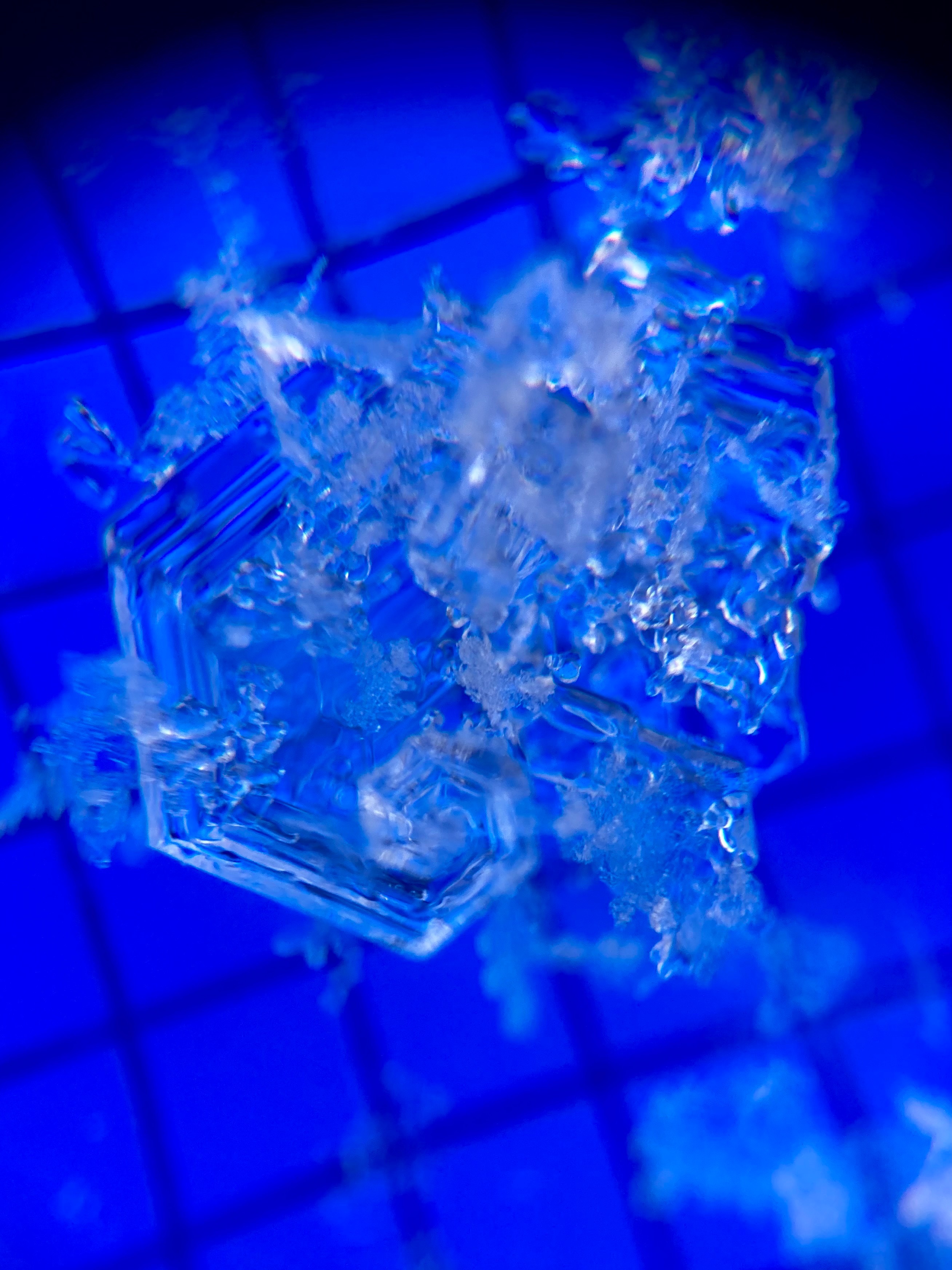
- Failed on striated facets 3 to 6mm (monsters!) on the Christmas interface.
Test Pit @ 6400 feet E
- HS = 205
- ECTP down 50 cm
- Failed facets (0.5-1.0mm) and needles (3mm), possibly the Christmas interface.
Test Pit @ 6400 feet S
- HS = 170
- ECTP18 down 50 cm
- Smaller facets 0.5mm on the Christmas interface. It is a proper crust on this aspect, 2 cm thick and P+ hard.