
Quick report
- Cracking
- specific
- Collapsing
- specific
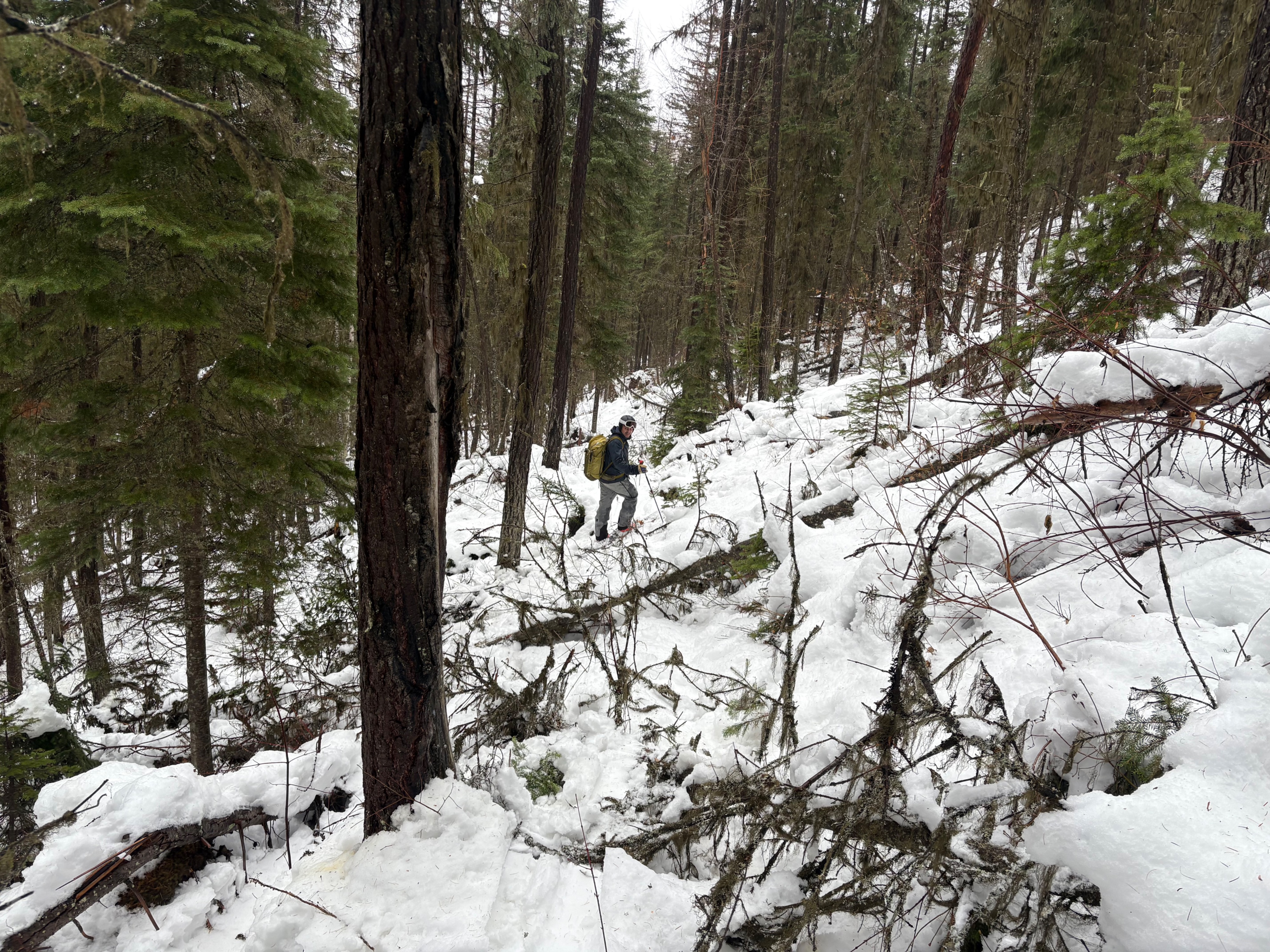
A wet and soggy day in the Flathead. We stayed on trails and ridgelines to access upper elevations. Getting off-trail at low and mid-elevations right now is not recommended.
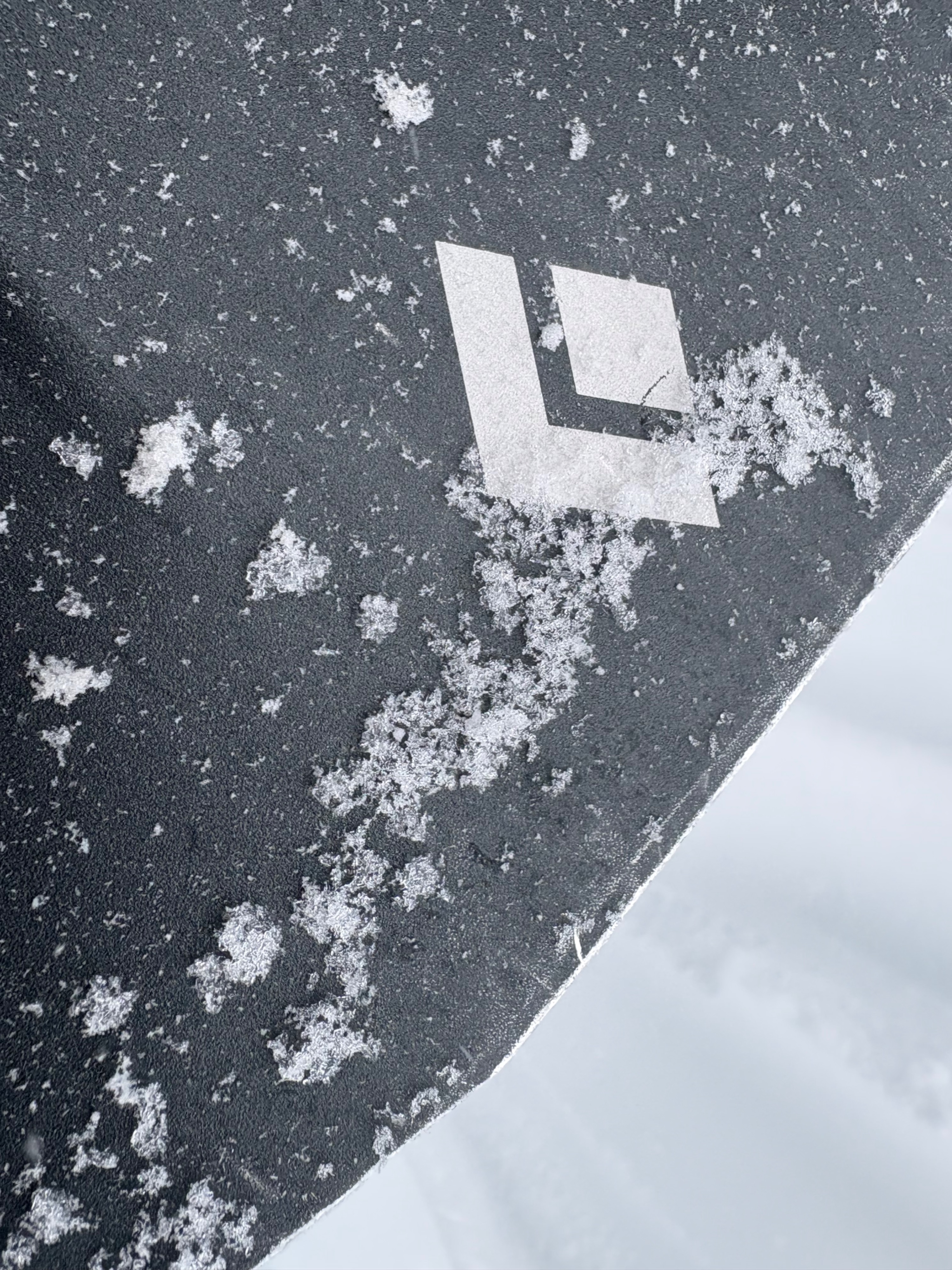
- Rain turned to snow at 5000 feet. Wet and isothermic snow turned to dry snow at roughly 5800 feet.
- We began to receive signs of unstable snow at the transition to dry snow at 5800 feet.
-
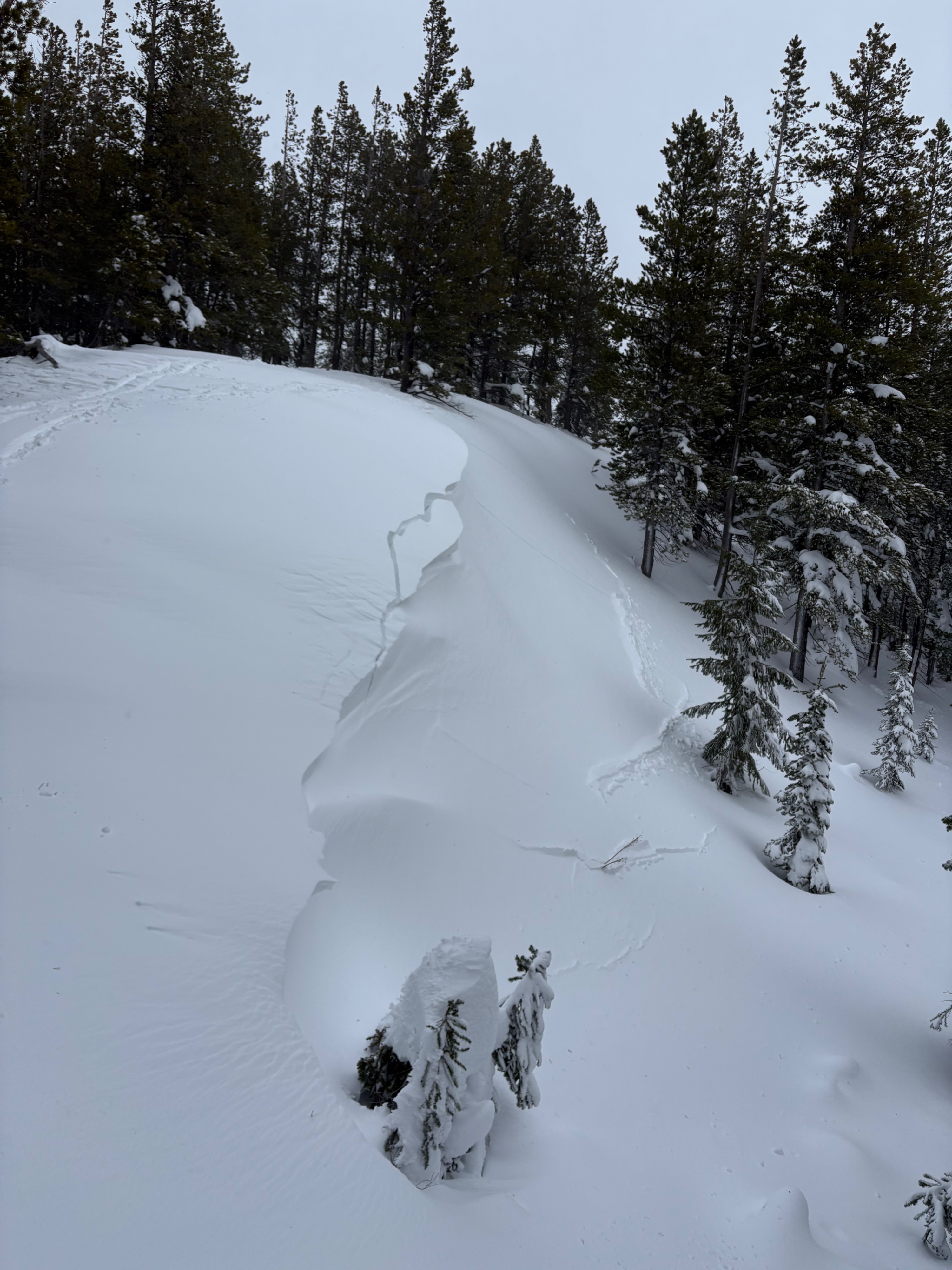
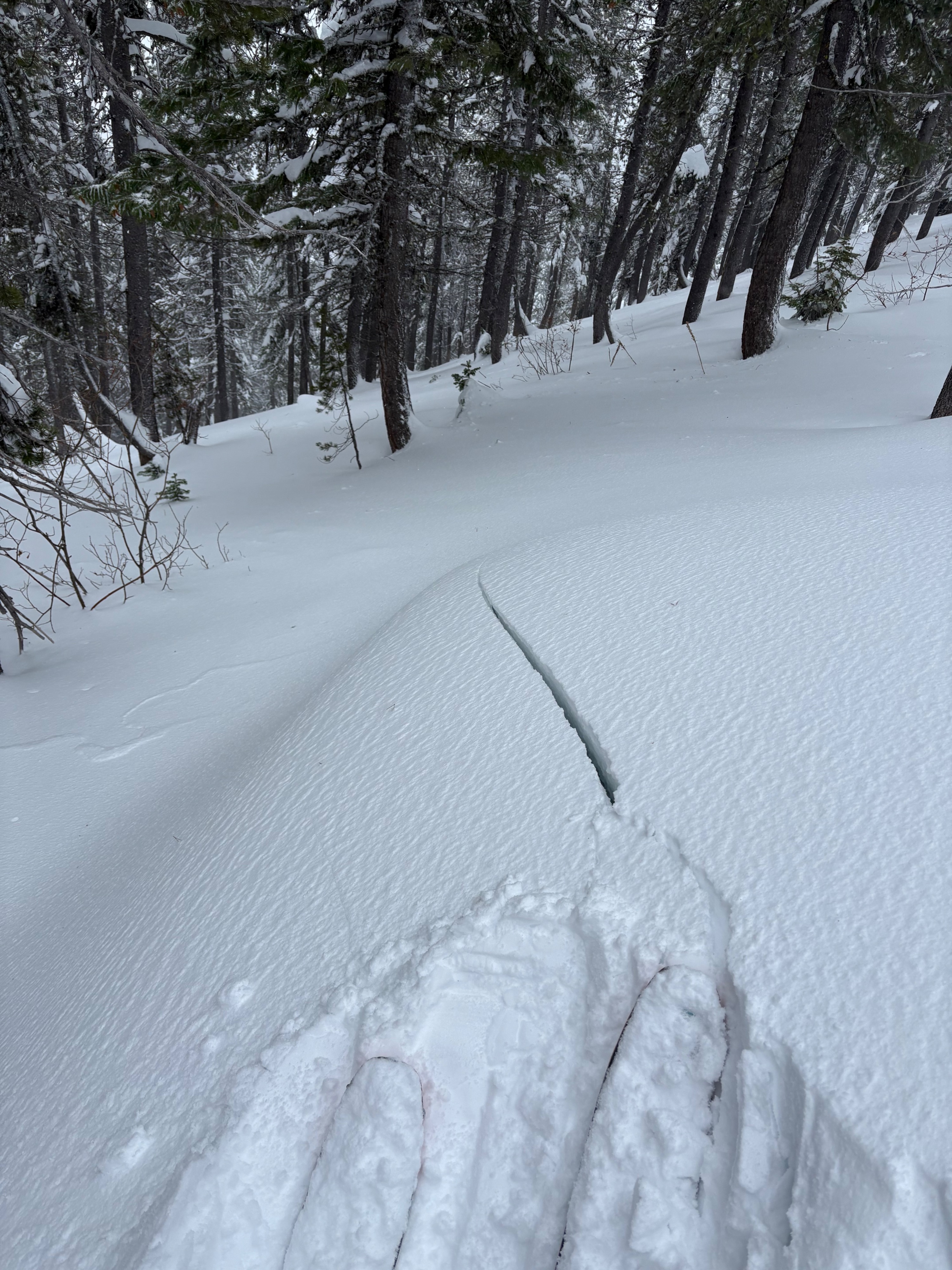
- We got it all: audible collapses, shooting cracks, and triggered small avalanches.
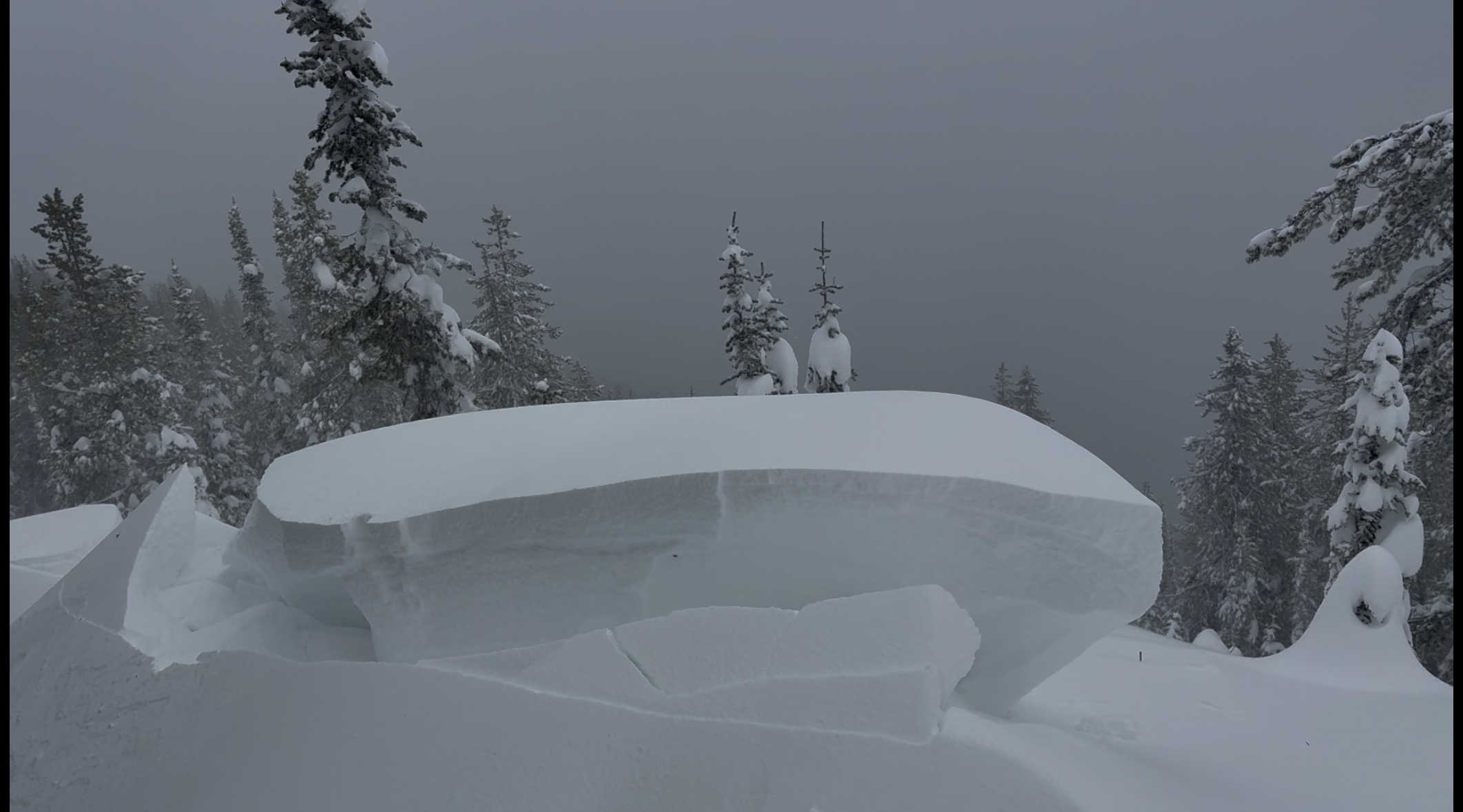
- Large cornices failed with a simple poke of a ski pole.
- NOTE: The shooting cracks and slabs we triggered broke surprisingly far back on the ridge. This was the type of hard slab that would pull into lower-angle terrain or far back on the ridge.
- Slabs were hard (1 Finger) and 1 to 2 feet thick.
We kept slope angles low and gave ridgelines a wide berth.
Bountiful signs of instability. We triggered small avalanches, initiated surprisingly long shooting cracks, and had numerous audible whumpfs while traveling along the ridge.Weather
- Cloud Cover
- overcast
- Wind Loading
- intense
- Rain Elevation
- 5000
- Recent Snowfall
- 12
- Snow Avail For Transport
- moderate amounts
Warm, wet, windy. 37 degrees F at parking lot. Rain turned to snow at roughly 5000 feet. Wind speeds gusted to "blow you over" force at upper elevation ridgelines.
Snowpack
We dug a snowpit at 6600 feet on a ESE aspect.
HS: 100cm. We found a buried layer of surface hoar and near-surface facets at 55 cm. The surface hoar was broken pieces and not standing upright. Other than that the snowpack really looked pretty good.
Avalanche
- Size
- D1 R1
- Type
- HS
- Aspect
- E
- Trigger
- AS
- Elevation
- 6300 ft
Triggered on test slopes. Triggered multiple hard wind slab avalanches