
Quick report
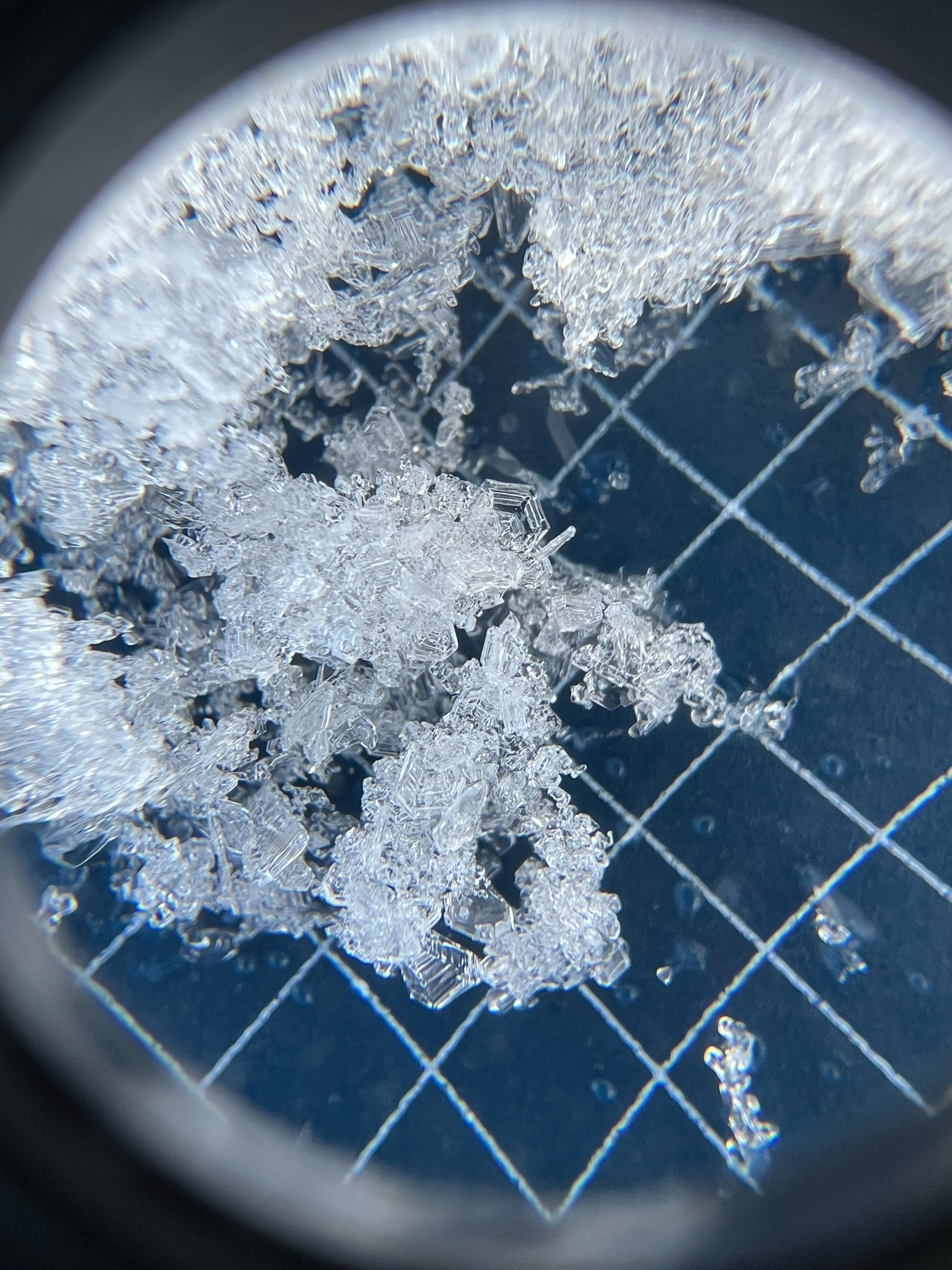
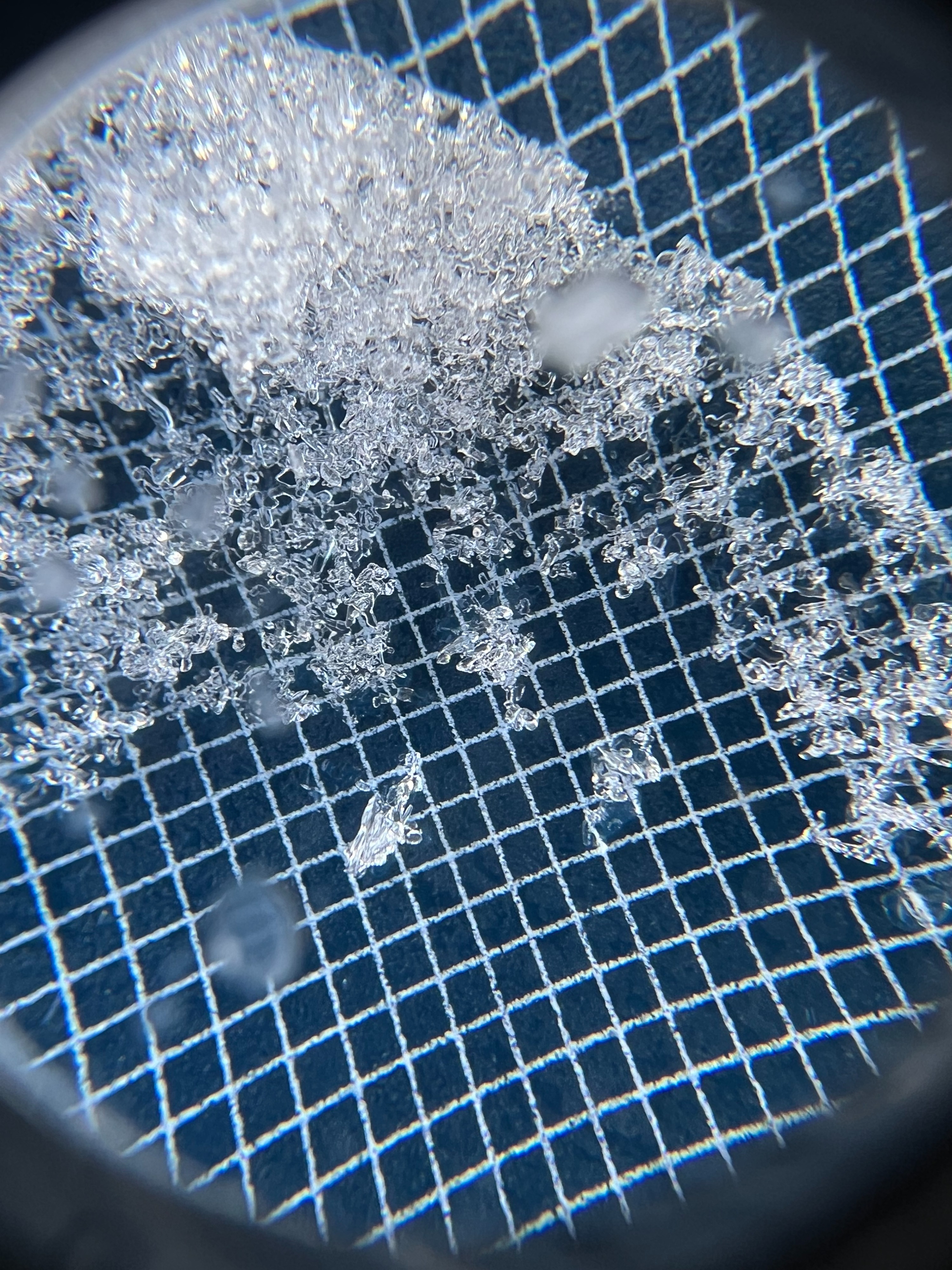
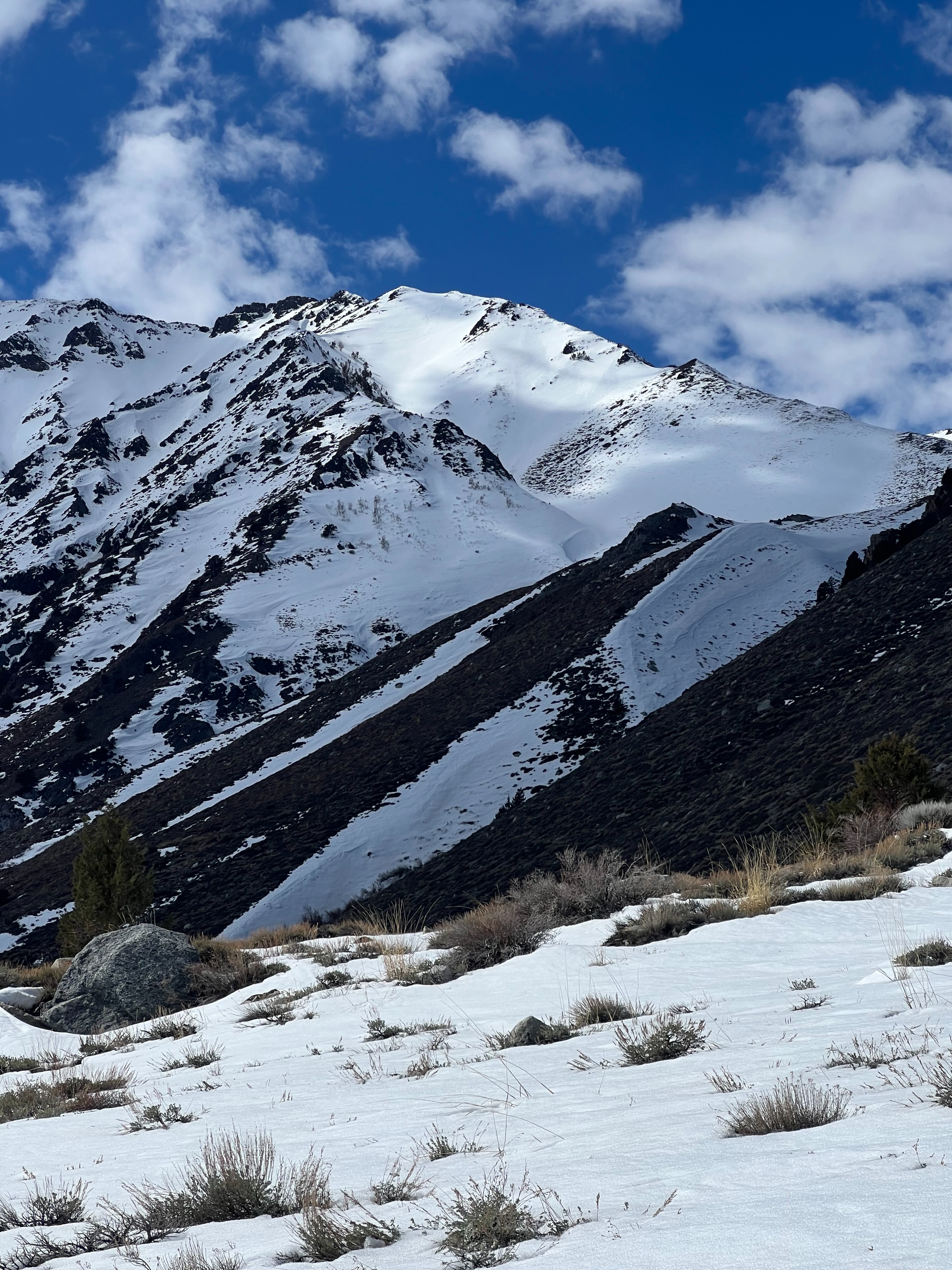
We traveled on spring snow for most of the approach until we got to steeper north-facing aspects where there was a few cm of winter snow, where we realized neither of us had skin wax. Around 9800' we noticed that the surface snow was deeper and was faceting, improving ski quality. this was widespread anywhere the aspect or slope angle decreased the sun angle, making up for a fairly widespread amount of the area continuing upward. In the Baldwin Cirque, we found two distinct slab layers, though the spatial variability kept the slabs from being exceptionally concerning, we still turned around before the top. The average composition of the top 60cm was as follows with 0cm at the top (although no formal pit was dug): 0cm - 2cm -> F-, 2-3mm FC 2cm - 16cm -> F, 0.5-1mm DF/PP __________ 16cm - 20cm -> 1F, .5mm RGwp CTM,SP^ 20cm - 24cm -> 4F,1mm-.5mm DF 24cm - 38cm -> 1F- .5mm RG/DF __________ 38cm - end -> 1F+ .5mm RG CTM,SP^ NE 11,150' We were unable to find a good reason for the failure at 38cm, and it was not present throughout the majority of the slope, but it increased in distribution as we ascended, finding it more on true north slopes. In some spots, the layers represented at 16cm and 38cm were fracturing upon isolation of hand shear tests, which was our main reason for turning around before the top of the slope.
Avalanche
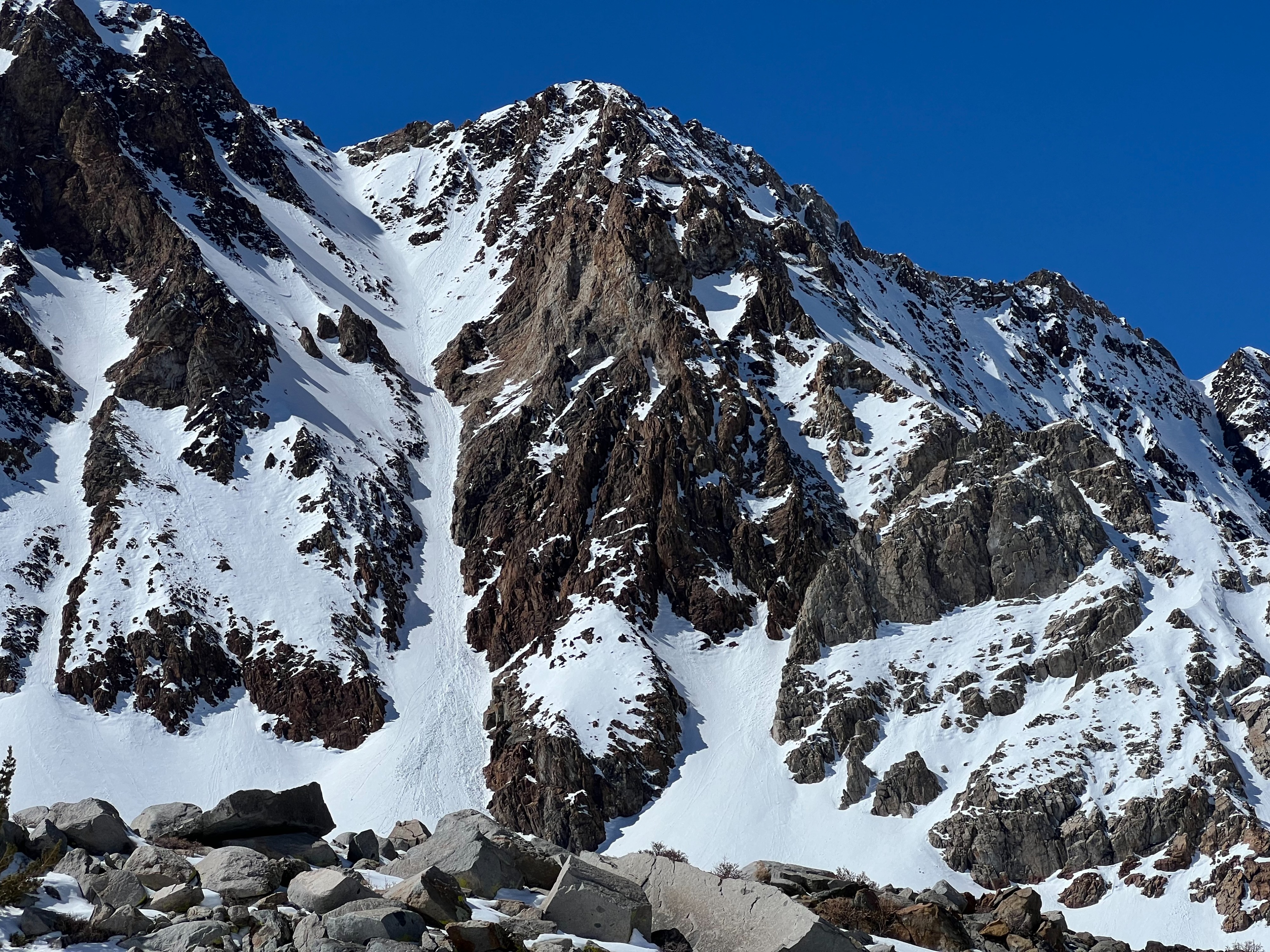
We saw many point-release avalanches on almost all aspects, and as usual, failed to photograph most of them. Many of them were new as of the last two days due to the warming trend. There were even some D1 R1 avalanches on north aspects where snow, cornice, or rocks fell from solar aspects above. There were D2 wet loose avalanches on east south and west aspects.