
Quick report
- Cracking
- widespread
- Collapsing
- widespread
We found reactive persistent slabs and reactive wind slabs in Bishop Creek.
- Feedback from persistent slabs on northwest, north, northeast, and east aspects above 9500 feet.
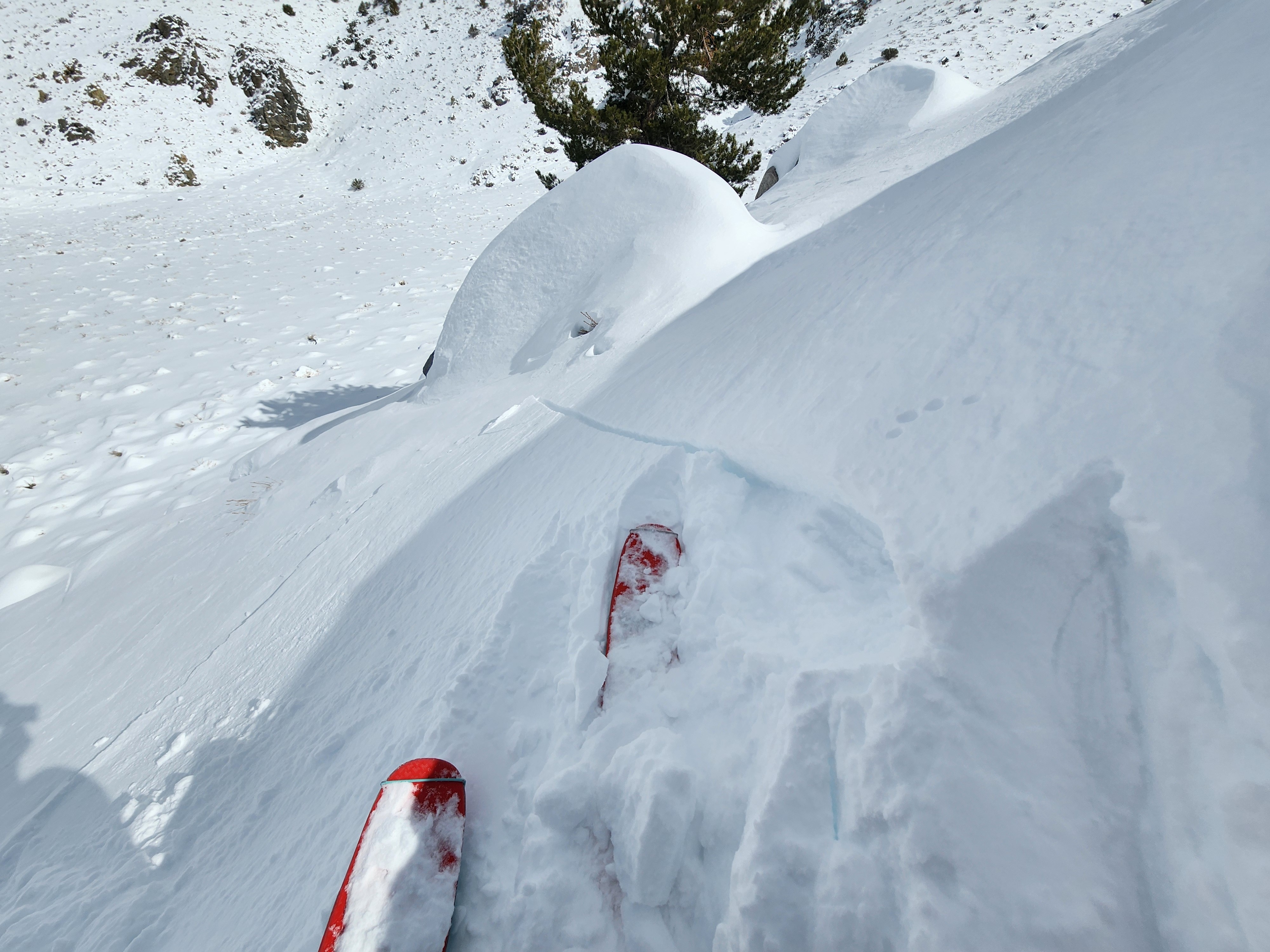
- Wind slabs failed easily on northeast test slopes near treeline. They broke on a thin layer of near-surface facets.
The wind slab problem was easy to avoid: we focused on sheltered terrain. The constant feedback from the persistent slab problem made us think hard about what terrain we could ride and what was above and below us.
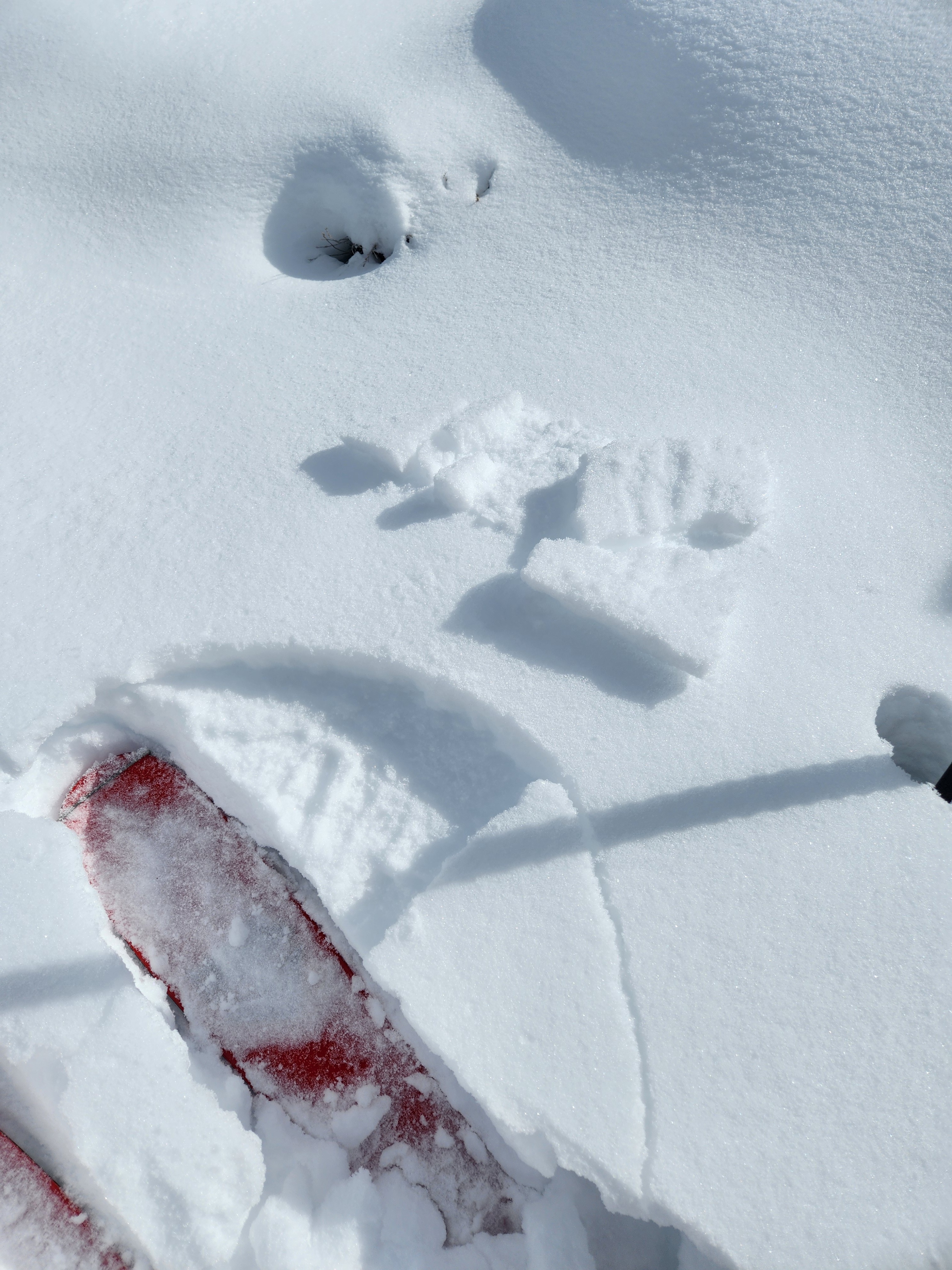
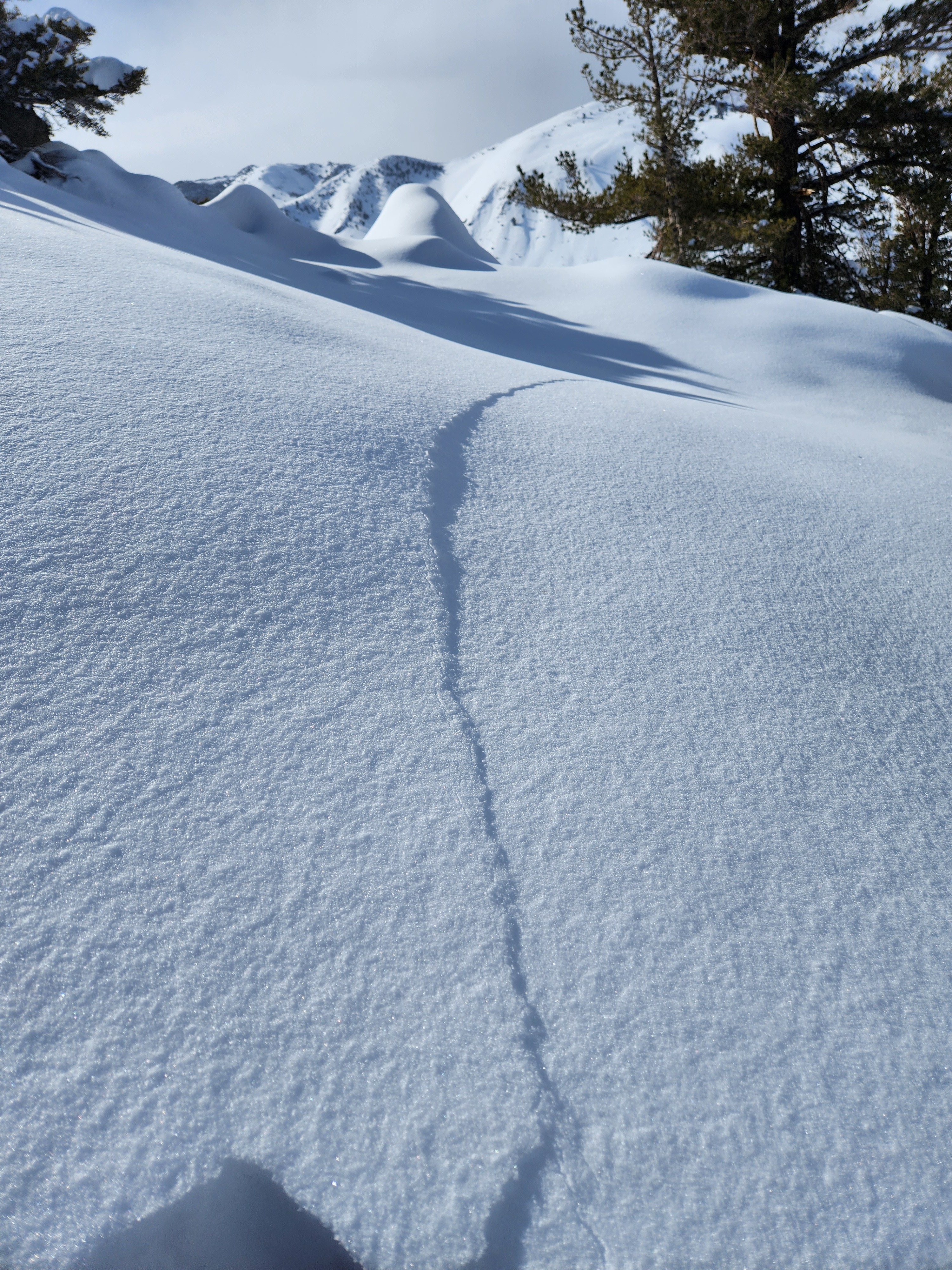
Slope scale collapses and spiderwebs of long shooting cracks breaking down to large facets and depth hoard near the ground. Cracks shot between buried rocks and brush in large circles around us. We dug and confirmed that it was the snowpack collapsing on the weak layer, NOT bush-collapses. We also skinned across several small, leeward test slopes where southwest winds were drifting snow. It was easy to get shooting cracks and small slabs to break out on these slopes.Weather
- Air Temp
- 28
- Cloud Cover
- broken
- Wind Loading
- moderate
- Recent Snowfall
- 1
- Snow Avail For Transport
- moderate amounts
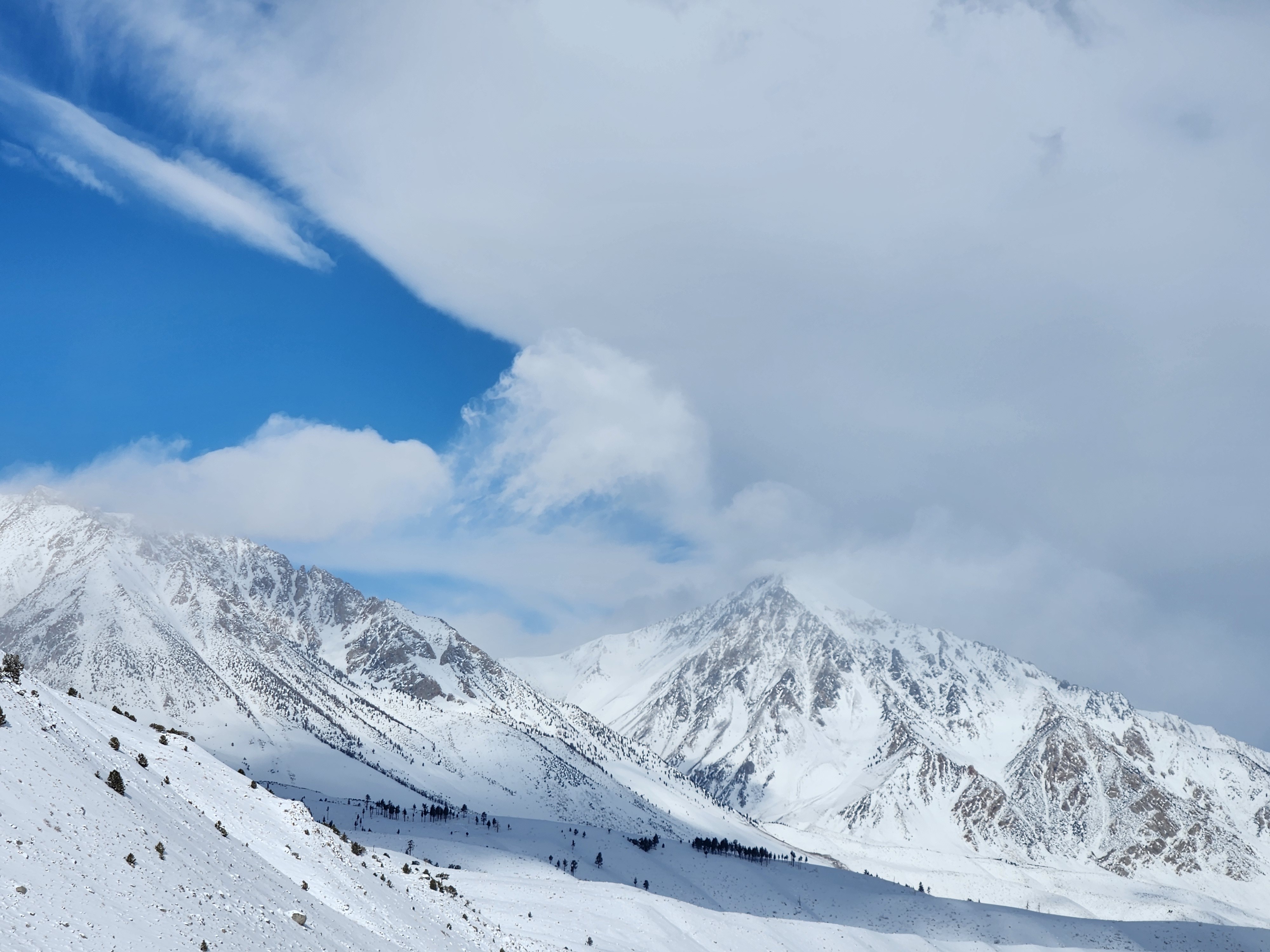
Strong southwest winds were blowing snow (intense) above treeline. Winds were light to moderate near treeline with moderate blowing snow. Short periods of light snowfall.
Snowpack
Below 9000' the snowpack is still anchored by sage and consists entirely of storm snow from 2/4; average snow depth was 50 cm. On westerly aspects at these elevations the surface was crusty (both melt-freeze and wind). There were near-surface facets above and below this crust. This could be a new weak layer below treeline if it doesn't improve before we get more snow down low.
We walked across several leeward test slopes near treeline and got easy failures in stiff (1F) wind slabs. These were thin (4") and fractured atop a thin layer of small near-surface facets and fragmented snowflakes (FCsf/DF).
Above 9500' there is a layered, continental snowpack with a soft slab over large facets and depth hoar that were the source of all our instability. No surface crusts here. Average snow depth was about 70 cm. No need to do snowpack tests: slope-wide collapses are enough feedback for me. We did dig to confirm the cause of our whumpfs and shooting cracks. See images below.