
Quick report
I went on a super quick tour up Virginia Lakes before driving the northern portion of the forecast zone in search of avalanche activity.
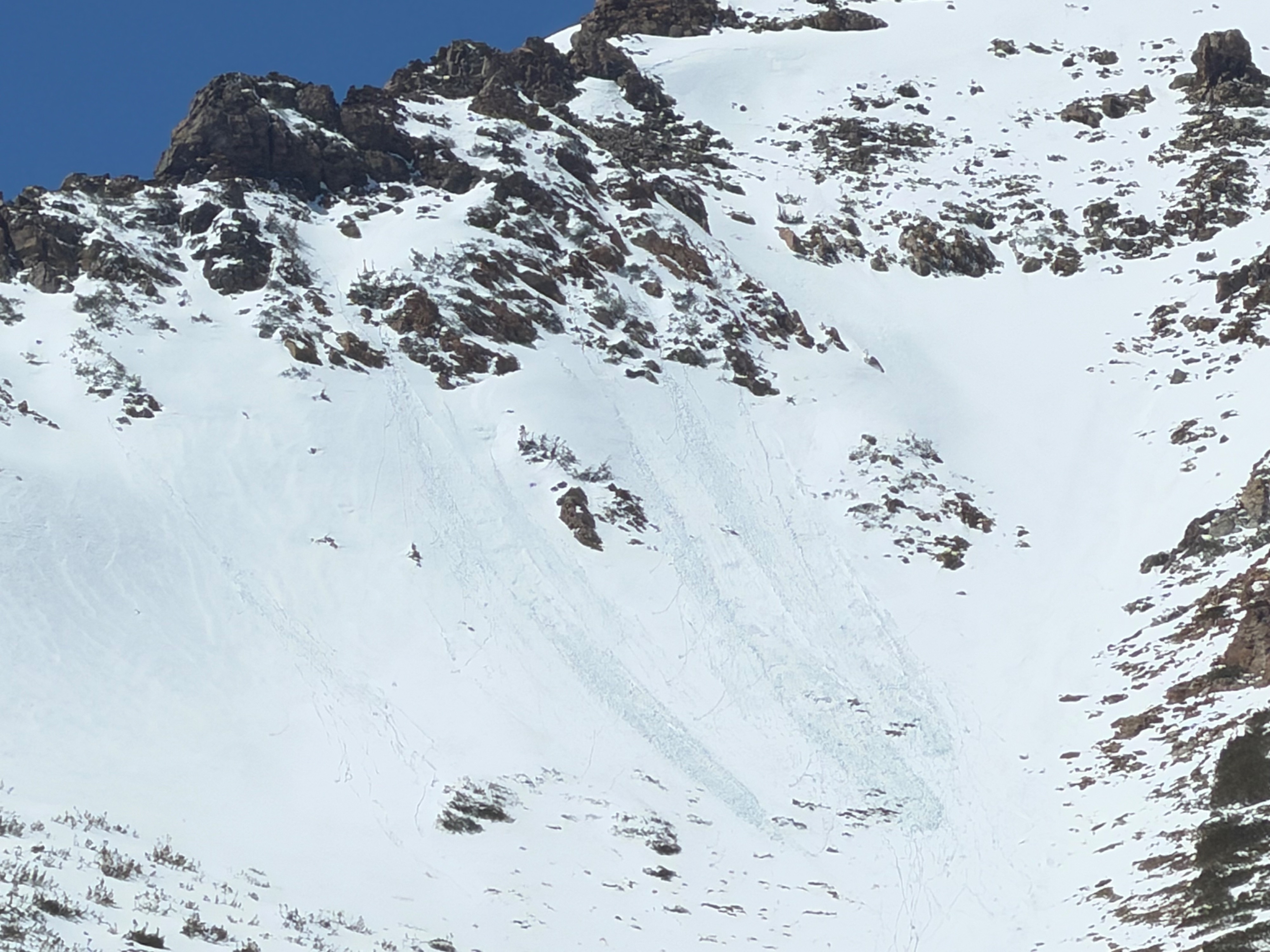
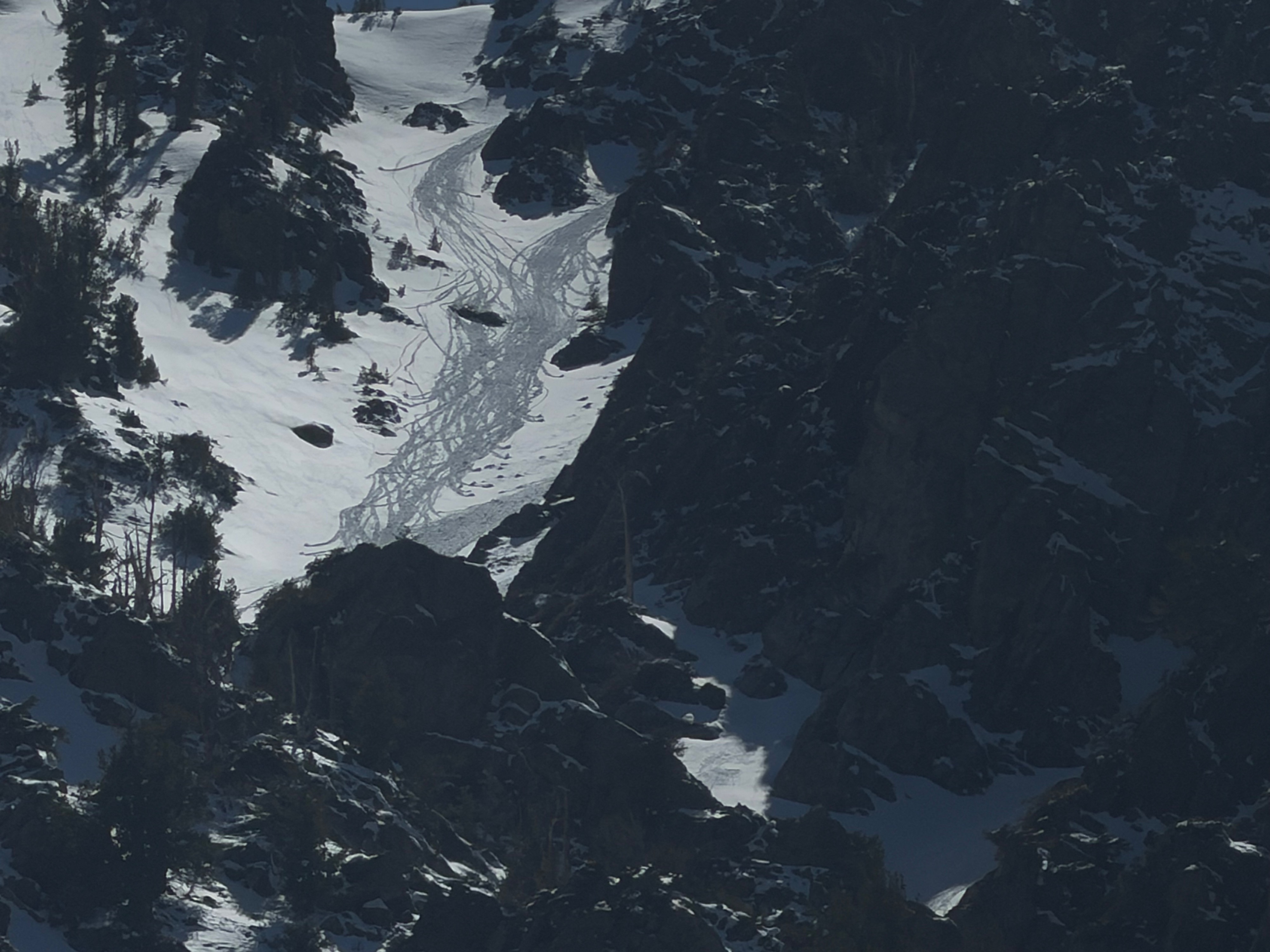
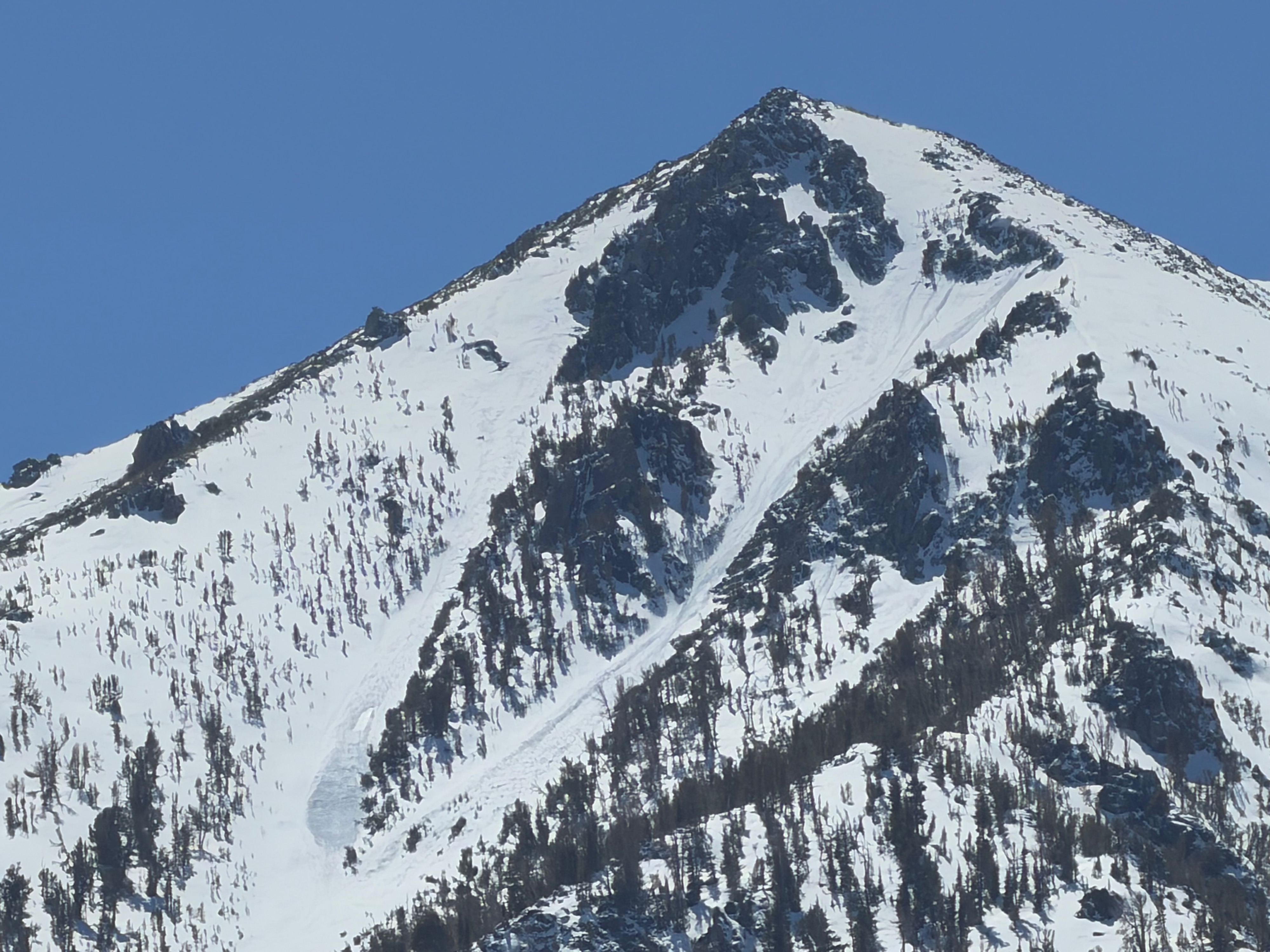
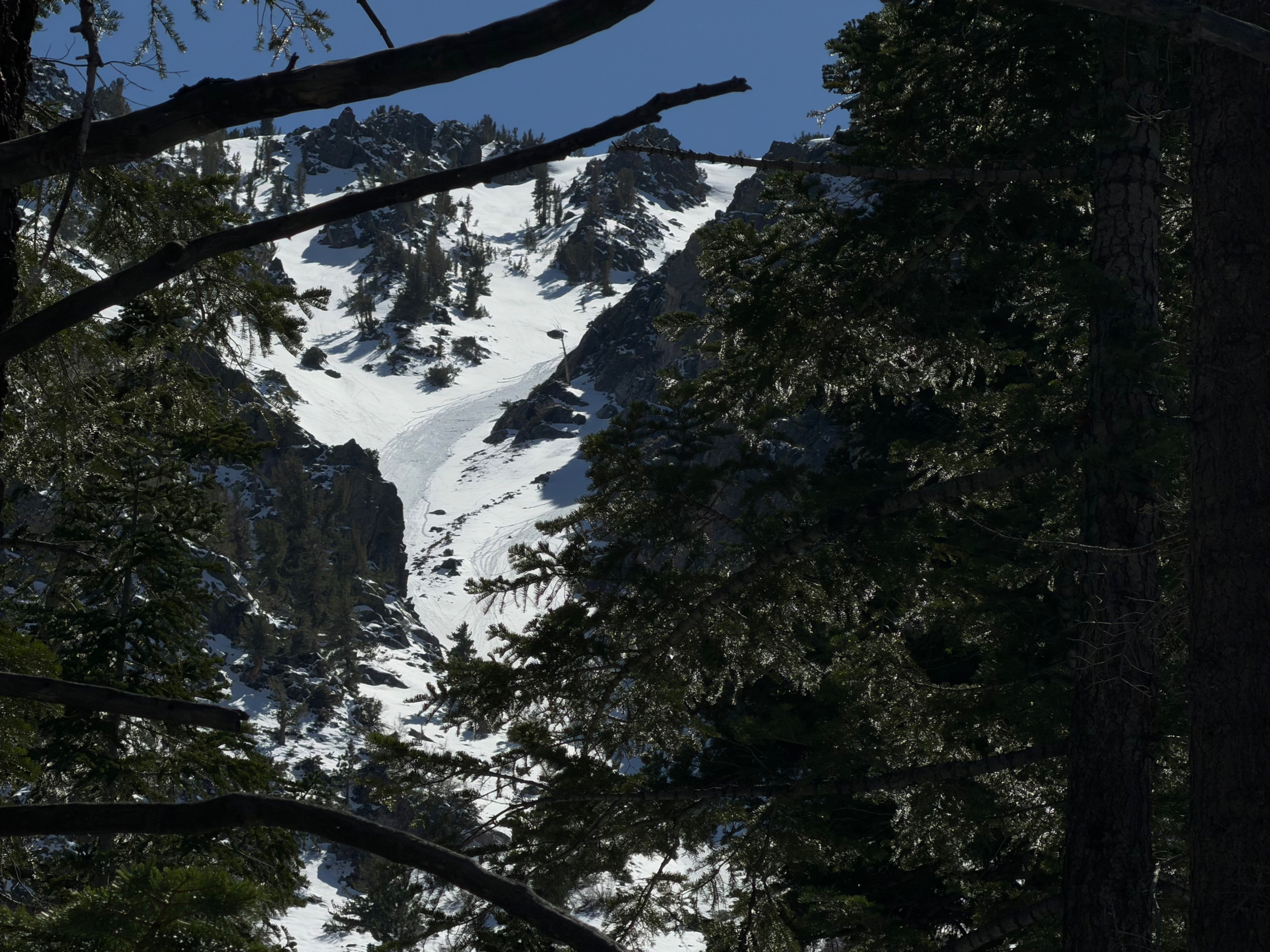
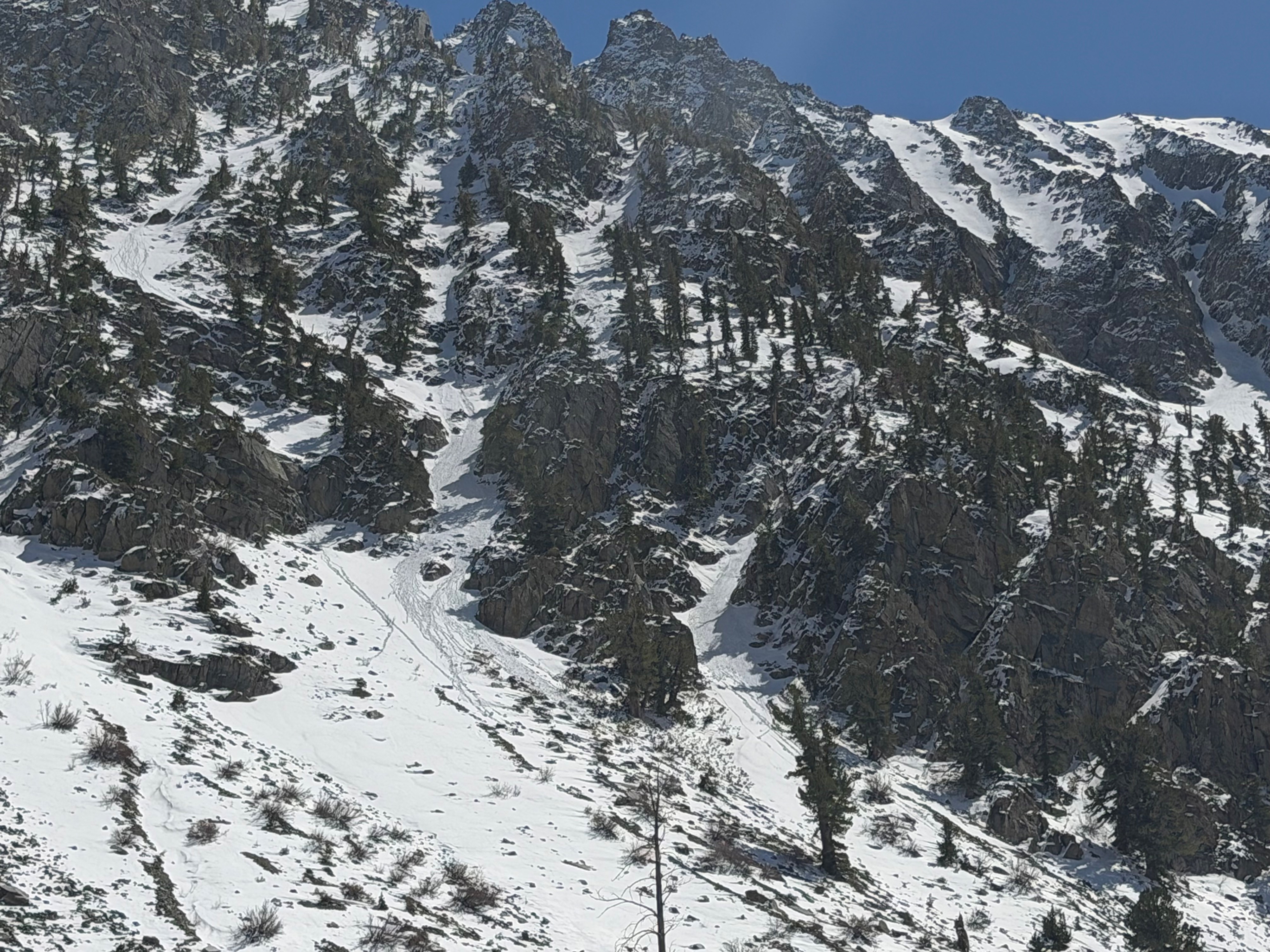
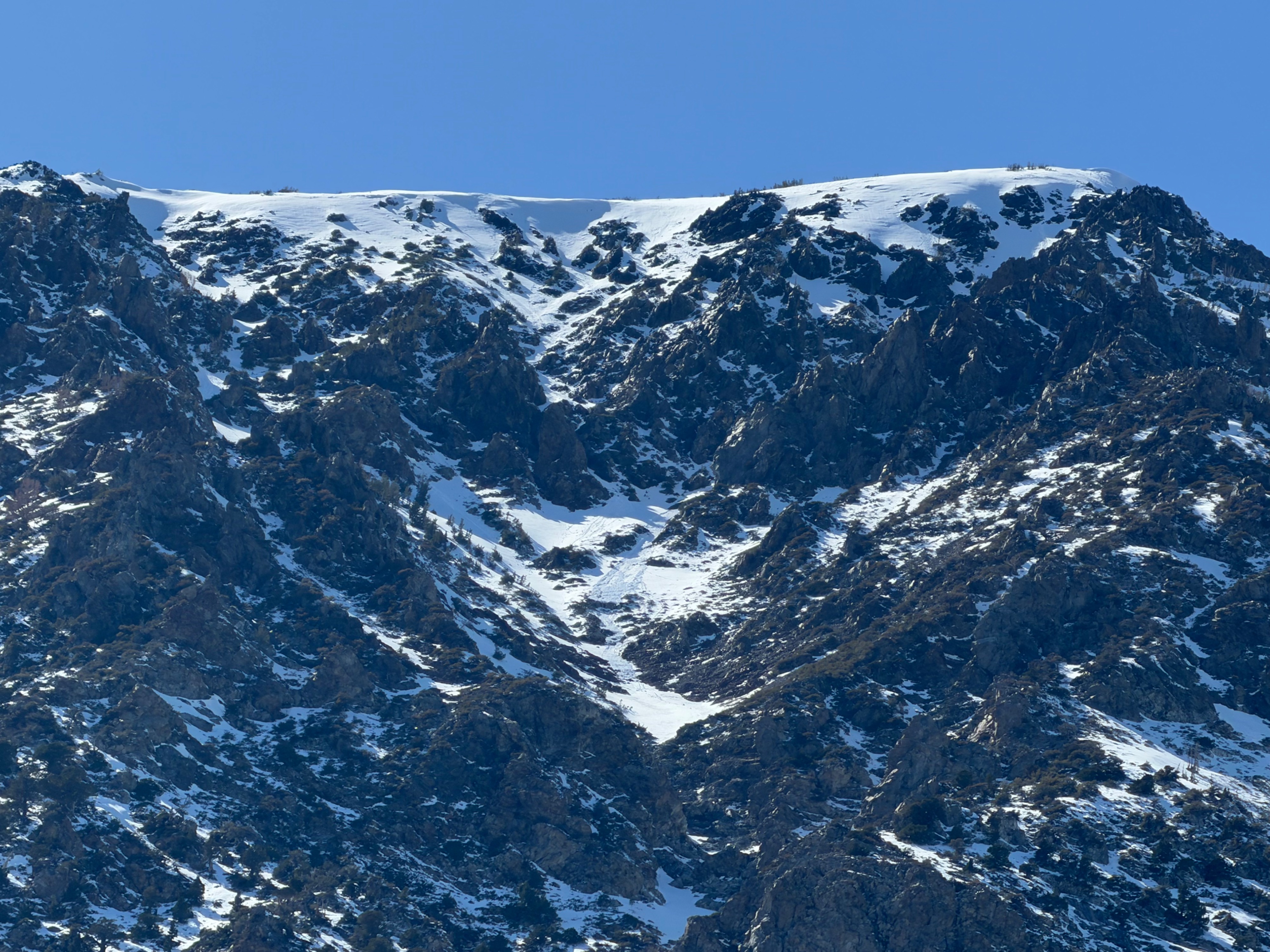
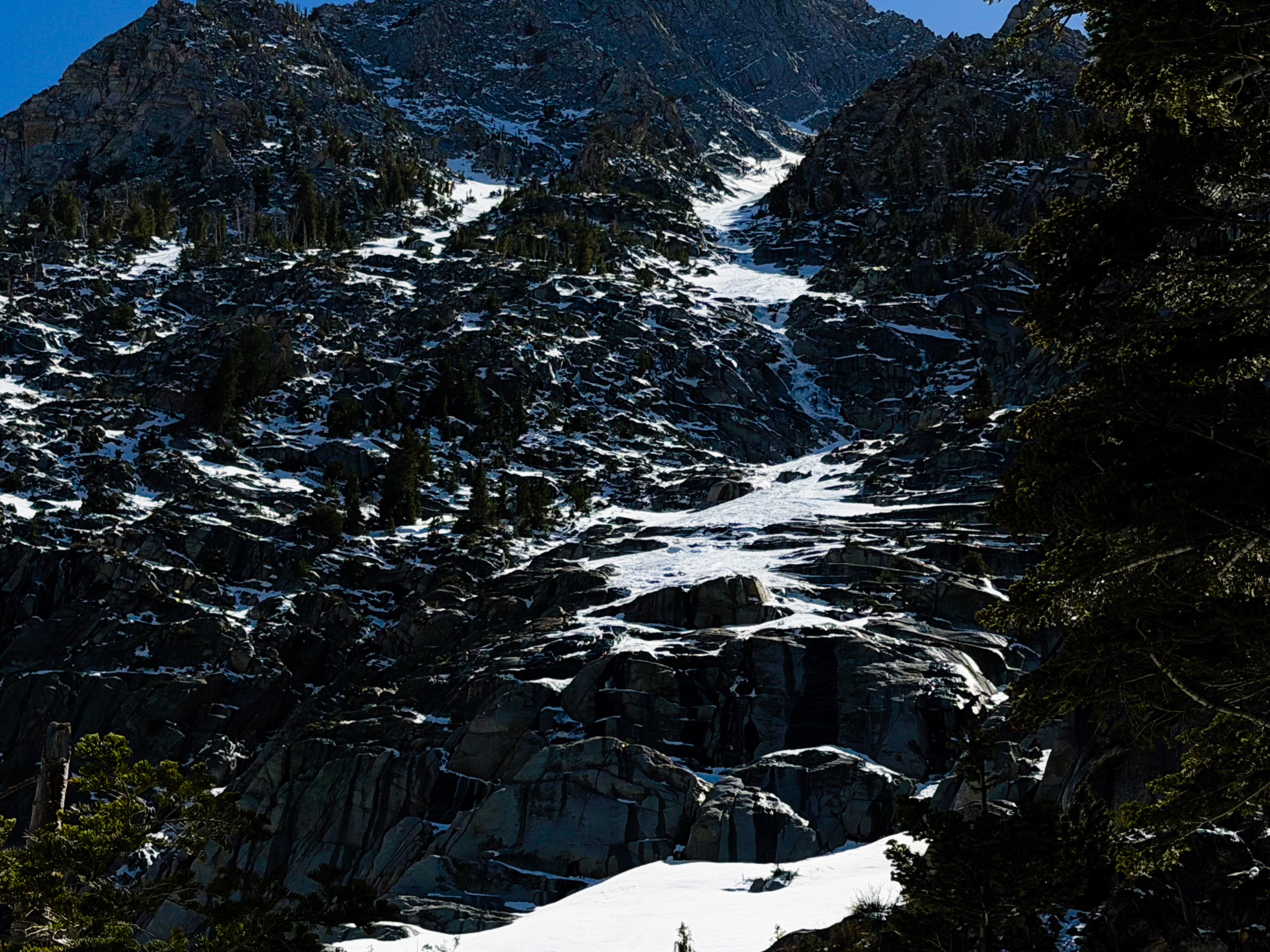
While skiing in VA, I found cold, dry snow on steep, north-facing alpine terrain. Anywhere that wasn't north-facing and steep had begun to transition to moist around 9:30 am. This transitional snow continued its transition to wet through the day, and I began to see natural rollerballs release from rocky areas beginning around 11 am. I took this as a sign that things were starting to get wet and wild and headed off for a drive around 1 pm. I drove until 4 pm and found numerous small wet loose avalanches that presumably released this afternoon.
Most slopes in the northern half of the zone have widespread rollerballs, but only specific areas hold wet loose avalanches. All of the avalanches I cataloged today emanated from steep, rocky areas. Most of them were on terrain that either had significant solar input on the slope itself or on the rocks from which the wet loose avalanches released.
Natural avalanche activity became increasingly likely after 11:00 am.Weather
- Air Temp
- 42
- Cloud Cover
- few
- Wind Loading
- none
- Recent Snowfall
- 0
- Snow Avail For Transport
- small smounts
Beautiful day! Westerly winds blew light at ridgetop, and filtered variable at lower elevations. Cloud cover remained mostly sunny through the day. Temperatures were near or above freezing at all elevations, but light winds made travel comfortable as I gained elevation.
Snowpack
20-50cm of dry snow exists above our old melt-freeze crust on northerly aspects at upper elevations. I found no signs of instability in the dry snow, and any (now old) wind-drifted slab has generally stabilized across the majority of the Virginia Lakes terrain. This 20-50cm of drifted snow shows signs of settlement in the last 24 hours, and in lower-angle north-facing areas, a 2-5cm melt-freeze crust capped the surface. On steep alpine northerlies, no warming had occurred by 11:30 am, and dry loose instabilities reigned supreme.
Solar terrain has much less ammunition in the clip. Generally, only favored catchment areas held loads of recently drifted snow, and most areas had 10-20cm of recent snow capping either bare ground or old melt freeze surfaces. Sunny slopes transitioned rapidly today, and I found solar aspects and low-angle terrain to be beginning the phase change (solid to liquid) by 9:30 am.
Natural roller balls began to occur around 11 am on sunny slopes.
Avalanche
- Size
- D1
- Count
- 5
- Aspect
- N
- Elevation
- 9500 ft
All avalanche observations are from my drive.