
Quick report
Yesterday's wind built some new slabs that were by and large unreactive, at least where we toured today. While our midpack has built strength since previous loading events, today was a good reminder that we still have poor structure at upper elevations. Despite not having recent human-triggered avalanches (since Microdot over the weekend), we are still able to find propagation in areas where strong over weak snowpack structure is shallower. In these areas, you could still trigger an avalanche. It might not be big enough to fully bury you, but it could drag you into an area you do not want to go.
We did not encounter any signs of instability on our travel. We did have propagation in extended column tests from the shoulder in crossloaded terrain with a height of snow around 100cm. See below under "Snowpack" for snowpit information and test results.Weather
- Air Temp
- 31
- Cloud Cover
- few
- Wind Loading
- previous
- Rain Elevation
- N/O
- Recent Snowfall
- NO
- Snow Avail For Transport
- small smounts
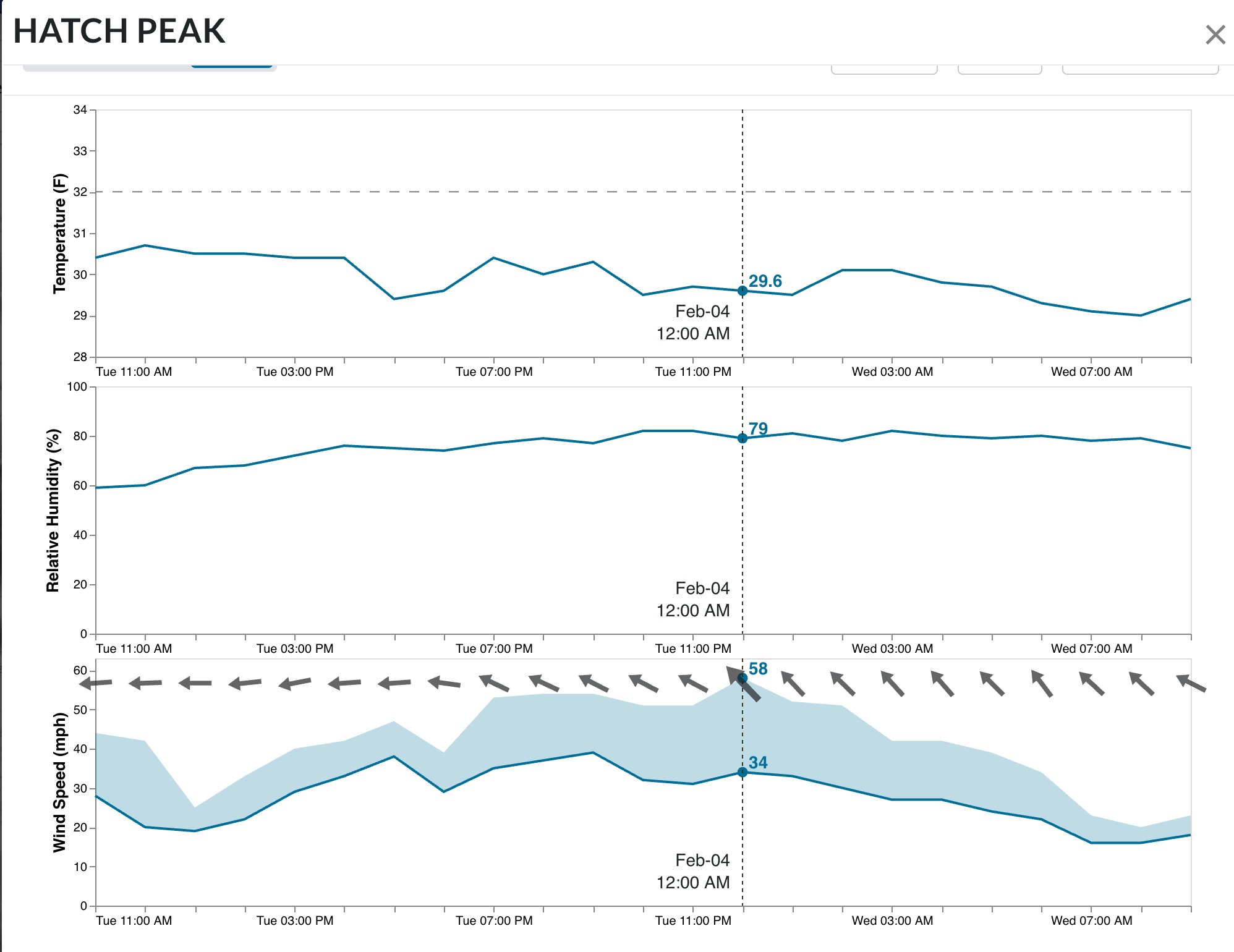
Yesterday, East/Southeasterly winds blew above 25 miles per hour for 15 hours with gusts in the 50s. Today, we experienced few clouds to broken skies by the later afternoon, light ESE winds and no precip. Light was excellent until about 1400 when it went flat as clouds came in.
Snowpack
General Snowpack:
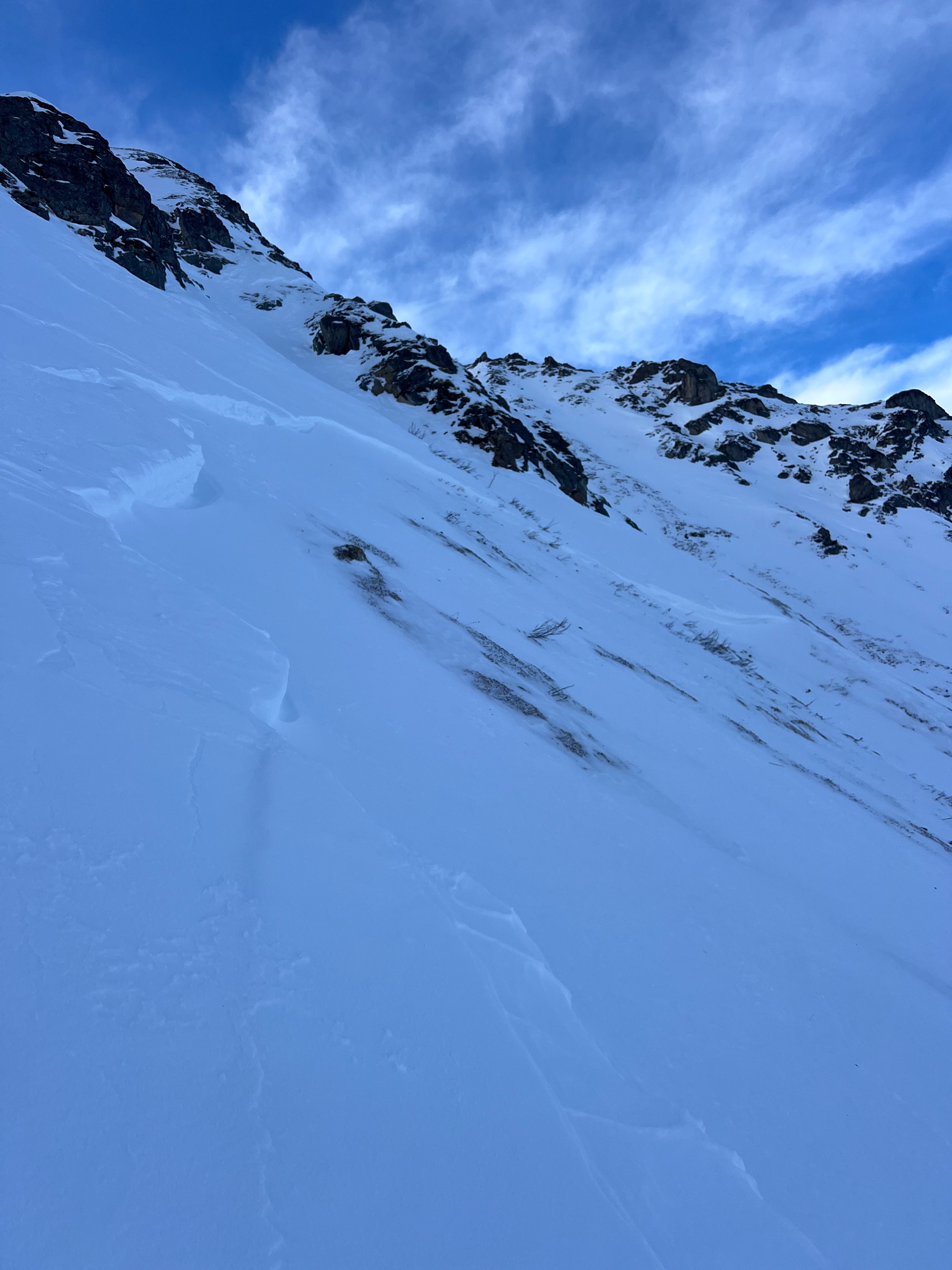
Snow surfaces showed some resiliency to wind transport today--windward (E and SE) aspects did not appear completely scoured to vegetation. Travel on the approach at mid elevations above 3,000' was surprisingly soft, even where wind clearly moved snow. As we got out of the meadows beyond the Eldorado test slope and towards the ramp, the impact of yesterday's wind was more pronounced with more sastrugi, crusts, and firm, supportive wind slabs.
Windward ridges were scoured to vegetation but only on truly easterly terrain. Gullies were filled with snow and were unreactive. Hand pit tests revealed a few interfaces: old buried wind slabs with small .5mm facets and stout, pencil-hard slabs over our weak, sugary basal snowpack. None of these hand pits had easy results, and they were all hard+, requiring torque to pop slabs. Pole tests indicated a mostly right-side-up upper snowpack in leeward areas, minus a 10-20cm layer of weak snow at the base. Buried crusts from the 1/25 warmup>freeze were intermittent at best and challenging to feel consistently in this area. We did not experience any collapsing, cracking or whumphing and new slabs did not react when jumping on test slopes, even on cross-loaded ones where they were softer.
Snowpit Tests and Crown Profile:
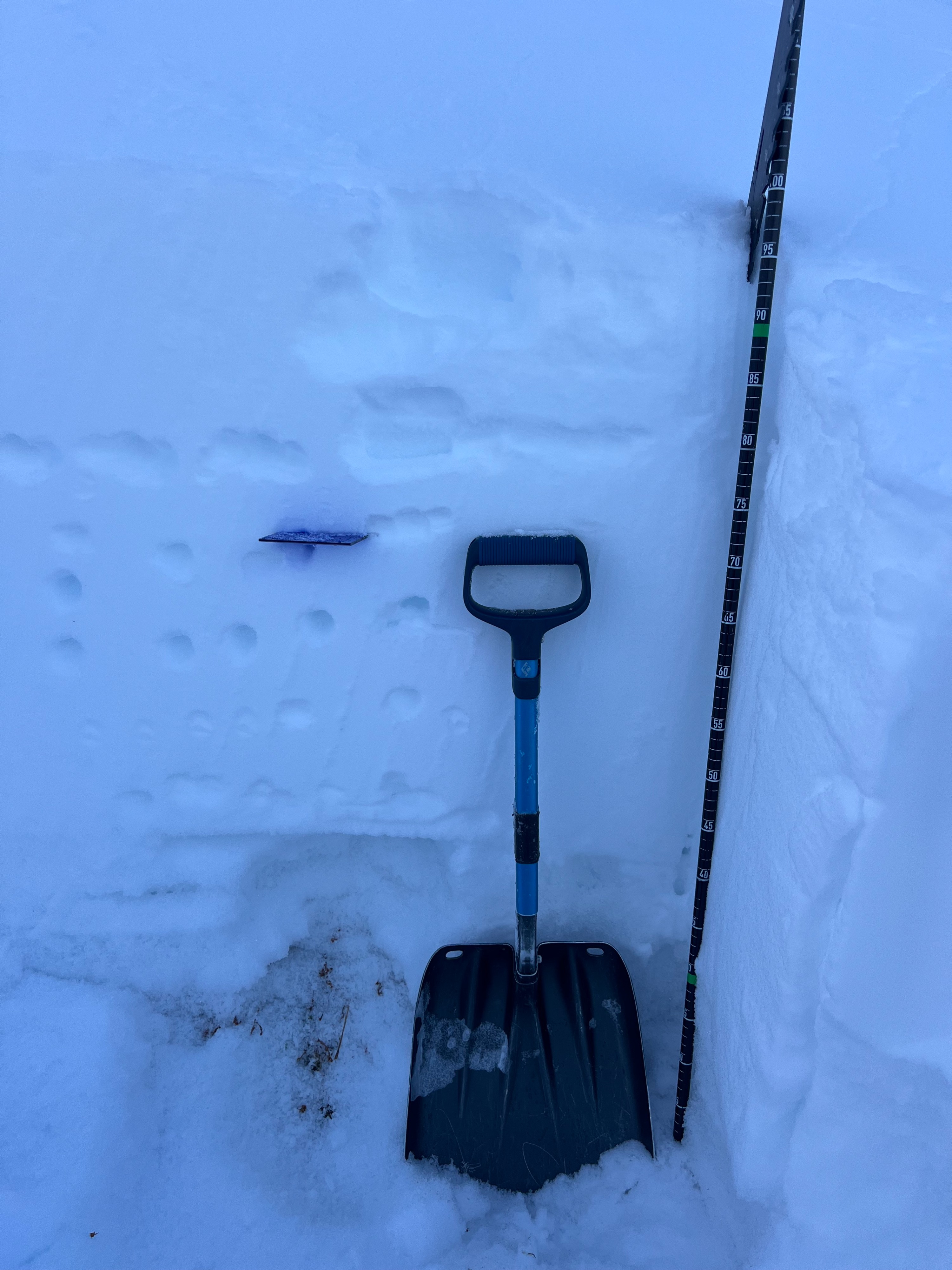
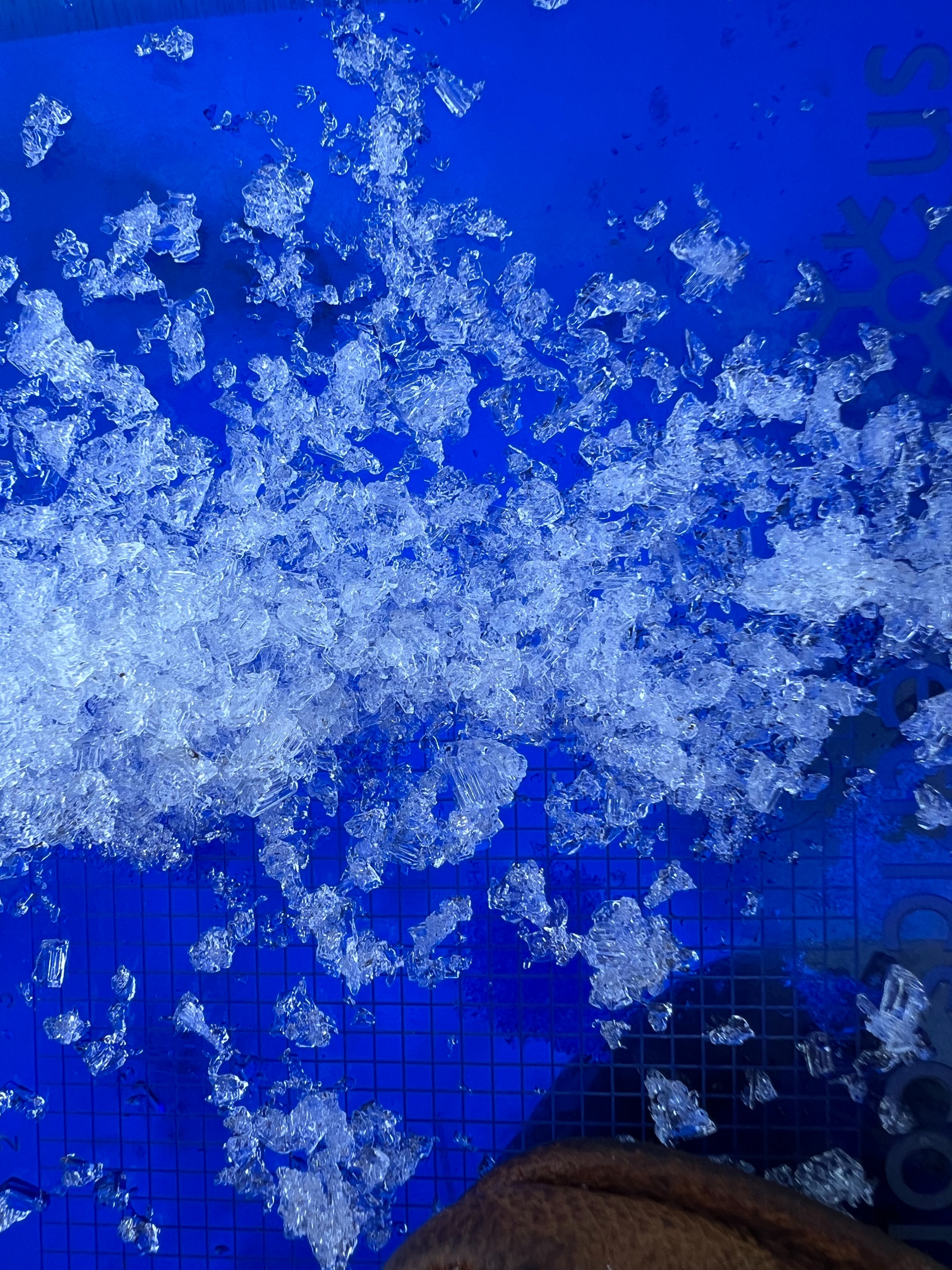
In mid-slope, cross-loaded terrain at 4,000' on a NNW aspect, we found some thin wind crusts over decomposing, faceted snow.
Basal facets and depth hoar here were inconsistent. Our propagating results failed over a more cohesive, knife-hard but clumpy and crumbly 20cm of depth hoar, which "stepped down" to adjacent, weaker F- snow. See video and snowpit markup.
The crown profile on the 1/27-1/28 persistent slab avalanche (4,300' ENE) showed poor structure with a stout wind slab over large, chained depth hoar. This setup showed signs of strengthening since the last loading event--in ~95cm of snow, we got ECTP27 and ECTP29 on the depth hoar/midpack interface, ~30cm from the ground.
Avalanche
- Size
- D1.5 R2
- Type
- HS
- Aspect
- E
- Trigger
- N
- Elevation
- 4400 ft
We spent some time observing the old, natural, persistent slab avalanche from 1/27 or 1/28 (over a week ago). While we have not had any natural persistent slab avalanches recently, this structure is in play.