
Quick report
A previously blower upper snowpack is beginning to settle and succumb to winds. The general structure remains simple and stable, but transport and warming may change the game in coming days.
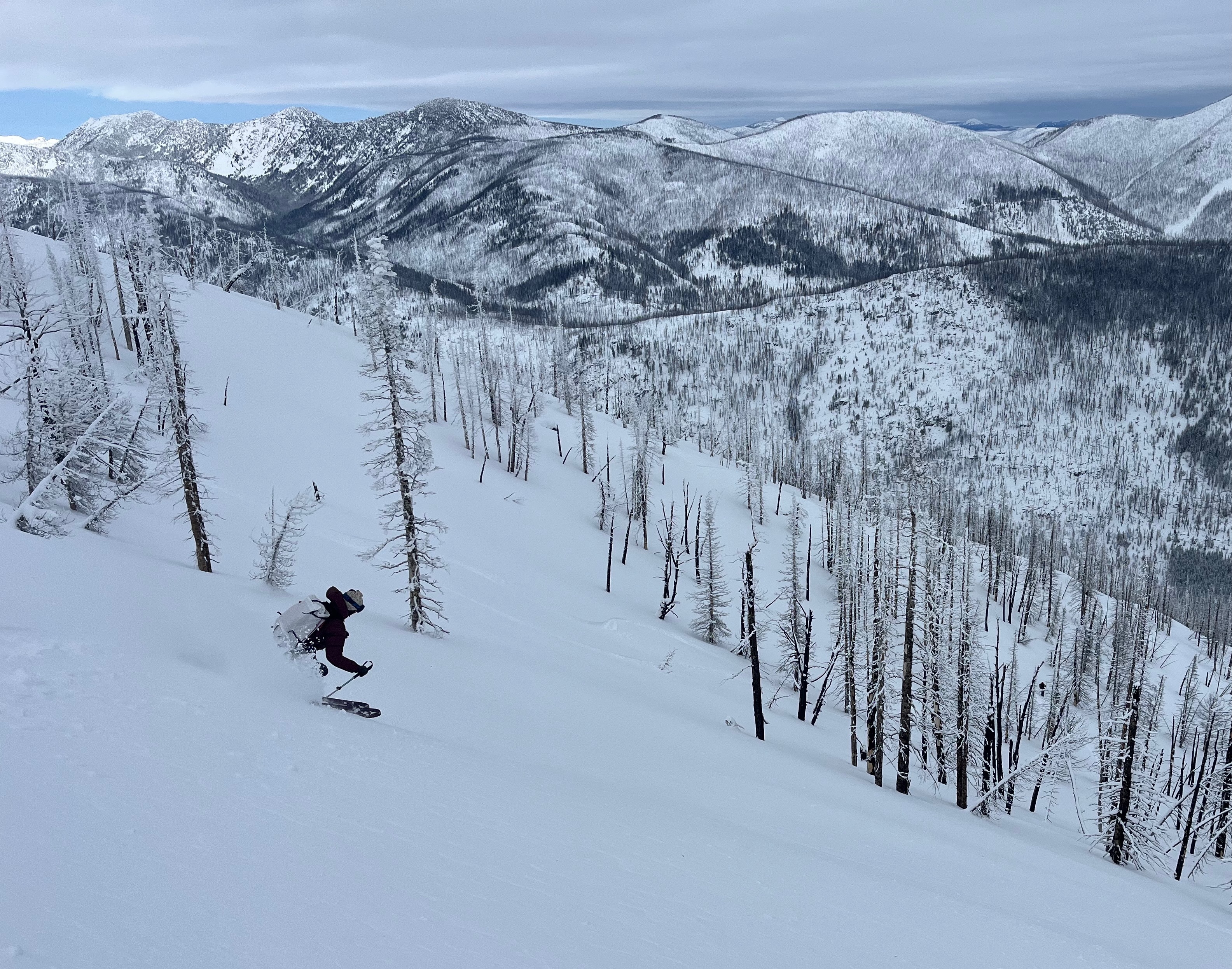
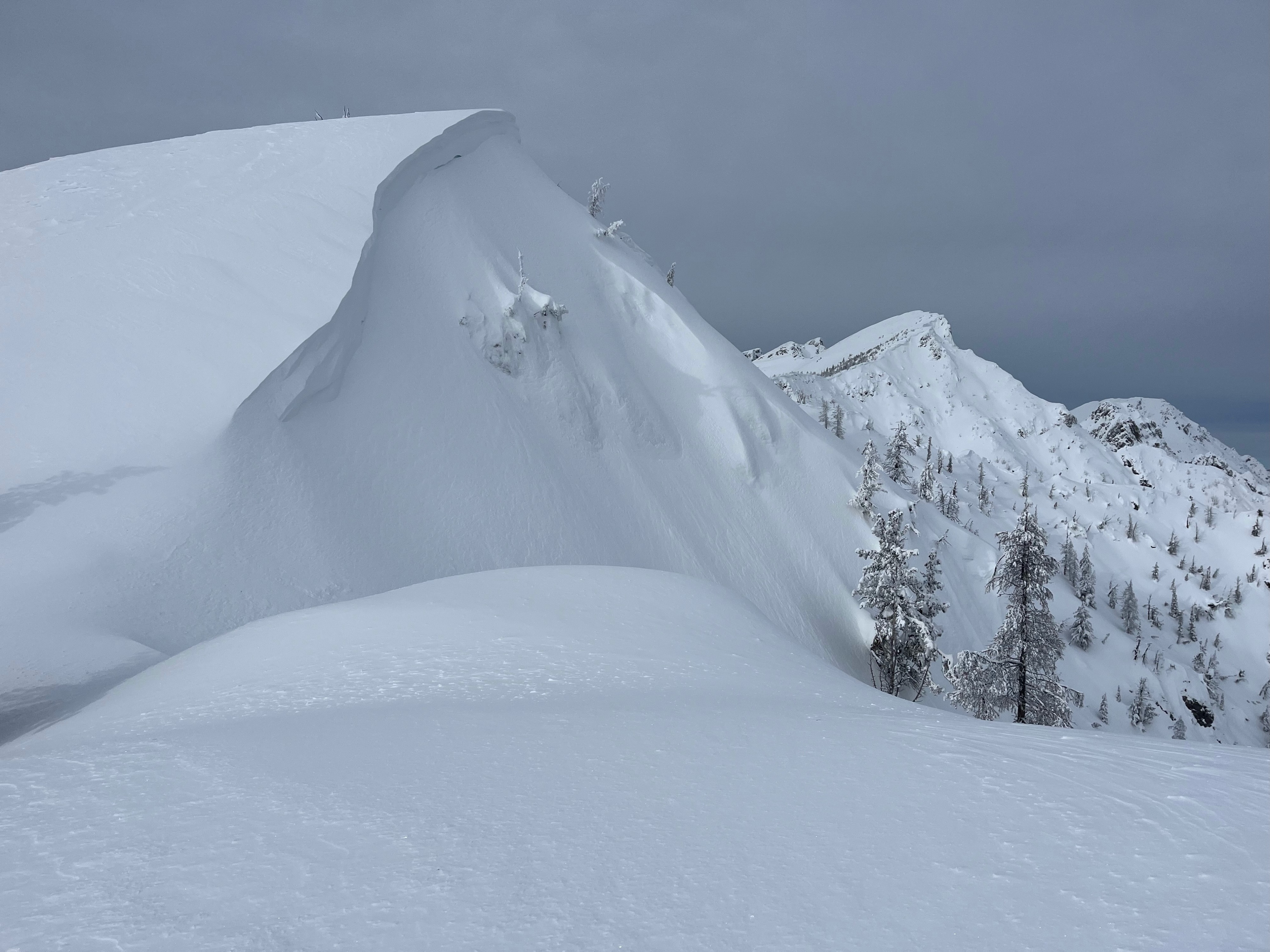
We experienced no signs of instability, but observed some wind-effects on snow surfaces, mainly above treeline. A conservative approach to steeper alpine starting zones seemed prudent. Though not particularly large, we gave cornices above steep exposure a wide berth. Of note is that snow surfaces in wind-sheltered areas near treeline are starting to exhibit "facety" behavior. I did not pull out the lens, but sluffs are moving in a cohesionless way through steep terrain. Something to keep in mind, especially where the snowpack remains shallow amidst rocky features.Weather
- Air Temp
- 15
- Cloud Cover
- overcast
- Wind Loading
- light
- Rain Elevation
- NA
- Recent Snowfall
- 0
- Snow Avail For Transport
- large amounts
Weak, filtered December sun, with overcast skies. Light SW winds were most noticeable at ridgecrest. Today felt like one of the colder days of the season.
Snowpack
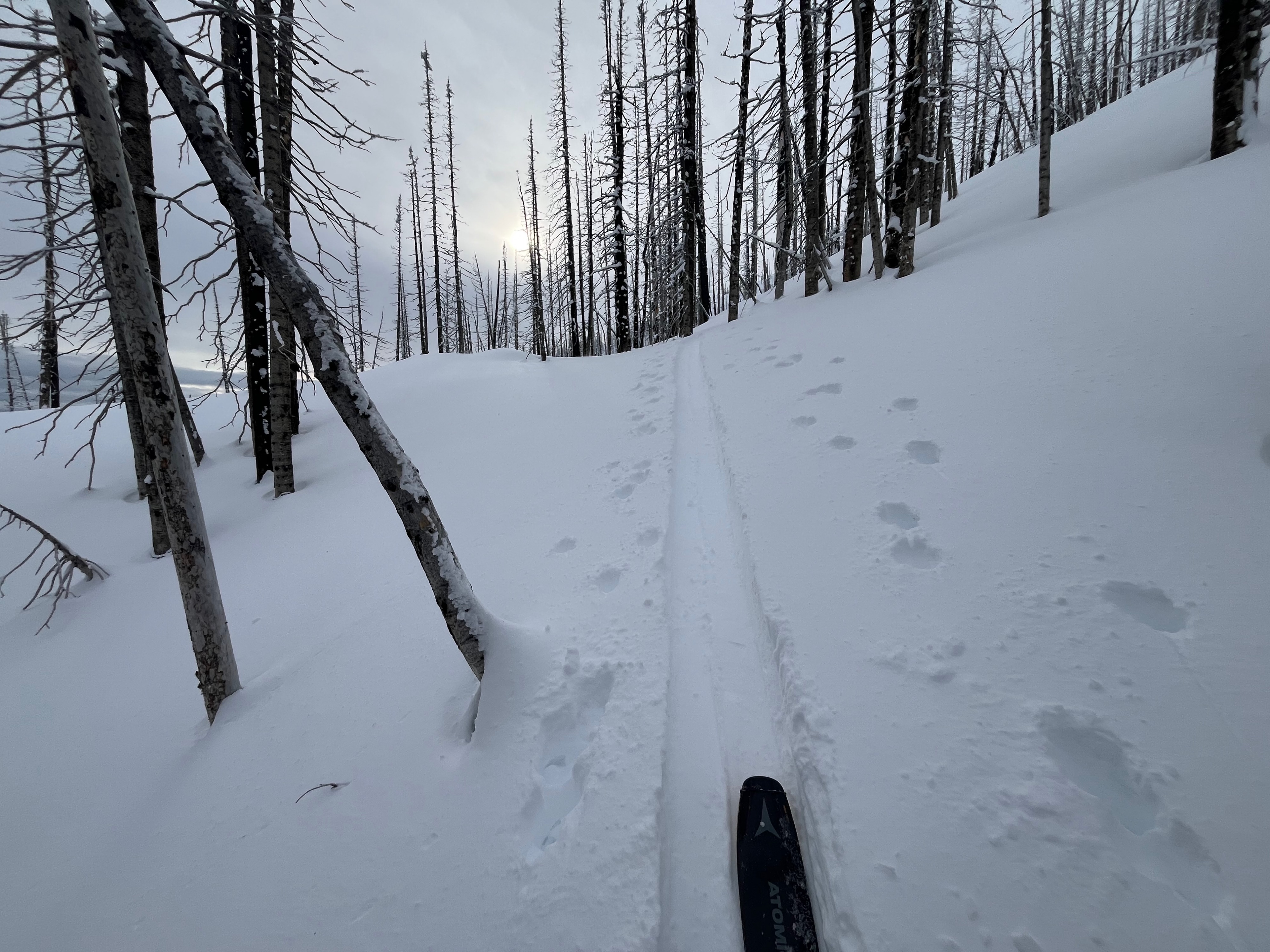
The main changes over the course of the past days have consisted of a general settling of the upper snowpack. The mid-pack and below has already undergone more settlement than one would care to remember! Boot penetration has decreased from hip-deep to boot-top. Ski penetration is now generally less than 20cm and trail-breaking is becoming less "spongy". Alpine ridgecrests are exhibiting signs of wind-effect, though mainly in the form of some surface stiffening, rather than significant loading (yet).
At our location today, we found a snow depth of 60cm at 3600', which consisted of 35cm storm snow since mid-December. Approaching 5000', the total snowdepth ranged from 80-100cm, with 50-60cm December storm snow.
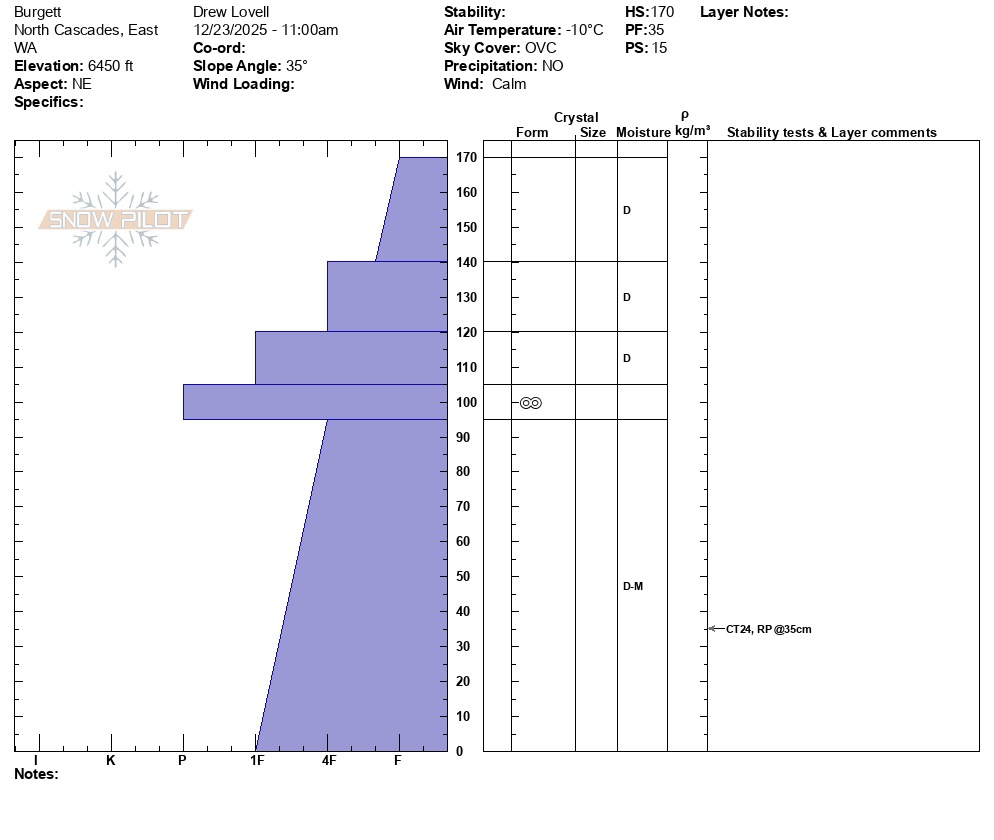
In a profile at 6450' on a NE aspect, we found a total snow depth of 170cm. The upper snowpack was composed of 65cm right-side-up but settling December storm snow, with a strong bond at the mid-December crust interface. The crust itself was >10cm thick and P hard, with some K hard ice laminations. Below, the lower snowpack has dried out considerably, with perhaps a 20cm moist layer confined near the ground. We found no evidence of faceting, above or below the crust. Stability tests were unremarkable.