
Quick report
- Cracking
- isolated
A little bit of fresh snow and some sunshine really made for a wonderful day and great travel conditions. The snowpack is becoming very aspect dependent this time of year. We found it looked and behaved differently as we moved onto different slopes. Most of the hazard to day was with warming from sunshine and mild temperatures. However, we didn't see any avalanches during our travels.
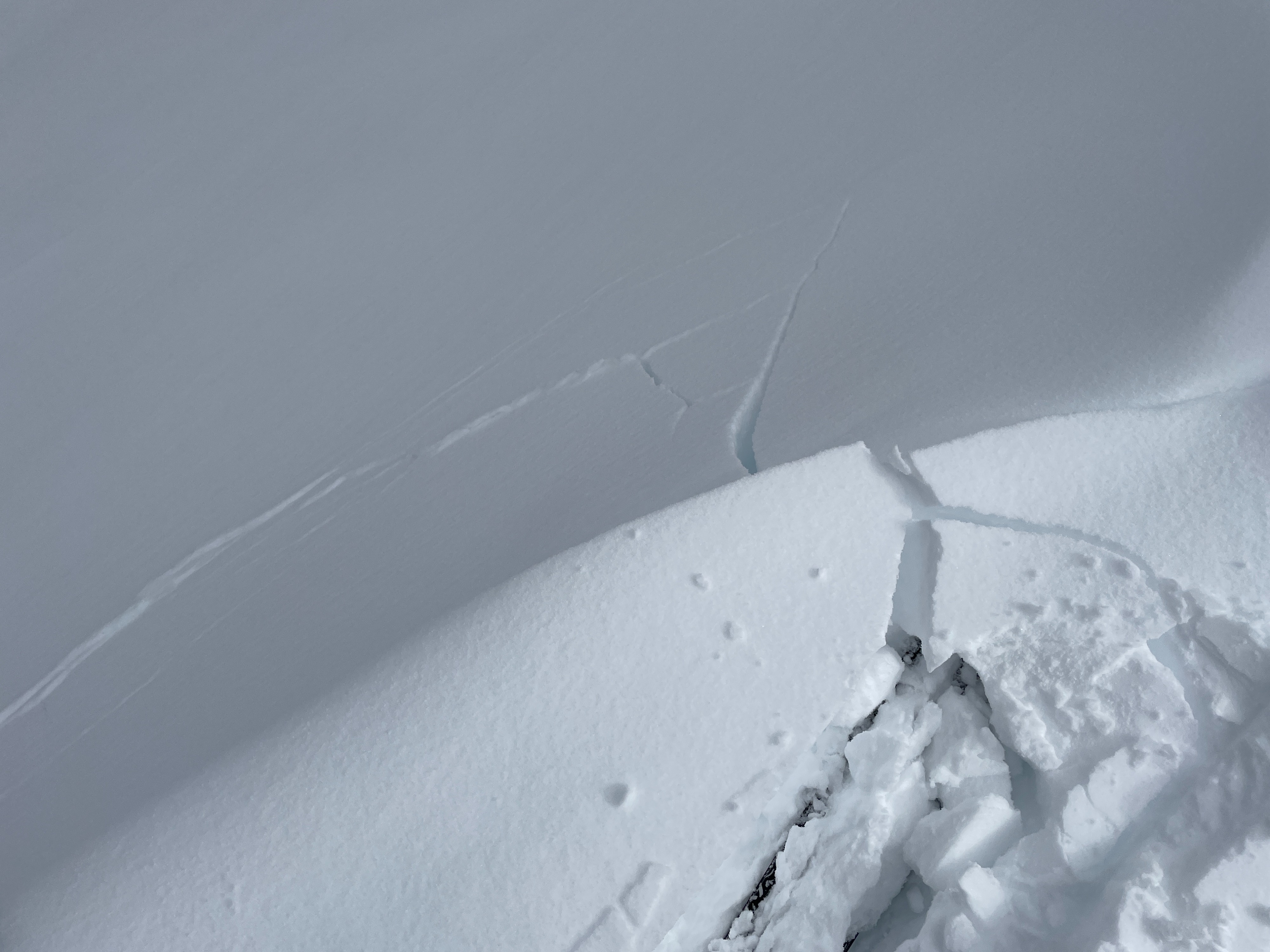
Cracking was isolated to small wind-loaded pockets immediately at ridgelines. None of these small slabs produced an avalanche.Weather
- Cloud Cover
- scattered
- Wind Loading
- previous
- Rain Elevation
- 4000
- Recent Snowfall
- 5
- Snow Avail For Transport
- small smounts
Beautiful day! Periods of sunshine and some mostly cloudy skies. Winds were near calm with only the faintest breeze along the ridgelines.
Snowpack
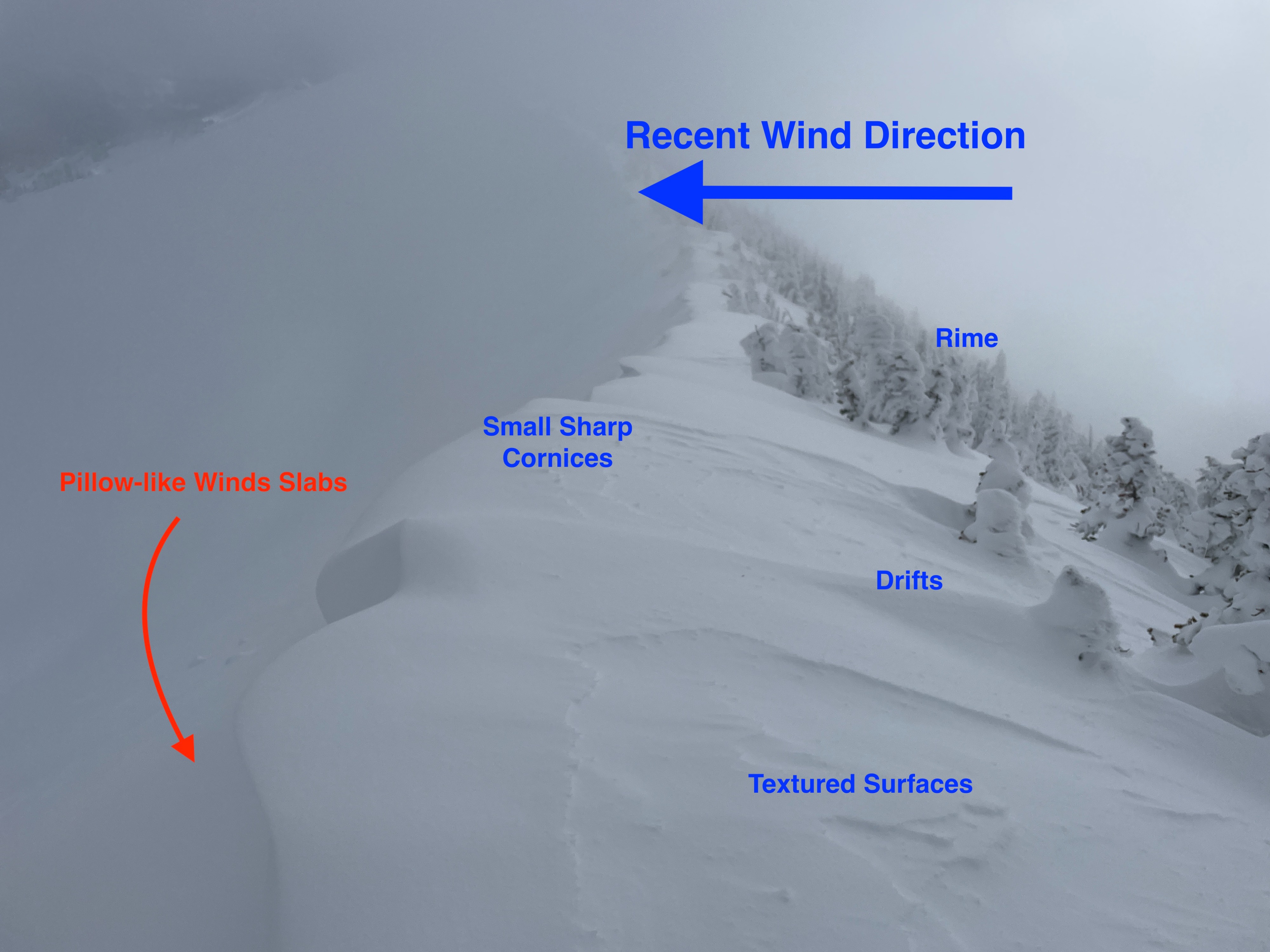
Wind: Signs of recent blowing snow were obvious near the tops of the peaks and along ridgelines. Rime, drifts, textured snow surfaces, and small sharp cornices showed the W-SW wind direction. Small firm slabs were found on E-NE aspects, but were localized right to the ridgelines. Larger older wind features from last weekend's east wind events were seen well below ridgeline throughout the terrain.
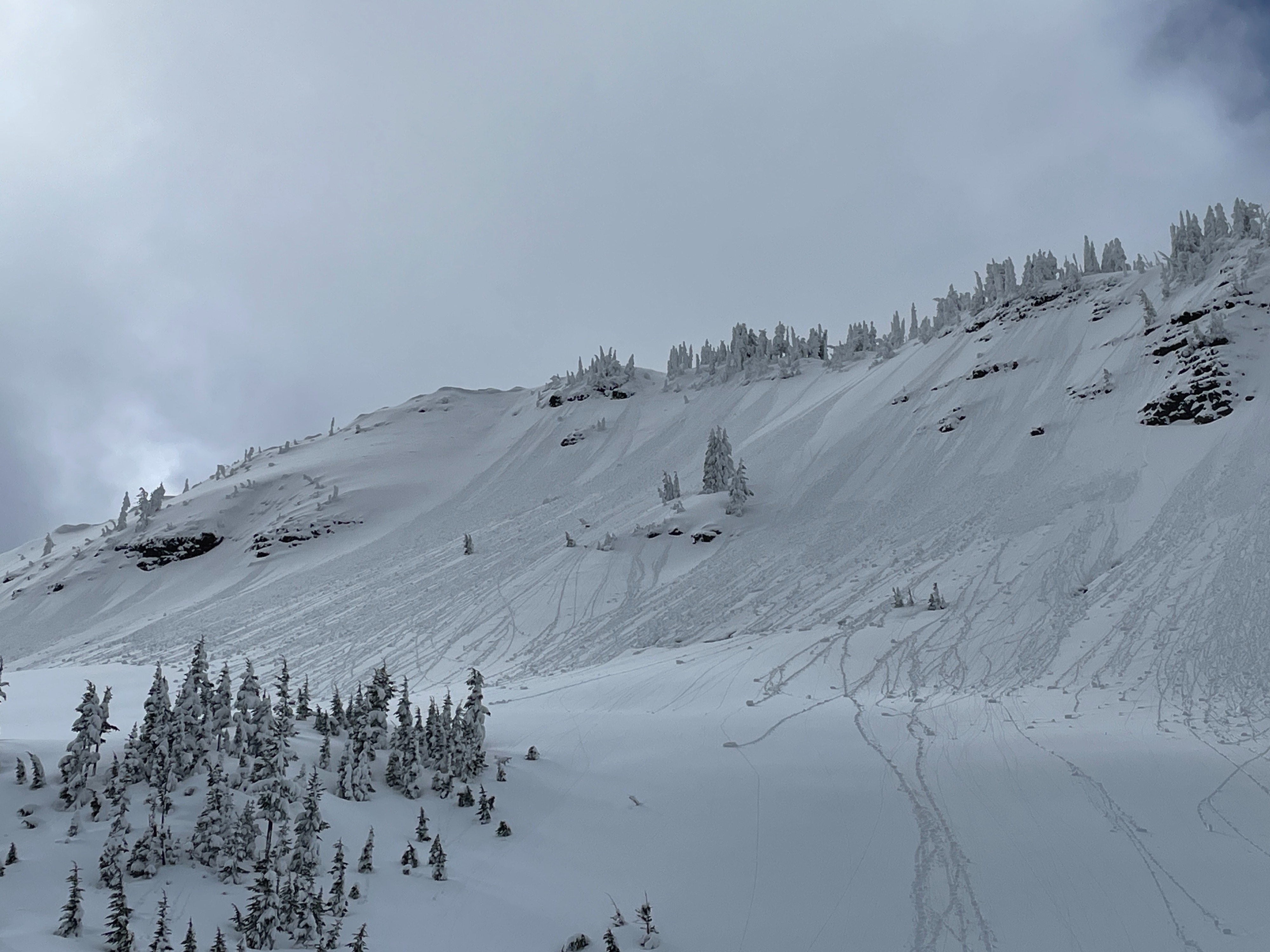
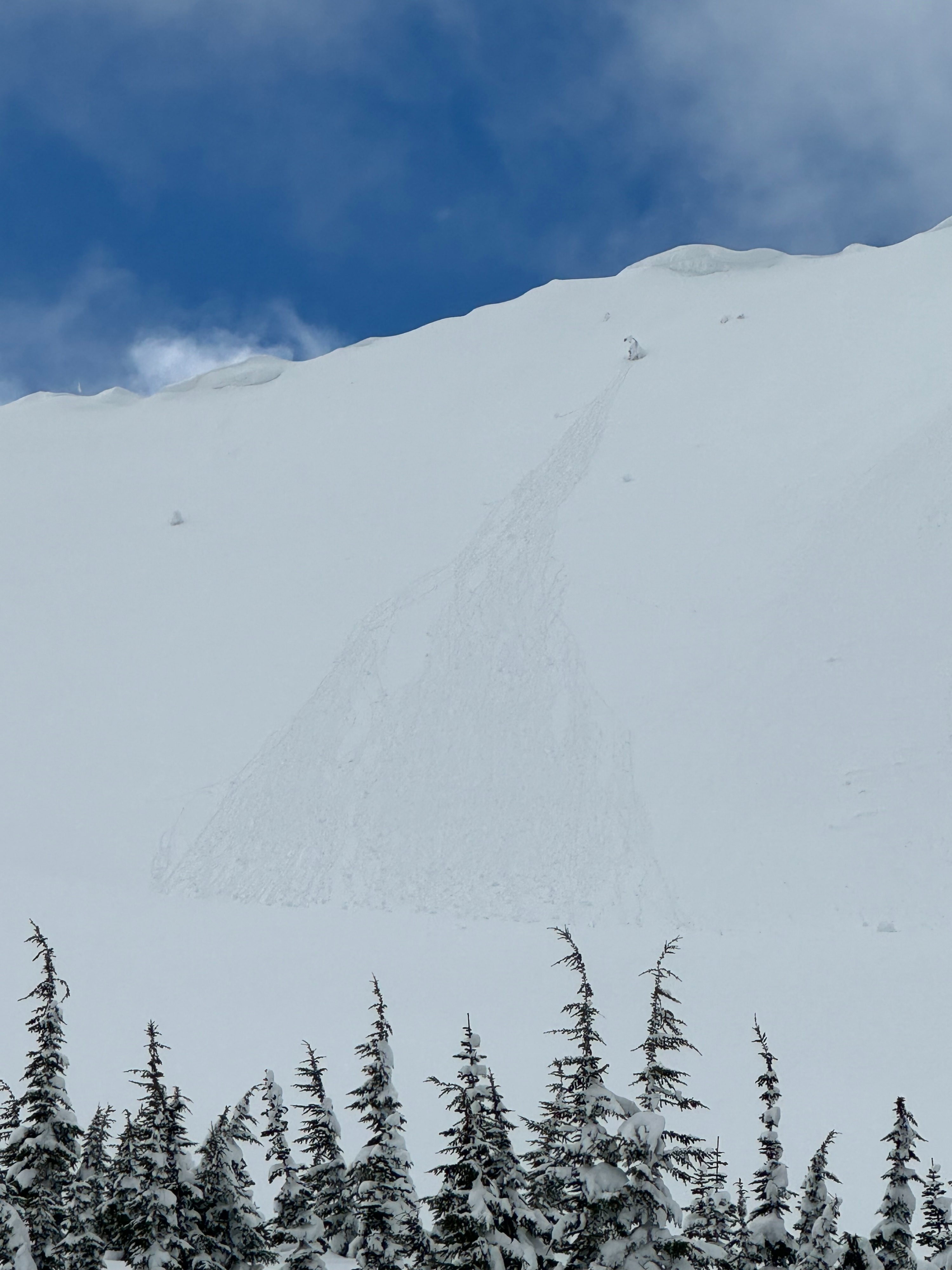
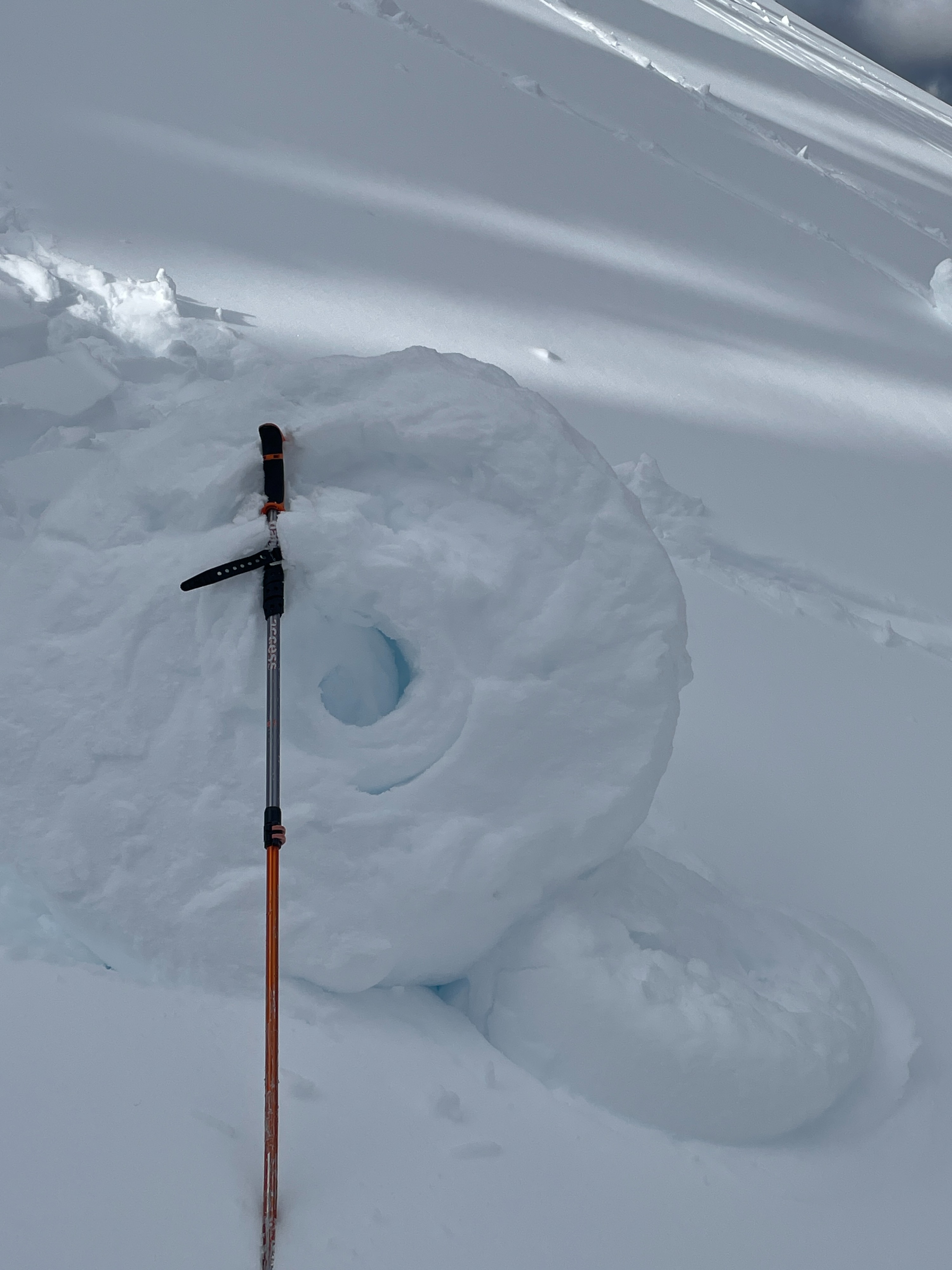
Wet Loose: Sunshine and mild temperatures in the morning allowed the snow surface to warm and become sticky, however, it never became wet. Piles of rollerballs were seen on E-SE-S-SW slopes. Most were very small and only involved the recent 2-3inches of new snow. A few much larger rollerballs were near a small rock outcrop. No wet loose slides were observed.
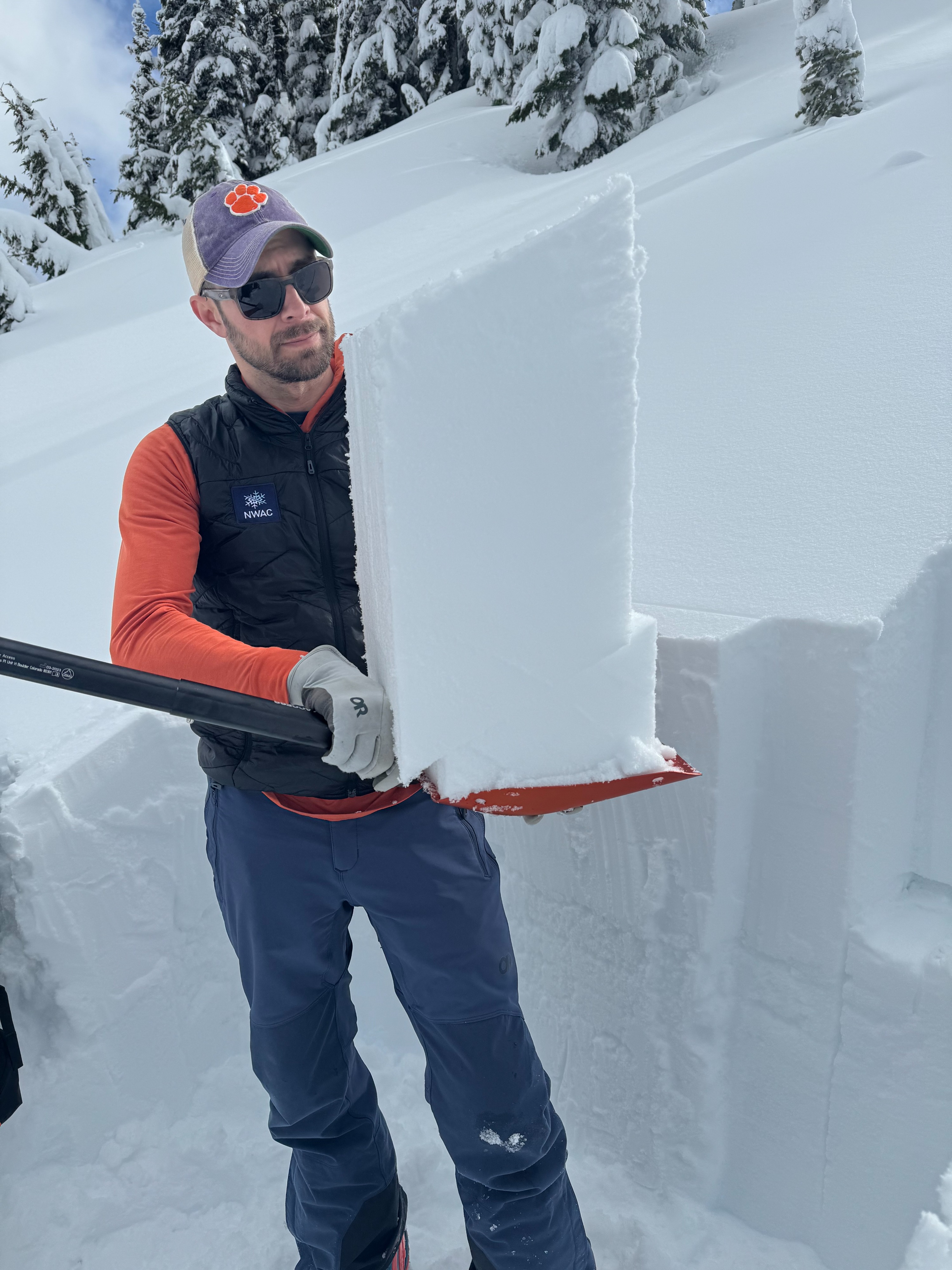
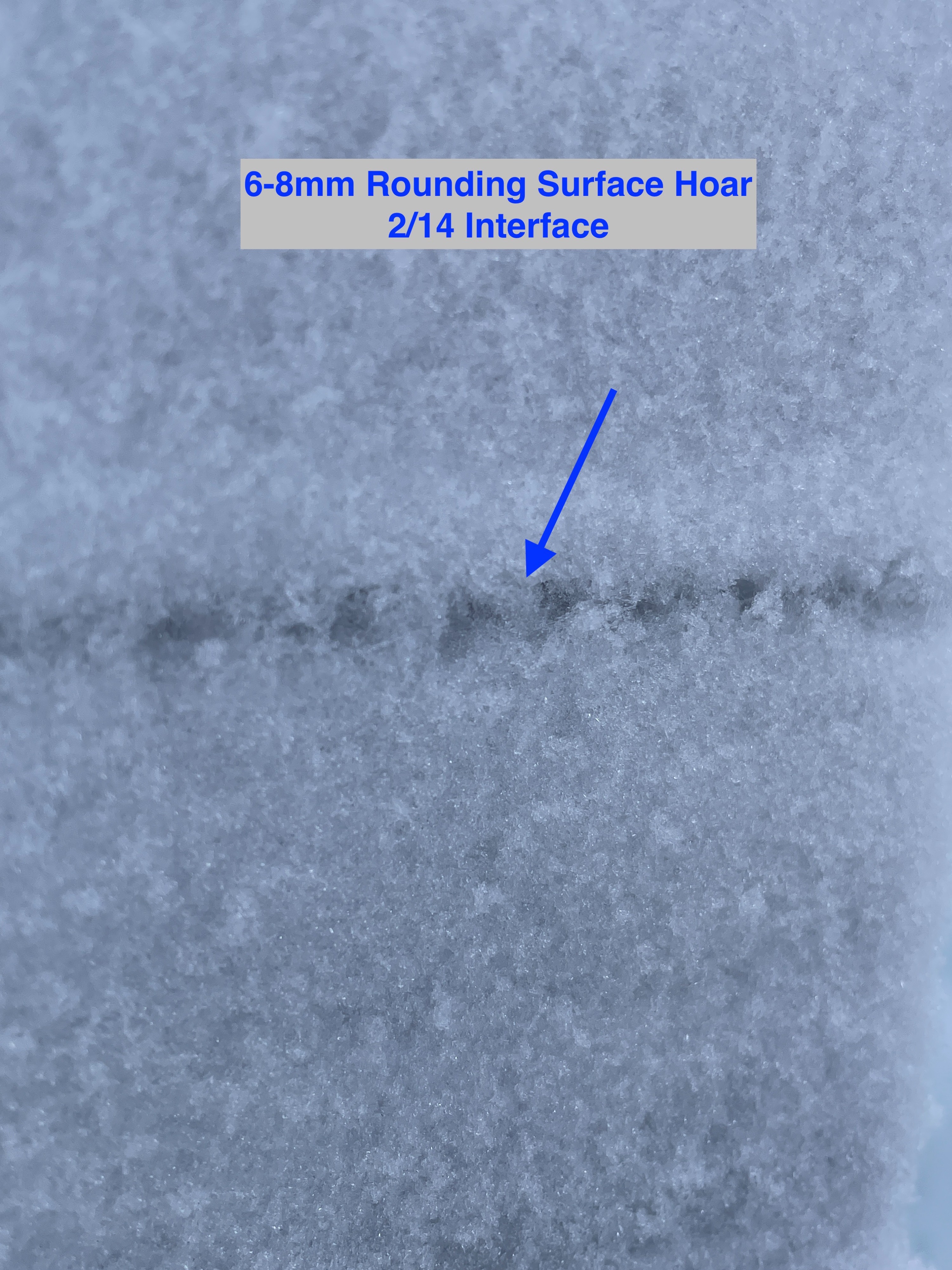
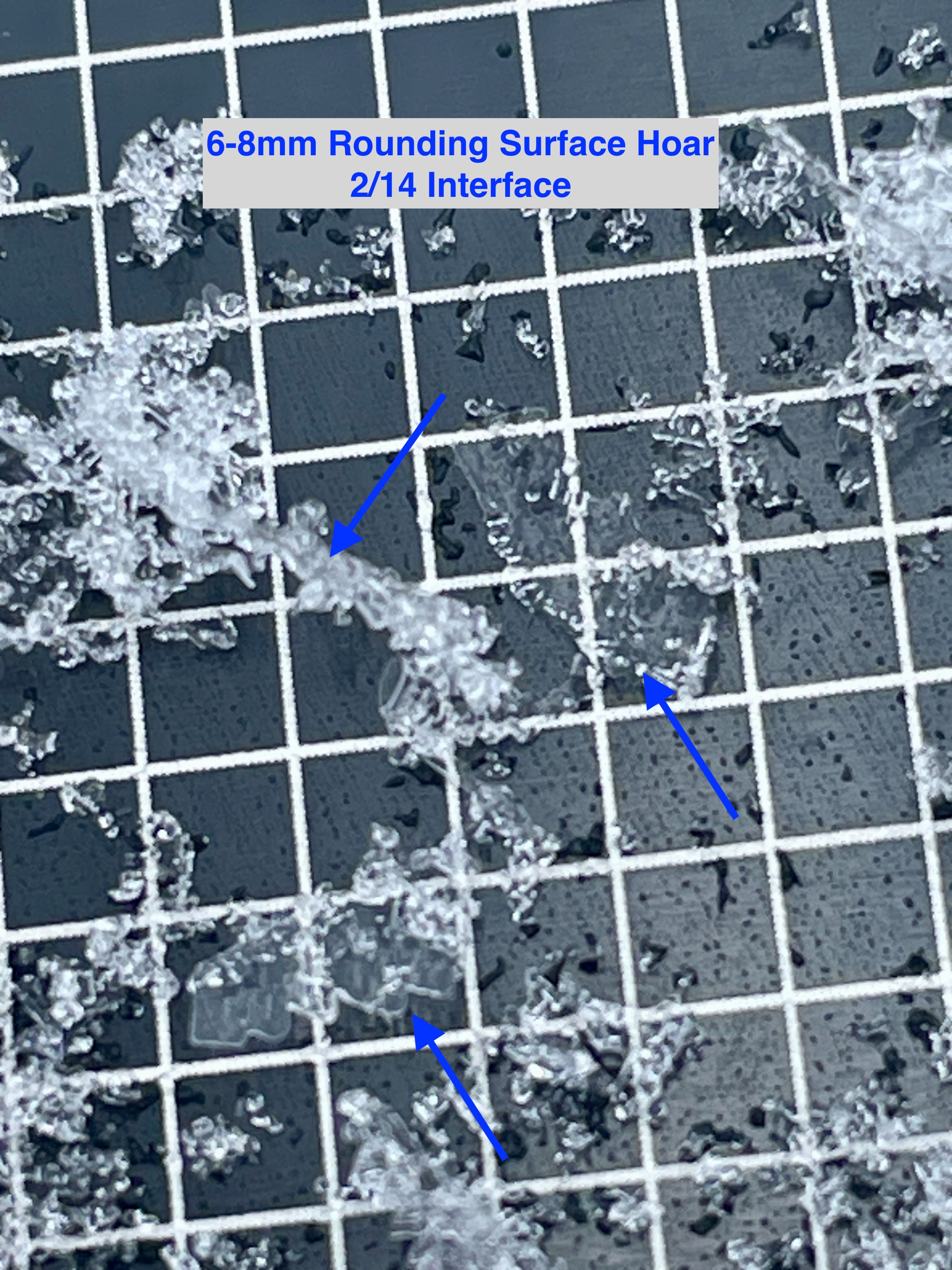
Upper snowpack: We dug snow profiles int two locations (flat 5900ft, and N, 6200ft). The upper snowpack still contains various interfaces and potential weak layers. The most notable we found were buried surface hoar at the 2/14 interface, about 15-18inches (40-45cm) below the surface. Large column tests (both ECT and PST) produce results that propagated across the entire block. We also found facets just above the Early February Crust (EFC). It also failed in large column tests. At the moment, these layers haven't produced any notable avalanches, but are worth watching.
The EFC is still stout. However, a notable difference at White Pass is the presence of large weak facets within the EFC complex.
Avalanche
No avalanches were observed.