
Quick report
- Cracking
- specific
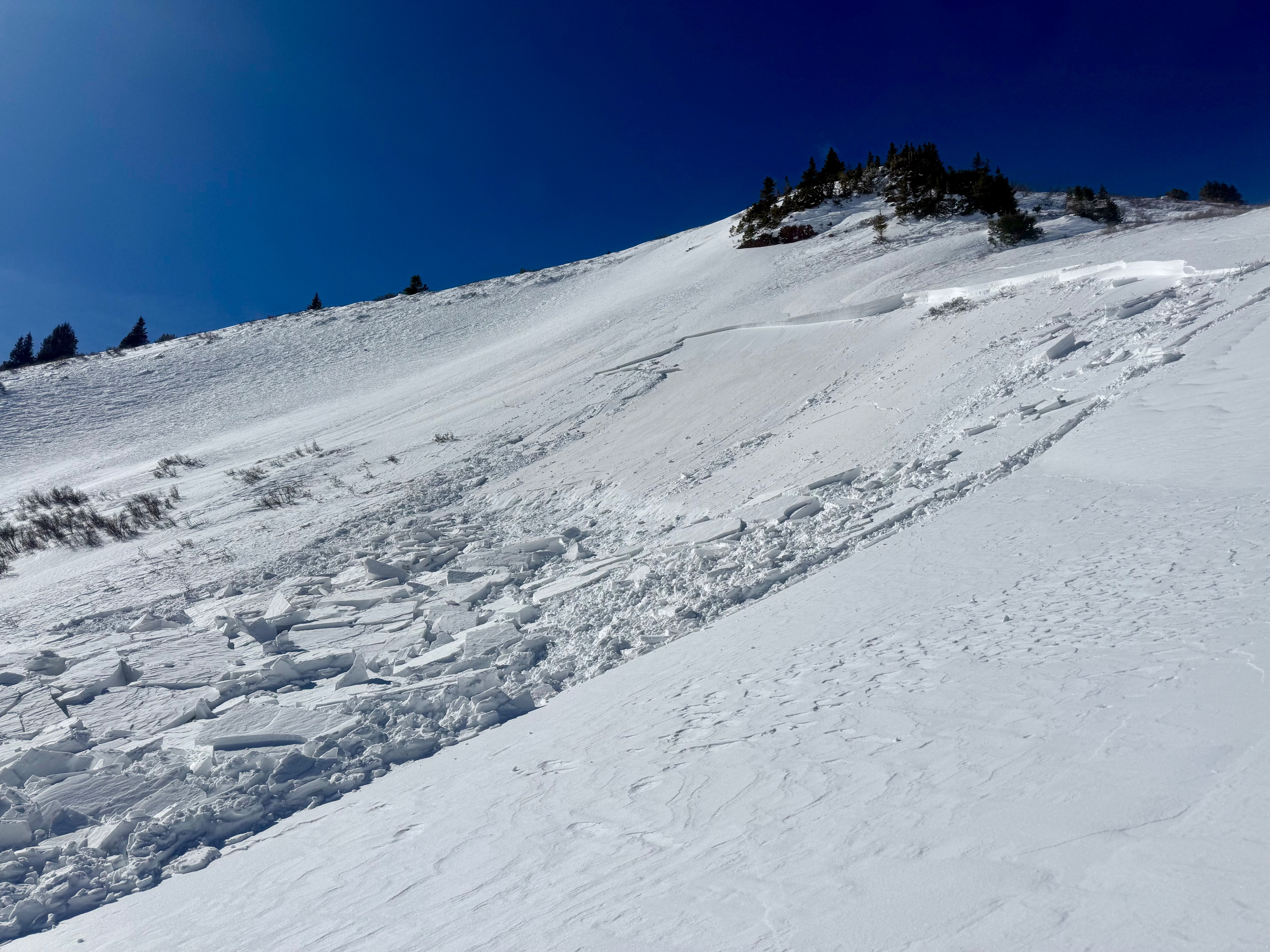
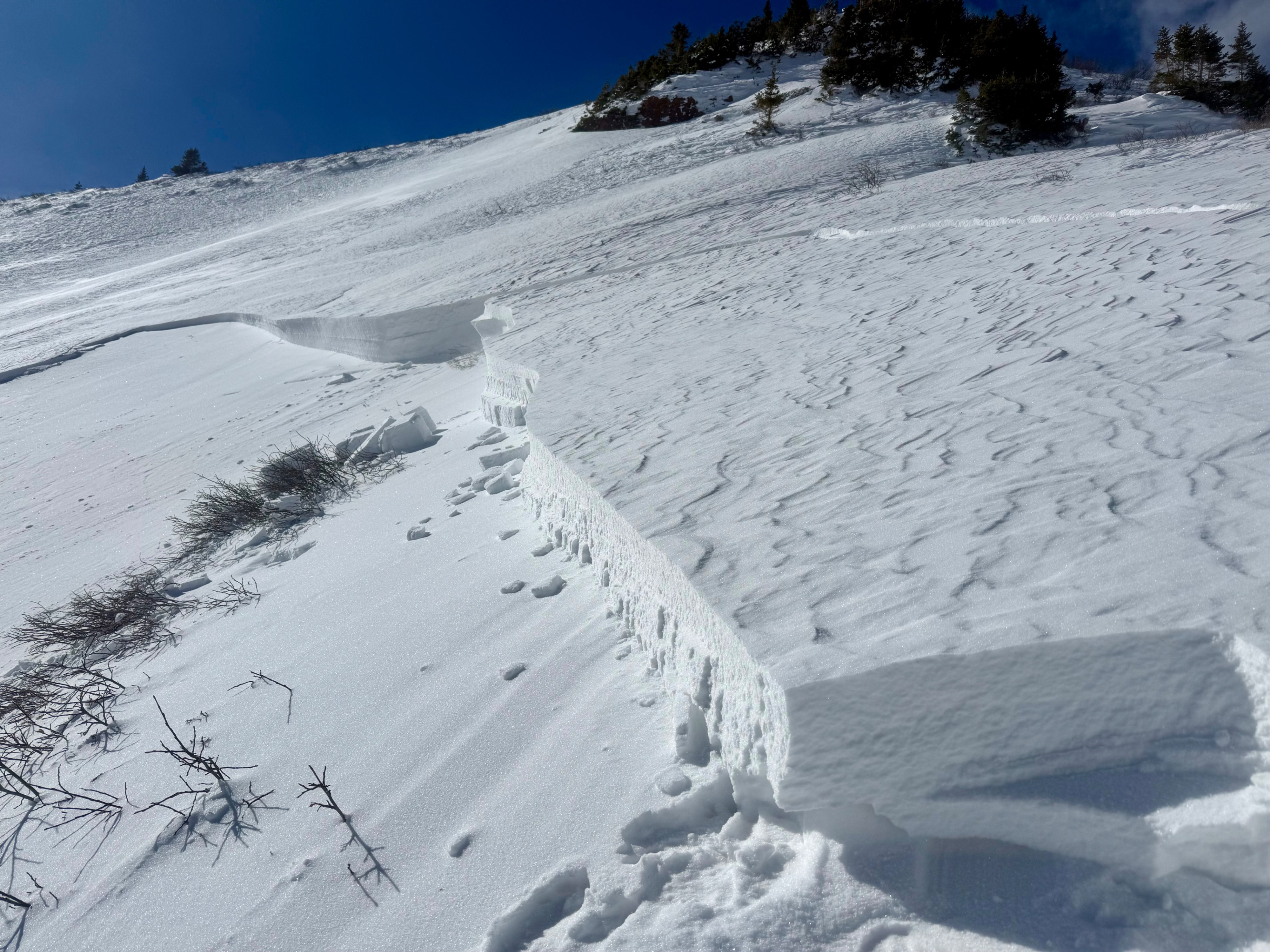
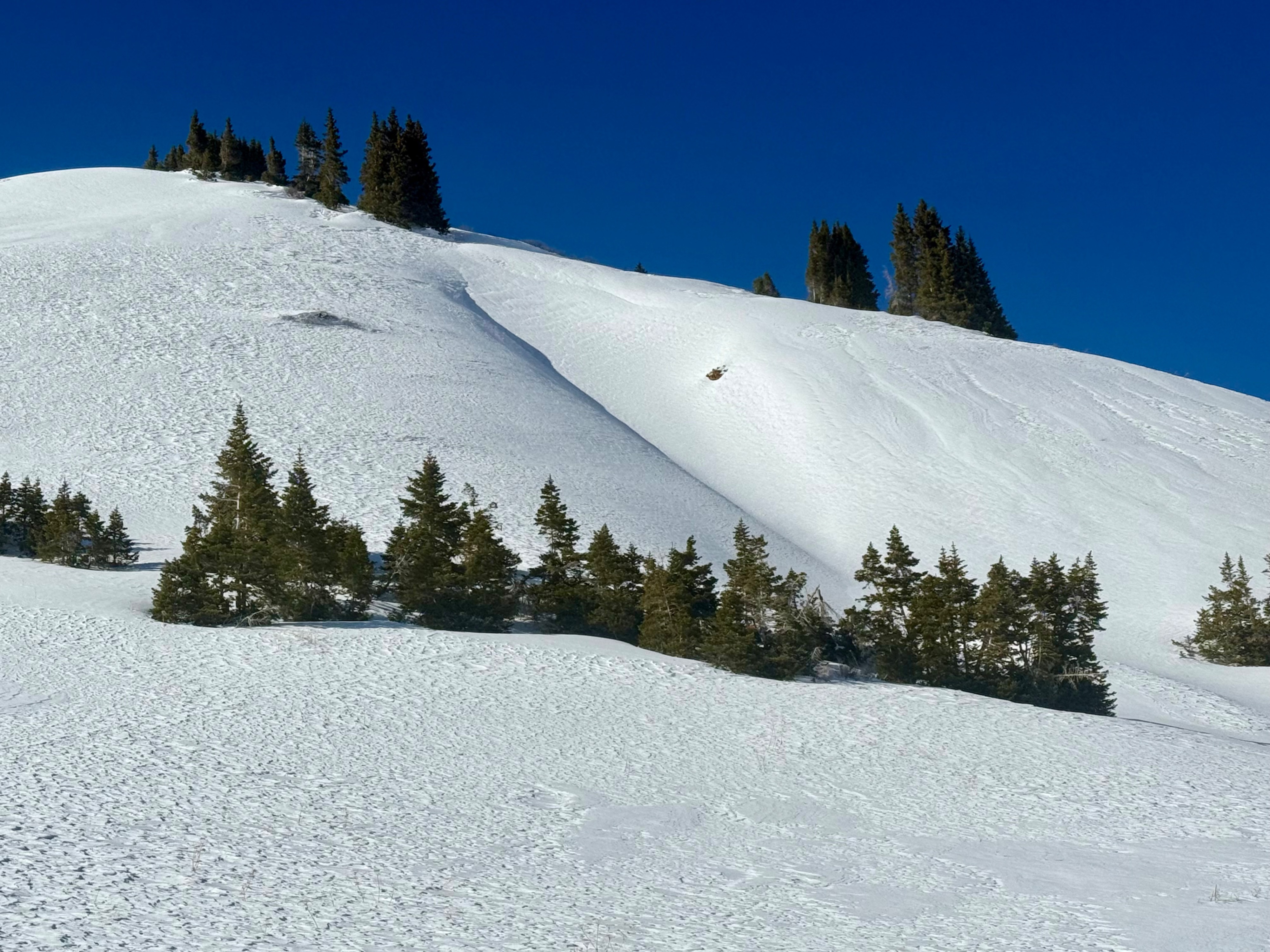
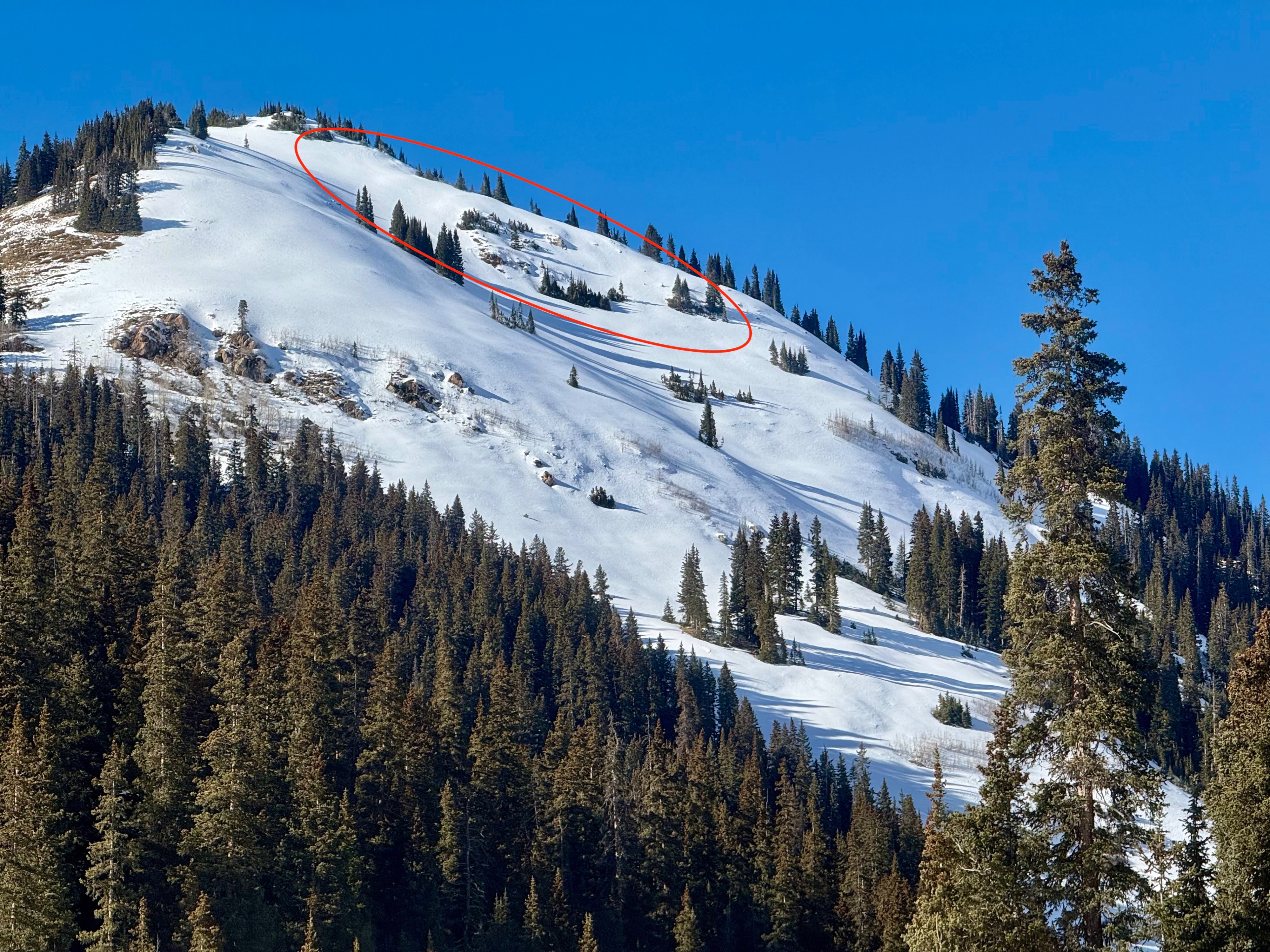
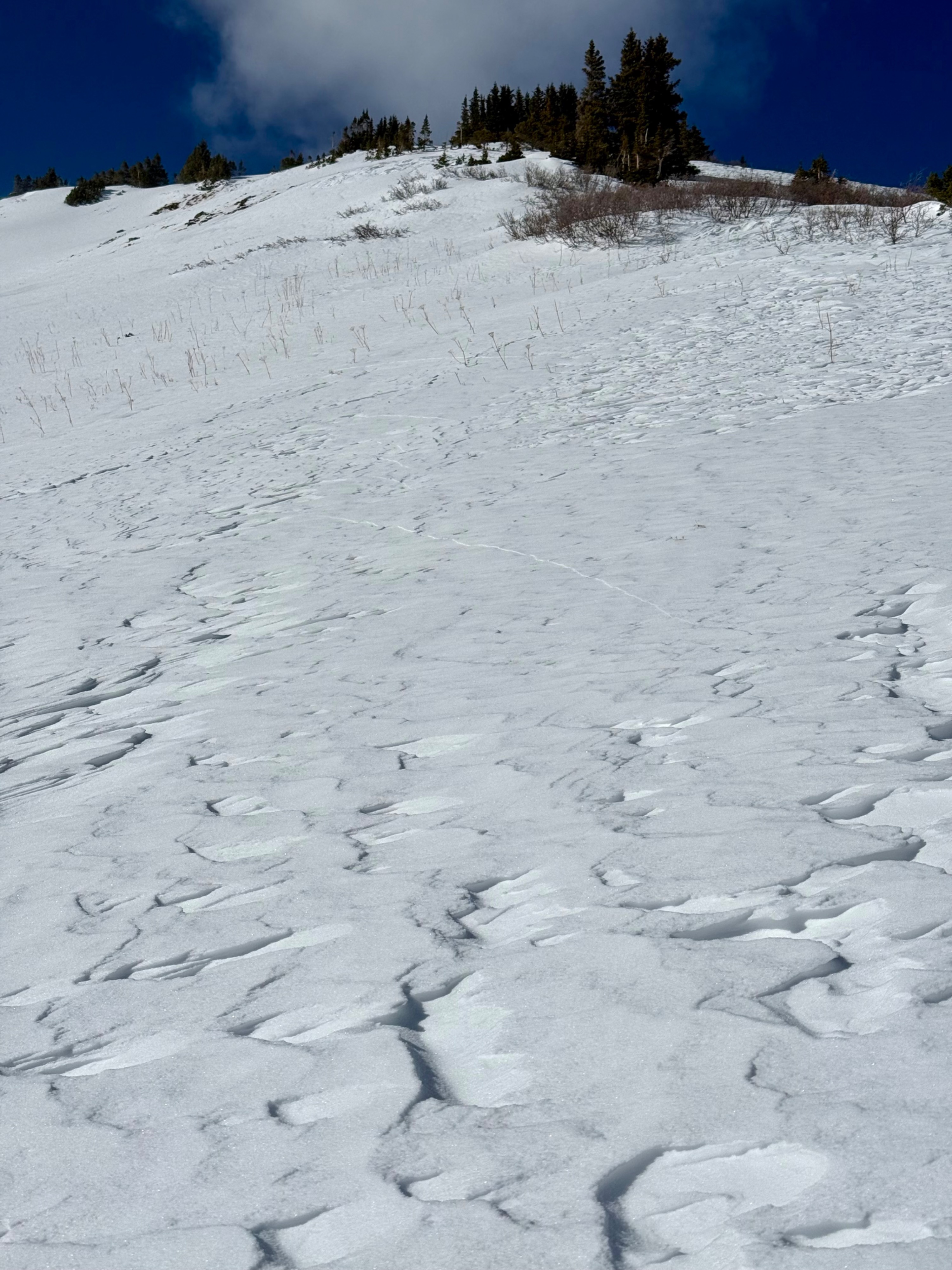
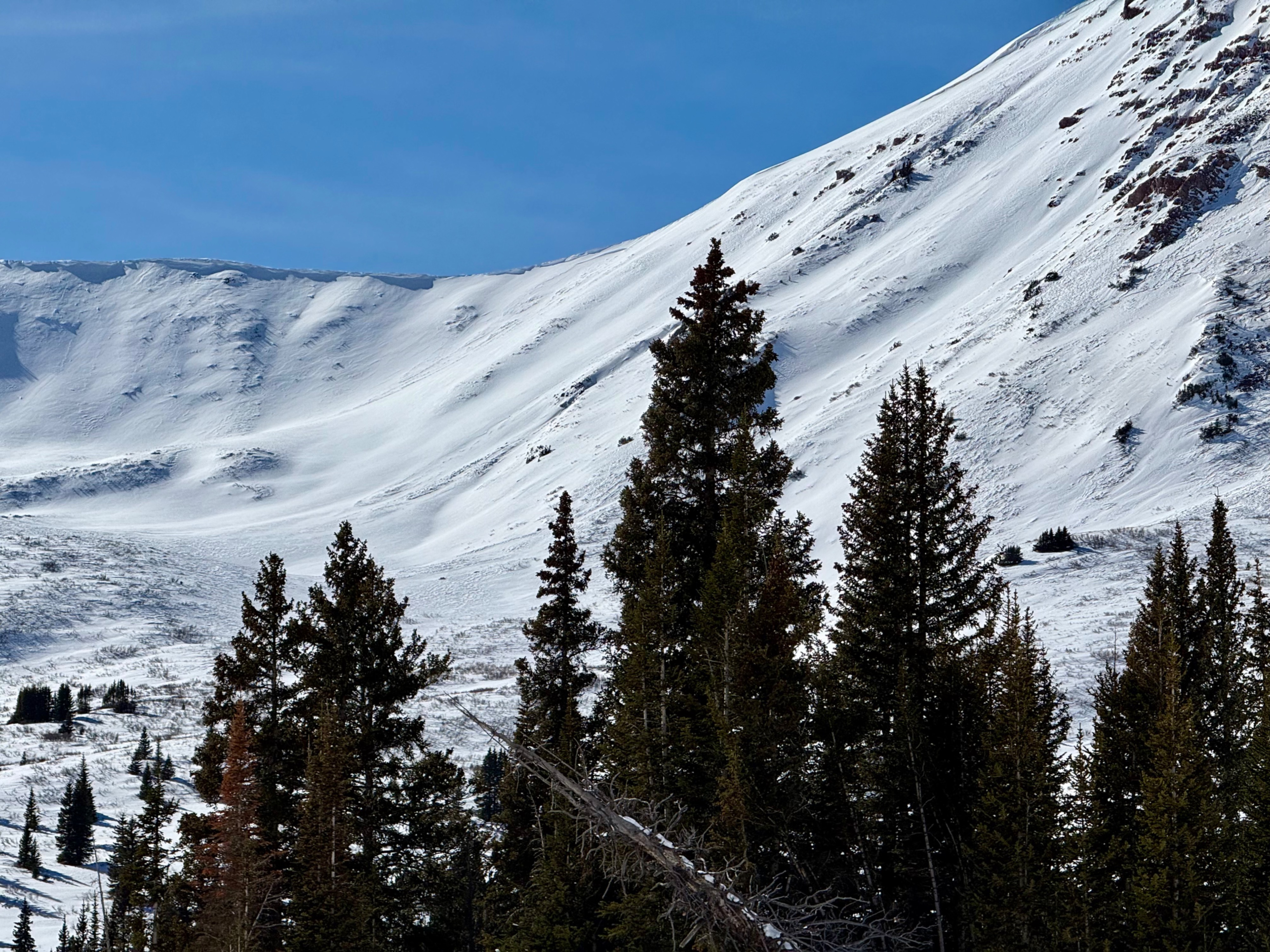
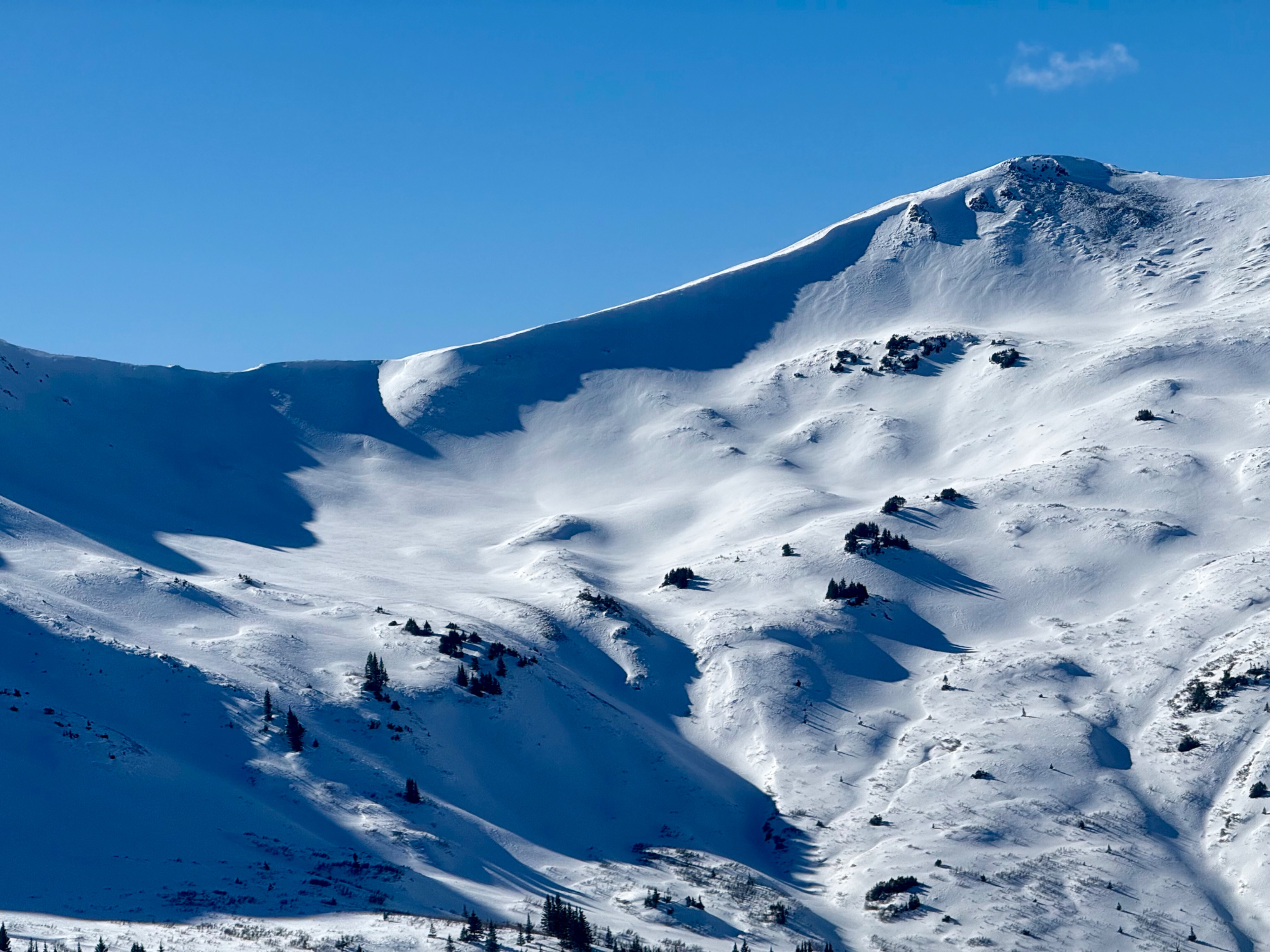
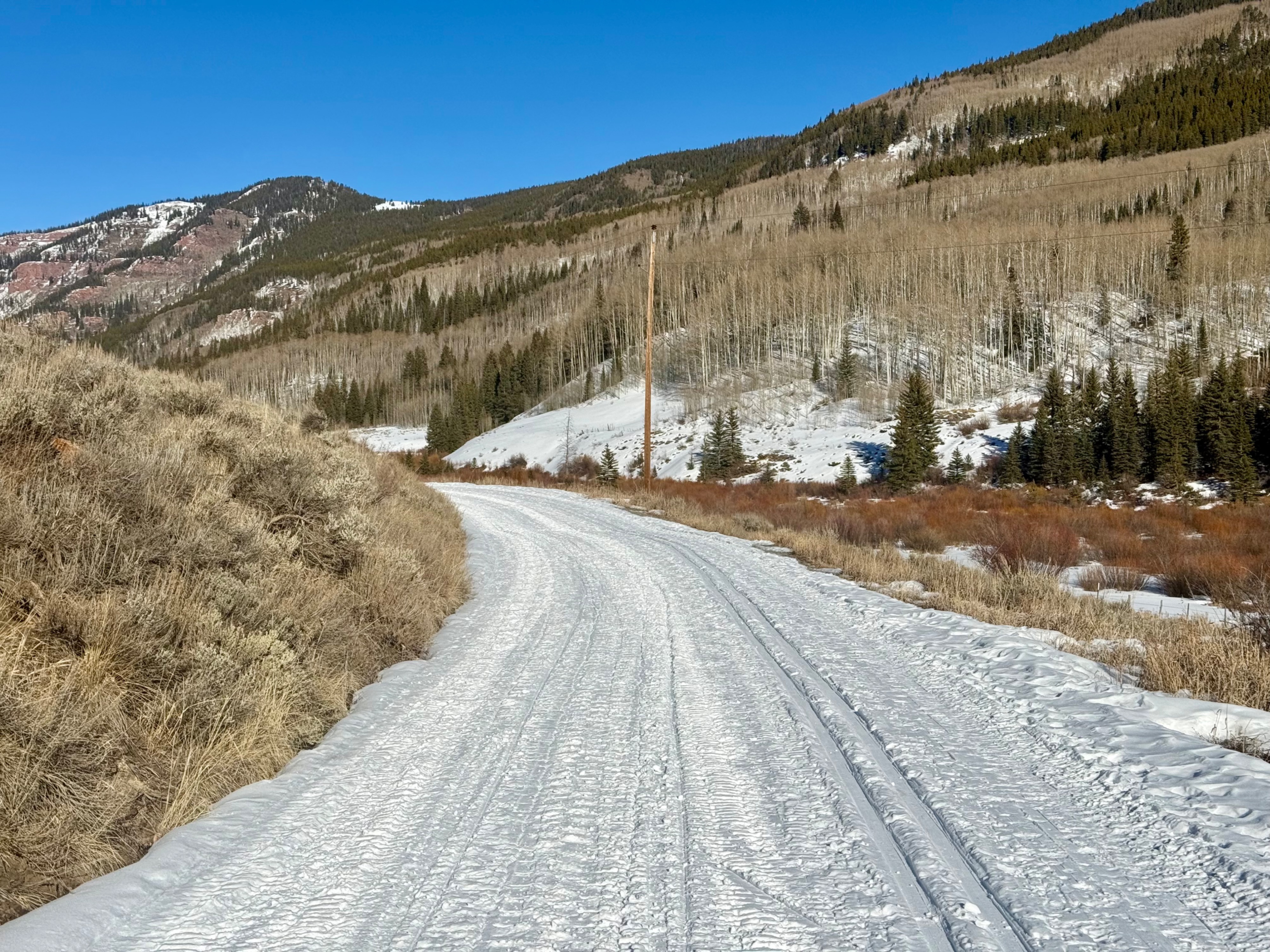
Lower Cement Creek feels like you are on spring break, and upper Cement Creek feels like you are in the Arctic. Upper Cement Creek has a very continental snowpack, with hard slabs on layers of facets, most specificly on easterly and southeasterly facing slopes. Two human triggered slab avalanche occured on small near treeline test slopes.
PSa was stubborn/specific in upper Cement Creek. Traveling on a snowmobile, so I didn't observe collapses while observing shooting cracks.Weather
- Cloud Cover
- few
- Wind Loading
- previous
- Recent Snowfall
- 0
- Snow Avail For Transport
- small smounts
Strong northerly winds at 12,000ft.
Snowpack
Lower Cement Creek is on spring break. There isn't enough snow to ski and ride in most areas and no notable volume for loose dry avalanches.
Traveling along the road, you start to get enough snowpack to ski or board as you get above ~11,300ft. Loose dry avalanches would be the avalanche problem, but the available snowpack volume doesn't look like enough to produce hazardous sluffs. The snowpack was mostly all soft facets in this area.
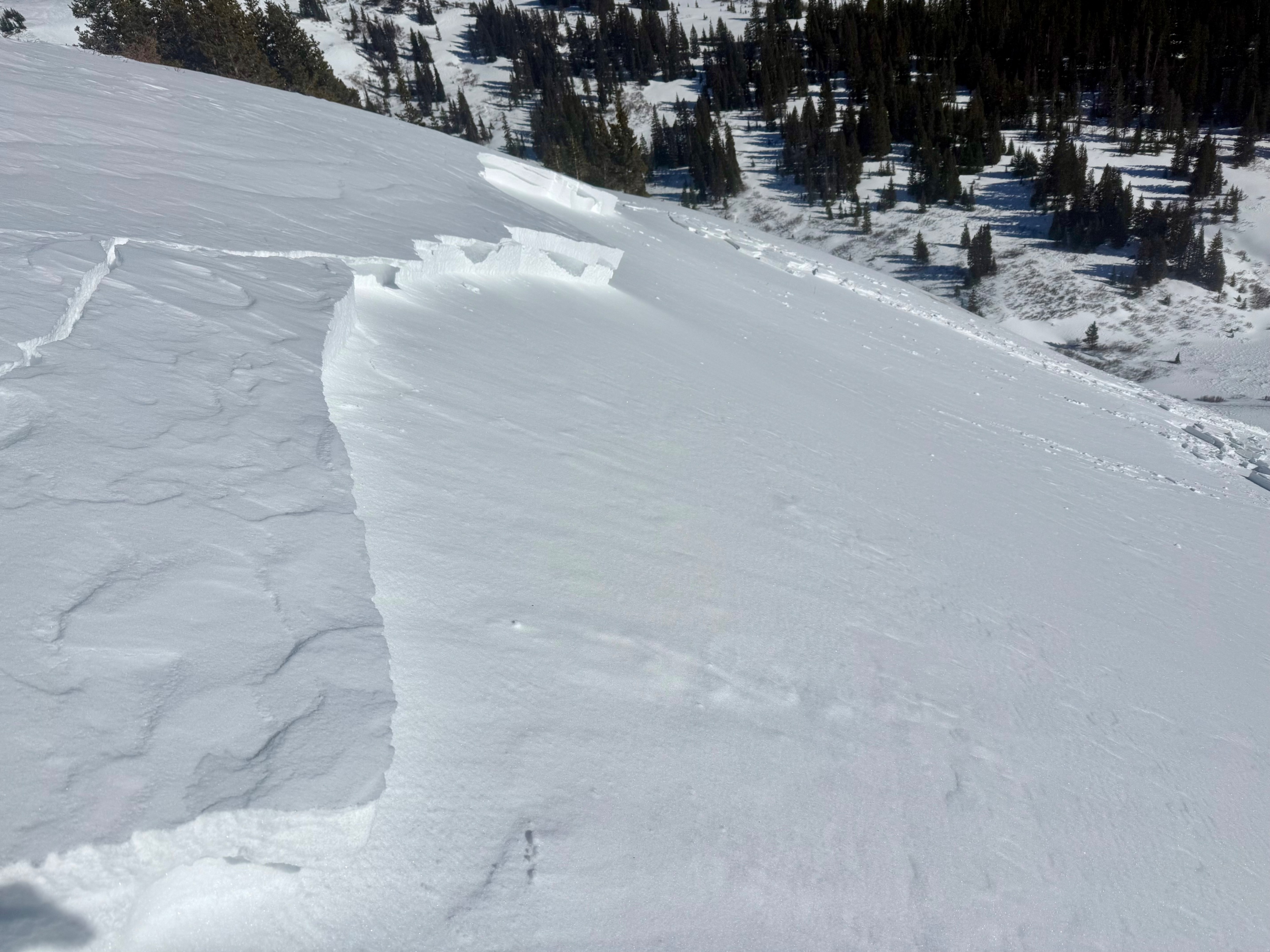
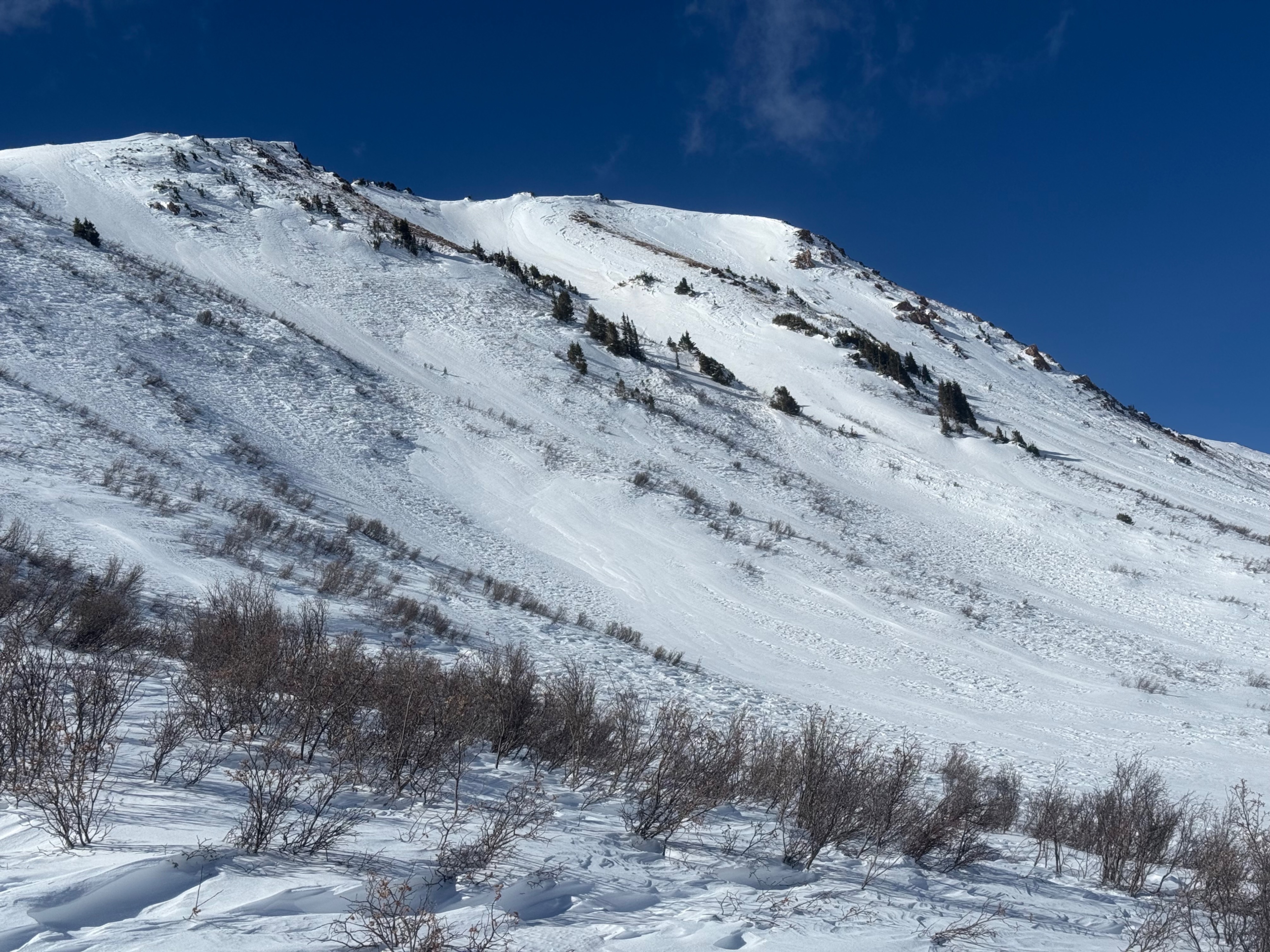
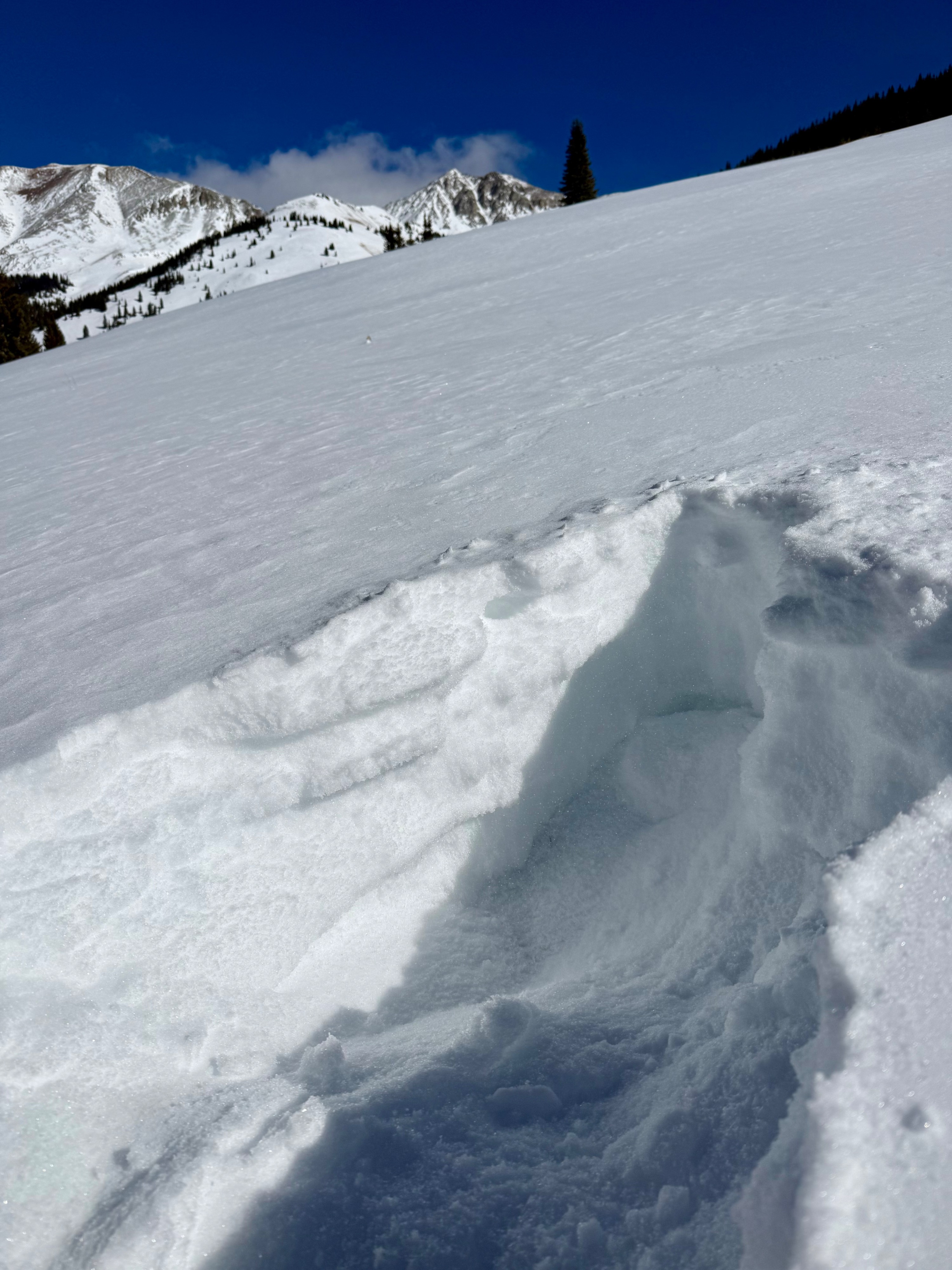
I initially started seeing obvious signs of instability as I targeted some cross-loaded terrain NTL between 11,500ft and 11,800ft. Easterly and southeasterly facing slopes were the most suspect looking after last weekend's northerly wind event, and these were the only aspects I traveled on. Weak faceted layers are widespread throughout the terrain, and hard slabs are more specifically located where they have formed by the multiple wind events over the last few weeks. The avalanche results I got all failed on 1 to 1.5mm soft facets between layers of hard slabs. There were no crusts in the upper snowpack, and I didn't dig below the bed surfaces. These triggered hard slabs had formed since the last time I was in the areas on 1/11. Interestingly, both of the bed surfaces had cracks propagating across them into deeper, harder slabs. I only traveled on smaller terrain features, and larger wind-loaded terrain features were obvious to avoid from both an avalanche and snow quality standpoint.
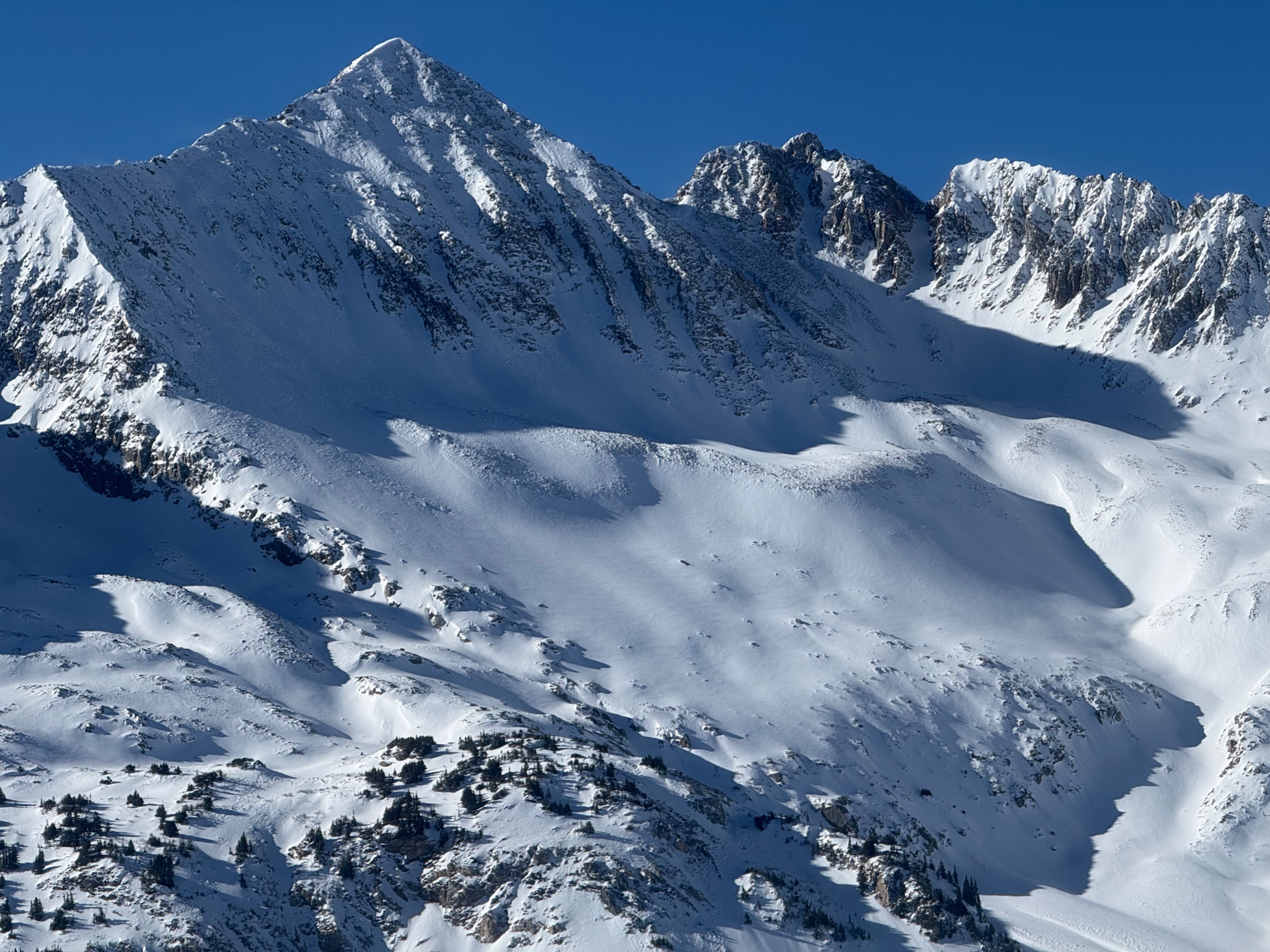
The east side of Star Pass and Star Peak had a snowpack that looked more continuous than that of upper Cement Creek.
Avalanche
- Size
- D1
- Type
- HS
- Count
- 2
- Aspect
- SE
- Trigger
- AM
- Elevation
- 117050 ft
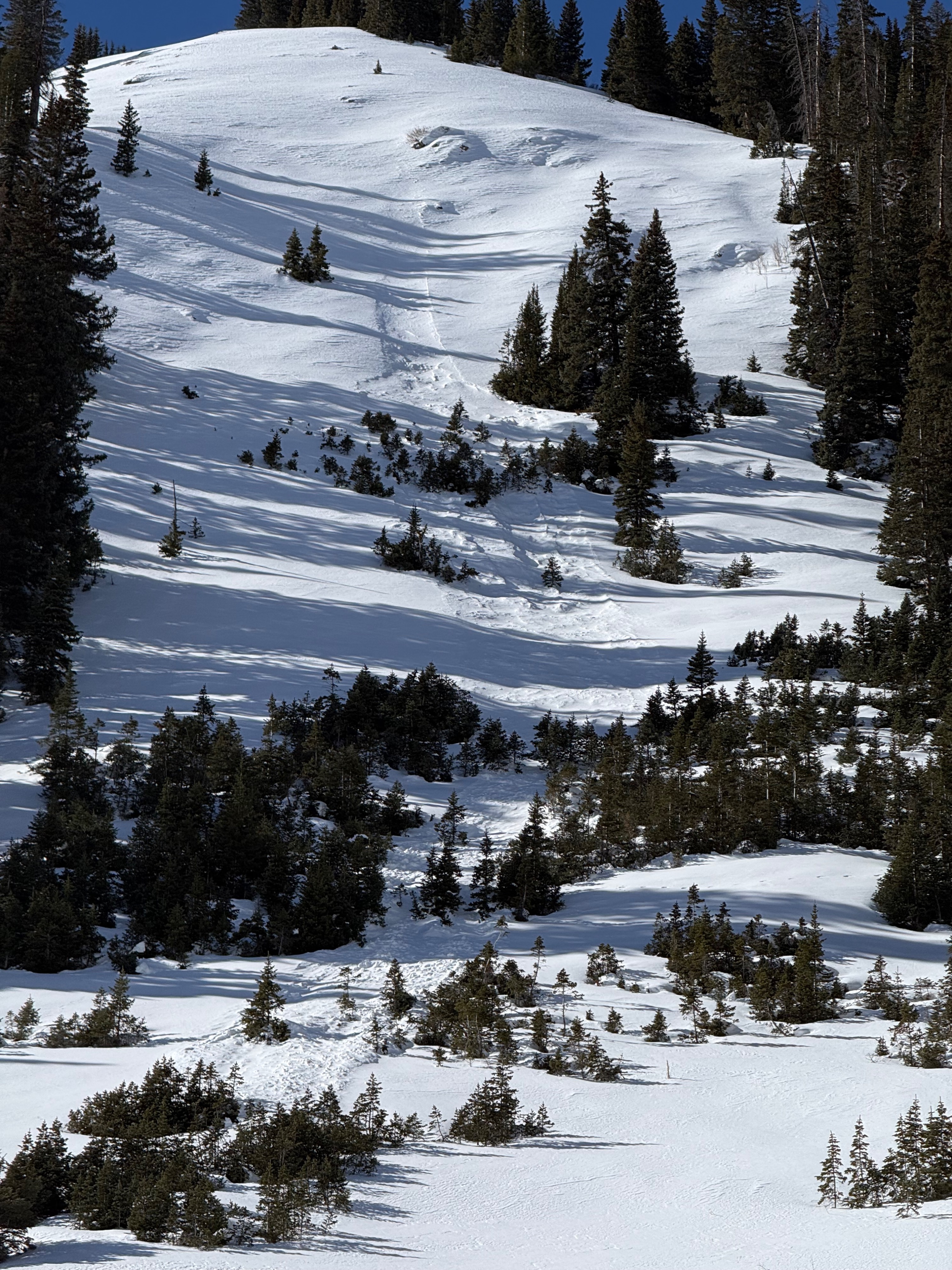
2 human-triggered hard slabs on small test slopes. These were cross-loaded SE-facing slopes near the treeline. A couple of old natural avalanches ran last weekend.