
Quick report
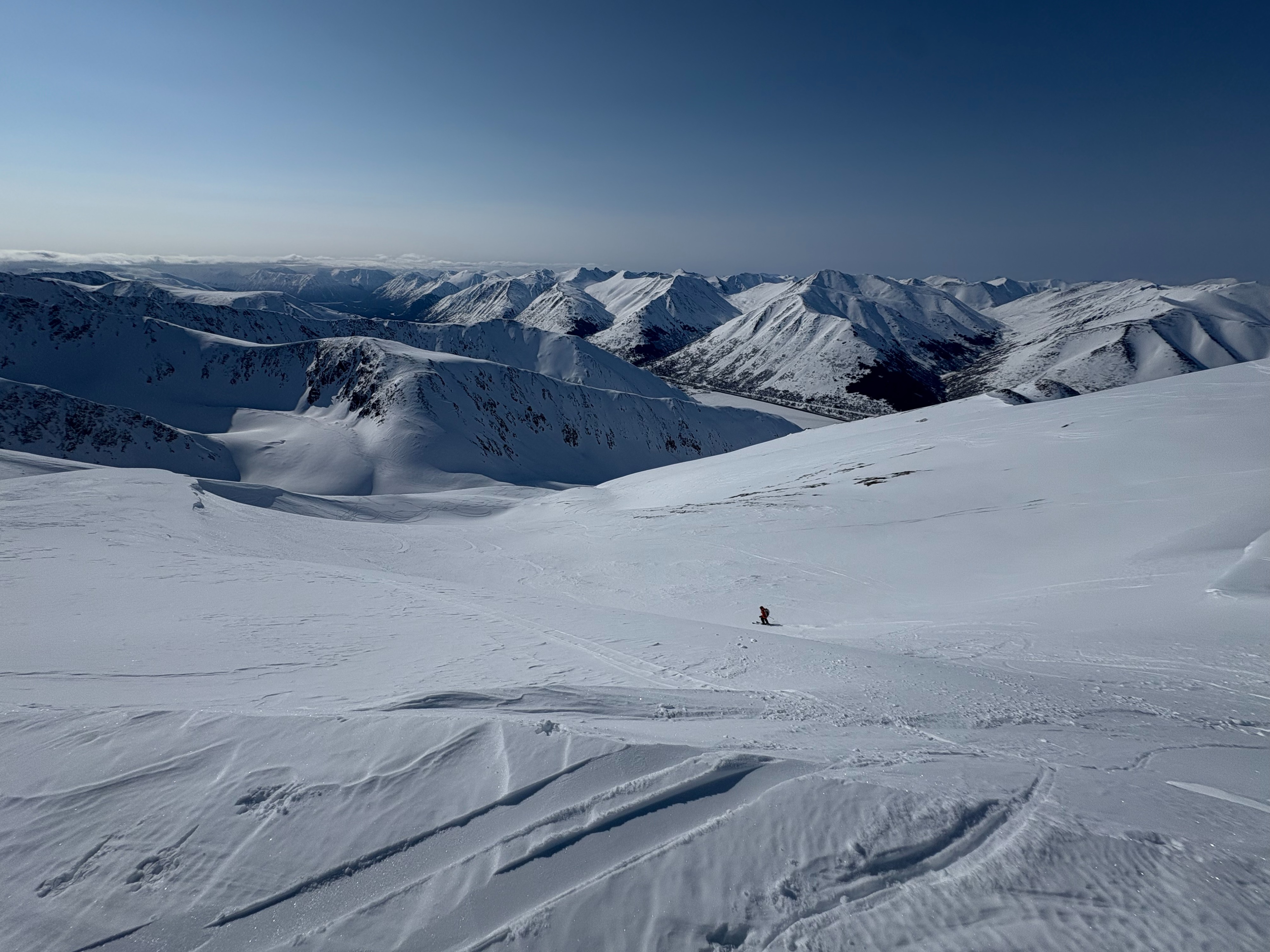
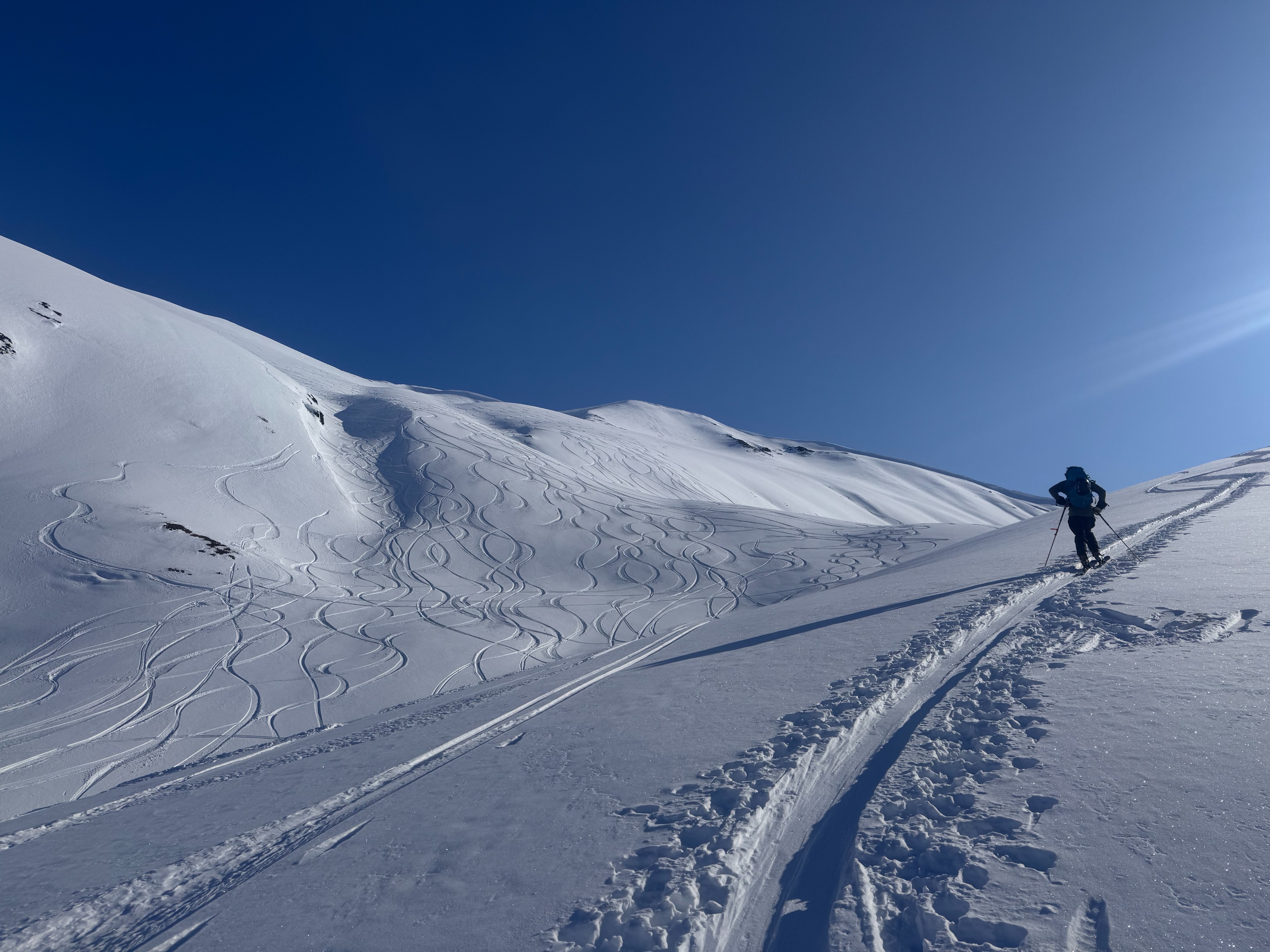
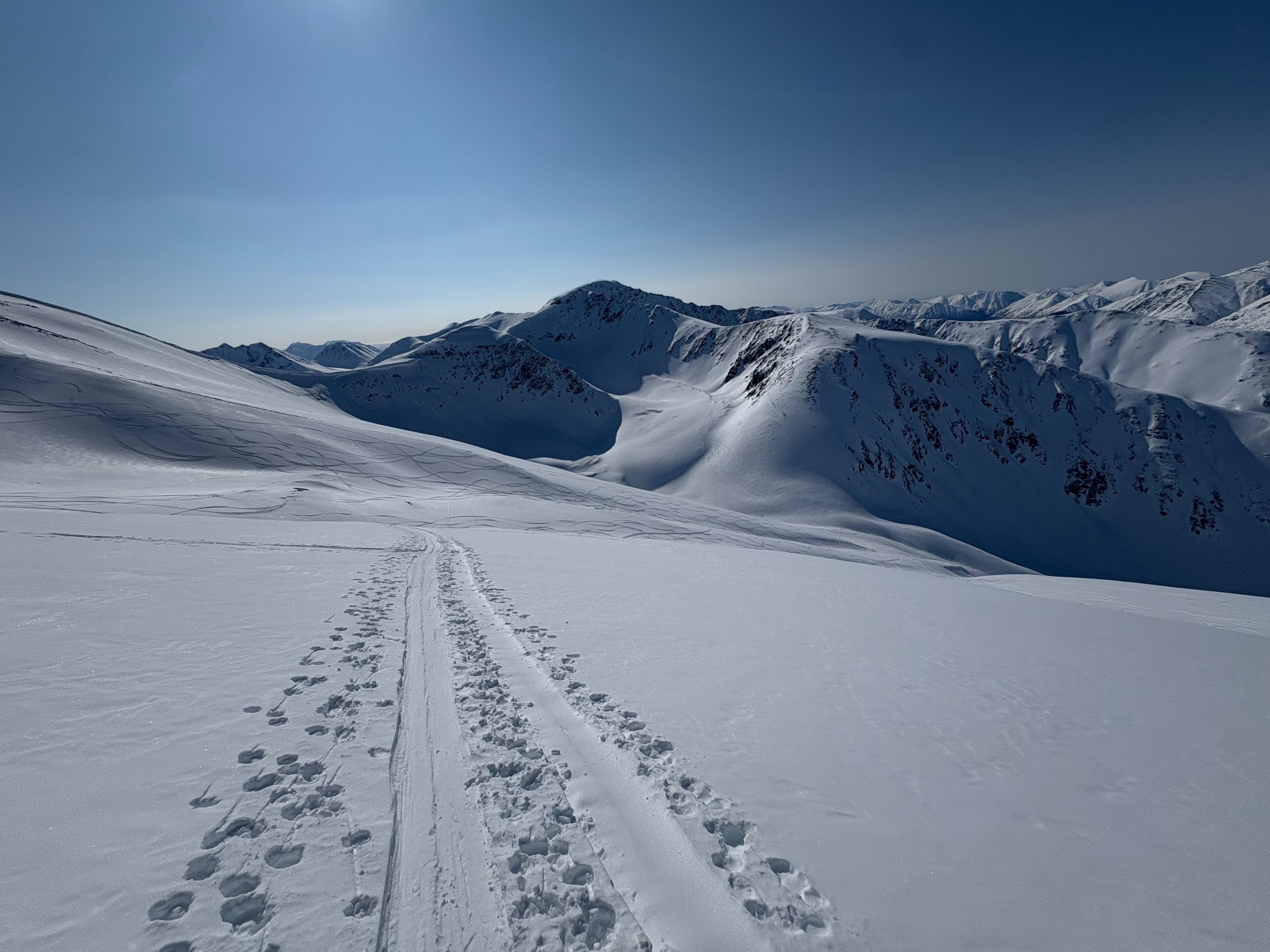
We toured up Hale Bop and reached the summit at 4,970 ft, finding no signs of instability along the way. It felt warm at the parking area, but temperatures cooled as we gained elevation. By the time we hit the ridge, a light southeasterly breeze had us reaching for an extra layer. Down low, we found 6-8 inches of soft snow in the shaded valley bottom. As we climbed into the southerly facing bowl, we ran into a thin melt freeze crust on steeper slopes, but it softened by midday and those slopes ended up skiing well with quality turns top to bottom. Despite the warmer temps at mid and lower elevations, we did not see any recent wet loose avalanche activity.
Weather
- Cloud Cover
- clear
- Wind Loading
- none
- Recent Snowfall
- 0
- Snow Avail For Transport
- small smounts
Clear skies for most of the day, although we could see clouds building toward the coast. A light southeasterly breeze along the ridgeline kept us in our puffys, while down in the valley bottom and on the ascent we were in our baselayers.
Snowpack
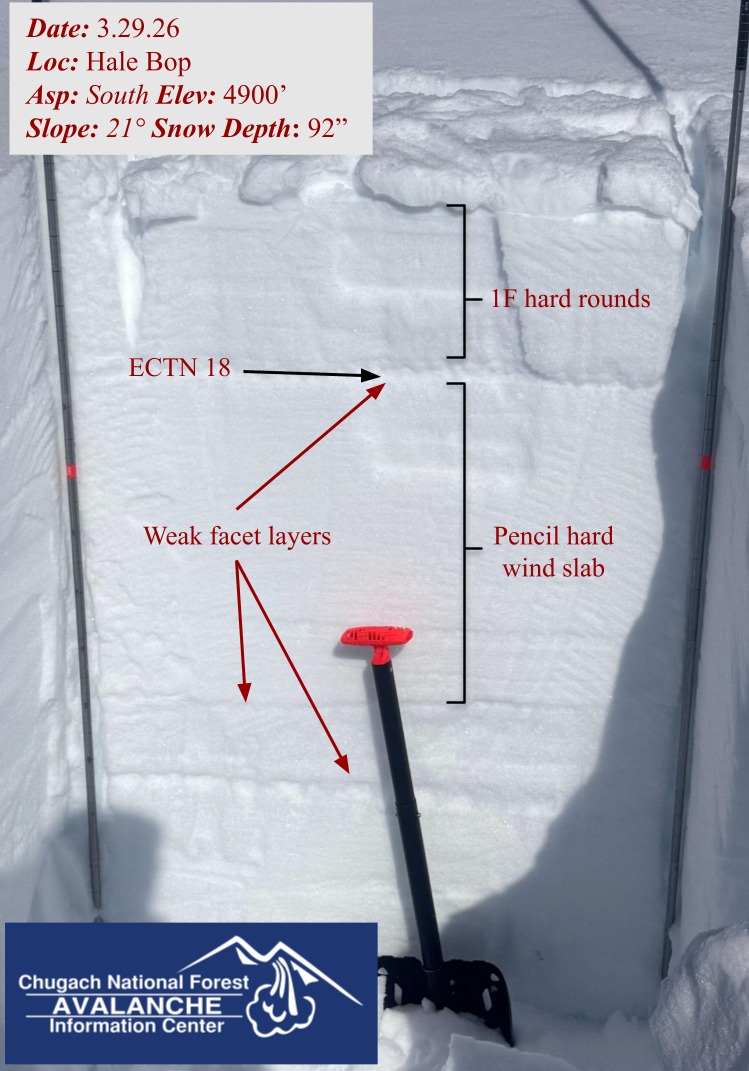
We dug two snowpits on the way up, one around 3,600 ft on a northerly aspect and another near 4,900 ft on a southerly aspect close to the summit. Neither pit produced unstable results, but both profiles had multiple weak faceted layers from the cold, dry spells in December, February, and March that have been well documented across Summit and Turnagain Pass. At 3,600 ft on a northerly aspect, we found about 7 inches of soft faceted snow at the surface sitting over more rounded, well bonded snow. Just below the new old snow interface, we identified a few inch thick layer of weaker 1 to 2 mm facets, but tests produced stubborn results (ECTN21 down 11 inches). Total snow depth in this sheltered location was around 6 to 8 ft. At 4,900 ft near the summit, the snowpack looked quite different after a season of strong winds. The profile was dominated by old wind slabs, but we still found two noticeable weak faceted layers, with tests again producing stubborn results (ECTN18 down 9 inches on a layer of 1 mm rounded facets). We also noted two layers of weak facets about 2.5 and 3 feet below the surface, but they were capped by mostly 1F to pencil hard snow, making them difficult to impact. Total snowdepth near this pit location ranged from 5 to 7 ft.
We also observed surface hoar growing on the surface up to 3 mm in size below about 3,700 ft in open, wind sheltered areas.