
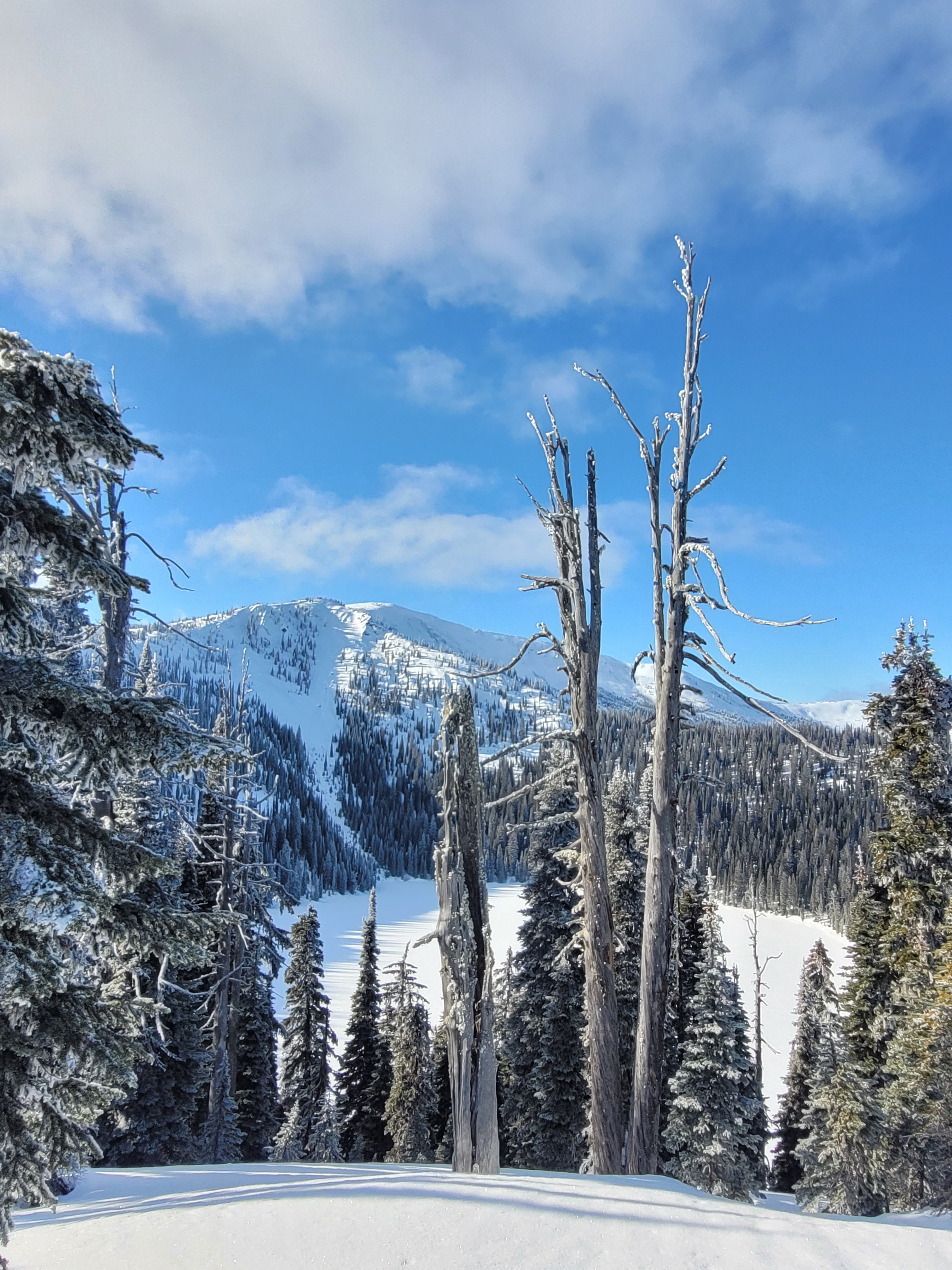
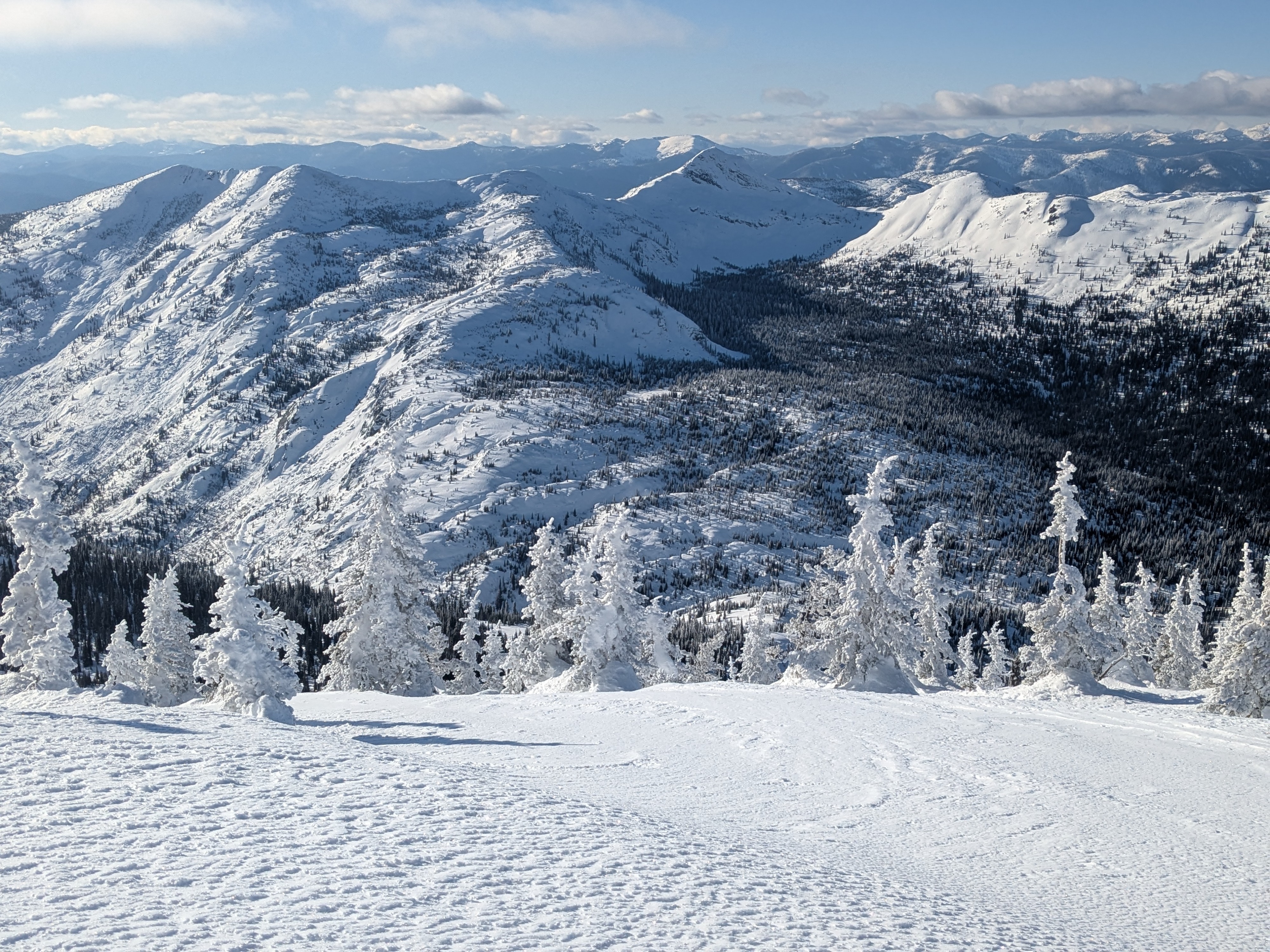
Quick report
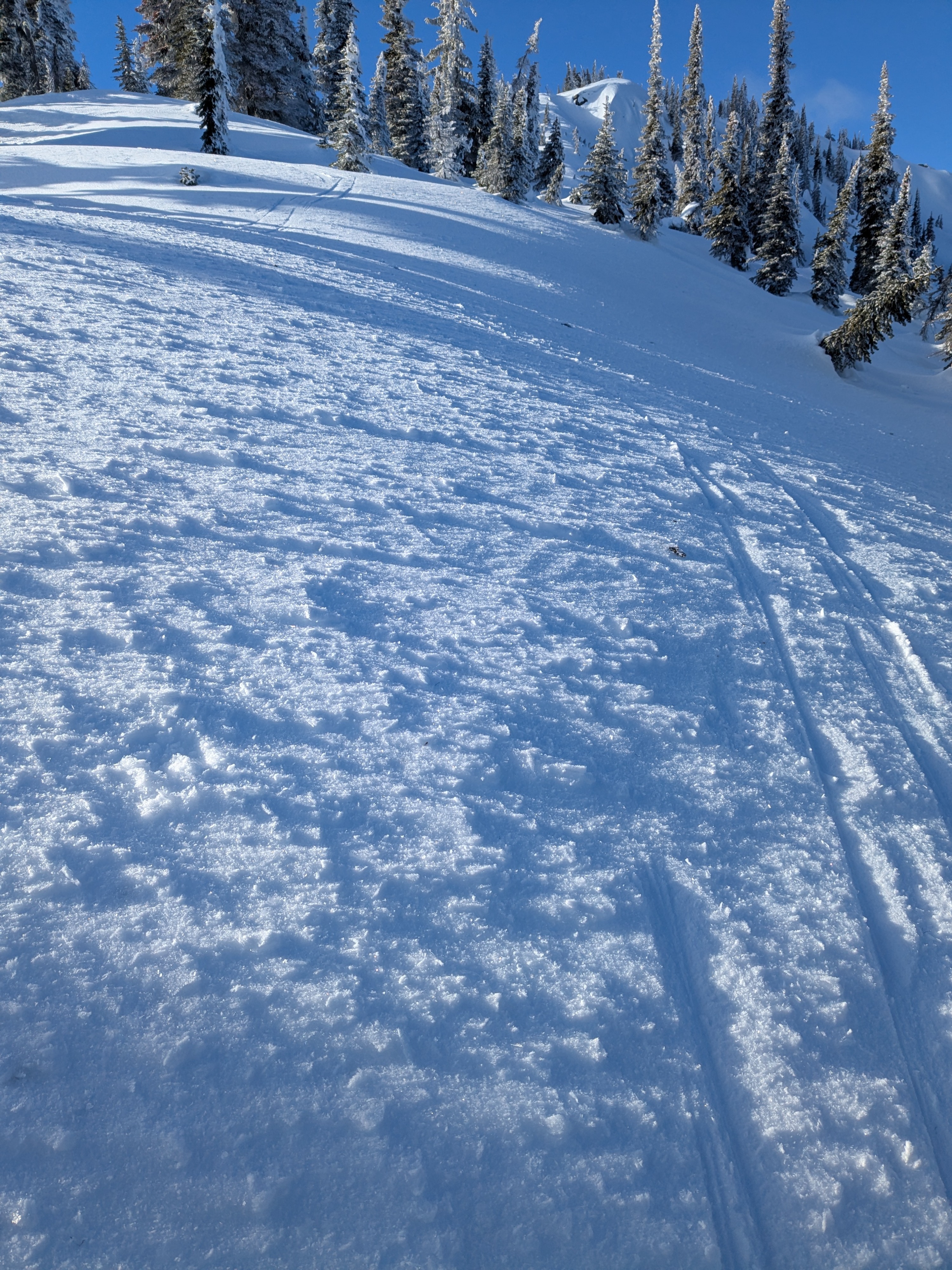
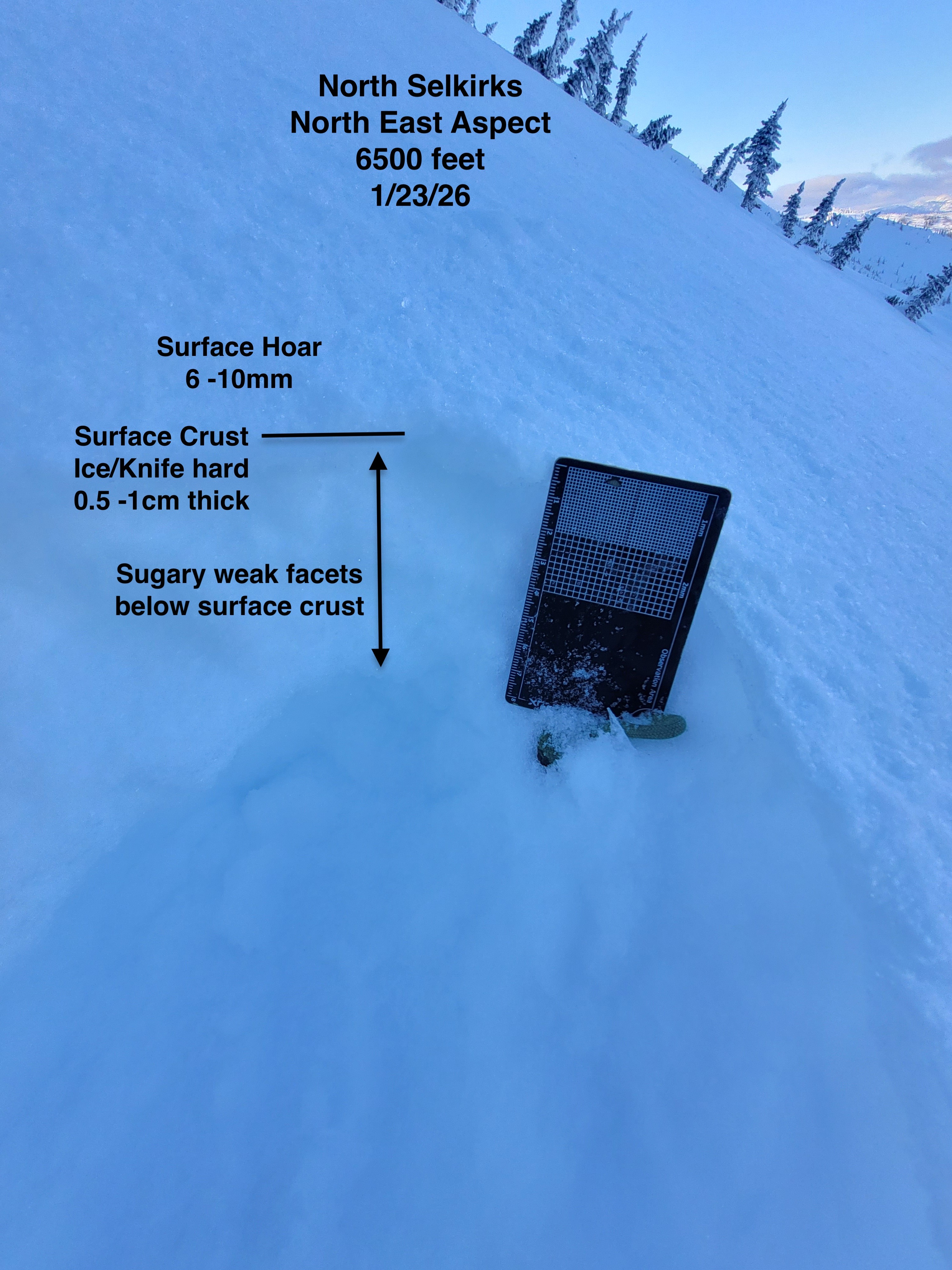
Status quo conditions in the mountains. With the exception that the snow below the unwelcome hard surface crust continues to weaken into sugary facets. Surface hoar is also forming widespread on top of the hard surface crust, setting up a nightmare scenario if it ever snows again. Be mindful of how firm surfaces are and whether you can make purchase with skis, boots, or crampons if you choose to recreate on steeper slopes, and have all the necessary self-arrest gear in the event of a slide-for-life fall.
Weather
- Cloud Cover
- few
- Wind Loading
- none
- Snow Avail For Transport
- none
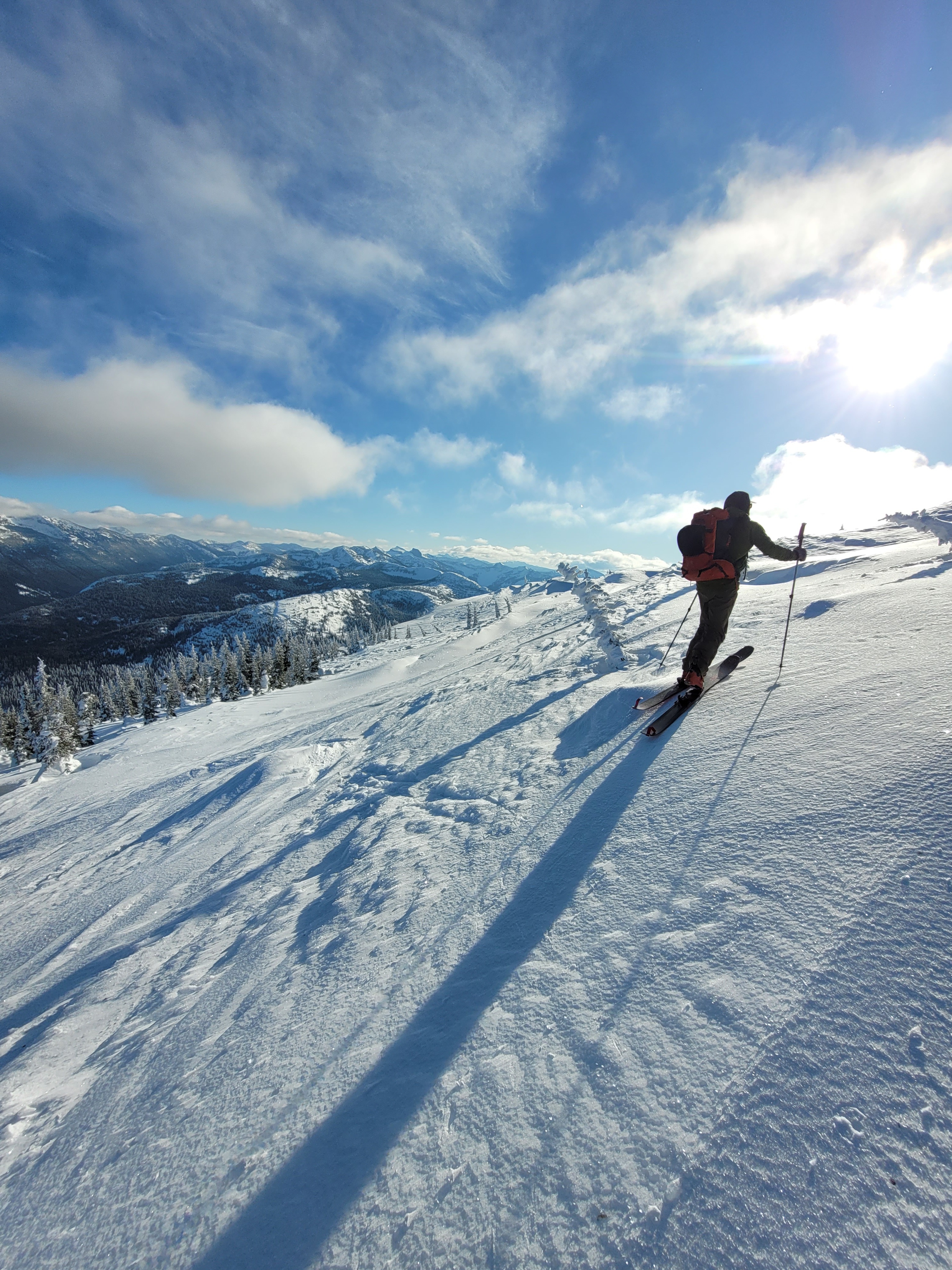
Mostly sunny skies and cold temperatures. The sun did not warm enough to cause any surface melt on south aspects. Winds were generally calm except for a gentle breeze at mountain top.
Snowpack
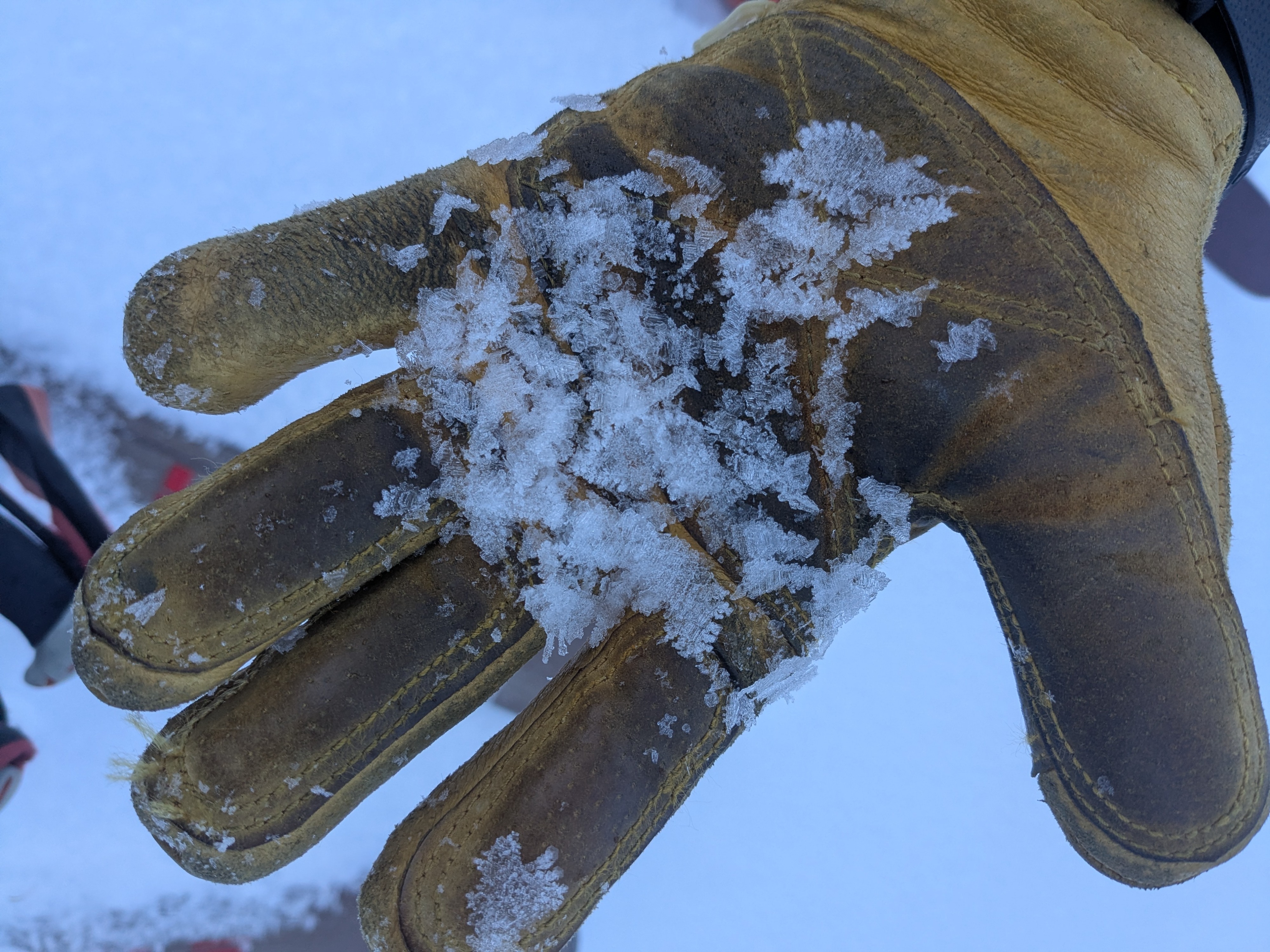
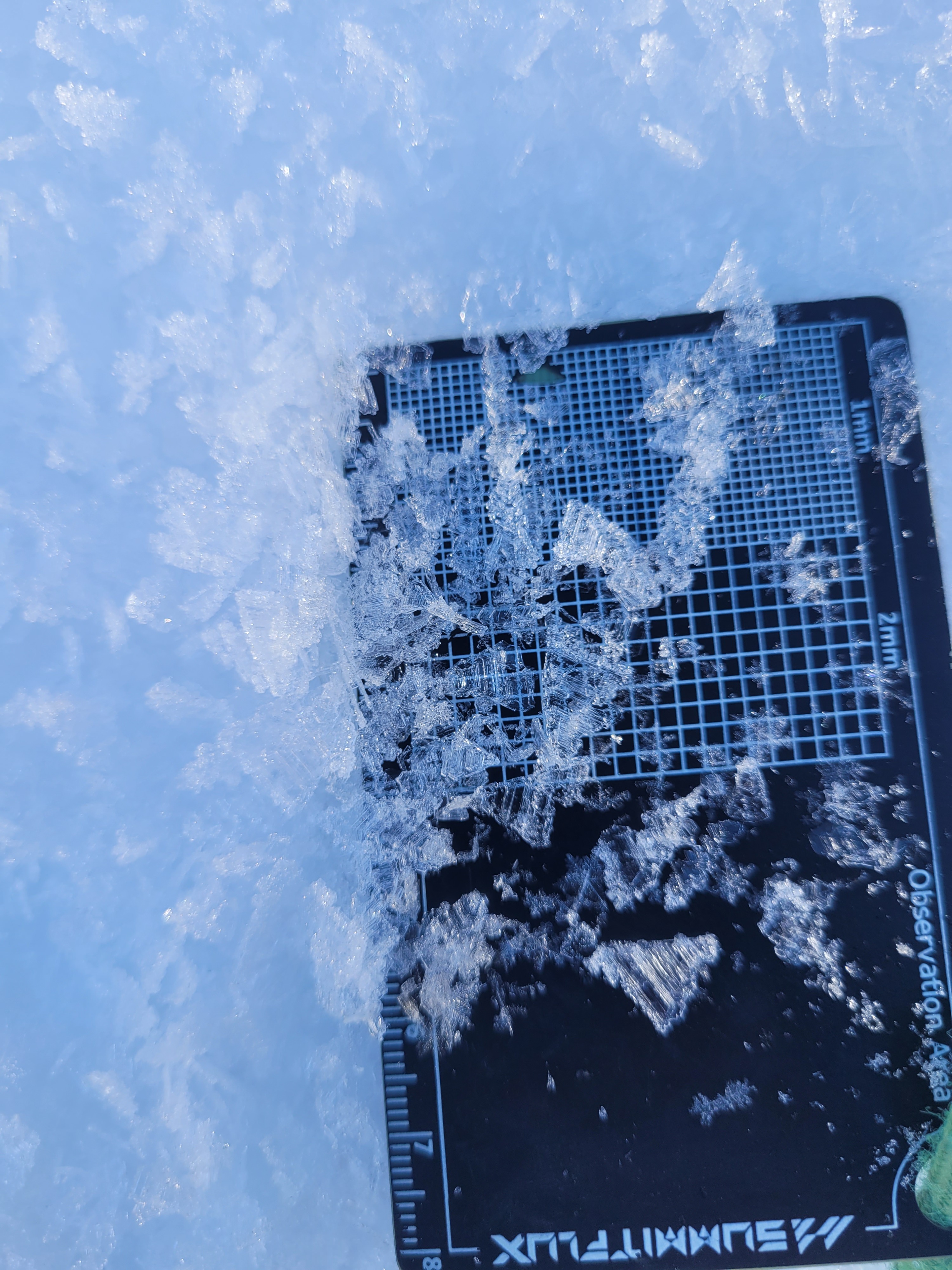
We observed widespread surface hoar on surfaces throughout our travels up to 6,700 feet. The surface hoar was most prominent below 6,200 feet give or take, and ranged 6 to 10 mm in size. While traveling through middle elevation treed slopes we did note variability in surface hoar formation. It existed in broad openings or areas with sparse tree cover and became absent where tree cover was slightly thicker.
The widespread surface crust that formed from light rain and warm temperatures on January 12 and 13, then refrozen on January 14 varies in thickness and hardness. Ski penetration was on average 5 cm deep where the crust is more breakable and 0 cm where the crust is more of a translucent ice layer. We needed ski crampons along portions of our uphill route. Faceting underneath the surface crust continues to get deeper as we remain in this cold, dry weather pattern. When isolated in pits, the surface crust easily fails/ slides off on the faceted grains below.
At lower elevations, off-road sled travel/ access into this area still doesn't have ample snow coverage. Lots of vegetation is still poking through the snow.
Avalanche
- Size
- D2
- Type
- SS
- Count
- 2
- Aspect
- E
- Trigger
- N
- Elevation
- 6500 ft
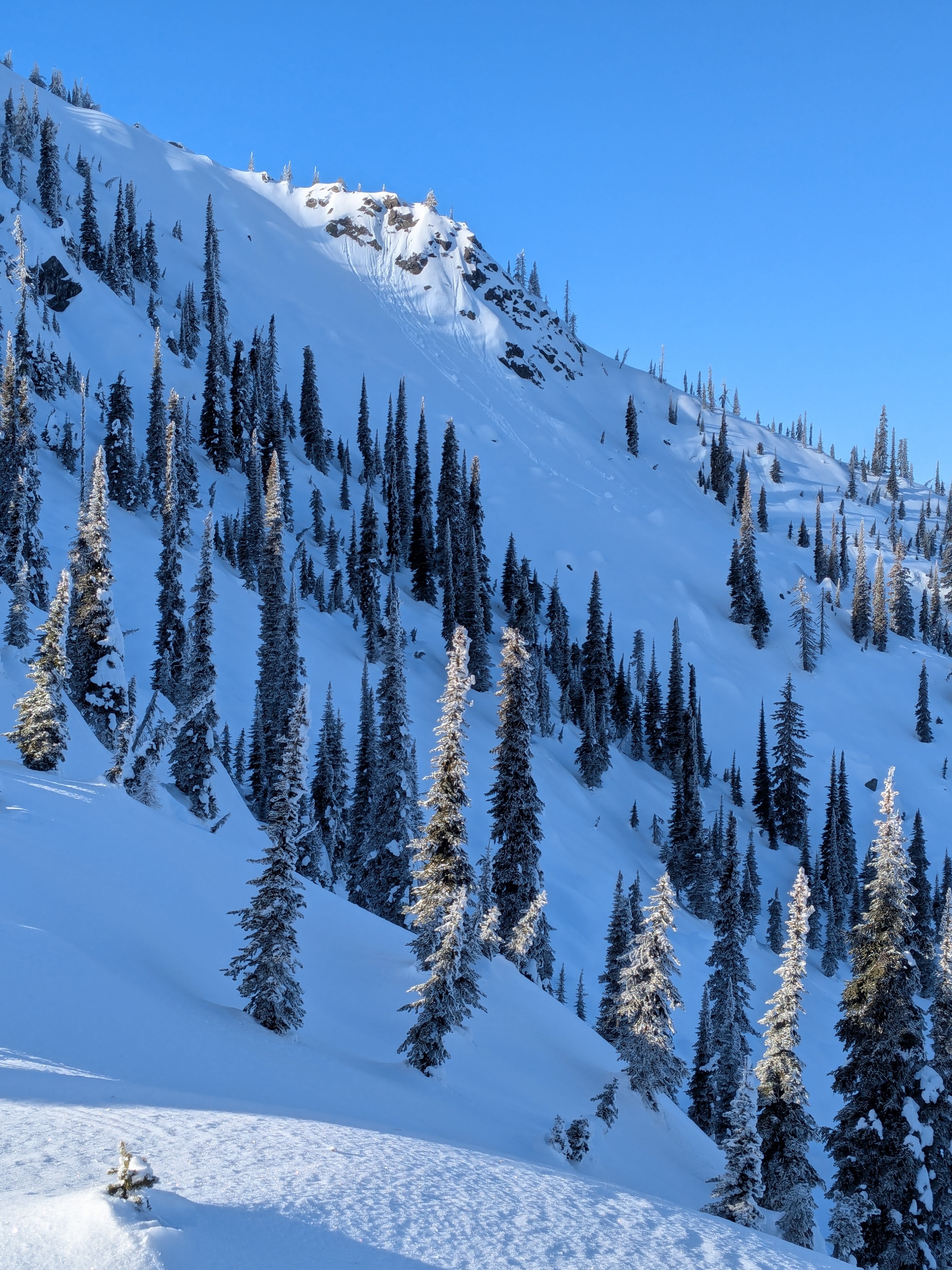
Old D2 to D2.5 crown lines on East and North-North East aspects of Joe Peak. Likely from around January 12.