
Quick report
- Cracking
- specific
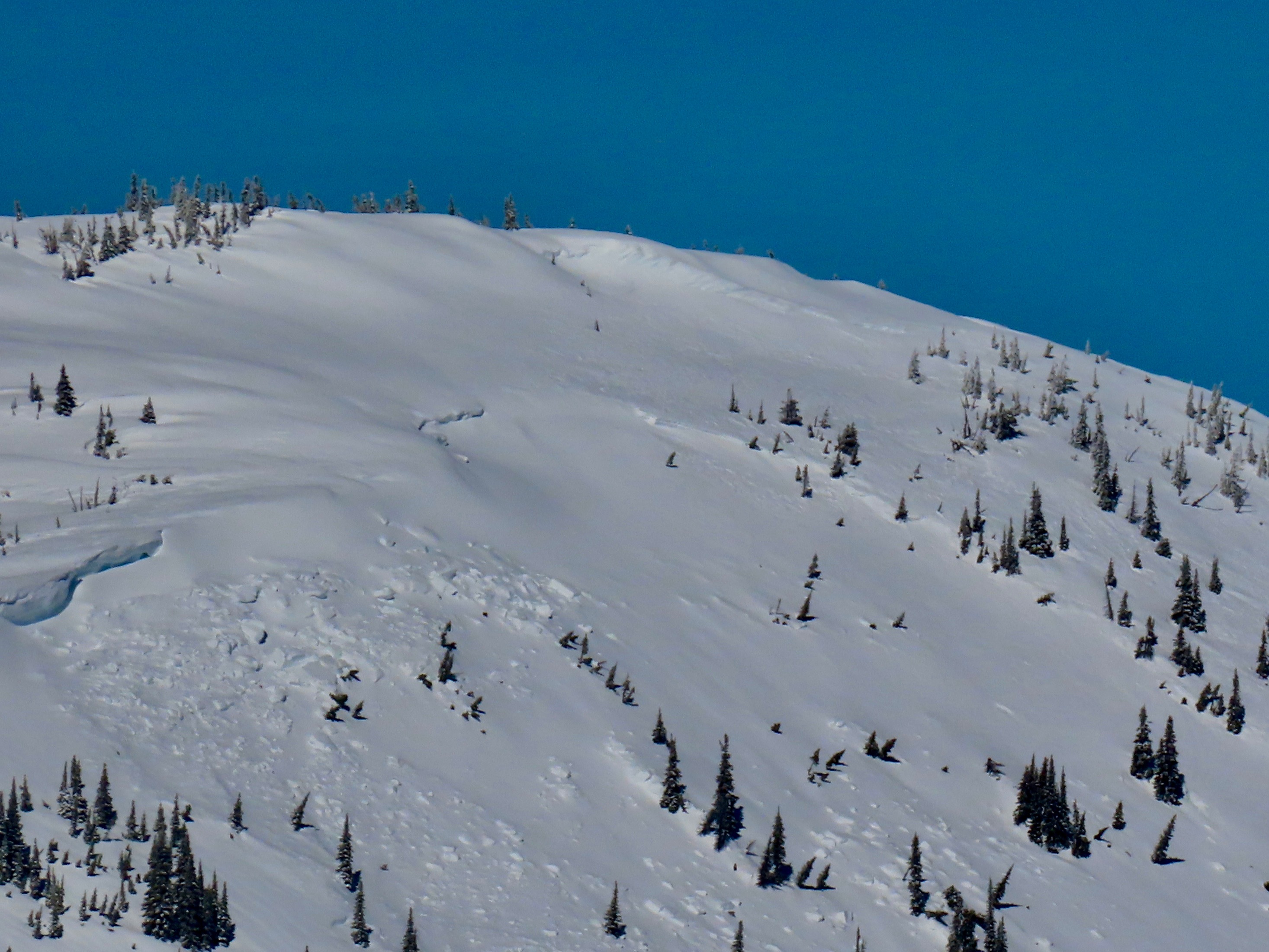
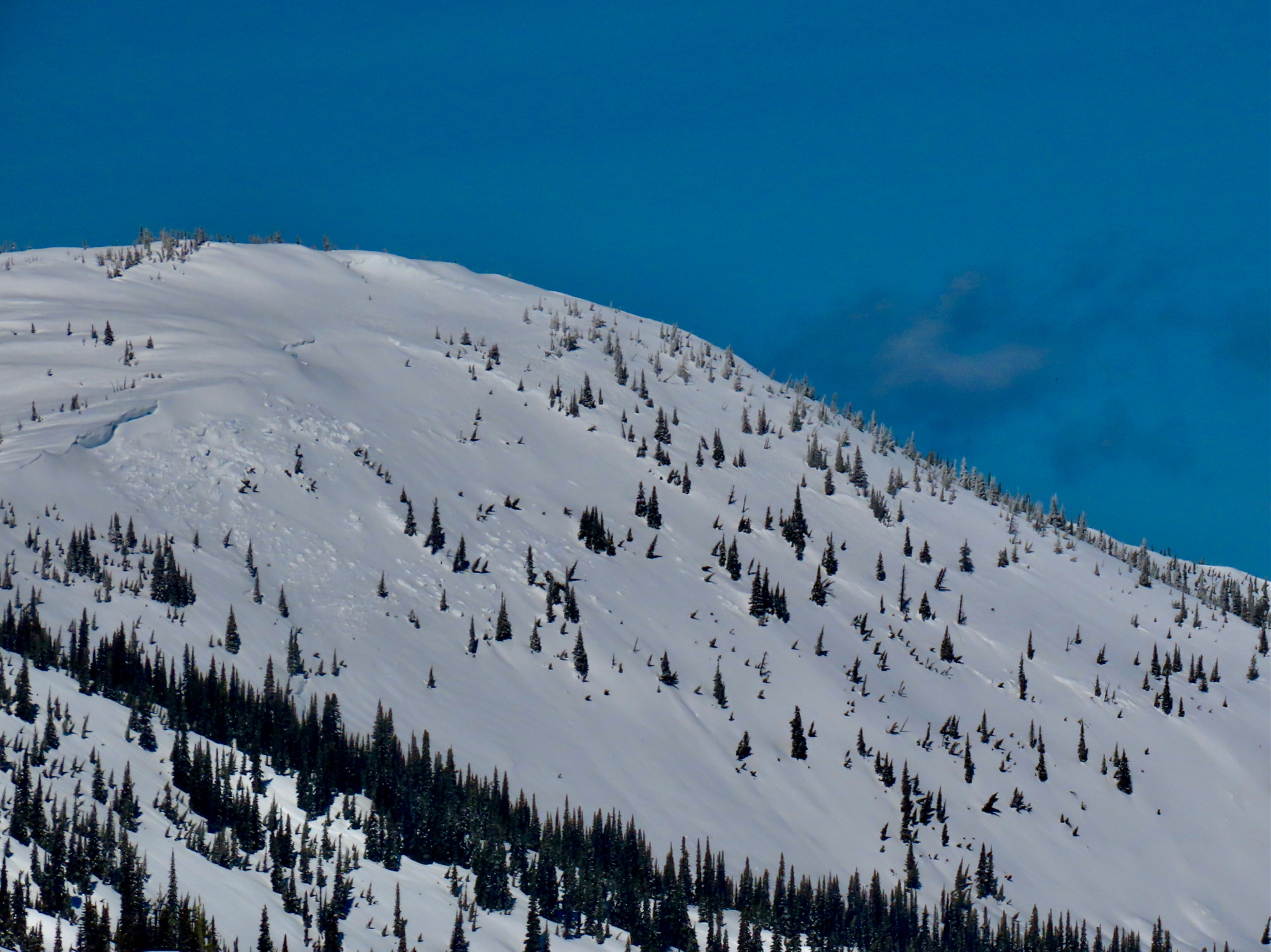
Today we headed to Sixmile to investigate the very large avalanche on Sixmile Mountain, reported on 3/19. We knew the southern edge of our Swan Zone had seen more water and warmer temperatures, and were curious to see if things looked significantly different there than further north in the zone.
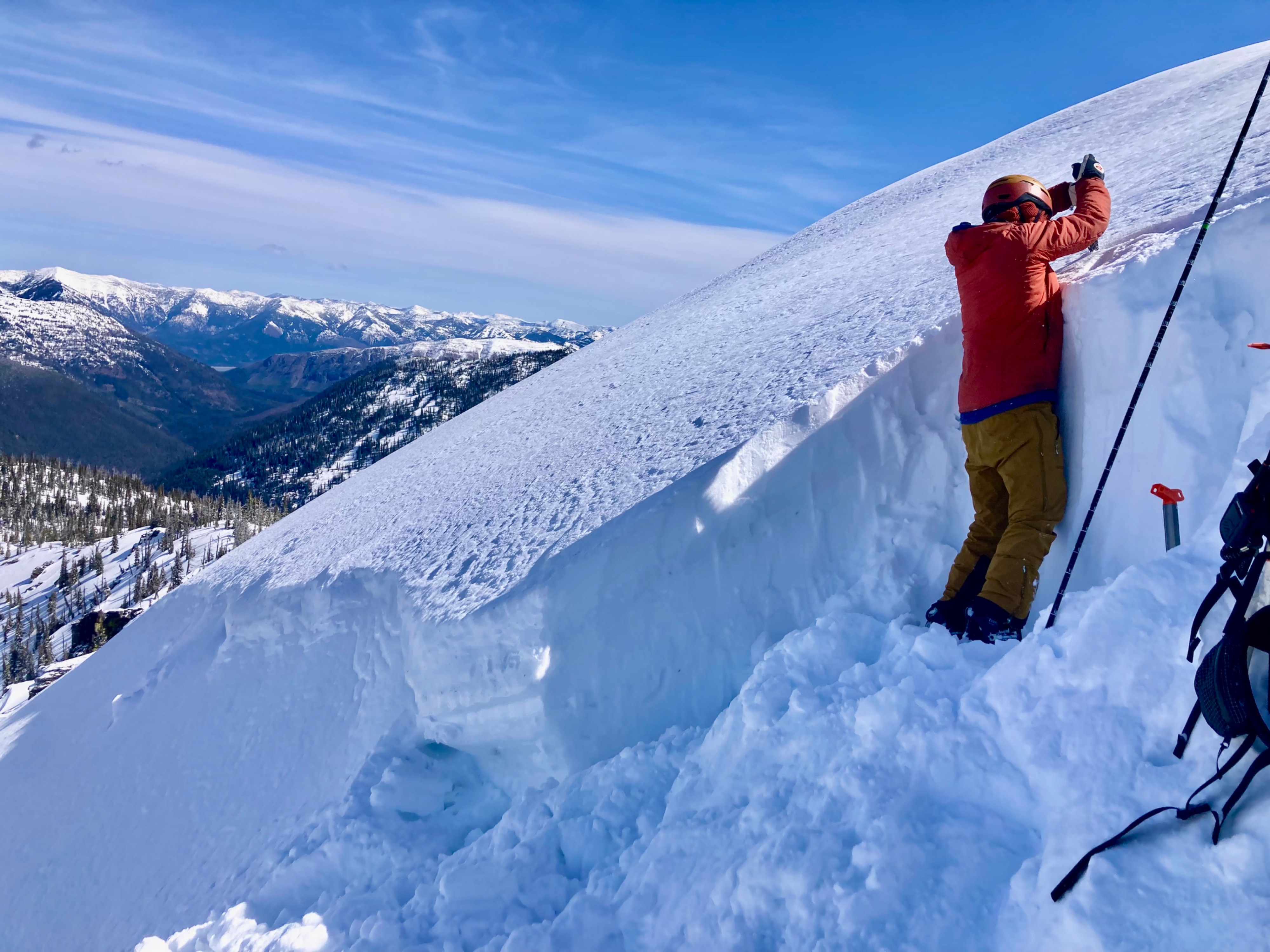
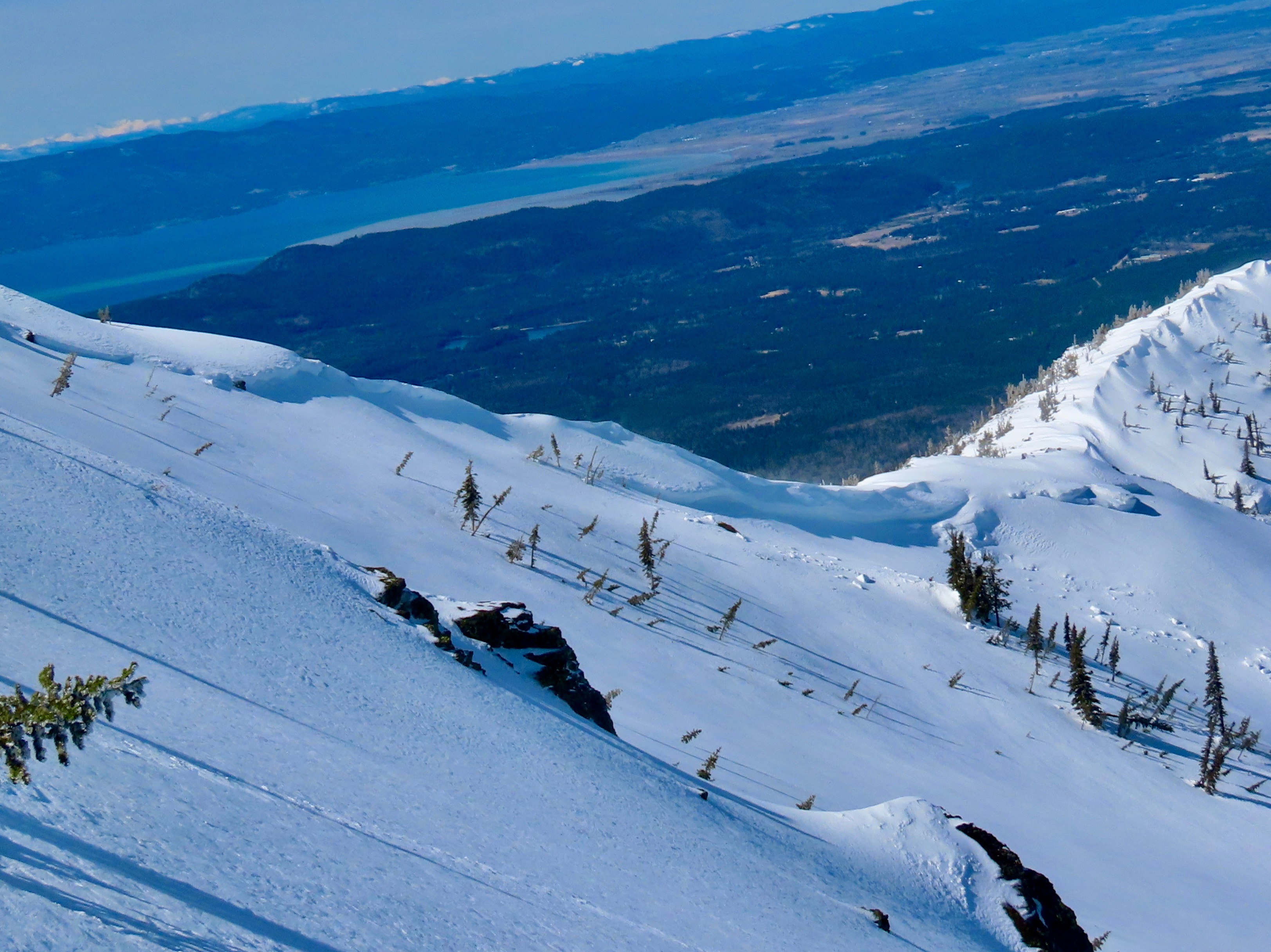
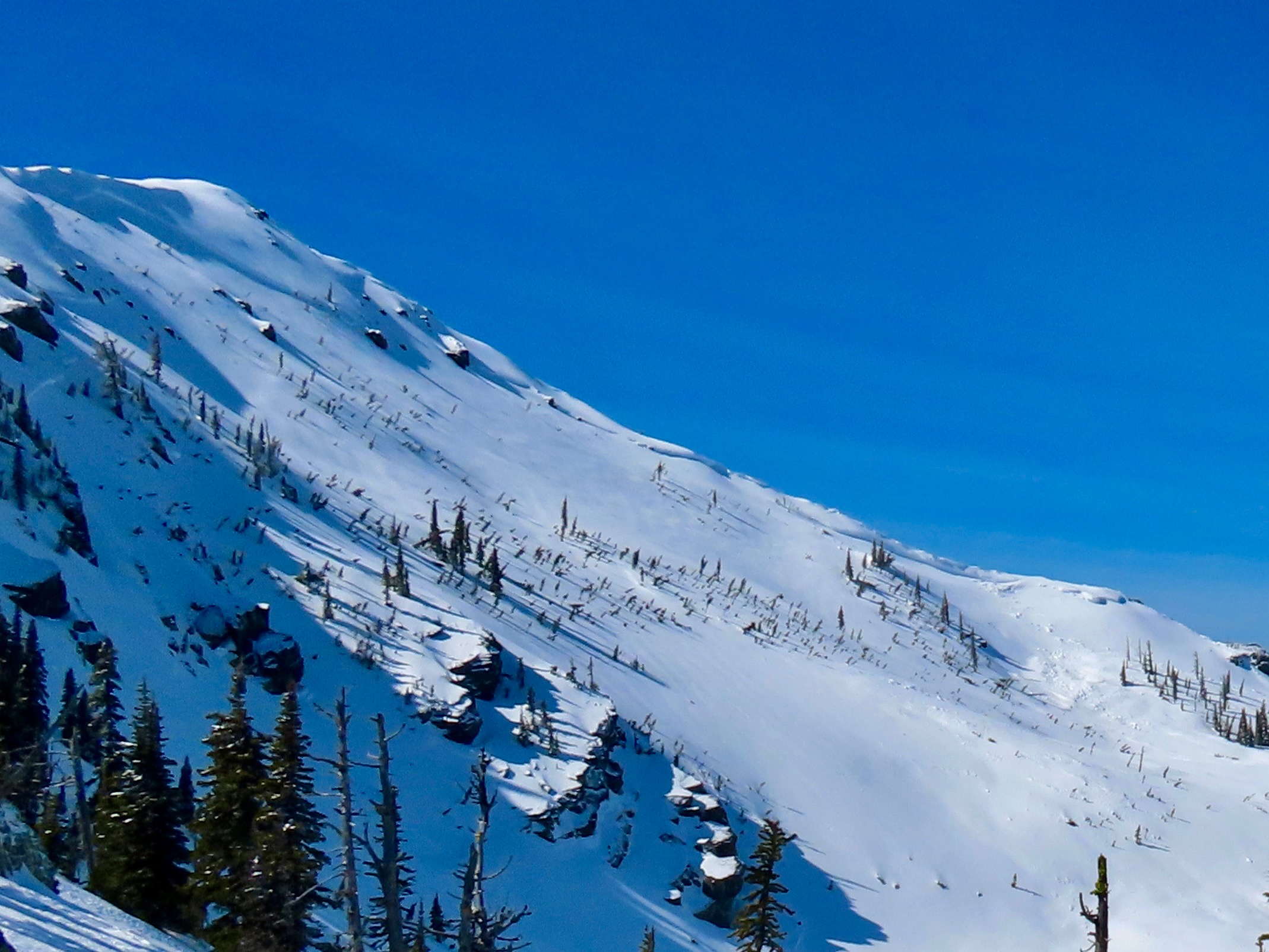
- The avalanche propagated the full width of the bowl, over 1900' wide, and broke 4-6' deep on the January Drought Layer (JDL, surface hoar). Our crown profile showed a mostly dry slab sitting atop a moist JDL. This suggests that preferential flow allowed water to percolate down to the weak layer while leaving most of the slab dry and intact; a perfect recipe for a widely propagating avalanche failing on a water-weakened JDL.
- We can't be certain that the water didn't reach the weak layer after the avalanche failed, but our assumption is that a moist JDL was a factor in this release.
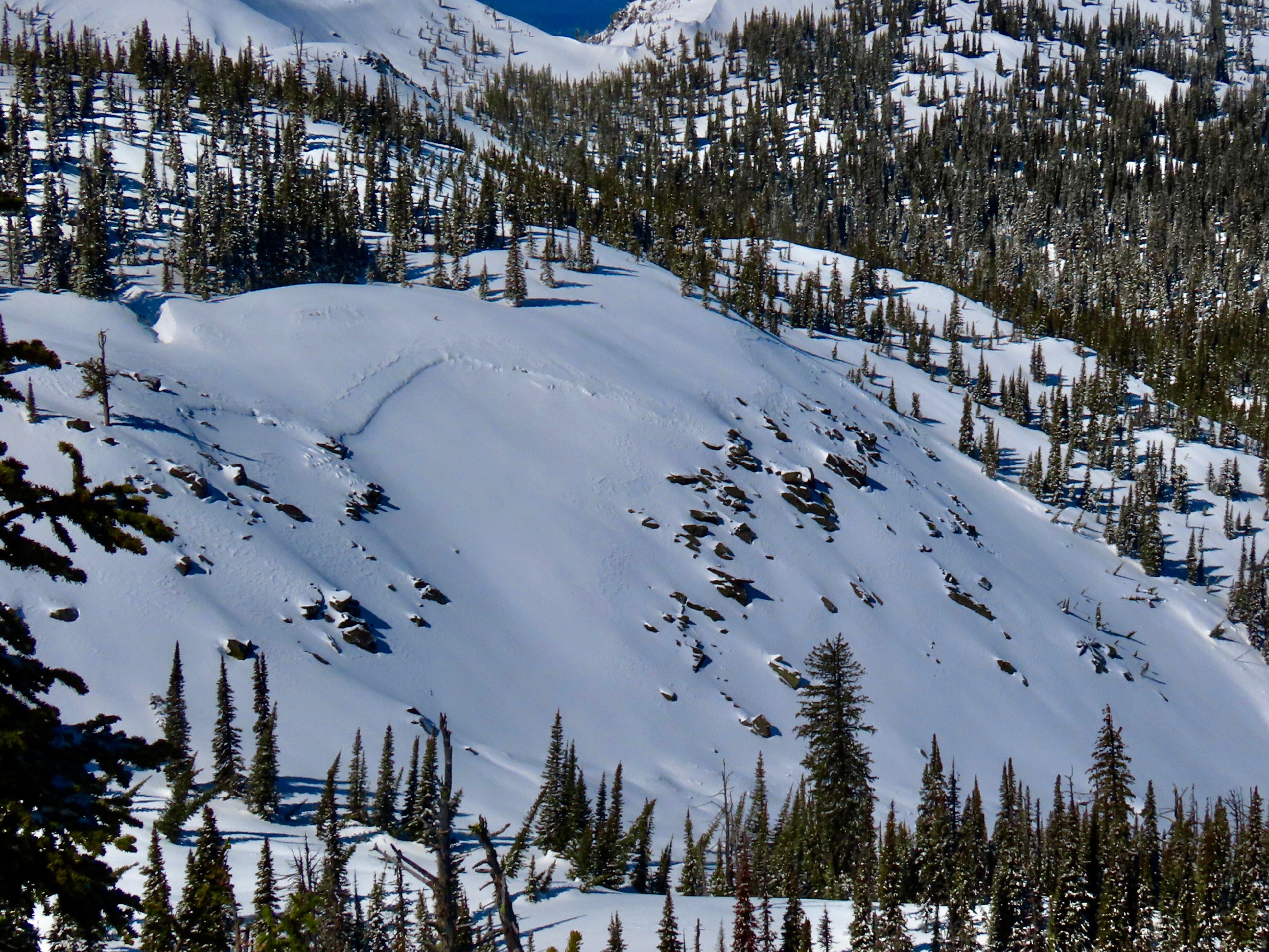
- We observed a secondary avalanche that was likely triggered by descending debris from the slide above, as well as an older large to very large avalanche.
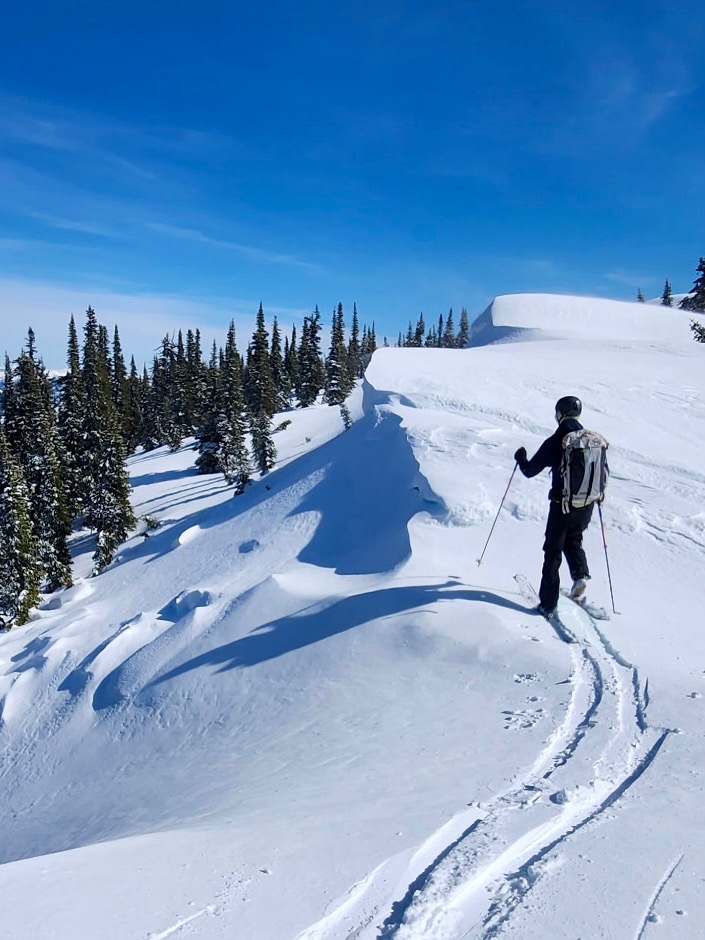
- We also saw numerous broken cornices that likely failed during the warmup.
- Despite a refreeze of the snow surface, multiple interfaces deeper in the snowpack were still moist, as was much of the snow below the JDL.
- A great example of how even once the spigot shuts off, there is still water in the hose.
- 2-6" of new/drifted snow sat atop the now ski supportable old snow surface (crust) above 6000'.
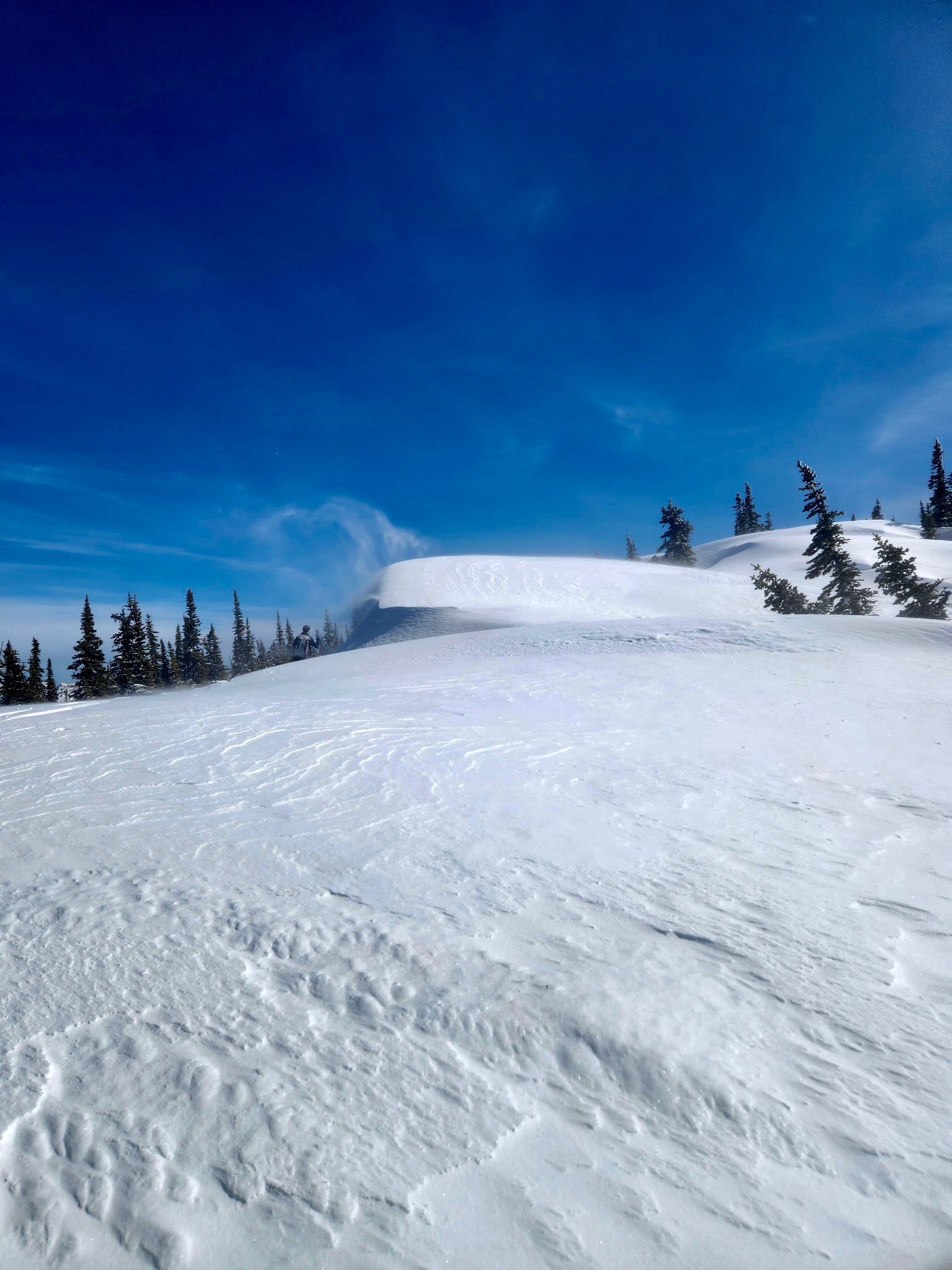
- Fresh thin wind slabs had formed overnight, and were continuing to form in real time; these proved stubborn to trigger. Fresh cornices were somewhat sensitive.
- Not much more snow available for transport by this afternoon.
- Solar input was significant today, as were the temperatures. This didn't seem to impact much up in the upper-elevation start zones (winds helped with that), but below 6000', the crust quickly disappeared and we sank into wet, mushy snow.
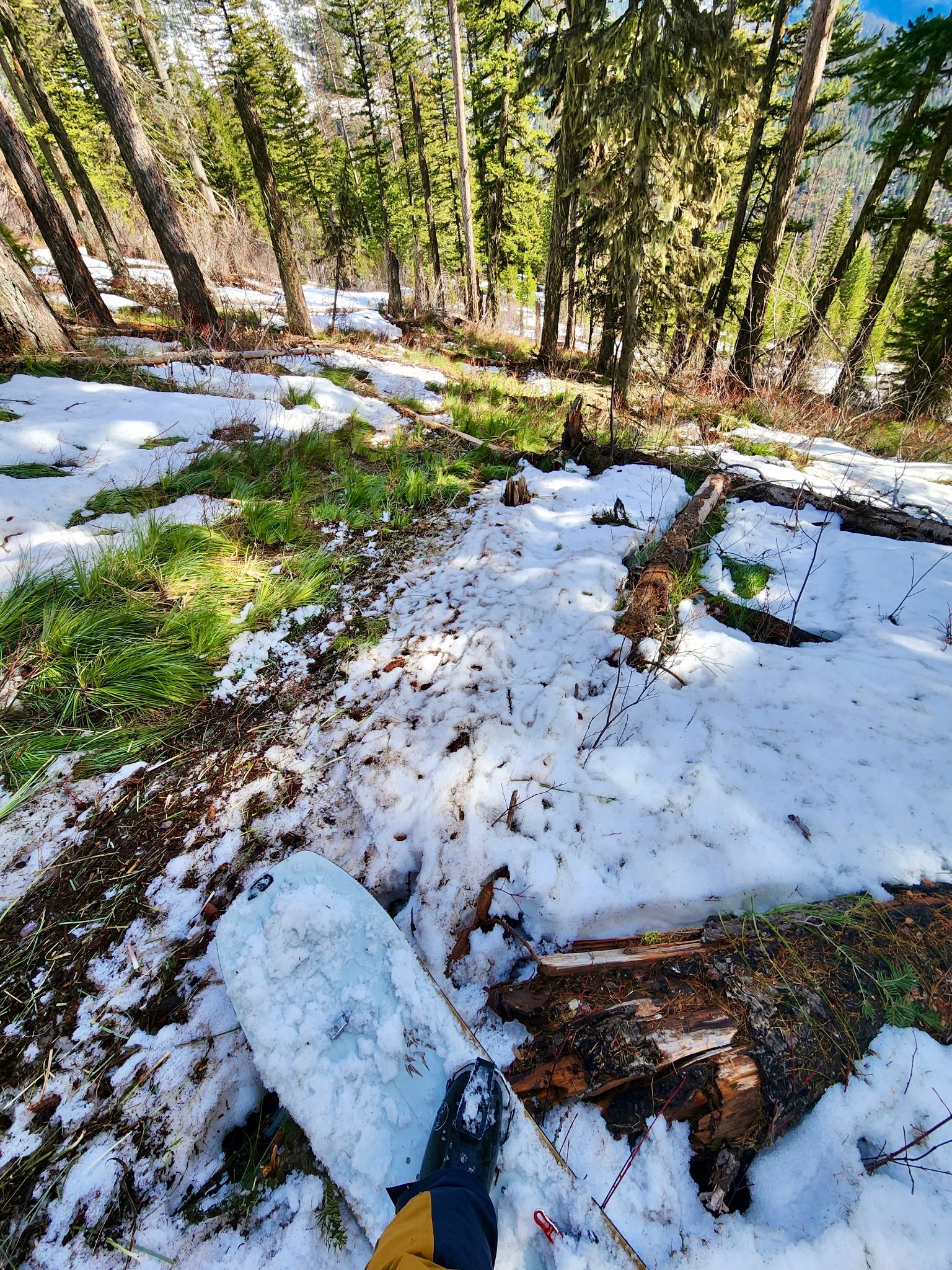
Despite a short walk through the bush and a mushy low-tide exit, the riding conditions above 6000' were quite enjoyable. We enjoyed soft turns over a supportable base on southerly slopes.
Cracking in wind-loaded pockets, limited to a few feet out from skis.Weather
- Cloud Cover
- clear
- Wind Loading
- light
- Rain Elevation
- 5500-6000'
- Recent Snowfall
- 5-10
- Snow Avail For Transport
- small smounts
Gorgeous bluebird day. Winds at ridgeline were moderate with occasionally strong gusts.
Snowpack
Crown Site - North Aspect @7250' - HS 230 cm
Three prominent layers in the upper snowpack, all of which were moist.
3/9 MFcr down ~ 40 cm
2/14 SH down ~ 95 cm
JDL SH down ~ 110 cm - Still clearly surface hoar, despite it being moistened.
Crust below the JDL surface hoar was broken down.
Slab was 1F>P>P+, and dry except at the layers noted above.
Below the JDL, snowpack was quite moist.
Avalanche
- Size
- D2 R3
- Type
- HS
- Count
- 3
- Aspect
- N
- Trigger
- NS
- Elevation
- 6800 ft
Visited crown site from very large avalanche reported on 3/19. Noted what appeared to be a secondary slide triggered by debris, as well as an older large to very large slide on Mount Orvis Evans.