
Quick report
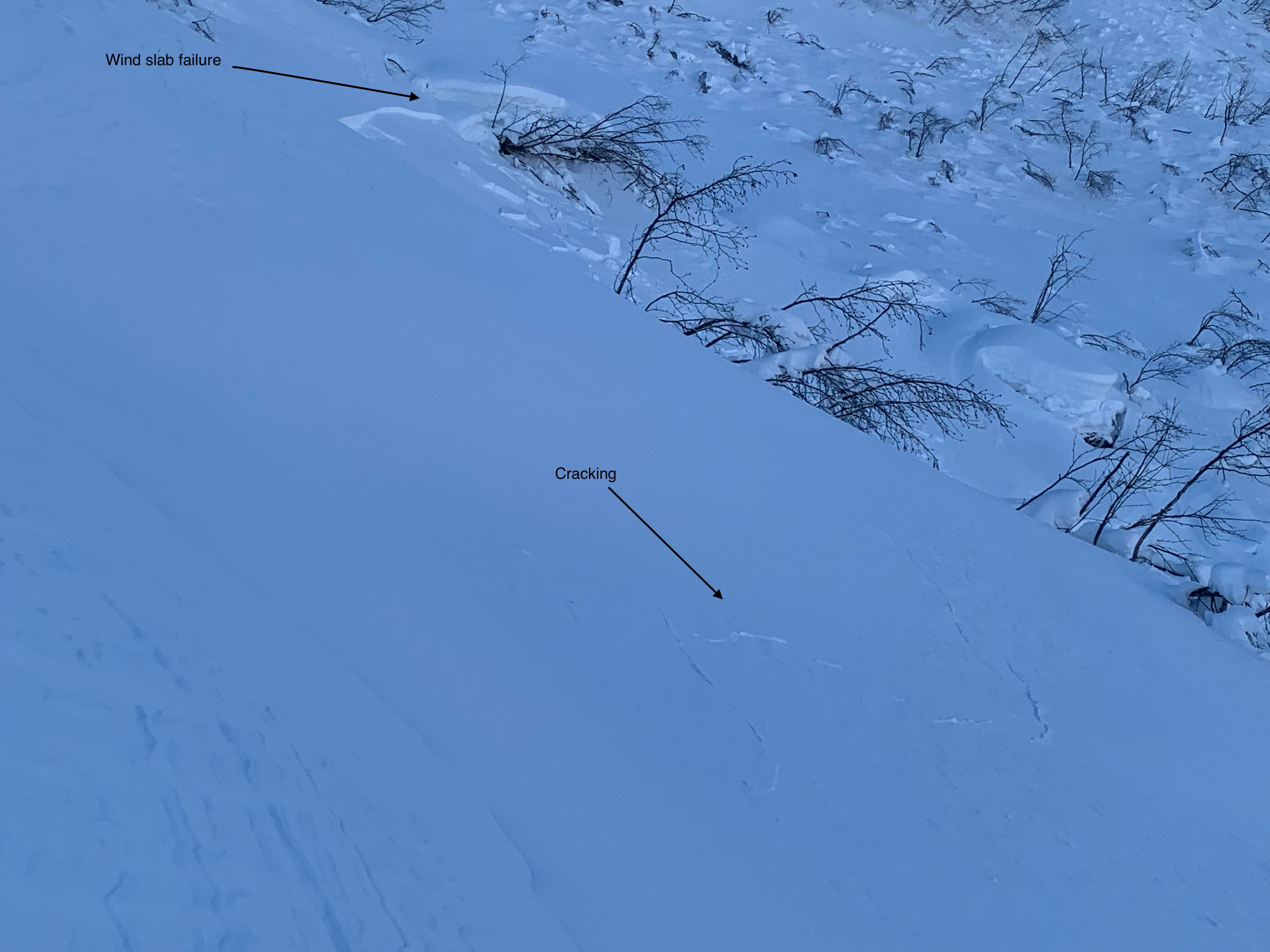
- Cracking
- Observed
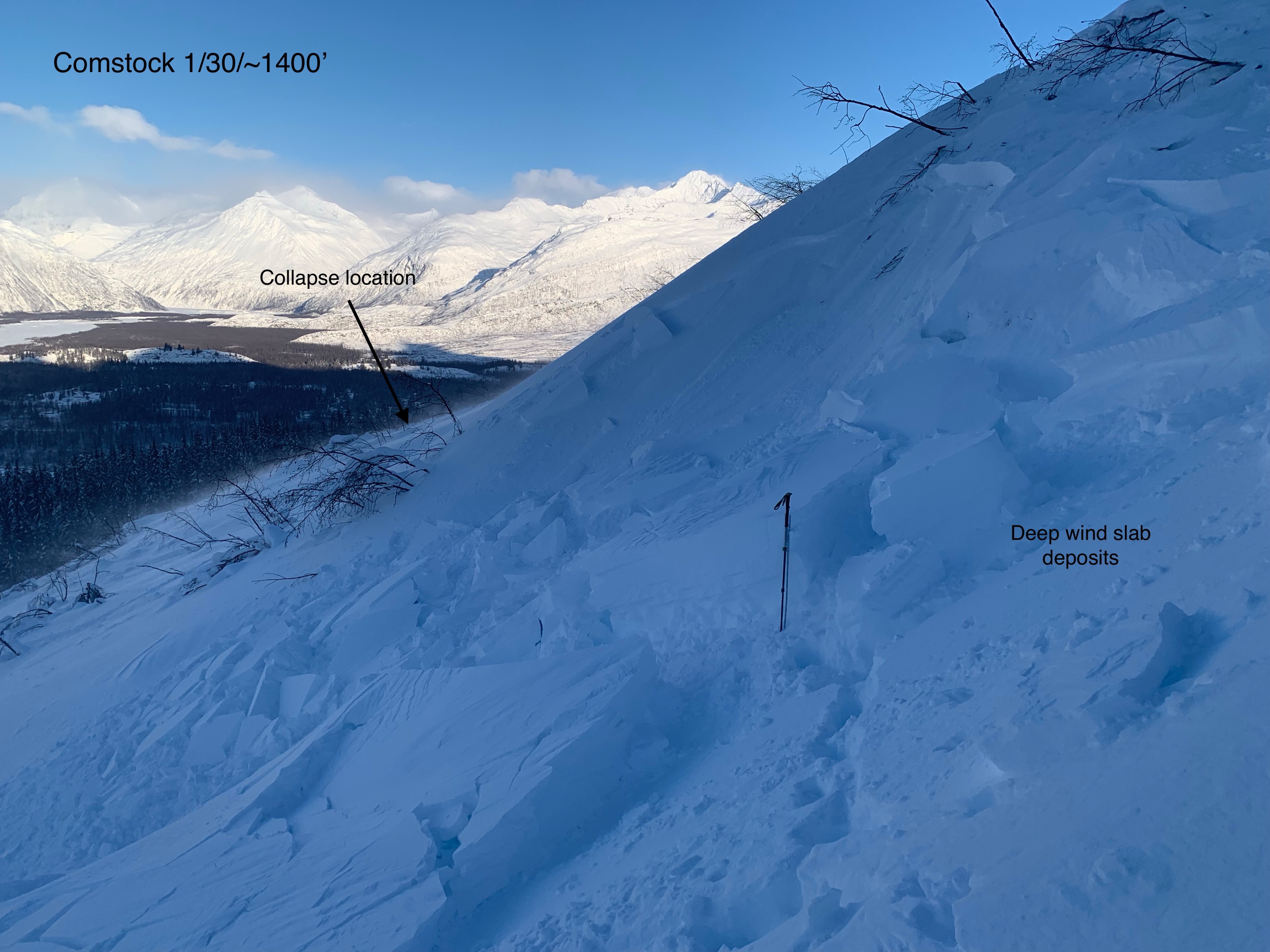
- Collapsing
- Observed
Protectected snow existed in the Spruce and Hemlock forest below 1000'.
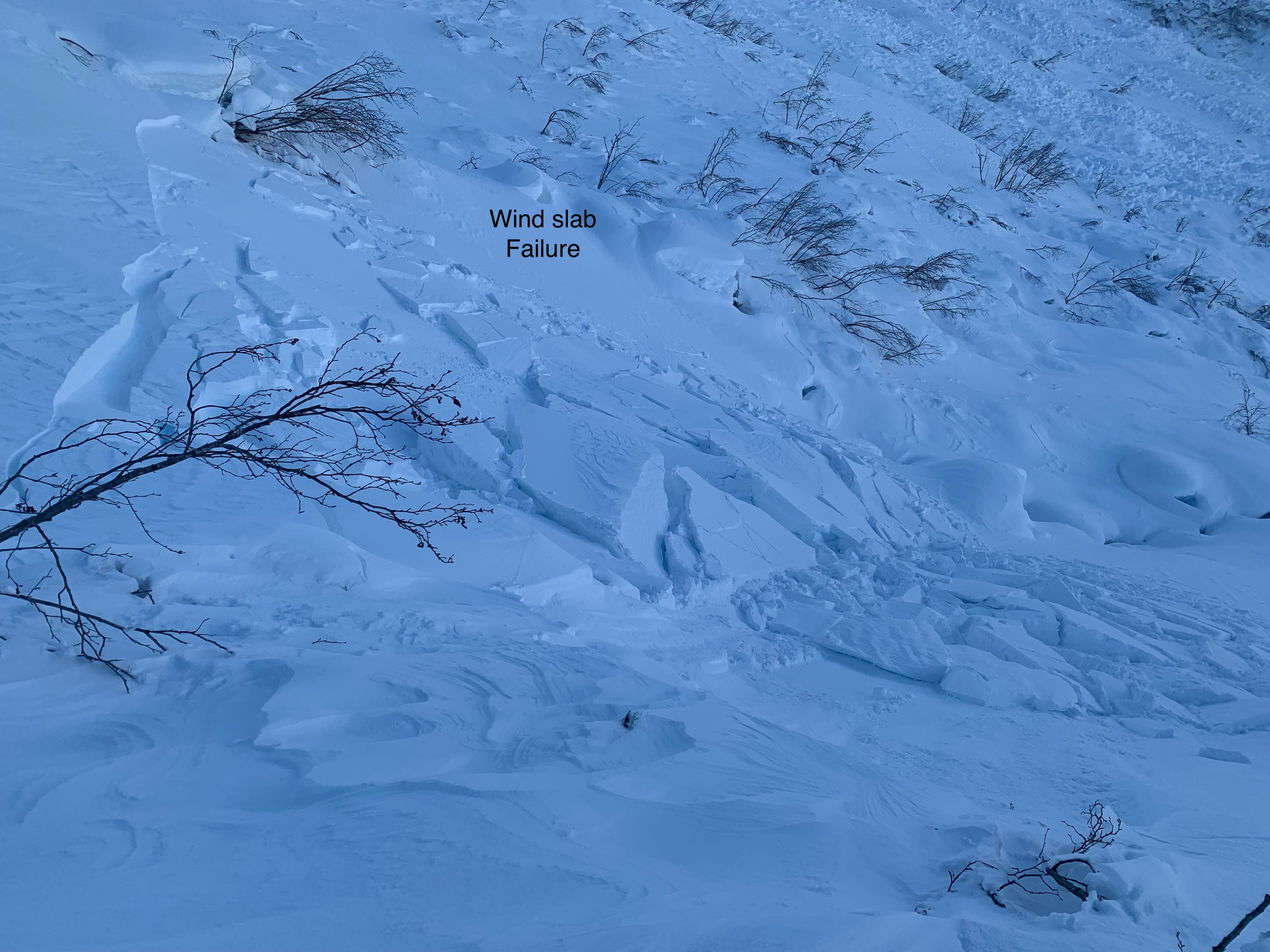
Above 1000' wind affected snow was widespread with a mix of windward slopes blown down to old rain crust, sastrugi, and wind slabs of various depths actively forming by significant active snow transport. Near 1500' I stepped onto a small pocket of wind slab that was near a wind scoured ridge and experienced a large collapse. This collapse produced a shooting crack that traveled over 200 feet in length. As this crack rounded a corner of terrain and found a slope steeper than 30°, a wind slab failed with debris up to 3.5 feet in depth. Slide couldn't travel any distance because slope was < 50' vertical.
this unusually deep and wide failure on a relatively small slope indicates that the current combination of previous deep snow and current strong winds has the potential of producing human triggered avalanches with higher consequences than what is typical with the wind speeds we are currently receiving.
All signs of instability were observed.Weather
- Air Temp
- ~0
- Cloud Cover
- clear
- Wind Loading
- intense
- Snow Avail For Transport
- large amounts
clear, cold, with strong north wind at all elevations that were not protected by trees.
Avalanche
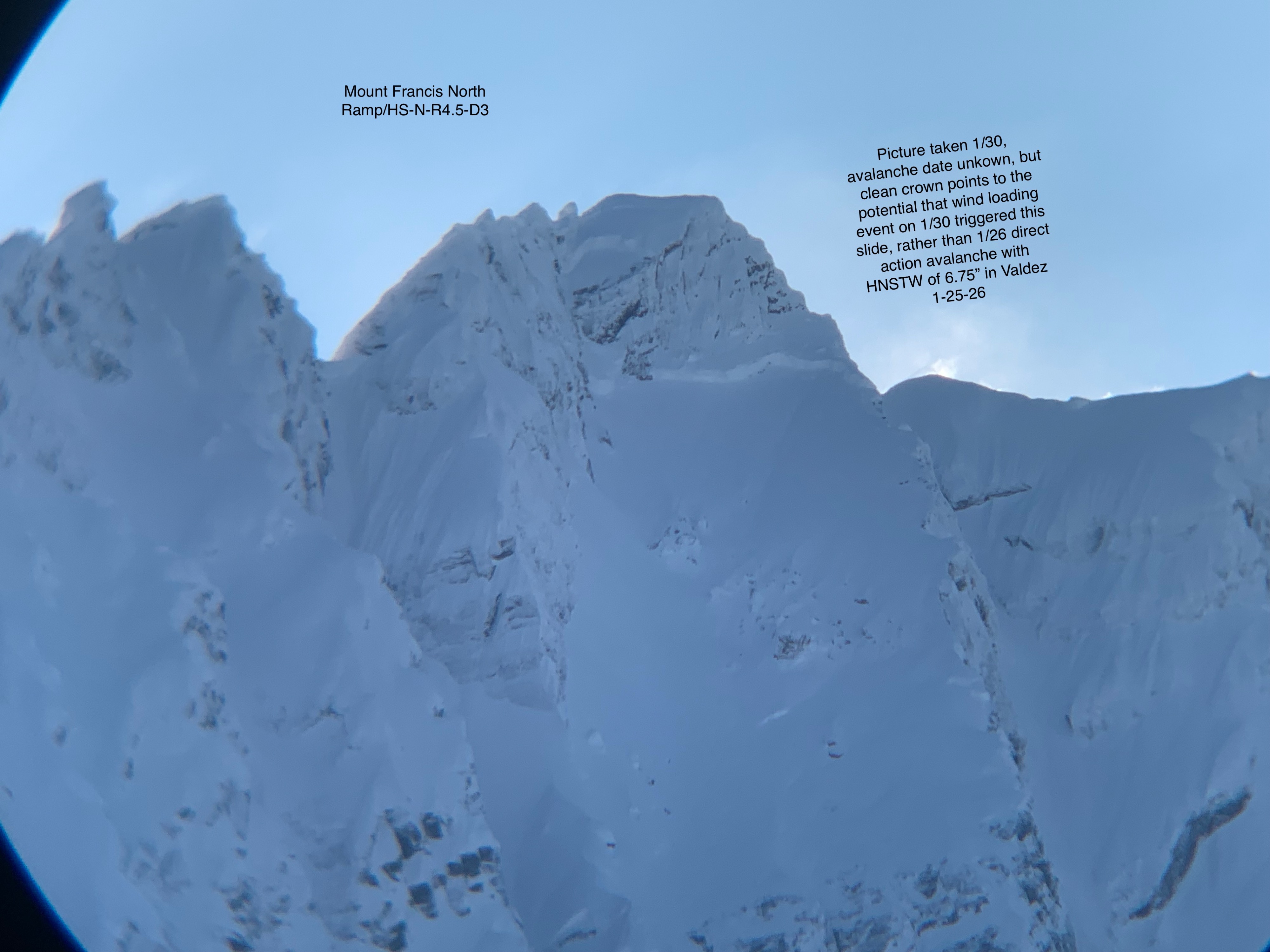
D3 Hardslab avalanche observed on the North Ramp of Mt Francis. Failure date unknown but the crisp crown points to the possibility that this slide may have been triggered by the wind event of 1/30 rather than the 1/25-26 storm.