
Quick report
With extremely poor visibility, we have limited information about the distribution of new wind slabs.
In the areas that we traveled (south face of Tuckerman Ravine), wind slab distribution was generally more significant than what we expected this morning, but overall, new windslabs are variable in depth and non-existent in terrain that has increased exposure to the wind. Areas like the Tuckerman Ravine floor and the low angle slopes on the south face (underneath Sluice, Right Gully, and Lobster Claw) were highly wind affected and scoured down to Saturday's melt-freeze crust in many areas.
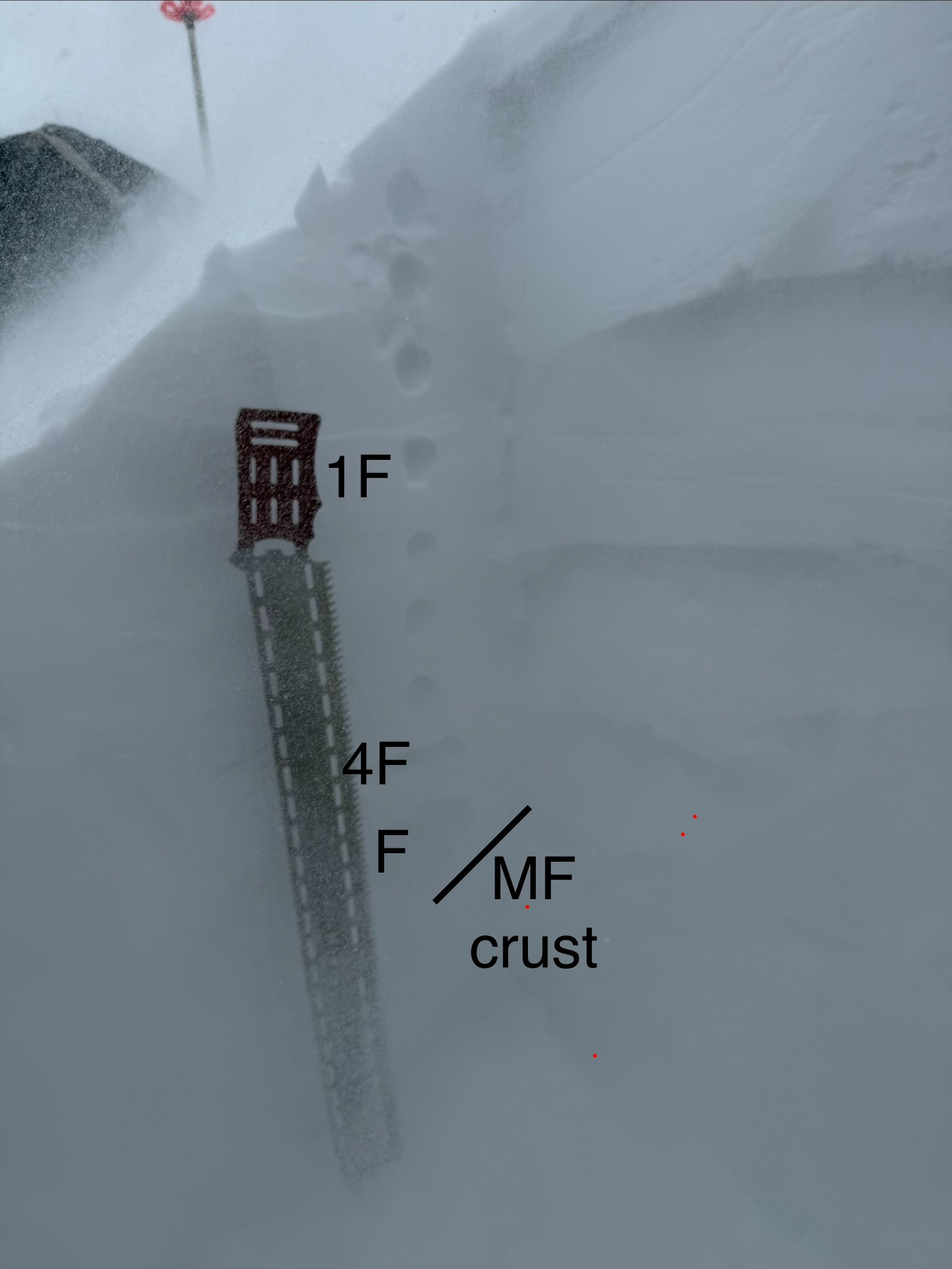
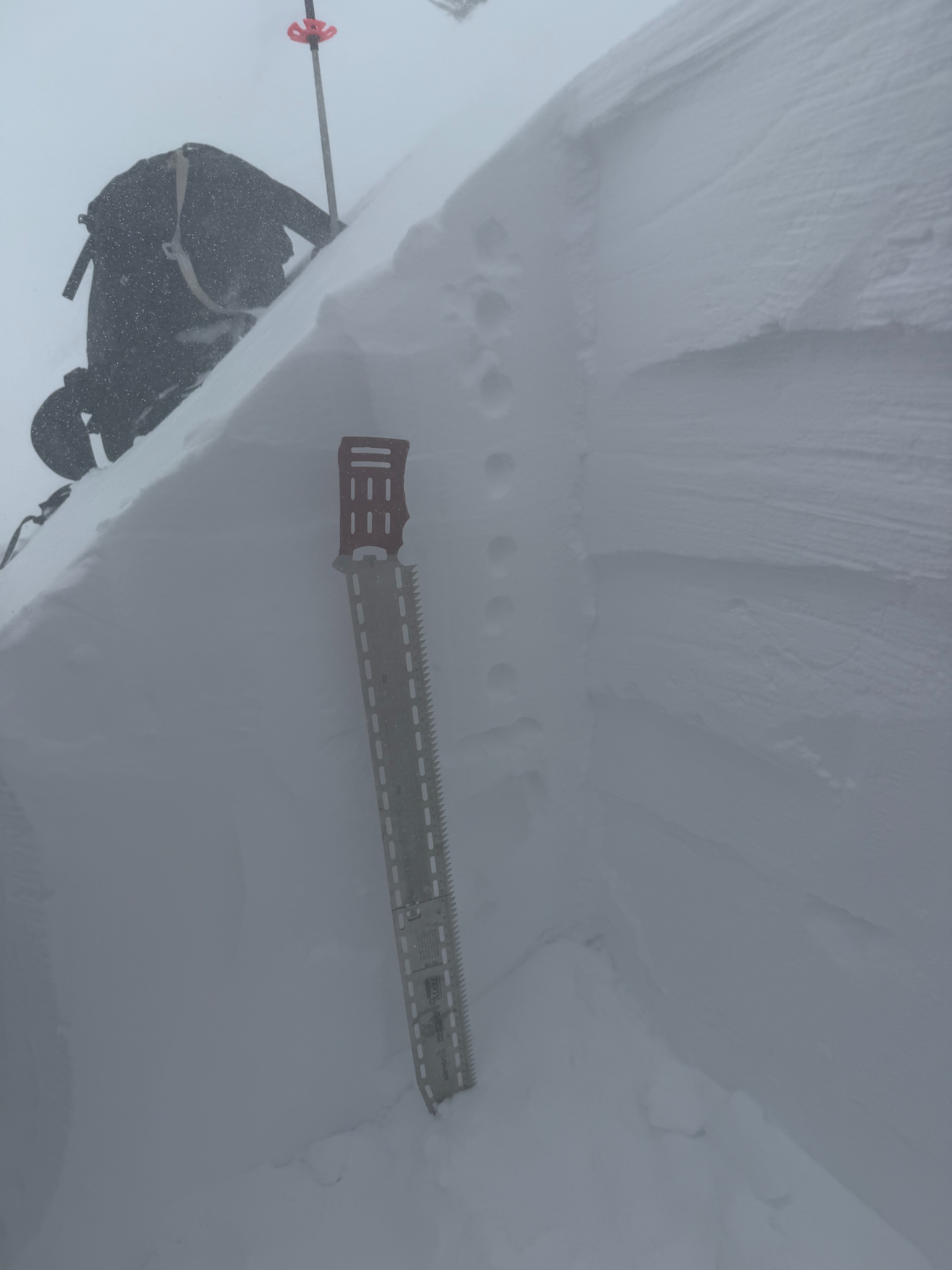
However, in areas that had additional protection from the wind including the middle sections of south-facing gullies like Sluice and Right Gully, new wind slabs up to 70cm thick were observed. While these slabs did not show immediate signs of instability like shooting cracks or collapsing, they were reactive during instability tests and showed a consistent strong-over-weak structure on top of a slick melt-freeze crust from warm temperatures on Saturday.
Weather
- Air Temp
- 10
- Cloud Cover
- obscured
- Wind Loading
- moderate
- Recent Snowfall
- 5-7cm
Obscured sky conditions from clouds and blowing snow. Winds in Tuckerman Ravine were strong and continued to transport loose snow. Temperatures were cold, around 10 degrees F.
Snowpack
In wind-exposed areas, the snowpack was scoured down to the 1/10 melt-freeze crust.
In wind-sheltered areas in steeper terrain, wind slabs of up to 70cm thick were observed. On a 35 degree protected slope between Right Gully and Sluice, a strong-over-weak windslab structure was observed on top of the 1/10 melt-freeze crust. In this location, 60cm of 1-finger-hard snow was on top of about 5cm of 4-finger-hard snow. Below this was a 5cm layer of Fist-hard snow. Below this was the 1/10 melt-freeze crust.
During extended column tests, we noted a score of ECTP11 within the Fist-hard snow on top of the melt-freeze crust.