
Quick report
- Cracking
- specific
Instabilities between the interface of the new snow and old snow interface were found, as well as a density difference within the new snow that is increasing in sensitivity. We discussed that the hours of forecast northwest winds will continue to transport snow and stiffen the surface. As this snow stiffens we expect to see increased sensitivity. Careful travel and consideration of this increasing hazard should be factored into travel tomorrow.
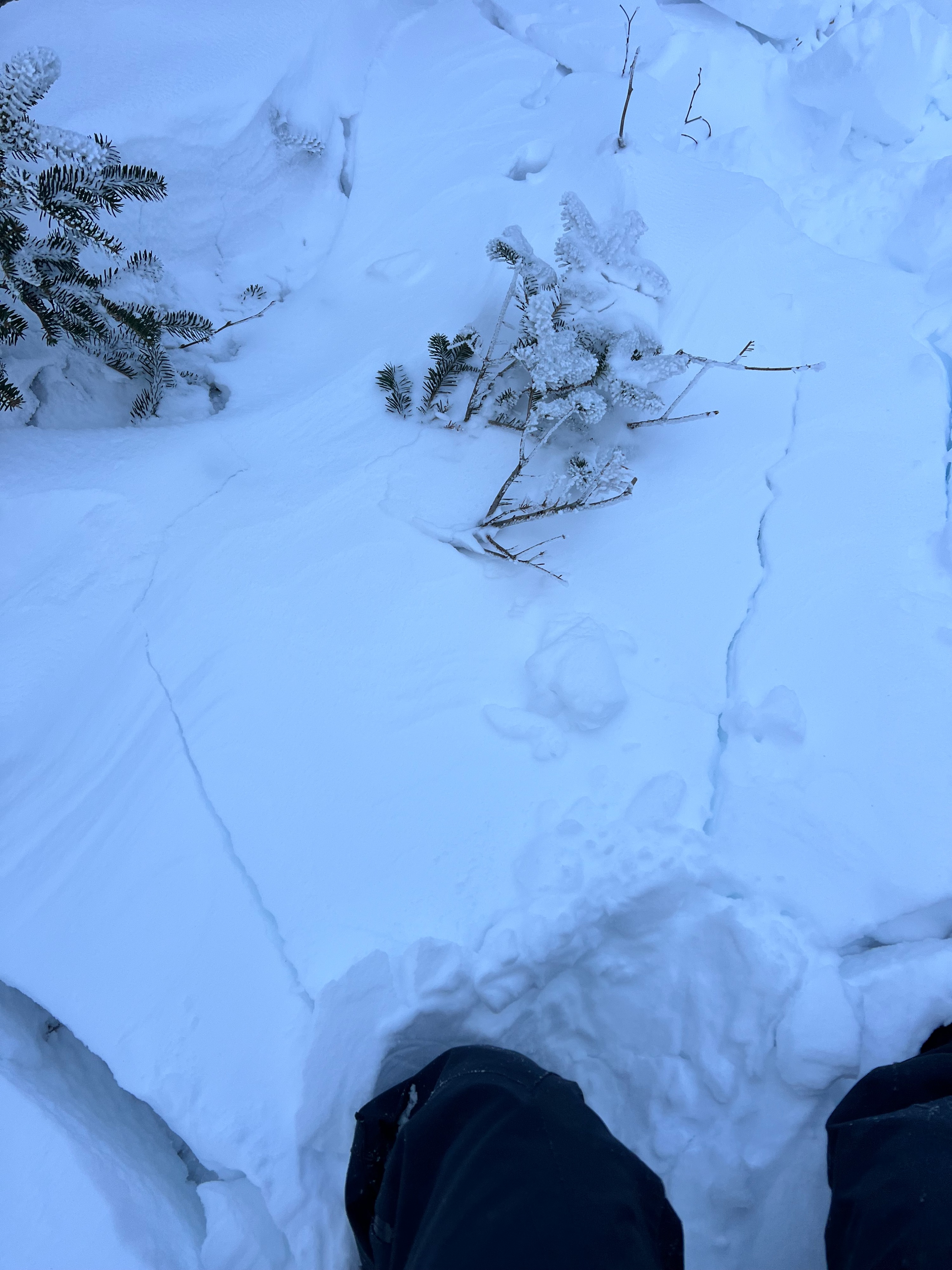
Found cracking in multiple easterly features along the Tuckerman Ravine Trail that leads into Tuckerman Ravine. These cracks were limited to under your boot where you stressed the surface snow. None of our cracks propagated laterally and only extended below our feet. These cracks were within the stiffening surface snow.Weather
- Air Temp
- 13.4
- Cloud Cover
- obscured
- Wind Loading
- moderate
- Recent Snowfall
- 12
- Snow Avail For Transport
- moderate amounts
Fog and blowing snow obscured all visibility of the Ravine. Strong northwest winds that averaged mid 50s mph were recorded during our time.
Snowpack
With very limited visibility our group decided our high point would be connection cache. Along the Tuckerman Ravine Trail we looked for wind affected pockets of snow to learn more about the sensitivity, size, and distribution of the wind deposited snow. It is important to note that this trail does shelter snow and this terrain is not fully representative of terrain in the Ravine.
We found variable snow depths, but most pockets of snow were at least boot height in depth. As winds increased in speed, shifted to the northwest snow, and is being transported the surface snow is stiffening. We found a 2-3 inch 1F+ that sits on 6-8 inches of fist hard snow. All of this sits on a slick, and icy bed surface. Because of this interface, the low density fist hard snow is poorly bonding to the icy surface. Hand shears failed on isolation, and we discussed that this was due to poor interface of the new snow and bed surface.
There was a density change within the new snow, with the 1F+ sitting atop fist hard snow. As winds continue to increase and load this surface will both grow larger and continue to stiffen. As that surface stiffens the wind slab hazard will be increasing as will the potential for shooting cracks.